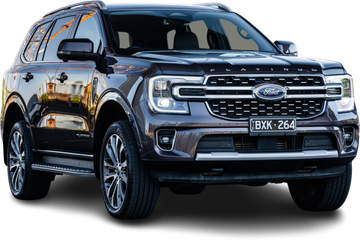
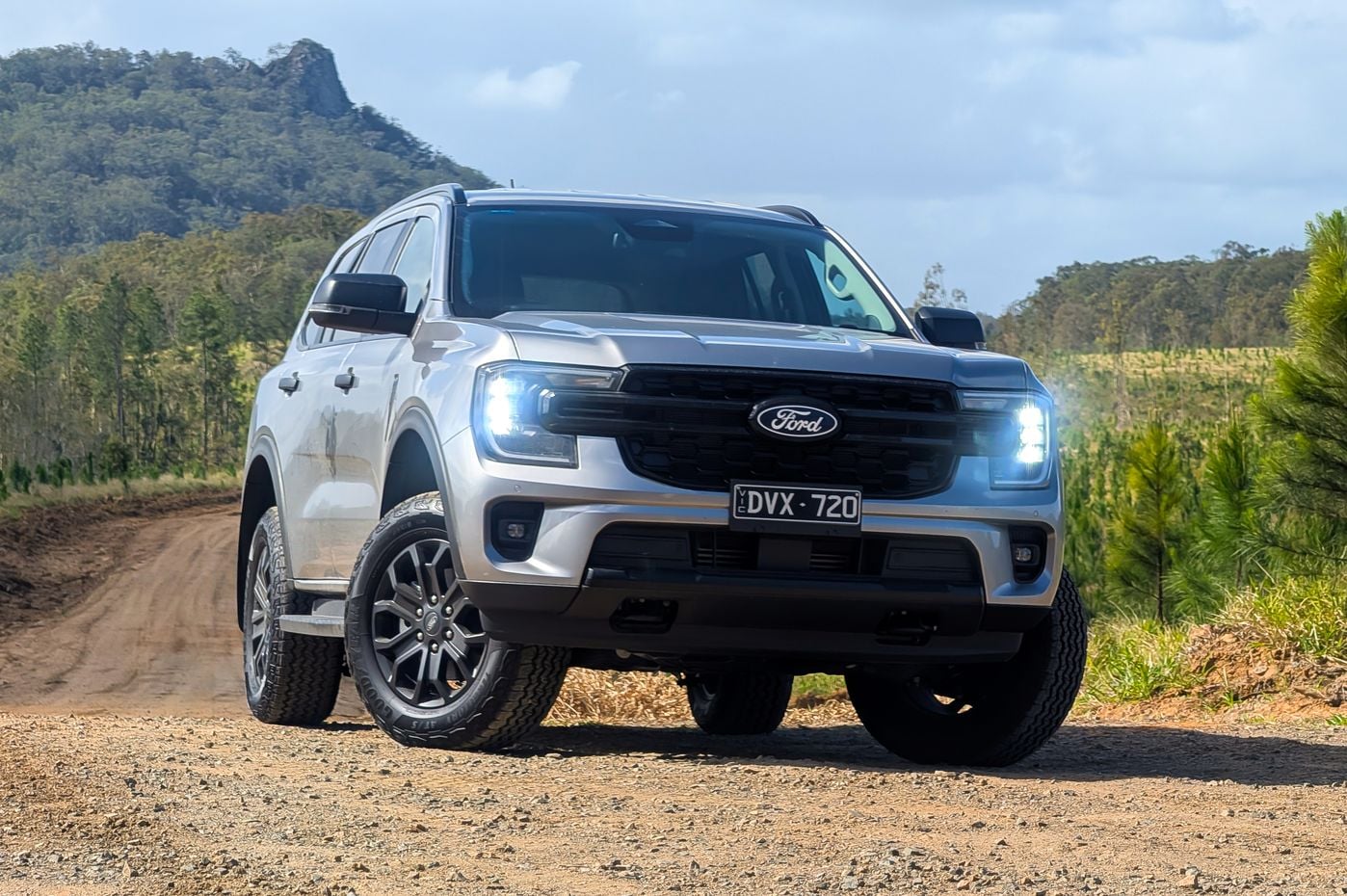
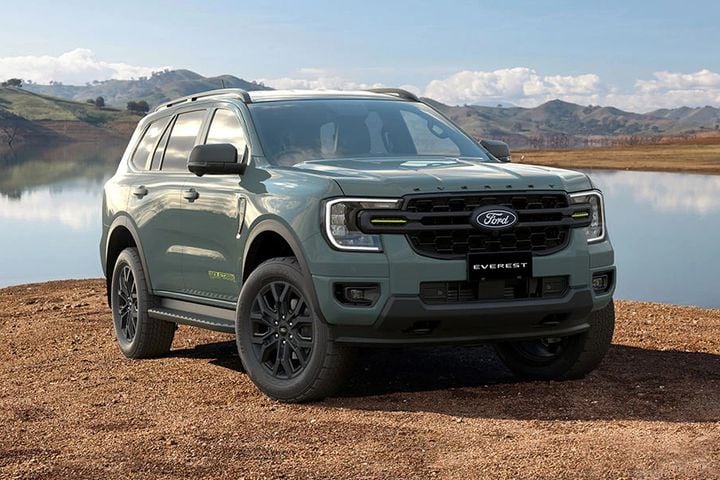
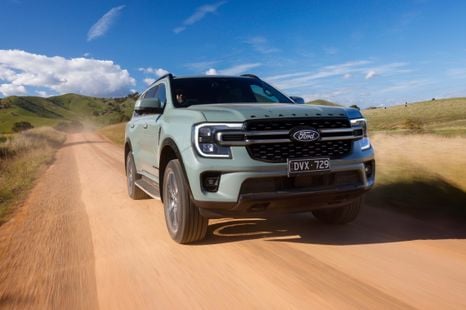
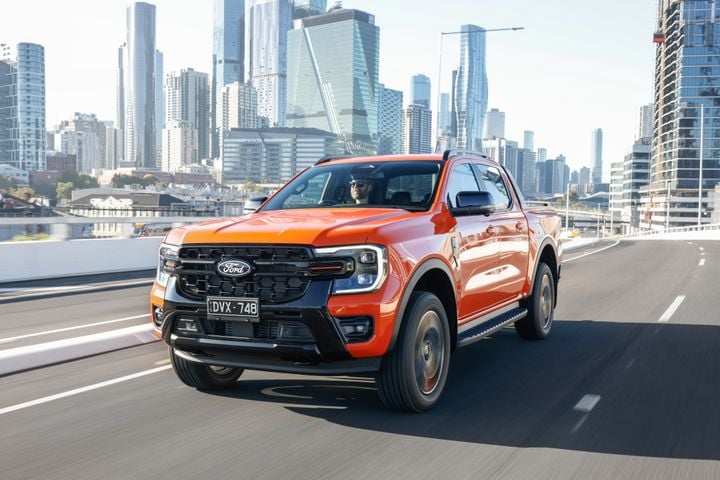
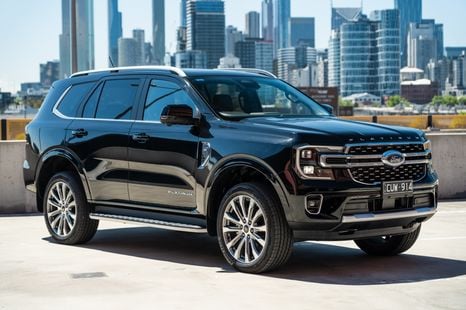
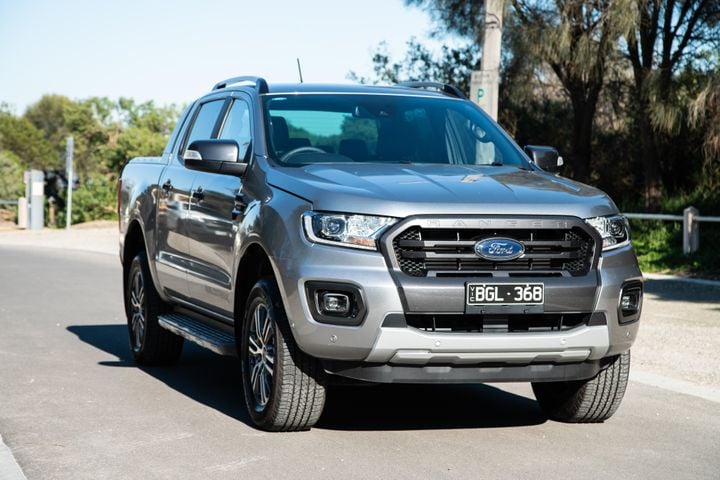
The Ford Everest Sport has plenty of attitude, but it is no performance SUV. Black exterior details and 20-inch wheels give this seven-seat SUV plenty of presence, but its strengths are everyday usability and relaxed touring rather than outright agility. Our 2020 review focuses on city and highway driving, not towing or off-road testing.
Priced just under $64,000 at the time of filming, the Sport sits among ute-based family SUVs such as the Toyota Fortuner, Mitsubishi Pajero Sport, and Isuzu MU-X. Its Ranger roots are obvious inside: there are soft dashboard and armrest surfaces, but plenty of harder plastics lower down. It feels durable rather than luxurious.
Ford’s SYNC 3 infotainment is a strong point, with satellite navigation, digital radio, and responsive wired Apple CarPlay and Android Auto. Physical climate controls are welcome, and a USB socket near the mirror makes connecting a dashcam easier. There is no wireless phone charger, however, and the steering wheel lacks reach adjustment.
The front seats are comfortable and the second row slides and reclines. Adults can fit in the third row, although space is tight and moving the middle seats forward compromises room there. Roof-mounted vents and airbag coverage extend to the third row. Rear passengers get a 230V outlet but no USB socket.
Ford’s quoted 450-litre luggage capacity with all seats raised is measured to the roof, an important qualification. Our suitcase and laptop bag fit, and folding both rear rows creates a large, almost-flat load area. The powered tailgate is frustratingly slow and does not open especially high.
The 2.0-litre turbo-diesel produces 157kW of power and 500Nm of torque, paired with a 10-speed automatic and permanent all-wheel drive in this specification. It pulls willingly without constantly needing downshifts. Indicated consumption was 8.2 litres per 100km against a claimed combined 7.0L/100km.
Coil-spring rear suspension delivers a comfortable touring ride, though some ladder-frame firmness remains. Light steering makes parking straightforward, while diesel noise is noticeable. Autonomous emergency braking and adaptive cruise control are included, but blind-spot monitoring requires the higher Titanium grade. The Sport is a capable-feeling family all-rounder, provided you can accept its ageing, workmanlike interior.