




William Stopford
2027 Ford Everest review
The four-cylinder Ford Everest diesel has lost a turbocharger, but it hasn't entirely lost its appeal.
4 Seconds Ago
The four-cylinder Ford Everest diesel has lost a turbocharger, but it hasn't entirely lost its appeal.
Senior Editor – News
Senior Editor – News
Senior Editor – News
Senior Editor – News
If this is the car for you, we’ll compare offers from trusted dealers, handle the back and forth and manage your purchase from enquiry to delivery.
Thank goodness the Ford Everest offers a turbo-diesel V6 engine, something none of its rivals can boast, because if you don't like this new base four-cylinder turbo-diesel, you'll have something to step up to.
The new entry-level four is a step backwards on paper. Ford had to replace the old bi-turbo in the Everest and related Ranger ute amid tightening emissions regulations (and longevity concerns around its wet cambelt design), and in its place is an uprated version of the Blue Oval’s existing single-turbo four-cylinder diesel.
This means power and torque outputs that are outpaced by everything from the Toyota Prado, with which the Everest dukes it out for the title of Australia's best-selling large SUV, as well as the Isuzu MU-X and incoming Mitsubishi Pajero.
But is this really as much of a step down as it appears on paper? We didn't think so after our brief initial drive at the MY26.50 Everest and Ranger launch in May, but we've now put the new single-turbo Everest to the test over the course a normal week to find out for sure.
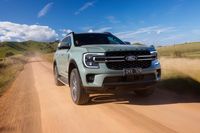
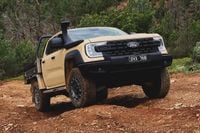
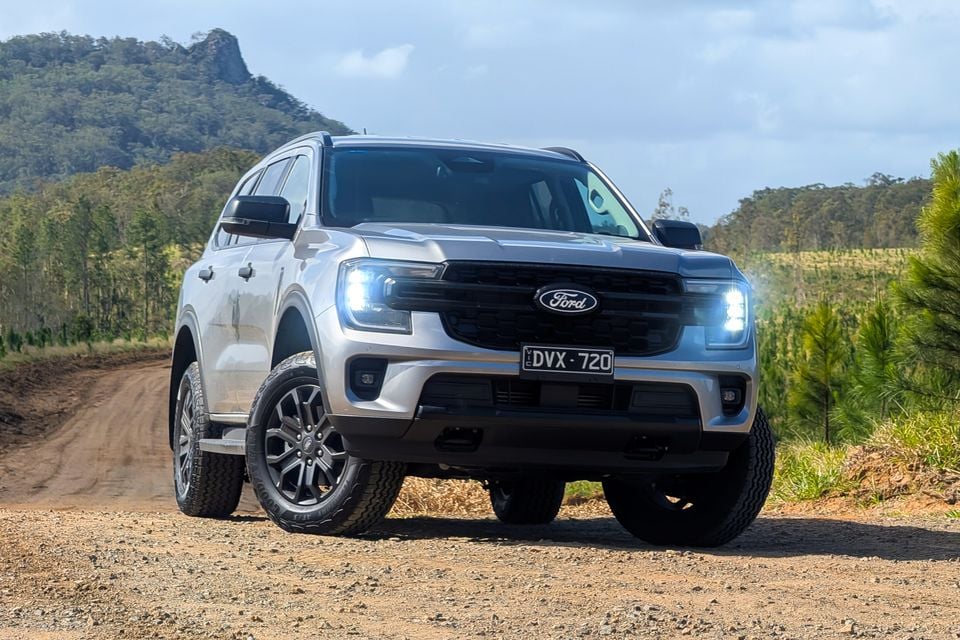
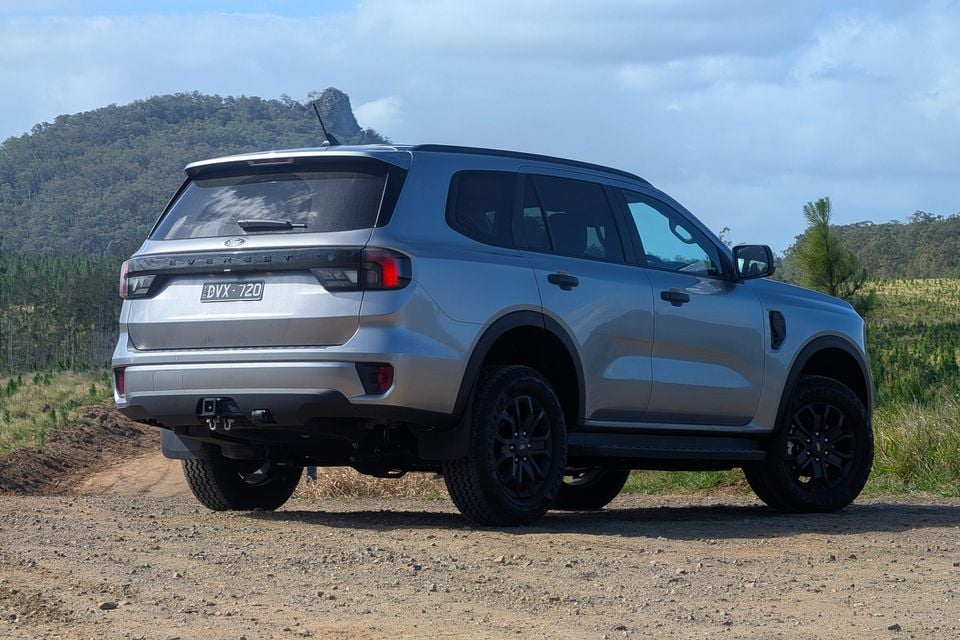
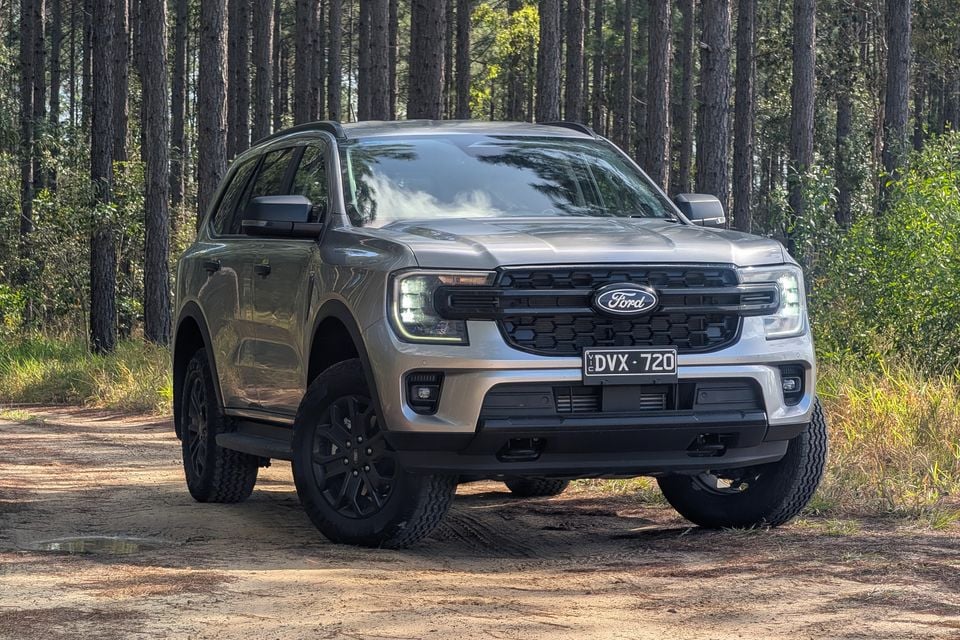
This five-seat Active is the most affordable Everest you can buy now, though it comes standard with four-wheel drive – rear-drive Everests are no longer available in Australia.
Ford has also dropped the Ambiente name for the base Everest, which was always a baffling choice of name for a rugged SUV, with the Active taking its place and also replacing the mid-range Trend.
The Blue Oval appears to have tried to soften the blow of axing the bi-turbo by slashing the cost of entry to the Everest range by $500, and also by adding some more standard equipment at the entry level.
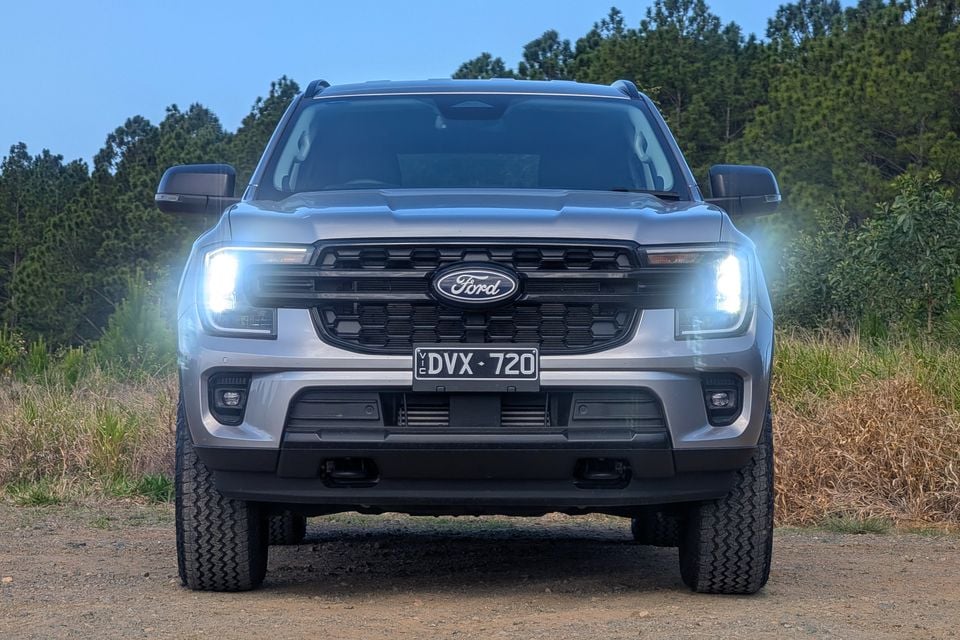
Our five-seat Active tester is the most affordable Everest, with a third row of seating adding an extra $1350 to the price. While its list price is $58,990 before on-road costs, Ford Australia is currently offering the base Active for $60,000 drive-away
| Model | Price before on-road costs |
|---|---|
| 2027 Ford Everest Active | $58,990 |
| 2027 Ford Everest Active V6 | $66,990 |
| 2027 Ford Everest Sport | $68,990 |
| 2027 Ford Everest Sport V6 | $76,990 |
| 2027 Ford Everest Tremor V6 | $79,990 |
| 2027 Ford Everest Platinum V6 | $83,490 |
The cheapest Prado is the five-seat GX at $73,200 before on-road costs and the cheapest Pajero is the five-seat GLS at $68,490 plus on-roads. The Isuzu MU-X has them all beat though, with the cheapest four-wheel drive variant – the LS-M 4x4 2.2L – priced at $55,900 plus on-roads.
To see how the Ford Everest lines up against the competition, check out our comparison tool
Even four years after its launch, the Ford Everest's interior still impresses with its integration of technology and its logical and intuitive layout.
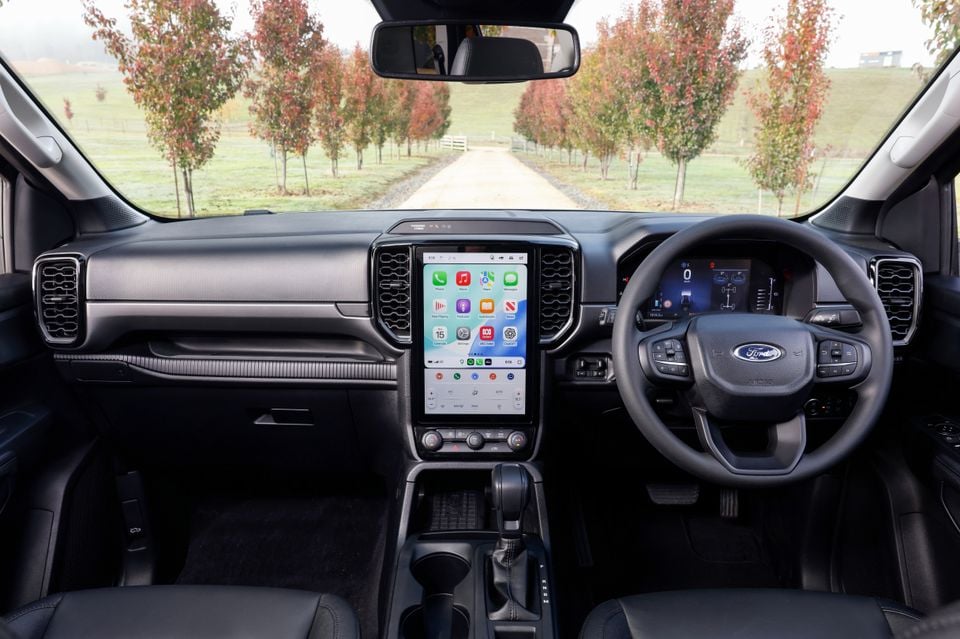
However, it's let down by a dreary ambience and ute-grade materials. Unsurprising, given this interior is lifted almost completely unchanged from the Ranger it's based on.
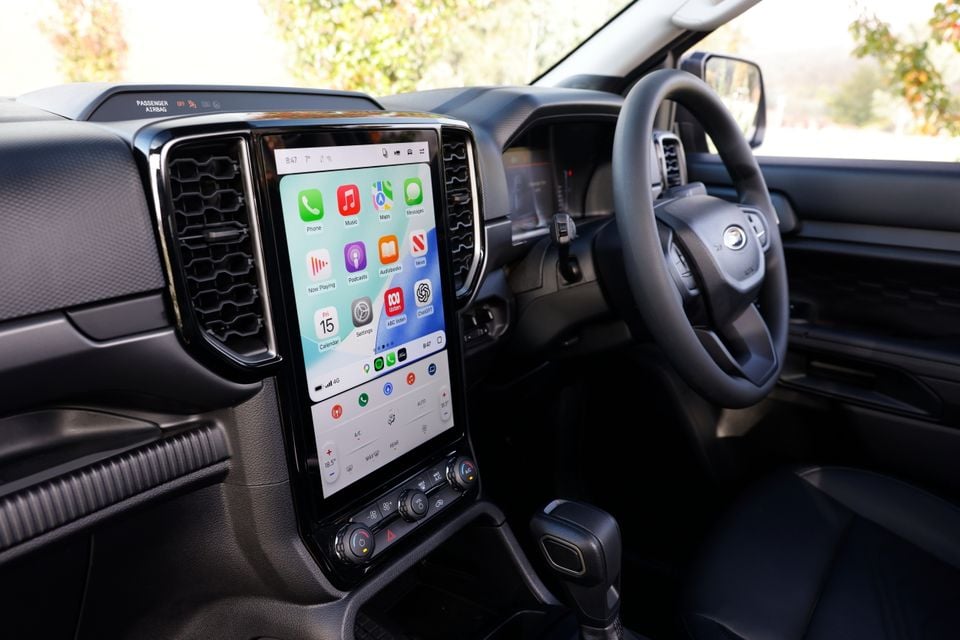
Let's start with the good. The infotainment system is holding up very well, particularly the neat and modern graphics. The larger 12-inch touchscreen has also been standardised across the Everest range.
There's a helpful, anchored header bar with shortcuts to things like the vehicle camera and settings menu. Climate controls are duplicated, so they appear both at the bottom of the screen and as physical controls for functions like fan speed and temperature adjustment. There's also a physical volume control in the middle of this array.
The digital instrument cluster is flanked by a pair of readouts for temperature and fuel level. Again, the graphics here are modern, clear and easy to read, and everything's easy to navigate.
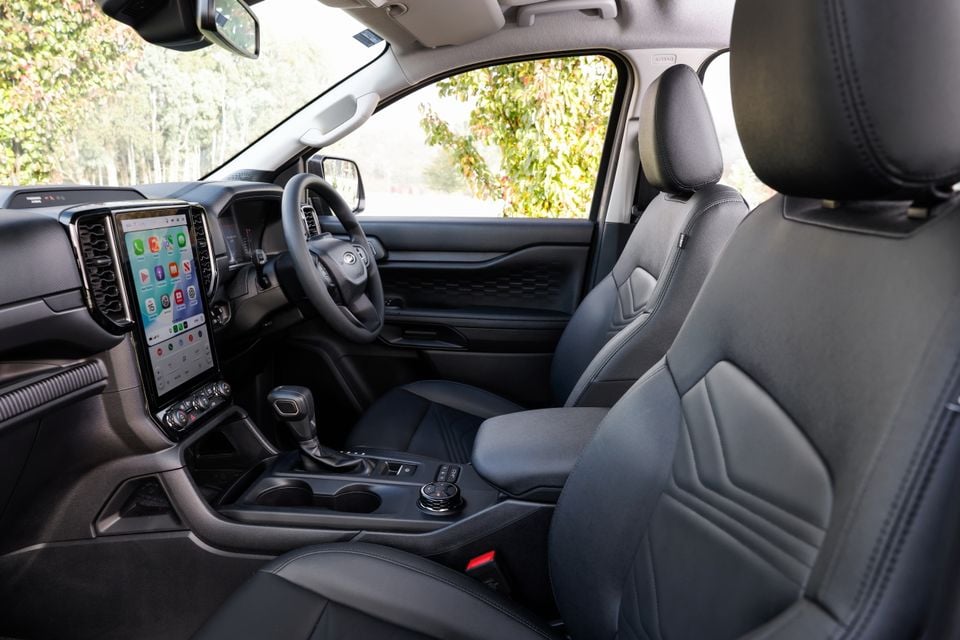
Ford's also designed an interior that just really falls to hand nicely and shows the Blue Oval listens to customers. There are pop-out cupholders on either end of the dashboard, and bottle holders in the doors that can fit 1.5L bottles.
There's a wireless phone charger on the centre console, which keeps your phone securely in place but is easy to access. There's also a handy storage nook on the centre console, which you can put your phone in or, yes, a container of McDonald's fries.
There are two glove boxes, a full complement of grab handles, a softly padded centre armrest under which there's a fairly spacious bin, and logically laid-out steering wheel switchgear.
From a usability point of view, the Ford Everest doesn't put a foot wrong. The only minor gripe we have is drive mode selection. The buttons for drive mode selection and automatic idle-stop/start are placed a little bit far back in the centre console, so unless you've memorised where they are, you may have to take your eye off the road to ensure you're pressing the right button.
That's the good. What about the bad?
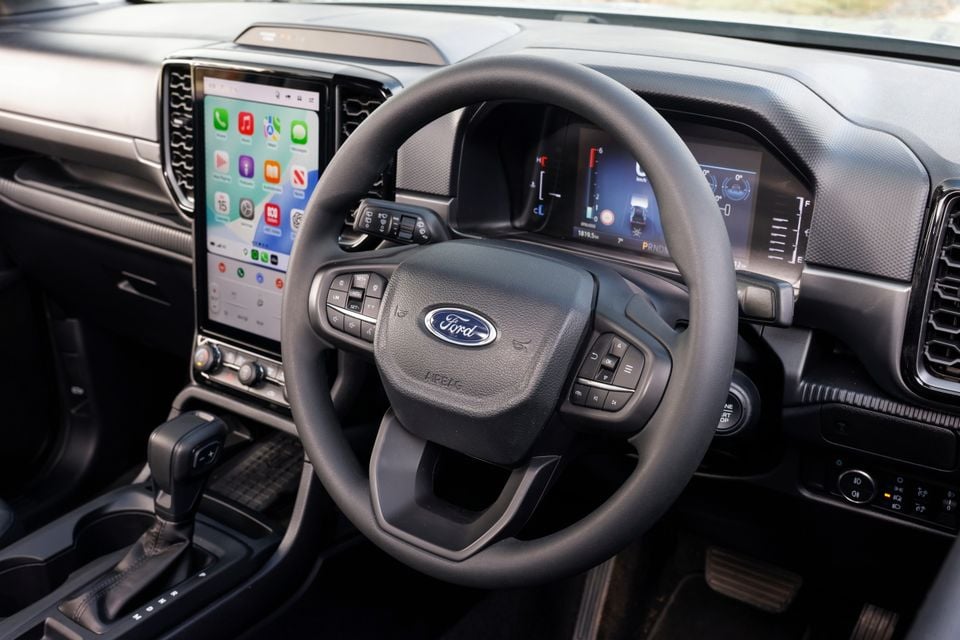
Well, the Everest's interior is in desperate need of nicer materials and fitment. We can almost forgive it in base Active grade, and indeed this segment of body-on-frame, predominantly ute-based SUVs isn't known for having the most decadent of interiors.
But would it have killed Ford to put in some nice contrast trim here or some more soft-touch surfaces? Everything other than the door armrests and the centre armrest is finished in hard plastic. And the base Active's got a urethane steering wheel that would have us rushing to Supercheap Auto to buy a cover.
The legs that connect the centre stack to the centre console are just as ill-fitting as they were at launch and make the interior look sloppily put together, even if we didn't hear any rattles or creaks during our time with the car.
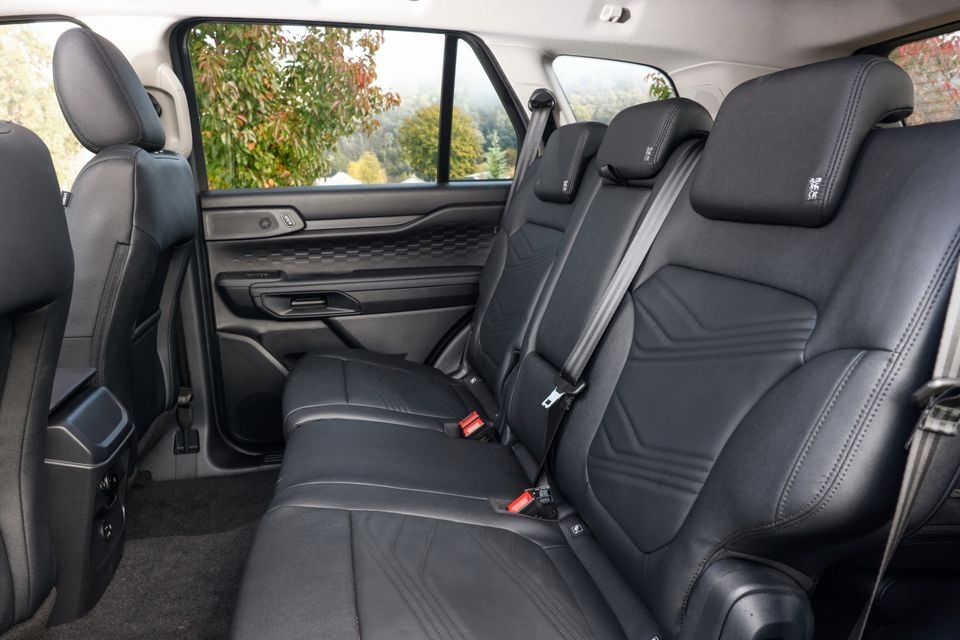
Run your finger around the cabin and you'll find sharp edges, including under the door lock controls on the doors.
If this was a ute, you'd probably be right to call us a bit fussy and pretentious for complaining about these things. But this is intended to be a family SUV, and Ford ought to make it feel more like one inside.
The seats are comfortable enough over long distances and are finished in leather. We'll leave you to decide whether this is more appealing and more upmarket than cloth trim.
Step into the back and there’s plenty of space in every direction, and you can sit three adults across the bench without too much complaint.
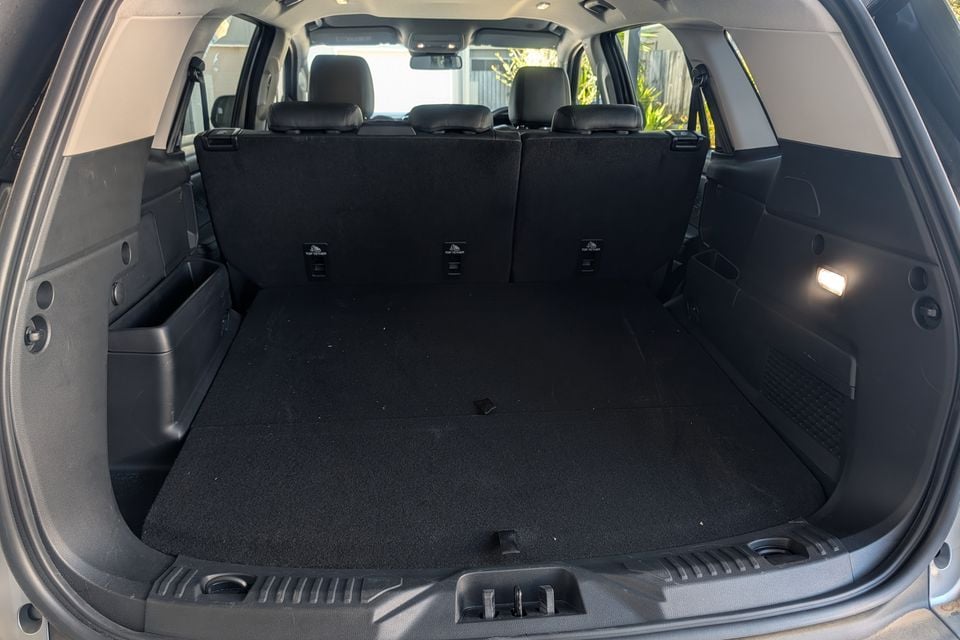
The driveline hump doesn't intrude much, and even at 180cm tall I can sit in the centre seat without my head brushing the roof – Ford hasn't done what some brands do and made the centre seat harder, flatter and higher than the others.
The headliner is scooped out on the sides to improve headroom, and likewise the front seatbacks are scooped out for kneeroom. Amenities include map pockets on the soft front seatbacks, USB-A and USB-C outlets, air vents, spacious bottle holders in the doors, and a fold-down centre armrest with cupholders
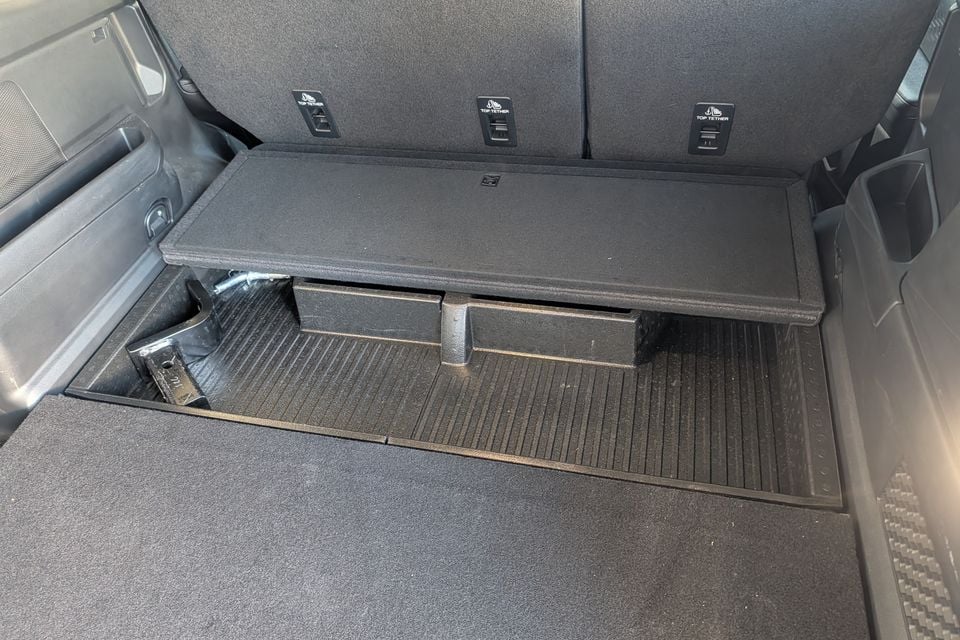
Our tester came without the optional third-row seating. However, if you pull the lever on the top of the outboard seats, they'll still tilt and slide to allow easy access to the boot.
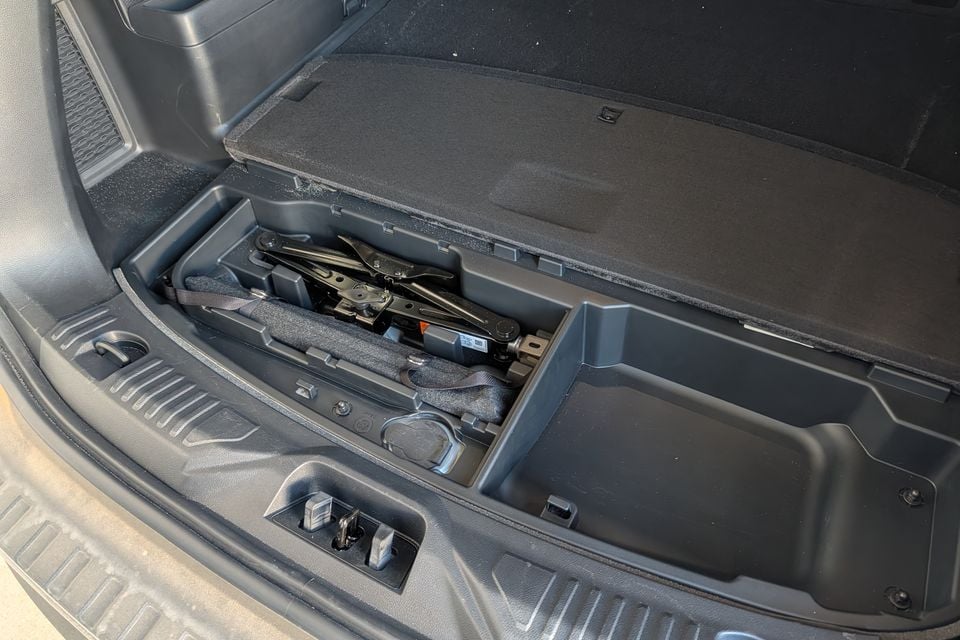
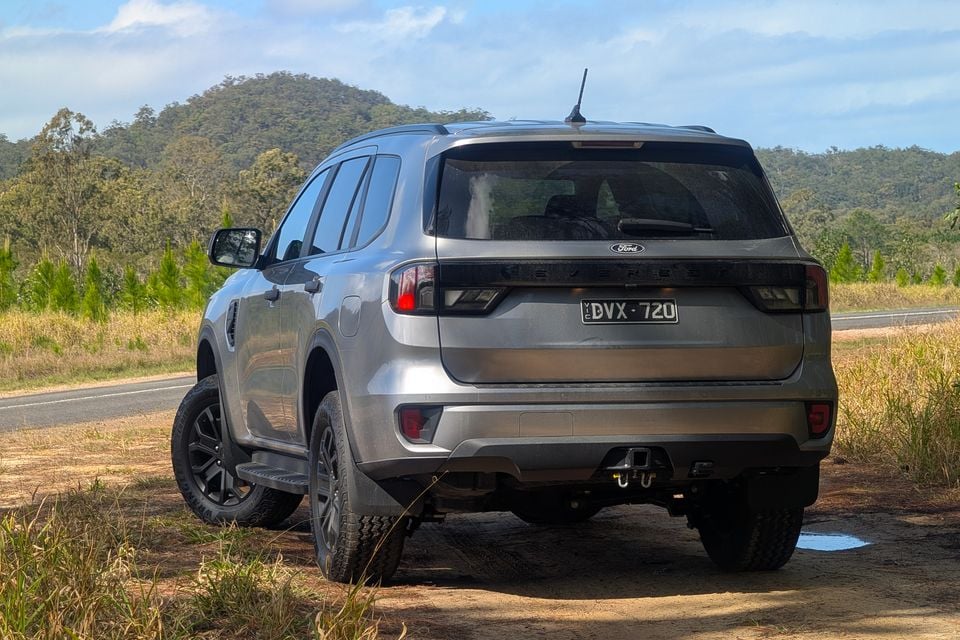
Instead of a third row of seats there's a flat boot floor under which sit a few shallow compartments for storage; the jack sits in one of these, with the spare wheel remaining under the vehicle. There's a 12V outlet back here, plus some open storage cubbies where the rearmost passengers in the three-row Active would rest their arms.
| Dimensions | Ford Everest |
|---|---|
| Length | 4914mm |
| Width | 1923mm – without mirrors 2015mm – mirrors folded 2207mm – mirrors extended |
| Height | 1876mm |
| Wheelbase | 2900mm |
| Cargo capacity | 259L – behind optional third row, measured to the roof 898L – third row folded, to the roof 1818L-1823L – second and third rows folded, measured to roof |
To see how the Ford Everest lines up against the competition, check out our comparison tool
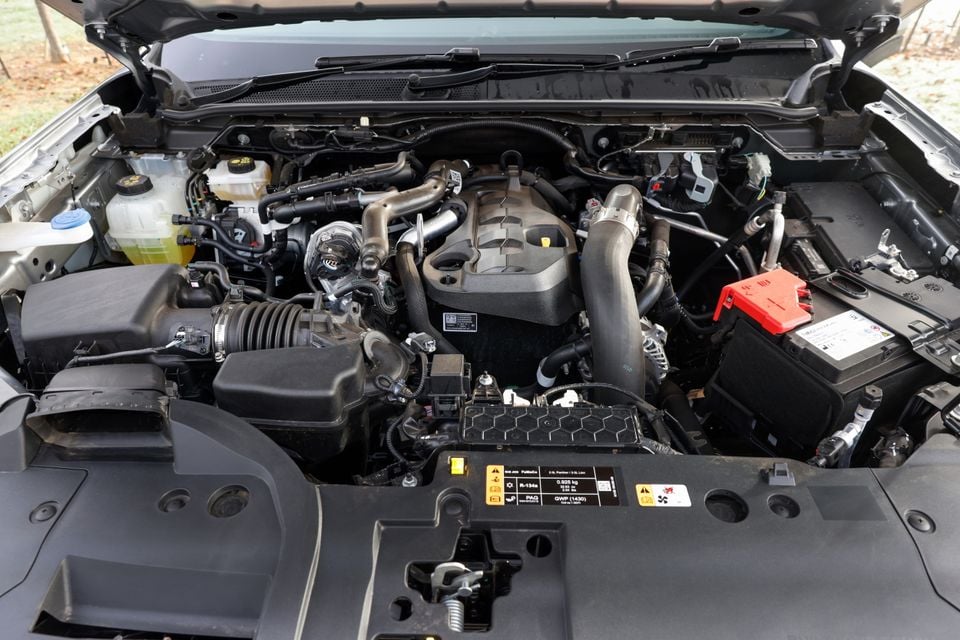
The new single-turbo diesel Everest produces 125kW of power and 405Nm of torque from its 2.0-litre four-cylinder engine – steep drops of 29kW and 95Nm from the engine it replaces. Despite this, fuel consumption is unchanged at 7.1L/100km.
| Specifications | Ford Everest Active 2.0L |
|---|---|
| Engine | 2.0L 4cyl turbo-diesel |
| Power | 125kW |
| Torque | 405Nm |
| Transmission | 10-speed auto |
| Drive type | Part-time 4WD |
| Fuel economy (claimed) | 7.1L/100km |
| Fuel economy (as tested) | 9.3L/100km – inner-city, suburban and highway loop8.5L/100km – 500km+ of driving |
| CO2 emissions (claimed) | 188g/km |
| Fuel tank | 80L |
| Kerb weight | 2245kg |
| Payload | 855kg |
| Braked towing capacity | 3500kg |
| Gross vehicle mass (GVM) | 3100kg |
| Gross combination mass (GCM) | 6250kg |
Even with plenty of highway driving each day, we couldn't match that claim. And given the turbo-diesel V6 has an 8.5L/100km claim but pumps out an extra 59kW and 195Nm, it makes the new engine option even more disappointing on paper.
To see how the Ford Everest lines up against the competition, check out our comparison tool
I'll be honest with you. When I first saw the lower power and torque outputs of the single-turbo Everest, I thought this was going to feel like a dog on the road.
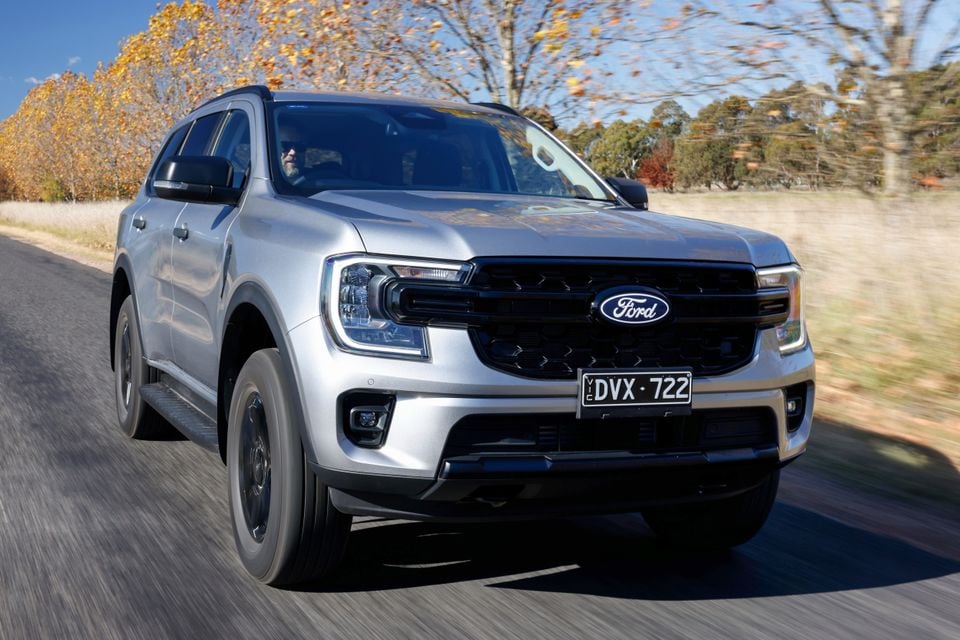
And if you're still planning on using an Everest to tow a 3.5-tonne trailer, the jury's still out on how the single-turbo performs relative to its more powerful bi-turbo predecessor.
However, when not hauling a load and without a full complement of passengers on board, the Everest is surprisingly sprightly.
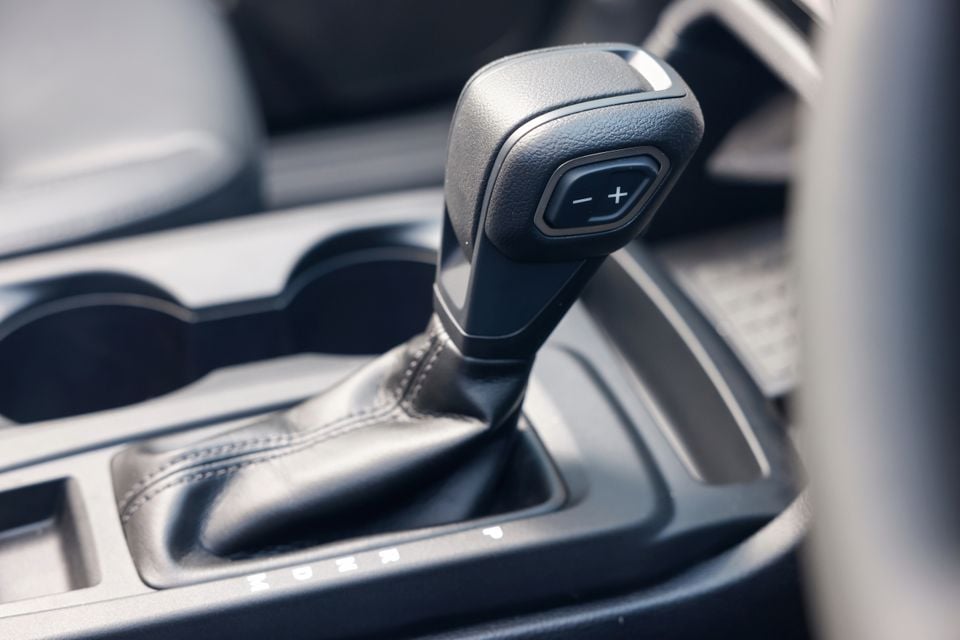
The 10-speed automatic transmission gets the most out of this engine, and we never felt the need to manually intervene, which is good because the only way to do so is by using the dumb buttons on the side of the gear shifter.
It really doesn't feel underdone, whether overtaking on the highway or just commuting around town. There's plenty of low-end torque available here.
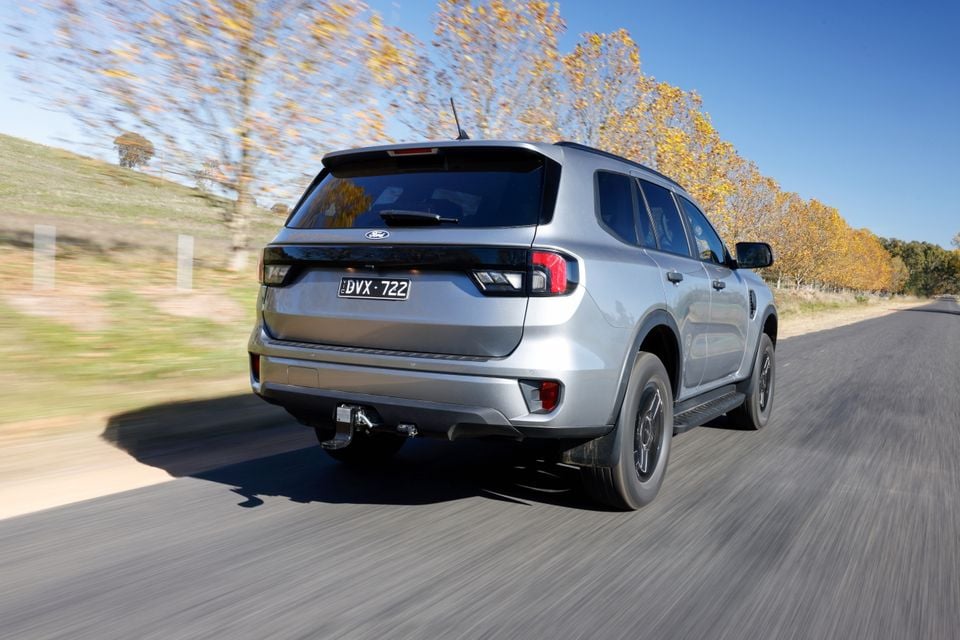
There's the persistent clatter you get with diesel engines, but Ford's done a decent job of isolating the cabin from this noise. Indeed, at highway speeds, wind noise is also kept largely at bay, tyre noise is fairly subdued even with the all-terrain rubber of our tester, and overall refinement is good for the segment.
Where the Everest impresses the most on the road is in ride and handling. This vehicle was developed in Australia, by Australians, on Australian roads, and it shows.
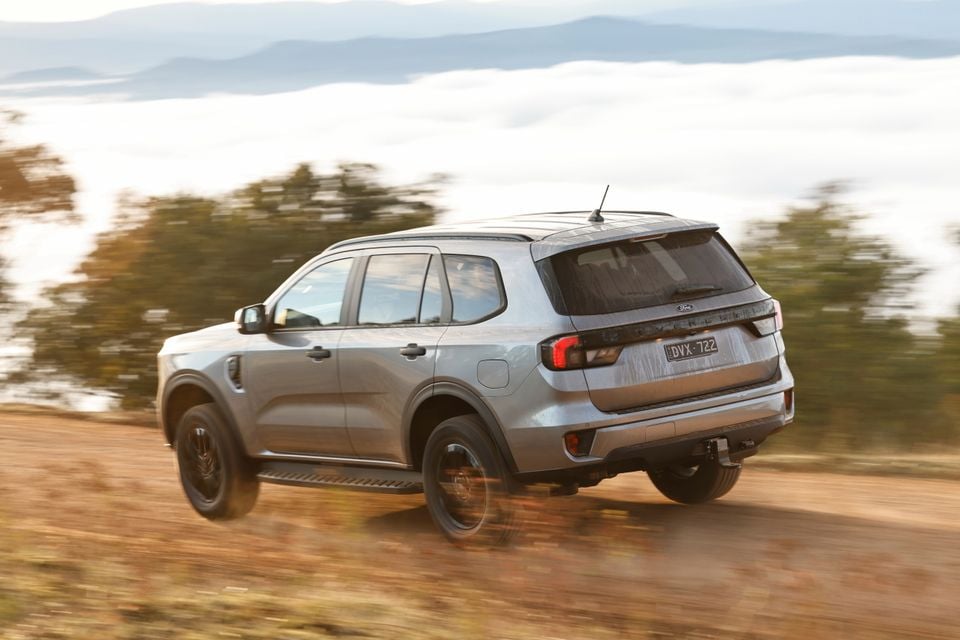
Yes, it's identifiably a body-on-frame SUV. However, there's very little in the way of the shudders you often get with vehicles on a ladder-frame chassis. It soaks up bumps with aplomb, and on unsealed rural roads it feels right at home.
That's what you get when a vehicle's developed and tested from the get-go on the types of roads that it'll end up roaming.
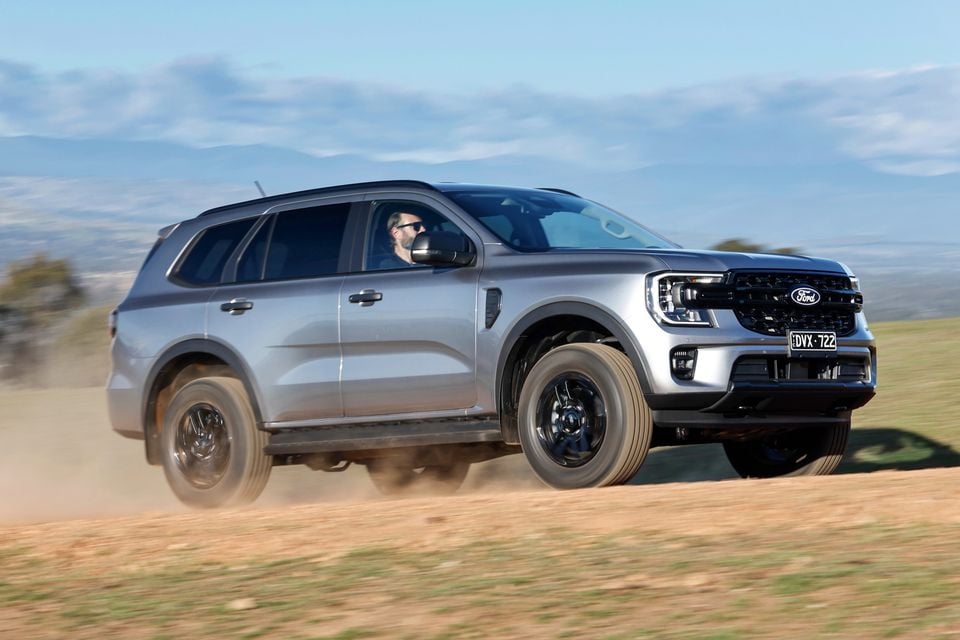
Ford's also nailed the steering. This comes as no surprise, and indeed there haven't been any steering changes of note to the Everest since its 2022 launch. However, the combination of good road feel and excellent weighting makes this Everest feel much more agile than its dimensions and weight would suggest.
Good steering isn't just a trait reserved for Australian-developed Fords, either. We've also sung the praises of the tiller in the Transit Custom. It seems to be a Blue Oval thing.
The Everest Active is the one member of the range that misses out on adaptive cruise control with stop/go and lane-centring.
You do get regular adaptive cruise control, and you do get lane-keep assist, which is well-calibrated. It never intervenes when it doesn't need to, but it intervenes smoothly and intelligently when it's needed.
If this is the car for you, we’ll compare offers from trusted dealers, handle the back and forth and manage your purchase from enquiry to delivery.
It's a shame there's no lane-centring in this grade, as this system works very well in other Everest variants. While the four-cylinder Everest's kept its 10-speed automatic transmission, it's been downgraded to a part-time four-wheel drive system.
The bi-turbo Everest had a 4A mode, which allowed four-wheel drive to be engaged while driving on the road. Ideal if you want the superior traction and peace of mind of four-wheel drive in, say, rainy weather.
Unfortunately, the Everest Active's four-wheel drive system, like the rival Isuzu MU-X's, has only 4H and 4L modes, which are designed only for off-road driving.
We only took the Active across a couple of trails, which it handled easily. You can see more detailed off-road observations in our recent off-road SUV mega test.
| Off-road dimensions | Ford Everest |
|---|---|
| Track front and rear | 1620mm |
| Ground clearance | 229mm |
| Approach angle | 30.4 degrees |
| Departure angle | 25.3 degrees |
| Ramp breakover angle | 22.2 degrees |
| Wading depth | 800mm |
To see how the Ford Everest lines up against the competition, check out our comparison tool
The Active sits at the bottom of the four trim levels on offer, replacing last year's Ambiente and Trend – though it lacks the power tailgate, 400W inverter, and zone lighting of the latter.
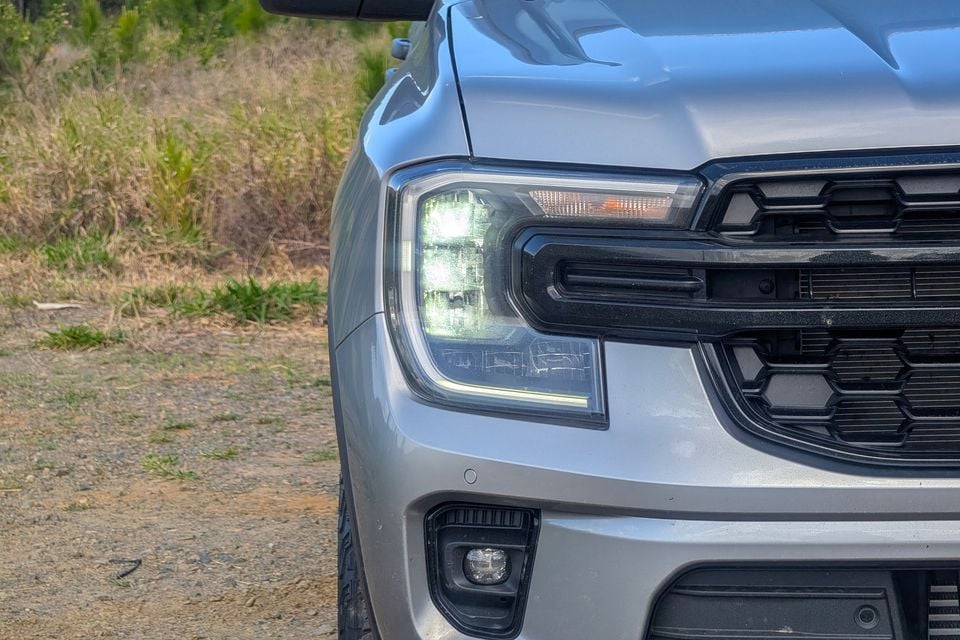
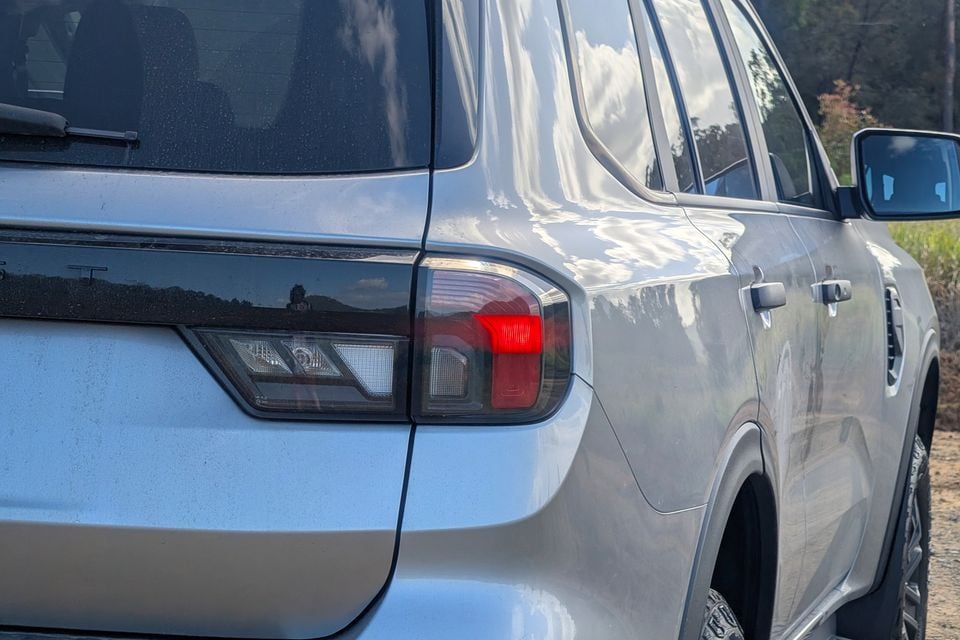
2027 Ford Everest Active standard equipment highlights:
Everest Sport adds:
Everest Tremor adds – over Active:
Everest Platinum adds – over Sport:
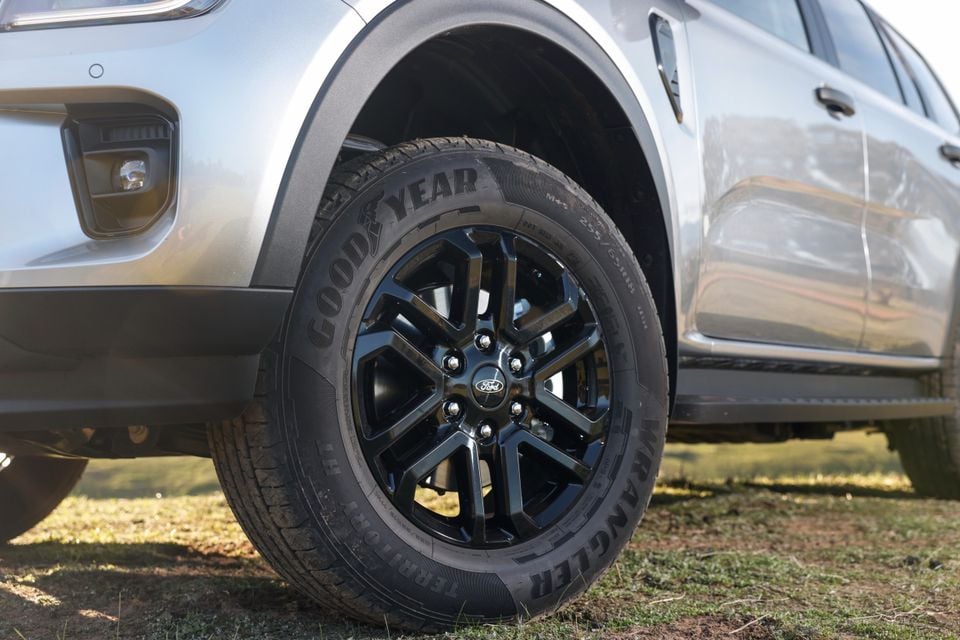
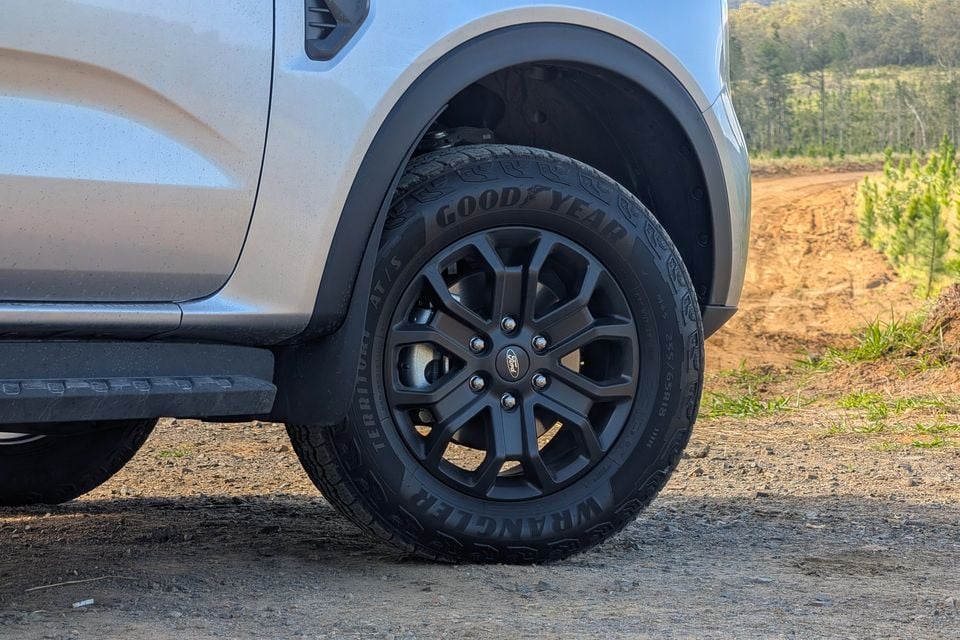
Besides a third row of seating for an additional $1350, the Active can also be had with all-terrain tyres for its 18-inch alloy wheels ($750) and metallic paint ($750).
Towing Package ($2000) adds:
The Ford Everest has a five-star rating from safety authority ANCAP, based on testing conducted in 2022.
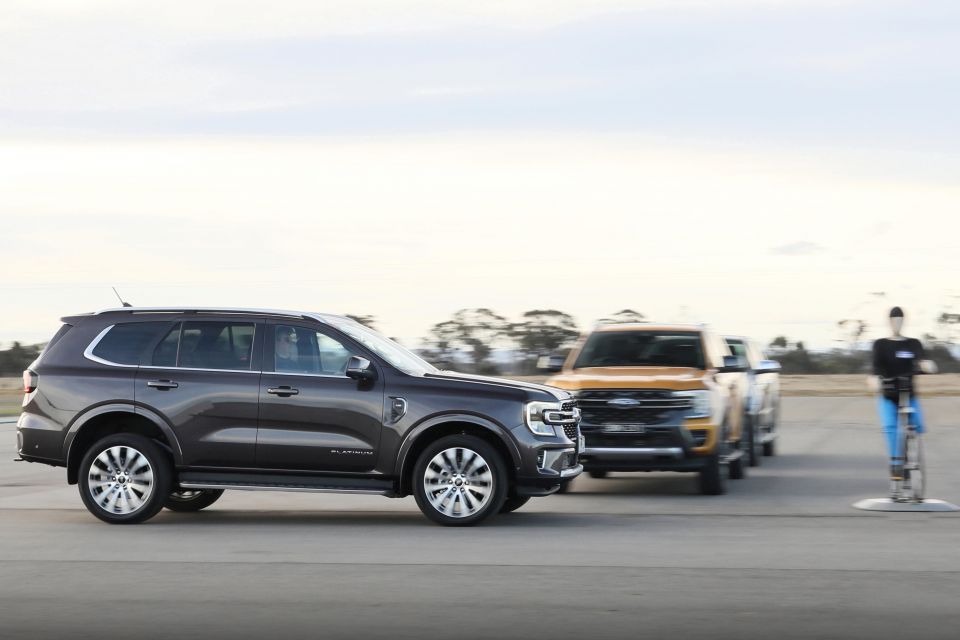
| Category | Ford Everest |
|---|---|
| Adult occupant protection | 86 per cent |
| Child occupant protection | 93 per cent |
| Vulnerable road user protection | 74 per cent |
| Safety assist | 86 per cent |
Standard safety equipment includes:
All bar the Active also feature:
All Everest variants cost the same to run, and work out considerably cheaper than the Prado, for which you pay slightly less per service ($395) but have to service the vehicle more frequently (six months/10,000km).
| Servicing and Warranty | Ford Everest |
|---|---|
| Warranty | 5 years, unlimited kilometres |
| Roadside assistance | 12 months, then service-activated up to 7 years |
| Service intervals | 12 months or 15,000km |
| Capped-price servicing | 5 years, 75,000km |
| Total capped-price service cost | $399 each or $1596 for a five-year pre-paid service plan |
To see how the Ford Everest lines up against the competition, check out our comparison tool
No, the new single-turbo four-cylinder diesel in the Ford Everest isn't as punchy as the engine it replaces. There's no getting around that. But it's also much more pleasant in day-to-day driving than its meagre outputs would suggest.
The available turbo-diesel V6 is a bloody good thing, but it commands a steep price premium. However, if you're likely to be regularly carrying a full complement of passengers or towing, it's the logical option.
Nevertheless, we were pleasantly surprised by the performance of the single-turbo diesel, but we remain disappointed in the Everest's interior. Not the packaging, technology or basic layout, mind you, but rather the ambience and the material choices.
The Everest is the closest thing to a modern-day Falcon wagon or Territory. But frankly, slick technology aside, we'd argue the interior isn’t as nice as those departed Aussie Fords.
What you get with the Everest, though, is a truly Australian-engineered SUV, and that shows in the way the vehicle drives.
With a lower base price than the Prado and Pajero, this most affordable Everest deserves to be on your shortlist
Interested in buying a Ford Everest? Let CarExpert find you the best deal here
Click the images for the full gallery
If this is the car for you, we’ll compare offers from trusted dealers, handle the back and forth and manage your purchase from enquiry to delivery.
Quickly see how this car stacks up against its competition. Select any benchmark to see more details.
Ford Everest
Ford Everest Sales rolling 12-months#
*Based on VFACTS and EVC data
Looking for complete Ford Everest price history?
Our Ford Everest Pricing Page shows exactly how prices have changed over time.
2027
$64,057
2026
$64,057
2026
$64,582
2026
$72,772
2027
$74,557
2026
$74,557
2026
$74,557
2027
$86,107
2026
$86,107
2026
$86,107
2027
$89,180
2026
$89,705
William Stopford is an automotive journalist with a passion for mainstream cars, automotive history and overseas auto markets.
Add CarExpert as a Preferred Source on Google so your search results prioritise writing by actual experts, not AI.
William Stopford
4 Seconds Ago

Tace Clifford
17 Hours Ago

Ben Zachariah
3 Days Ago

James Wong
4 Days Ago

Damion Smy
4 Days Ago

Max Davies
5 Days Ago
Add CarExpert as a Preferred Source on Google so your search results prioritise writing by actual experts, not AI.
# Based on VFACTS and EVC data
† Displayed prices are based on the drive-away price of the vehicle, which includes delivery charges, registration fees, number plates, and applicable road taxes, based on a Sydney location. However, prices may vary between states and territories, and additional costs such as compulsory third party (CTP) insurance, dealer delivery fees, and optional extras are not included. These prices are subject to change without notice and may not reflect current market pricing or dealer offers.
 Automotive Vehicle Spec Data & 4K images Powered by JATO Dynamics Ltd