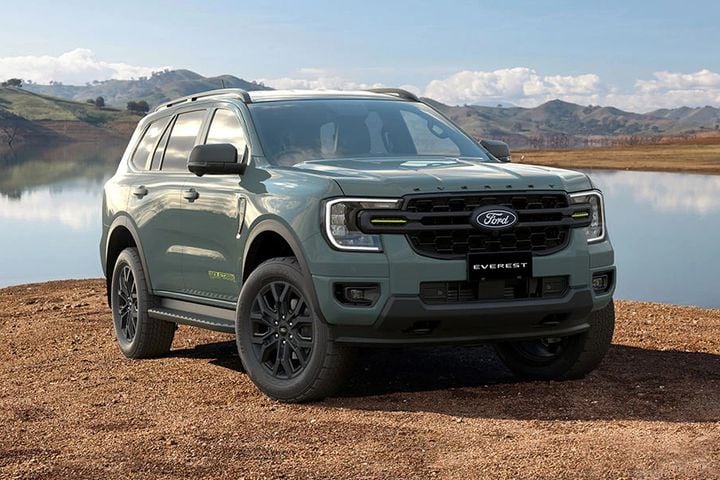
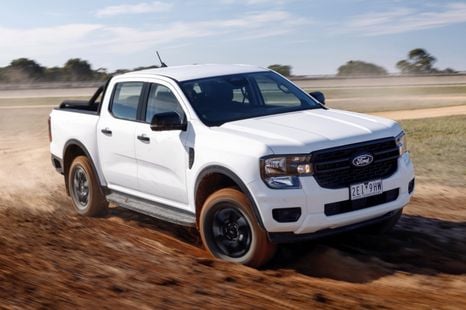
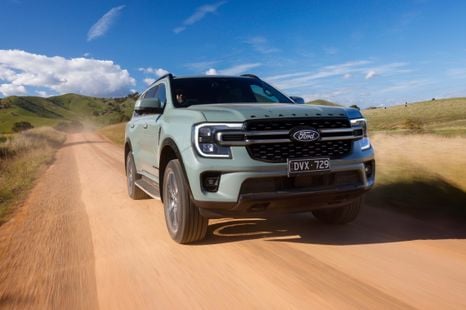
A camouflaged Ford Ranger is hiding much more than its final styling. During a development drive with Ford for the new Ranger, Raptor, and Everest, we took a closer look at the equipment engineers use to turn a prototype into a production vehicle. This behind-the-scenes visit was filmed ahead of the models’ arrival, rather than in a finished customer car.
The disguise starts with covers over the headlights. These conceal their shape, but the lights and indicators still need to work because the vehicle must remain road legal. Engineers have to watch for covers moving in the wind and obstructing the lamps. Padding beneath the exterior camouflage also changes the apparent body contours, hiding details such as flared wheel arches.
Those yellow cables running through the vehicle aren’t decorative. They’re thermocouples, measuring temperatures at components including the engine and an auxiliary battery. Fleet stickers help Ford identify individual prototypes and their engines, even if the markings mean little to anyone outside the development team.
Inside, covers conceal the dashboard and large central screen whenever the vehicle is in public. Some trim is unfinished, allowing testing to proceed before the final cabin materials are ready. That makes it important not to judge production fit and finish from a development vehicle.
Ford development team member and off-road expert Tim Postgate explains the emergency stop switch. It cuts power to the engine control unit and other modules if something goes wrong with the prototype systems, while retaining steering and brakes. It also captures data for later investigation.
A separate logging button records an issue with a configurable window of data: in the setup demonstrated, 30 seconds before activation and a minute afterwards. The information is stored and uploaded when reception becomes available.
Engineers can also record spoken observations through the infotainment screen, a development feature not intended for customer cars. These notes can reach the relevant team even when its members aren’t on the trip. Together, the recordings and sensor data give engineers something more useful than a driver’s recollection when diagnosing a problem.