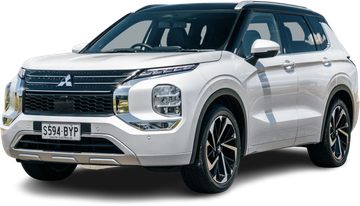
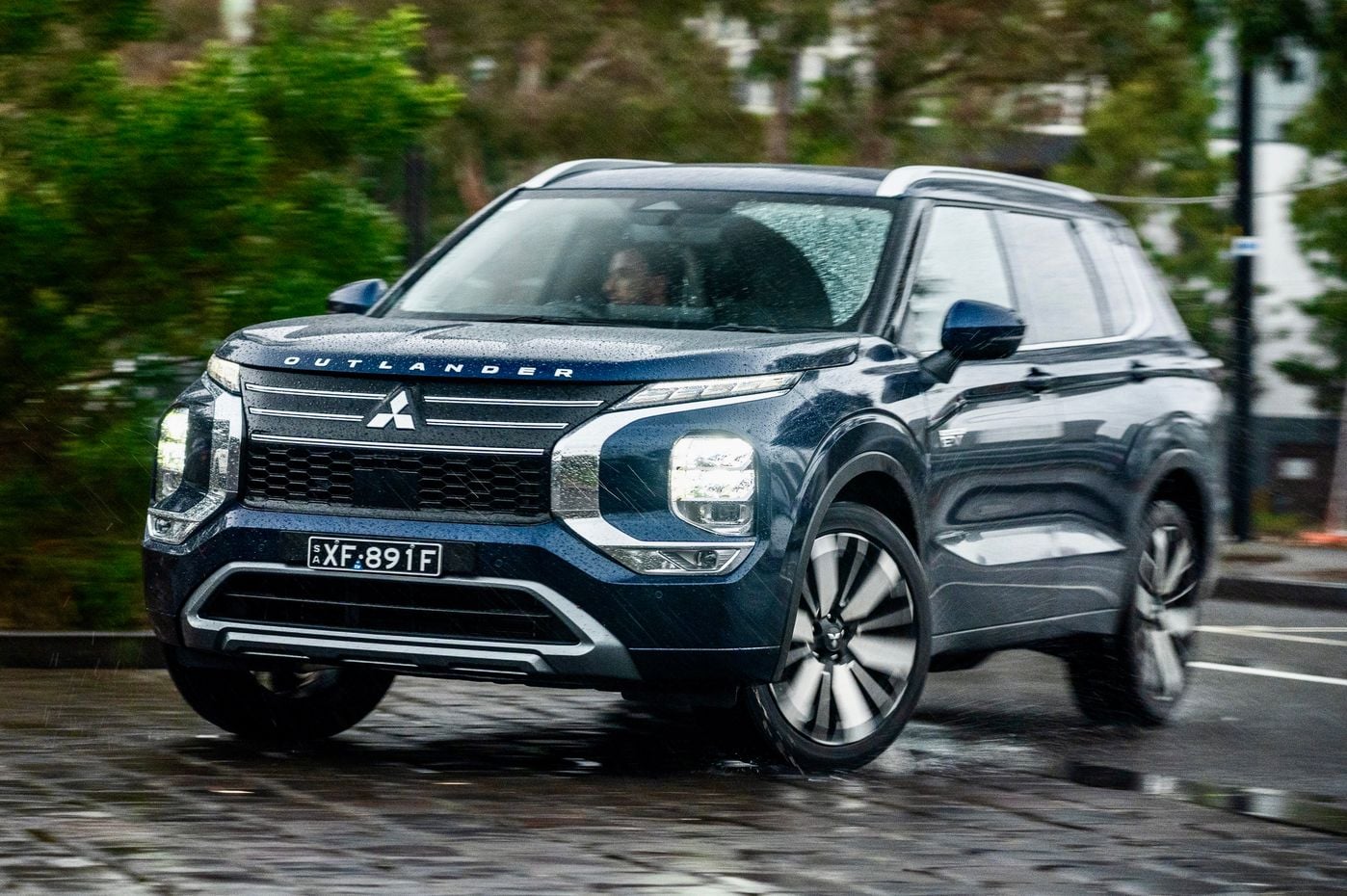
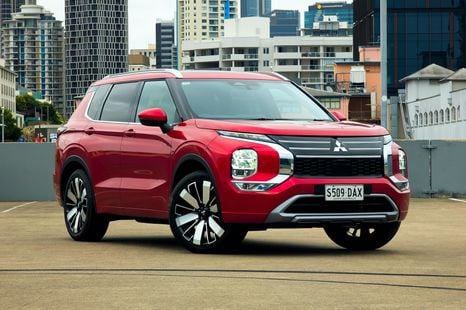
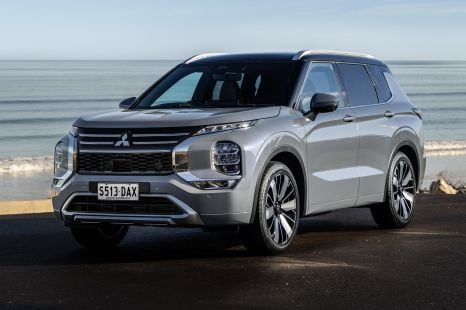
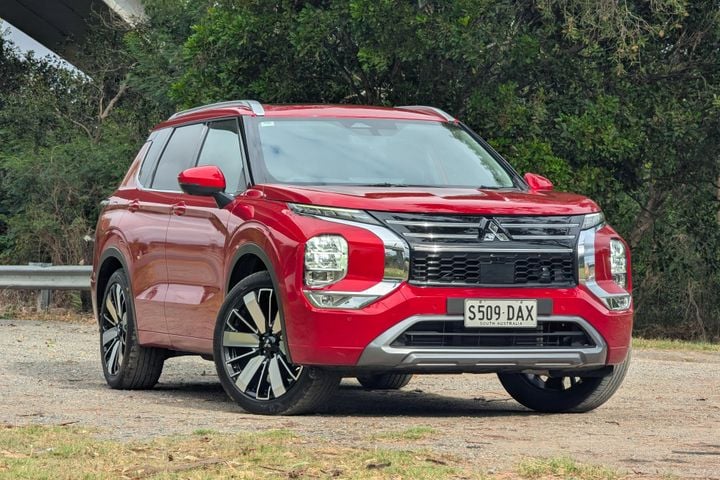
The Mitsubishi Outlander PHEV gives this family SUV the extra punch we wanted from the petrol version. Our 2023-model Exceed was priced just below $66,000 when filmed, with the plug-in hybrid range starting below $55,000 and the Exceed Tourer sitting above our test car.
Its 2.4-litre petrol engine works with electric motors on both axles, delivering combined outputs of 185kW of power and 450Nm of torque. A 20kWh battery provides around 80km of electric driving range, depending on the test cycle. In ordinary driving, the system feels smooth and allows substantial accelerator input before the engine joins in.
There is useful flexibility beyond commuting. AC charging supports up to 3.7kW, while a separate CHAdeMO connection provides DC charging and bidirectional capability. Supplying a home or exporting power requires compatible external equipment; it is not something a conventional home socket enables. Inside, 1500W outlets can power suitable appliances.
After an approximately 800km trip from Adelaide to Melbourne, including a detour, we recorded 6.7 litres per 100km. That is a more useful long-distance reference than assuming the very low official plug-in hybrid fuel figure applies after the battery's electric range has been used.
The extra performance is immediately apparent. We measured 0-100km/h in 7.9 seconds, beating Mitsubishi's 8.2-second claim, and found the Outlander surprisingly agile through corners. However, 80-120km/h took 7.3 seconds, revealing how strongly acceleration tapers at higher speeds. Overtaking needs planning, particularly when considering its 1600kg braked towing rating.
The cabin feels suitably premium, with a 9.0-inch touchscreen, wireless Apple CarPlay, wired Android Auto, and a clear 12.3-inch instrument display. Second-row accommodation is good, but the third row is strictly an occasional-use space for children. Folding it away leaves just under 500 litres of luggage space.
There are other frustrations. The regenerative driving mode does not bring the car fully to rest, lane assistance lacks continuous steering support, and tyre noise becomes intrusive on coarse-chip roads. The bonnet also visibly vibrates at highway speeds.
Most importantly, body control over high-speed undulations could be tighter. Despite that reservation, we are impressed by the blend of electric running, stronger low-speed performance, and family practicality. It substantially improves the Outlander's appeal, provided those third-row and highway limitations suit your use.