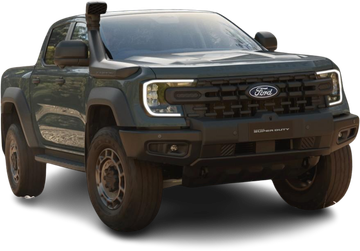
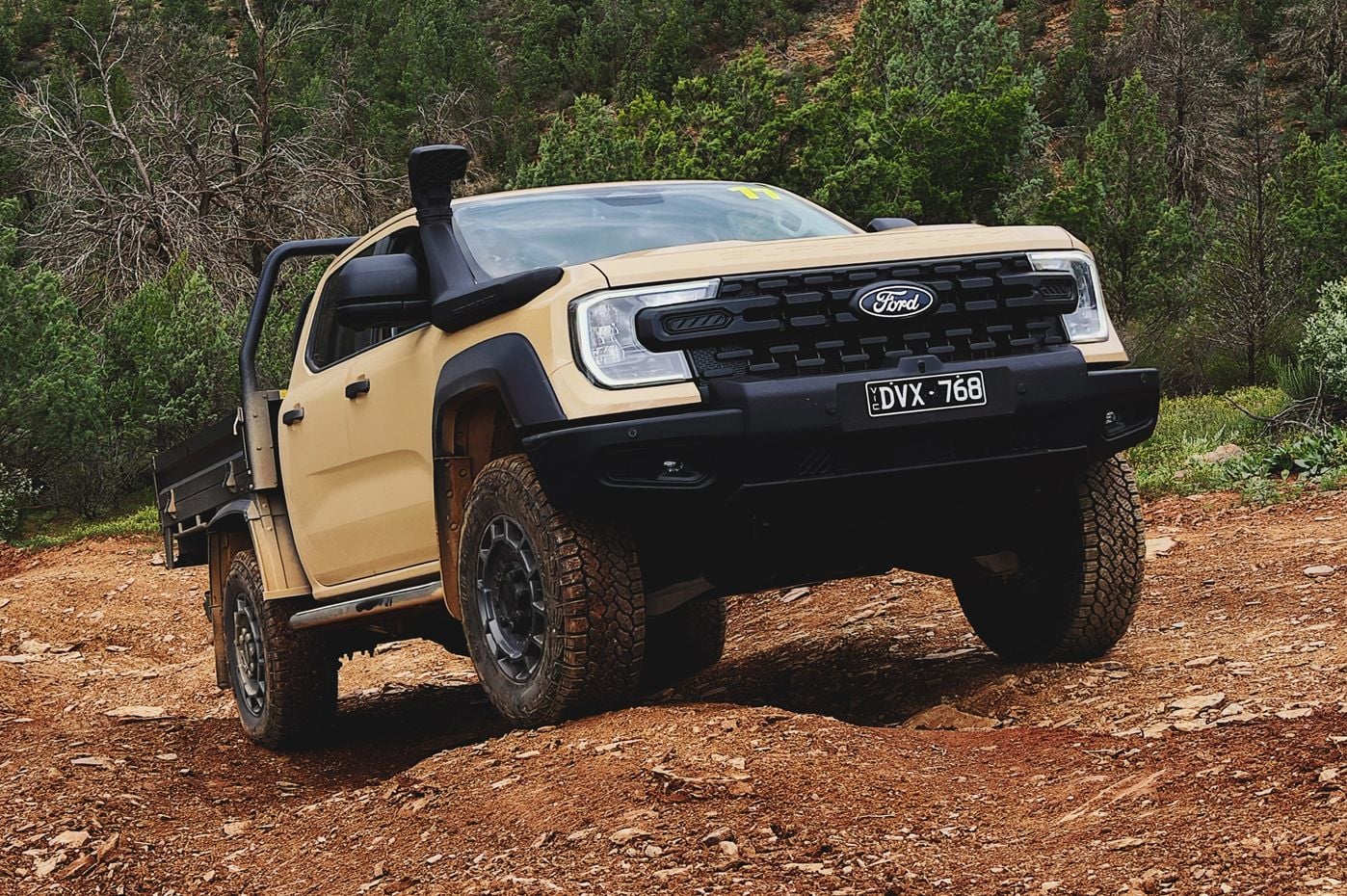
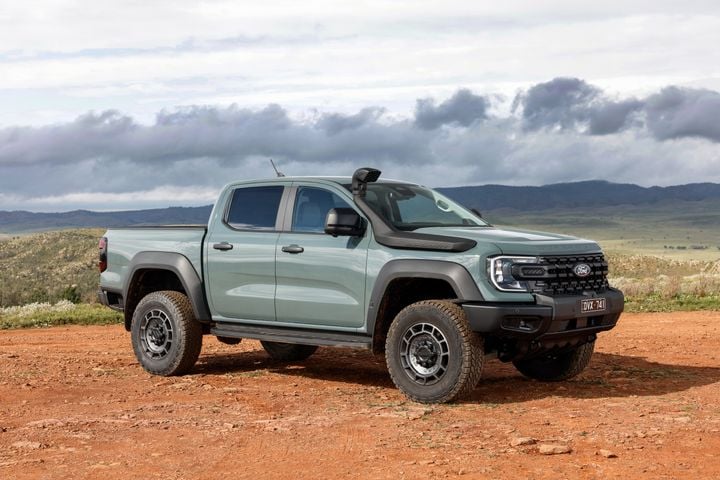
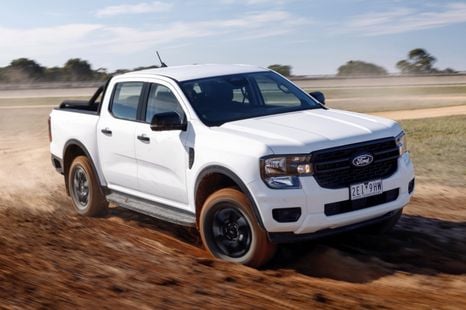
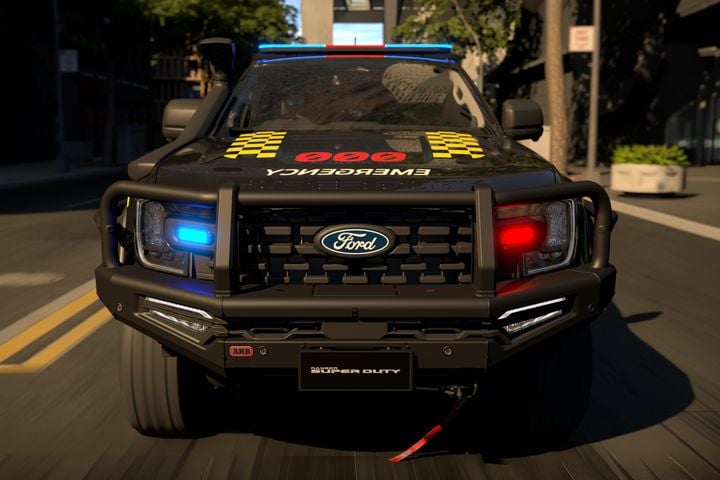
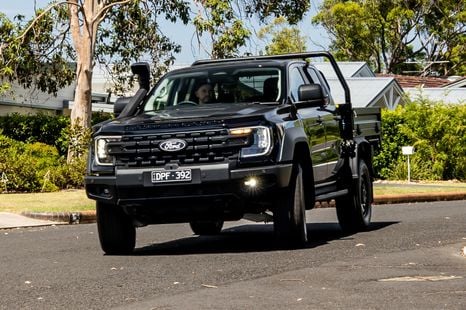
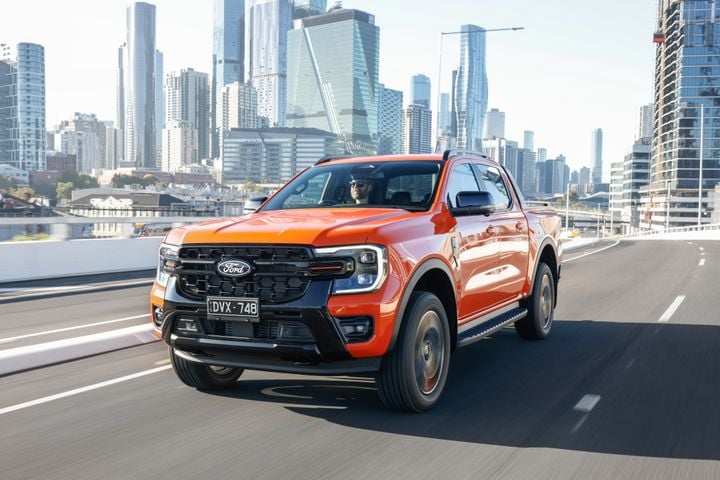
The Ford Ranger Super Duty is much more than a tougher-looking Ranger. At Ford’s Australian design centre, Paul Maric takes us around the prototype in our April 2025 first look, ahead of an Australian arrival planned for 2026.
The headline is a 4500kg maximum towing capacity using a 70mm towball. Ford also quotes a 4500kg gross vehicle mass and an 8000kg gross combination mass. Kerb weight wasn’t disclosed, so we can’t yet say what payload remains when towing a heavy trailer.
Underneath, the changes are substantial. We inspect chunky control arms, extensive underbody protection, rated front recovery points, and a significantly larger rear differential. The chassis has been heavily reworked for the extra loads rather than simply carrying over the ordinary Ranger’s hardware.
Front and rear differential locks, a wider track, light-truck all-terrain tyres, and eight-stud wheels reinforce that heavier-duty brief. The alloy wheels shown weren’t intended for the initial launch; steel wheels would come first, with the alloys following later.
There’s a 130-litre fuel tank and a full-size spare underneath. A snorkel developed with Safari and a frame-mounted steel front bumper suit the intended forestry, emergency-service, and fleet roles. Ford is also working with approved upfitters on equipment and tray options.
One particularly useful feature is the onboard weighing system. Through the SYNC screen, it provides information about payload and towball loading, helping drivers assess how weight is distributed rather than relying solely on separate scales.
Ford’s chassis-cab safety approach is welcome, too. Rear-mounted sensors retain blind-spot monitoring and rear cross-traffic alert, while a surround-view camera is standard across the range described at the reveal.
The cabin is familiar Ranger territory, with vinyl flooring, mounting areas for work equipment, and provision for manually initiating a diesel particulate filter burn. We don’t sit inside this display prototype, so this is an inspection rather than a comfort assessment.
Power comes from a 3.0-litre V6 diesel with upgraded cooling. We’re enthusiastic about the capability on paper, but reliability remains an important question under heavier-duty use. With payload, kerb weight, and pricing still unknown at this first look, the hardware is compelling without yet telling the whole ownership story.