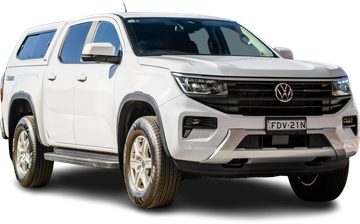
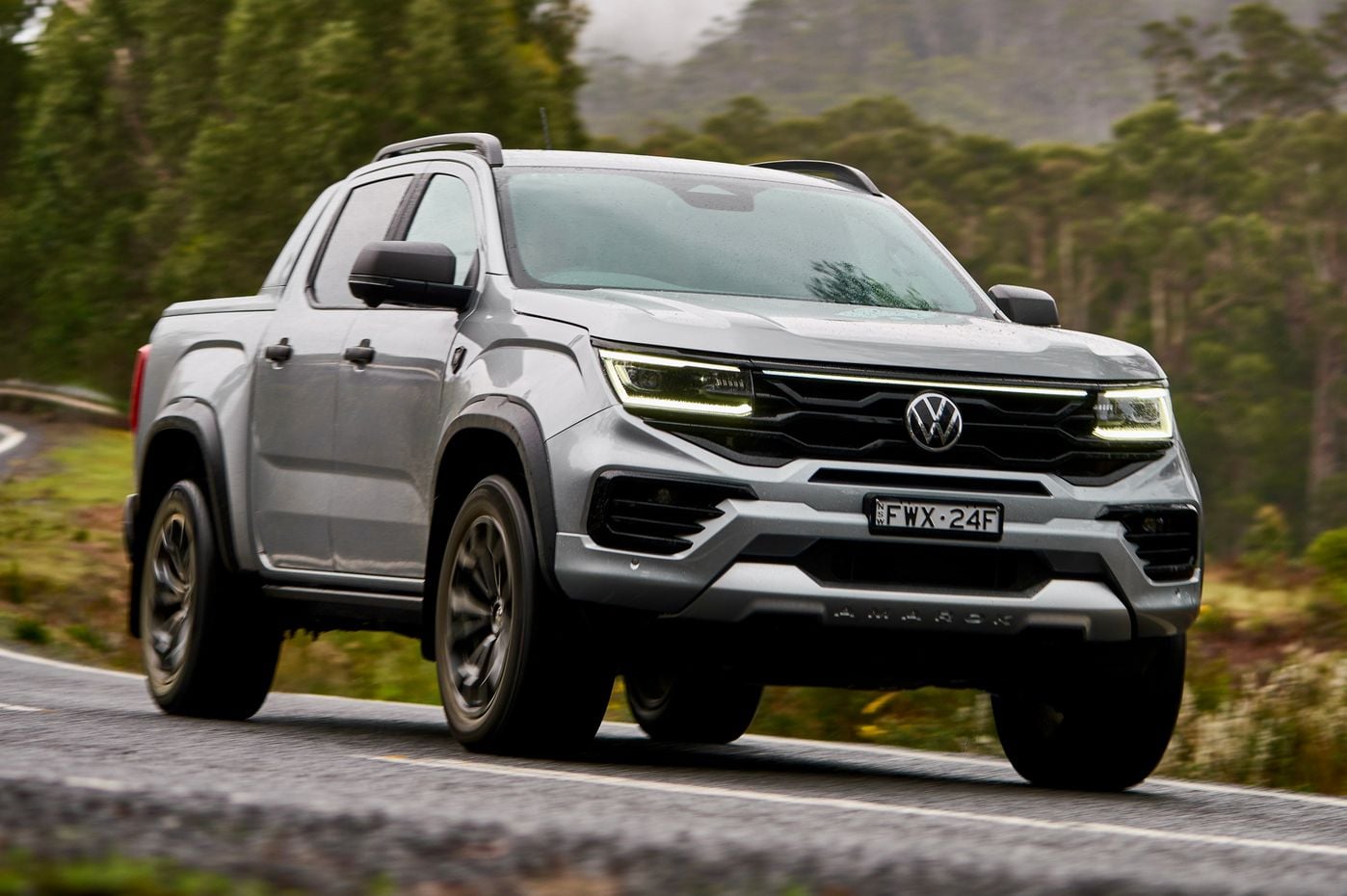
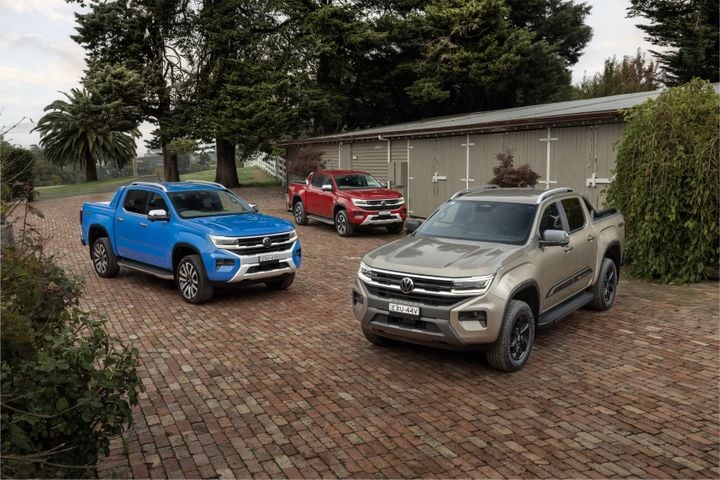
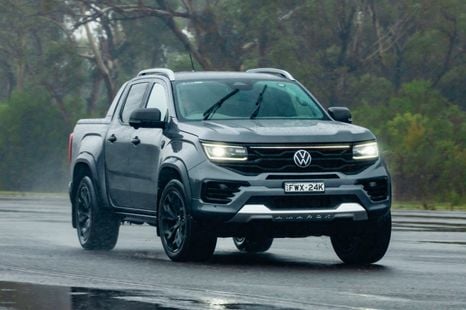
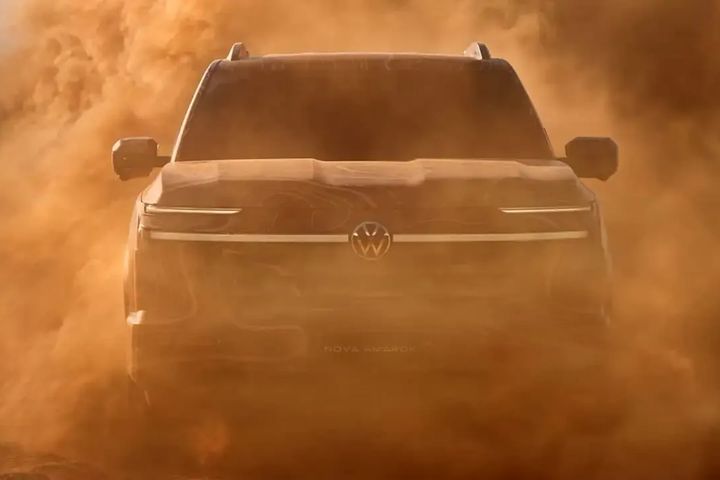
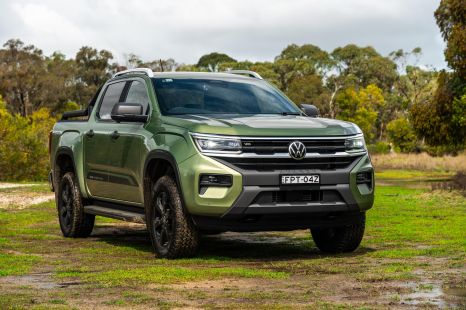
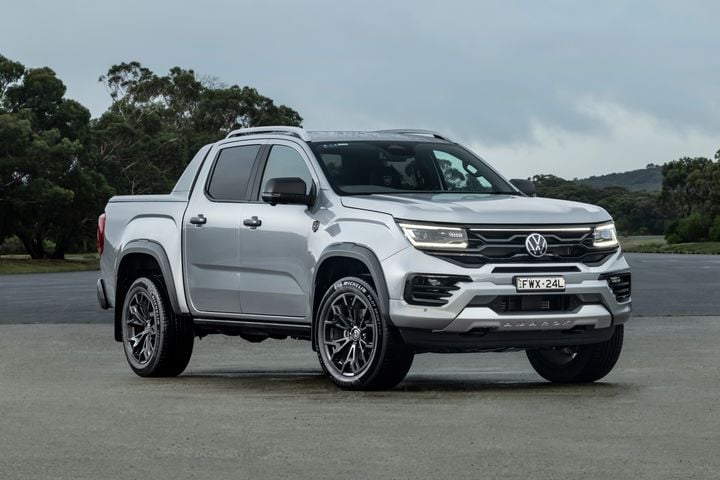
The Volkswagen Amarok shares its foundations with the Ford Ranger, but our first drive suggests Volkswagen has done more than change the badges. In South Africa, the new ute combines its own styling and cabin treatment with steering and suspension tuning that give it a distinct character.
This is our launch assessment of the 2023 model, filmed before Australian pricing and fuel consumption figures were announced. The vehicles are pre-production examples, so we’re reserving a final judgement on build quality and local ride comfort until we drive Australian cars.
We start inside the range-topping Aventura, where stitched dashboard trim, a different steering wheel, and Volkswagen-specific displays help lift the atmosphere. Physical steering wheel buttons are welcome, while the large touchscreen includes wireless Apple CarPlay and Android Auto. It can be slow to respond, though, and changing drive modes through the screen is more distracting than using a dedicated control.
Comfortable front seats are a highlight. Rear knee room is adequate rather than generous, and rear passengers get air vents but no USB ports in the car shown. The tray accommodates a Euro pallet, while braked towing capacity is 3.5 tonnes.
For the road drive, we switch to the Panamericana with a 3.0-litre turbo-diesel V6 producing 184kW of power and 600Nm of torque, paired with a 10-speed automatic. It feels muscular and responsive, and its automatic four-wheel drive mode helps it put that performance down confidently through corners.
Our acceleration run delivers 0-100km/h in under nine seconds, with 80-120km/h taking around six seconds. The Panamericana’s 20-inch wheels and suspension setup also feel more relaxed than the Aventura on 21s, which can be busy even on smooth roads.
Off-road, we use a four-cylinder Style on 18-inch wheels and all-terrain tyres. Its rear differential lock, adjustable hill descent control, and straightforward controls make the course easy to tackle. The terrain isn’t particularly difficult, however, so this isn’t a definitive test of its limits.
The early signs are encouraging: the Amarok feels like its own vehicle, not simply a rebadged Ranger. Australian testing still needs to establish whether that polished first impression survives rougher local roads.