




Alborz Fallah
GWM offers $5000 discounts on selected SUVs, low-rate finance in October
GWM’s October offers include discounts of up to $5000, low-rate finance and $2000 cash-or-fuel-card bonuses on selected new models.
1 Day Ago
Volkswagen has unleashed the engineers from Walkinshaw on the Amarok, and says the result is the “ultimate driver’s ute”. Can it live up to the claim?

Road Test Editor
Road Test Editor
Road Test Editor
Road Test Editor
If this is the car for you, we’ll compare offers from trusted dealers, handle the back and forth and manage your purchase from enquiry to delivery.
You could be looking at the last vehicle developed by Walkinshaw Automotive at the former Holden proving ground in Lang Lang, given the facility is now in the hands of a defence supplier.
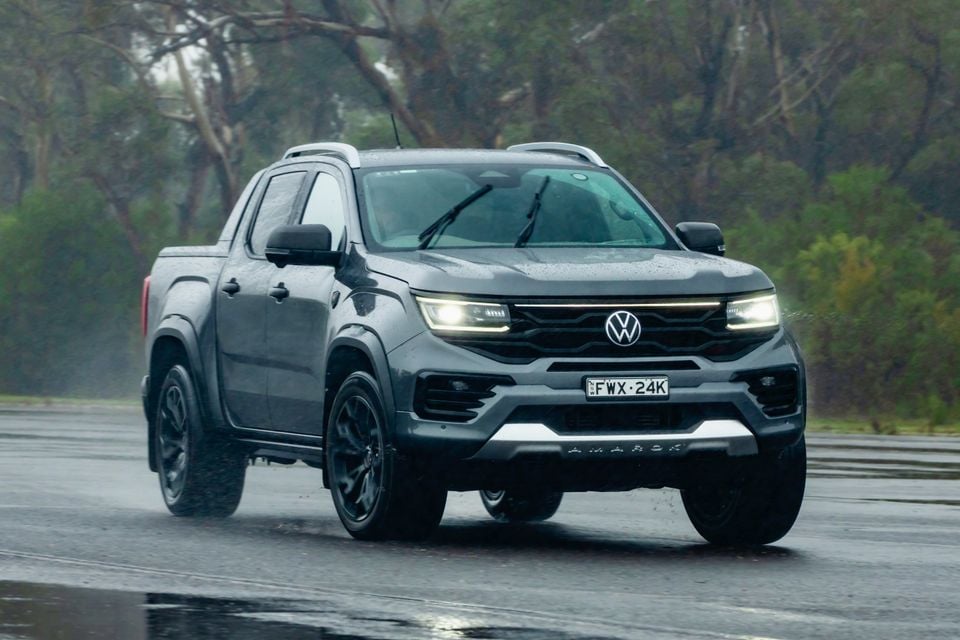
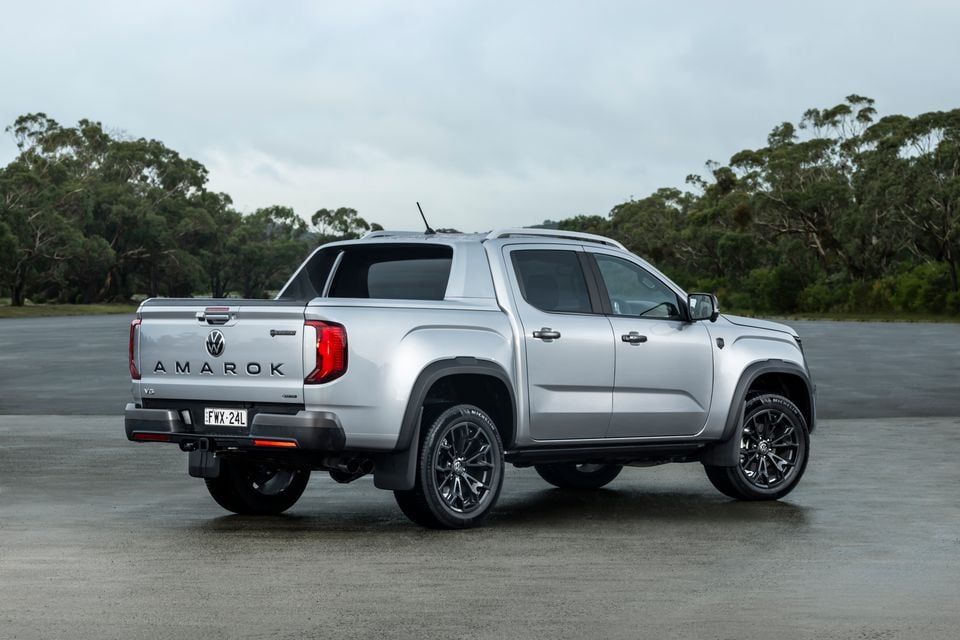
It's almost 40 years since the HSV VL Commodore Group A SS was shown to the world, and now after working its magic on a series of other dual-cab 4x4 utes including the original Volkswagen Amarok, Walkinshaw has once again lent its talents to the German brand to create this: the Amarok W600.
Volkswagen is calling it the “ultimate driver’s ute”, which has more than a hint of BMW’s famous slogan. Regardless, it’s a brave thing to declare.
While the previous-generation Amarok W580X had more of an off-road character about it than the road-focused W580S, the brief to Walkinshaw this time was to turn the second-generation, Ford Ranger-based Amarok into a ute that’s engaging and capable on the road – where the vast majority of owners spend the vast majority of their time, according to Volkswagen's research.
However, VW’s people say this isn’t a direct competitor to the Ford Ranger Raptor, despite benchmarking the Raptor during development of the W600.
“It’s been obviously present for a number of years and is very, very popular. What we’ve done [with the W600] is we’re not competing with Raptor,” said Michael Cenci, Product Manager for the Amarok at Volkswagen Commercial Vehicles Australia.
“We don’t believe that [the Ford Ranger Raptor] gives us what our customers were asking for. Our customers were asking for a ute that is great to drive on the road, that is refined, that feels Euro and premium,” he told CarExpert.
“That product is also compromised in terms of towing and in terms of payload, which is something we’re not seeing on this vehicle.”
Which is a good point. Those wanting the street cred of a Ranger Raptor have to deal with a lower payload, and a towing capacity that drops from 3500kg to 2500kg.
The W600, on the other hand, maintains the payload and towing capabilities of the Amarok Style on which it’s based.
However, while the Raptor has a spicy twin-turbo petrol V6 engine, the W600 continues with the turbo-diesel V6 found in the rest of the Amarok lineup.
So, what is different about the Amarok W600?
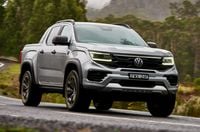
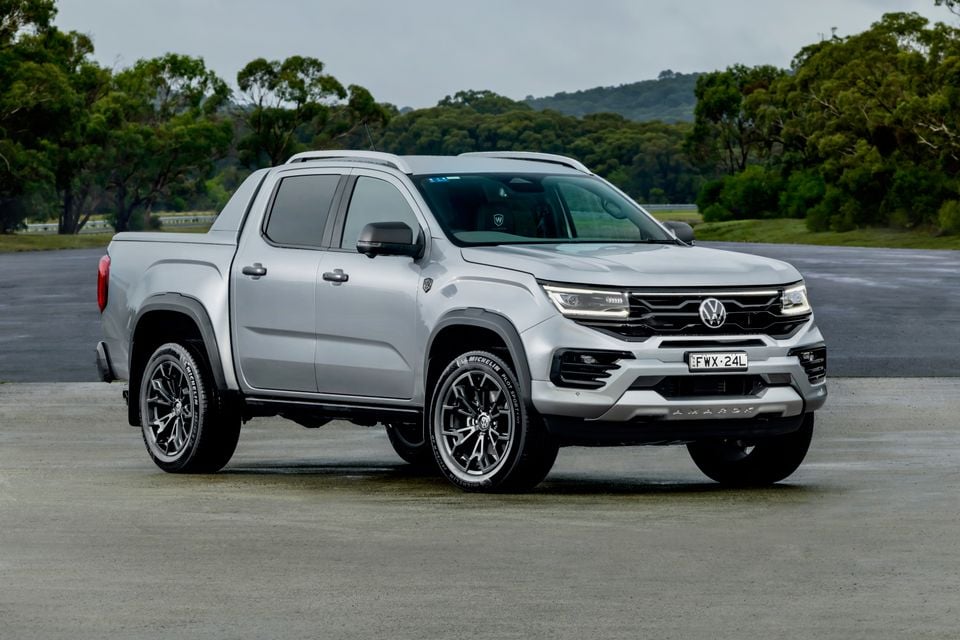
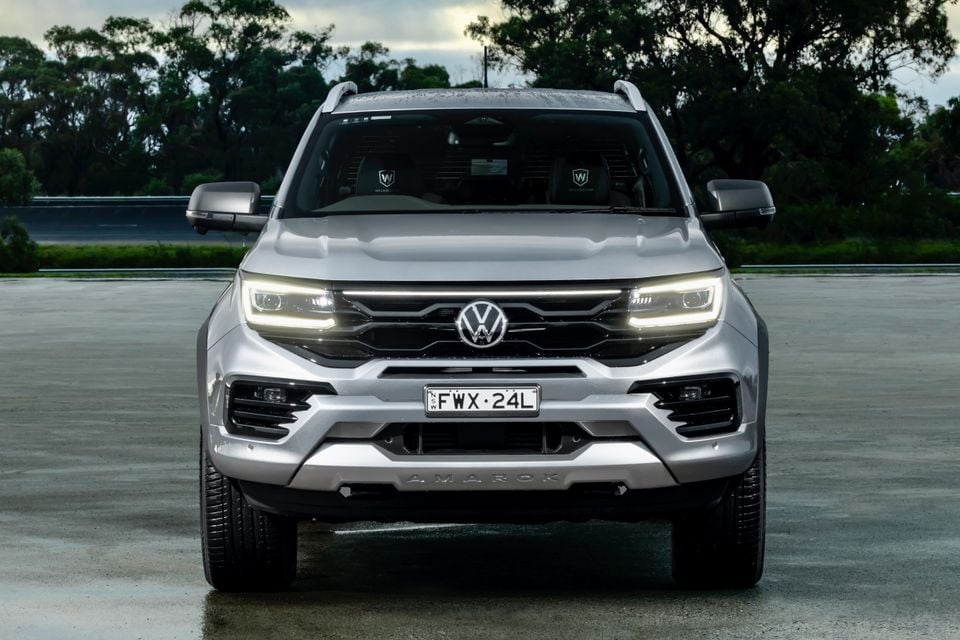
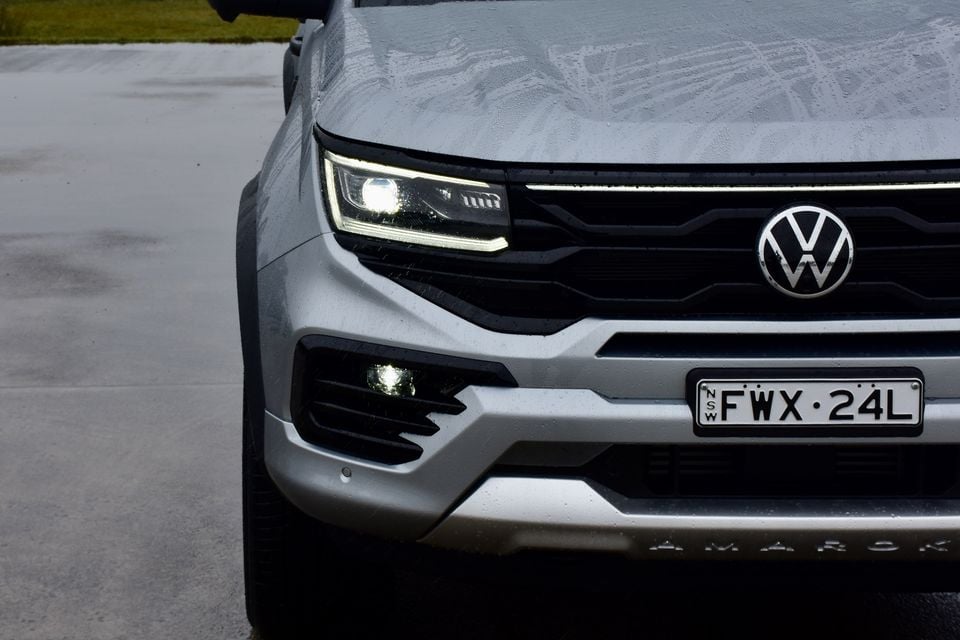
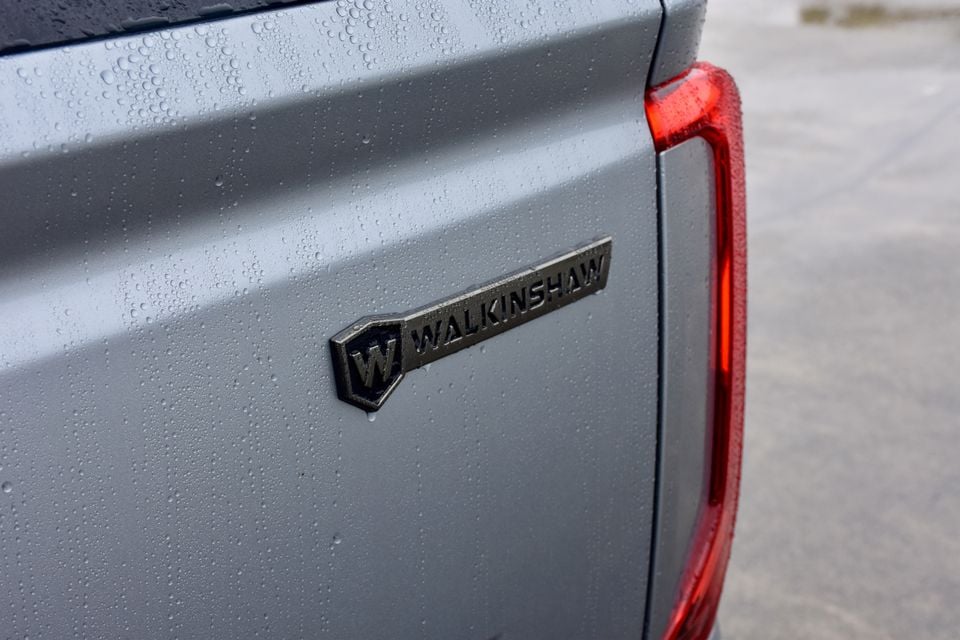
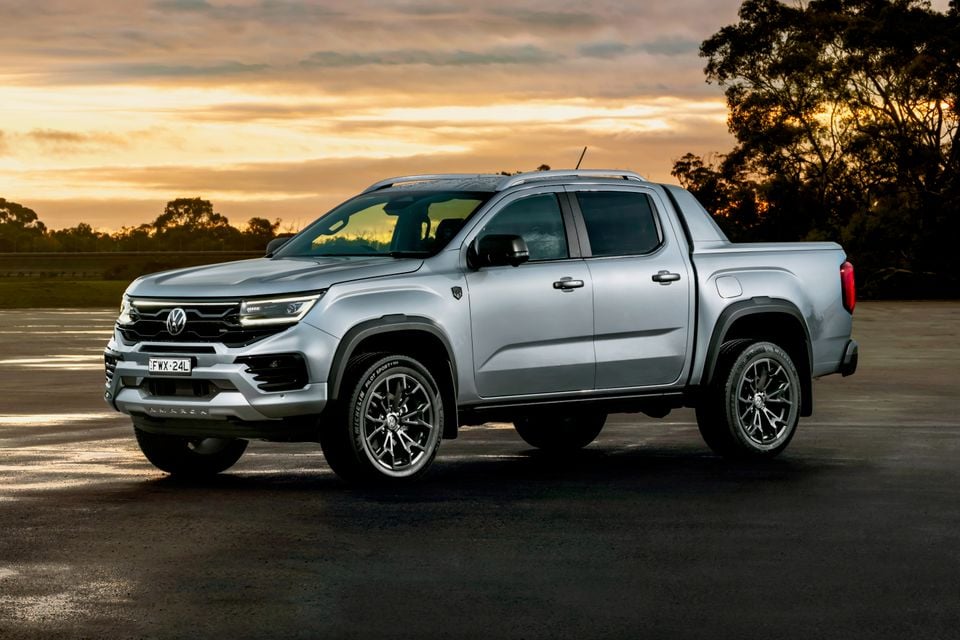
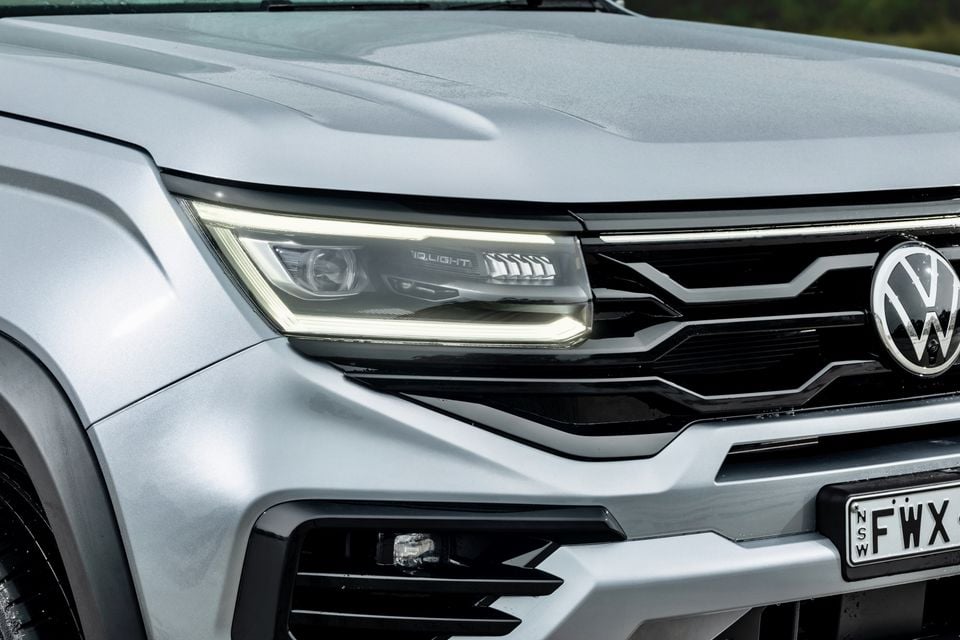
Firstly, there’s the styling. Since the first teaser images of the current Amarok came out, Walkinshaw chief designer Julian Quincey has been working on a beefier version. The result is a new front bumper design, incorporating Walkinshaw’s ‘W’ logo into the grille, as well as wider wheel-arches.
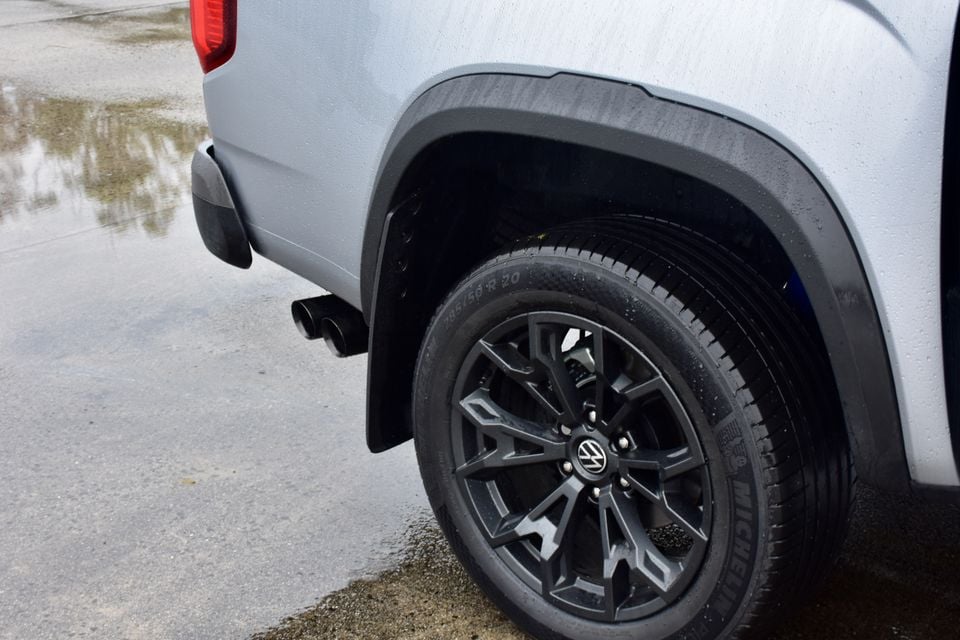
When combined with new 20-inch alloy wheels, also designed by Walkinshaw, it gives the W600 a much stronger, stouter look. The 10-inch-wide wheels – up from 7.5 inches – together with a much more aggressive offset, give the car a particularly assertive stance and a tougher presence in person, without ever being in-your-face.
There are also power-retractable side-steps, a dual exhaust system with side-exit outlets finished in shadow chrome, and 285/50R20 Michelin Pilot Sport 4 SUV tyres.
But the big story is under the car. Taking a page from Peter Brock’s recipe book, Walkinshaw has removed the front anti-roll bar and fitted a 22mm anti-roll bar at the rear – despite there being no factory mounts for it, as there’s no rear sway bar on the rest of the Amarok lineup.
To make that happen, Walkinshaw welds drop-link mounts to the ladder-frame chassis and fits forged knuckles to the axle that replicate original equipment from Volkswagen.
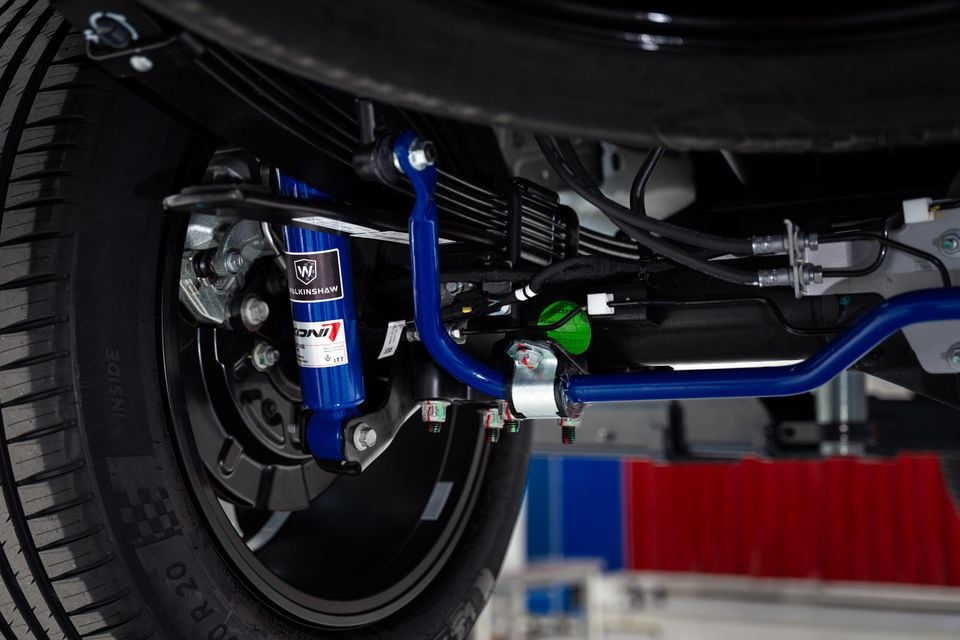
Walkinshaw also approached Koni – arguably one of the best shock absorber manufacturers in the world today – and had it create a bespoke damper tuned by Walkinshaw and combining the best components of its FSD and Raid products.
CarExpert was one of a small number of media outlets invited to the Lang Lang Proving Ground to experience pre-production examples of the Volkswagen Amarok W600 – despite the variant not being 100 per cent signed off yet.
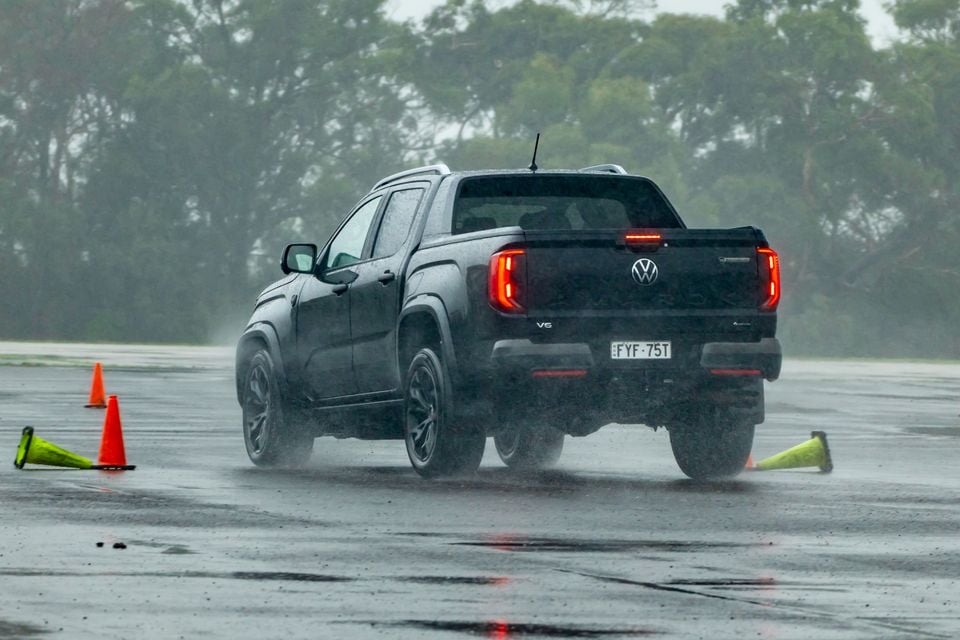
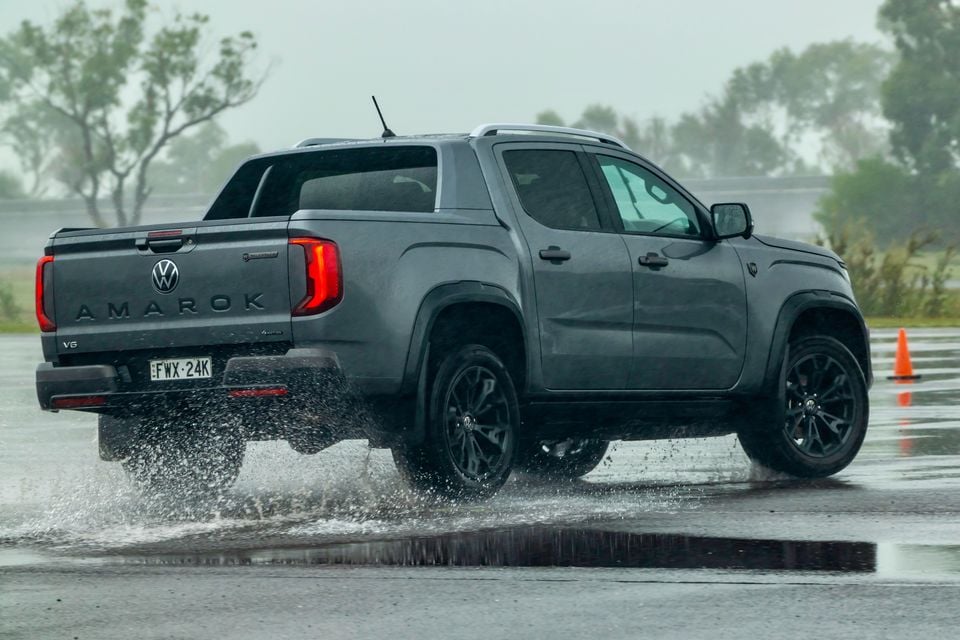
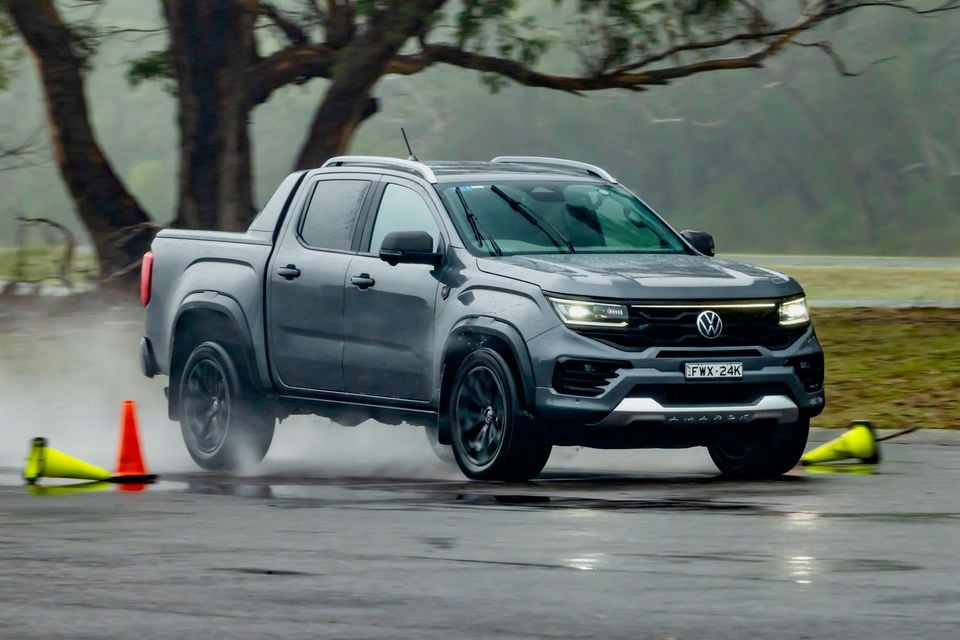
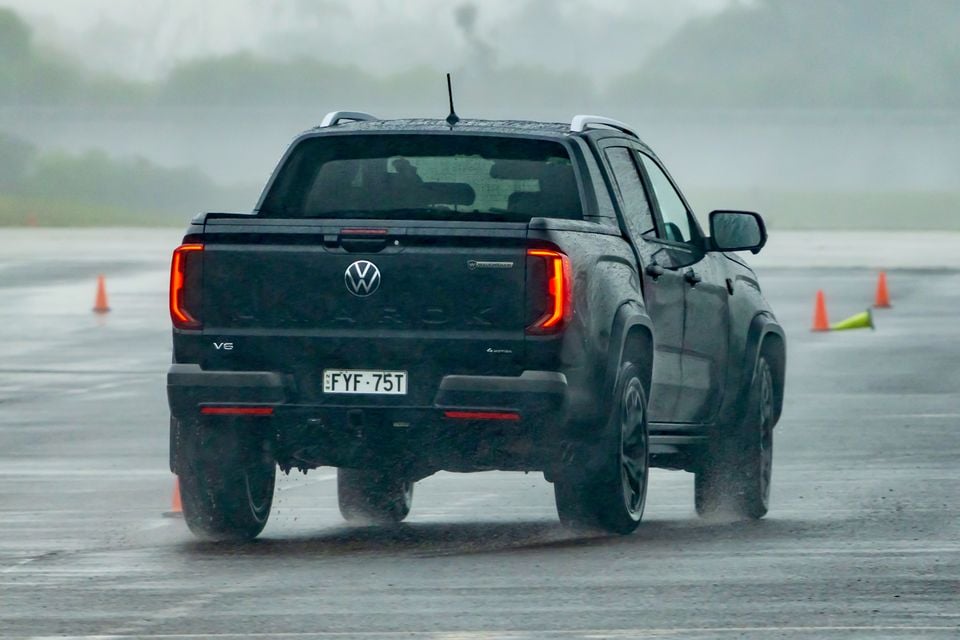
It’s fair to say our time with the car was limited, with unrelenting rain on the day also meaning we weren’t able to really push the car to its full capabilities.
But it was enough for us to get a first taste, and there are some very promising things here.
Pricing for the 2027 Volkswagen Amarok W600 by Walkinshaw has yet to be announced.
| Model | Price before on-road costs |
|---|---|
| 2026 Volkswagen Amarok Style pickup TSI452 | $73,740 |
| 2026 Volkswagen Amarok Style pickup TDI600 | $73,740 |
| 2026 Volkswagen Amarok Style Tray TDI600 | $77,740 |
| 2026 Volkswagen Amarok PanAmericana pickup TDI600 | $78,990 |
| 2026 Volkswagen Amarok Aventura pickup TDI600 | $82,990 |
| 2026 Volkswagen Amarok Dark Label pickup TDI600 | TBC |
Volkswagen has heavily revised the Amarok range in recent months, dropping the Core and Life variants, and making the Style the new entry point to the lineup. The high-spec Aventura no longer gets the 2.3-litre turbo-petrol engine, however, that powertrain is now available in the Style as an alternative to the turbo-diesel V6.
As first reported by CarExpert in December 2025 following the axing of the Ford-sourced 2.0-litre biturbo diesel engine globally, large fleet customers still have the option of ordering the four-cylinder Amarok Core TDI405 – powered by an upgraded 2.0-litre single-turbo diesel making 125kW of power and 405Nm of torque – though this grade is not available to the public or smaller fleets.
It's also worth mentioning that, at the time of publication, Volkswagen has several drive-away offers on MY25 Amarok vehicles, which you can read about in our EOFY roundup.
To see how the Volkswagen Amarok lines up against the competition, check out our comparison tool
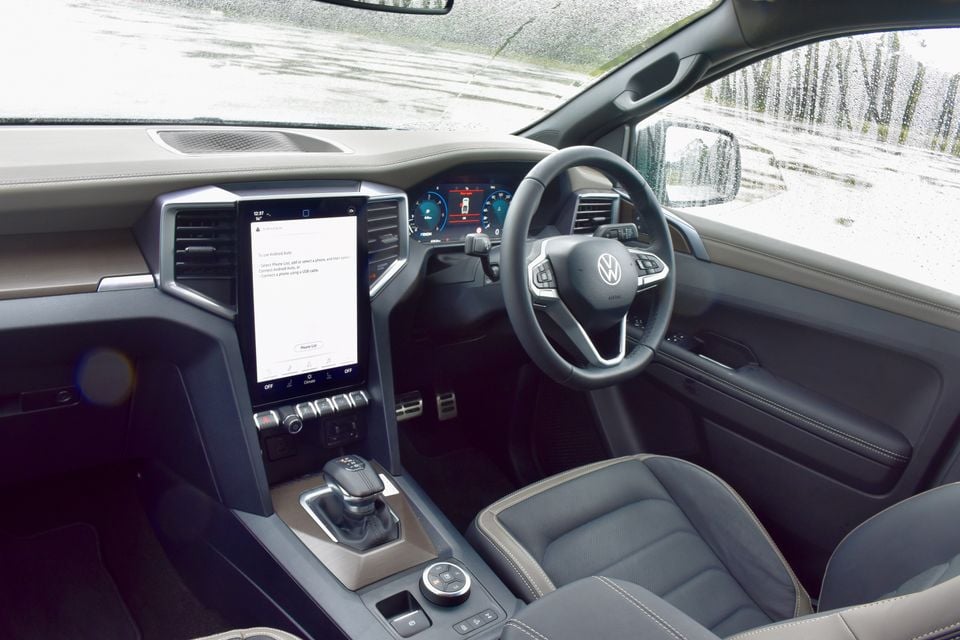
Despite being based on the Amarok Style, the W600 actually borrows some of its interior from the top-spec Aventura.
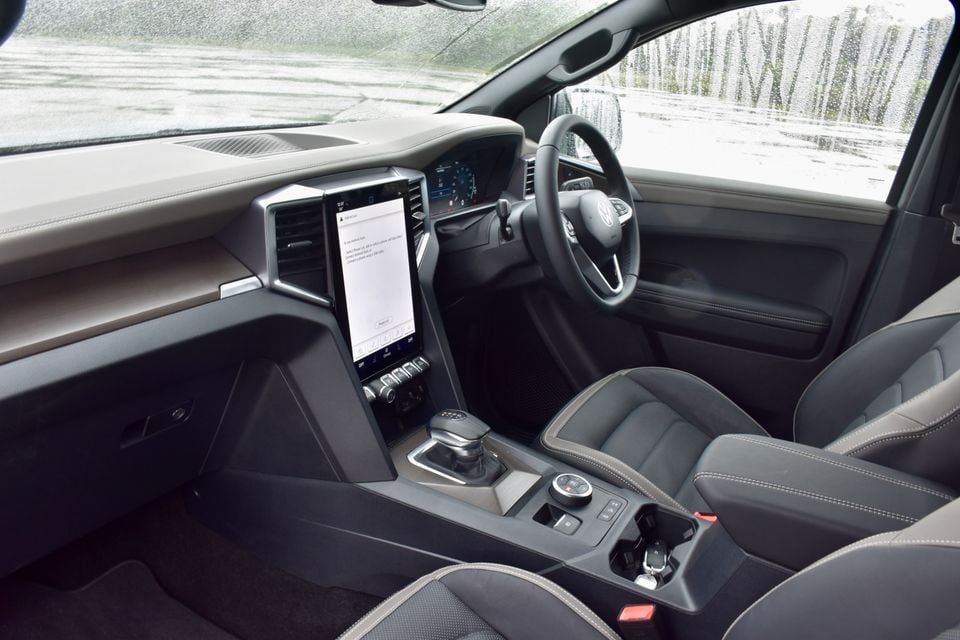
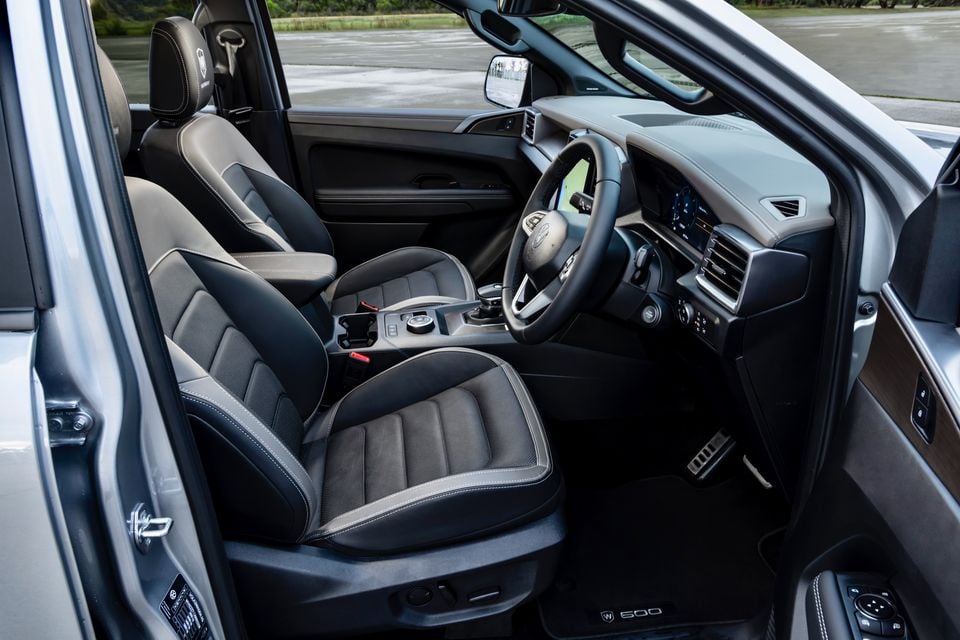
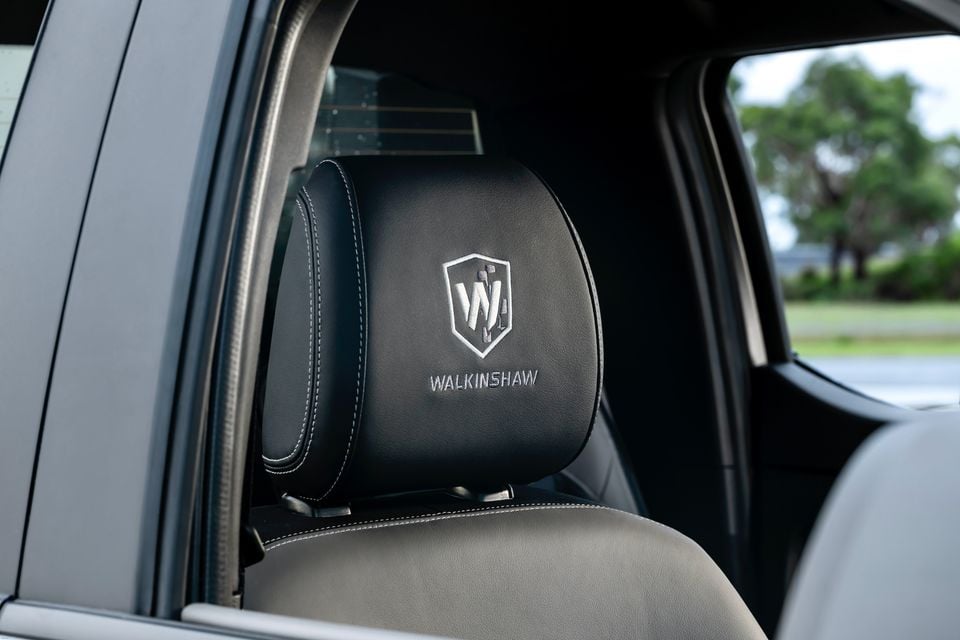
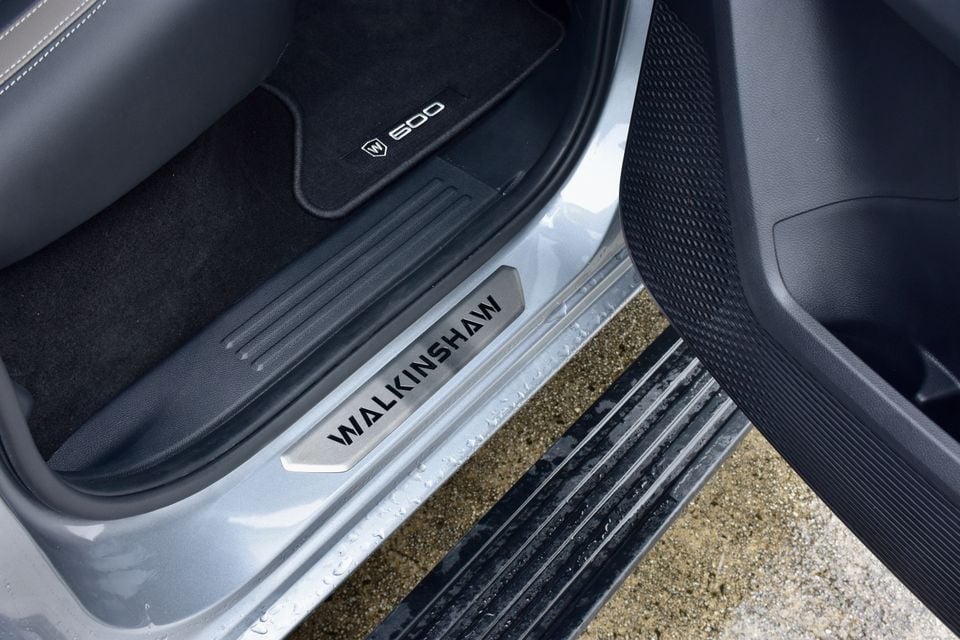
There isn’t a lot to distinguish this as a W600 inside, besides some brushed sills bearing the Walkinshaw logo, aluminium sports pedals, puddle lamps, and the brand’s W shield embroidered on the head restraints and carpets.
While not strictly to do with the interior, the power-retractable side-steps are a cool feature – common on full-size US pickups, but it's the first time I can remember seeing them in this segment. Walkinshaw said it wasn’t really happy with off-the-shelf solutions, so it engineered the side-steps from scratch, using the units found on American pickups as a reference.
Being someone who is dedicated to science, I replicated a night in the bush with mates and bourbon, and jumped up and down on the side-steps. There was a bit of deflection during my research, but nothing snapped and they continued to work afterwards as intended.
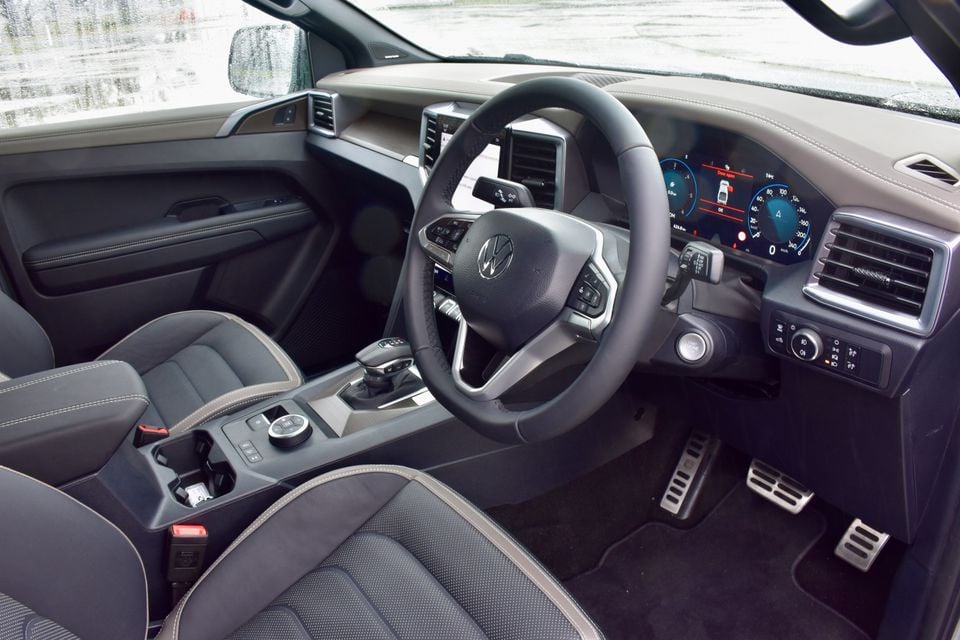
Other than those things, the cabin is pretty standard Amarok – which is no bad thing.
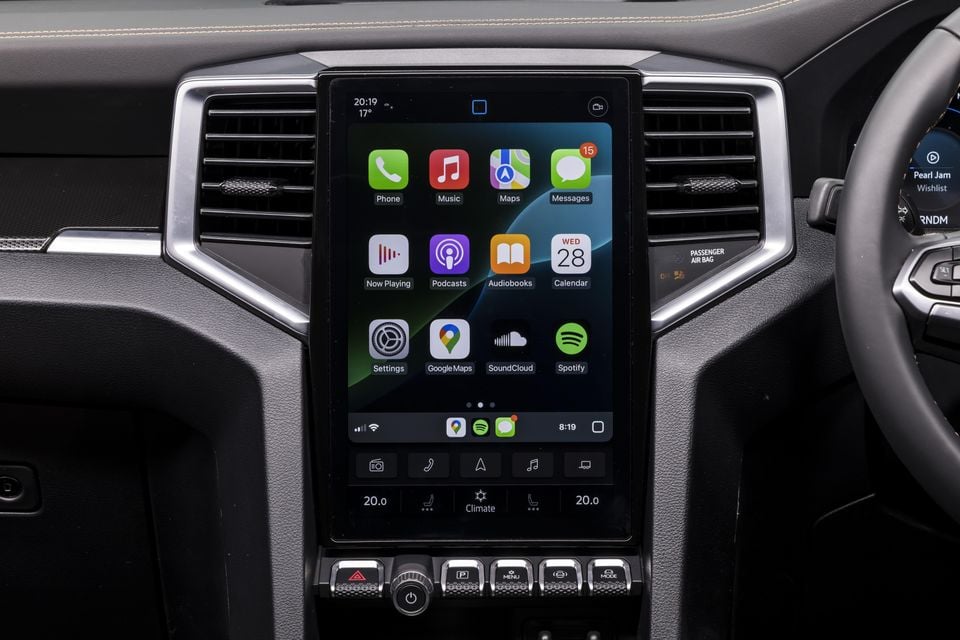
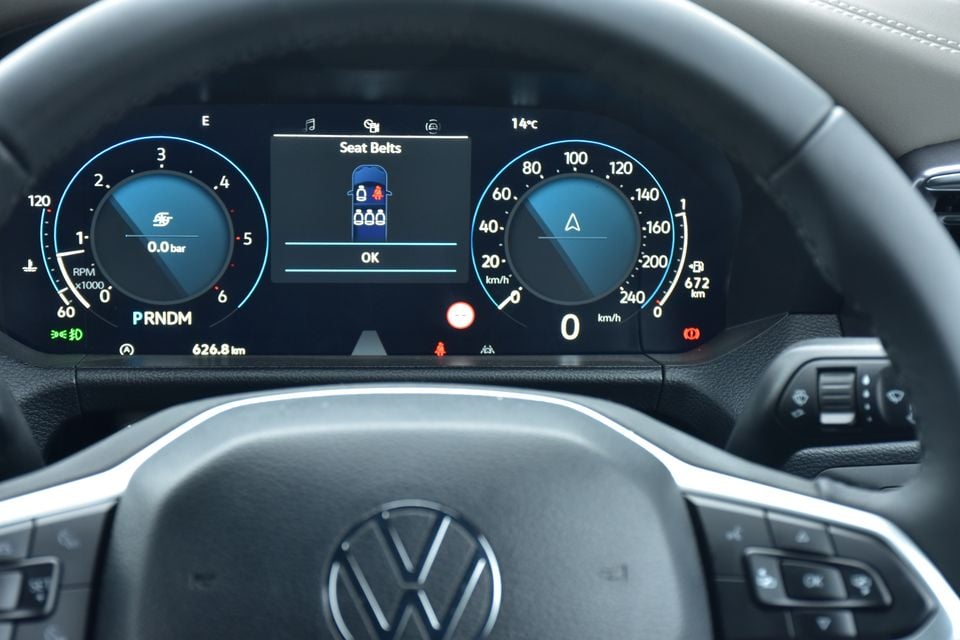
The centrepiece is the 12-inch portrait-oriented infotainment touchscreen, complemented with a volume knob and several shortcut buttons below.
The PRND shifter is appreciated for its relative simplicity, and there’s a wheel to select between rear-wheel drive, automatic four-wheel drive, high-range four-wheel drive, and low-range four-wheel drive.
The push-button starter is where you’d expect it, and the automatic headlight switches are easy to find and use. The only oddball thing is the indicator being on the left – one of the few real differences between the Amarok and the Ranger on which it’s based.
Another is the steering wheel, which is a Volkswagen unit with real buttons and leather trim, which fits the hands well.
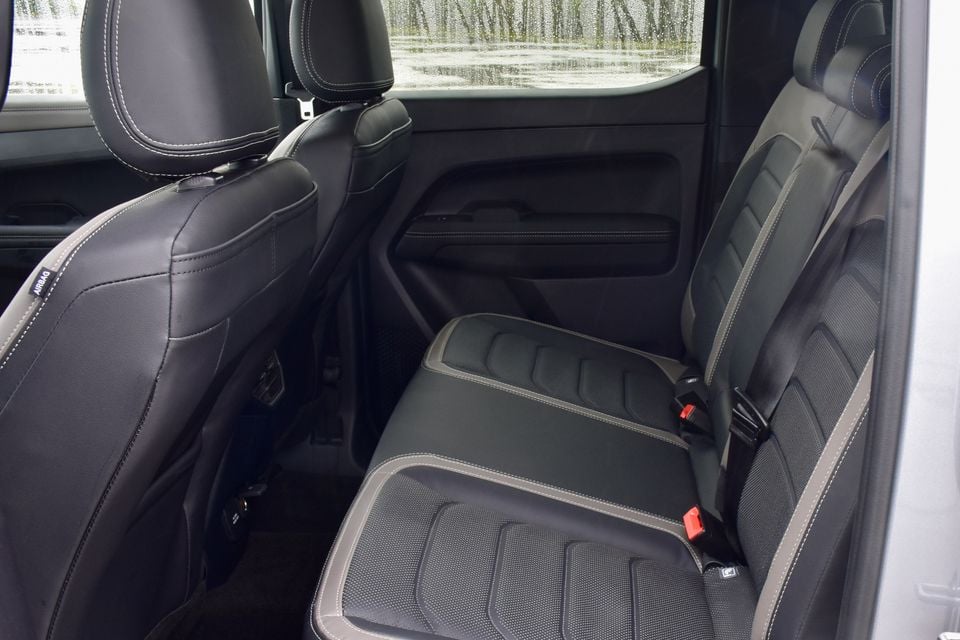
The seats themselves are comfortable and do a decent job of providing support. There’s enough space in the back for two adults to spend some time in, though I did smack my knee on the centre console when jumping in. Being the reasonable man I am, I blame Volkswagen directly.
The Amarok has always had one of the nicer interiors in the dual-cab ute segment, and there’s nothing crazy about the W600 inside compared to the standard ute.
There’s an element of ‘if it ain’t broke, don’t fix it’ here, though it would have been nice if there was a little bit more to help sell the Walky Roc (a nickname I’m trying to get traction on) as a driver’s ute from the driver’s seat.
I’m glad there’s no fake carbon-fibre trim (the standard ute weighs circa 2.4 tonnes, after all), and Walkinshaw’s corporate colours are basically black and white, which makes it harder to add a splash of colour inside while maintaining its theme. Plus, there’s something a bit cool and understated about the W600, and a bright red interior would take away from that.
Volkswagen’s people specifically told us they would be looking for our feedback on the W600 ahead of final sign-off – and I’m cognisant of the fact they’re somewhat limited in what they can do, and that they want to keep production costs in check.
But I’ll offer this: add some matching white contrast stitching to the steering wheel, and stick a plaque on the centre console. Everyone loves a plaque in their car – it’s like a participation award for making a big purchase and may enhance resale value.
To see how the Volkswagen Amarok lines up against the competition, check out our comparison tool
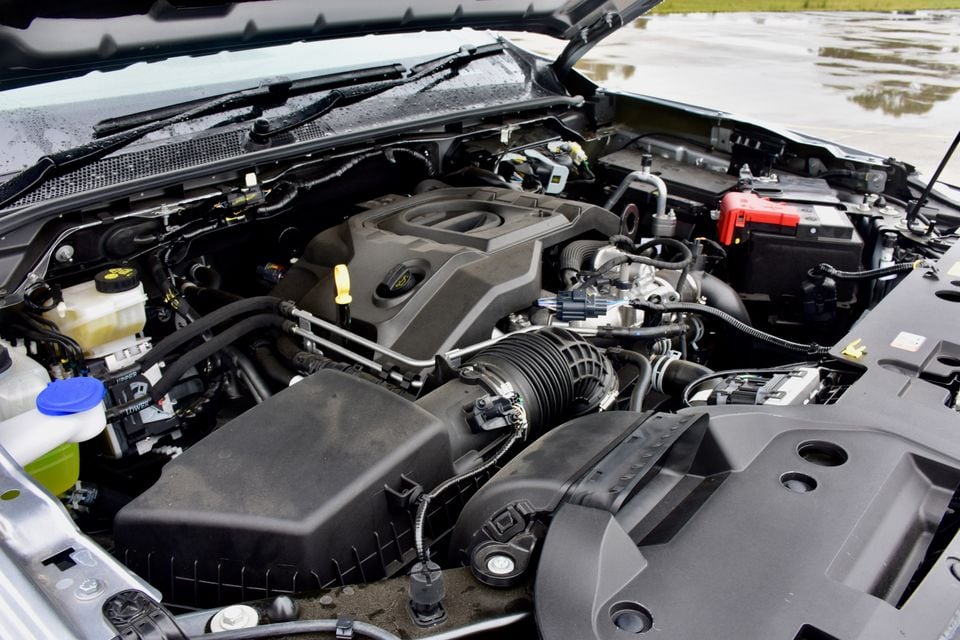
The Volkswagen Amarok W600 is powered by the 3.0-litre turbo-diesel V6 making 184kW and 600Nm, mated to a 10-speed automatic transmission.
| Specifications | Volkswagen Amarok W600 |
|---|---|
| Engine | 3.0-litre turbo-diesel V6 |
| Power | 184kW |
| Torque | 600Nm |
| Transmission | 10-speed automatic with low-range |
| Drive type | Four-wheel drive |
| Fuel economy (claimed) | TBC |
| CO2 emissions (claimed) | TBC |
| Fuel tank | 80-litre |
| Weight | TBC |
| Payload | TBC |
| Braked towing capacity | 3500kg |
| Gross vehicle mass (GVM) | 3350kg |
| Gross combination mass (GCM) | 6400kg |
As mentioned, there’s selectable rear-wheel drive, four-wheel drive, and high- and low-range four-wheel drive.
Volkswagen told CarExpert the 3.0-litre twin-turbo petrol V6 in Ford’s Ranger Raptor wasn’t available to be used in the W600, as you’d expect.
Performance remains the same in the W600 as other V6-powered Amaroks, and while there hasn’t been any confirmation or announcements at this stage, there may come a time in the near future when owners can purchase a performance upgrade for the engine.
To see how the Volkswagen Amarok lines up against the competition, check out our comparison tool
Volkswagen gave us the opportunity to get a baseline in the standard Amarok V6 prior to jumping into the W600.
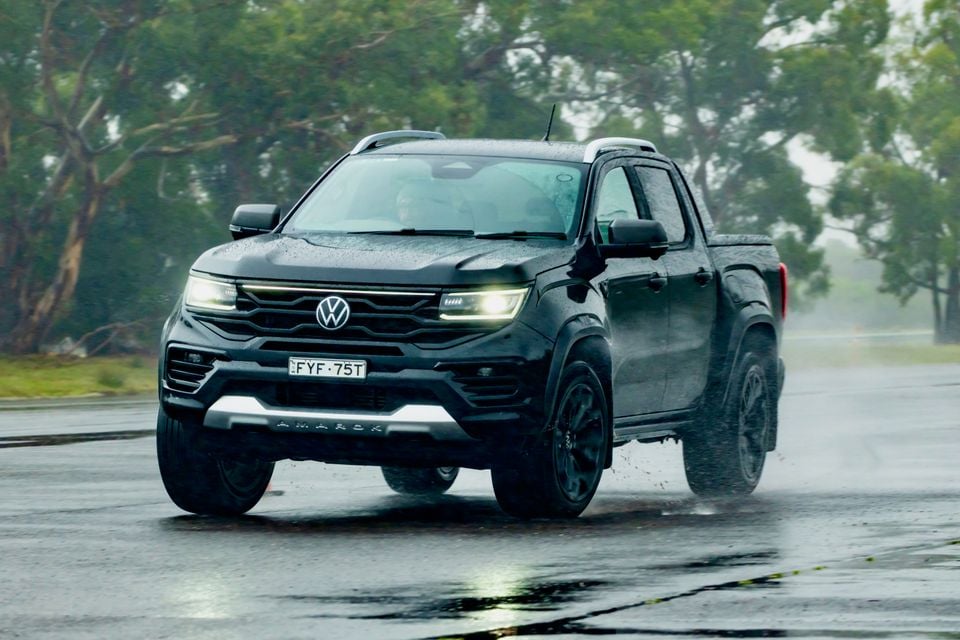
Car companies will only do this if they’re confident there is a noticeable improvement in driving characteristics. So that tells you something right off the bat.
What it also did, given the unrelenting rain and standing water on the track, was show just how rubbish the Amarok's Goodyear Wrangler all-terrain tyres are in the wet. I don’t think that was the intention.
The chance to get reacquainted with the Amarok was appreciated, though. The ute has a decent powertrain, okay brakes in normal circumstances, and good enough ride and handling for a body-on-frame light commercial ute.
Push the Amarok – particularly in the wet, on those tyres – and the limit isn’t far from the mean.
If this is the car for you, we’ll compare offers from trusted dealers, handle the back and forth and manage your purchase from enquiry to delivery.
Even with the Amarok being arguably one of the best dual-cabs on the market, driving it with aggression will quickly show inadequacies in braking performance, lateral grip, and chassis response.
All of which makes the Volkswagen Amarok W600 so impressive, because it’s a big leap forward in on-road performance.
The three real differences between the W600 and the standard Amarok are grip, body roll, and comfort.
Ride comfort isn’t a hot-button feature of the W600, but it’s the result of the vehicle being fitted with high-quality shock absorbers that have been expertly tuned for this particular ute.
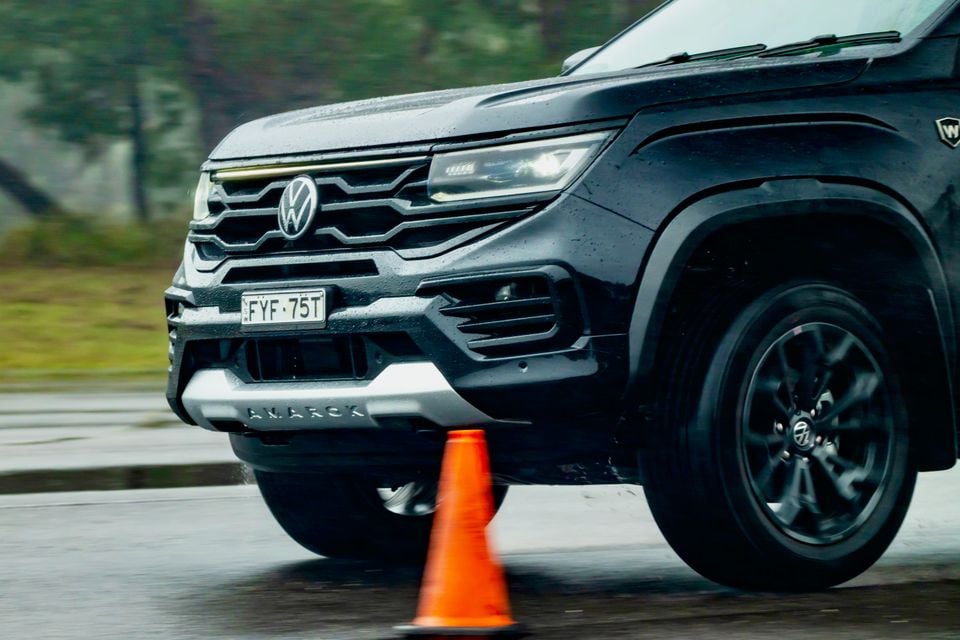
The valving technology from Koni allows the dampers to remain somewhat firm in response to lean from the body, while still absorbing potholes, railway tracks, and bumps. The result is a ute that feels planted on the road, yet is comfortable over rough roads. A pretty astonishing feat, considering this is a ladder-frame ute with leaf packs at the rear.
The real genius comes from the work Walkinshaw's team has done in regard to sway bars. In removing the front sway bar and adding one at the rear, they have dramatically reduced body roll, without increasing that jittery feeling that comes from oversized sway bars. It shows both the care and expertise Walkinshaw’s engineers apply to their craft, rather than merely throwing a bunch of off-the-shelf parts at the car and calling it a day.
From initial turn-in to hard cornering, the Amarok W600 is far more responsive and predictable, feeling a lot more athletic through bends. It also handles direction changes with great composure – even sudden yanks on the steering wheel don’t seem to faze the Volkswagen.
In a tightening, off-camber corner that was drenched, we got a surprising amount of understeer from the standard Amarok – admittedly, driving it far more aggressively than you ever would on public roads. While the W600 displayed some of the same characteristics at the same speed and on the same bit of road, there was far less pushing from the front-end, and it was easier to both predict and control.
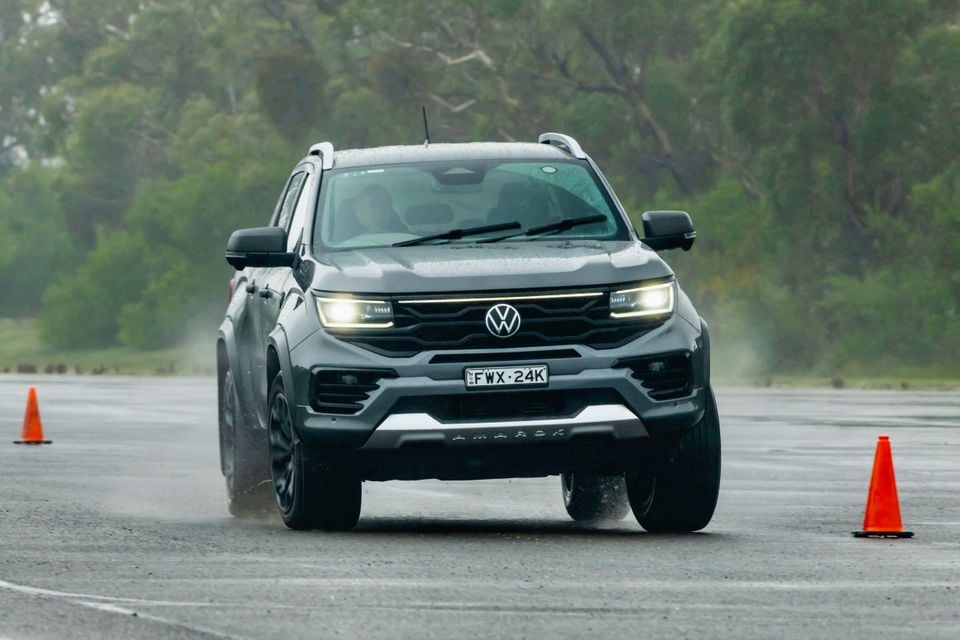
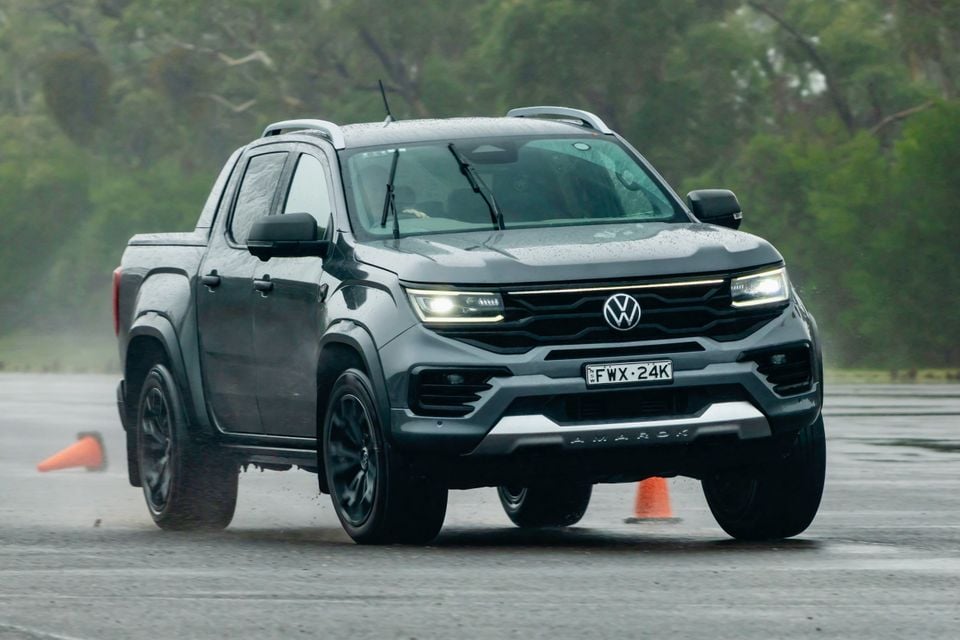
Having said that, the upgrade to Michelin Pilot Sport tyres is doing a lot of the heavy lifting here. That isn’t to diminish the good work of Walkinshaw’s people, but Michelin’s engineers also need to take some credit for the W600.
Particularly when it comes to braking. While a prototype development vehicle spotted in the car park was fitted with larger calipers and discs, Walkinshaw chose to keep the standard brakes on the W600 – likely to keep costs down. We may see a bigger brake package offered in the future, but the much larger contact patch of the new wheels and stickier tyres means braking distances are reduced by quite a bit on the Walky Roc (it’ll catch on, just give it a chance).
The wet roads made it harder to get a read, but it does seem like road noise might be improved with the Michelins too, despite there being more rubber meeting the road. We'll have to confirm this in the future, though.
Then there’s the powertrain. The turbo-diesel V6 isn’t a zingy engine, nor does it offer the kind of lazy performance you get from a Chevy V8. But it delivers a good balance, responding well and providing a decent surge of torque when you need it.
I remain somewhat unconvinced that the turbo-diesel is the right fit for this vehicle – or, really, the intention of this vehicle. The V6 has always been a good, strong thing, but its character doesn’t entirely lend itself to the ethos of the W600.
We asked Volkswagen whether we could see a Walkinshaw Amarok with the 2.3-litre turbocharged four-cylinder petrol engine from the Style TSI452, which puts out 222kW and 452Nm. It’s a slightly detuned version of the engine used in the Ford Mustang EcoBoost, and combining that engine with Walkinshaw’s upgrades could give us a vehicle that’s more akin to the likes of the Ford Falcon and Holden Commodore utes that Aussies loved so much. A Mustang EcoBoost dual-cab, with a VW badge.
The answer? “Never say never.”
However, the 10-speed has always been the V6’s best friend, ensuring the powerplant is kept in its sweet spot, no matter what you’re asking of it. It’s not the most sophisticated transmission in the world, and while it can sometimes be a little busy, it shifts relatively smoothly.
The exhaust – which is a true dual-pipe system – does change the tone of the engine slightly. It’s not a crazy difference, but Walkinshaw has done a good job of not making it sound like an old Mack, or like a Ranger Raptor, thankfully. But I do like the side-exit tips in shadow chrome, no doubt inspired by US pickups.
We also spoke to a Walkinshaw engineer about what’s left to be signed off, and apparently there are still some conversations happening about the steering. Personally, I thought it was pretty much bang-on. There’s a nice weight to it, without being too heavy or too light – the latter being the trend nowadays – along with offering a good level of feedback from the front tyres.
Add in the wider offset, and the Amarok W600 we drove offered a much higher level of confidence within normal driving limits – and in conditions that were less than ideal – providing a more stable platform during quick direction changes and through sweeping bends.
To see how the Volkswagen Amarok lines up against the competition, check out our comparison tool
The Volkswagen Amarok lineup is now packed full of variants, so buyers can easily find one that suits their needs and budget.
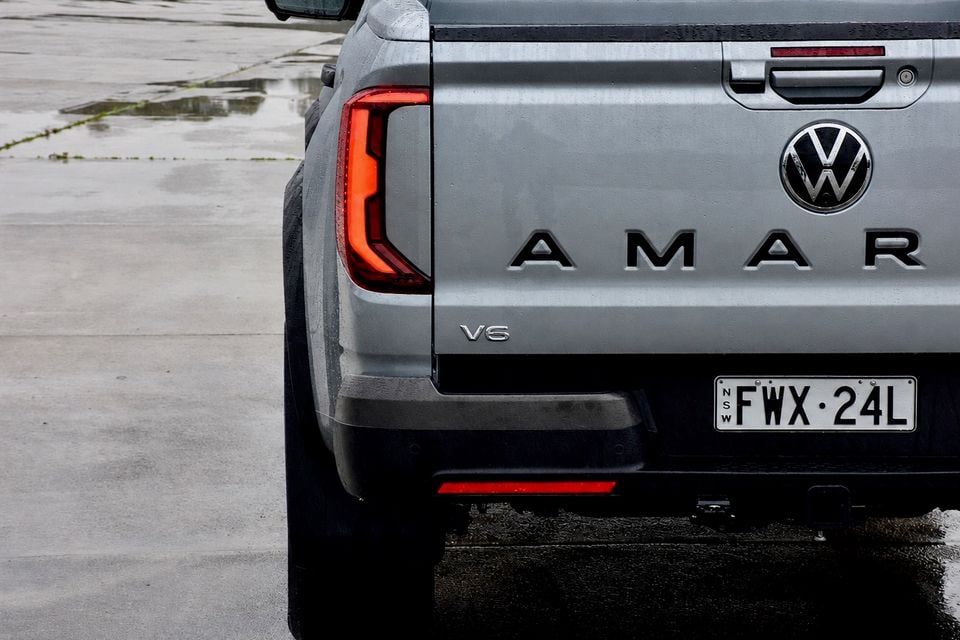
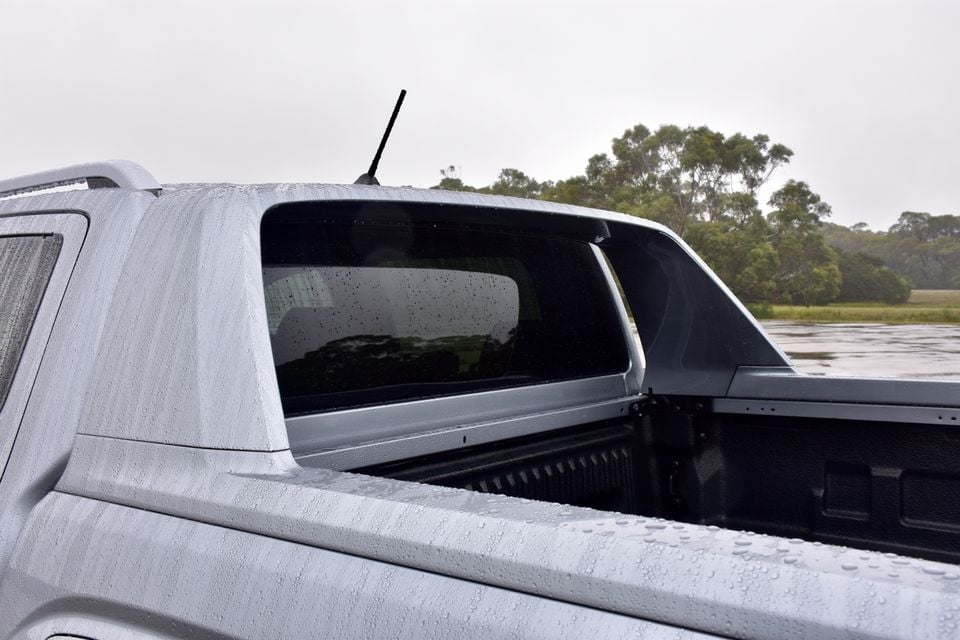
2026 Volkswagen Amarok Core equipment highlights:
Amarok Life adds:
Amarok 10 Deserts Edition adds:
Amarok Style adds:
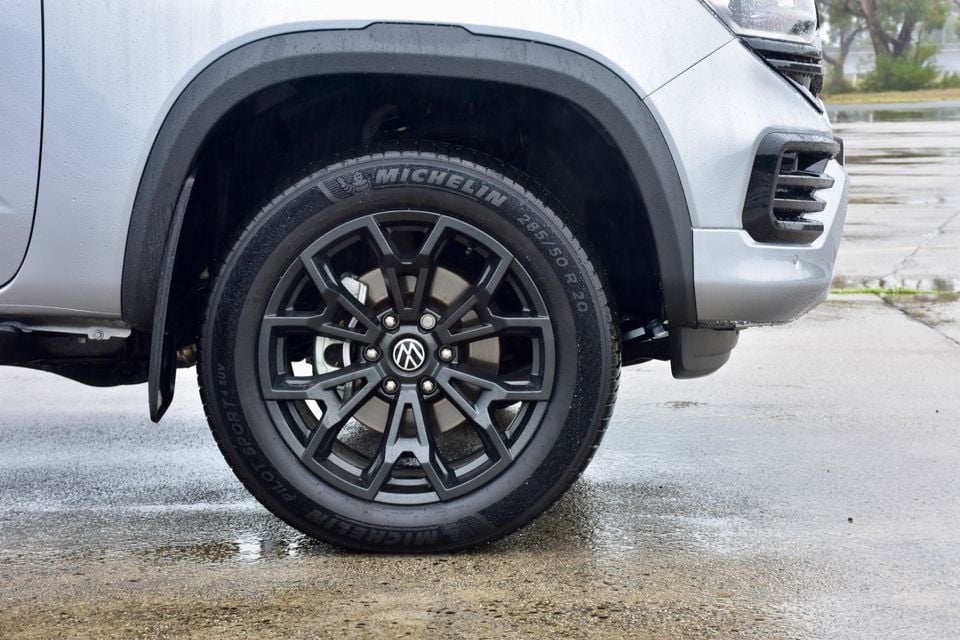
Amarok W600 adds:
Amarok PanAmericana adds (over Style):
Amarok Aventura adds:
Options
While final specifications have yet to be finalised, Volkswagen says the W600 will be available with an electric roller cover for the tub.
The W600 will also be available in Clear White, Medium Silver Metallic, Midnight Black Metallic and Dark Grey Metallic paint colours, and a 'wildcard' option that will change annually – Deep Red Metallic initially.
To see how the Volkswagen Amarok lines up against the competition, check out our comparison tool
Volkswagen has yet to confirm a safety rating for the W600 – as the vehicle has not gone into production at the time of writing – however, the rest of the Amarok range gets a five-star grade from ANCAP, issued in 2022.
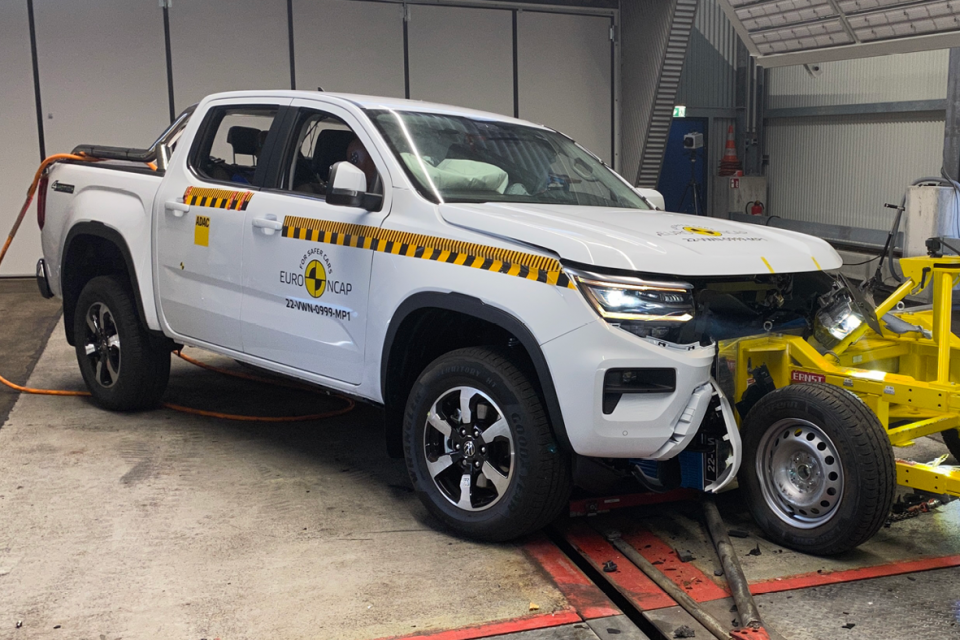
| Category | Volkswagen Amarok |
|---|---|
| Adult occupant protection | 86% |
| Child occupant protection | 93% |
| Vulnerable road user protection | 74% |
| Safety assist | 83% |
Standard safety equipment across the range includes:
Amarok Life adds:
Amarok Style adds:
To see how the Volkswagen Amarok lines up against the competition, check out our comparison tool
As this was a pre-launch event for a model not yet on sale or in production, ownership costs have yet to be published by Volkswagen.
| Servicing and Warranty | Volkswagen Amarok |
|---|---|
| Warranty | 5 years, unlimited kilometres |
| Roadside assistance | 1 year |
| Service intervals | 12 months or 15,000km |
| Capped-price servicing | 5 years |
However, it's expected the W600 will follow the rest of the Amarok range with a five-year, unlimited-kilometre warranty and up to five years of capped-price servicing.
To see how the Volkswagen Amarok lines up against the competition, check out our comparison tool
This was only a quick taste of what Walkinshaw has cooking with the Volkswagen Amarok W600 – and it left us wanting more seat time.
Is it the “ultimate driver’s ute”? Time will tell, but it’s probably not an especially high bar to clear in this segment, if we’re being honest, and the W600 could absolutely prove to be the best among them. We’ll reserve our judgement until we get a finalised production vehicle out into the real world for a longer drive – and, ideally, on some dry roads – but there’s enough here to be excited about what’s coming.
The excitement also comes from what may emerge from this program, beyond the W600. One of the bigger question marks is whether the turbo-diesel V6 has the right disposition for a vehicle aimed at driving enjoyment and on-road performance. But the 2.3-litre turbo-petrol unit found in the Amarok Style could be something really exciting when combined with the changes found on the W600. It’s also a popular engine among tuners and the aftermarket industry.
But straight out of the box, the Volkswagen Amarok W600 is a big leap forward for the model. The bold yet understated exterior presence, the improved braking grip, the balance and agility it displays, and the increased traction it offers instil confidence behind the wheel – resulting in a more determined driving experience.
To be sure, we’re not talking the same levels of engagement you could expect from Toyota Gazoo Racing or BMW M, but there’s clearly a lot of promise from the Walky Roc (stick with it, it’s a really great nickname).
I can't help thinking that this is what the Mercedes-Benz X-Class should have been.
Then there’s the ride comfort, which is markedly better. And yet, you don’t lose any of the towing or load capability of the ute.
While turning a dual-cab into a driver’s car doesn’t make a lot of sense on paper, in reality the W600 makes a lot more sense than the likes of the Ranger Raptor – something designed for the Finke Desert Race.
And as with the normal Amarok, it just feels a bit more grown-up and mature. Not as shouty. Less naughty. None of which are bad things – particularly if you want the segment-leading ute but don't want to carry the weight of public perception that comes with its non-identical twin.
The Volkswagen Amarok W600 may not have the flair and rowdiness of an HSV VL Walky, but from what we’ve experienced so far, it's clear Australian engineers are still delivering cars we can be proud of.
CarExpert can save you thousands on a new Volkswagen Amarok. Click here to get a great deal.
Click the images for the full gallery
If this is the car for you, we’ll compare offers from trusted dealers, handle the back and forth and manage your purchase from enquiry to delivery.
Quickly see how this car stacks up against its competition. Select any benchmark to see more details.
Volkswagen Amarok
Volkswagen Amarok Sales rolling 12-months#
*Based on VFACTS and EVC data
Looking for complete Volkswagen Amarok price history?
Our Volkswagen Amarok Pricing Page shows exactly how prices have changed over time.
2025
$61,111
2025
$65,231
2025
$74,501
2025
$75,789
2026
$79,909
2026
$84,286
2026
$85,316
2025
$85,316
2025
$86,346
2026
$89,436
2026
$98,706
Ben Zachariah has 20-plus years in automotive media, writing for The Age, Drive, and Wheels, and is an expert in classic car investment.
Add CarExpert as a Preferred Source on Google so your search results prioritise writing by actual experts, not AI.
Alborz Fallah
1 Day Ago

Damion Smy
2 Days Ago
Ben Zachariah
2 Days Ago
Damion Smy
3 Days Ago
Damion Smy
4 Days Ago
Damion Smy
4 Days Ago
Add CarExpert as a Preferred Source on Google so your search results prioritise writing by actual experts, not AI.
# Based on VFACTS and EVC data
† Displayed prices are based on the drive-away price of the vehicle, which includes delivery charges, registration fees, number plates, and applicable road taxes, based on a Sydney location. However, prices may vary between states and territories, and additional costs such as compulsory third party (CTP) insurance, dealer delivery fees, and optional extras are not included. These prices are subject to change without notice and may not reflect current market pricing or dealer offers.
 Automotive Vehicle Spec Data & 4K images Powered by JATO Dynamics Ltd