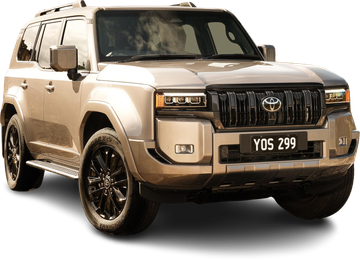
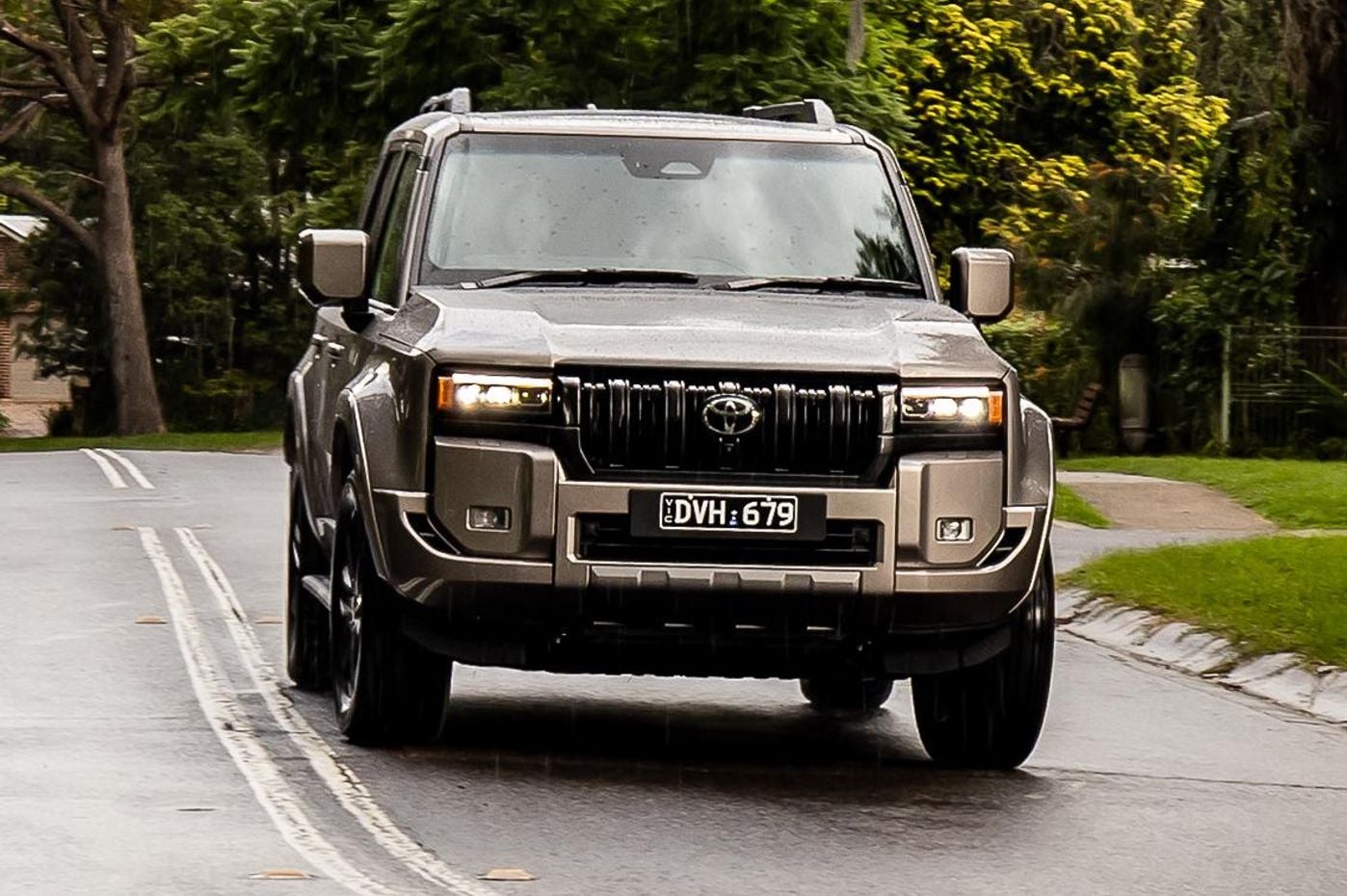
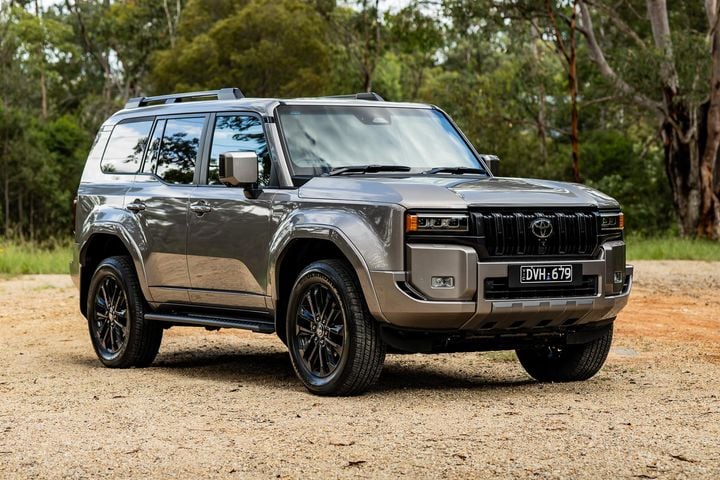
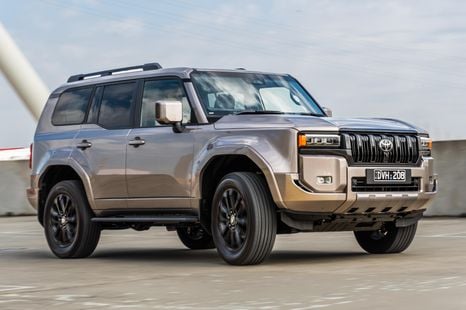
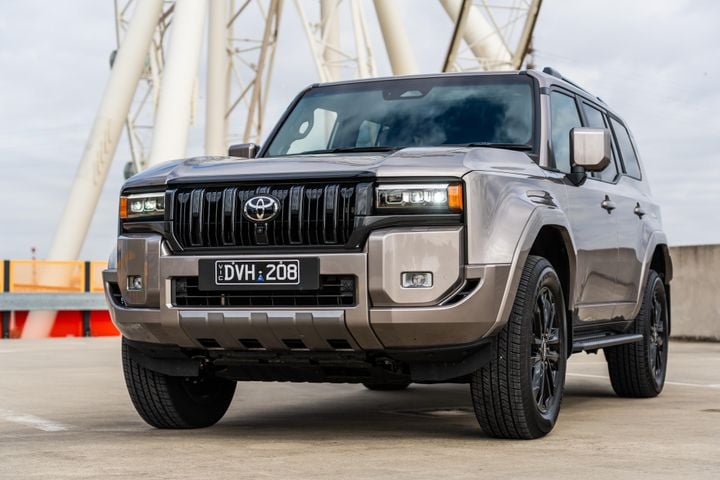
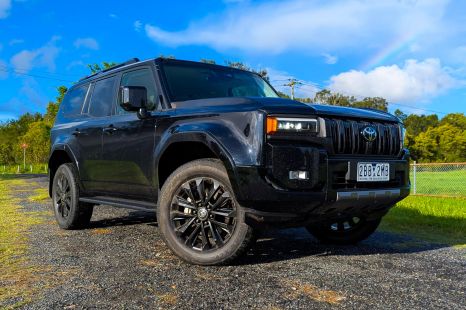
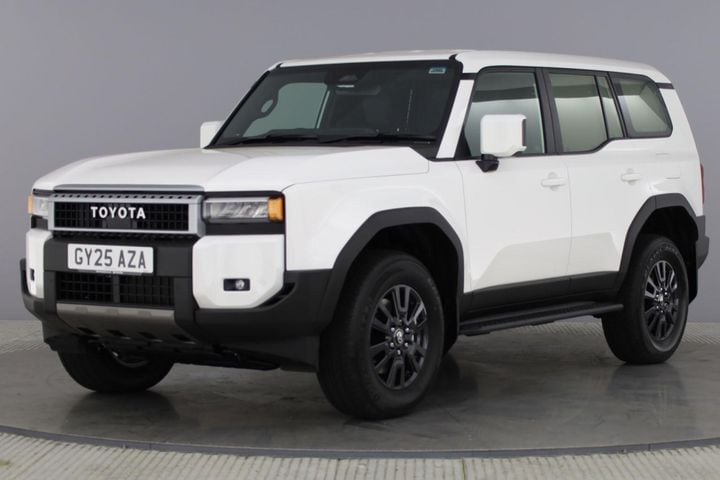
The Toyota LandCruiser Prado Kakadu feels suitably plush, but its awkward boot and familiar diesel engine make the price harder to swallow. In our January 2025 review, Paul Maric tests the flagship on-road, off-road, and with our towing rig. It was priced just under $100,000 when filmed.
Unlike the Altitude we tested previously, the Kakadu has adaptive damping and highway-terrain tyres. It misses out on the Altitude’s rear differential lock and disconnecting front anti-roll bar, although it retains low range and a centre differential lock.
Inside, the large touchscreen and digital rear-view mirror are welcome, but the cool box reduces centre-console storage. The second row doesn’t slide, limiting our ability to free up space for those behind. Third-row accommodation is tight for an adult, especially around the feet and head.
The boot is more frustrating. With all seats in use there’s around 180 litres of space, and folding the third row leaves a very high floor. The battery packaging and raised load area make the cargo blind difficult to reach, while folding or tumbling the second row introduces awkward gaps.
On-road, we like the smooth operation of the 48-volt mild-hybrid system, paired with a 2.8-litre turbo-diesel and eight-speed automatic. Comfort mode delivers a comfortable ride, but there’s considerable body roll, and the Prado feels less agile than a Ford Everest.
Our unladen acceleration test returned 11.27 seconds from 0-100km/h, while stopping from 100km/h took 42.45 metres. That braking distance was longer than in the Altitude we previously tested on all-terrain tyres.
Off-road, the initial offset-mogul attempt exposes hesitant traction control. Locking the centre differential gets us through, and selecting the appropriate terrain mode also helps. In low range, the Kakadu handles our recently repaired hill confidently, including restarting on the slope. Adaptive damping makes the rocky section feel smoother than in the Altitude.
With the Trailerdyne applying 3.0kN of resistance, the Prado reaches 90km/h in 18.55 seconds, barely quicker than the old model’s 18.58 seconds. Despite the speedometer briefly indicating 100km/h, it never reaches that GPS speed. Recorded loaded consumption improves from 30.4 to 29 litres per 100km. The 3500kg braked towing rating also needs context: a 350kg tow-ball load leaves around 255kg of the quoted 605kg payload for people and other cargo. Those modest performance gains and the compromised boot leave us wanting more for the money.