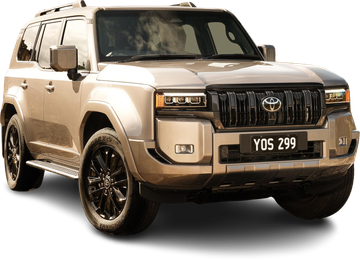
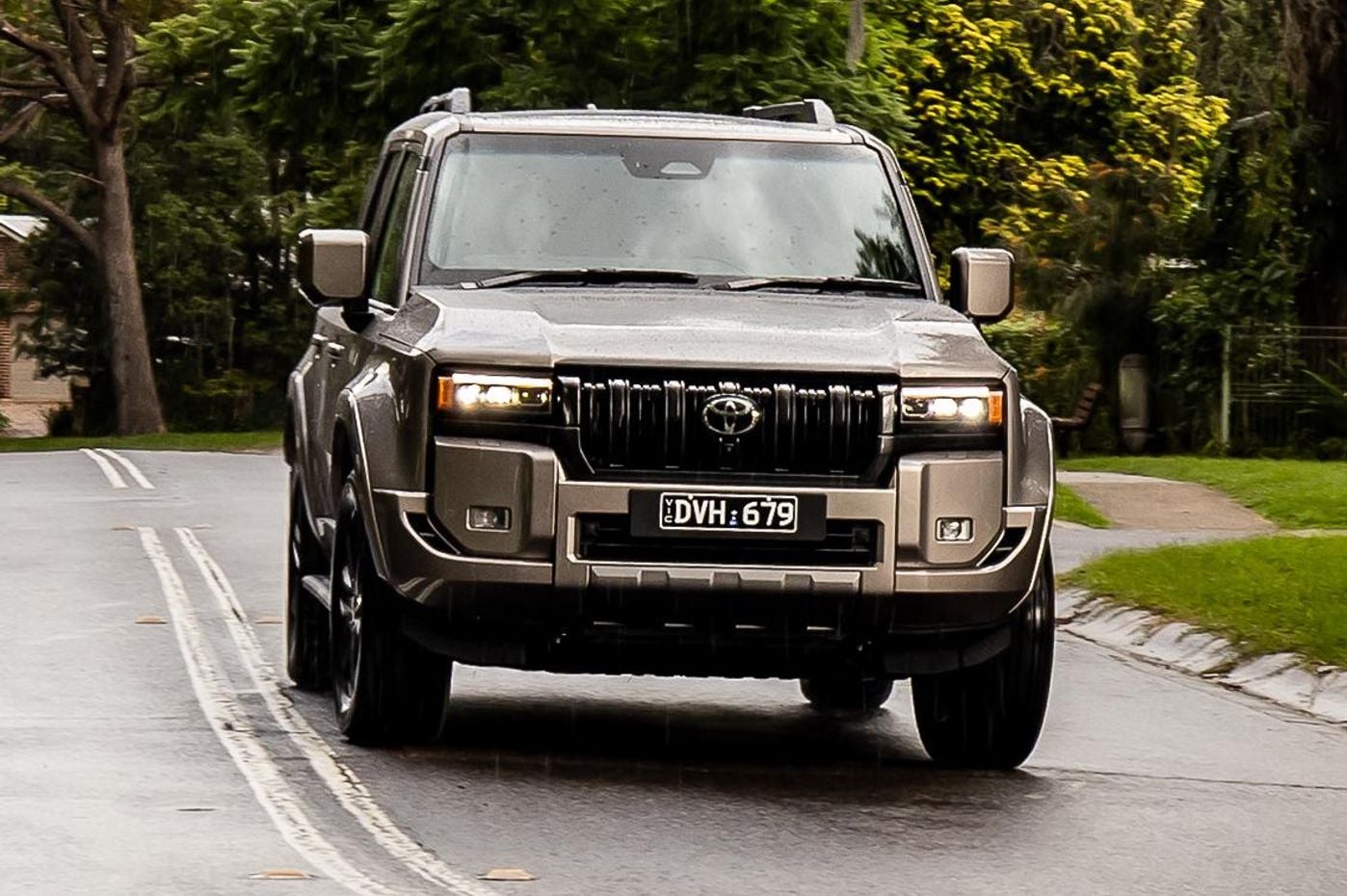
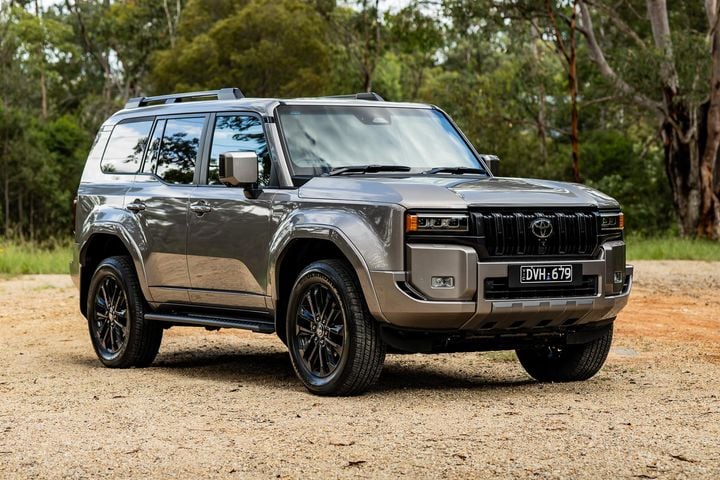
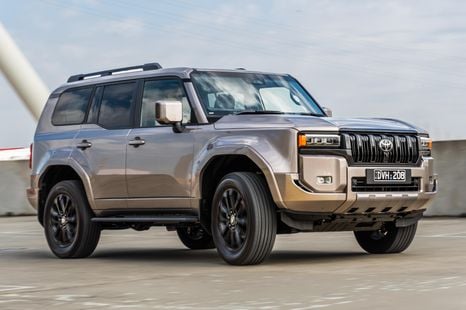
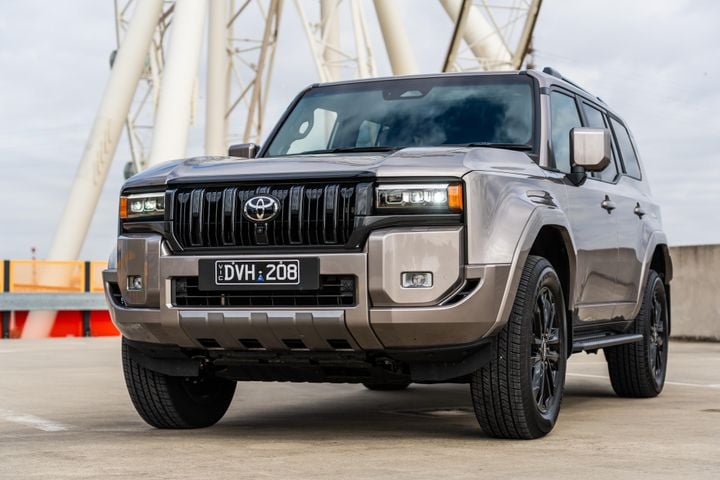
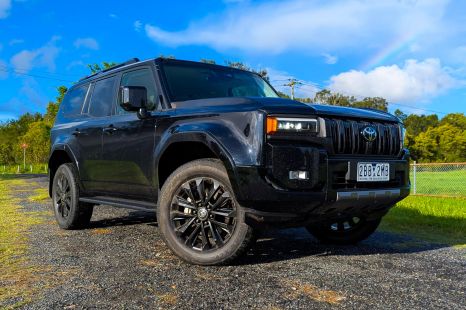
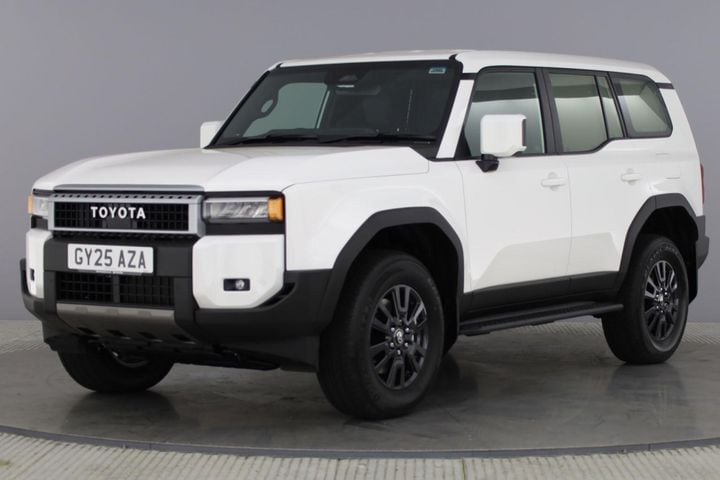
The Toyota LandCruiser Prado VX makes more sense to us than the range-topping Kakadu in this review of the 2022 model. At around $77,000 when filmed, it saved roughly $10,000 over the flagship, while retaining the comfort and off-road ability that make the Prado appealing. Its ageing technology is harder to overlook.
Power comes from a 2.8-litre four-cylinder turbo-diesel engine producing 150kW of power and 500Nm of torque, paired with a six-speed automatic transmission. Acceleration is adequate rather than exciting, but the engine has enough muscle for everyday driving. Permanent four-wheel drive adds reassurance on sealed roads without needing to switch between two- and four-wheel drive.
We prefer the VX’s simpler suspension setup to the more elaborate Kakadu we previously drove. It absorbs bumps comfortably and handles repeated undulations well for an off-road-focused SUV. Toyota claimed fuel consumption of 7.9 litres per 100km; our display showed 11.1L/100km, although this test vehicle had covered only about 400km.
The cabin has comfortable front seats and a spacious, sliding second row. Adults can squeeze into the third row, but head room and toe room are compromised, and luggage capacity with every seat in use is little more than 100 litres. Fold the third row and there’s around 600 litres to work with.
The 9.0-inch touchscreen includes wired Apple CarPlay and Android Auto, but both feel slightly laggy. The surround-view camera is grainy, and a single front USB port is limiting when it’s already occupied by smartphone mirroring. These are areas where the Prado feels its age.
Off-road, it tackles our slippery logs and offset moguls without needing the differential locks. A more demanding rutted climb initially stops progress, but engaging the centre differential lock gets it through. Hill descent control is less convincing: it allows too much speed on our rutted descent, prompting us to take over.
One touring detail matters when choosing this configuration. The optional flat tailgate relocates the spare wheel underneath, reducing fuel capacity from 150 litres to 87 litres. Even with that trade-off and its dated screens, the VX remains our pick here: comfortable, capable, and better value than stretching to the Kakadu.