




Josh Nevett
2027 Hyundai Palisade XRT Pro review: Quick drive
Hyundai’s off-road sub-brand has arrived with a tougher take on the family-friendly Palisade large SUV. Is the first XRT Pro as capable as it looks?
5 Hours Ago
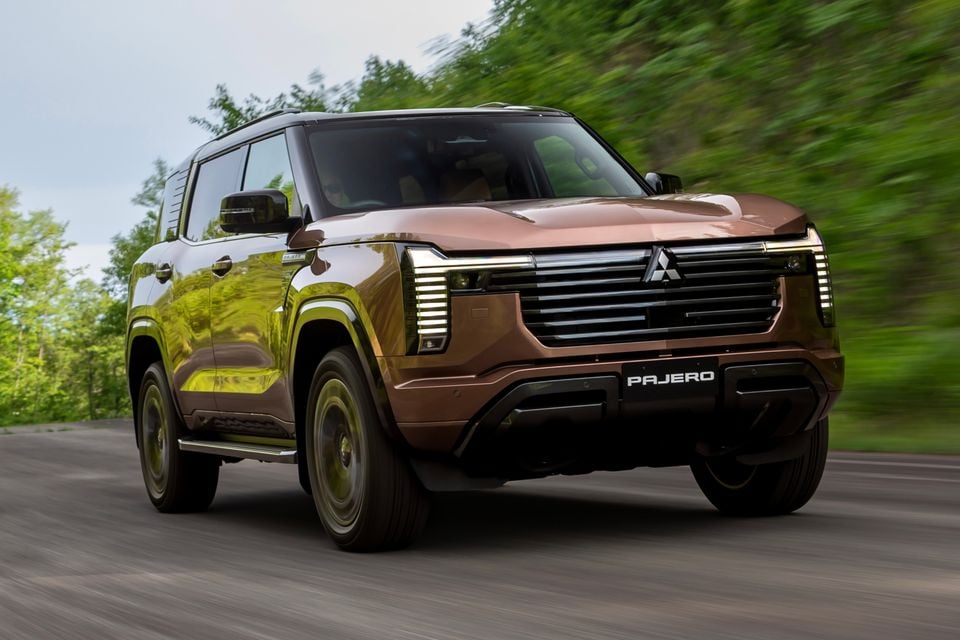
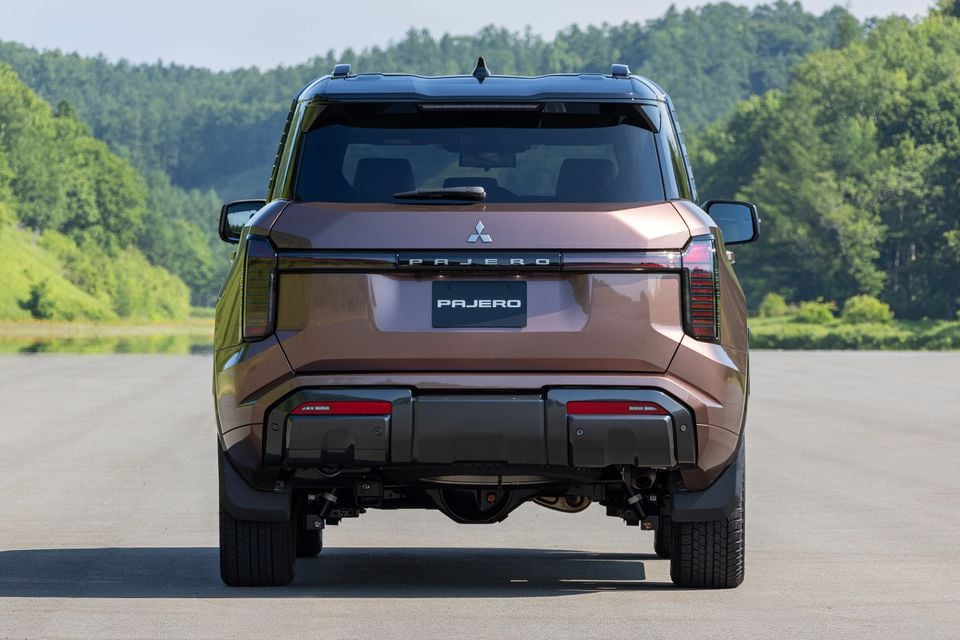
Our first drive in the born-again Mitsubishi Pajero confirms the big new off-road SUV is as upmarket as its price.
If this is the car for you, we’ll compare offers from trusted dealers, handle the back and forth and manage your purchase from enquiry to delivery.
Over four generations since 1982 – even before Toyota launched its first LandCruiser Prado in 1990 and Ford released its first Everest in 2003 – the Mitsubishi Pajero established itself as one of the world’s most iconic off-road SUV nameplates.
In its 39-year model run, the large all-terrain SUV attracted almost 3.3 million customers globally and became a household name in countries like ours, where countless Aussie families racked up endless kilometres on and off the beaten track.
Indeed, I spent many of my teenage years in the back of an original short-wheelbase Pajero two-door which my stepdad bought new in 1984 and I later inherited.
However, the Pajero dynasty ended when production ceased globally in 2021, leaving the smaller Triton ute-based Pajero Sport to soldier on alone until it too was discontinued – at least in Australia – in 2025.
But after a five-year hiatus, there’s an all-new Pajero and it’s gone dramatically upmarket like its two most direct rivals – the Prado and Everest, Australia’s most popular large SUVs.
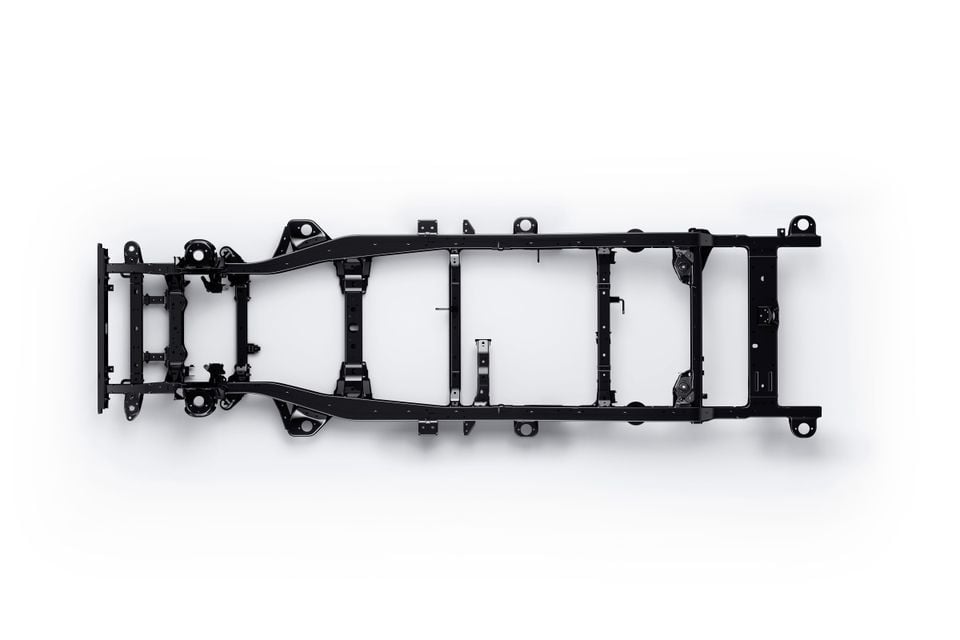
The new Pajero will be the first in two generations to be based on a ladder-frame chassis, after the third-generation model switched to a unibody (monocoque) design with an integrated ladder frame for increased torsional rigidity.
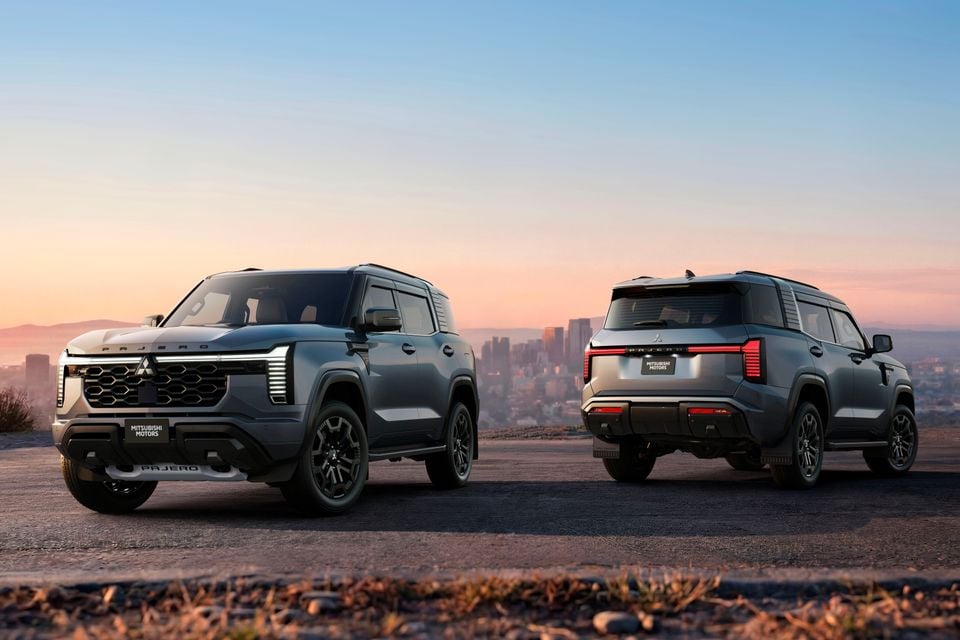
Technically, that makes it more of a replacement for the Pajero Sport – which was based on and built alongside the previous Triton in Thailand, much like the Everest and the related Ranger ute – rather than the fifth generation of a model that has always been produced in Japan, at least for Australia.
In any case, the new Pajero comes packed with safety features, advanced technologies, luxurious cabin equipment, and all of the requisite hardware that made its predecessors so capable off-road.
It’s also roughly 100mm longer and wider and about 70mm taller than the old Pajero Sport, and just 70mm shorter than the Prado at 4.92 metres long.
Its heavily modified Triton-based ladder frame has thicker side members, additional cross-bracing, and a wheelbase measuring 2870mm – 260mm shorter than that of Mitsubishi's ute.
Mitsubishi says the Triton's ladder frame has been “significantly enhanced” to offer “the robust capability of traditional frame-based off-road vehicles with modern refinement levels, ensuring a quiet, comfortable occupant experience”.
It claims the new frame is substantially stiffer than the outgoing Pajero Sport’s and supported by long-travel suspension with wider tracks, high-response shock absorbers and stabiliser bars, and electric power steering.
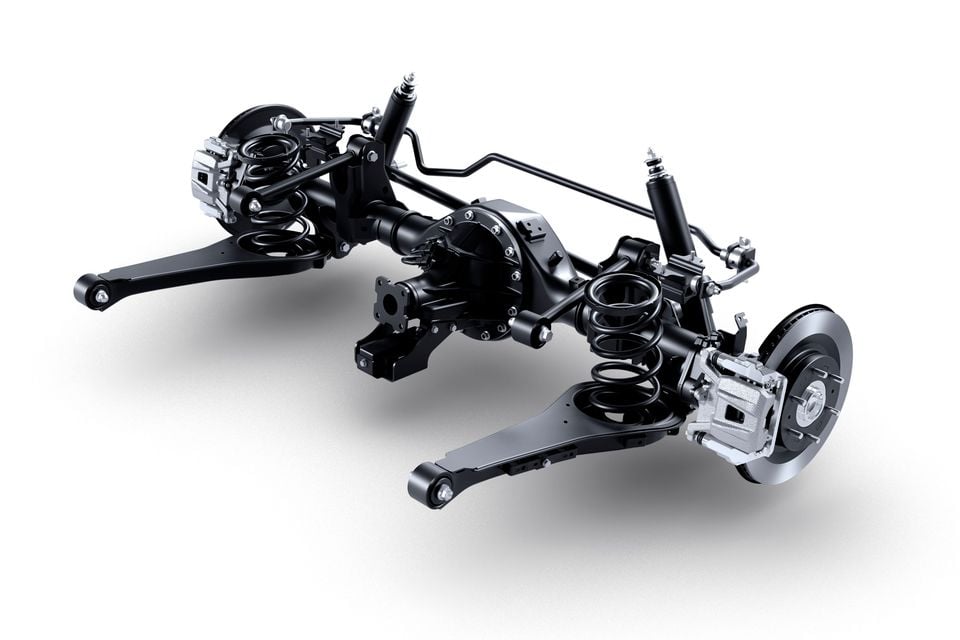
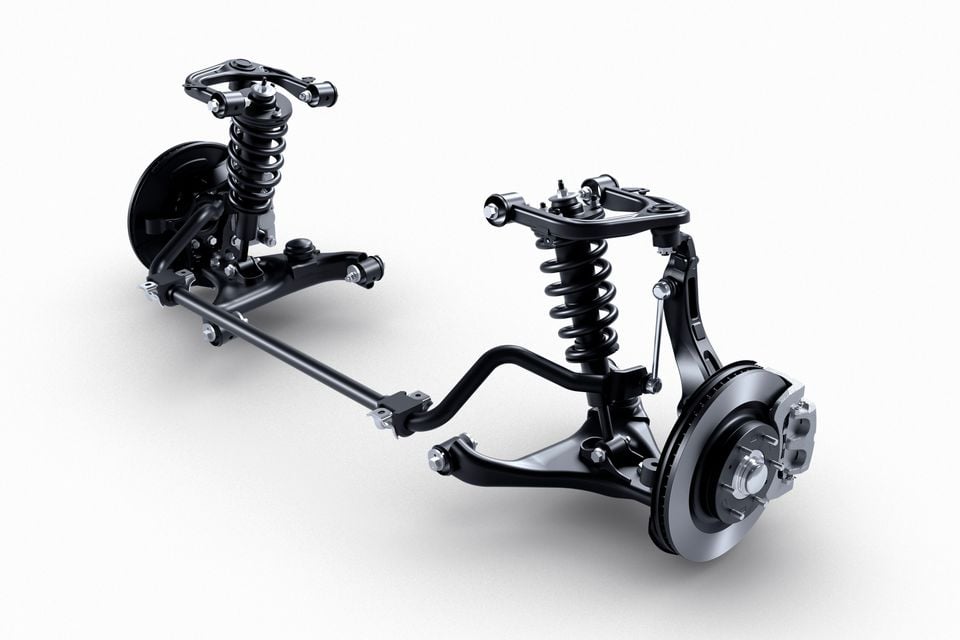
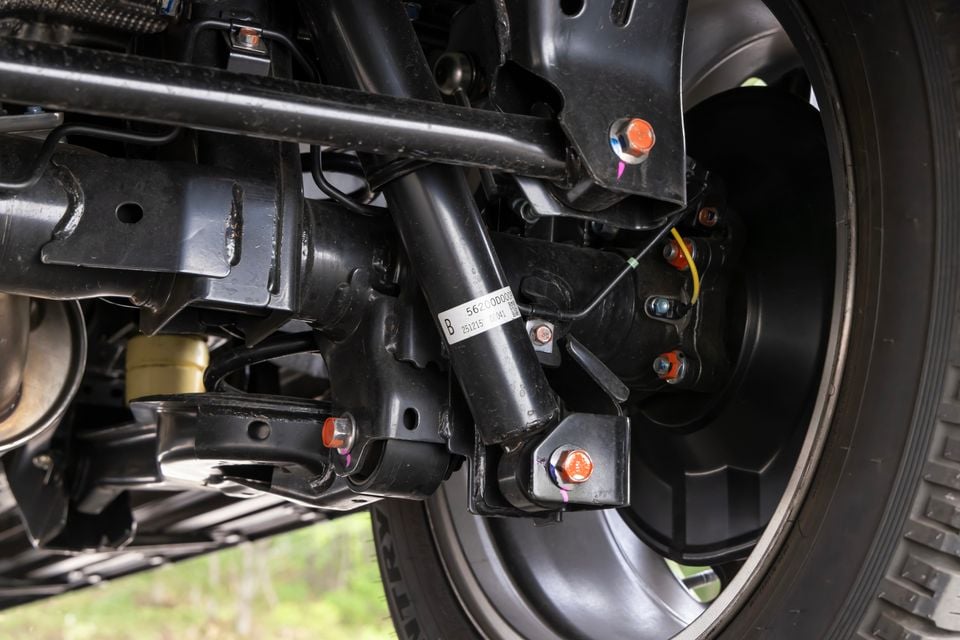
The Japanese brand says the front and rear of the chassis were developed exclusively for the Pajero. Front suspension is via double wishbones and coils and, like the Pajero Sport, the Pajero swaps out the Triton’s leaf-sprung rear suspension for a five-link ‘torque arm’ live rear axle with coil springs to better balance off-road capability and ride comfort.
Other changes over the Triton include an upgraded four-cylinder turbo-diesel engine with an eight-speed automatic transmission, rear disc brakes instead of drums, a slightly tighter turning circle, and a higher 'eye-point' to aid outward visibility, plus more upright A-pillars and redesigned front door structures.
The result is a bona-fide off-road SUV chassis wrapped in a full-size five-door wagon body that’s about as large as its competitors, accommodates up to seven adults in comfort, and remains unmistakably a Pajero.
But the fifth-generation Pajero will also be the most expensive ever, with a circa-$70,000 starting price that eclipses the Everest’s and comes close to the Prado’s.
Ahead of first Australian deliveries in December, Mitsubishi invited us for a brief first drive of its new flagship SUV at its Okazaki proving ground in Japan immediately following its world debut in Tokyo last week.
Available in four grades, the new Pajero is priced from almost $70,000 before on-road costs, making the all-new large off-road SUV more expensive than all but one of its most direct competitors.
| Model | Price before on-road costs |
|---|---|
| 2027 Mitsubishi Pajero GLS 5-seat | $68,490 |
| 2027 Mitsubishi Pajero GLS 7-seat | $69,990 |
| 2027 Mitsubishi Pajero Exceed | $79,990 |
| 2027 Mitsubishi Pajero GSR | $84,990 |
The entry-level five-seat Pajero GLS is priced at $68,490 plus ORCs, with a third row of seats costing an extra $1500 at $69,990 plus ORCs, while both the mid-range Exceed ($79,990 plus ORCs) and sportier GSR flagship ($84,990 plus ORCs) come standard with seven seats.
The Japanese-built Toyota Prado is still dearer with a starting price of $73,200 plus ORCs for the five-seat GX (and an equivalent seven-seat GXL costs $80,665 plus ORCs), but the new Pajero is significantly more expensive than the ute-based, Thai-made seven-seat Isuzu MU-X (from $49,900 plus ORCs) and Ford Everest, Australia’s most popular large SUV priced from $58,990 plus ORCs.
While the new 3.0-litre diesel-powered GWM Tank 500 is also cheaper with a $65,990 drive-away starting price, the reborn Pajero is almost $17,000 pricier at base level than the old Pajero Sport (from $51,540), stock of which remains available in Australia for the next couple of months, and $13,500 more expensive than the previous-generation Pajero GLX Final Edition last sold in 2021 at $54,990 plus ORCs.
To see how the Mitsubishi Pajero lines up against the competition, check out our comparison tool
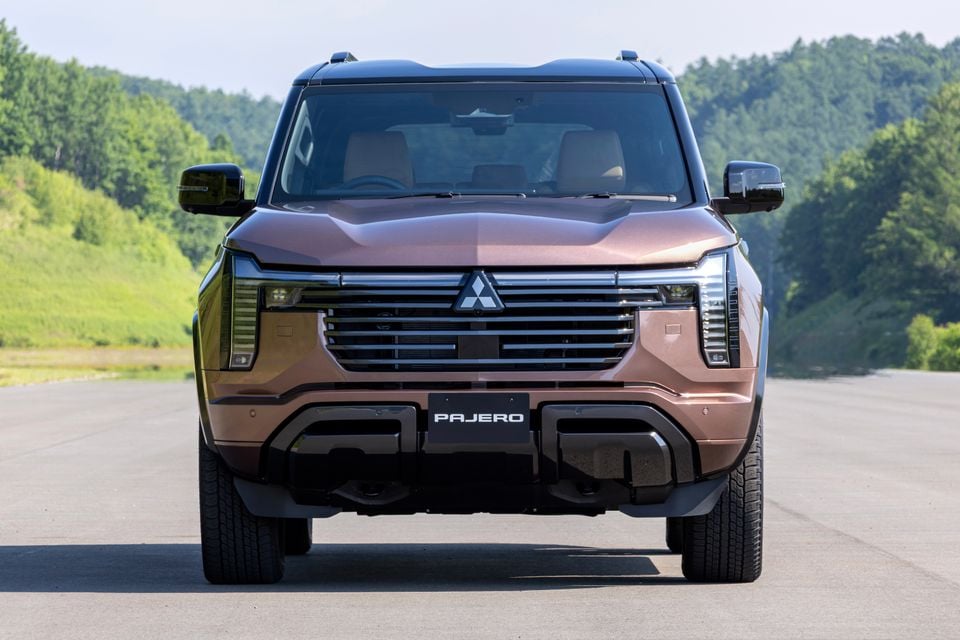
The new Pajero is not a premium SUV, but its extra-large and surprisingly plush cabin certainly gives off plenty of luxury vibes, and nails its brief for what is Mitsubishi’s new flagship SUV.
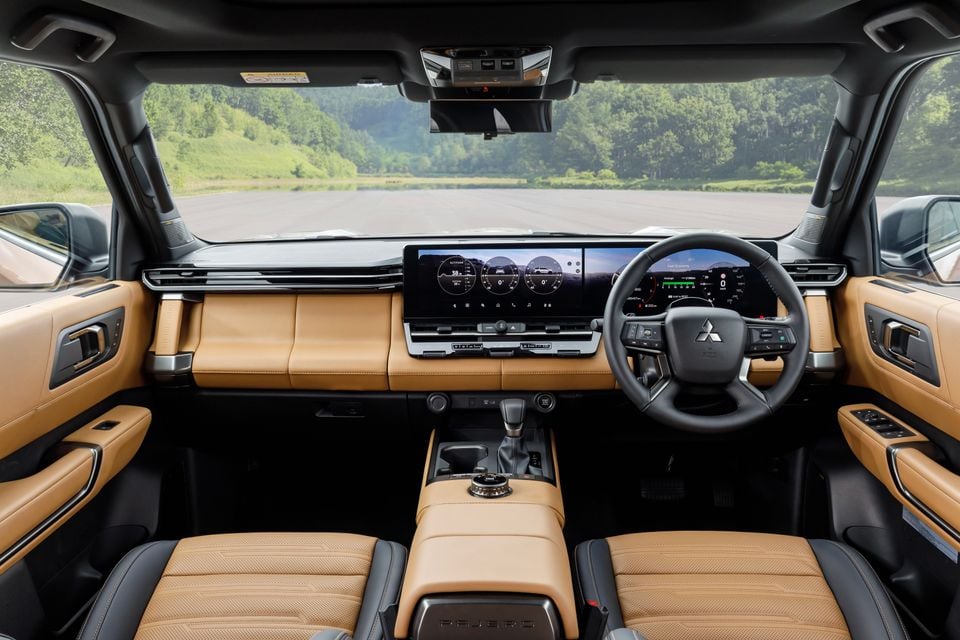
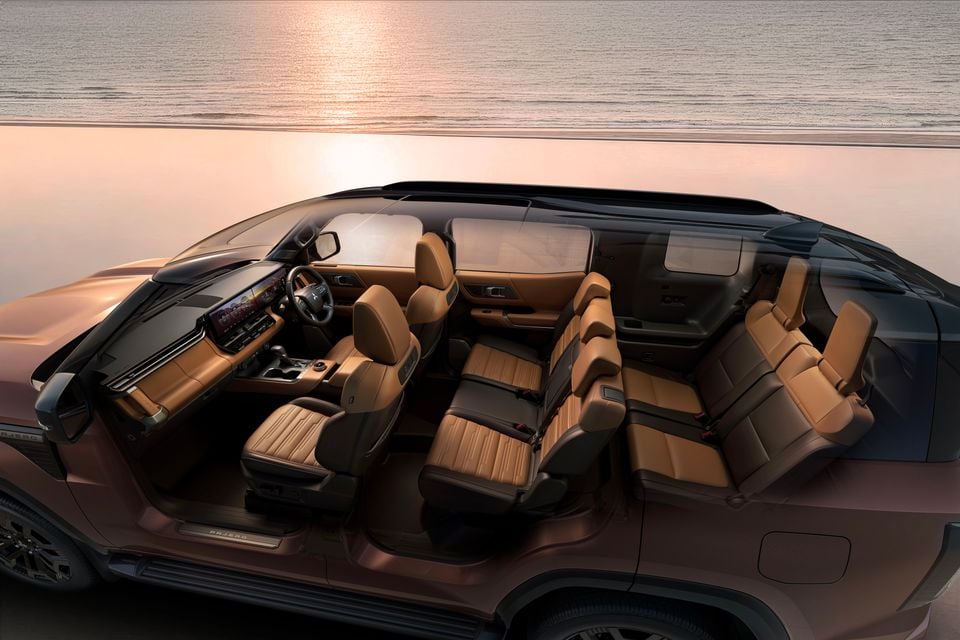
It starts with stretching space, and there’s plenty of it in all directions. All occupants score acres of legroom, shoulder room and, in particular, headroom. Indeed, Mitsubishi claims class-leading headroom courtesy of its relatively high roof line.
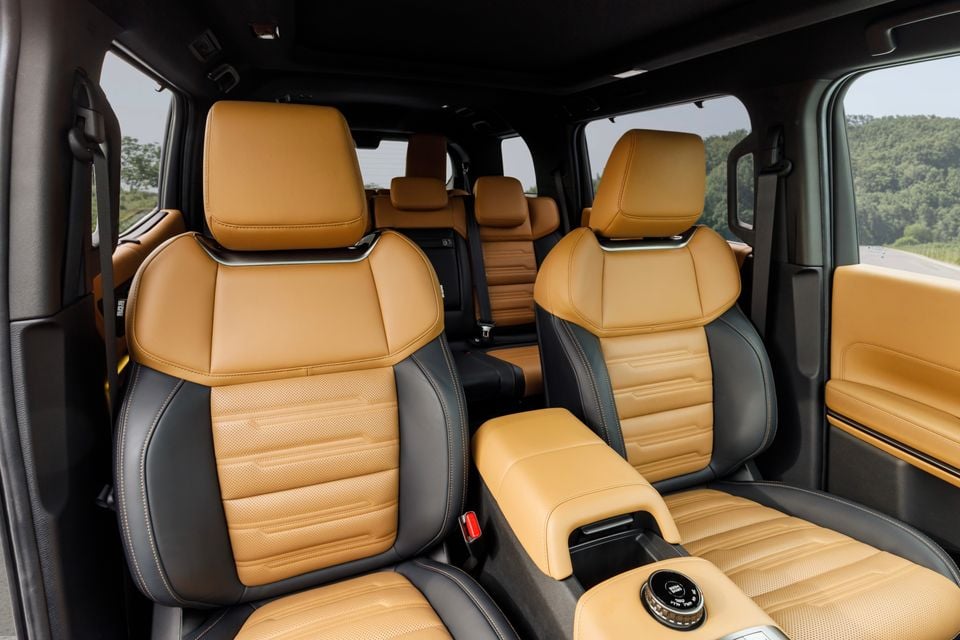
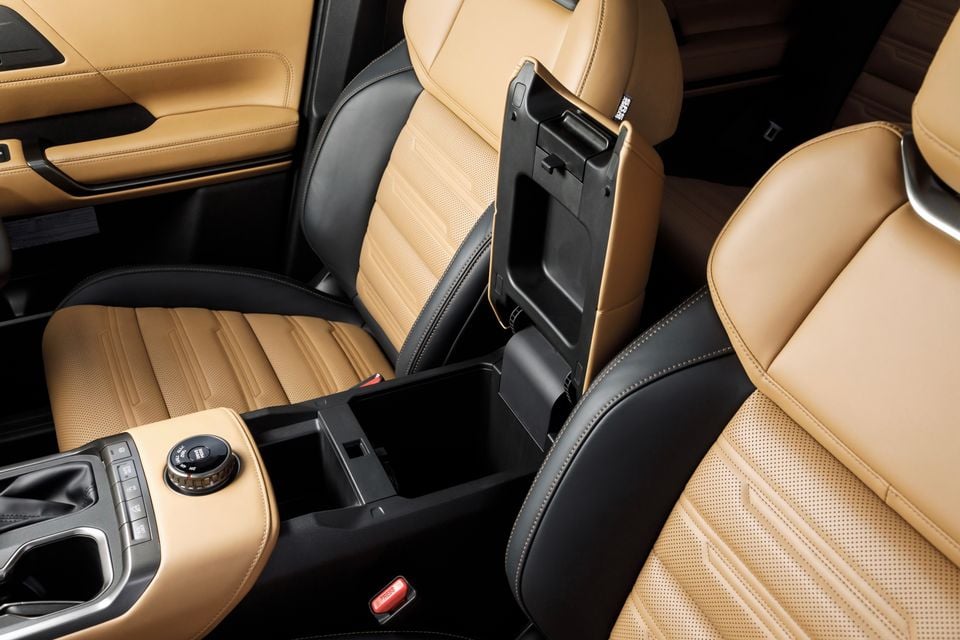
Front occupants are well separated by a large centre console with a softly padded armrest, and outward vision is a highlight from every seat – including those in the third row when specified – thanks to the generous glasshouse and stadium-style seating arrangement.
Apart from offering a commanding forward view out over the broad clamshell bonnet, the front seats are big and soft but well-bolstered, making them some of the most comfortable we’ve ever sat in, and also feature a wide range of adjustment (including powered lumbar as standard).
The second row slides over a 150mm range to provide adjustable legroom and improved access to the third row, which also accommodates occupants up to six feet tall thanks in part to the scalloped rear ceiling, though full-size adults are forced into somewhat of a knees-up stance.
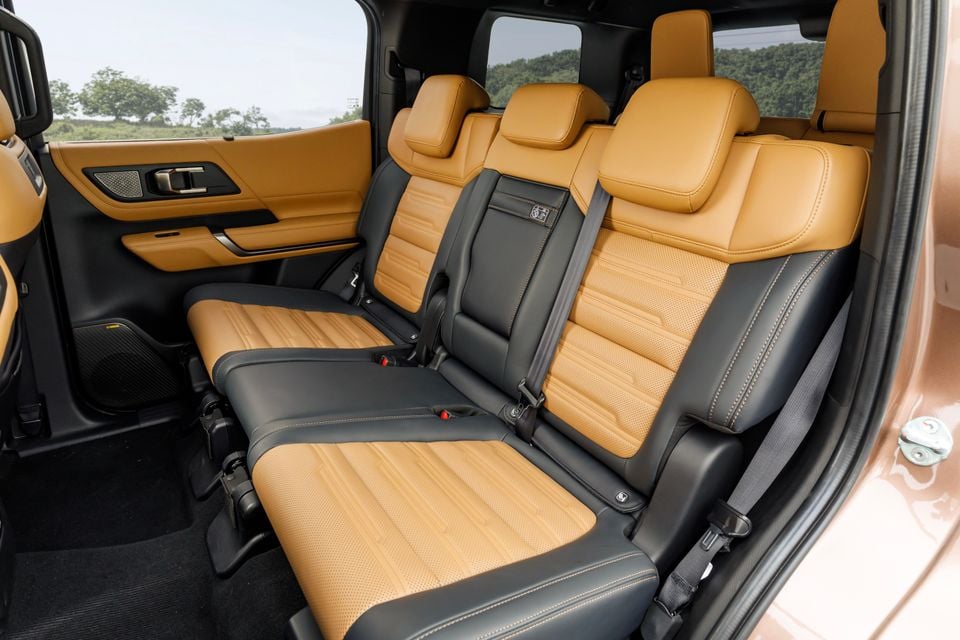
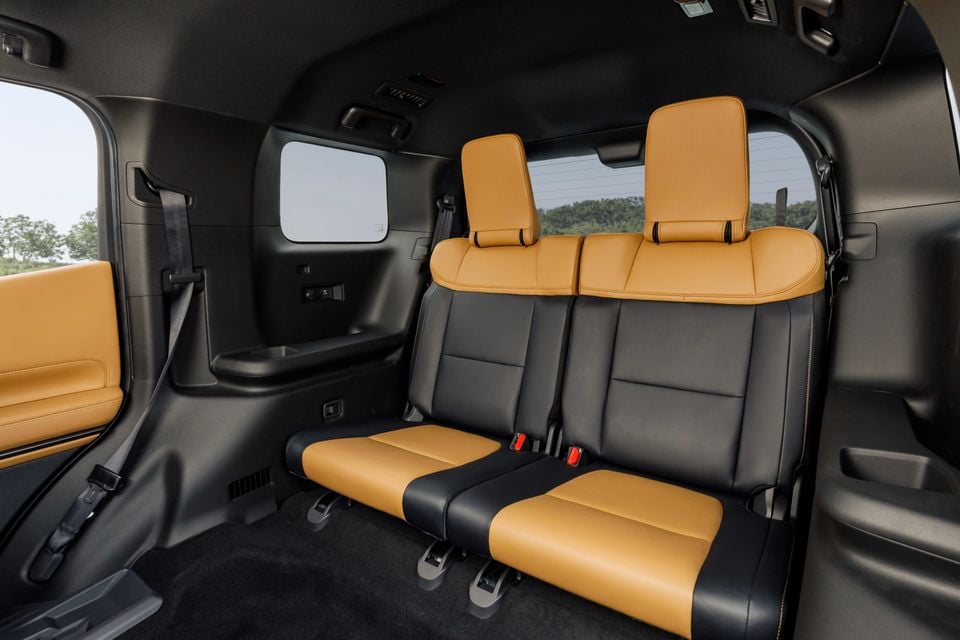
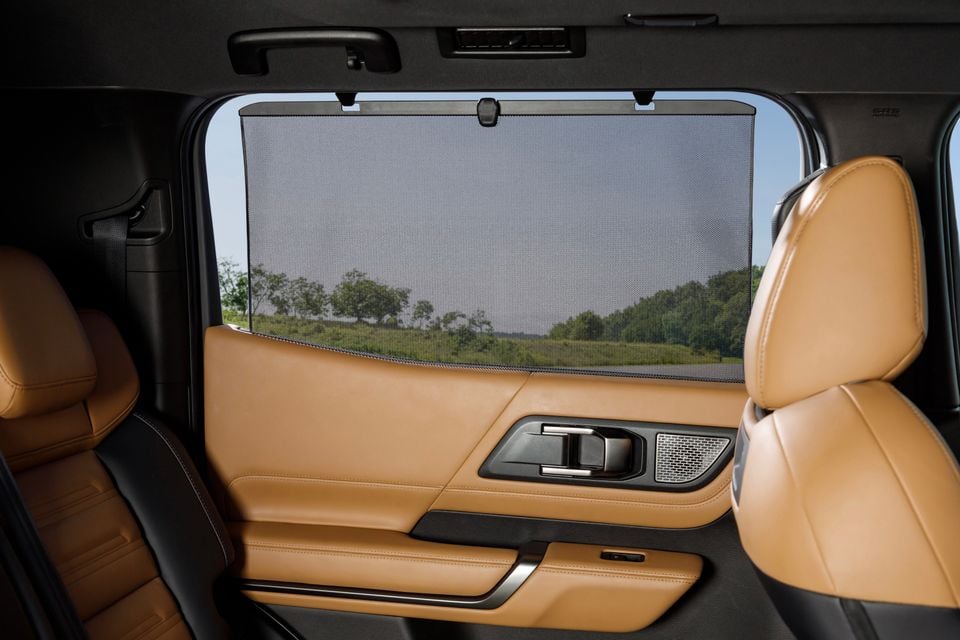
The large rear doors open to almost 90 degrees and feature retractable sunblinds, the middle seat in the second row isn’t humped and uncomfortable like it is in many SUVs, and even the centre transmission tunnel only mildly intrudes on foot room.
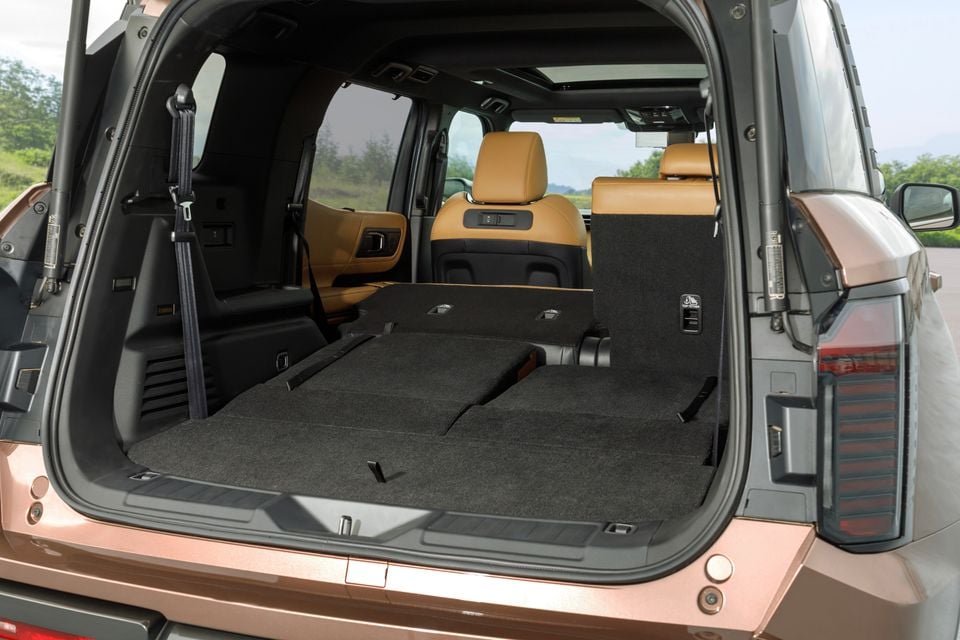
Cargo capacity behind the middle-row seatbacks, which also feature a multi-angle recline function (we counted at least 10 steps!), is listed at a sizeable 519 litres (VDA), plus there's another 10L in a cargo box under the boot floor, because a full-size spare wheel is mounted underneath the vehicle.
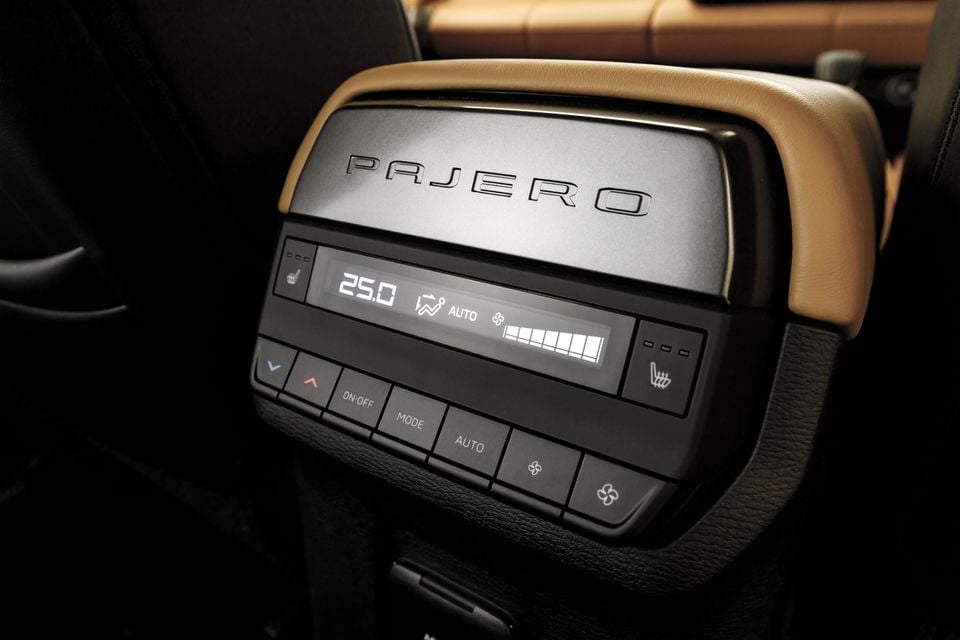
Occupants in both rear rows score overhead ventilation outlets, overhead grab handles, cupholders, and USB-C ports with up to 27W of charging capacity.
Access to the third row is relatively easy due to the middle row’s handy tumble-fold function, while even the third-row seatbacks can be flipped down without removing the huge head restraints to create a continuous but slightly sloping load floor, and all four doors come with oversized storage bins including large bottle holders.
The storage bonanza continues up front, where there are both upper and lower gloveboxes, a large tub under the centre armrest (replaced by a coolbox from Exceed level), and cupholders that pop out from each end of the dashboard like in the Everest, but this time accompanied by handy vertical grab handles mounted above them on the dash (in addition to A-pillar grabs).
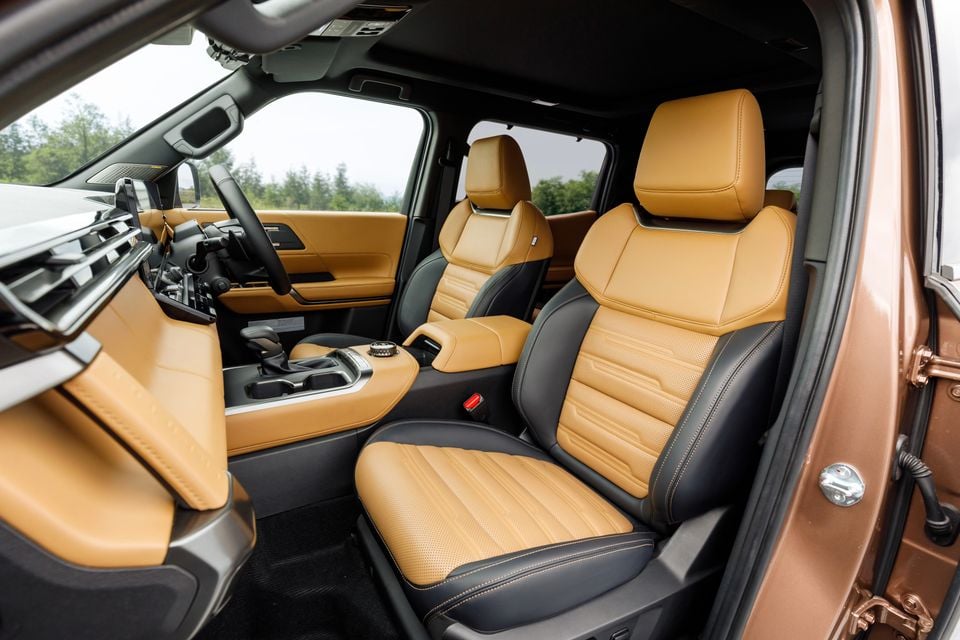
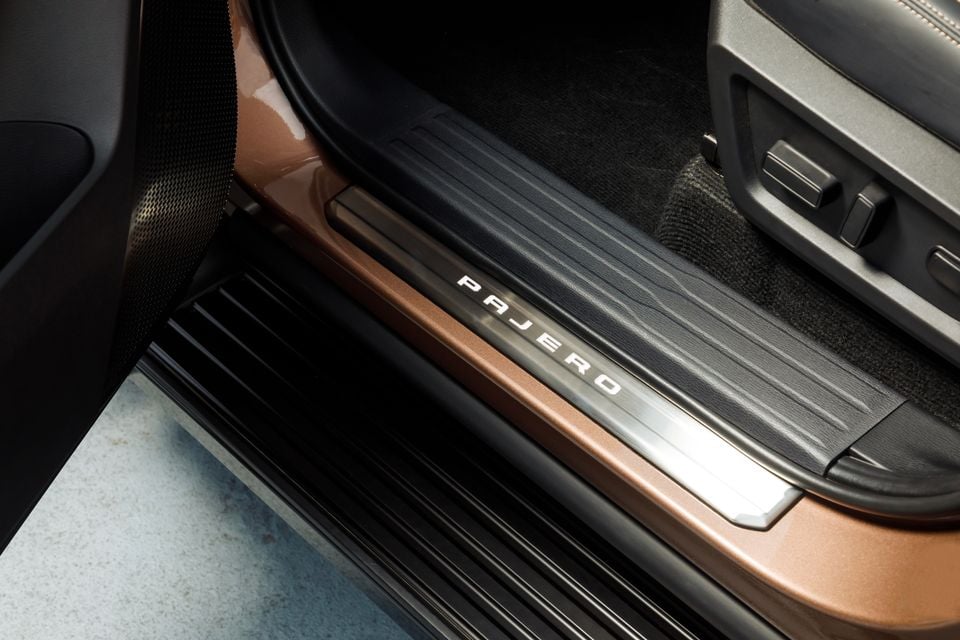
And in the top-spec GSR – which also steps up from the Exceed’s black leather seat trim to cool two-tone camel and black leather upholstery, and also adds panoramic sun visors with LED lamps, and illuminated front scuff plates – the expansive interior is bathed in light from a large panoramic sunroof.
Backing up the space and comfort is top-notch cabin material and build quality. While there is some hard plastic to be found down below, all of the key touch points are super-soft, including the seats, armrests, steering wheel and dashboard.
The waterproof black cloth trim in the entry-level GLS, which still gets a stitched leather-clad upper dash and the same soft padding everywhere, feels durable yet supple. And while the base grade has only manual front seat adjustment, there’s still power lumbar adjustment.
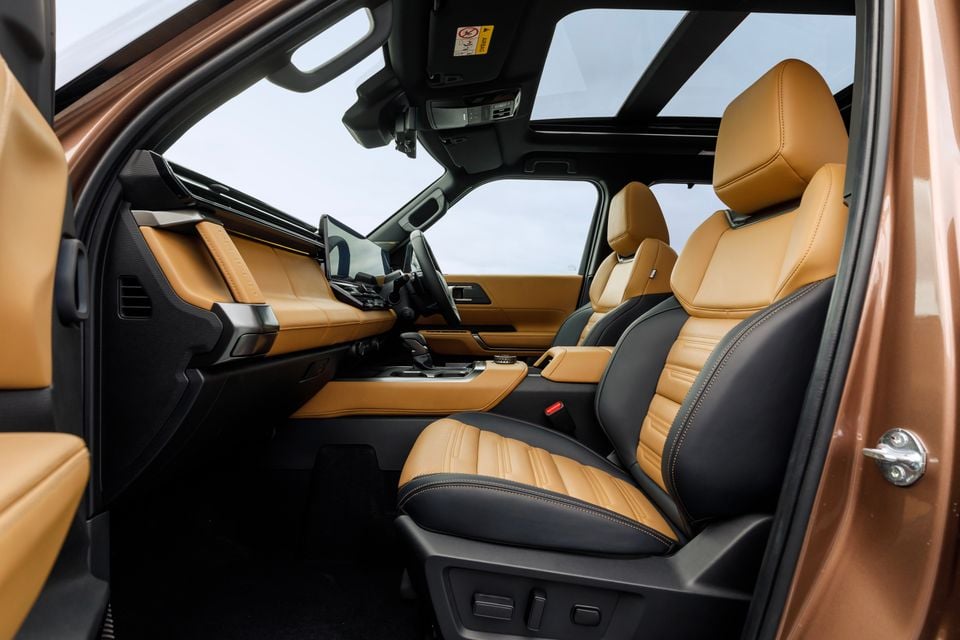
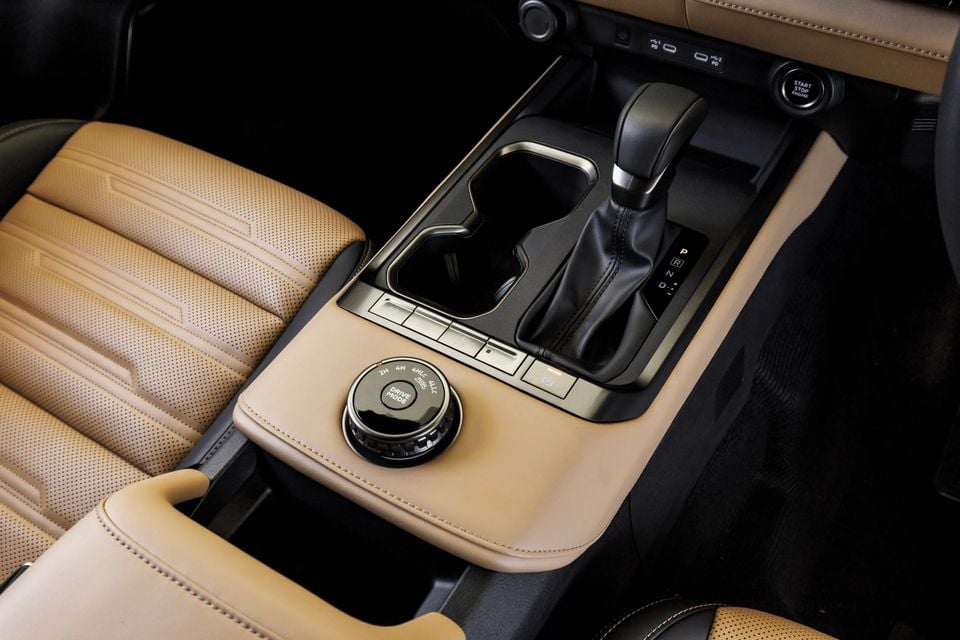
From Exceed level, both front occupants get heated, power-adjustable seats, while the GSR adds front-seat ventilation and memory settings, and all variants score a heated steering wheel with paddle shifters, an electric park brake with brake auto-hold, and tyre pressure monitoring.
In a refreshing change of pace from the touch-intensive interiors of many new cars today, there are tactile rubberised scroll wheels on the dash to adjust audio volume and cabin temperature, and physical buttons for audio and cruise controls on the tiller.
So while traditional SUV buyers will feel right at home here, tech-heads will rejoice in the fact the new Pajero also comes with the latest multimedia technology.
The graphics of the large digital screens may not be the most stylish, but once again even the entry-level GLS gets the same single, continuous wide-screen display comprising the central infotainment system and instrument cluster ahead of the driver.
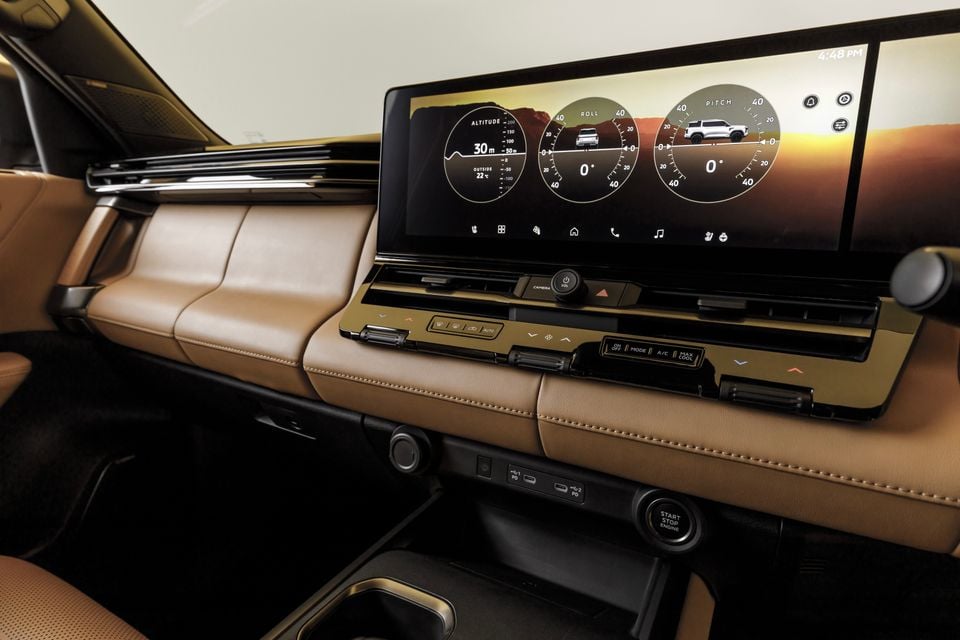
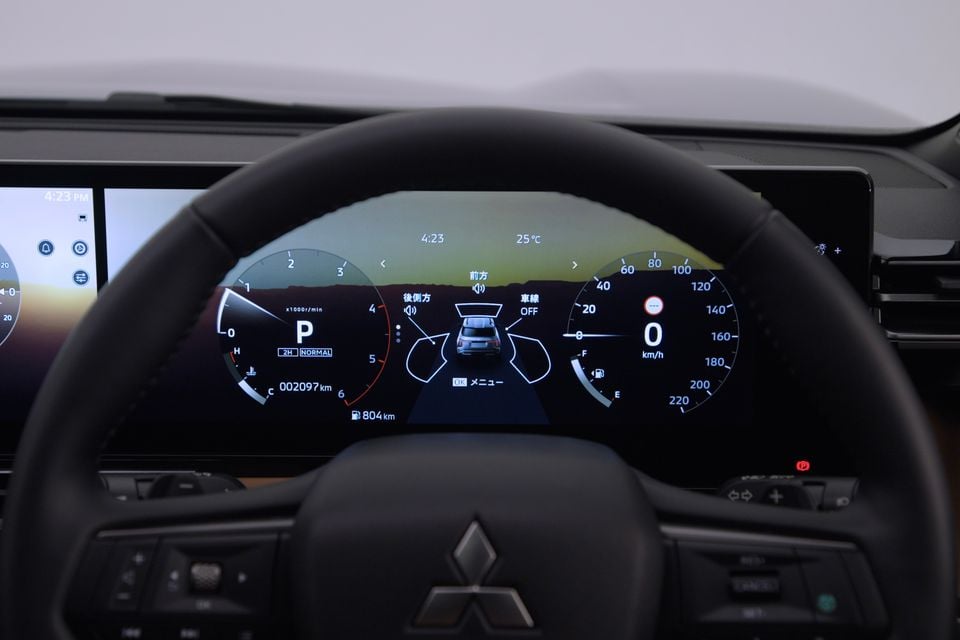
The only difference is the height of the digital display, with GLS grades coming standard with a 12.3-inch infotainment touchscreen and 12.3-inch digital instrument display, while Exceed and GSR variants upgrade to larger 14.3-inch units.
A central meter display harks back to the original Pajero with a specific off-road mode that presents an altimeter and inclinometers showing pitch and roll, with other functions including a compass, AYC status and world clock also available.
Wireless Apple CarPlay and Android Auto are standard across the range, along with Mitsubishi Connect providing a range of services including Automatic Collision Notification and Remote Climate Control.
Other standard multimedia highlights include a 15W wireless phone charger up front, Multi Around View Monitor, an advanced ‘Bonnet see-through’ camera that digitally aids vehicle placement and, for the Exceed and GSR, a 12-speaker Dynamic Sound Yamaha Ultimate audio system with 11-channel Dual Amplifier and Digital Signal Processor.
It not only sounds cracking, but compensates for vehicle speed, rain and even air-conditioning noise, while the GSR flagship also adds a digital rear-view mirror and electric steering column adjustment.
| Dimensions | Mitsubishi Pajero |
|---|---|
| Length | 4920mm |
| Width | 1925mm |
| Height | 1900-1910mm – variant-dependent |
| Wheelbase | 2870mm |
| Turning circle | 11.6m |
| Cargo capacity | 131L (behind third row) 1561L (third row folded) |
To see how the Mitsubishi Pajero lines up against the competition, check out our comparison tool
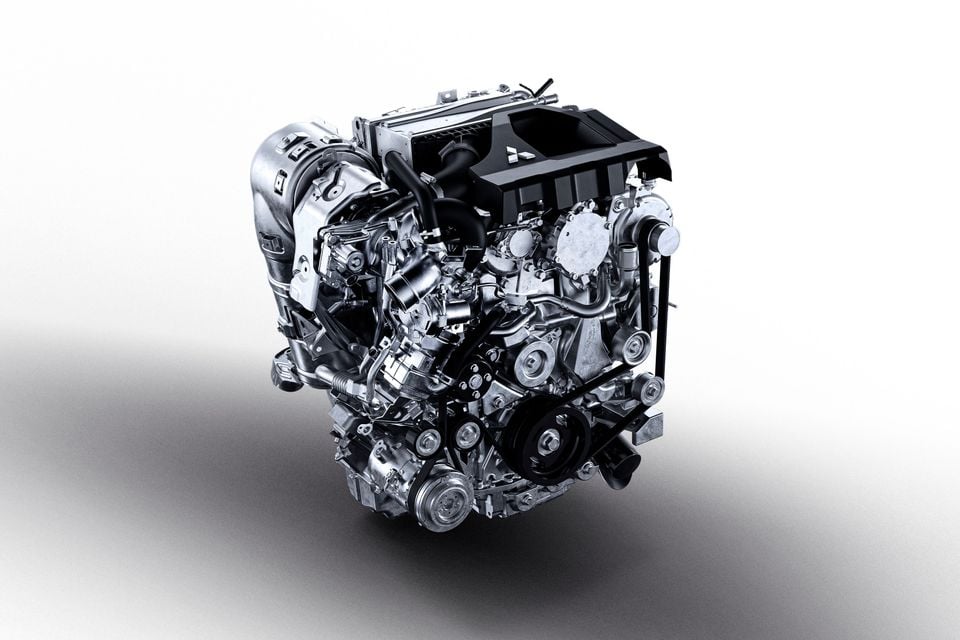
While hybrid and plug-in hybrid powertrains have been confirmed for release by 2030, the new Pajero will arrive with a “new-generation” version of the Triton’s twin-turbocharged 2.4-litre 4N16 four-cylinder diesel engine, developing the same 150kW of power and an extra 10Nm of torque at 480Nm but using one fewer turbocharger.
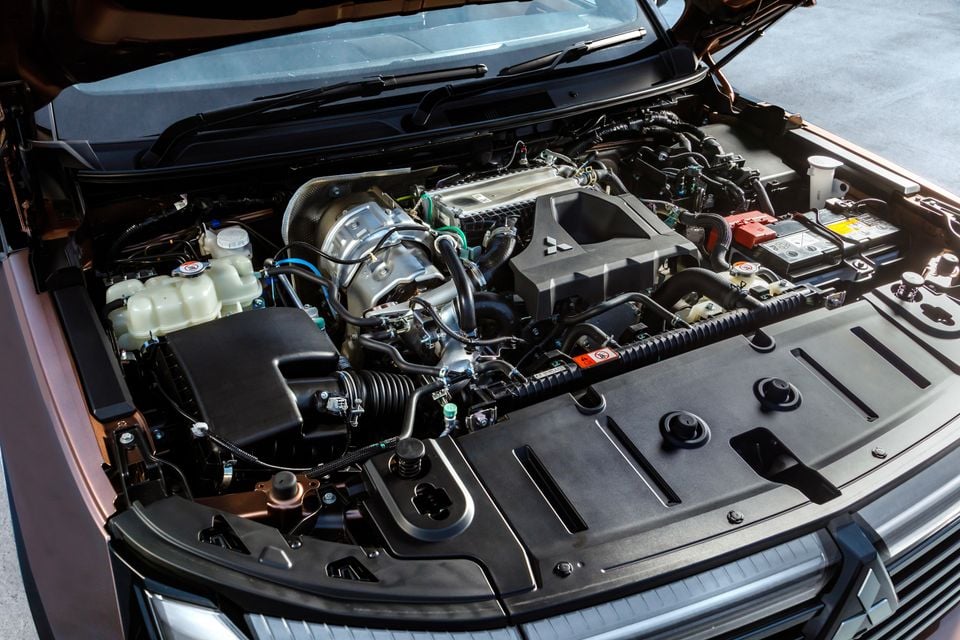
That eclipses the outputs of both the single-turbo diesel Pajero Sport (133kW and 430Nm), and the Mk4 Pajero’s 3.2-litre DI-D diesel four (141kW/441Nm).
And in terms of its large off-road SUV competitors, the Everest is available with 125kW/405Nm 2.0-litre four-cylinder and 184kW/600Nm 3.0-litre V6 turbo-diesel engines, the Prado comes with a 150kW/500Nm 2.8-litre four-cylinder turbo-diesel, and the MU-X can be had with 120kW/400Nm 2.2-litre and 140kW/450Nm 3.0-litre four-cylinder engines.
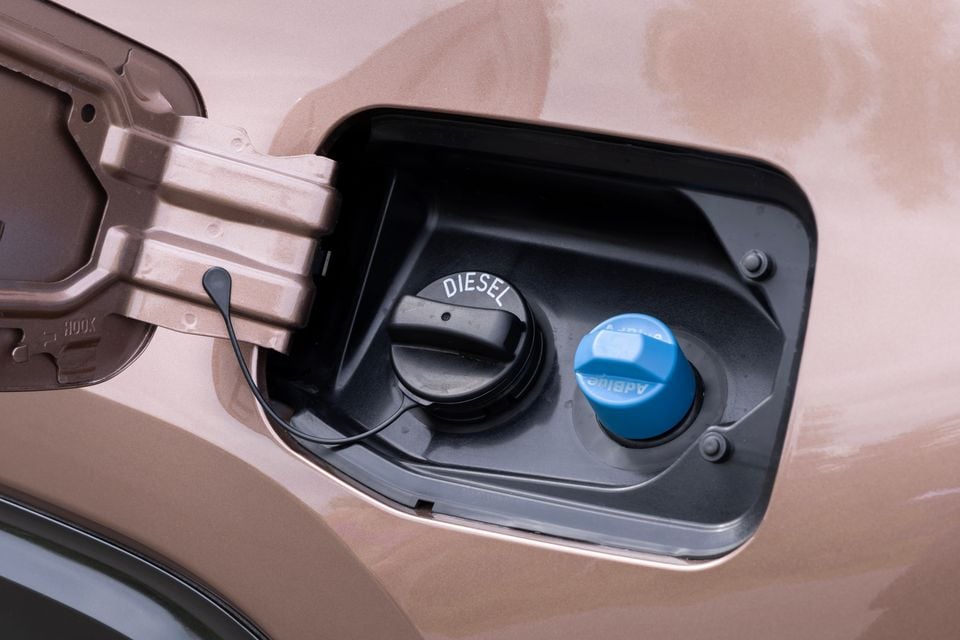
Claimed to deliver more refinement, drivability, response and efficiency, it now meets Euro 6d emissions standards – a first for a Mitsubishi engine – thanks to a water-cooled intercooler, dual-loop EGR system and the adoption of AdBlue, plus an electric fan cooling system.
Efficiency figures published by RedBook.com.au (but yet to be confirmed by Mitsubishi) include combined fuel consumption of 7.2L/100km, aided by a fuel-saving automatic idle-stop system, while a “latest-generation variable-geometry turbocharger” is said to increase mid-range torque and response “right where the bulk of driving is conducted”.
While the Triton has a six-speed automatic transmission, the new Pajero adopts an “enhanced, lighter-weight” version of the old Pajero Sport’s eight-speed unit with a wider ratio spread “to support impressive response and reduced fuel use”. Fuel capacity is 80L and AdBlue capacity is 17L.
All model variants will come standard with a low-range transfer case, rear differential lock, Mitsubishi’s tried-and-proven Super Select II switchable 4WD system with 2H (rear-wheel drive, high ratio), 4H (four-wheel drive, high ratio), 4HLc (4WD, high ratio, locked centre diff) and 4LLc (4WD, low range, locked centre diff) drivetrain settings, plus Super-All Wheel Control with Active Yaw Control and seven drive modes – Normal, Eco, Gravel, Snow, Mud, Sand and Rock.
Braked towing capacity is 3500kg, bettering the Pajero Sport by 400kg and the old Pajero by 500kg (and matching the Triton and its direct rivals), while Trailer Load Assist (TLA) is said to detect sway and actively adjust power and braking to each individual wheel to maximise stability while towing.
However, kerb weight rises to 2513kg, leaving 830kg of payload based on a gross vehicle mass (GVM) of 3215kg, while Mitsubishi lists a static roof-load capacity of 300kg (dynamic: 100kg), allowing fitment of popular accessories such as roof racks.
| Specifications | Mitsubishi Pajero |
|---|---|
| Engine | 2.4L 4cyl turbo-diesel |
| Power | 150kW @ 3500rpm |
| Torque | 480Nm @ 1750-2500rpm |
| Transmission | 8-speed auto |
| Drive type | ‘Super Select II’ four-wheel drive |
| Fuel economy (combined) | 7.2L/100km |
| CO2 emissions (combined) | 190g/km |
| Fuel capacity | 80 litres |
| Kerb weight | 2385kg |
| Payload | 830kg |
| Braked towing capacity/towball download | 3500kg/350kg |
| Gross vehicle mass (GVM) | 3215kg |
| Gross combination mass (GCM) | 6340kg |
To see how the Mitsubishi Pajero lines up against the competition, check out our comparison tool
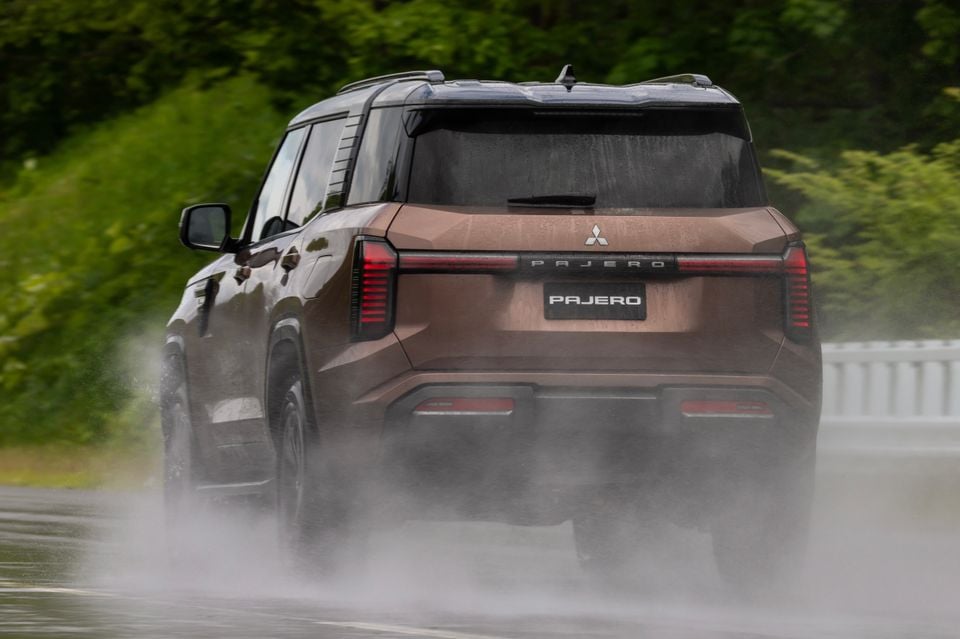
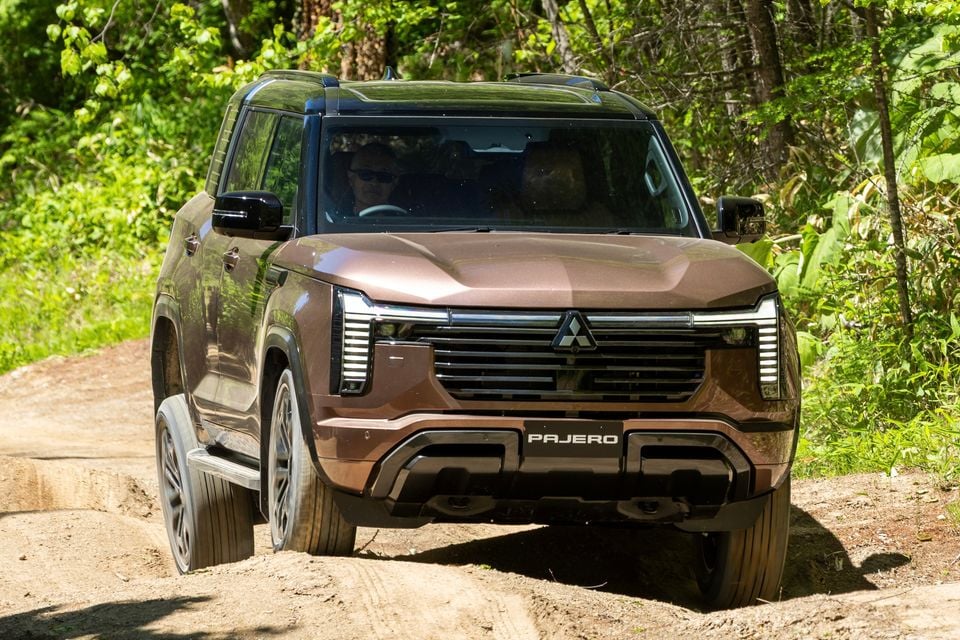
We need to preface the drive section of this review by stating we had just one lap of a test track at the Okazaki Technical Center proving ground – Mitsubishi’s Japanese R&D hub near Nagoya – to drive the new Pajero following its global debut in Tokyo the previous day. And no photography was allowed, hence the stock shots you see here.
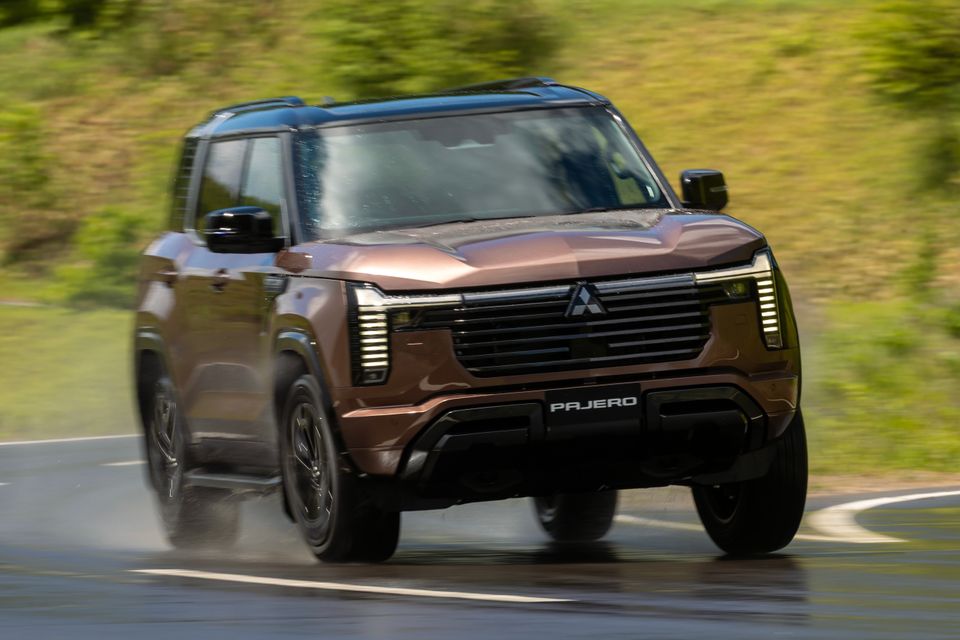
That said, we had plenty of time to crawl around in it, and the course did include two long straights, half of the facility’s high-speed banked circuit, one fast bend with stutter bumps mid-corner, and a series of fast and slow turns in between.
With limited time on the ground, several hours on the Shinkansen to get there and back, and dozens of Thai journalists also lining up alongside a small group of us Aussies, the decision was made to limit us only to on-road evaluation.
It was the right decision in hindsight, because we assume the Pajero’s well-proven Super Select II switchable 4WD system with low range, centre and rear diff locks, active yaw control and seven drive modes will make it as formidable off-road as its forebears, and we’ll have more time to evaluate its off-road capability before the new Pajero arrives Down Under in December.
Stepping inside the large, tall SUV via the standard side steps with the engine running, it’s immediately obvious this updated turbo-diesel is much more refined, with barely any vibration apparent inside, and an ability to rev beyond 4000rpm smoothly, responsively and strongly without any traditional diesel clatter.
If this is the car for you, we’ll compare offers from trusted dealers, handle the back and forth and manage your purchase from enquiry to delivery.
Yes, when worked hard on the road, it’s still the loudest part of the vehicle and it’s certainly no powerhouse, but it does get off the line fairly briskly and delivers a seamless wall of twist from all engine revs, and certainly won’t disappoint anybody stepping out of a four-cylinder Everest, Prado or Isuzu MU-X.
Obviously there’s plenty of weight to haul around here and some might argue it needs another 50Nm of peak torque – or at least another 20Nm to match the Prado – but the 2.4-litre turbo-diesel has enough punch to compete with all but an Everest V6, and feels relaxed and willing from all engine speeds, including 1900rpm at 100km/h in top gear.
The well-sorted eight-speed automatic transmission shifts smoothly yet quickly (albeit not as quickly via the manual override paddles), was never left fumbling in the wrong ratio, and is perfectly suited to a big, go-anywhere family SUV like the Pajero.
In fact, refinement is a highlight of Mitsubishi’s new flagship SUV, the doors of which shut with a thud and the body of which feels as tight as a drum, thanks to outstanding engine, wind and road noise insulation.
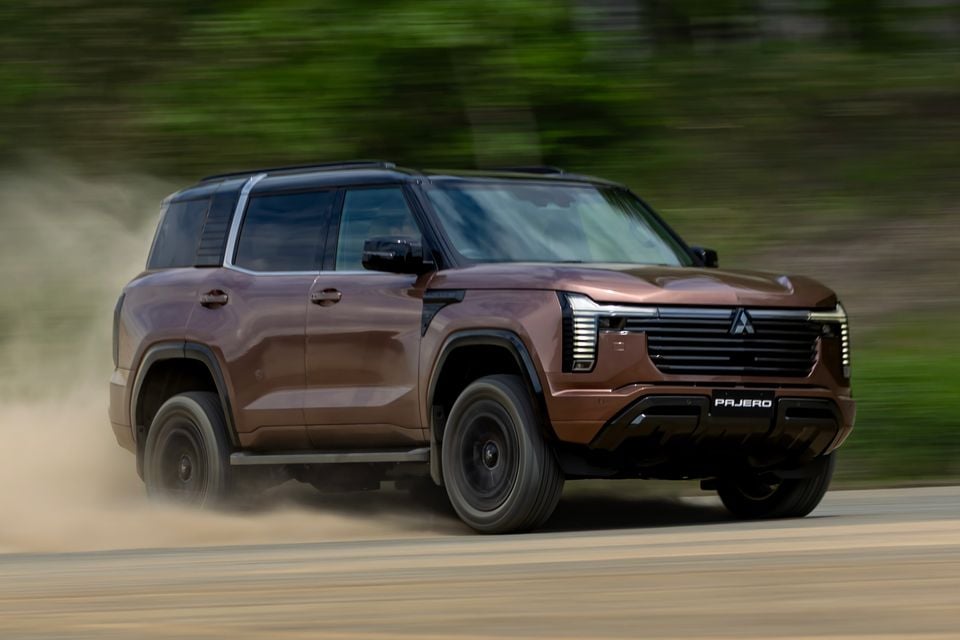
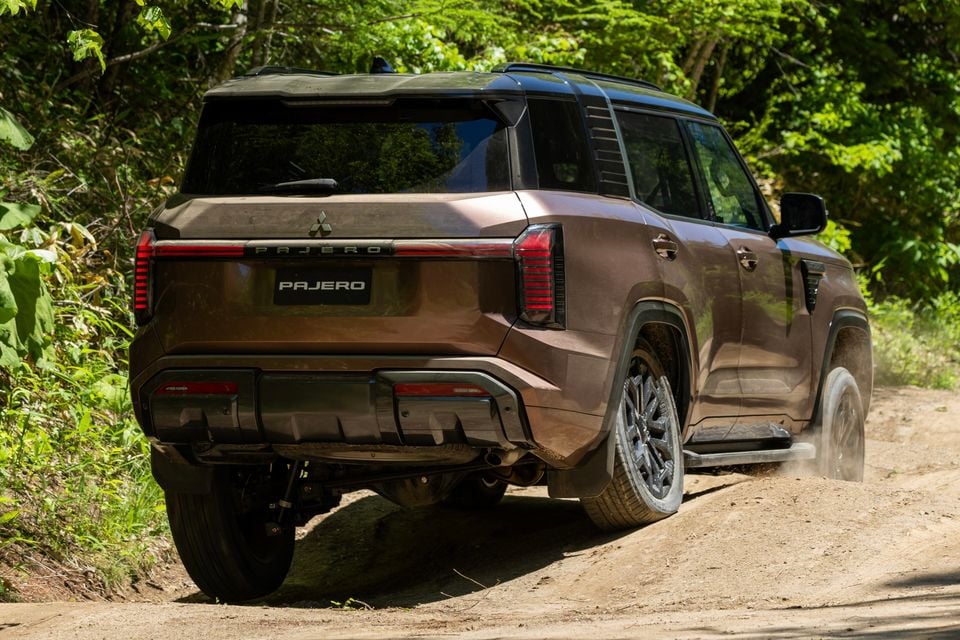
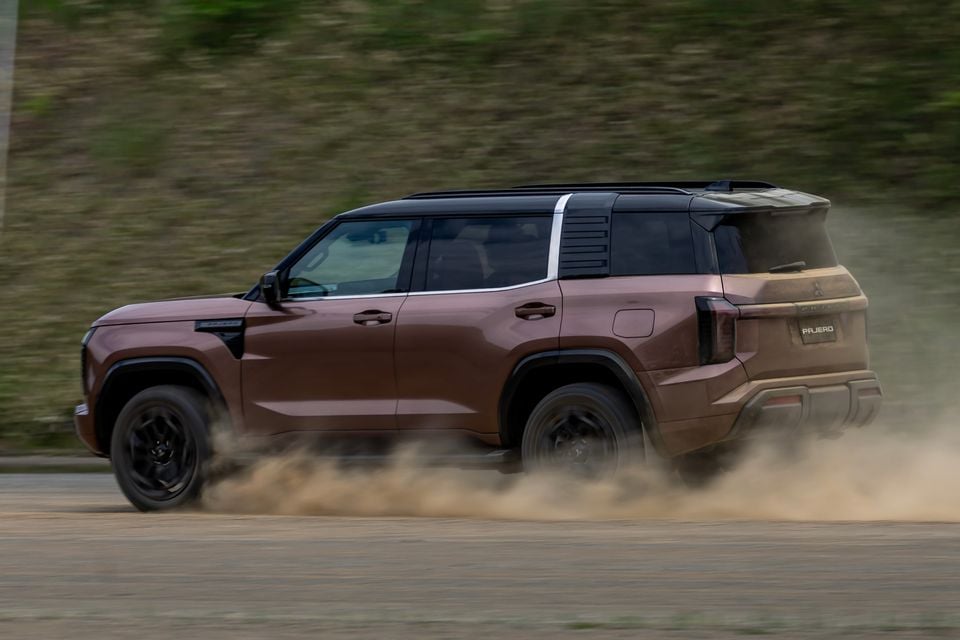
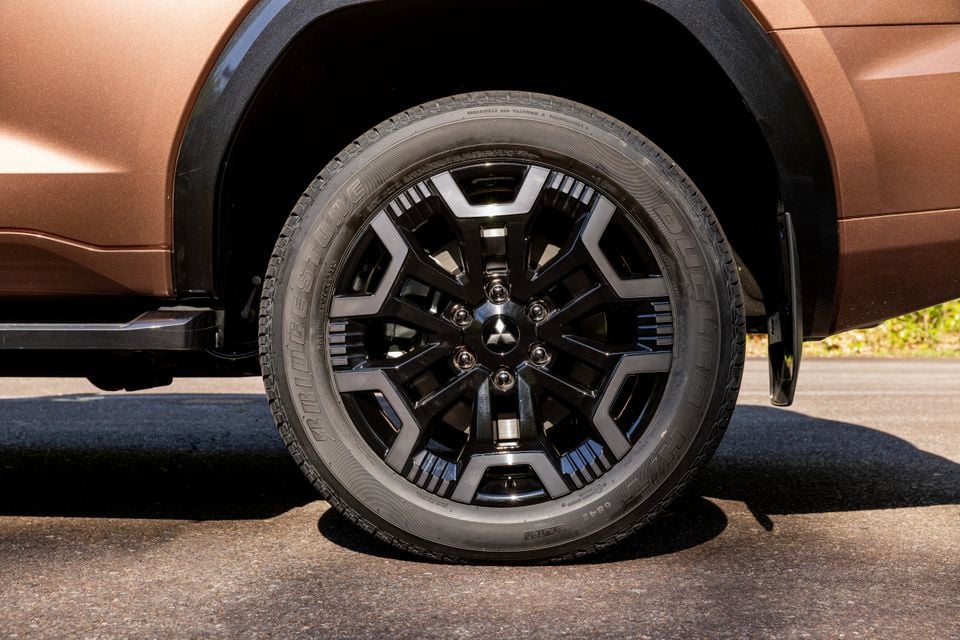
It was very quiet and stable at speed – both the high-spec version we drove on 20-inch Bridgestone Dueler HTs, and the low-spec version we passengered in with 18-inch Toyo Open Country ATs – and equally impressive in the few bends we could throw it at.
The good news continues when it comes to ride and handling. The steering is slow but accurate and responsive enough, and the ride quality is supple, yet body roll is kept well in check, at least during our limited time behind the wheel.
Minor steering column shock and faint body shudder over the sharp mid-corner bumps at speed were the only obvious giveaways we were driving a hefty ladder-frame SUV, and the brakes were progressive but strong enough to generate pronounced pitch under hard braking.
No, the Pajero is not Euro-firm like many large German premium SUVs, but nor is it as soft as some Chinese off-roaders. Instead, like its engine, its chassis strikes a happy medium that will suit a wide variety of use cases, from urban family running to outback trekking.
| Off-road dimensions | Mitsubishi Pajero |
|---|---|
| Ground clearance | 228mm (GSR) |
| Approach angle | 30.4 degrees |
| Departure angle | 25.8 degrees |
| Breakover angle | 22.5 degrees |
To see how the Mitsubishi Pajero lines up against the competition, check out our comparison tool
Three trim levels will be available from launch, each borrowing their names from the Pajero Sport (with the exception of GLX, leaving the door open to a cheaper variant later on), and each bringing an uptick in technology, safety and equipment compared to both the old Pajero and Pajero Sport, led by a digital recreation of the iconic triple analogue ‘Multi Meter’ instruments seen in previous generations of the Pajero.
2027 Mitsubishi Pajero GLS equipment highlights:
The Exceed adds:
The GSR adds:
Mitsubishi says that because Australia is “one of the key global Pajero markets”, its local accessories engineering team has been “deeply involved” in accessories design and development, and that a comprehensive outline of genuine accessories will be provided before launch.
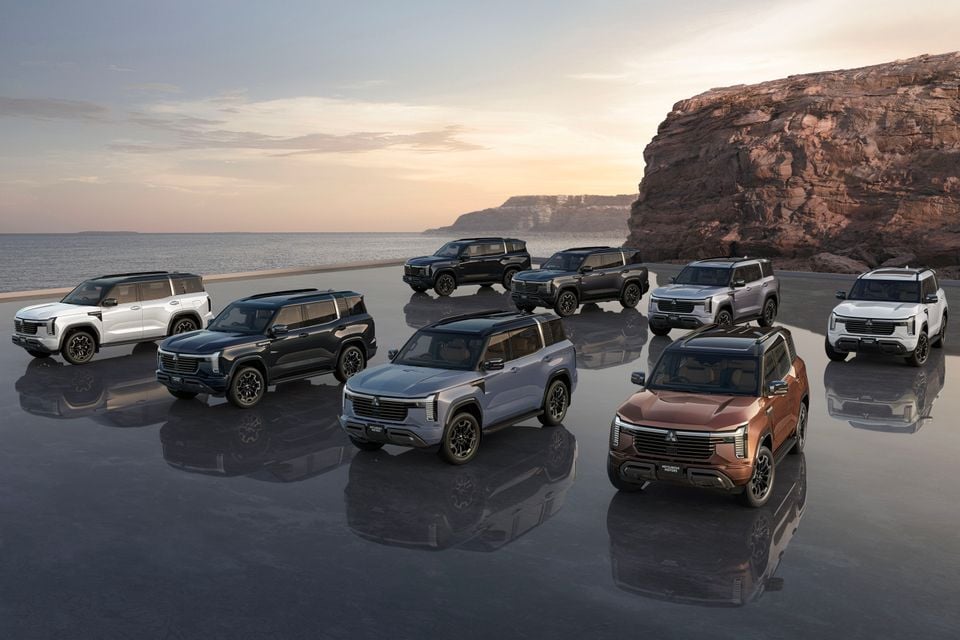
A range of solid, metallic and pearlescent exterior paints are available, in addition to two prestige colours debuting on the Pajero (Armour Copper and Phantom Blue), alongside Black Diamond. Armour Copper and Black Diamond are exclusive to the Exceed and GSR, while Phantom Blue can be had with all grades.
White is the only standard solid colour and optional paint prices are yet to be announced. Uniquely, the GSR features a black roof to create a two-tone look when paired with a non-black primary colour.
While the base GLS comes with black fabric seat trim with grey stitching, the Exceed gets black leather with beige stitching, and the GSR offers two-tone black and Camel leather with Camel stitching.
To see how the Mitsubishi Pajero lines up against the competition, check out our comparison tool
The new Pajero takes a significant step up in terms of safety equipment and advanced driver aids, ticking almost every box as standard across the range.
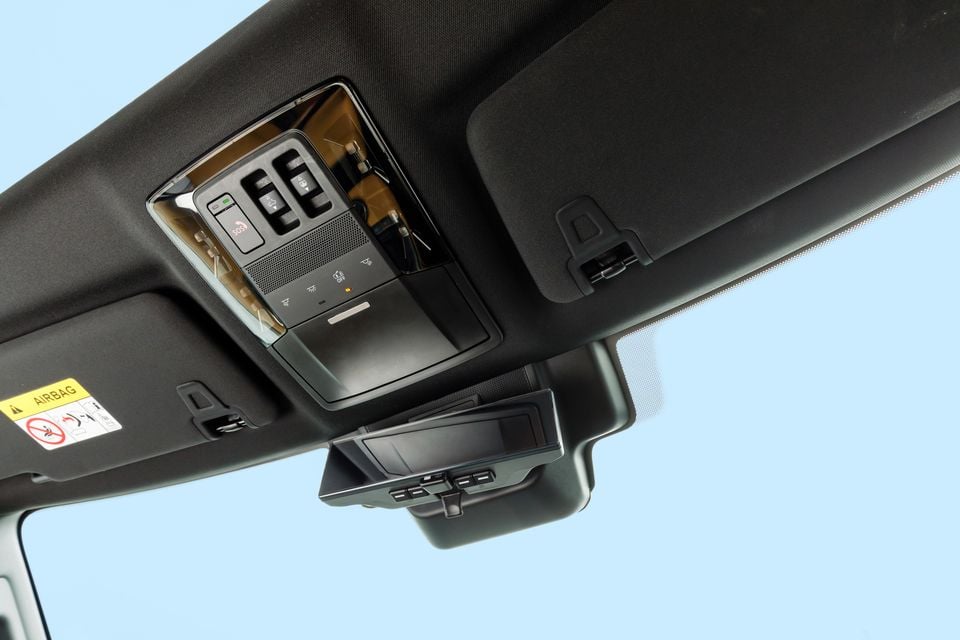
Standard safety features include:
To see how the Mitsubishi Pajero lines up against the competition, check out our comparison tool
Service pricing is yet to be announced but, as with all Mitsubishi models in Australia, the Pajero will be backed by a conditional 10-year/200,000km warranty, 10-year capped-price servicing and 10-year roadside assistance plan.
| Servicing and Warranty | Mitsubishi Pajero |
|---|---|
| Warranty | 10 years or 200,000 kilometres (conditional) |
| Roadside assistance | 10 years (conditional) |
| Service intervals | 12 months/15,000km |
| Capped-price servicing | TBC |
| Total capped-price service cost | TBC |
If you’re a commercial buyer or you don’t service with Mitsubishi, you receive the Japanese brand’s standard five-year/100,000km warranty.
To see how the Mitsubishi Pajero lines up against the competition, check out our comparison tool
It’s been a long time between drinks for rusted-on Pajero fans, but after five long years there’s now a fitting sequel for one of the world’s most revered off-road SUVs – even if it’s based on a ladder frame for the first time in two generations.
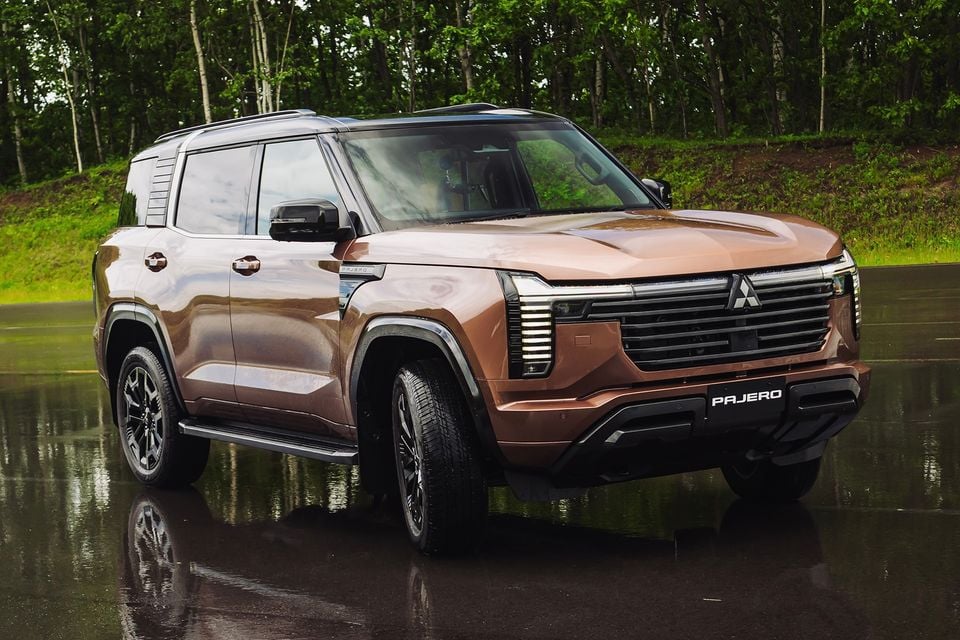
It may be based on the Triton ute, but the new Pajero is the most spacious, luxurious, comfortable and refined example of the breed so far, and it’s backed by an engine and chassis that should be perfect for its target audience.
The first all-new Pajero in two decades will also major in cutting-edge technology, extensive standard equipment and generous aftersales provisions, which should make it a compelling proposition alongside two of Australia’s most popular family vehicles.
If only it wasn’t so expensive.
Interested in buying a Mitsubishi Pajero? Let CarExpert find you the best deal here
Click the images for the full gallery
If this is the car for you, we’ll compare offers from trusted dealers, handle the back and forth and manage your purchase from enquiry to delivery.
Marton Pettendy is a veteran motoring journalist and editor with decades of experience across Australia’s leading automotive titles.
Add CarExpert as a Preferred Source on Google so your search results prioritise writing by actual experts, not AI.
Josh Nevett
5 Hours Ago

Damion Smy
9 Hours Ago
Damion Smy
9 Hours Ago

Dave Kavermann
10 Hours Ago

Marton Pettendy
10 Hours Ago
Damion Smy
11 Hours Ago
Add CarExpert as a Preferred Source on Google so your search results prioritise writing by actual experts, not AI.
# Based on VFACTS and EVC data
† Displayed prices exclude on-road costs such as delivery charges, registration fees, number plates, insurance and applicable road taxes. These prices are subject to change without notice and may not reflect current market pricing or dealer offers.
 Automotive Vehicle Spec Data & 4K images Powered by JATO Dynamics Ltd