




Tace Clifford
Top 10 family PHEVs with the longest electric range
There are now plenty of plug-in hybrid family cars that are well suited to the school run and commute, but here are the ones with the longest EV range.
8 Hours Ago
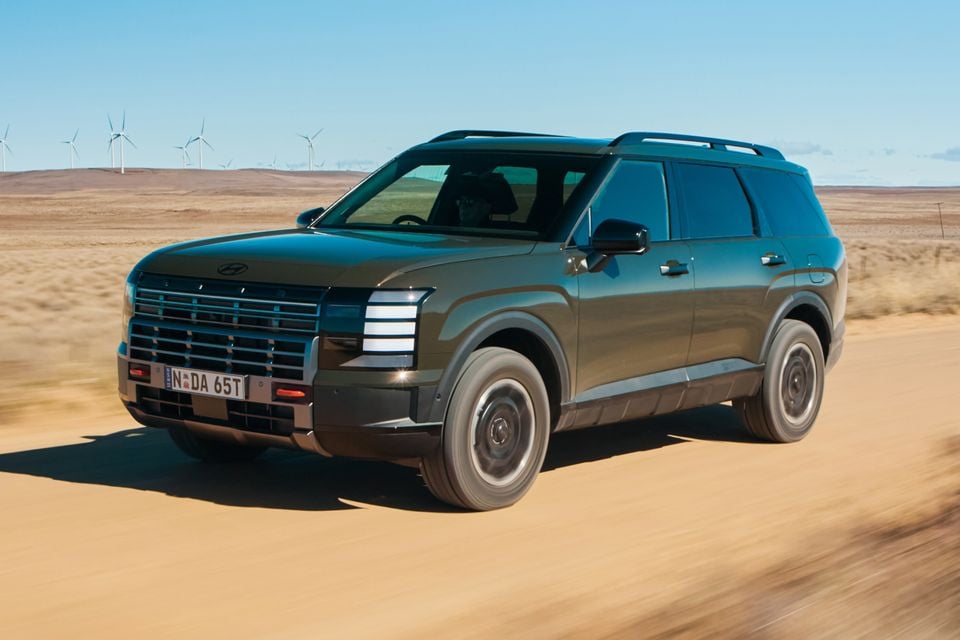
Hyundai’s off-road sub-brand has arrived with a tougher take on the family-friendly Palisade large SUV. Is the first XRT Pro as capable as it looks?

Deputy Road Test Editor
Deputy Road Test Editor
Deputy Road Test Editor
Deputy Road Test Editor
If this is the car for you, we’ll compare offers from trusted dealers, handle the back and forth and manage your purchase from enquiry to delivery.
Rugged probably isn't the first word that comes to mind when you think of Hyundai.
After all, the South Korean automaker has largely built its reputation on selling affordable city hatchbacks and school-run specials, only more recently establishing the N sub-brand to appeal to driving enthusiasts.
That experiment has proven fruitful, with well north of 20,000 high-performance Hyundais finding homes Down Under since the i30 N hot hatch arrived in 2018.
Now, Hyundai Australia hopes to catch lightning in a bottle again with XRT Pro and XRT – off-road equivalents of N and N Line.
US customers have had access to XRT appearance packages since 2022, before Hyundai began adding genuine off-road capability with the 2024 Santa Fe XRT. Australia’s first taste of XRT came two years ago, via two locally developed, dealer-fitted accessory packs for all-wheel drive Santa Fe variants, combining cosmetic and mechanical upgrades.
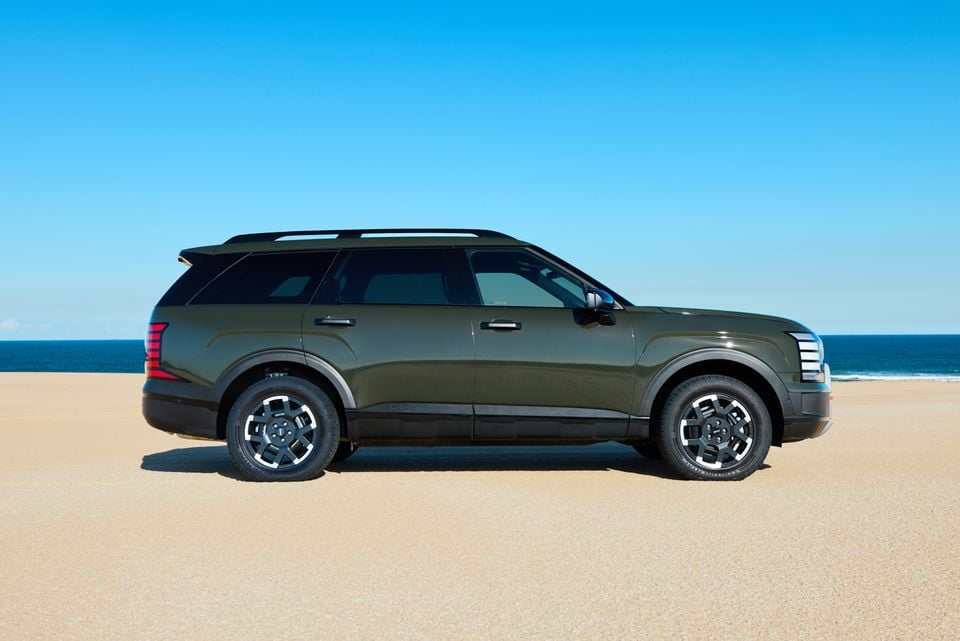
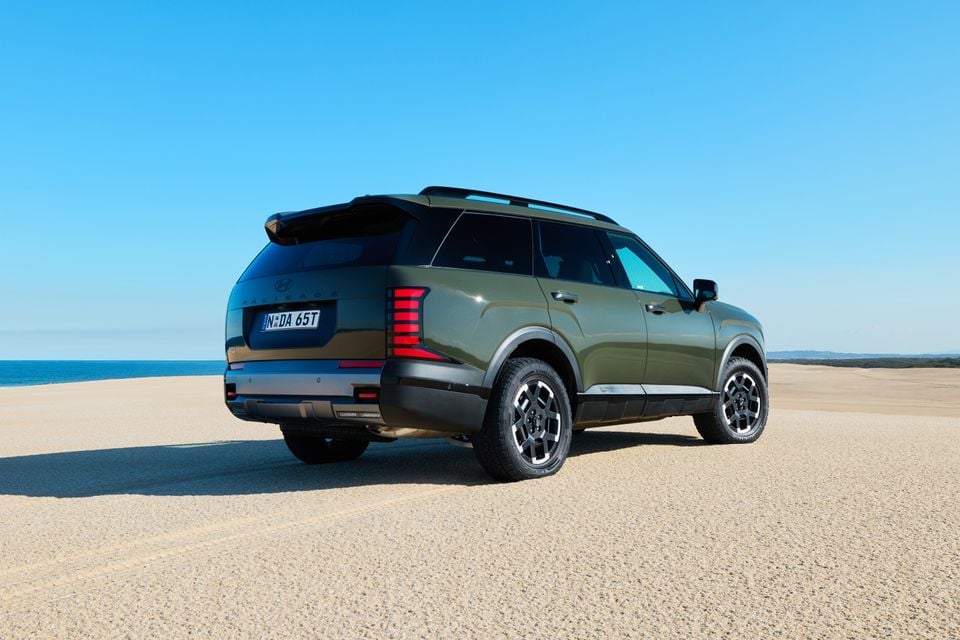
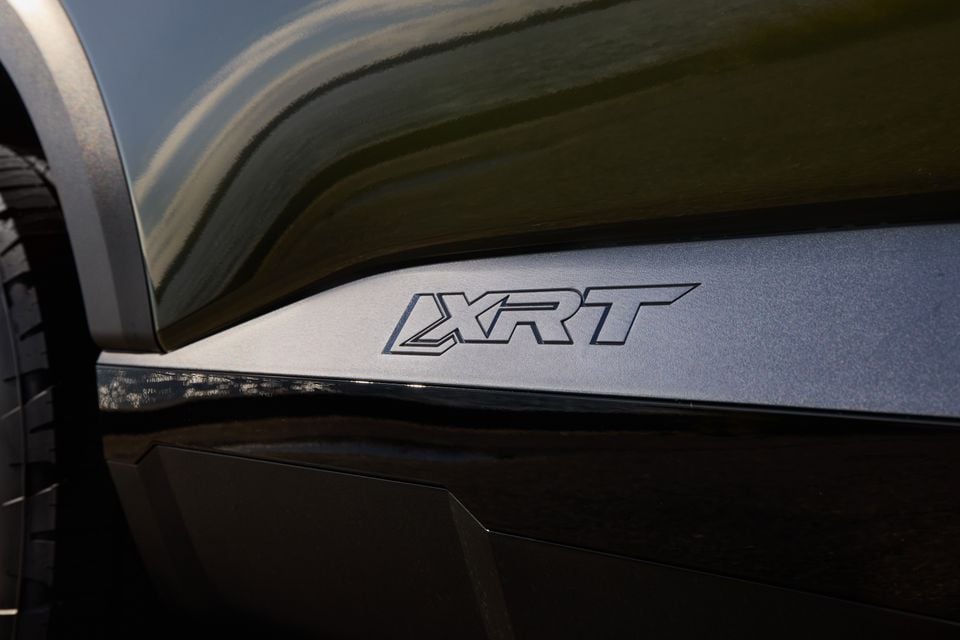
But this – the Palisade XRT Pro – is the first of its kind: a factory-built adventure variant with meaningful hardware upgrades including a one-inch suspension lift, all-terrain tyres, and an electronic limited-slip differential.
Hyundai Australia says it’s aimed at two distinct groups – existing monocoque/crossover SUV buyers seeking more off-road capability, and those stepping out of body-on-frame 4WDs such as the Ford Everest and Toyota Prado.
That leaves the XRT Pro with a tricky brief: perform off the blacktop without sacrificing the on-road comfort and refinement expected of a flagship family SUV.
Has Hyundai struck the right balance, or instead robbed Peter to pay Paul? Read on to find out.
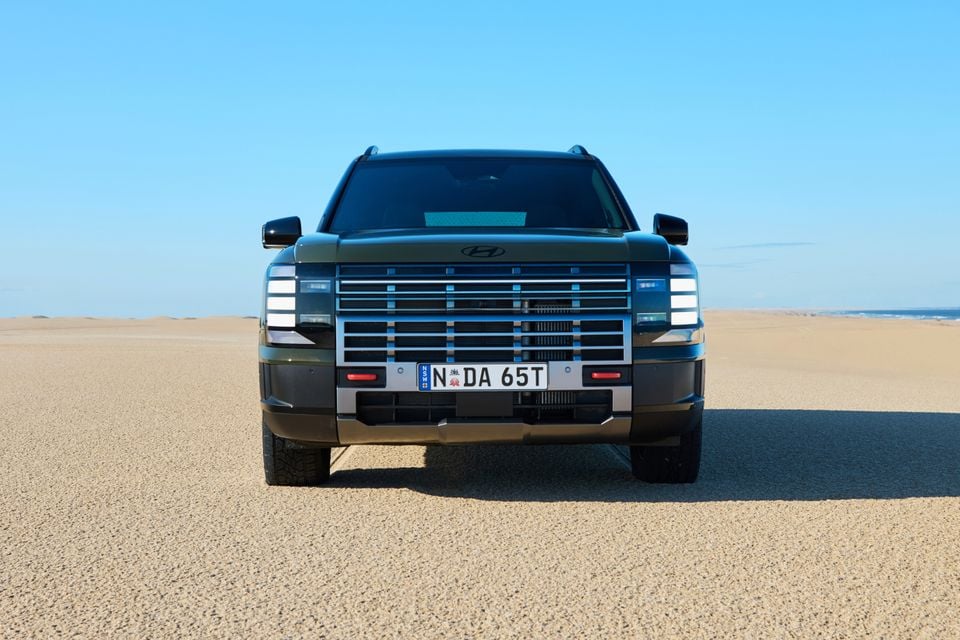
The XRT Pro will set you back $3400 more than the new entry-level Elite grade, but almost $10,000 less than the top-shelf Calligraphy.
| Model | Price before on-road costs |
|---|---|
| 2027 Hyundai Palisade Hybrid Elite (8-seat) | $76,500 |
| 2027 Hyundai Palisade XRT Pro (8-seat) | $79,900 |
| 2027 Hyundai Palisade Hybrid Calligraphy (8-seat) | $89,828 |
| 2027 Hyundai Palisade Hybrid Calligraphy (7-seat) | $90,828 |
| 2027 Hyundai Palisade Hybrid Calligraphy Black Ink (8-seat) | $92,400 |
| 2027 Hyundai Palisade Hybrid Calligraphy Black Ink (7-seat) | $93,400 |
Three-row soft-roader rivals are hard to come by. Instead, the XRT Pro is best measured against both family 4WDs such as the Ford Everest, Toyota Prado, Denza B8 and GWM Tank 500, as well as road-focused monocoque family SUVs in the mould of the Toyota Kluger, Kia Sorento, and Mazda CX-80.
The five-seat Subaru Outback is another relevant point of comparison, particularly in adventurous Wilderness Apex trim, although it’s considerably cheaper at $62,490 before on-road costs.
To see how the Hyundai Palisade lines up against the competition, check out our comparison tool
The XRT Pro trades some luxuries for extra utility, but still feels like a premium product inside.
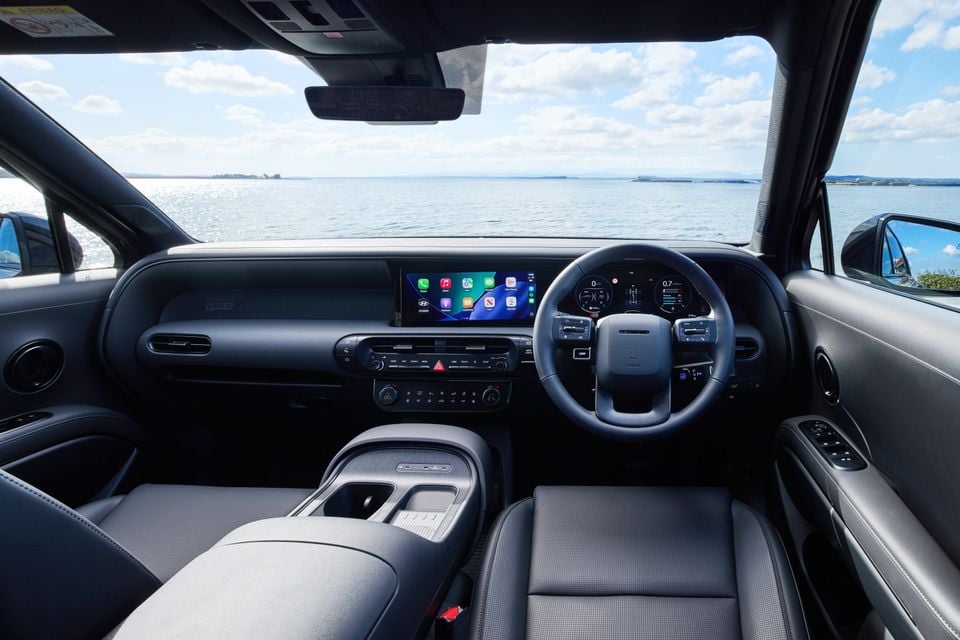
The deeply comfortable seats, for example, are trimmed in synthetic leather that’s barely less convincing than the real stuff found in the Elite and Calligraphy grades, yet likely more durable. XRT emblems on the head restraints and an embossed mountain-inspired pattern below demonstrate the same attention to detail we appreciate in the Calligraphy, just with a rugged twist.
Similarly, the switch to darker finishes including a black cloth headlining helps to hide any lingering signs of adventure without taking a huge toll on perceived quality.
And, at least in my opinion, the XRT Pro's branded dash panel actually comes off more upmarket than the Calligraphy equivalent.
This rugged version misses out on some of the flagship's toys, though – namely an electrically adjustable steering wheel, 16- and 12-way adjustable seats for the driver and front passenger respectively, massaging front seats, a head-up display, digital rear-view mirror, and seat ventilation. At the same time, the XRT Pro is nearly $11,000 cheaper, which seems fair.
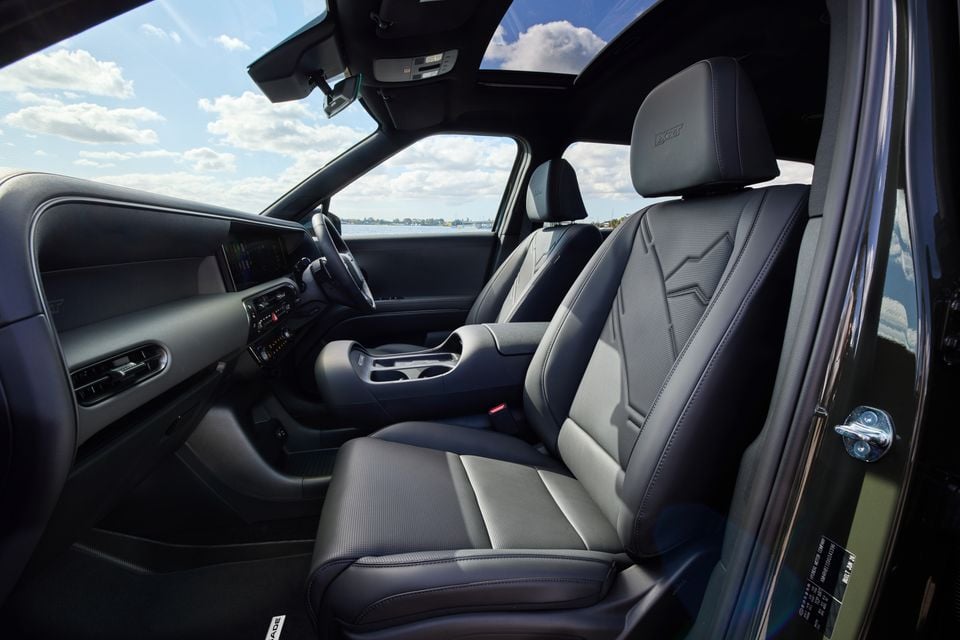
It’s better equipped than the base Elite, too, adding a single-pane sunroof and heated steering wheel to an already generous list of standard equipment.
Given we’ve previously praised the Palisade for its interior value, there’s little reason to change our tune with the XRT Pro.
And, minor changes aside, the space, comfort and technology we’ve come to know and love remain intact.
Starting with cabin space, the Palisade is both longer and wider than the CX-80 and Kluger – an advantage reflected in the generous pews and broad footwells. Those lucky enough to be seated up front can therefore spread out without encroaching on second-row passengers, while the floating centre console turns otherwise dead space between the seats into useful storage.
That's just as well, because some of the other storage options (eg: the door bins, glovebox, and centre armrest compartment) feel surprisingly stingy for a cabin this capacious.
The technology suite, on the other hand, never leaves you feeling shortchanged.
Neatly integrated into the dash is a panoramic display housing twin 12.3-inch screens running Hyundai’s latest software. The setup brings wireless smartphone integration, sharp graphics and a tile-based menu system that’s easy to get around.
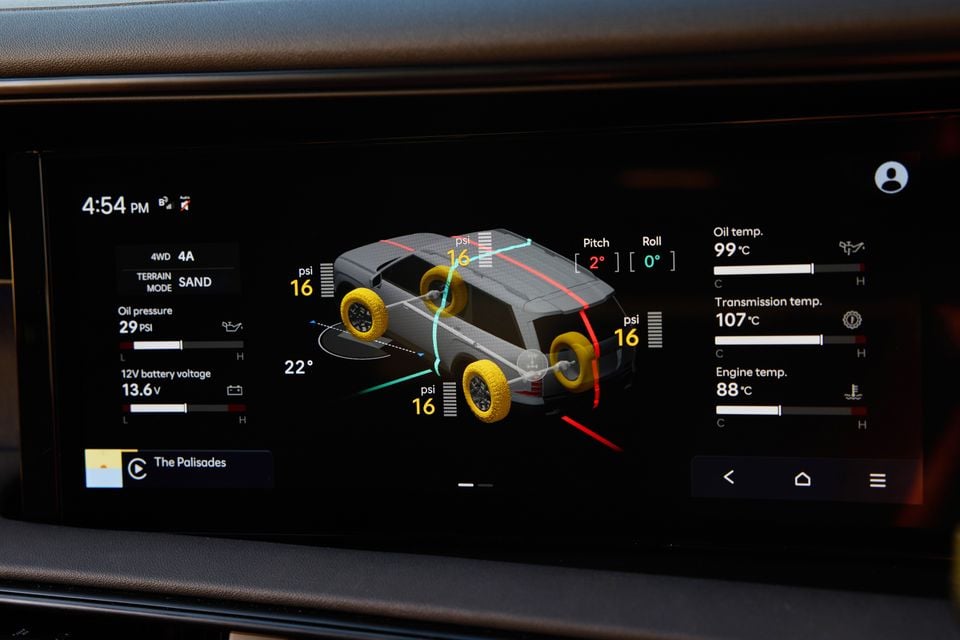
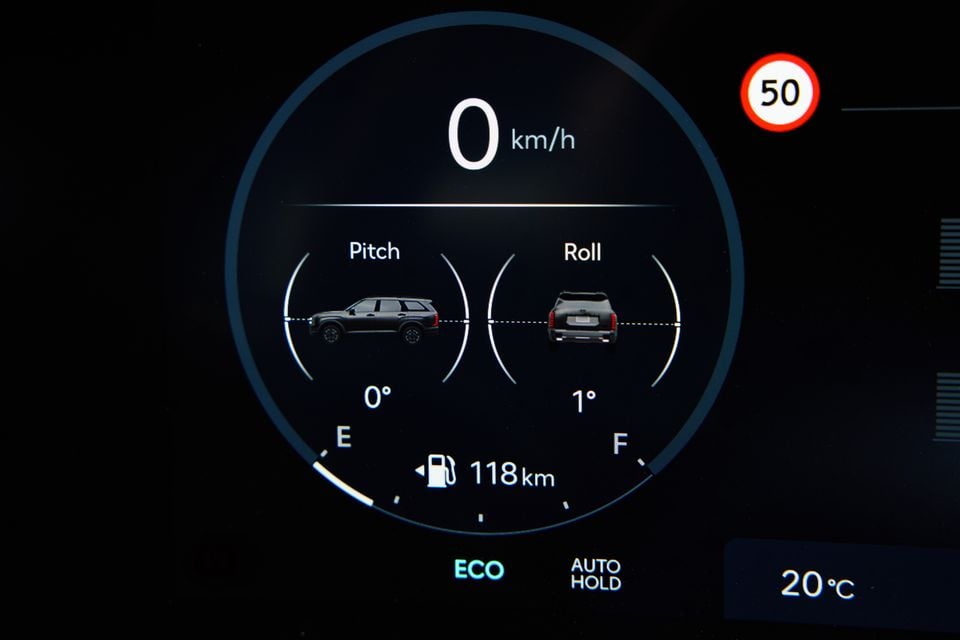
New for the XRT Pro is a bespoke off-road page displaying key data such as pitch and roll angles, power distribution and rear e-LSD operation. I didn’t find myself engaging with it all that often, but I’m sure aficionados will see its value.
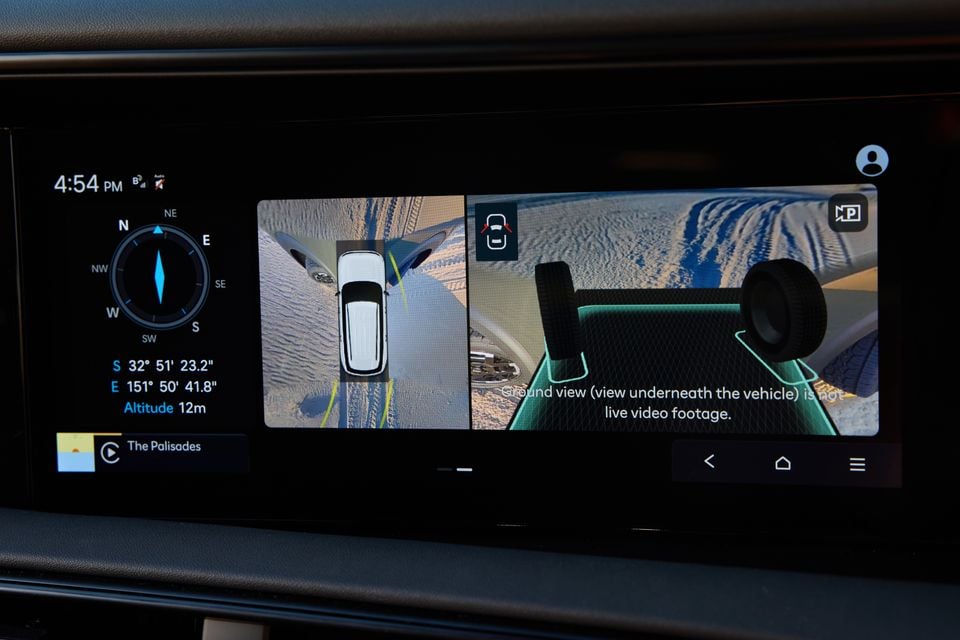
The ground-view monitor – also unique to the XRT Pro – is more my speed, offering an extra set of eyes beneath the vehicle to help pick the right line through challenging terrain.
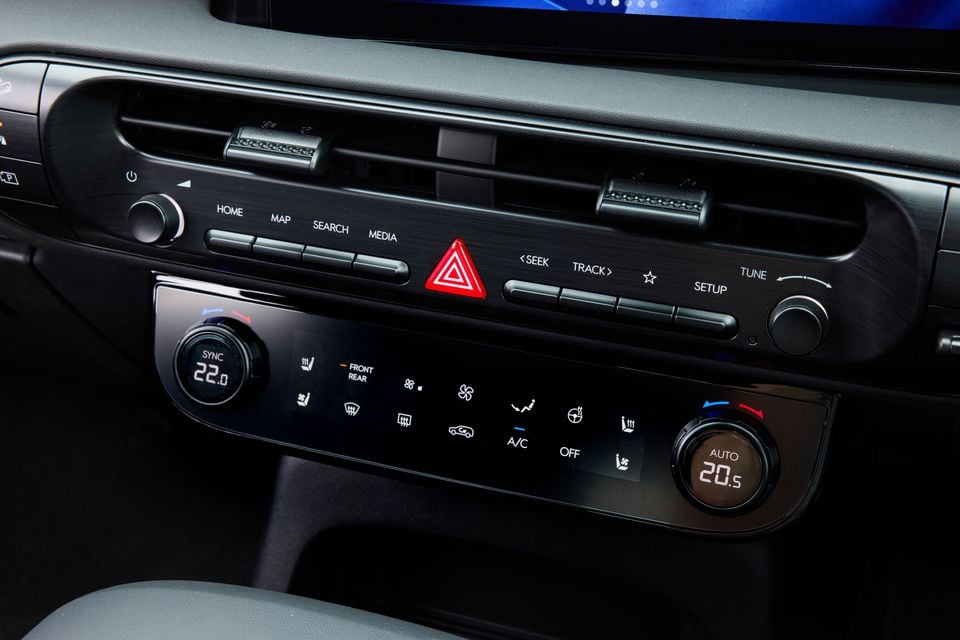
Even if you’re not sold on the whole touchscreen thing, Hyundai has retained plenty of physical controls to make daily life with the Palisade that little bit easier. A dedicated climate panel features traditional rotary temperature dials, while a second bank of buttons above provides quick access to key infotainment functions. Everything is clearly labelled, save for an anonymous drive mode toggle tucked beside the steering wheel.
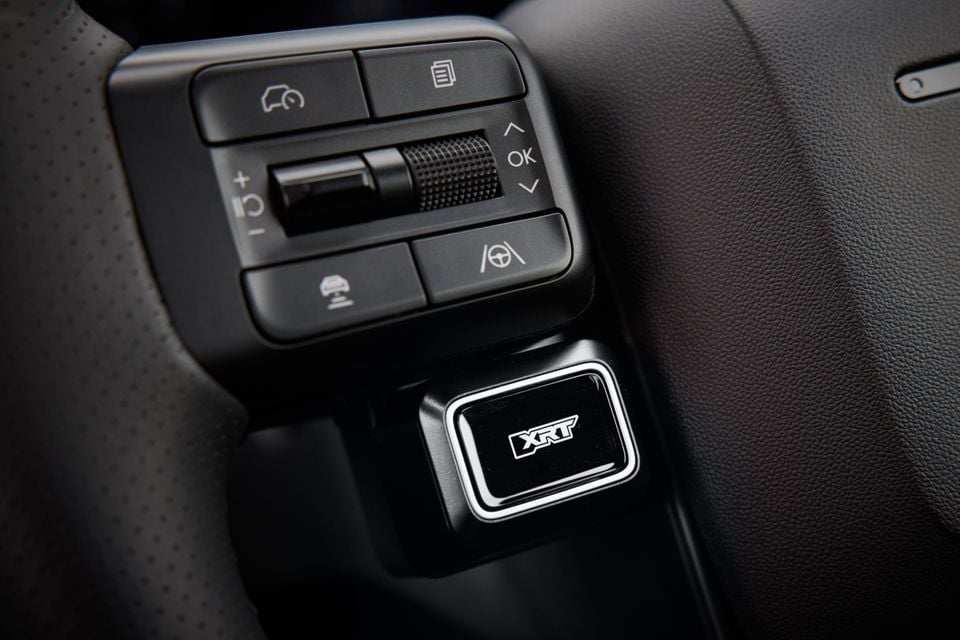
Further controls are situated on the steering wheel, including a subtle yet distinctive ‘XRT’ button that provides quick access to the off-road infotainment and instrument themes.
The aforementioned instrument display offers plenty of scope to tailor both the information shown and its visual appearance, while a standard head-up display projects additional driving data onto the windscreen.
Connected services are standard, and the Palisade can also be locked and unlocked using a digital key stored on your smartphone.
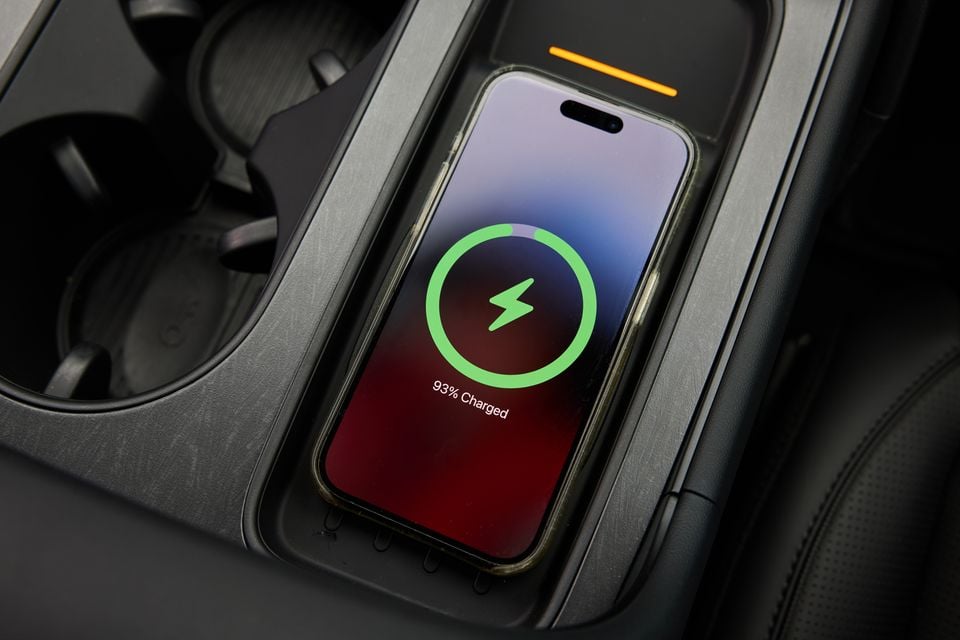
There’s no shortage of charging options, either. Three fast-charging USB-C outlets sit at the front of the floating centre console, alongside a wireless phone charging pad.
Moving back, the XRT Pro stays true to its purpose with a traditional three-seat bench in place of the twin captain’s chairs fitted to the Calligraphy.
It's almost certainly less comfortable as a result, but far more practical day-to-day. And given the class-leading legroom available, plus the retention of outboard seat heating, I'd still rather be cooped up here than in the back of just about any similarly priced large SUV.
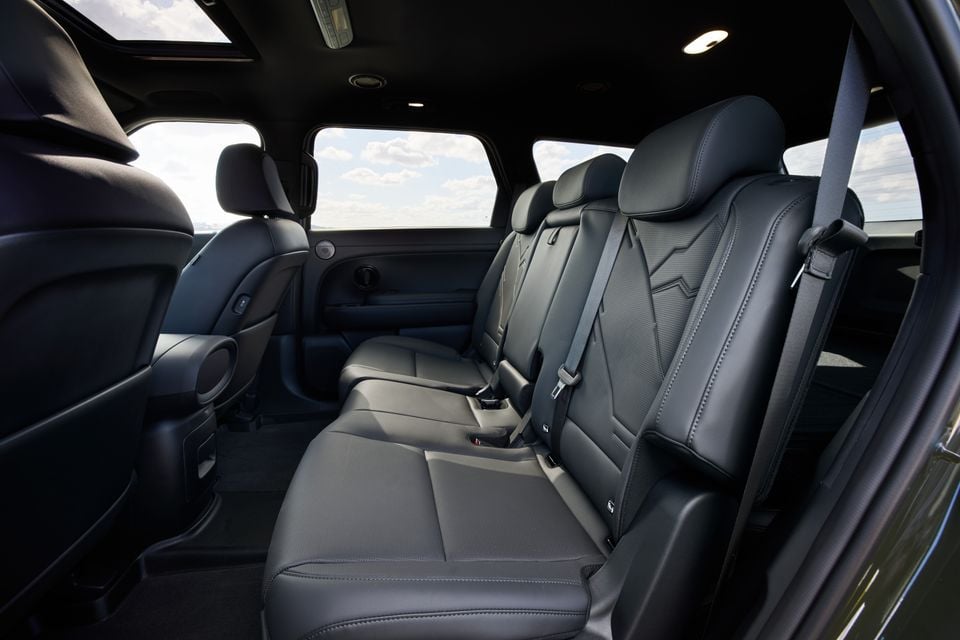
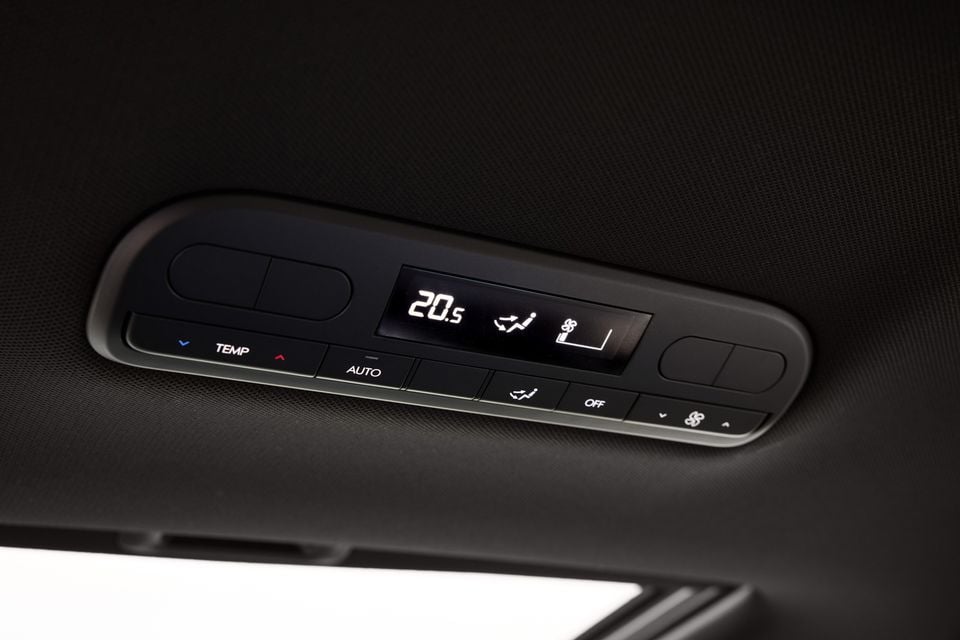
Other second-row amenities include manual window blinds, a fold-down centre armrest with cupholders, USB-C outlets and climate controls, while storage comes courtesy of a sliding centre-console drawer, map pockets and decent door bins.
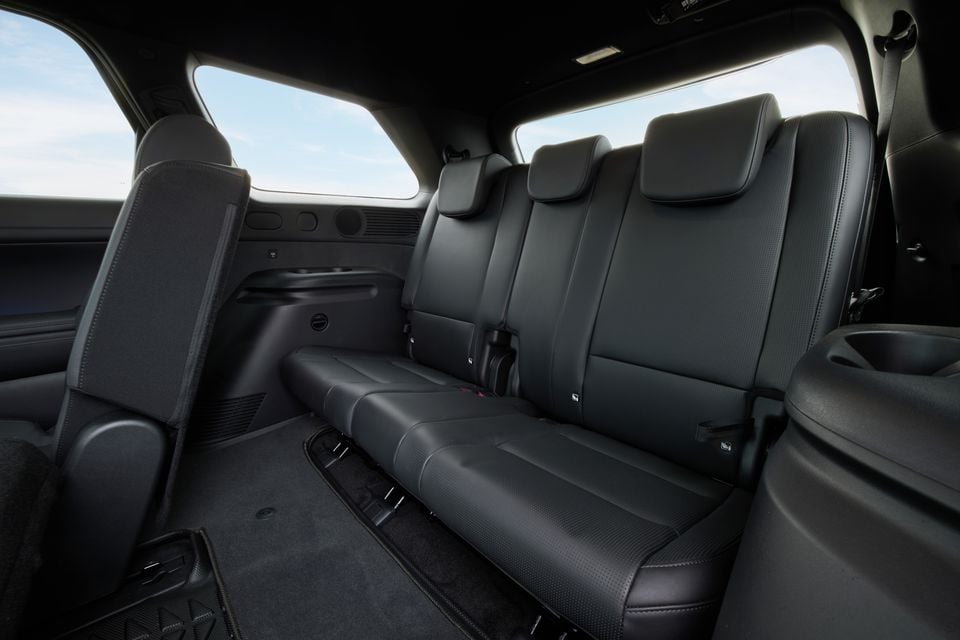
Gaining access to the third row is as easy as pressing a button on the side of the seat base, which tumbles the bench forward in sections.
Slipping through the gap and into the 'back-back', it's immediately apparent that the Palisade is a true eight-seater, unlike its rivals.
Again, some of the Calligraphy’s knockout luxuries are missing, but more importantly there’s still enough room for three kids or a couple of adults to get through a road trip without developing circulation problems. USB-C outlets, cupholders and dedicated air vents are also on hand to make longer journeys that little bit more bearable.
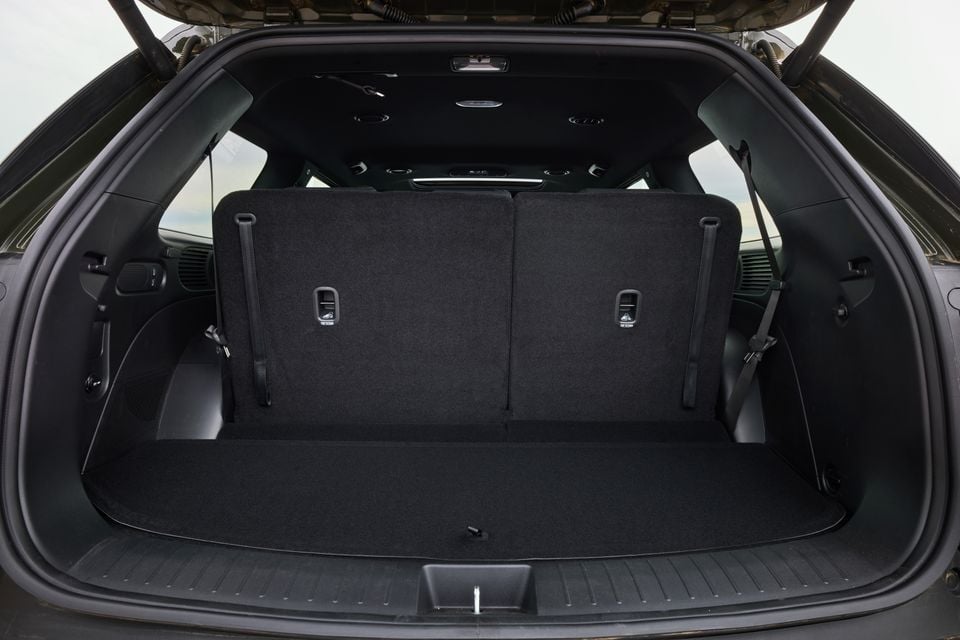
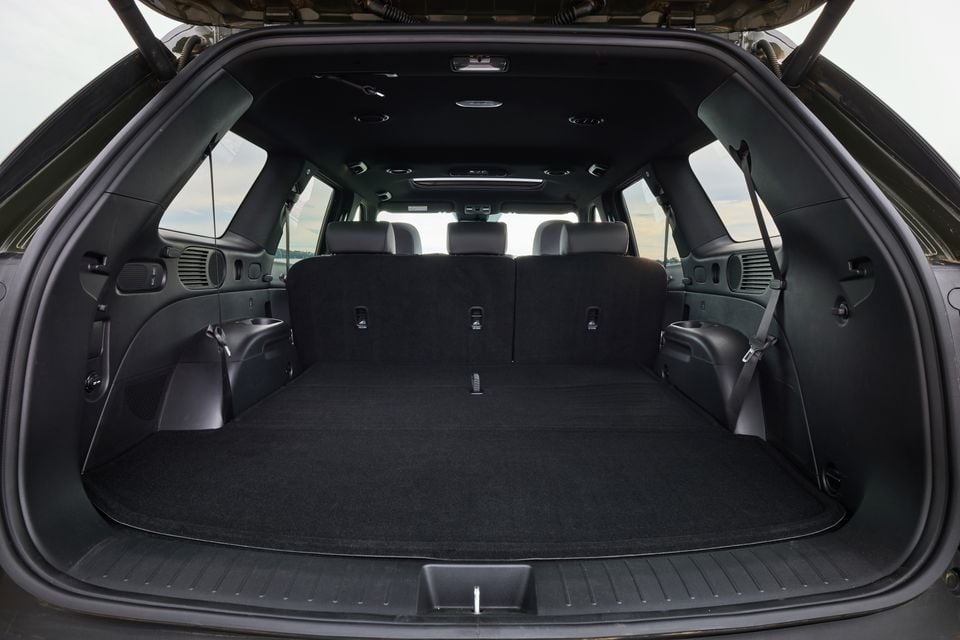
Hyundai claims another victory in the boot wars, given the XRT Pro boasts 317 litres of cargo capacity behind the third row, shading the competition.
Dropping the third row – a manual process – increases that number to 729L, while buttons built into the boot wall let you fold the second-row seats from the rear of the vehicle.
However, keen campers will rue the absence of vehicle-to-load (V2L) – an easy, increasingly prevalent way to power small electrical appliances such as portable coolers, cooktops, and lamps.
On the plus side, the XRT Pro features a full-size spare wheel mounted underneath the vehicle.
| Dimensions | Hyundai Palisade XRT Pro |
|---|---|
| Length | 5090mm |
| Width | 1980mm |
| Height | 1830mm (incl. roof rails) |
| Wheelbase | 2970mm |
| Cargo capacity | 317L (third row up) 729L (third row folded) 2098L (second and third rows folded) |
To see how the Hyundai Palisade lines up against the competition, check out our comparison tool
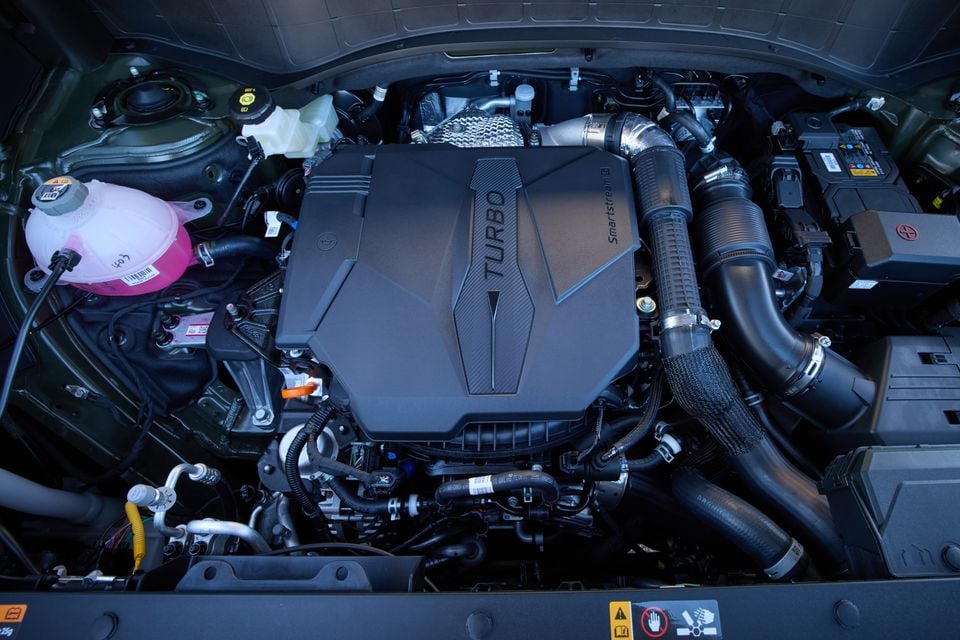
Australia’s version of the XRT Pro employs a turbocharged 2.5-litre four-cylinder petrol engine producing 207kW of power and 422Nm of torque, mated to an eight-speed automatic transmission.
| Specifications | Hyundai Palisade XRT Pro |
|---|---|
| Engine | 2.5L 4cyl turbo-petrol |
| Power | 207kW |
| Torque | 422Nm |
| Transmission | 8-speed automatic |
| Drive type | All-wheel drive |
| Fuel economy (claimed) | 11.2L/100km |
| Fuel economy (as tested) | 11.0L/100km |
| CO2 emissions (claimed) | 254g/km |
| Fuel tank | 72L |
| Weight (tare) | 2158kg |
| Payload | 701-835kg |
| Braked towing capacity | 2200kg |
| Gross vehicle mass (GVM) | 2900kg |
| Gross combination mass (GCM) | 5100kg |
It's the first time the Palisade has been offered here with the combination of petrol power and all-wheel drive. All other current-generation Palisades are all-wheel drive hybrids, while the previous Palisade was sold here only in front-wheel drive petrol or all-wheel drive diesel variants.
Underneath, the XRT Pro features a bespoke Australian suspension tune, 255/60 R18 Continental all-terrain tyres and an electronic limited-slip rear differential (e-LSD).
It also comes with a factory-fitted towbar and wiring connection, although not Hyundai’s Genuine towing accessory kit as standard. Braked towing capacity rises by 200kg to 2200kg, while towball downweight increases to 160kg. Unbraked towing capacity remains unchanged at 750kg.
To see how the Hyundai Palisade lines up against the competition, check out our comparison tool
For context, our brief first drive of the XRT Pro comprised an hour-long mixed-speed road loop and a selection of off-road trails at the HART driver training centre in Sydney’s north. So while I can speak to its performance in those environments, we’ll need more time behind the wheel to properly assess its highway and city capabilities.
If this is the car for you, we’ll compare offers from trusted dealers, handle the back and forth and manage your purchase from enquiry to delivery.
On-road
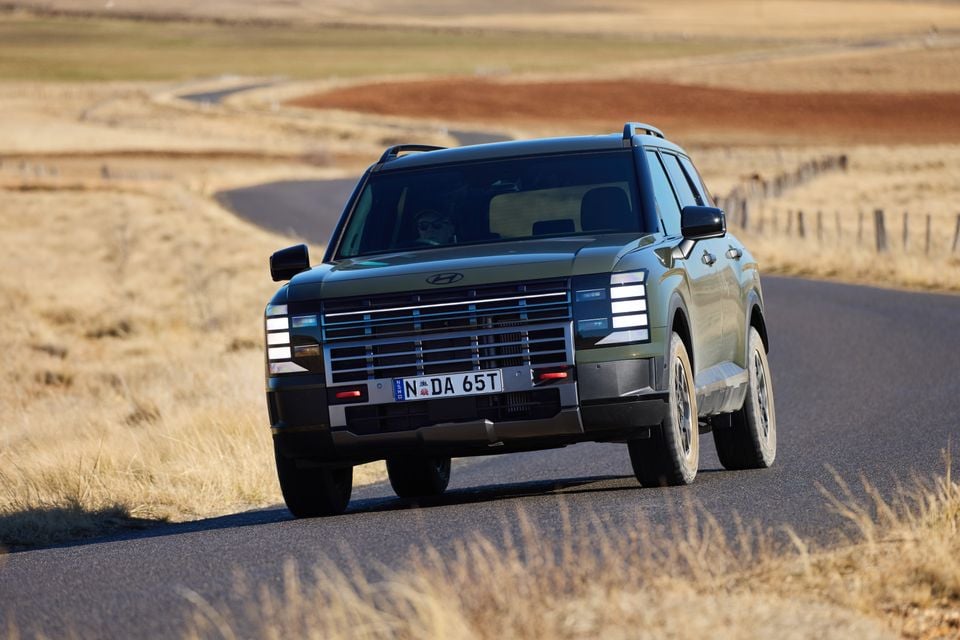
First we hit the tarmac, where the XRT Pro feels every bit a Palisade despite its substantial off-road upgrades.
I perhaps unfairly expected comfort and refinement to noticeably suffer as a result of the fitment of a suspension lift and all-terrain tyres, but that's far from the case.
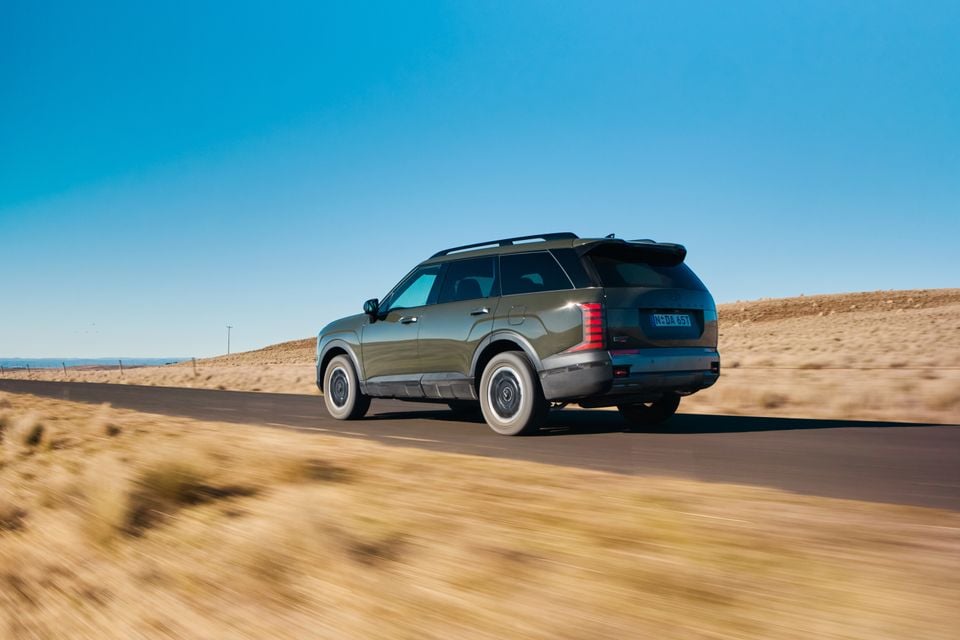
Rather, the softer side of this big, tough bus remains intact. In XRT Pro guise, the Palisade still rides better than many luxury SUVs, soaking up the worst of Australia's patchy country roads without ever feeling under-sprung. In urban settings, the speed bumps and potholes known to plague the school run are dismissed with nonchalance.
This really shouldn't have come as a surprise, given Hyundai Australia went out of its way to tune the dampers, springs and anti-roll bars for local roads – a process it hasn't undertaken since 2024 with the i30 Sedan.
Rolling refinement likewise remains a super-strength.
Even on those A/T tyres, the XRT Pro is impressively hushed, maintaining a peaceful separation between you and the surface below. Acoustic laminated glass and ample sound deadening likewise keep noise from both the engine and outside world at bay.
The engine itself is the same donk found in other Palisades, albeit stripped of hybrid hardware and paired with an eight-speed transmission.
Both changes contribute to the XRT Pro's increased towing capacity – a win for keen adventurers – while the absence of electrification feels like a return to simpler times.
There are a couple of trade-offs, though. The XRT Pro doesn’t have the same punch from a standstill as its hybrid siblings, so it’s likely to feel a little more lethargic around town.
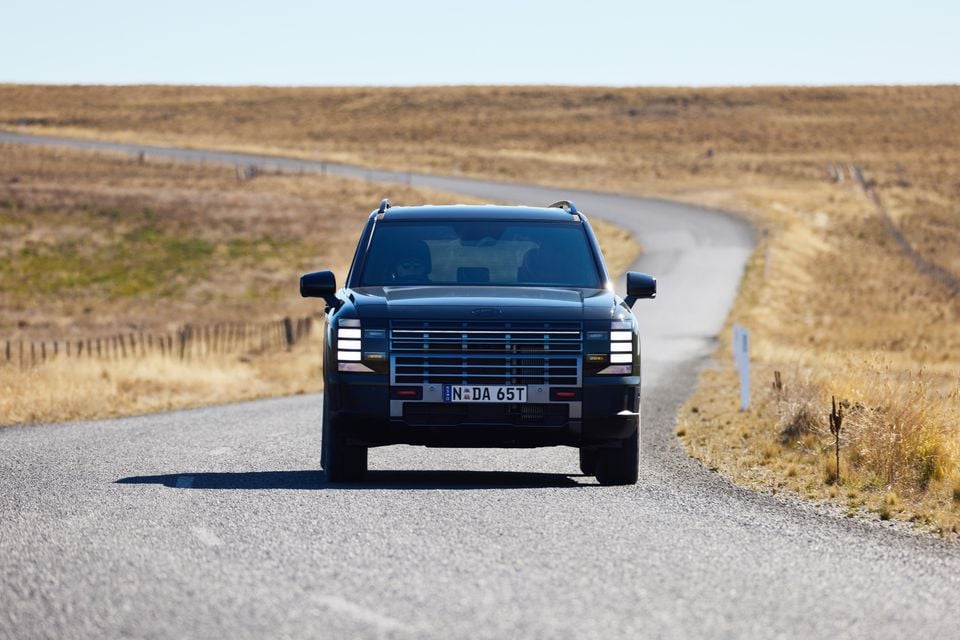
Once you’re up and moving, however, there isn’t a huge difference in outright performance – at least with an empty cabin and nothing hitched to the back.
The transmission seems relatively well sorted, with manual control available via flimsy plastic paddles attached to the back of the steering wheel.
Without electric assistance, though, the little 2.5-litre still has to work harder, and that takes a toll on efficiency. We saw fuel consumption of around 11L/100km on test – roughly 30 per cent higher than the Calligraphy I drove last year, twice that of a Kluger, and about on par with the new Outback Wilderness. That means XRT Pro buyers can expect to spend more time – and money – at the pump.
Tight, twisty national park roads also served as a reminder that the XRT Pro carries over many of the hybrid Calligraphy’s dynamic limitations.
First and foremost, its length and width leave little margin for error. Then there’s the weight of the thing – tipping the scales at nearly 2.2 tonnes, the Palisade isn’t particularly keen to turn and leans heavily through corners. Hyundai has tried to mask this with light steering, but the rack is simultaneously slow and short on accuracy.
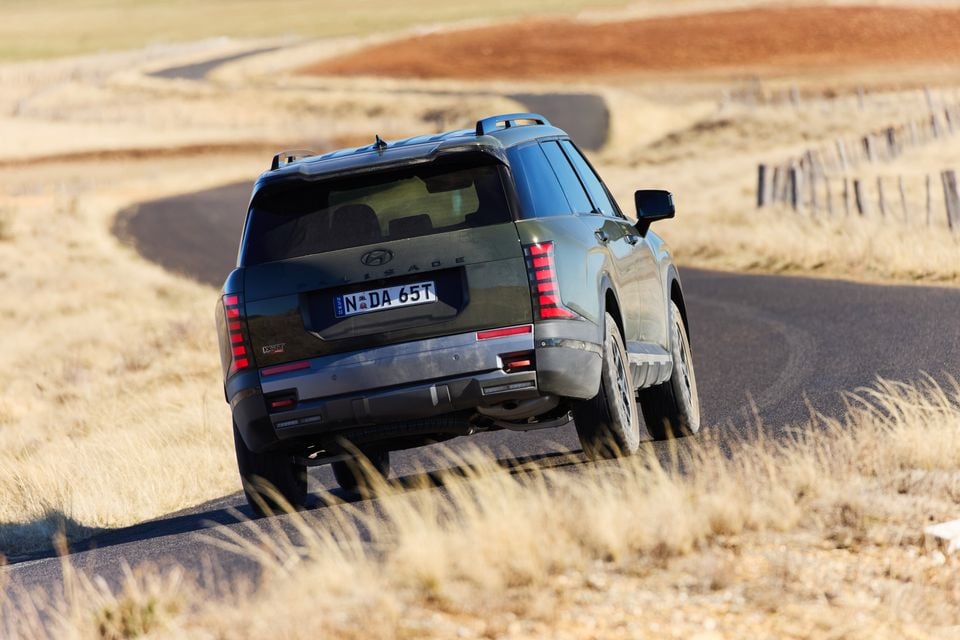
Enthusiastic driving is best left off the agenda then, for the sake of both you and your passengers.
From previous experience, parking and low-speed city manoeuvres can prove onerous too. That said, it's difficult to name a 5.1-metre long SUV that excels in this regard, and the Palisade at least offers excellent outward visibility courtesy of a generous glasshouse and comprehensive camera system.
The rest of the safety suite is a mixed bag. Like all modern Hyundais, the Palisade beeps obnoxiously whenever you nudge past the speed limit or stray a little too close to a lane marking.
I’d argue that’s more problematic here than in, say, a Venue, because the Palisade trades heavily on cabin quietness, while its soft, doughy pedals and sheer width arguably make those transgressions more likely.
Thankfully, these two annoying advanced driver assist systems (ADAS) are easy to disable via the steering wheel buttons, which isn't always the case.
Off-road
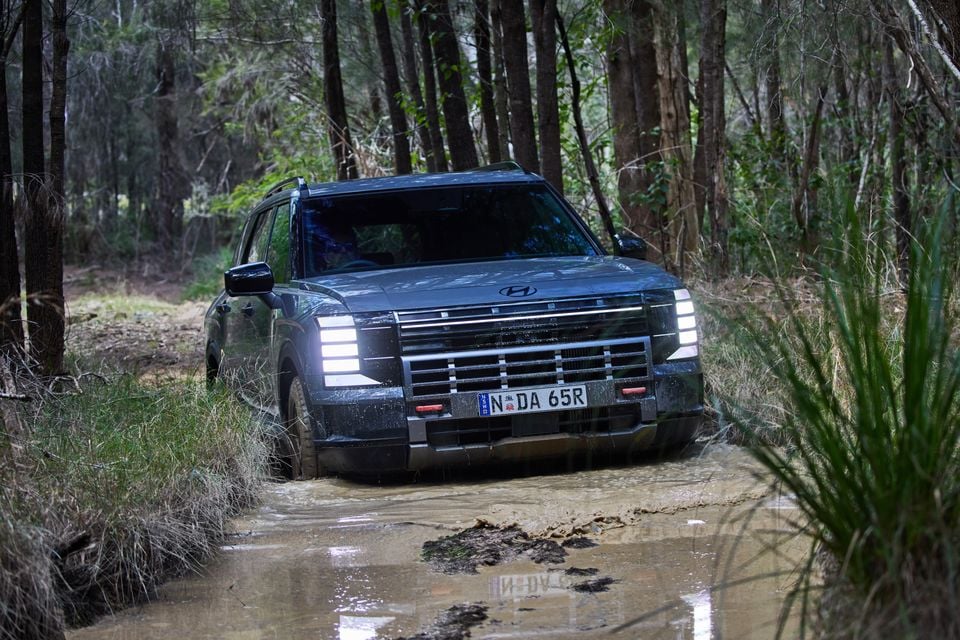
Perhaps the biggest surprise is that the XRT Pro actually knows what it's doing when the tarmac ends.
It's got a lot going against it – monocoque construction, no low-range gearing, no locking differentials and relatively modest ground clearance, to name a few.
But despite those shortcomings, Hyundai’s biggest, toughest bus rarely felt out of its depth during an hour of moderately difficult off-roading that included wading, climbing and articulation exercises.
The latter arguably exposed its limitations most, with the XRT Pro running out of suspension articulation and lifting wheels over steep, offset moguls far sooner than an Everest or Prado likely would.
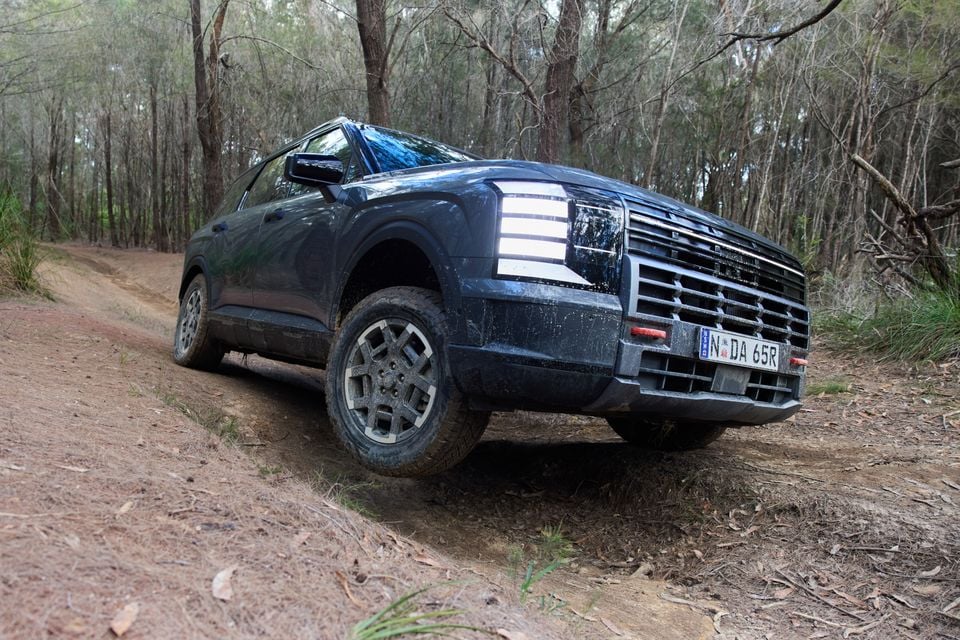
However, when all four wheels stay planted, the all-terrain tyres grip up nicely, while the combination of a torque-juggling e-LSD and various terrain modes – particularly Mud mode in this case – helps maintain consistent traction over challenging surfaces.
That said, I struggled to hold up my end of the bargain, as the pedals proved somewhat distant and tricky to modulate, occasionally resulting in excessive wheelspin and the odd hard landing.
But hard landings aside, the XRT Pro’s ride comfort remains a highlight off-road, which should please the partner, friend or child who'd rather be at home watching Netflix.
Just don't let this lure you into a false sense of security, because we need to circle back to the subject of ground clearance. Up front, things aren’t too bad – an improved 20.5-degree approach angle means the XRT Pro is relatively comfortable tackling steep climbs, at least by unibody SUV standards.
However, I see a couple of issues at the rear. It’s great that the Palisade comes with a full-size spare, but it hangs quite low beneath the vehicle and eats into departure clearance. Remove the spare and you'll run into a similar problem with the muffler.
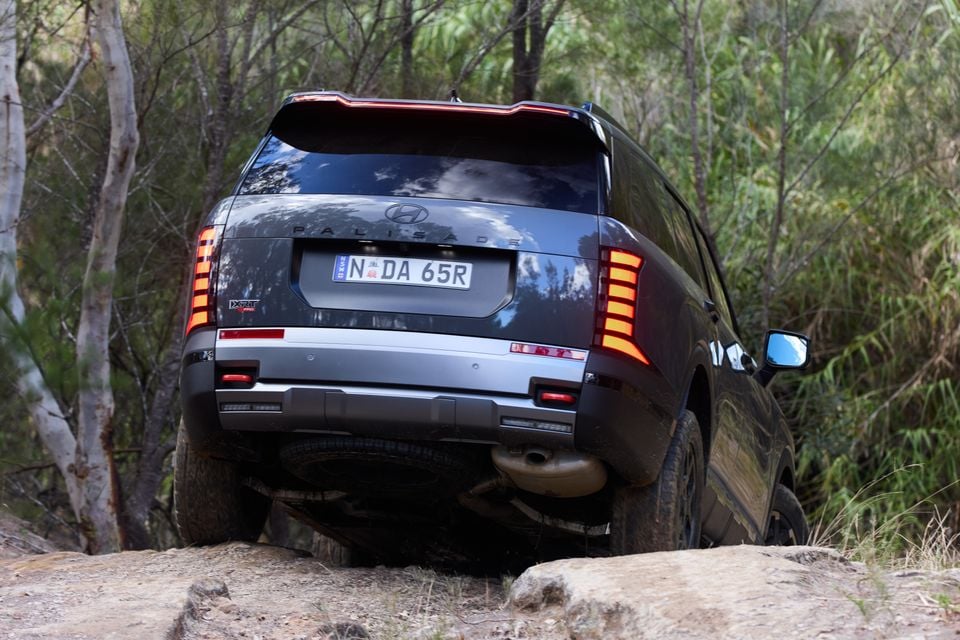
Regardless of the circumstances, you really don’t want to bottom out the XRT Pro, as there’s very little in the way of underbody protection.
Nerve-wracking downhill stretches are at least made easier by Hyundai’s fixed-speed hill descent control system, which limits momentum enough to maintain full control.
In terms of its physical footprint, the Palisade's width can likewise be limiting when navigating narrower trails, not that this impacted our drive.
And in the event you do find yourself caught between a rock and a hard place, the sophisticated camera system should help. Much of its functionality is geared towards the rough stuff, with the ground-view monitor I mentioned earlier assisting in picking a cleaner line through tight or technical sections.
| Off-road dimensions | Hyundai Palisade XRT Pro |
|---|---|
| Track front and rear | 1713mm – front 1731mm – rear |
| Ground clearance | 212mm (+25mm) |
| Approach angle | 20.5 degrees (+1.9 degrees) |
| Departure angle | 22.4 degrees (+1.3 degrees) |
| Ramp breakover angle | 18.3 degrees (+2.8 degrees) |
| Wading depth | N/A |
To see how the Hyundai Palisade lines up against the competition, check out our comparison tool
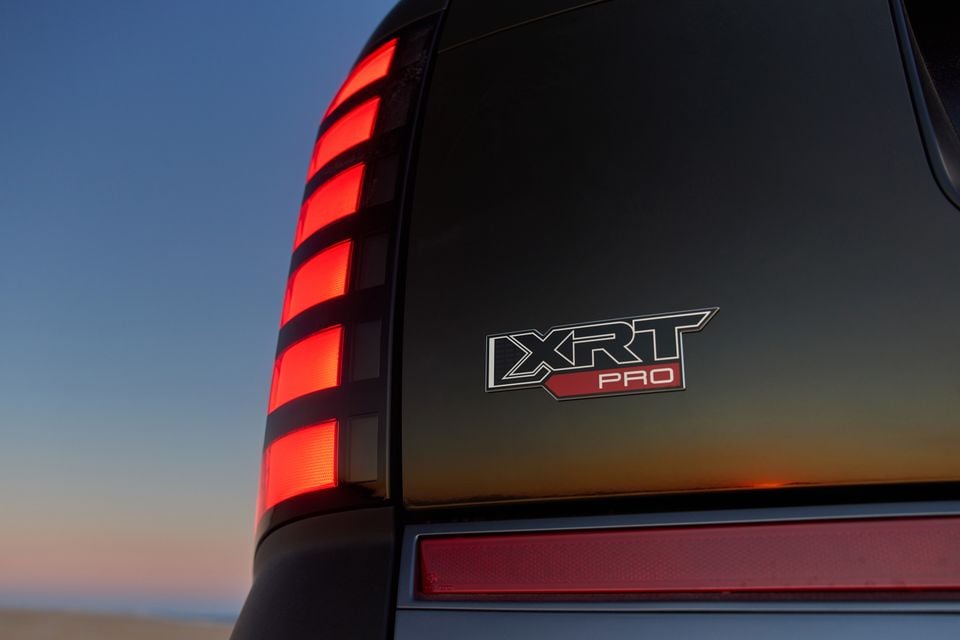
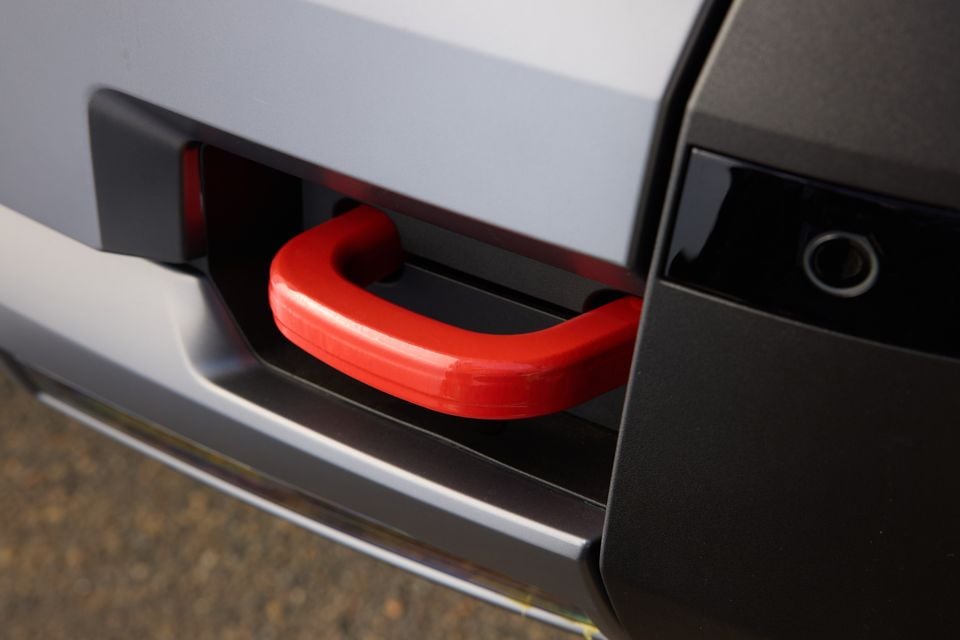
Several features set the XRT Pro apart from the base Elite it sits atop, including exclusive 18-inch alloy wheels with Continental all-terrain tyres, a single-pane sunroof, hardier synthetic leather seat trim, XRT Pro branding, dedicated off-road displays, and a heated steering wheel.
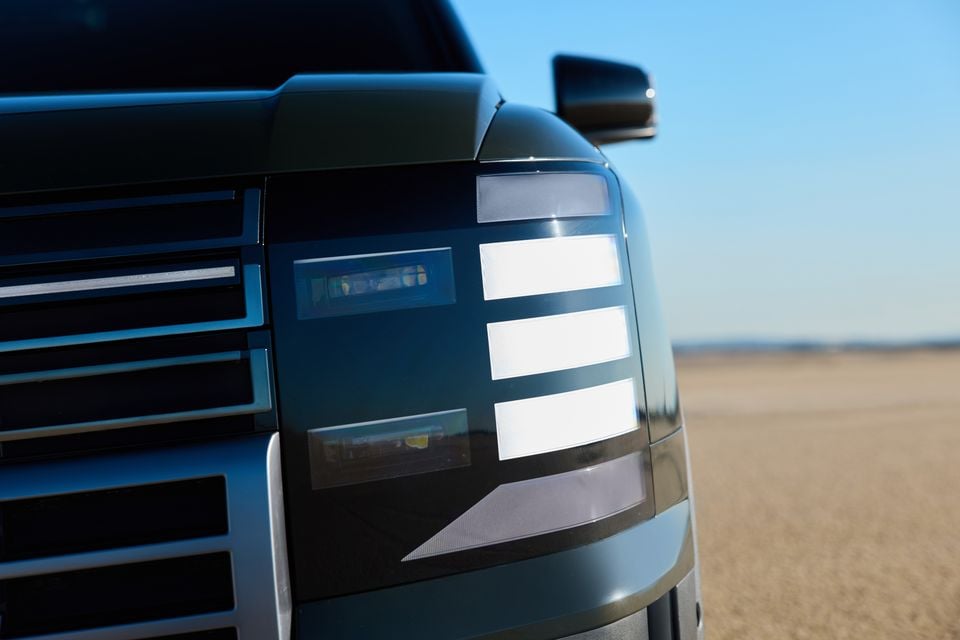
2026 Hyundai Palisade Elite equipment highlights:
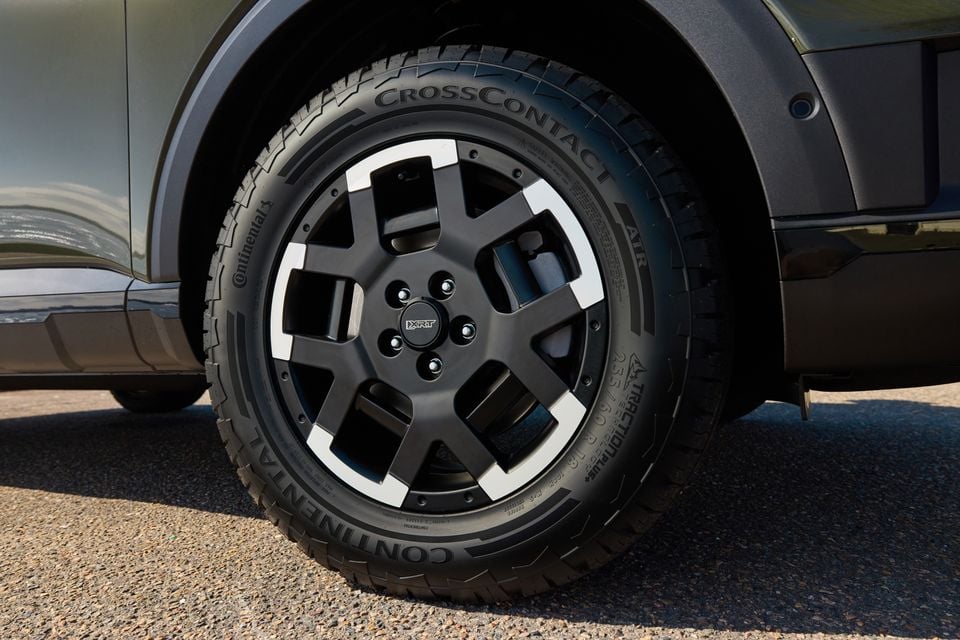
XRT Pro adds/alters:
Calligraphy adds (over Elite):
Black Ink adds:
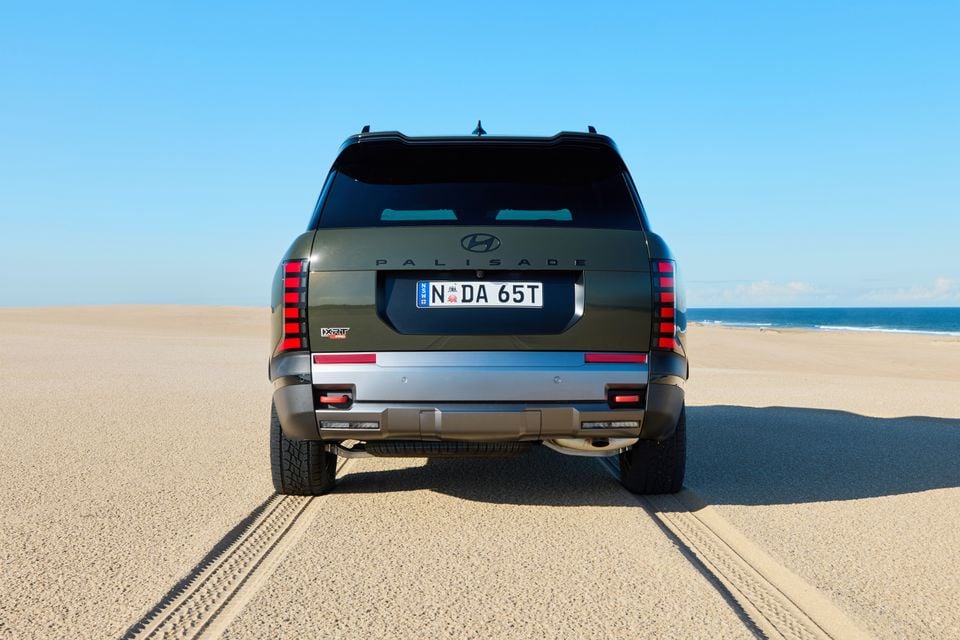
The XRT Pro introduces an exclusive new exterior paint colour dubbed Titan Charcoal.
To see how the Hyundai Palisade lines up against the competition, check out our comparison tool
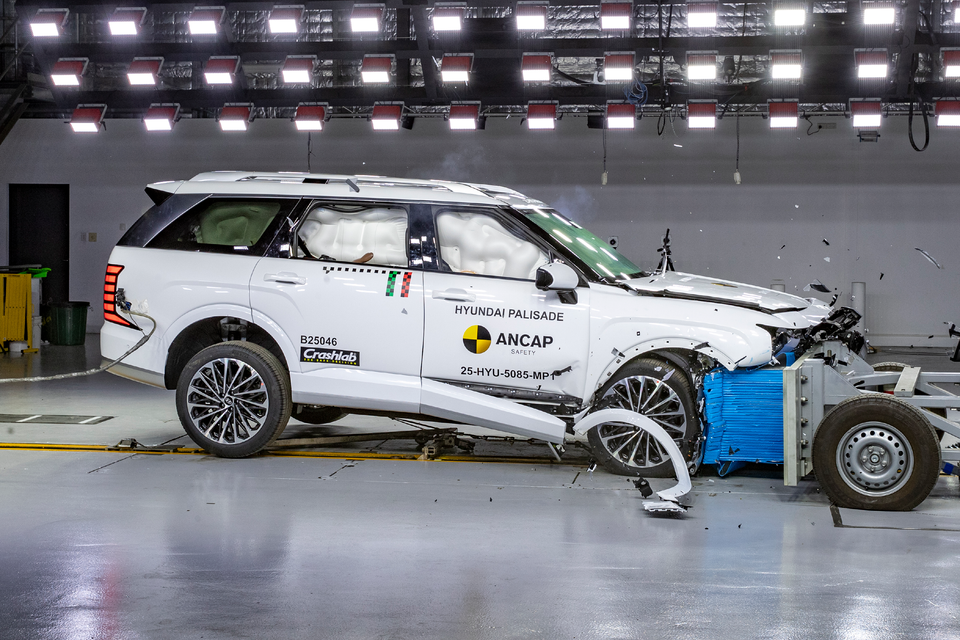
The second-generation Palisade holds a five-star ANCAP safety rating, based on testing conducted late last year. This rating applies to all variants.
| Category | Hyundai Palisade |
|---|---|
| Adult occupant protection | 89 per cent |
| Child occupant protection | 86 per cent |
| Vulnerable road user protection | 71 per cent |
| Safety assist | 73 per cent |
Standard safety equipment includes:
XRT Pro adds:
To see how the Hyundai Palisade lines up against the competition, check out our comparison tool
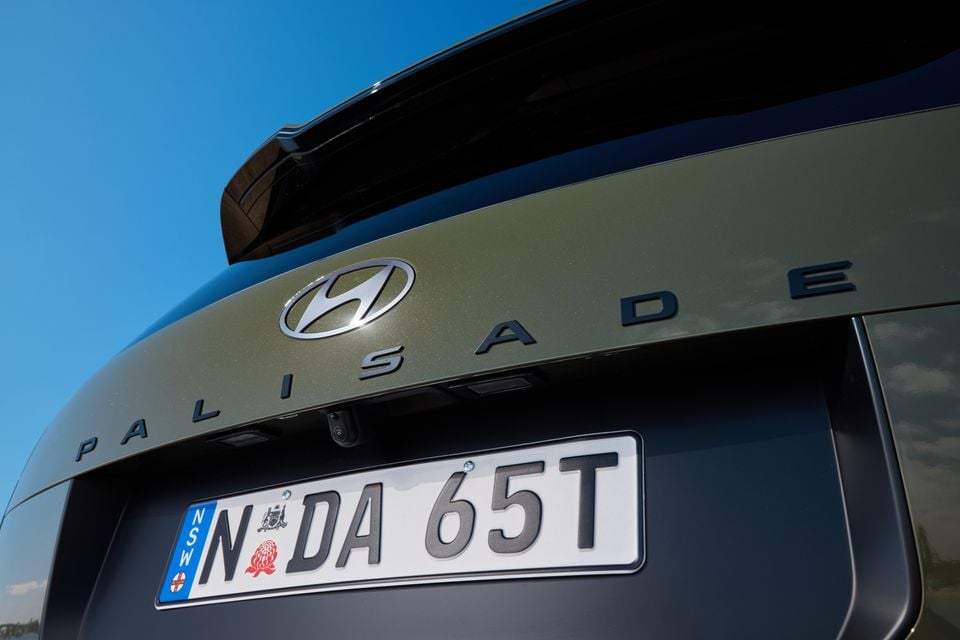
The Palisade XRT Pro is covered by Hyundai Australia’s seven-year, unlimited-kilometre warranty.
| Servicing and Warranty | Hyundai Palisade XRT Pro |
|---|---|
| Warranty | Up to 7 years, unlimited kilometres |
| Roadside assistance | Lifetime |
| Service intervals | 12 months or 10,000km |
| Capped-price servicing | Up to 7 years |
| Average annual service cost (7 years) | $536 |
| Total capped-price service cost (7 years) | $3752 |
Hyundai also offers up to seven years of capped-price servicing, provided said servicing is kept within the dealer network.
It's probably worth doing so, even if the set 10,000km intervals are quite short, because the Palisade still ends up being cheaper to maintain than a Tank 500 PHEV, Kia Sorento, or Mazda CX-80.
That said, the XRT Pro is thirstier than most rivals, drinking a hefty 11.2 litres of fuel for every 100km of mixed driving. Granted, it only requires regular 91-octane unleaded, but you can still expect to spend around $2000 per year (10,000km) filling up. For context, refuelling a Kluger costs half that much, if manufacturer consumption claims are to be believed.
To see how the Hyundai Palisade lines up against the competition, check out our comparison tool
The XRT Pro is a welcome addition to the local Palisade family, by virtue of its improved off-road capability, familiar road manners, and sensible price tag.
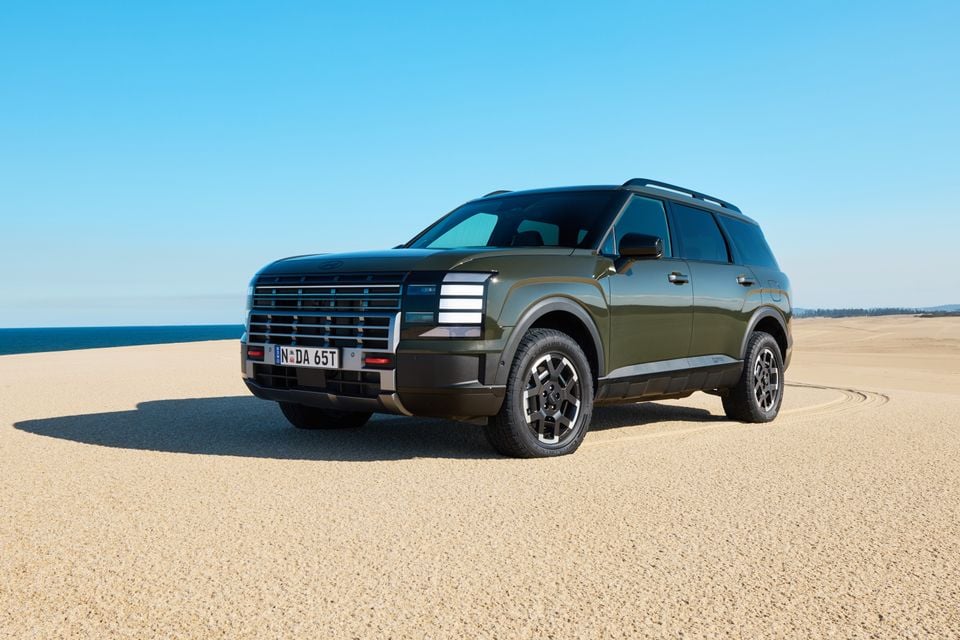
While not quite a viable alternative to the LandCruisers and Everests of this world when it comes to hardcore bush-bashing, the XRT is just tough enough to serve as a reliable camping-trip companion.
At the same time, it remains one of the most spacious and comfortable family SUVs mainstream money can buy.
Sure, it drinks a lot more fuel than the hybrid variants, but that feels like a relatively small price to pay for a more versatile package.
And to Hyundai's credit, it's not like the XRT Pro commands a huge premium over the Elite or its closest competitors.
There’s not much else like it, either. The Outback Wilderness is similar in concept but seats only five, while none of the ladder-frame alternatives can quite match the XRT Pro for on-road refinement.
So whether you need a weekend-ready family wagon or simply want to look cool at the school drop-off, this mean, green adventure machine is a seriously good shout.
CarExpert can save you thousands on a new Hyundai Palisade. Click here to get a great deal.
Click the images for the full gallery
If this is the car for you, we’ll compare offers from trusted dealers, handle the back and forth and manage your purchase from enquiry to delivery.
Quickly see how this car stacks up against its competition. Select any benchmark to see more details.
Hyundai Palisade
Hyundai Palisade Sales rolling 12-months#
*Based on VFACTS and EVC data
Looking for complete Hyundai Palisade price history?
Our Hyundai Palisade Pricing Page shows exactly how prices have changed over time.
2027
$82,443
2027
$96,437
2027
$99,138
Josh Nevett is an automotive journalist covering news and reviews, with a background in motorsport journalism.
Add CarExpert as a Preferred Source on Google so your search results prioritise writing by actual experts, not AI.
Tace Clifford
8 Hours Ago

Damion Smy
7 Days Ago

William Stopford
7 Days Ago

Alborz Fallah
10 Days Ago
Damion Smy
11 Days Ago
Damion Smy
12 Days Ago
Add CarExpert as a Preferred Source on Google so your search results prioritise writing by actual experts, not AI.
# Based on VFACTS and EVC data
† Displayed prices are based on the drive-away price of the vehicle, which includes delivery charges, registration fees, number plates, and applicable road taxes, based on a Sydney location. However, prices may vary between states and territories, and additional costs such as compulsory third party (CTP) insurance, dealer delivery fees, and optional extras are not included. These prices are subject to change without notice and may not reflect current market pricing or dealer offers.
 Automotive Vehicle Spec Data & 4K images Powered by JATO Dynamics Ltd