




Damion Smy
Ram 2500 Warlock brings Hemi V8 back to Australia
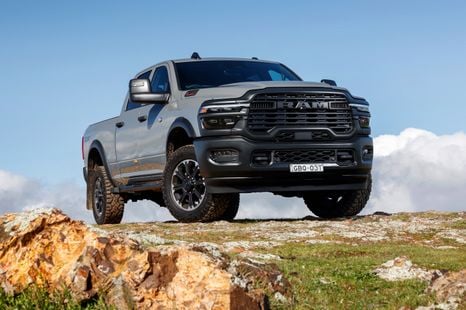
The famous Hemi V8 is returning to Ram’s Australian lineup for the first time in almost two years, under the bonnet of the heavy-duty 2500 Warlock.
5 Hours Ago
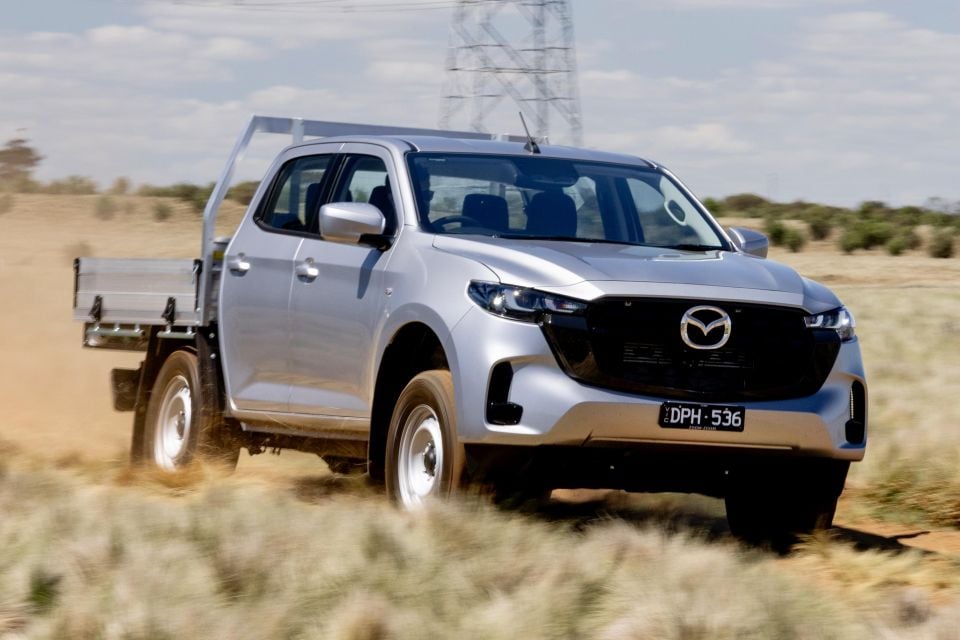
As with its D-Max sister model, the Mazda BT-50's base 1.9L engine has been replaced by a new 2.2L turbo-diesel, bringing sweeping advances.

Marketplace Journalist
Marketplace Journalist
Marketplace Journalist
Marketplace Journalist
If this is the car for you, we’ll compare offers from trusted dealers, handle the back and forth and manage your purchase from enquiry to delivery.
The Mazda BT-50was facelifted earlier this year, but it’s already come in for another tweak that should be fairly significant for fleets and tradespeople.
It’s out with the old base-spec 1.9-litre turbo-diesel, and in with the new 2.2-litre turbo-diesel. The 300cc (266cc to be specific) jump in displacement comes roughly one month after the same switch for the Isuzu D-Max, on which the BT-50 is based.
Accompanying the new entry-level turbo-diesel is also a new eight-speed automatic transmission, which is now standard across both 4×2 or 4×4 drivetrain layouts. Not only that, but you can now get the new 2.2 in single-cab/chassis, dual-cab/chassis, and dual-cab pickup body styles, a vast expansion over the 1.9’s single-cab-only availability.
The only downside is that the BT-50 is now more expensive than before at the bottom of the range, albeit with the promise of improved towing, fuel-efficiency, and general performance.
Mazda invited media to drive the new 2.2L BT-50 range in Victoria’s west on a mix of sealed and unsealed surfaces, though there was no real off-roading, and only dual-cabs were on hand. Is it just what the doctor ordered?
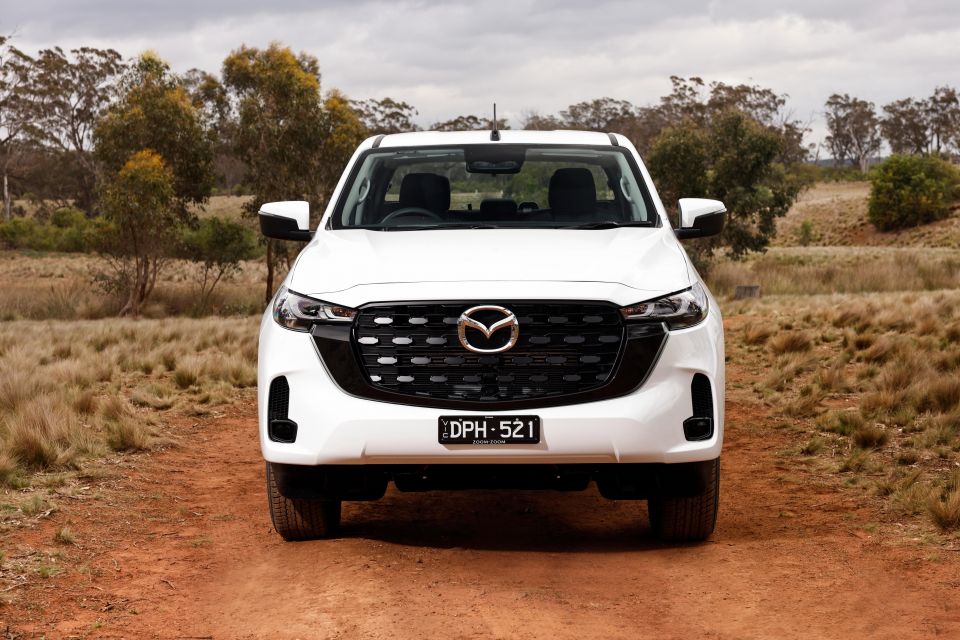
The base 2.2-litre commands a $1500 price premium over its 1.9-litre predecessor, which means the BT-50 range now starts at $37,900 before on-roads for the base XS single-cab/chassis.
| Model | Price before on-road costs |
|---|---|
| 2026 Mazda BT-50 XS 4×2 2.2L single-cab/chassis | $37,900 |
| 2026 Mazda BT-50 XT 4×2 3.0L single-cab/chassis | $40,400 |
| 2026 Mazda BT-50 XT 4×2 3.0L freestyle-cab/chassis | $44,000 |
| 2026 Mazda BT-50 XS 4×2 2.2L dual-cab pickup | $46,710 |
| 2026 Mazda BT-50 XT 4×2 3.0L dual-cab/chassis | $47,610 |
| 2026 Mazda BT-50 XT 4×2 3.0L dual-cab pickup | $49,210 |
| 2026 Mazda BT-50 XT 4×4 3.0L single-cab/chassis | $48,250 |
| 2026 Mazda BT-50 XT 4×4 3.0L freestyle-cab/chassis | $52,000 |
| 2026 Mazda BT-50 XS 4×4 2.2L dual-cab/chassis | $53,120 |
| 2026 Mazda BT-50 XTR 4×2 3.0L dual-cab pickup | $54,240 |
| 2026 Mazda BT-50 XS 4×4 2.2L dual-cab pickup | $54,720 |
| 2026 Mazda BT-50 XT 4×4 3.0L dual-cab/chassis | $55,620 |
| 2026 Mazda BT-50 XT 4×4 3.0L dual-cab pickup | $57,220 |
| 2026 Mazda BT-50 XTR 4×4 3.0L dual-cab/chassis | $61,100 |
| 2026 Mazda BT-50 XTR 4×4 3.0L dual-cab pickup | $63,200 |
| 2026 Mazda BT-50 GT 4×4 3.0L dual-cab/chassis | $64,520 |
| 2026 Mazda BT-50 GT 4×4 3.0L dual-cab pickup | $66,620 |
| 2026 Mazda BT-50 SP 4×4 3.0L dual-cab pickup | $71,950 |
The most natural rival is the Isuzu D-Max, which is cheaper in single-cab/chassis guise at $36,200 before on-roads. It’s the same story for 2.2-litre 4×2 pickup versions of the Isuzu, which start at $44,200 before on-roads.
Similarly, the base Ford Ranger4×2 single-cab/chassis costs $37,130 before on-roads, albeit for a model fitted with the 2.0-litre single-turbo diesel engine. Upgrading to the Ranger’s bi-turbo alternative brings the starting price to $48,230 before on-roads for the same body style, though buyers gain a 4×4 setup.
The cheapest diesel Toyota HiLux single-cab, meanwhile, costs $32,970 before on-roads, while the Mitsubishi Triton starts at $34,740 before on-roads. Point being, the BT-50 is comparatively pricey.
To see how the Mazda BT-50 stacks up against its rivals, use our comparison tool
Unsurprisingly similar to the D-Max, but with much less of the Mazda spice that makes its higher-spec models feel unique.
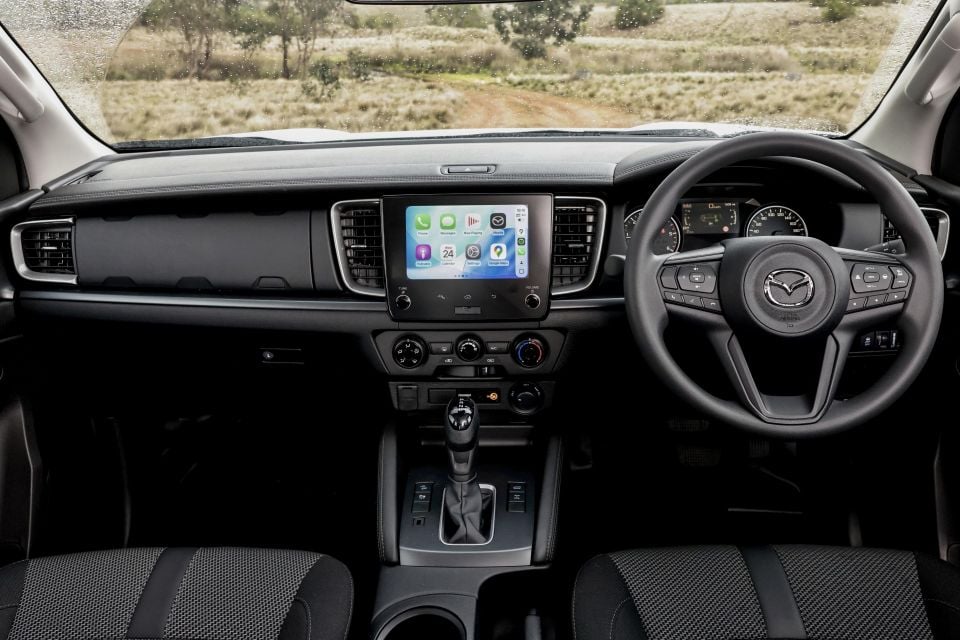
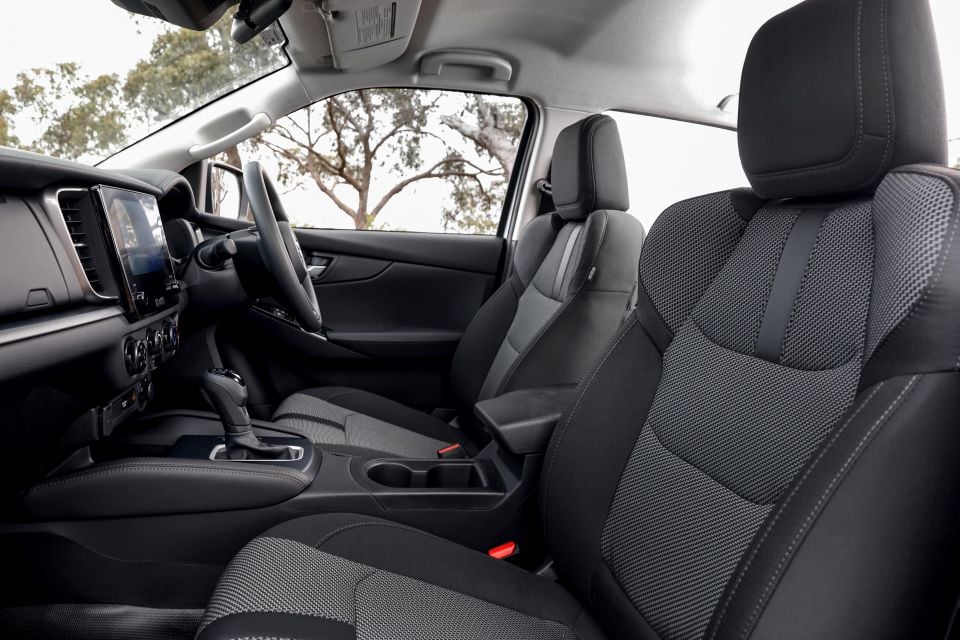
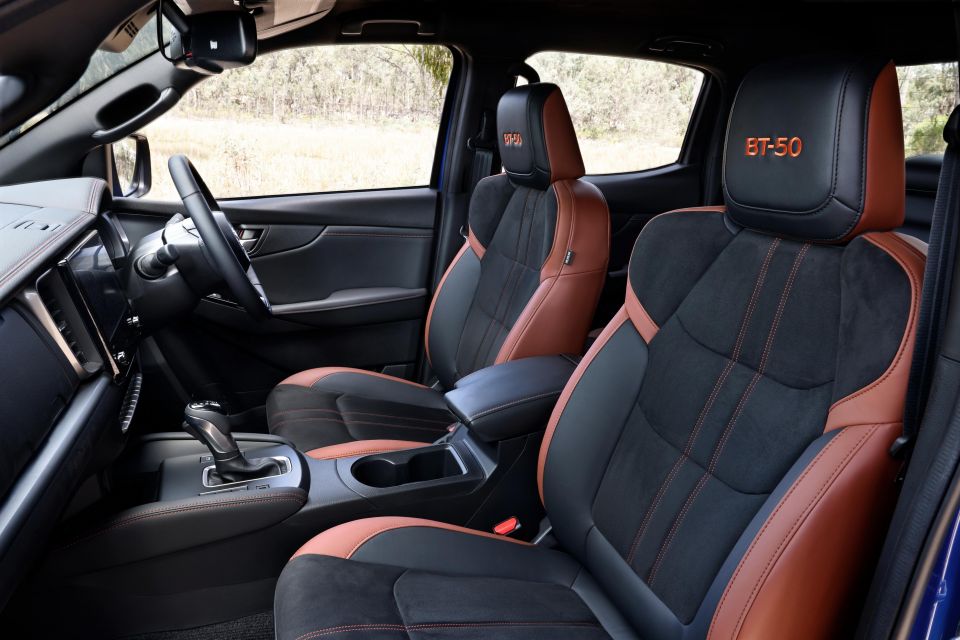
Gone is the black and terracotta upholstery of the top-spec SP and the black synthetic leather of the GT. As is to be expected, the base XS only gets cloth upholstery – even with any unique stitching or dashboard designs, it’s a copy-paste of the D-Max.
Not that that’s a bad thing though, because the Isuzu offers an interior that’s functional if nothing else. The Mazda benefits from this tried-and-tested arrangement, and despite being relatively comfortable, there’s still a sense of rugged durability about it all.
You’ll find loads of plastic, dull surfaces, and stripped-back necessities everywhere – from the door cards to the steering wheel, and from the climate control to the infotainment display.
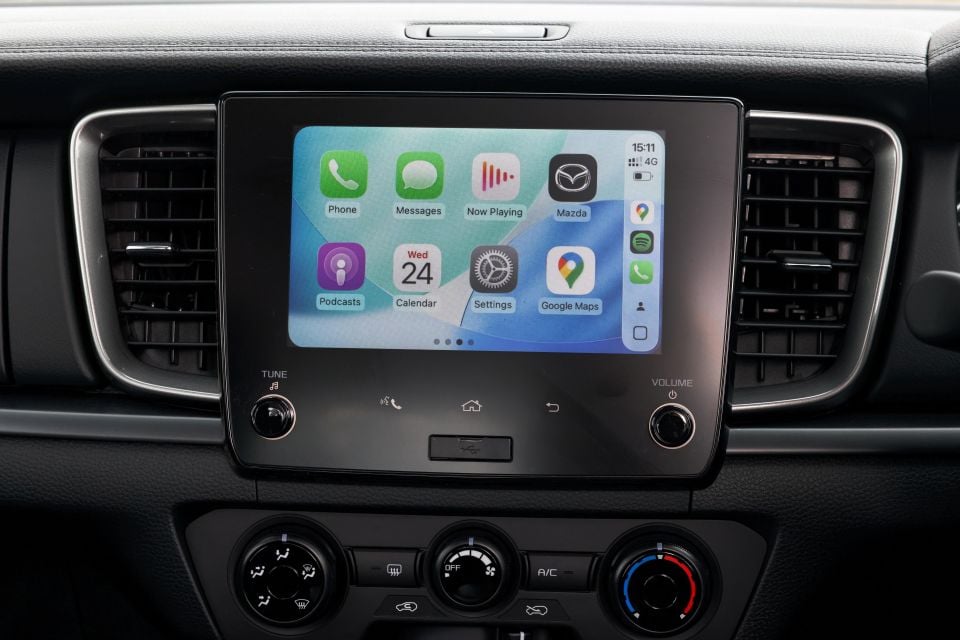
Shared with the D-Max is the smaller of the two infotainment systems available across the BT-50 range. The 8.0-inch screen in this and the XT utilise the exact same user interface as the D-Max, but like its larger, 9.0-inch sibling, it’s supported by isolated touch shortcuts and knobs.
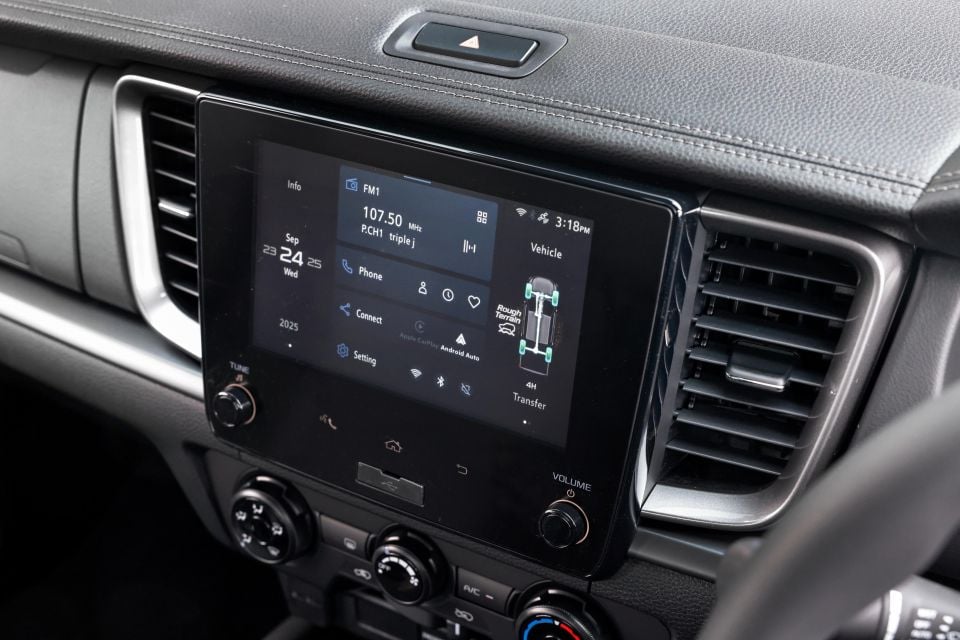
This makes it easy to navigate on the fly, but native apps are still clearly legible via large icons on the display’s home screen. You’ll also find a couple of off-road menus open by default, while the system retains the vaguely utilitarian graphic edge Isuzu seems to love.
This base model doesn’t even miss out on wireless Apple CarPlay or Android Auto – a feature added when the BT-50 range was updated earlier in 2025.
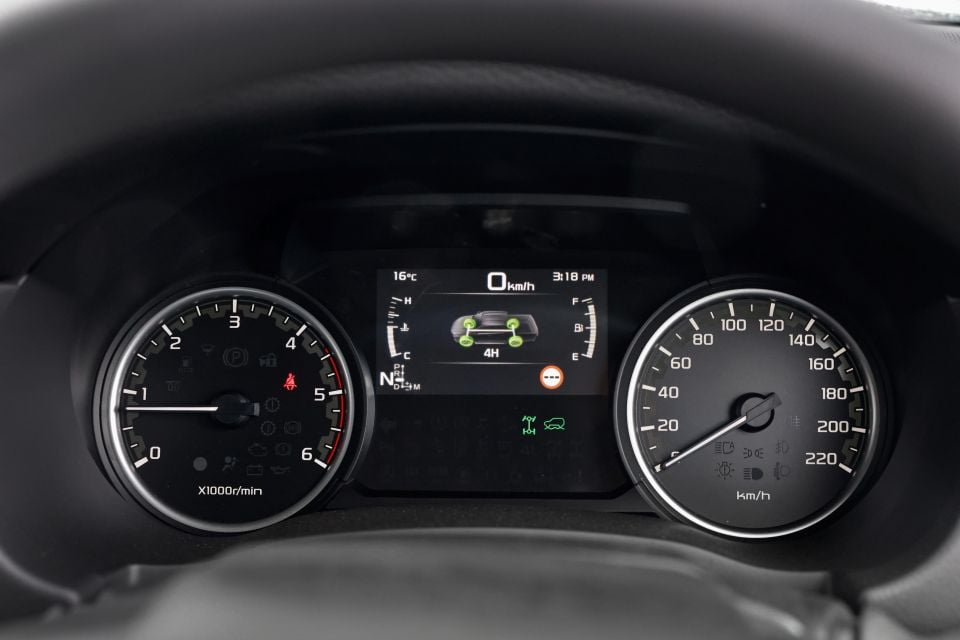
Moving to the instrument cluster brings one of the more stark reminders of the XS’s base-model status. Unlike the 7.0-inch screen seen from the XTR and up, the XS (and XT) get two old-school analogue gauges with a 4.2-inch LCD screen in between.
There’s a charming simplicity to the gauges’ design, and when paired with the small screen, they fit the no-nonsense vibe of this base ute perfectly. You can also toggle through a couple of menus on this screen by using buttons on the steering wheel.
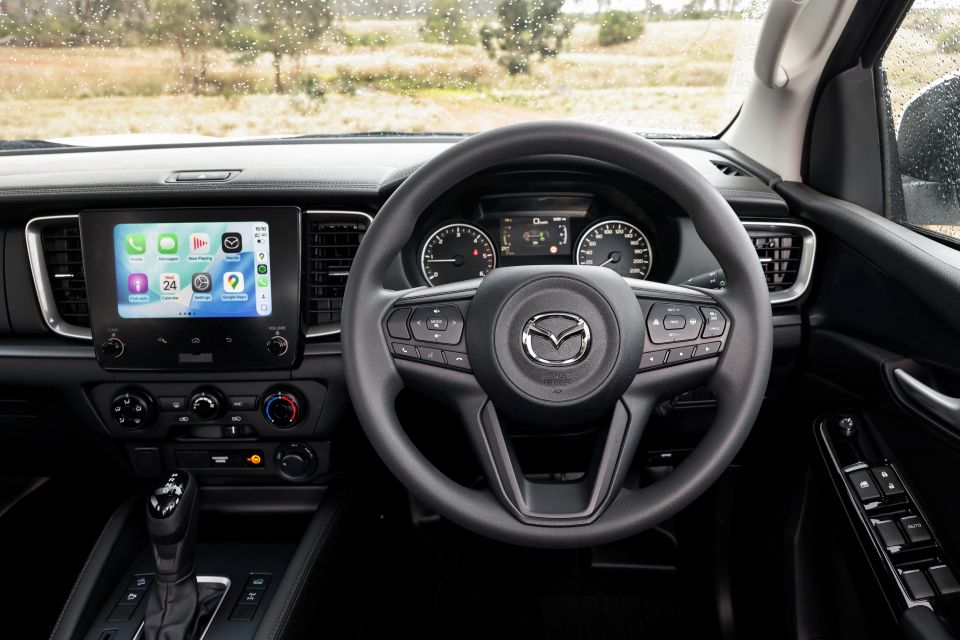
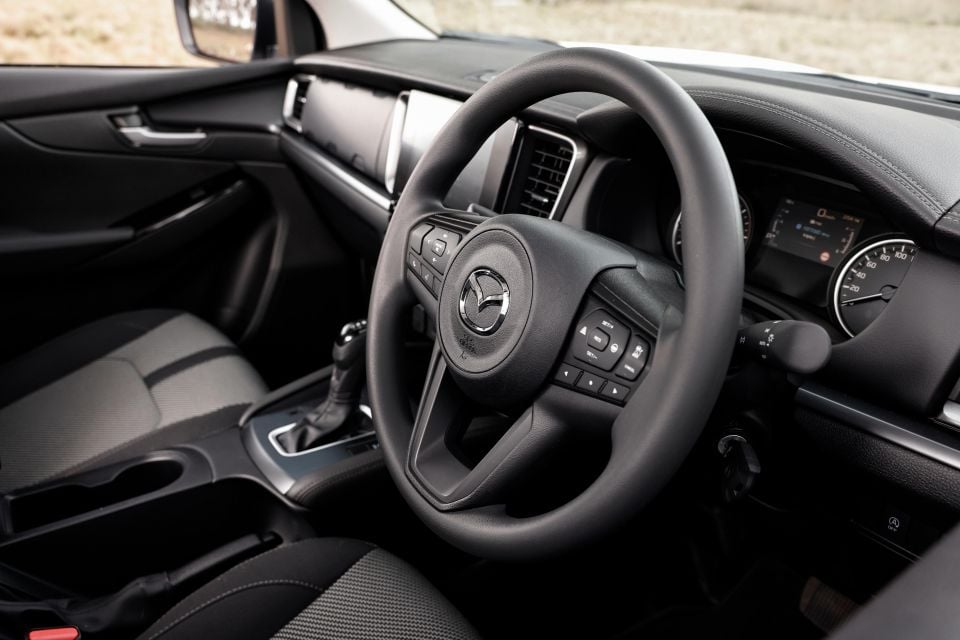
When it comes to that steering wheel, you probably won’t even notice it isn’t all that plush. Don’t expect to find any leather or luxuries here; you get a polyurethane rim and an entirely black plastic finish, without the silver accents seen elsewhere in the range.
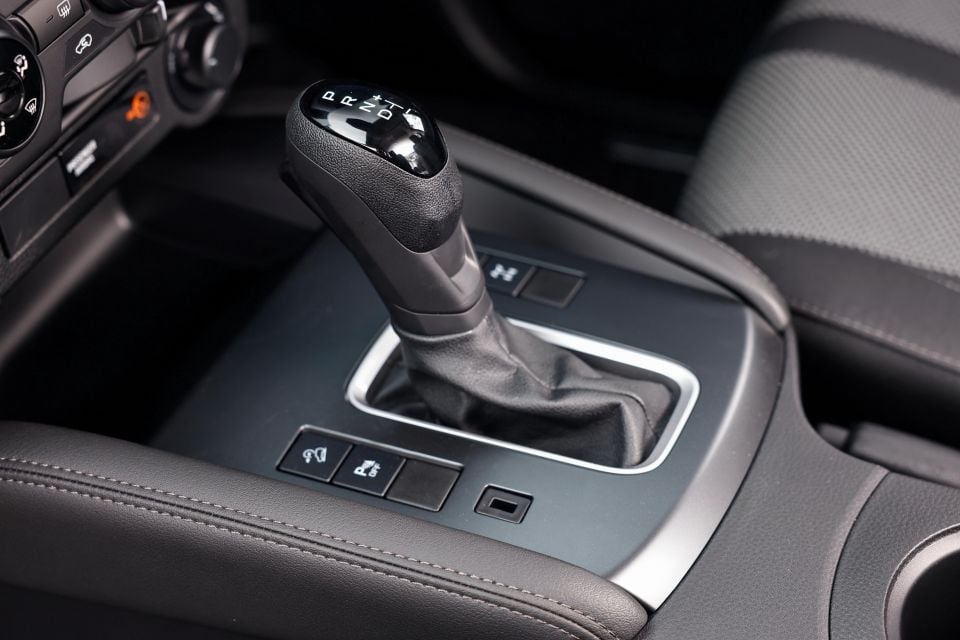
The buttons are still finished in dull black plastic, which fit nicely in the stripped-back XS. Similar materials are found on the centre console around the gear selector, where you’ll also find some off-road controls and a couple of blanks where seat heating buttons would typically be.
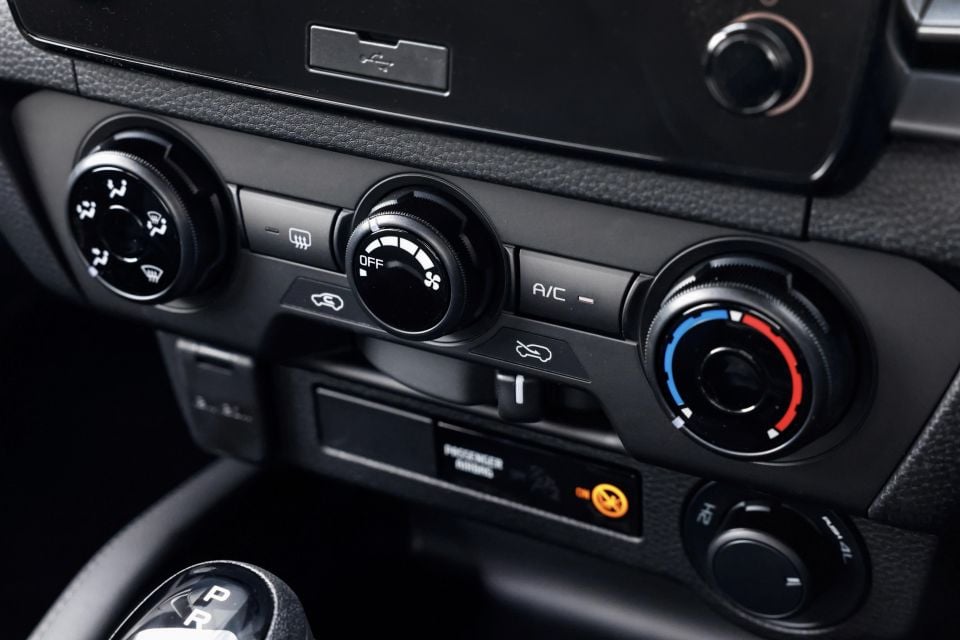
Climate control takes the form of Isuzu’s most basic three-dial air-conditioning setup, which we again expect to hold up well to the working life, at least compared to the over-the-top button array reserved for more expensive models. Our only real gripe in the front of the cabin is an apparent lack of storage space.
There are the usual cupholders, a small-ish two-tier passenger glovebox and centre console box, and a sunglasses holder, but there’s no D-Max-esque cubby on top of the dashboard, nor additional Ranger-style dash-mounted cupholders – not ideal for tradie practicality.
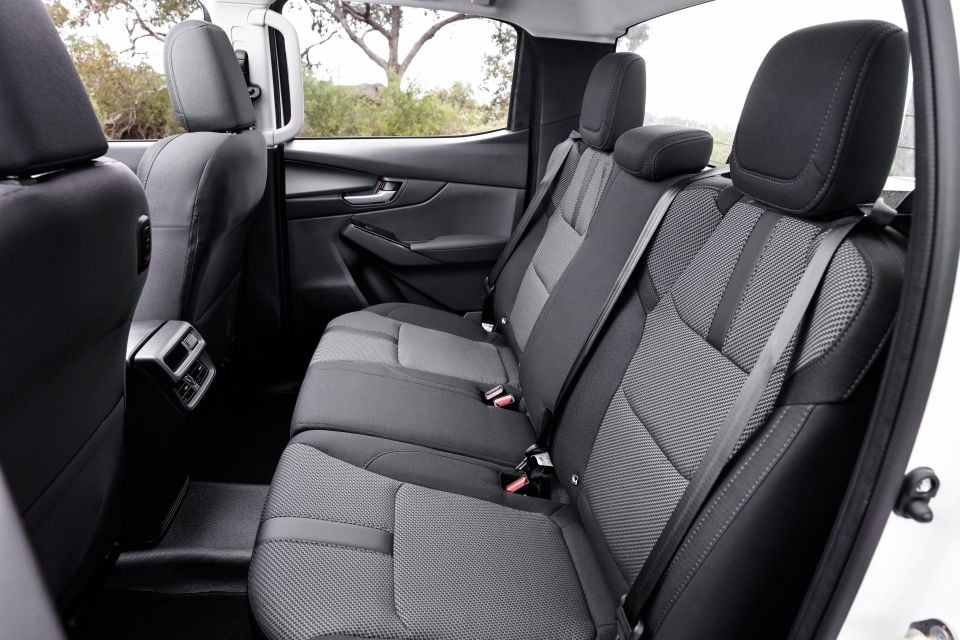
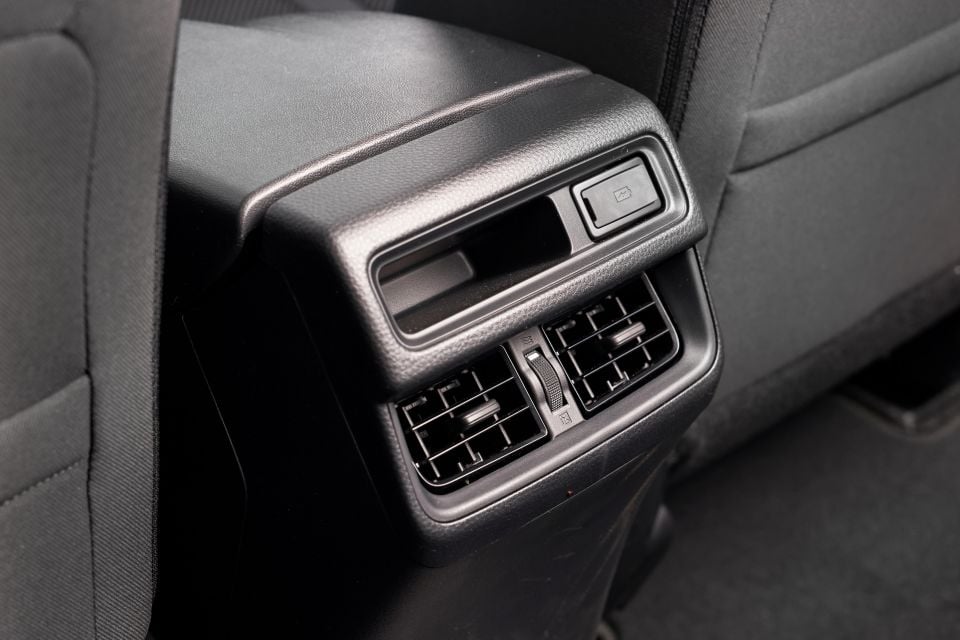
The second row is expectedly sparse, but there’s still plenty of space all around. There’s a pair of rear-facing air vents and a single USB-C port for passengers to use, but no fold-down centre armrest nor additional cupholders beyond bottle holders in the door cards.
It feels a bit like a continuation of the limitations up front, which aren’t crippling but do restrict the freedom and flexibility we’d expect from a ute at the entry-level BT-50’s corner of the market. There’s also only one USB-C port up front, if you’re wondering.
The back seats are purely a space to transport extra people in, without much in the way of creature comforts. If you need more space and don’t have anyone seated here, the bottom of the bench seat folds up to reveal a pair of hidden storage cubbies.
Of course, none of that is applicable to the two-seat, single-cab/chassis variants.
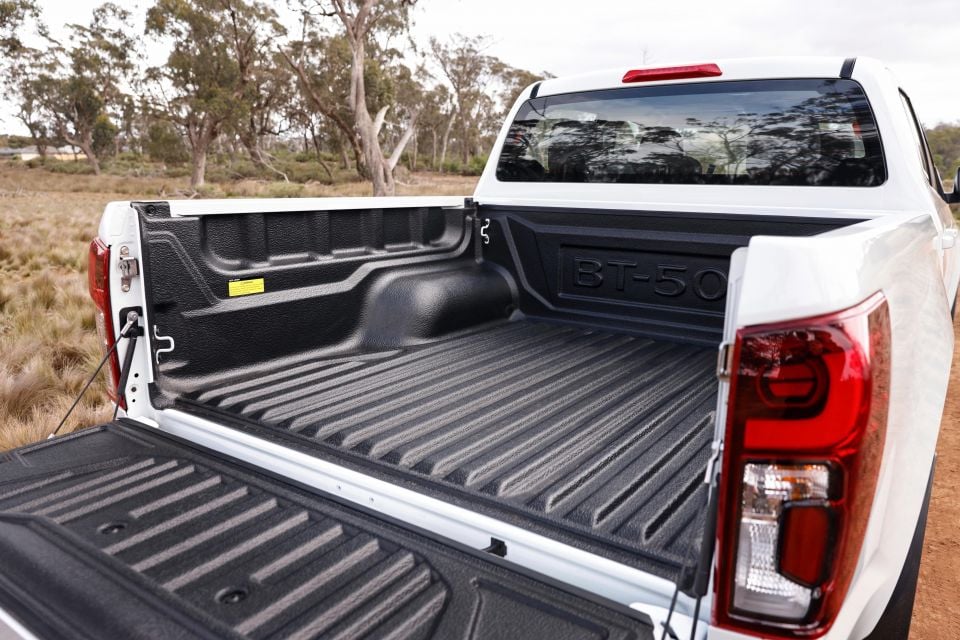
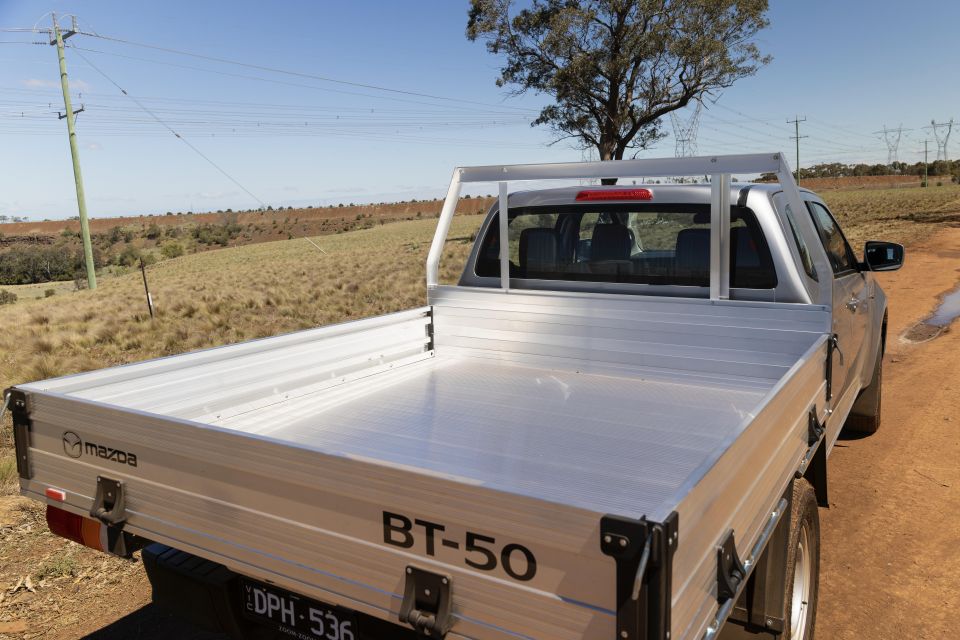
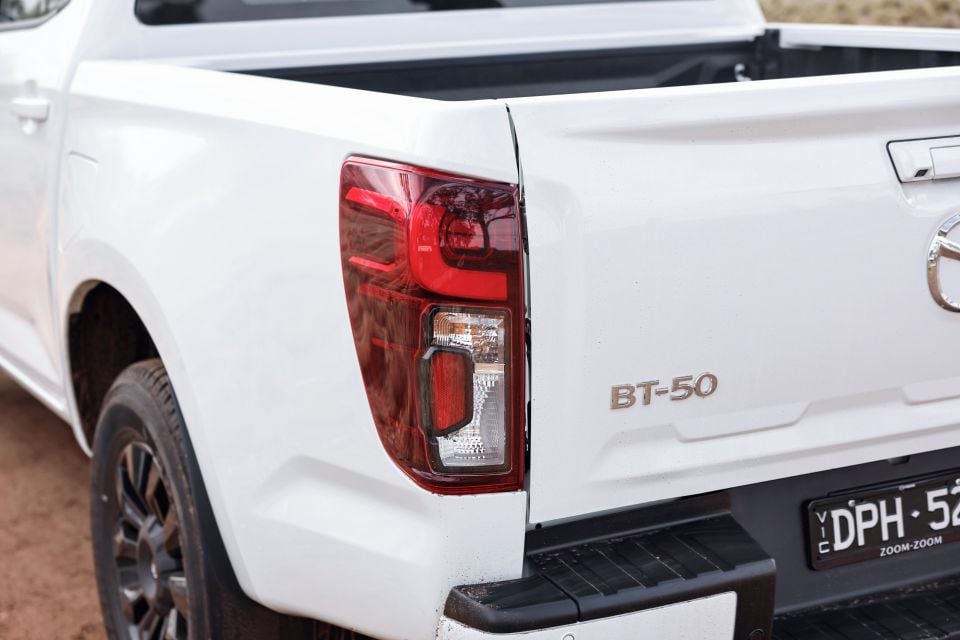
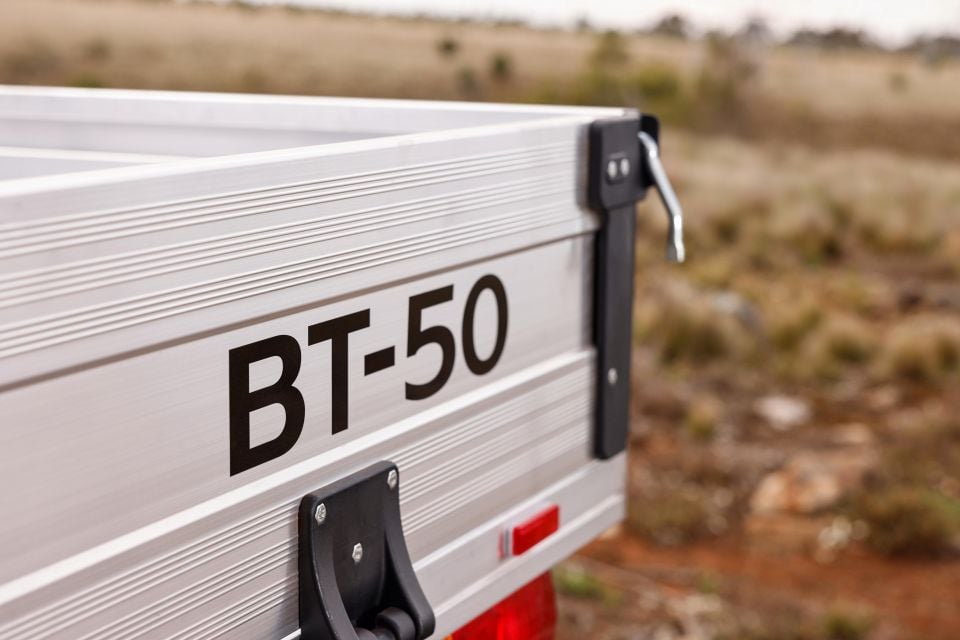
BT-50 XS variants are available with an alloy tray or a pickup-style tub. Both are very basic when it comes to extra features or capabilities, but that isn’t the end of the world given that the vehicle is meant to be put to work.
Pickup models feature hydraulic tailgate assistance, which makes it easier to lower the tailgate without it falling down uncontrollably. It’s no easier to close, though.
Also missing as standard is any sort of tonneau cover for the pickup models, which are immensely useful if you’re a tradie carrying tools. These can be optioned at the time of purchase and it isn’t uncommon for manufacturers to omit them from the factory, though we can praise the standard inclusion of a bed liner.
While there are no measurements for the tray, the tub is dimensionally comparable to most of the competition, if not a little longer.
| Dimensions | Mazda BT-50 single-cab/chassis | Dual-cab/chassis | Dual-cab pickup |
|---|---|---|---|
| Length | 5320mm | 5280mm | 5280mm |
| Width | 1870mm | 1870mm | 1870mm |
| Height | 1790mm | 1800mm | 1785mm |
| Wheelbase | 3125mm | 3125mm | 3125mm |
| Tub length | – | – | 1571mm |
| Tub width (between wheel arches) | – | – | 1120mm |
| Tub depth | – | – | 1530mm |
To see how the Mazda BT-50 stacks up against its rivals, use our comparison tool
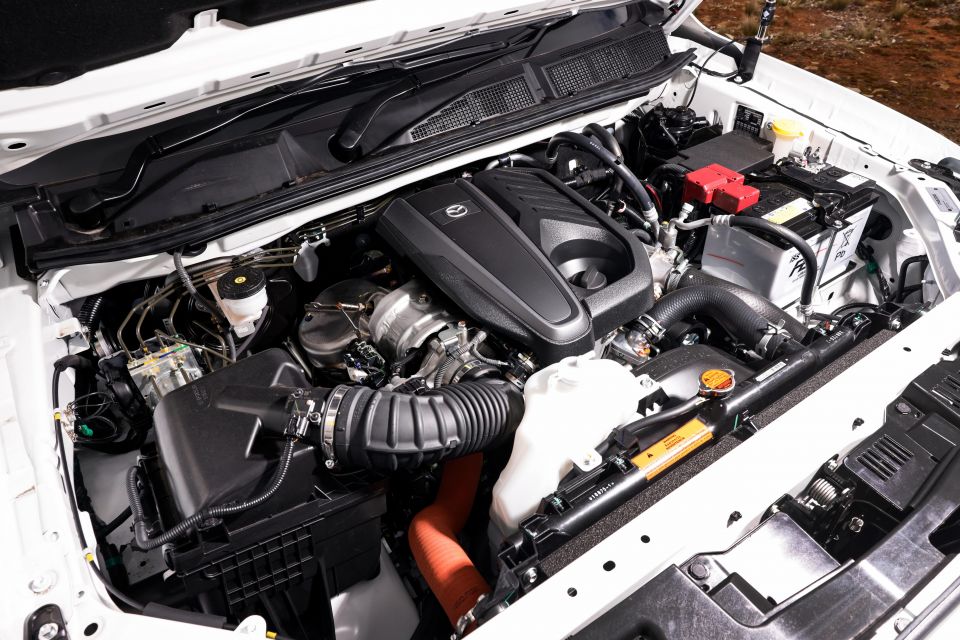
Of course, the big news is the bigger engine under the bonnet. We now get a 2.2-litre four-cylinder turbo-diesel, pumping out 120kW of power and 400Nm of torque – up 10kW and 50Nm from the 1.9-litre of old.
| Specifications | Mazda BT-50 XS |
|---|---|
| Engine | 2.2L 4cyl turbo-diesel |
| Power | 120kW |
| Torque | 400Nm |
| Transmission | 8-speed auto |
| Drive type | Rear-wheel drive or four-wheel drive with low range |
| Fuel economy (claimed) | 6.3L/100km (4×2 dual-cab pickup) 6.6L/100km (4×4 dual-cab pickup) 6.9L/100km (4×2 single-cab/chassis) 7.1L/100km (4×4 dual-cab/chassis) |
| Fuel economy (as tested) | |
| CO2 emissions (claimed) | 167g/km (4×2 dual-cab pickup) 174g/km (4×4 dual-cab pickup) 183g/km (4×2 single-cab/chassis) 188g/km (4×4 dual-cab/chassis) |
| Fuel tank | 76L |
| Kerb weight | 1787kg (4×2 single-cab/chassis, with standard alloy tray) 1888kg (4×2 dual-cab pickup) 1961kg (4×4 dual-cab pickup) 1966kg (4×4 dual-cab/chassis, with standard alloy tray) |
| Payload | 1112kg (4×2 dual-cab pickup) 1134kg (4×4 dual-cab/chassis, with standard alloy tray) 1139kg (4×4 dual-cab pickup) 1213kg (4×2 single-cab/chassis, with standard alloy tray) |
| Braked towing capacity | 3500kg |
| Gross vehicle mass (GVM) | 3000kg (4×2) 3100kg (4×4) |
| Gross combination mass (GCM) | 5500kg (4×2) 6000kg (4×4) |
It’s exclusively mated to an eight-speed automatic transmission, contrasting the six-speed unit fitted to 3.0-litre versions. Buyers can also choose between rear- and four-wheel drive configurations, the latter offering selectable low-range gearing.
We didn’t have enough time in any one car during Mazda’s local launch to record a representative real-world fuel-economy figure, but we did see figures hovering around 7.5L/100km over the day.
To see how the Mazda BT-50 stacks up against its rivals, use our comparison tool
When I reviewed the facelifted BT-50 earlier this year, I noted that it drove well but with a few flaws that took away from the vehicle’s otherwise polished demeanour. When it comes to the XS, those flaws tend to blend into the background.
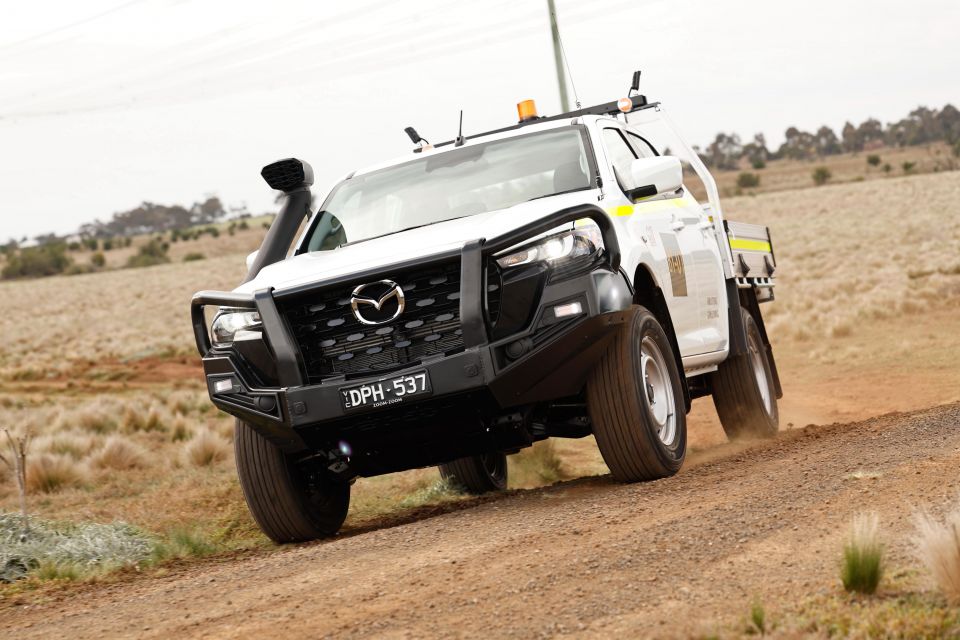
Granted, that’s not to say those flaws don’t still exist; it’s more that they don’t feel out of place in a work vehicle. It’s still somewhat wallowy in turns, and it’s sluggish off the line, despite the new engine.
But this isn’t meant to be a performance weapon. Instead, its factory tyres are geared to withstand thousands of kilometres of abuse on all manner of roads and worksites, while still providing enough traction to get to difficult locations.
The somewhat wobbly nature also makes it fun to chuck around, and you certainly don’t have to be as careful when driving down unsealed roads. The BT-50 can handle it, and the plethora of accessories allows you to dial it in to do exactly what you need.
As for the new engine, it’d be wrong to say it’s a lot quicker than the 1.9-litre it replaces, because it’s still quite slow.
Compared to the 3.0-litre, which is much gruntier but far from class-leading, the 2.2-litre certainly couldn’t hold a candle. But improvements over the 1.9 now put it in the territory of acceptably slow, mostly because nobody driving it expects it to be anything other than the way it is.
It isn’t wheezy like the 1.9 often was. Instead, it chugs along with a characteristic diesel rattle and pulls appropriately when accelerating to highway speeds. Cabin refinement is good, and neither engine noise nor road noise overpowers conversations.
This engine also gets a new eight-speed automatic instead of the 3.0-litre’s six-speed unit, which works well and is much smoother. There’s still a bit of delay when stomping on the throttle, but it’s only noticeable when you’re particularly harsh with your pedal inputs.
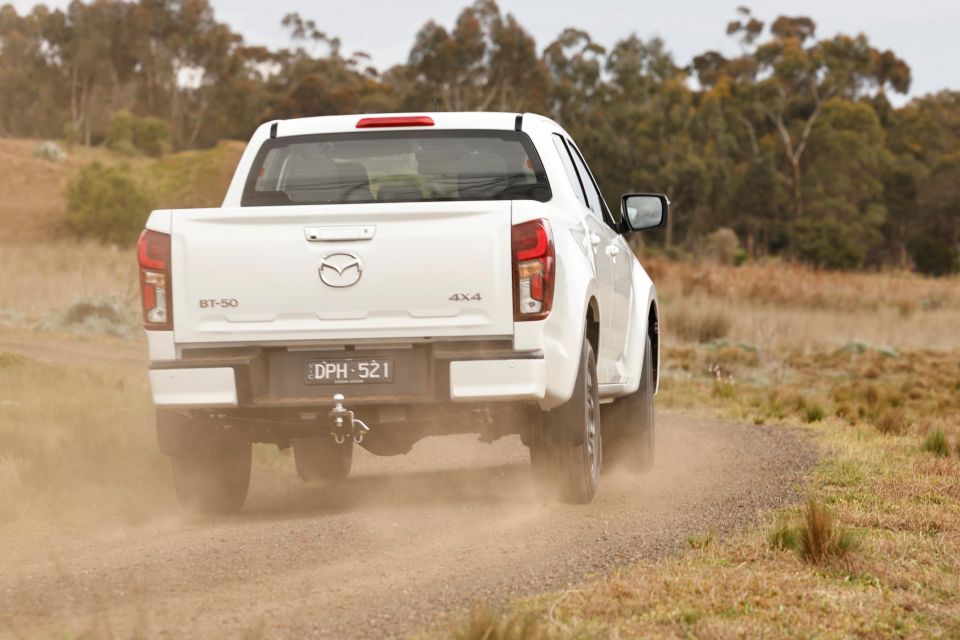
The result is a ute that you shouldn’t dread driving, perhaps unlike the 1.9. It’s perfectly acceptable in almost every way, with just enough grunt to get you out of harm’s way, though some pre-planning is still required if you’re thinking of an overtake. And it will still spin the rear wheels at decent speeds on a dirt road if you’re driving in 2H, which is fun.
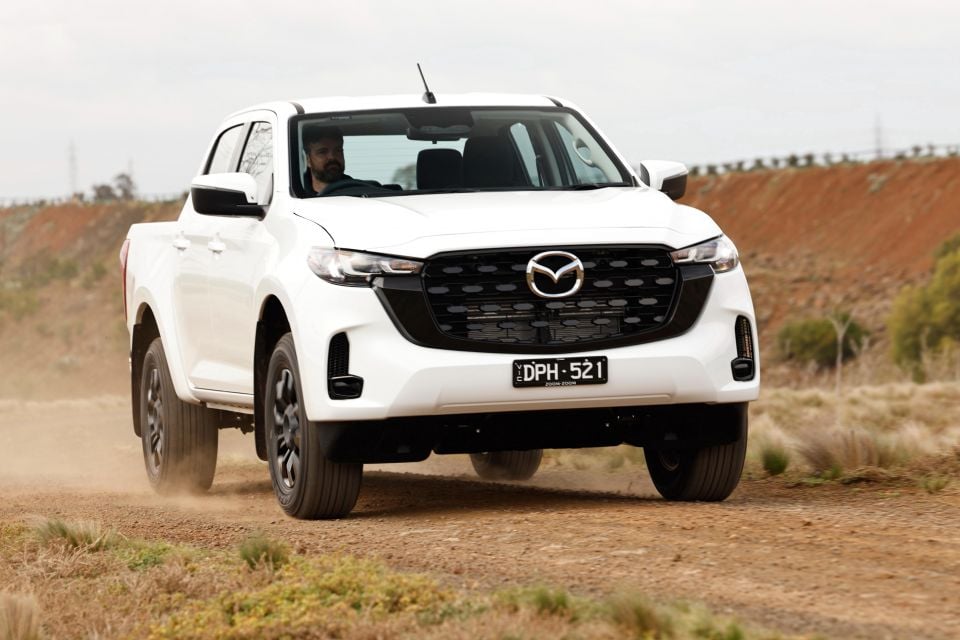
That’s the other thing: four-wheel drive variants come with low-range gearing, which means you have the flexibility of choosing between a more fuel-efficient rear-drive mode during on-road commuting, or 4×4 for more hardcore off-road situations.
Ride quality is fairly well sorted, even unladen. It’s actually fairly well composed, and while it doesn’t threaten the all-conquering Ranger, it will still keep you comfortable on longer drives.
It’s at least far better than lower-spec Tritons, which sport heavy-duty rear leaf springs that allow bumps to buck the rear of the vehicle violently when unladen. The BT-50 feels just a little more competent and compliant on paved roads, at least enough to avoid any major complaints from rear-seat occupants.
All said, the 2.2-litre BT-50 is best described as ‘fine’. It isn’t anything revolutionary, but does its job to an acceptable standard.
If this is the car for you, we’ll compare offers from trusted dealers, handle the back and forth and manage your purchase from enquiry to delivery.
Capping it off is surprising manoeuvrability in tighter conditions, supported by a strong, high seating position that gives you a commanding view of everything around.
Rear visibility is also good, though there are the usual ute hindrances, like the way the tub obscures smaller objects or those closer to the rear of the vehicle. We didn’t notice the same visual obstructions in variants with a tray as we did in the Triton, for example.
We also know the 3.0-litre BT-50 is quite capable off-road, and though we didn’t do any serious off-roading in four-wheel drive 2.2L vehicles at the launch, we’d expect them to perform similarly given their shared componentry.
Despite recent criticisms in our recent BT-50 reviews, we didn’t notice any safety beeps or bongs worth mentioning during the event either. All that makes the BT-50 easier to drive, for both regular ute buyers and the uninitiated.
| Off-road dimensions | Mazda BT-50 XS |
|---|---|
| Track front and rear | 1570mm |
| Ground clearance | 235mm |
| Approach angle | 29.6º (cab/chassis) 30.0º (dual-cab pickup) |
| Departure angle | 24.6º (single-cab/chassis) 29.6º (dual-cab/chassis) 23.9º (dual-cab pickup) |
| Ramp breakover angle | 23.9º (cab/chassis) 23.3º (dual-cab pickup) |
| Wading depth | 800mm |
To see how the Mazda BT-50 stacks up against its rivals, use our comparison tool
The five-grade BT-50 model range is unchanged.
2026 Mazda BT-50 XS equipment highlights:
BT-50 XT adds:
BT-50 XTR gains:
BT-50 GT adds:
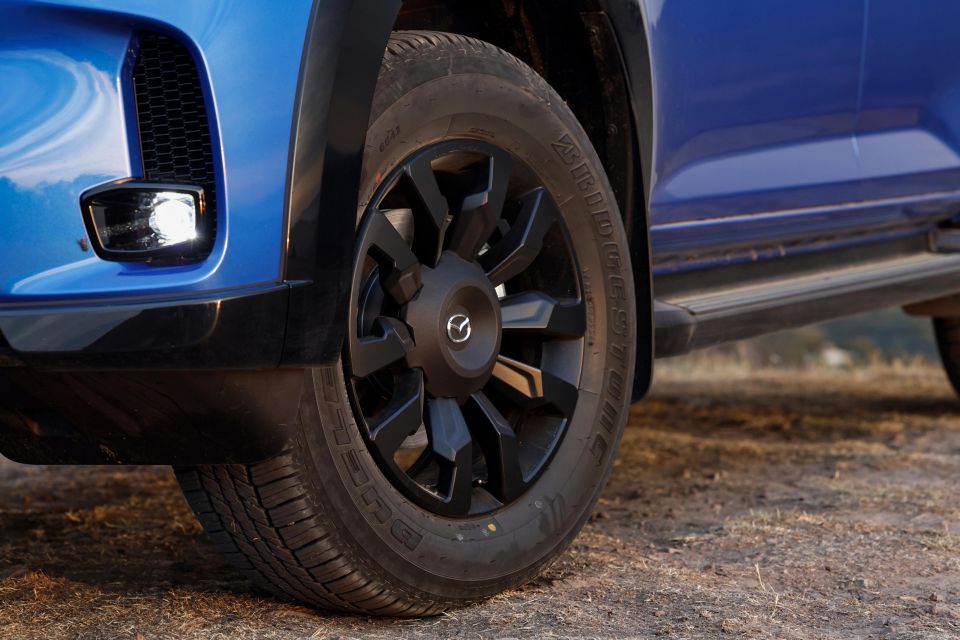
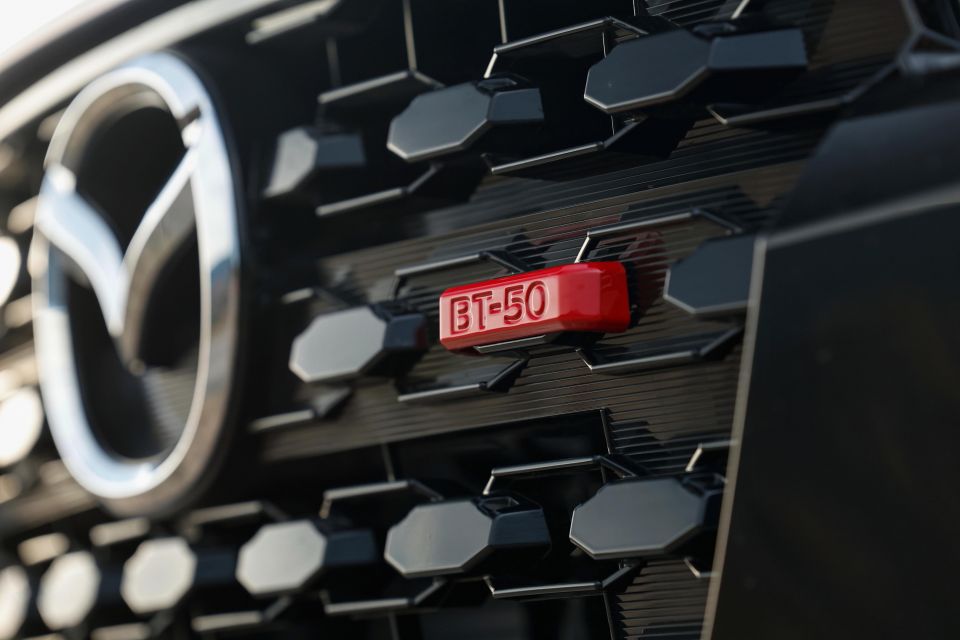
BT-50 SP gains:
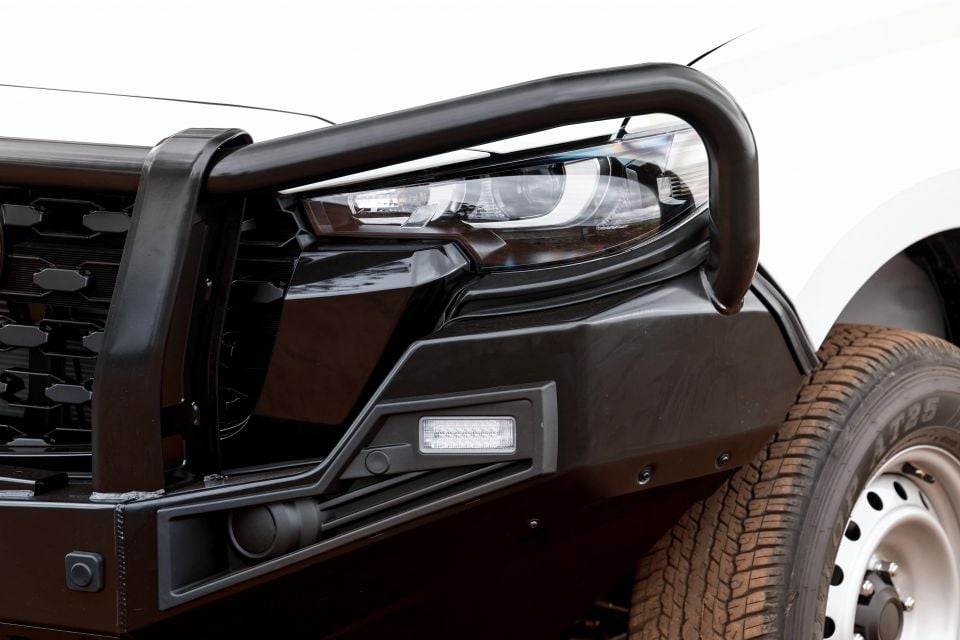
Additionally, there are more than 100 genuine Mazda accessories available for the BT-50, so it’s worth visiting a Mazda dealer to check out and the customisation options.
They’re also covered by the ute’s five-year factory warranty if fitted at delivery, or a two-year warranty if fitted after purchase.
To see how the Mazda BT-50 stacks up against its rivals, use our comparison tool
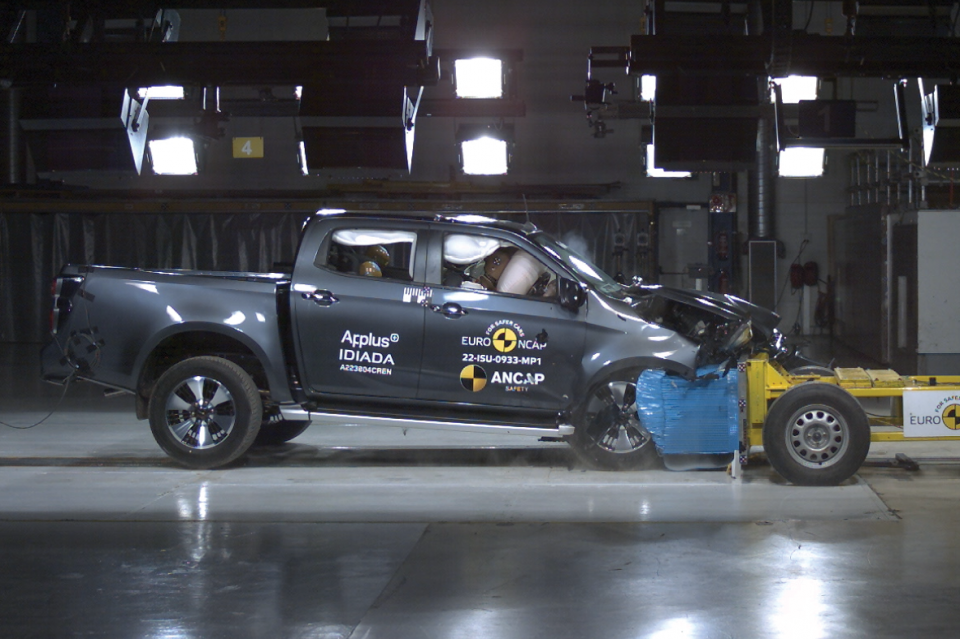
The Mazda BT-50 boasts a five-star ANCAP safety rating, based on testing conducted on the D-Max in 2022.
| Category | Mazda BT-50 |
|---|---|
| Adult occupant protection | 86 per cent |
| Child occupant protection | 89 per cent |
| Vulnerable road user protection | 67 per cent |
| Safety assist | 84 per cent |
The utes were reassessed despite having already received five-star ratings in 2020, as the D-Max and BT-50 received a design change to the driver’s knee airbag and instrument panel.
Standard safety equipment includes:
To see how the Mazda BT-50 stacks up against its rivals, use our comparison tool
The Mazda BT-50 is covered by the Japanese brand’s five-year, unlimited-kilometre warranty, which includes roadside assistance for the same period. For reference, Isuzu Ute Australia offers a six-year, 150,000km warranty.
| Servicing and Warranty | Mazda BT-50 |
|---|---|
| Warranty | 5 years, unlimited kilometres |
| Roadside assistance | 5 years, unlimited kilometres |
| Service intervals | 12 months, 15,000km |
| Capped-price servicing | 5 years |
| Total capped-price service cost | $2188 (2.2L 4×2) $2302 (2.2L 4×4) $2406 (3.0L 4×2) $2496 (3.0L 4×4) |
| Average annual service cost over 5 years | $437.6 (2.2L 4×2) $460.4 (2.2L 4×4) $481.2 (3.0L 4×2) $499.2 (3.0L 4×4) |
Individual capped-price service costs for each BT-50 drivetrain are outlined below.
| 2.2L 4×2 | 2.2L 4×4 | 3.0L 4×2 | 3.0L 4×4 | |
|---|---|---|---|---|
| 12 months or 15,000km | $392 | $449 | $416 | $458 |
| 24 months or 30,000km | $422 | $422 | $423 | $425 |
| 36 months or 45,000km | $560 | $560 | $729 | $731 |
| 48 months or 60,000km | $478 | $535 | $499 | $541 |
| 60 months or 75,000km | $336 | $336 | $339 | $341 |
For context, the first five services for an Isuzu D-Max cost $469 each, totalling $2345 over five years. This is the same for both powertrains.
Ford offers significantly cheaper servicing for the Ranger, with the first five services available for $1596 under a pre-paid plan.
Similarly, the first six services for a base Toyota HiLux are capped at $305, but given that ute has shorter six-month, 10,000km intervals, that works out to a total of $1830 over just three years.
To see how the Mazda BT-50 stacks up against its rivals, use our comparison tool
We went into Mazda’s launch expecting mild improvements, and fortunately our low-ish expectations were met.
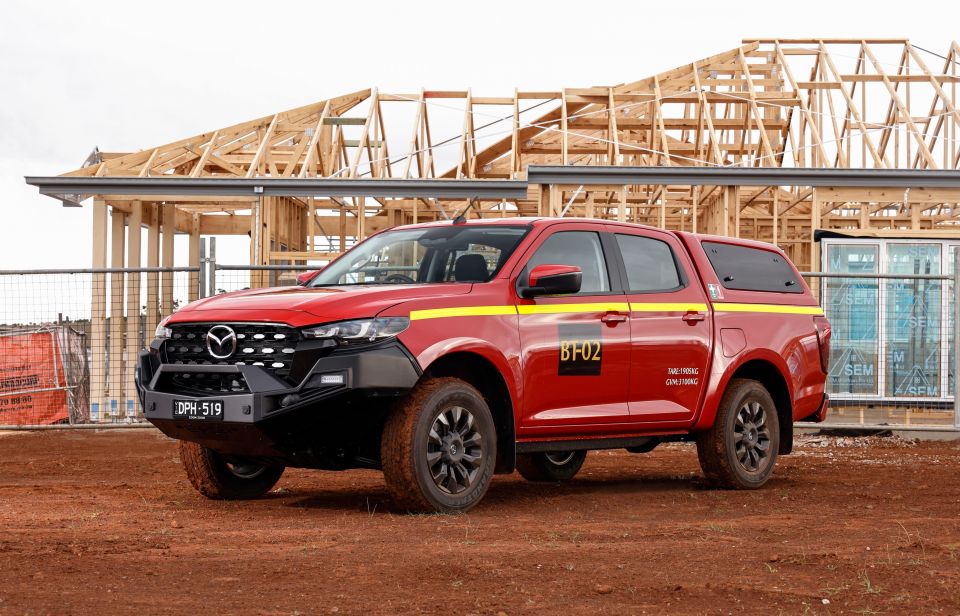
Like we said in our driving impressions, the base BT-50 is really just fine. It does what it’s supposed to do relatively well, without doing too much wrong.
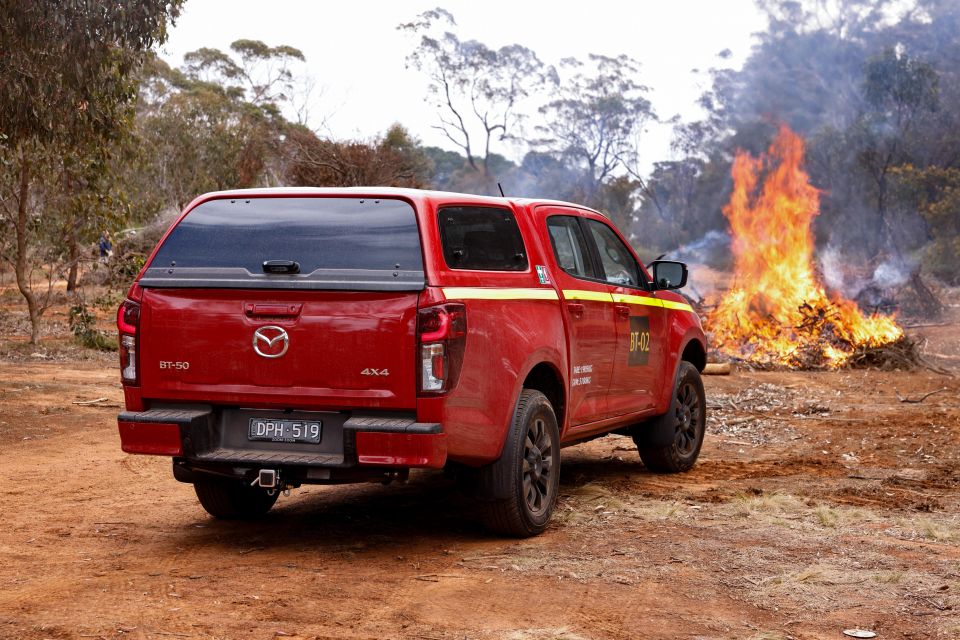
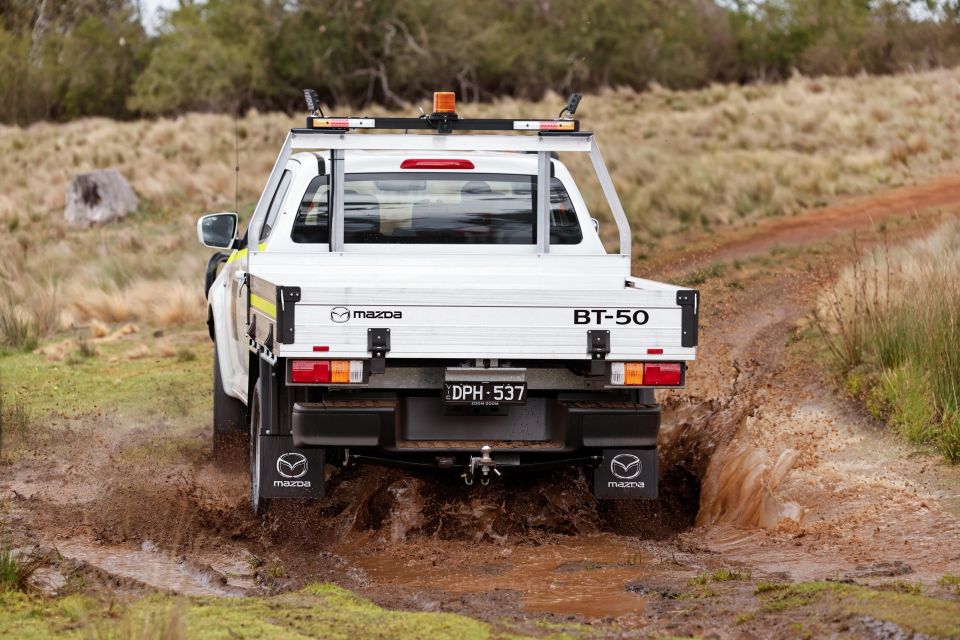
That said, it is still a harder sell than in the D-Max, primarily because it’s not only more expensive to buy, but also to own in the short term. That could likely be the difference for fleet buyers in particular, which is clearly what these 2.2L models are aimed at – just look at how Mazda dressed up some of the cars in its imagery.
Of course, you may still buy a BT-50 instead because you prefer Mazda to Isuzu, and at that point it’s coming down to personal preference. The expanded, lower-spec XS range that’s now on offer also makes it difficult to choose between the two.
To us, both utes are now decently improved at the bottom of their respective lineups, which means the D-Max makes more sense if you’re only concerned about price. If that isn’t your main concern, a coin toss will still give you a good result.
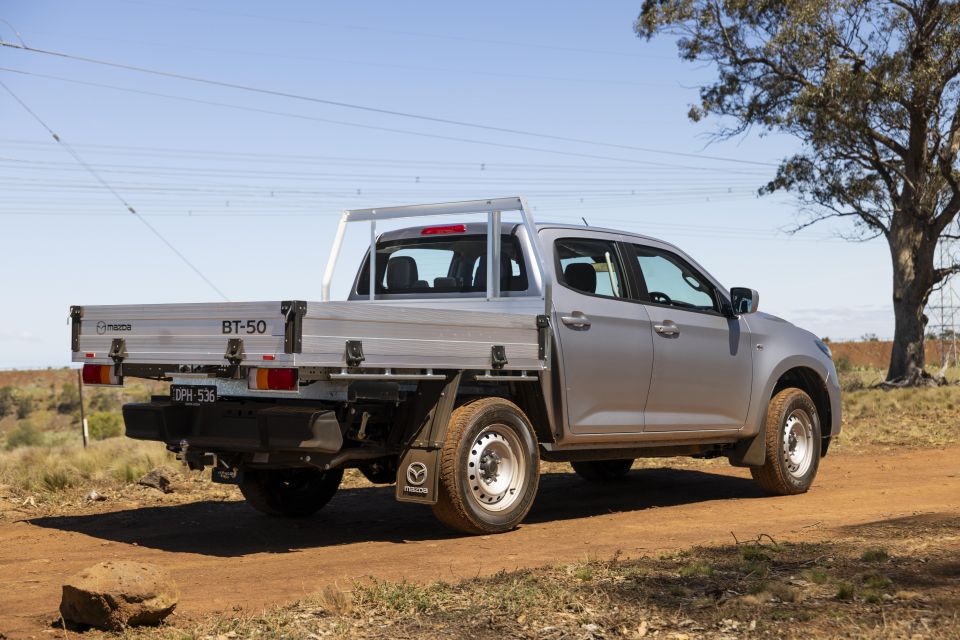
CarExpert can save you thousands on a new Mazda BT-50. Click here to get a great deal.
Click the images for the full gallery
If this is the car for you, we’ll compare offers from trusted dealers, handle the back and forth and manage your purchase from enquiry to delivery.
Quickly see how this car stacks up against its competition. Select any benchmark to see more details.
Mazda BT-50
Mazda BT-50 Sales rolling 12-months#
*Based on VFACTS and EVC data
Looking for complete Mazda BT-50 price history?
Our Mazda BT-50 Pricing Page shows exactly how prices have changed over time.
2026
$43,509
2026
$46,084
2026
$61,410
2026
$65,983
2026
$70,927
2026
$79,651
2026
$85,831
Max Davies is a CarExpert journalist with a background in regional media, with a passion for Japanese brands and motorsport.
Add CarExpert as a Preferred Source on Google so your search results prioritise writing by actual experts, not AI.
Damion Smy
5 Hours Ago

William Stopford
6 Hours Ago
William Stopford
1 Day Ago


Tace Clifford
5 Days Ago
Damion Smy
8 Days Ago
Damion Smy
8 Days Ago
Add CarExpert as a Preferred Source on Google so your search results prioritise writing by actual experts, not AI.
# Based on VFACTS and EVC data
† Displayed prices are based on the drive-away price of the vehicle, which includes delivery charges, registration fees, number plates, and applicable road taxes, based on a Sydney location. However, prices may vary between states and territories, and additional costs such as compulsory third party (CTP) insurance, dealer delivery fees, and optional extras are not included. These prices are subject to change without notice and may not reflect current market pricing or dealer offers.
 Automotive Vehicle Spec Data & 4K images Powered by JATO Dynamics Ltd