




William Stopford
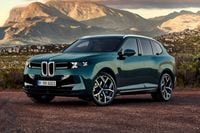
2027 BMW X5 price and specs
The new-generation BMW X5 wears bolder styling inside and out, packs more power, and comes with a price tag only slightly higher than before.
10 Hours Ago
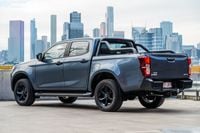
Isuzu's MU-X continues to prove why it's a strong seller, but we don't think it makes sense to spring for the top-spec X-Terrain.

Marketplace Journalist
Marketplace Journalist
Marketplace Journalist
Marketplace Journalist
If this is the car for you, we’ll compare offers from trusted dealers, handle the back and forth and manage your purchase from enquiry to delivery.
The Isuzu MU-X has continued to chug along after an update in early 2025, consistently posting respectable sales figures and ranking highly among Australia's seven-seat heavy-hitters.
With 7564 deliveries to the end of June 2026, it's Australia’s third most popular large off-road SUV behind only the segment-leading Ford Everest and Toyota Prado.
Its sales decline has been lower than its two closest rivals so far this year, no doubt aided by last year's updates. Among the headline tweaks to its tech and model lineup was the addition of the new flagship X-Terrain variant, a trim level borrowed from the Isuzu D-Max ute with which the MU-X shares its ladder-frame platform.
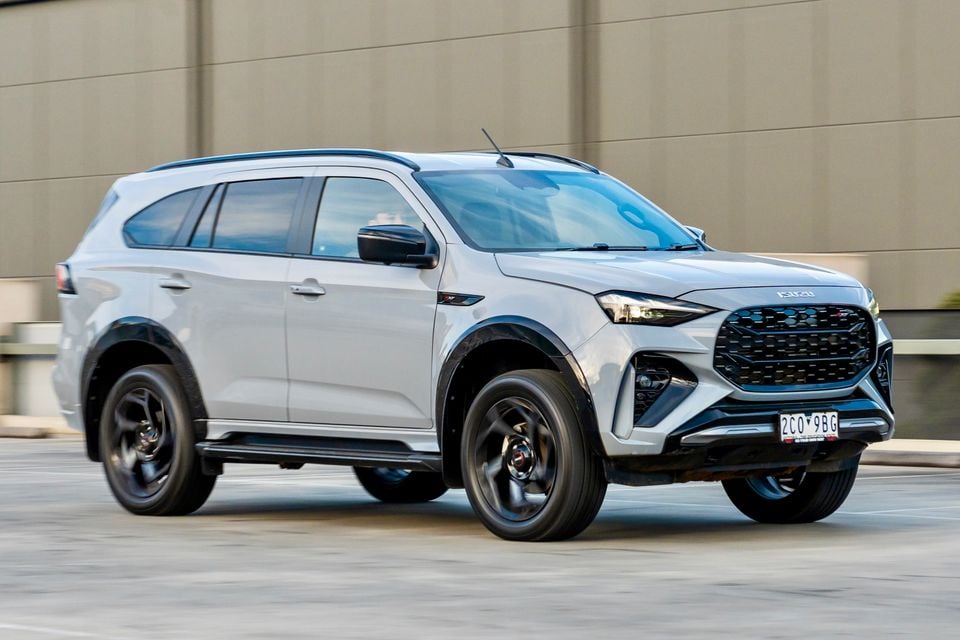
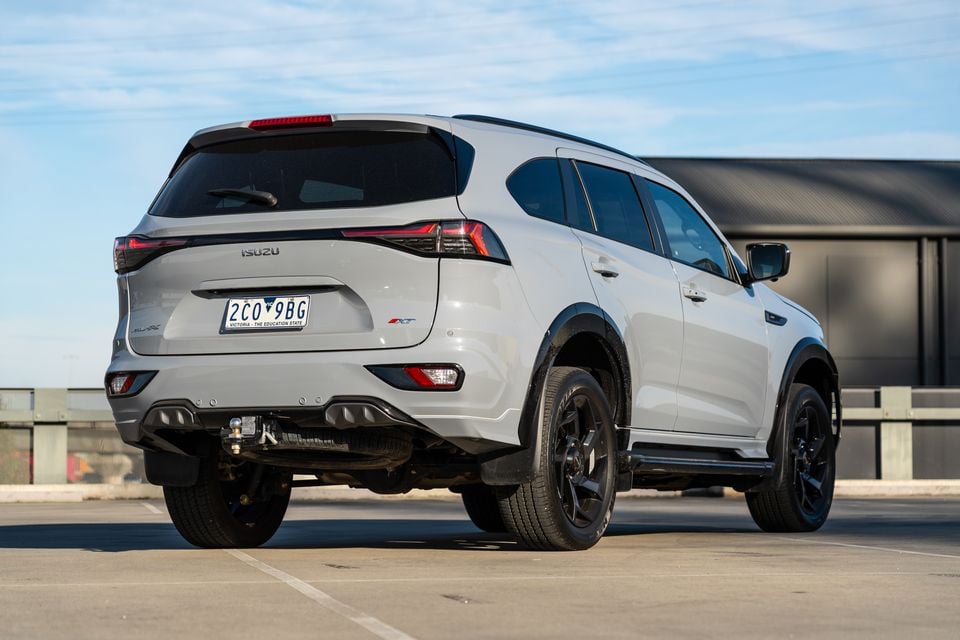
The 2026 Isuzu MU-X X-Terrain on test here is the plushest MU-X variant we've seen in Australia. Of course, that means it isn't cheap, which skews the value equation the MU-X is typically known for.
How does it stack up in 2026, and is it worth considering over other flagship off-road SUVs?
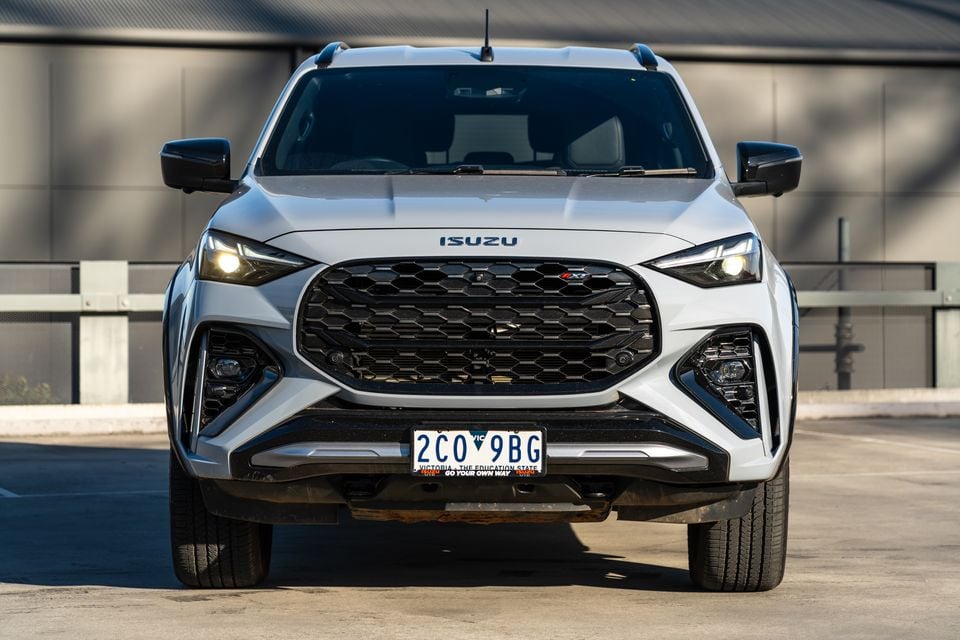
The X-Terrain is the flagship of the Isuzu MU-X range, priced at $77,100 before on-road costs.
| Model | Price before on-road costs |
|---|---|
| 2026 Isuzu MU-X 2.2L LS-M 4×2 | $49,900 |
| 2026 Isuzu MU-X 2.2L LS-M 4×4 | $55,900 |
| 2026 Isuzu MU-X 3.0L LS-M 4×4 | $57,900 |
| 2026 Isuzu MU-X 2.2L LS-U 4×4 | $62,900 |
| 2026 Isuzu MU-X 3.0L LS-U 4×4 | $64,900 |
| 2026 Isuzu MU-X 2.2L LS-T 4×4 | $71,400 |
| 2026 Isuzu MU-X 3.0L LS-T 4×4 | $73,400 |
| 2026 Isuzu MU-X 3.0L X-Terrain 4×4 | $77,100 |
Rivals include other flagship, ute-based ladder-frame SUVs. The most obvious is the Ford Everest Platinum, priced at $82,917 before on-roads, and there's also the GWM Tank 500 Ultra PHEV at $79,990 drive-away. A 3.0-litre turbo-diesel is coming for the Tank 500 later this year.
You may also consider the flagship seven-seat Toyota Prado Kakadu at $100,690 plus ORCs or, for a lower price, the slower-selling KGM Rexton, which typically tops out at $64,200 drive-away for the Ultimate with Sport Pack.
Historic rivals like the Toyota Fortuner and Mitsubishi Pajero Sport are no more, though the incoming new Triton-based Pajero will compete with the MU-X.
To see how the Isuzu MU-X stacks up against the competition, use our comparison tool
Disappointingly under-equipped for a large flagship SUV.
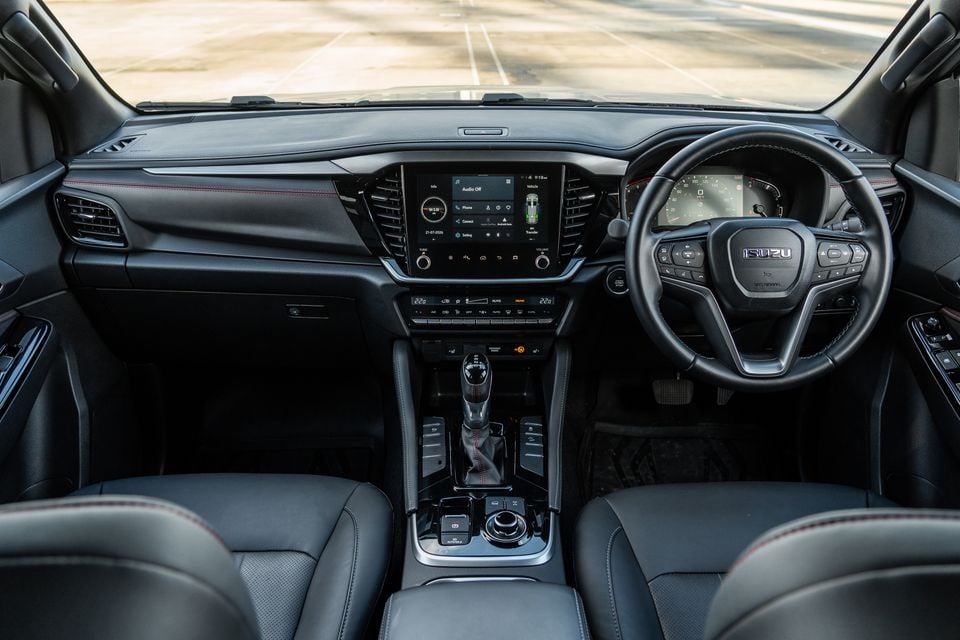
Yes, it's a large SUV based on a commercial platform, but that doesn't excuse the fact the MU-X X-Terrain lacks many of the features we'd expect given its range-topping status and its price. It's far outclassed by an Everest Platinum, that's for sure.
There's no front seat ventilation, no heated second-row seats, no heated steering wheel, and not even a wireless phone charger. Those omissions are almost forgivable in the equivalent D-Max, but the MU-X is more family-oriented and should really have the creature comforts to match.
What makes those missing features more conspicuous is the fact that everything the MU-X X-Terrain does have is actually pretty good. There's no debate that the cabin is a lovely place to spend time, if not a little utilitarian in its general presentation.
Take the ergonomics. The broad range of adjustment in the steering wheel and (powered) driver's seat makes it easy to dial in an excellent driving position, providing an elevated view of everything around you, which suits the MU-X's stature to a tee.
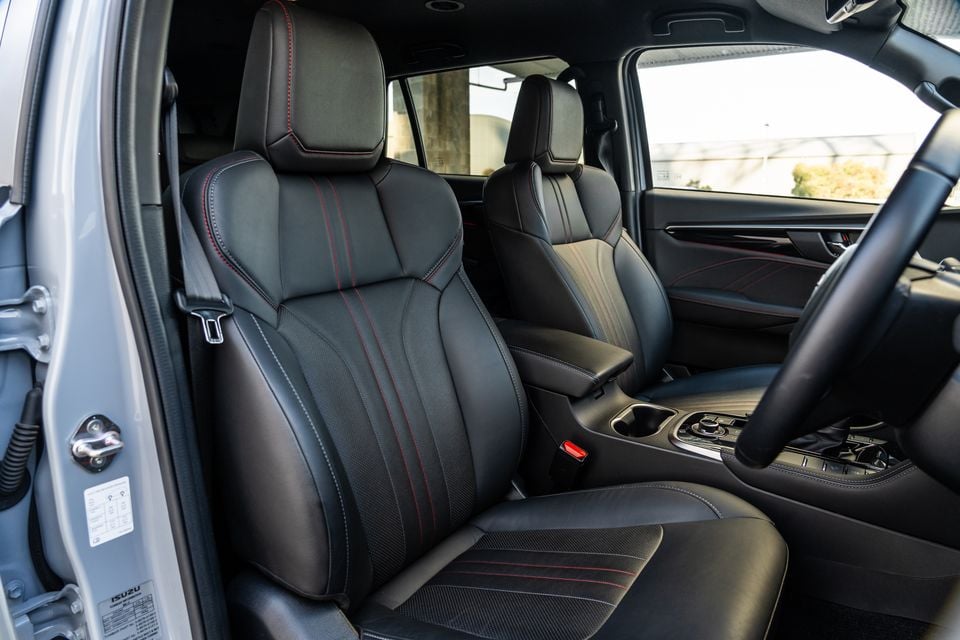
Combine that with surprisingly plush seats and a well-proportioned steering wheel, and you have a very comfortable cockpit. The seats themselves feel a touch small, but at least there's lumbar adjustment to help dial things in.
The steering wheel’s smooth leather finish and the seats’ synthetic leather upholstery feel suitably premium, although the aforementioned heated wheel and ventilated front seats would improve matters.
Materials elsewhere aren't quite as plush, though much of the scratchy plastic is offset by nicer stitched trims on the dashboard and door cards. Touchpoints like the armrests are still appropriately soft, but the generous use of piano-black plastic is still a gripe.
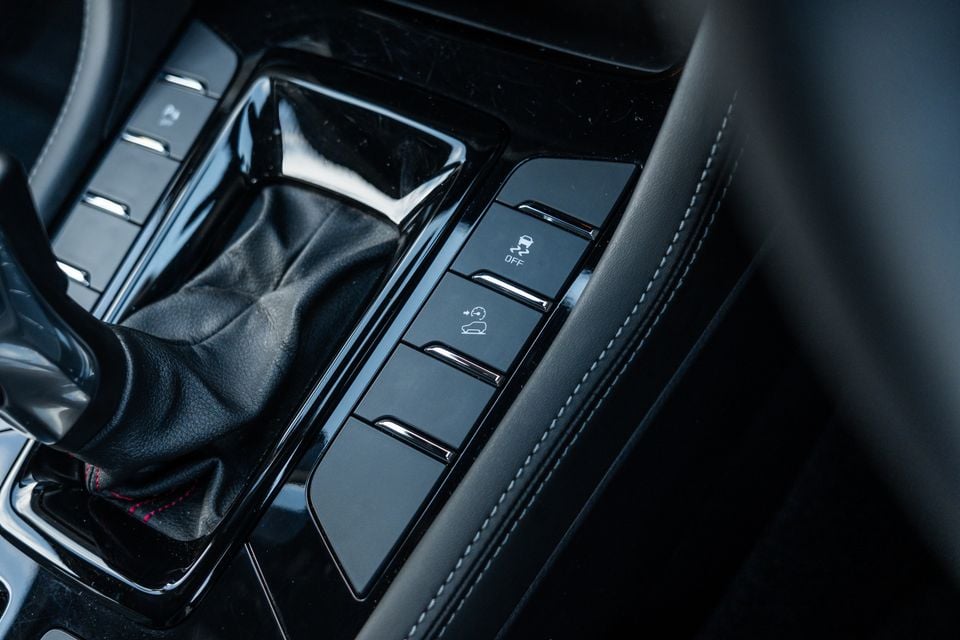
You'll find it all over the centre console and on the door panels. It's annoyingly close to many frequently used buttons, which means you're almost certainly going to end up with unsightly scratches and smudges in daily use.
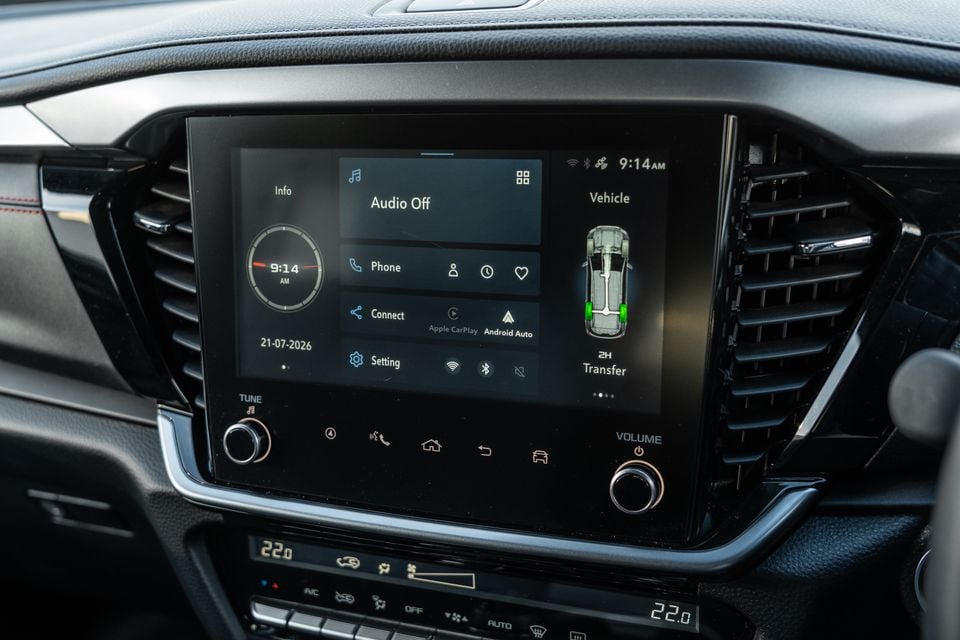
In a similar vein, Isuzu's tech is beginning to age. We have no issue with the fact that its 9.0-inch infotainment touchscreen is on the smaller side, but its native graphics are now looking tired alongside rivals like the Everest.
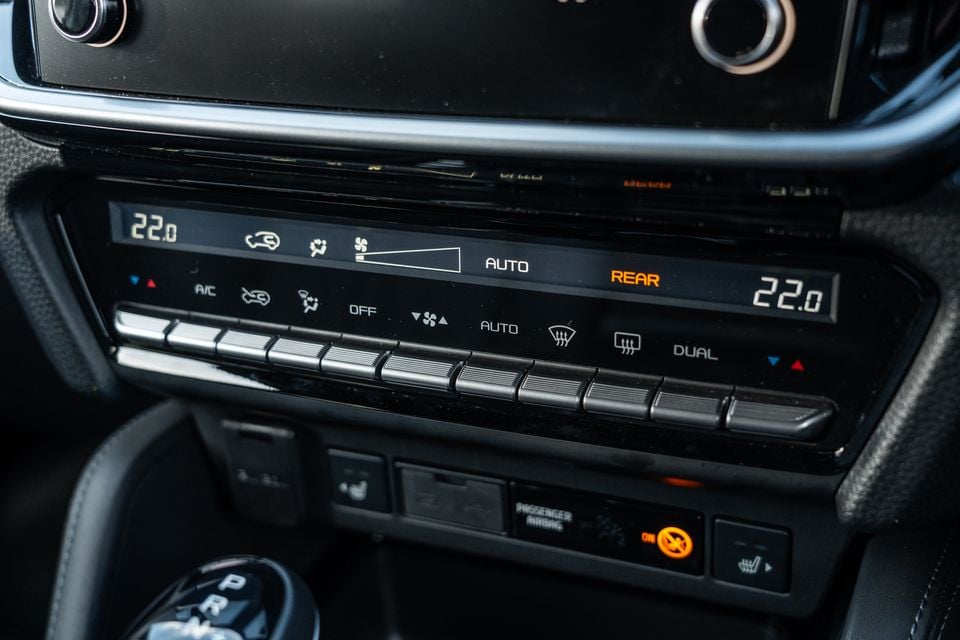
The interface can also be laggy, and navigating between different menus isn't the most intuitive task. Fortunately, Isuzu hasn't followed Ford in moving its climate controls to the touchscreen, instead continuing to offer a far more usable – if not expansive – array of switches lower on the centre stack.
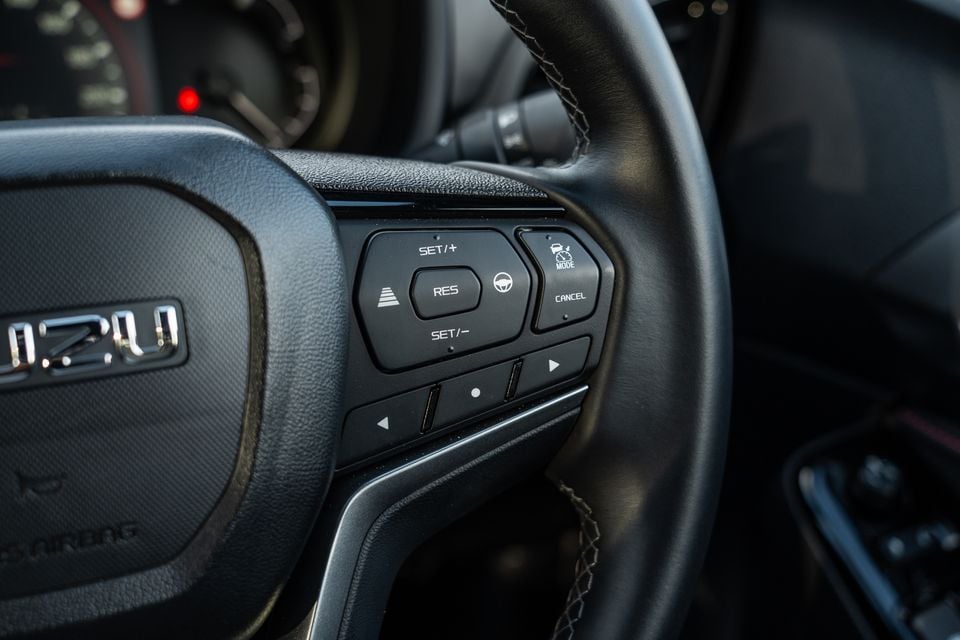
That climate system is largely indicative of the physicality of the rest of the cabin. There are loads of physical buttons all over the centre console and steering wheel, each clearly labelled and easy enough to figure out with a bit of poking and prodding.
That said, this fully equipped MU-X still has a concerning number of button blanks on the centre console. Surely some of these could have been used for the seat heating buttons instead, which are confusingly tucked away ahead of the gear selector.
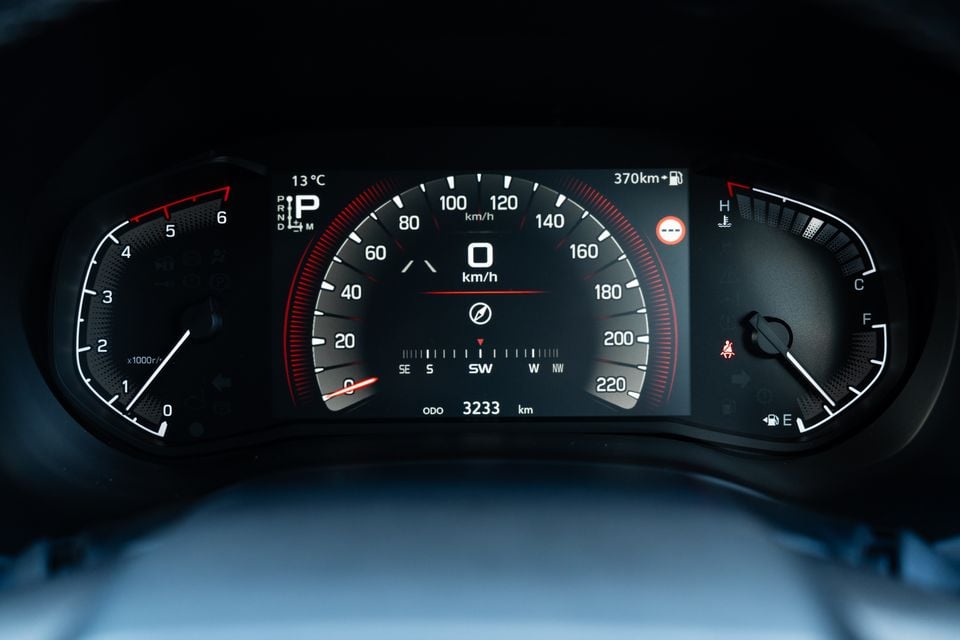
As for the 7.0-inch digital instrument cluster, it features a similarly rugged graphic character that's accented with red, in keeping with the X-Terrain's overall theme. It has just a few menus, navigable via three buttons on the right side of the steering wheel.
There's plenty of info here, and it's simple enough thanks largely to the physical gauges for RPM and fuel level on either side, and a light-based gauge for engine coolant temperature. The more traditional approach with these is a nice touch.
The most noticeable difference between the MU-X and its D-Max donor vehicle is interior storage, or the lack thereof. Isuzu's SUV lacks a two-tier passenger-side glovebox and a lidded compartment on top of the dashboard, while the centre console has been redesigned at the expense of a physical handbrake.
You still get a reasonably sized central storage box and four cupholders, including two that pop out from the dashboard. As mentioned, there's no wireless phone charger in the phone-sized slot ahead of the gear shifter, with charging limited to USB-C ports instead.
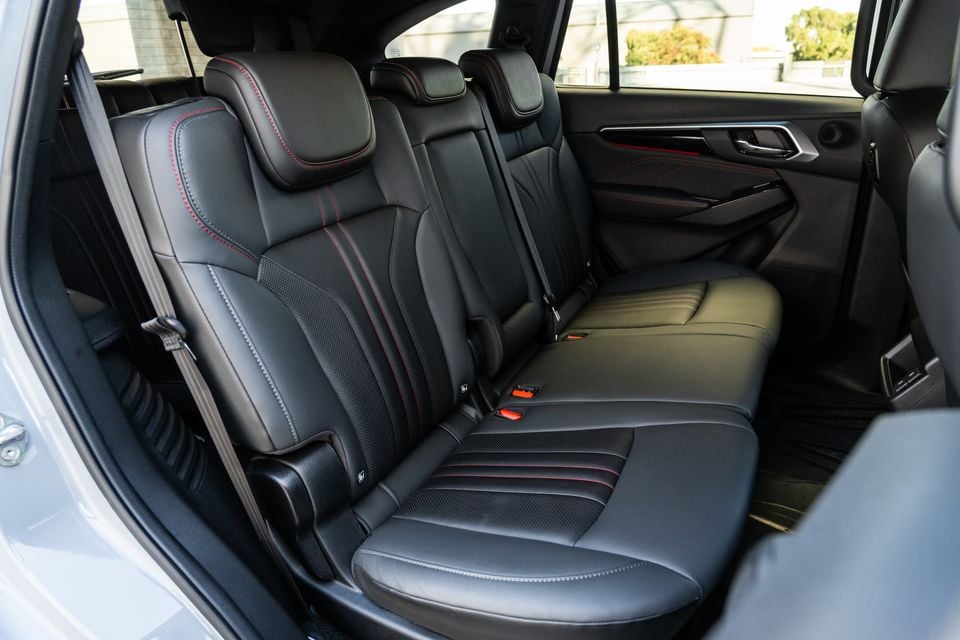
Second-row space is generous, and at 173cm tall I had no issues fitting behind my driver's seat position. More vertically gifted passengers should find the headroom and legroom decent, even if the space is generally quite dark given the black headliner and lack of a sunroof.
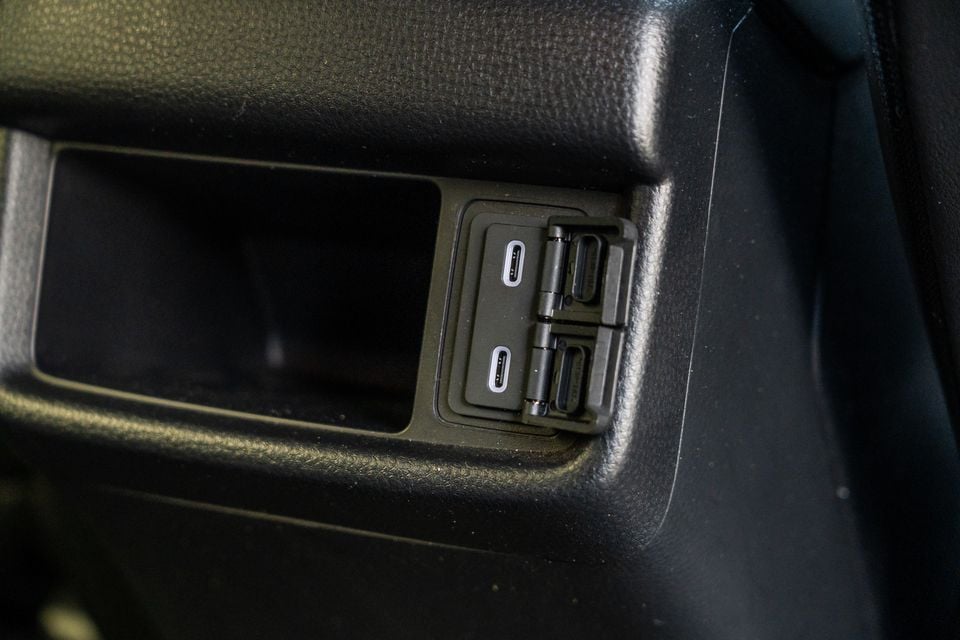
Still, occupants back here can use the grab handles on the B-pillars to pull themselves in, while climate control is provided by air vents in the ceiling. On the back of the centre console is a deep storage cut-out and two USB-C ports, while cupholders extend from the leading edge of the fold-down armrest.
The second row is also fitted with the requisite child seat top-tether points and ISOFIX anchors, which is more than can be said for the third row. Access to the rearmost seats is made easier by folding the second row forward, though it doesn't slide.
All MU-X variants offer seven-seat capacity, and the third row is relatively accommodating for fully grown adults. It is, however, even darker back there, but that's to be expected – lesser MU-X variants have a lighter-coloured headliner that may be more appealing.
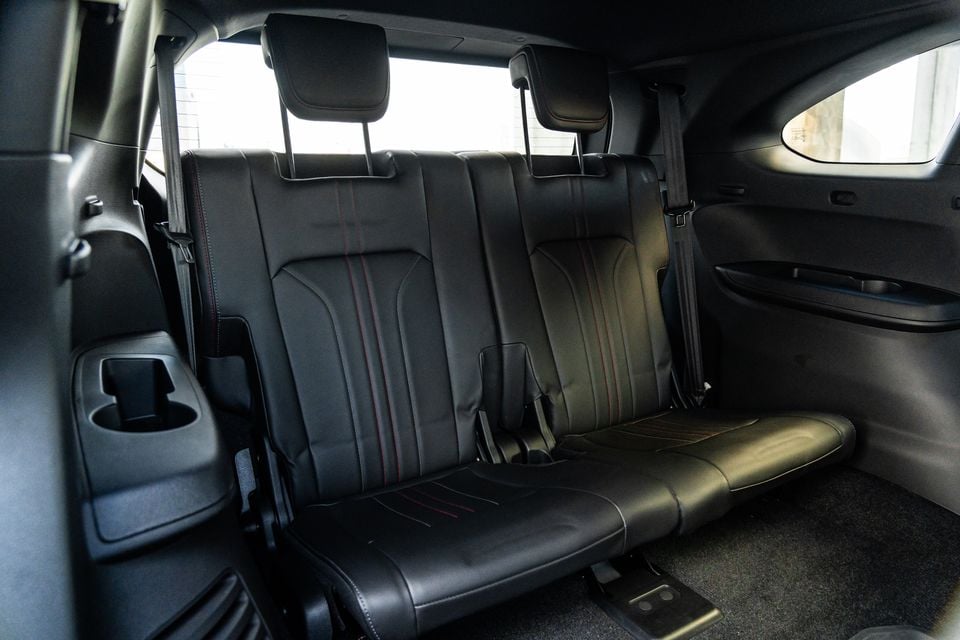
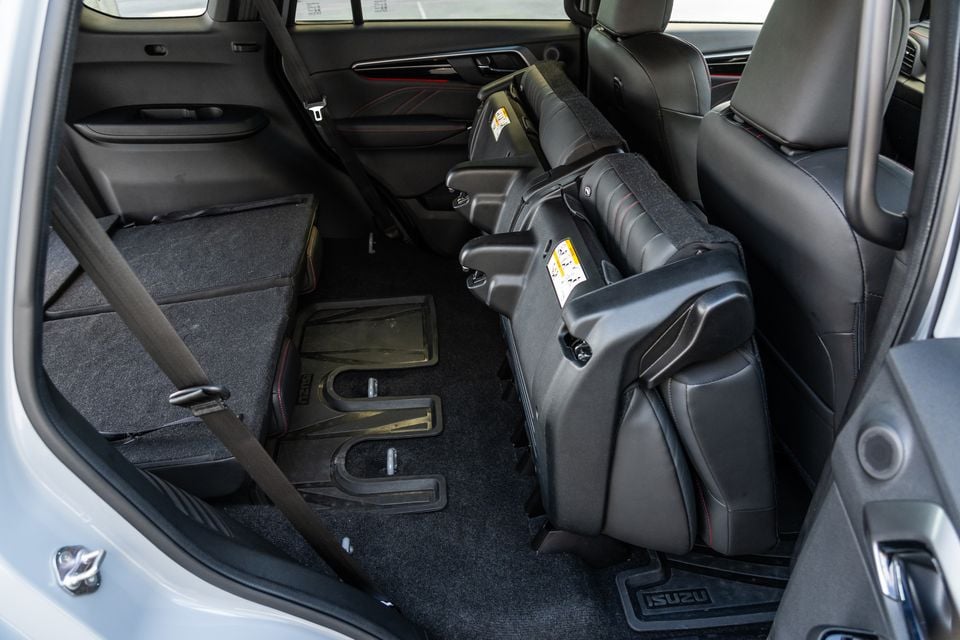
Occupants in the very back get some amenities too, including additional overhead vents and cupholders on both sides. There aren't any USB charging ports here though, so keep that in mind.
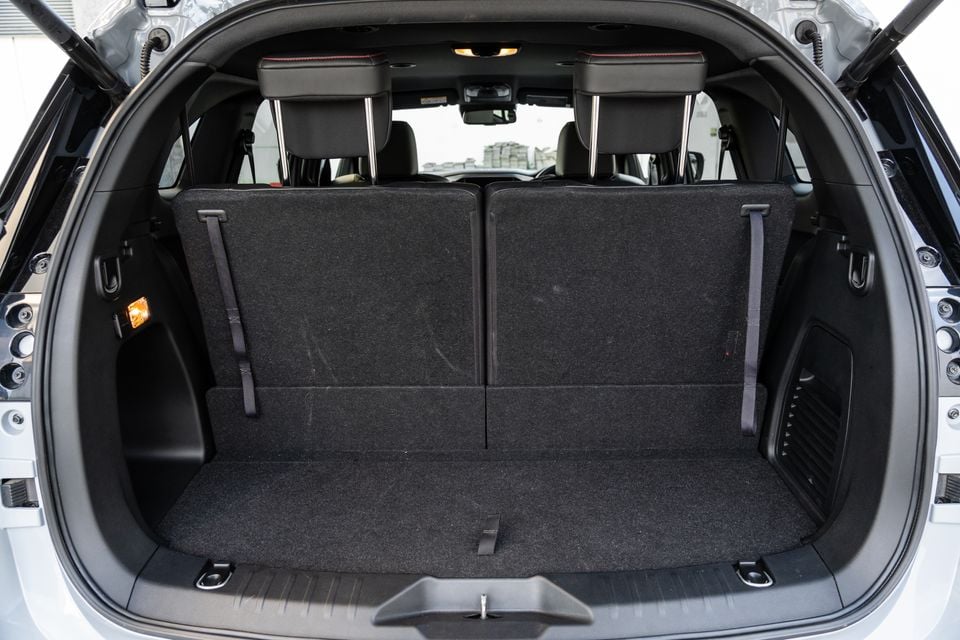
As expected, boot capacity is severely limited with the third row in use. That said, Isuzu's minimum capacity claim of 311 litres is larger than Ford's claim of 259L for the Everest, but don't expect to fit more than a few shopping bags in here either.
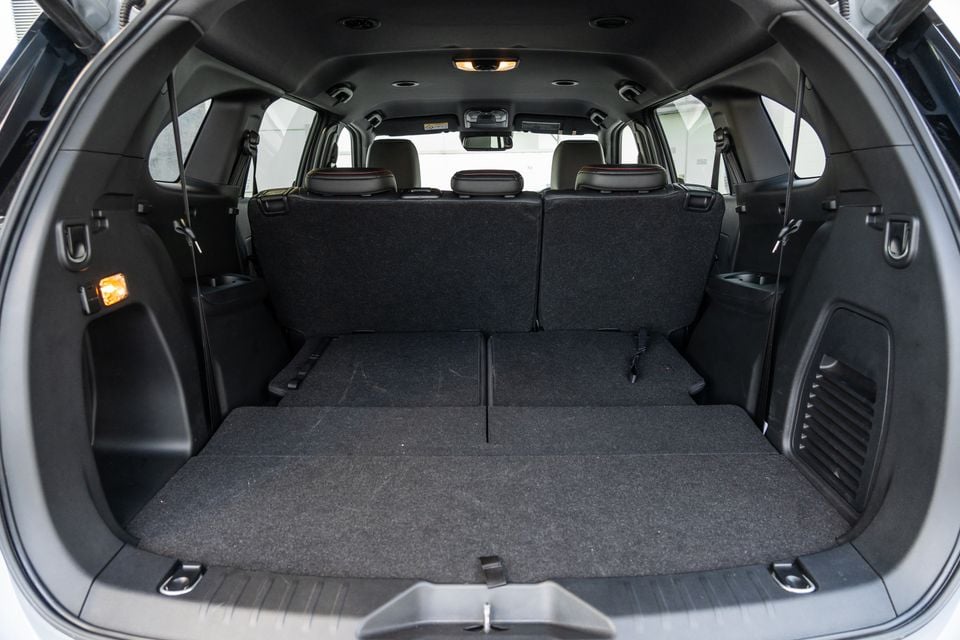
With the third row out of the way, the boot is a very usable space. You get a powered tailgate in the MU-X X-Terrain, and the floor sits at a comfortable height to load things in. There's also a small cubby under the floor at the very back of the boot.
Don't fret about a spare wheel either, because the X-Terrain gets a full-size alloy backup mounted underneath the rear of the vehicle.
| Dimensions | Isuzu MU-X X-Terrain |
|---|---|
| Length | 4860mm |
| Width | 1870mm |
| Height | 1825mm |
| Wheelbase | 2855mm |
| Cargo capacity | 311L (all seats up)1119L (third row folded) 2138L (second and third rows folded) |
To see how the Isuzu MU-X stacks up against the competition, use our comparison tool
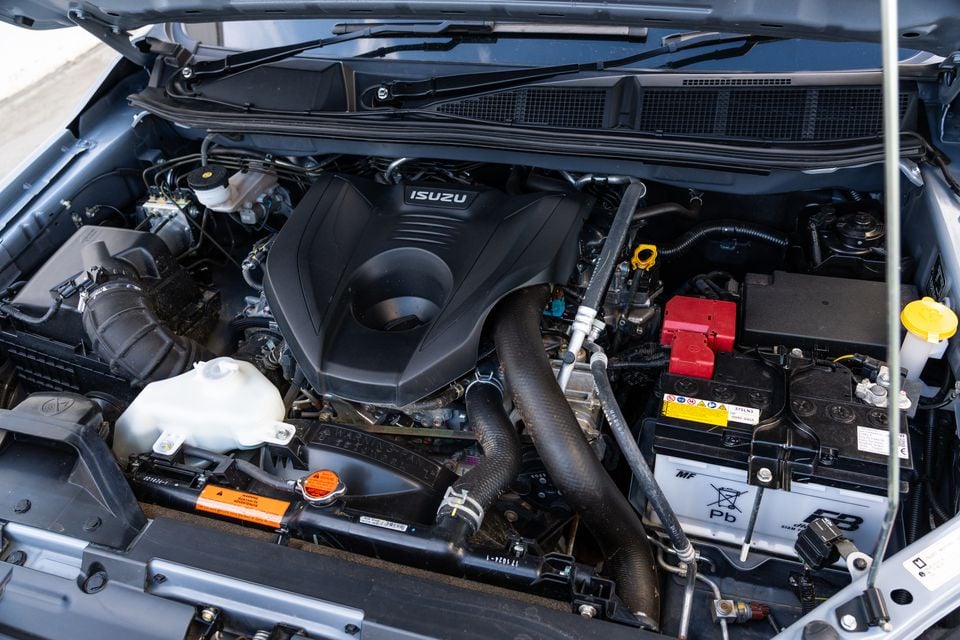
Powering the MU-X X-Terrain is Isuzu's trusty 3.0-litre four-cylinder turbo-diesel engine producing 140kW of power and 450Nm of torque. Drive is sent to a part-time four-wheel drive system via a six-speed automatic transmission.
| Specifications | Isuzu MU-X X-Terrain |
|---|---|
| Engine | 3.0L 4cyl turbo-diesel |
| Power | 140kW |
| Torque | 450Nm |
| Transmission | 6-speed auto |
| Drive type | Part-time four-wheel drive with low-range |
| Fuel economy (claimed) | 7.6L/100km |
| Fuel economy (as tested) | 7.8L/100km |
| CO2 emissions (claimed) | 200g/km |
| Fuel tank | 80L |
| Kerb weight | 2195kg |
| Payload | 605kg |
| Braked towing capacity | 3500kg |
| Gross vehicle mass (GVM) | 2800kg |
| Gross combination mass (GCM) | 5900kg |
Our week with the MU-X primarily involved highway commuting and suburban errand-running. Even though traffic was plentiful, our recorded fuel economy was still comfortably close to Isuzu's claim.
To see how the Isuzu MU-X stacks up against the competition, use our comparison tool
The MU-X is quite a comfortable cruiser, and Isuzu has done an excellent job of masking the SUV's commercial underpinnings.
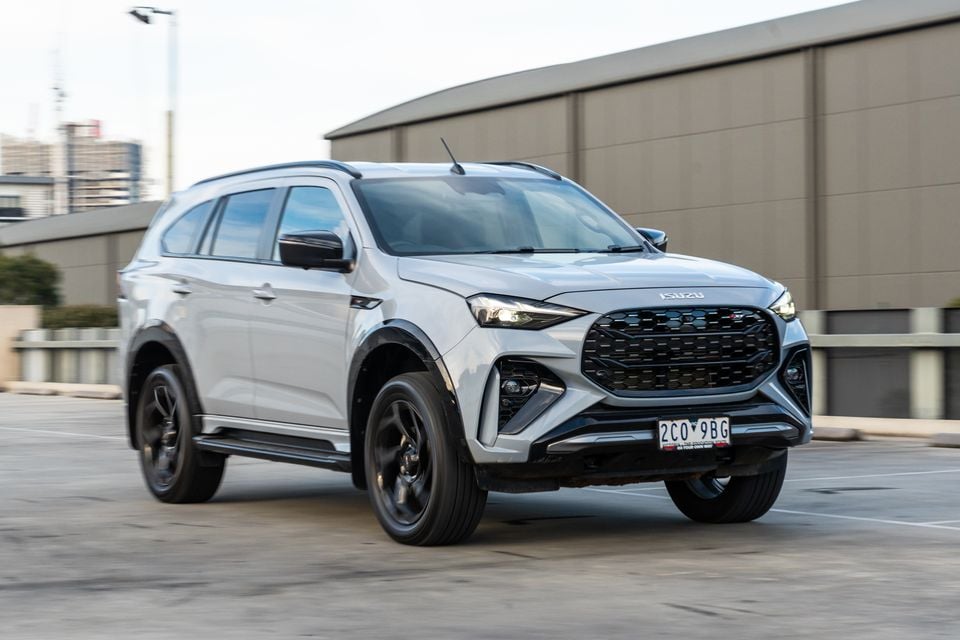
Its suspension soaks up bumps with impressive composure, and there's far less jostling inside the cabin than you get in the leaf-sprung D-Max. That makes it fairly enjoyable to spend time in on country roads, and even the roughest of surfaces are well-managed.
The clear highlight is that the MU-X feels stable at all times, which makes it easy to trust. That remains true over high-speed mid-corner bumps as well as on unsealed roads at 100km/h.
This is the kind of environment many owners will treat their MU-Xs to, so that's a big plus. Even the 20-inch wheels don't have a huge impact on overall ride and refinement, and it‘s testament to the chassis package that it isn't diminished by the addition of top-spec bling.
That said, you will notice a fair bit of wind noise at highway speeds, while tyre noise is also quite audible on coarse road surfaces. Still, it doesn't feel like a tin can, and by no means were our ears bleeding after a prolonged country drive.
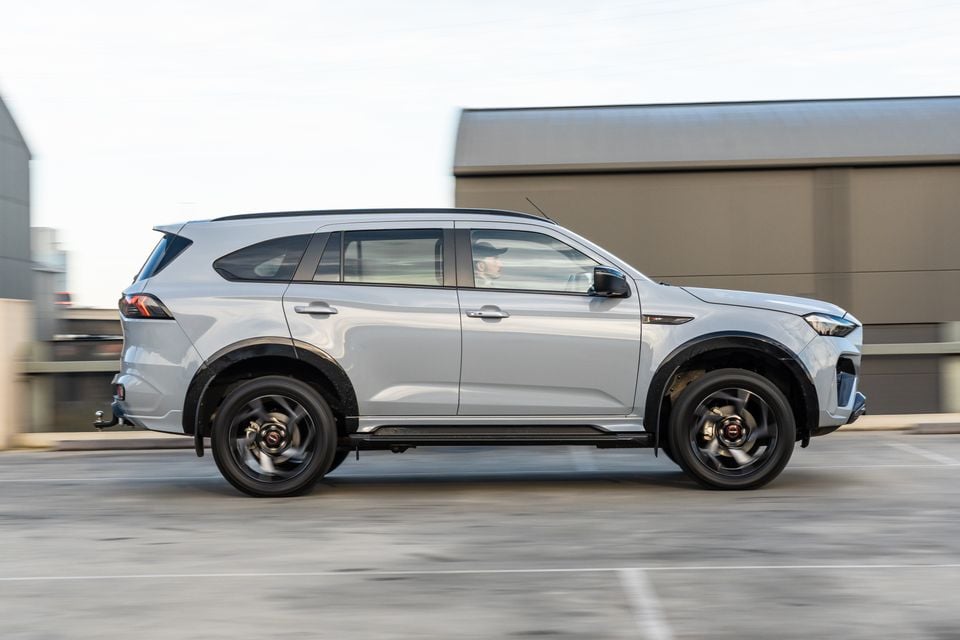
In fact, the most audible element inside the MU-X is its diesel engine. As good a reputation as Isuzu's 3.0-litre turbo-diesel has, it is incredibly clattery, and not that well muffled from the cabin.
It can easily overpower a regular conversation when accelerating up a freeway on-ramp, though it quietens down nicely at a cruise. You will sometimes get some vibration from the engine too, most notably as a result of the sporadically indecisive transmission.
While generally competent and smooth in its shifts, the six-speed autobox seems to want to be in the highest gear possible at all times. 80km/h seems to be a crossover point between the fifth and sixth ratios, which means the MU-X will often shift from the right gear into one that's slightly too high for sub-100km/h arterial roads.
That sees the engine revving considerably lower, creating that vibration and requiring a downshift for useful acceleration. This is the only real 'flaw' with the powertrain, so it's a good thing it's a minor one.
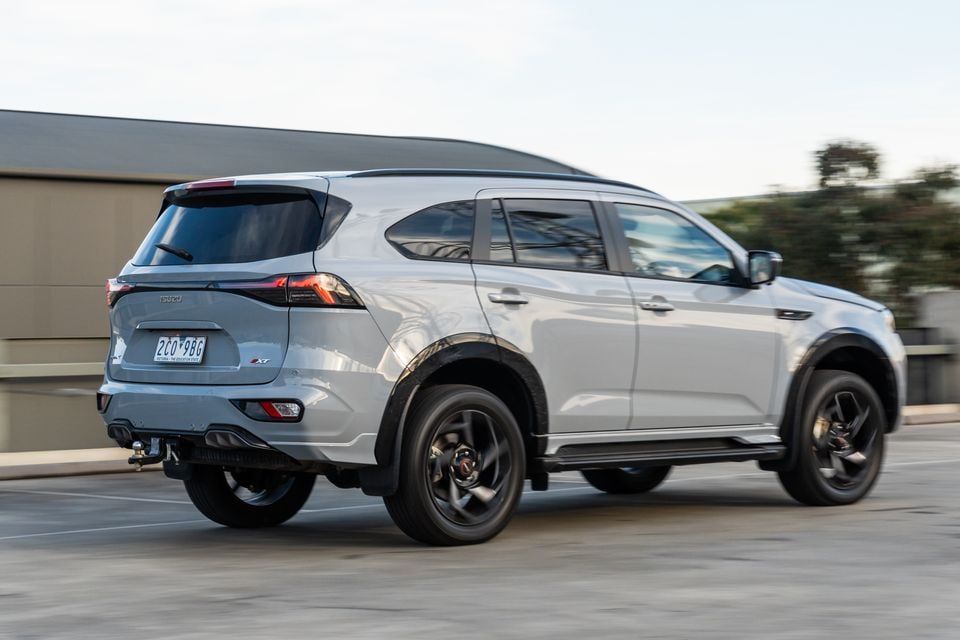
If this is the car for you, we’ll compare offers from trusted dealers, handle the back and forth and manage your purchase from enquiry to delivery.
The MU-X does have a somewhat doughy pedal feel, and in particular the brake pedal is softer than we'd like. It feels like you have to press down quite far to get real braking response, though the brakes themselves are actually quite strong. Some time behind the wheel will make this feel more natural.
Arguably the most significant drawback is the fact this SUV still lacks full-time four-wheel drive. This is a key point of difference when it comes to the on-road behaviour of the MU-X and the Everest, because Ford offers a handy '4A' (4WD-Auto) setting that can be used on sealed surfaces.
As a result, it's far too easy to light up the driven wheels on tarmac in this rear-drive MU-X. That can be hairy if you're trying to accelerate from a standstill onto a 100km/h road with haste, especially if the road's wet.
Yes, a lighter right foot will help with this, but country driving sometimes requires you to act quickly. In contrast, the Everest hooks up far more reliably and, in V6 Platinum guise, it has noticeably more punch than this flagship MU-X.
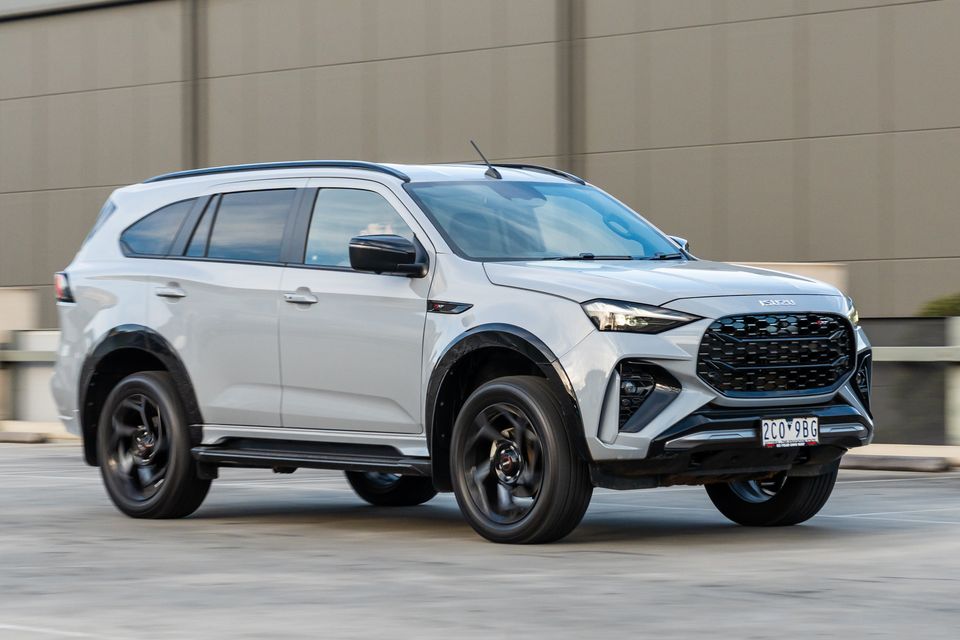
Overall, though, the MU-X is likeable behind the wheel and easy to drive. That's helped by a relatively light steering feel, which makes it feel more manoeuvrable at low speeds, but it‘s heavy enough at high speed to make the Isuzu stable and confident on highways.
Combine that with a reasonably well-calibrated suite of safety gear and you get added peace of mind. We had no major issues with the MU-X's safety tech during our week with the car.
That said, the car's front parking sensors would often sound an alarm when stopped behind other vehicles, even if the gap was sufficient. This may have also contributed to the vaguely overreactive autonomous emergency braking system warnings we encountered, though we had a similar experience recently in a D-Max.
However, these issues don't ruin the driving experience, which is otherwise simple and enjoyable.
For a full breakdown of the MU-X's off-road capabilities, check out our video review below:
| Off-road dimensions | Isuzu MU-X X-Terrain |
|---|---|
| Track front and rear | 1570mm |
| Ground clearance | 235mm |
| Approach angle | 29.2º |
| Departure angle | 26.4º |
| Ramp breakover angle | 23.1º |
| Wading depth | 800mm |
To see how the Isuzu MU-X stacks up against the competition, use our comparison tool
There are four trim grades of the Isuzu MU-X available in Australia.
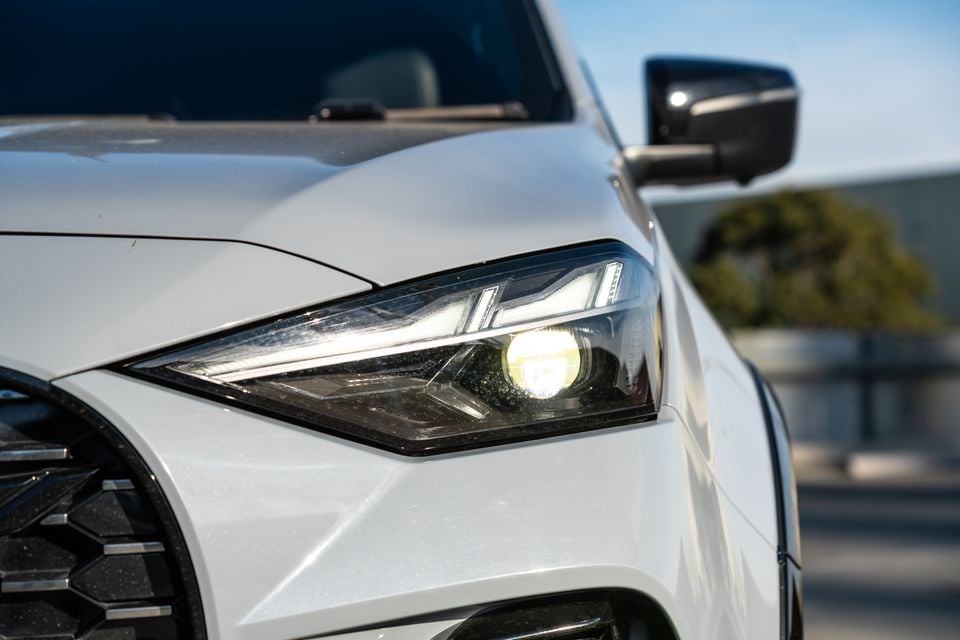
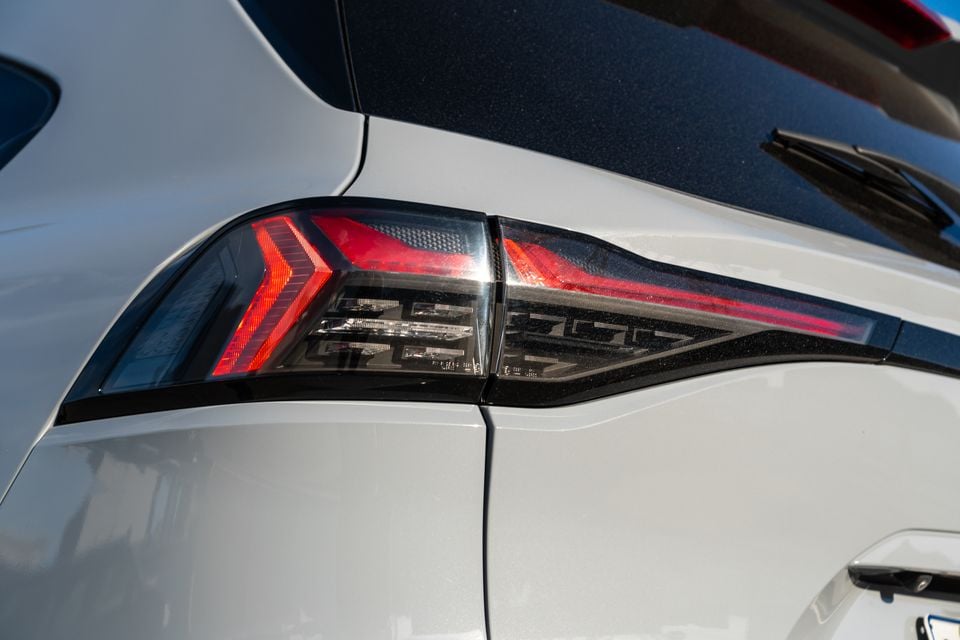
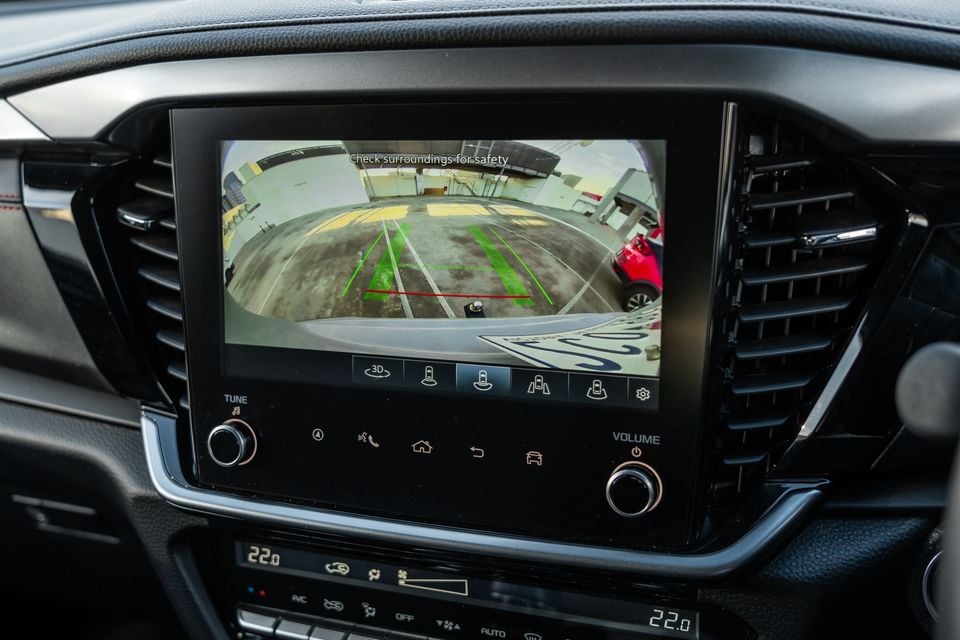
2026 Isuzu MU-X LS-M equipment highlights:
MU-X LS-U adds:
MU-X LS-T adds:
MU-X X-Terrain adds:
To see how the Isuzu MU-X stacks up against the competition, use our comparison tool
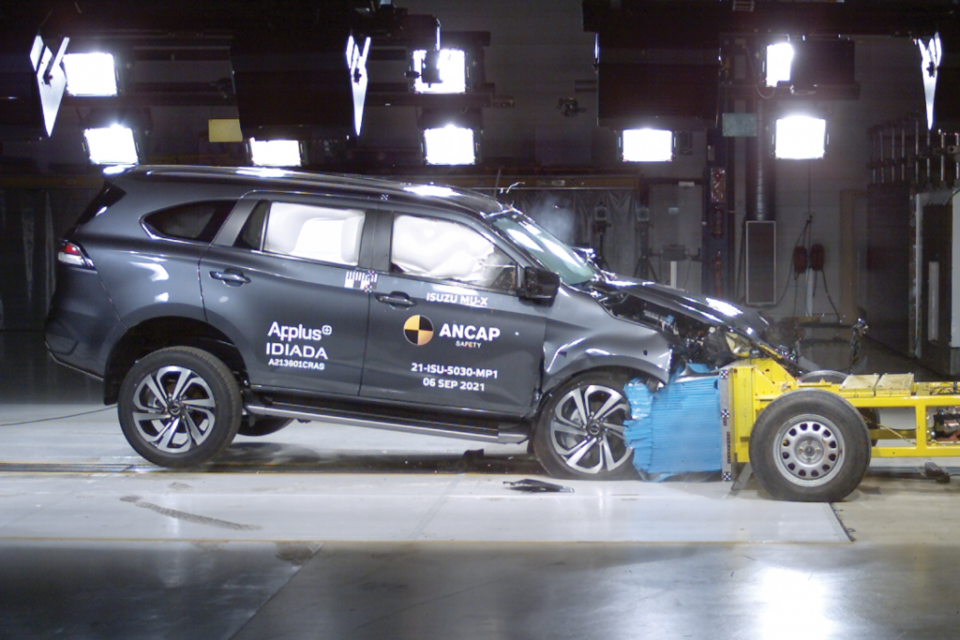
The Isuzu MU-X has a five-star ANCAP safety rating based on testing conducted in 2022. This rating incorporates testing carried out on the related D-Max.
| Category | Isuzu MU-X |
|---|---|
| Adult occupant protection | 86 per cent |
| Child occupant protection | 85 per cent |
| Vulnerable road user protection | 69 per cent |
| Safety assist | 84 per cent |
Standard safety equipment highlights:
The LS-U adds front parking sensors, while the LS-T and X-Terrain also get a surround-view camera.
To see how the Isuzu MU-X stacks up against the competition, use our comparison tool
Isuzu Ute Australia backs its range with a six-year, 150,000km warranty. Servicing for the MU-X is required every 12 months or 15,000km, whichever comes first.
| Servicing and Warranty | Isuzu MU-X |
|---|---|
| Warranty | 6 years, 150,000km |
| Roadside assistance | Up to 7 years (service-activated) |
| Service intervals | 12 months or 15,000km |
| Capped-price servicing | 5 years ($489 each) |
| Total capped-price service cost | $2445 |
For context, the Ford Everest has its first five services covered by a $1596 prepaid plan, while seven years of Tank 500 PHEV maintenance is quoted at $4250.
Seven years of servicing for the KGM Rexton diesel will also cost $3397.
To see how the Isuzu MU-X stacks up against the competition, use our comparison tool
The MU-X remains a solid vehicle and a justifiable choice in the large off-road SUV segment. It may not quite live up to its key rivals in terms of value or tech, but many buyers will prefer its older-school setup.
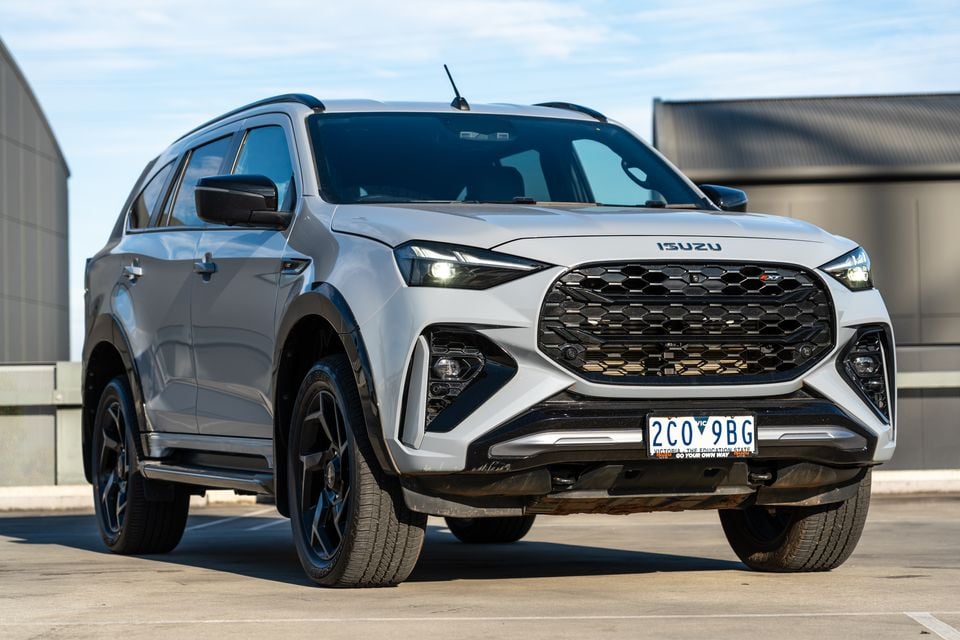
It's comfortable on the road, and its punchy 3.0-litre diesel powerplant is a known quantity with a solid reputation. That should mean the X-Terrain will withstand almost anything you can throw at it, including hardcore towing and off-roading.
The only real issue is that the value equation doesn't quite add up. For a top-spec model variant that will cost more than $80,000 once on the road, it's disappointing that it lacks fairly common interior amenities like ventilated seats and a wireless phone charger.
Its screens and tech aren't quite as flash as what some rivals offer either, and it's generally starting to feel old. So, as with the D-Max X-Terrain, we'd be inclined to point prospective buyers towards the Everest Platinum for just a few thousand more.
Of course, that's if you want a top-spec seven-seat off-roader. You could always go for the LS-U instead, which is reasonably well equipped and still available with the 3.0-litre engine, but will save you more than $10,000.
CarExpert can save you thousands on a new Isuzu MU-X. Click here to get a great deal.
Click the images for the full gallery
If this is the car for you, we’ll compare offers from trusted dealers, handle the back and forth and manage your purchase from enquiry to delivery.
2025
$54,513
2025
$68,163
2025
$77,007
2025
$79,990
2025
$83,073
Max Davies is a CarExpert journalist with a background in regional media, with a passion for Japanese brands and motorsport.
Add CarExpert as a Preferred Source on Google so your search results prioritise writing by actual experts, not AI.
William Stopford
10 Hours Ago
Max Davies
23 Hours Ago


Tace Clifford
5 Days Ago


Damion Smy
5 Days Ago

Damion Smy
5 Days Ago
Damion Smy
6 Days Ago
Add CarExpert as a Preferred Source on Google so your search results prioritise writing by actual experts, not AI.
# Based on VFACTS and EVC data
† Displayed prices are based on the drive-away price of the vehicle, which includes delivery charges, registration fees, number plates, and applicable road taxes, based on a Sydney location. However, prices may vary between states and territories, and additional costs such as compulsory third party (CTP) insurance, dealer delivery fees, and optional extras are not included. These prices are subject to change without notice and may not reflect current market pricing or dealer offers.
 Automotive Vehicle Spec Data & 4K images Powered by JATO Dynamics Ltd