
Alborz Fallah
Chery boss wants to enter the US market, warns America risks falling behind
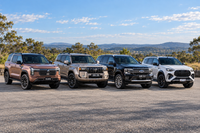
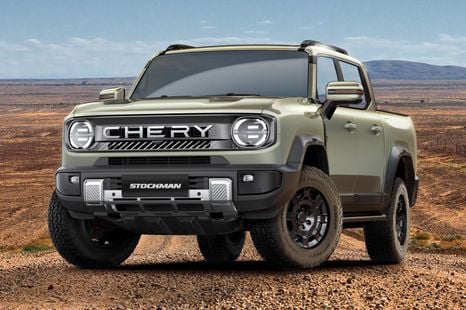
Chery wants to enter the US market, and argues shutting out Chinese brands will leave American automakers falling behind on technology.
20 Minutes Ago
Mitsubishi Australia wasn't cut from the development of the new Pajero, and it has revealed the demands it made of its Japanese HQ.

Journalist
Journalist
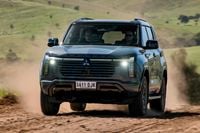
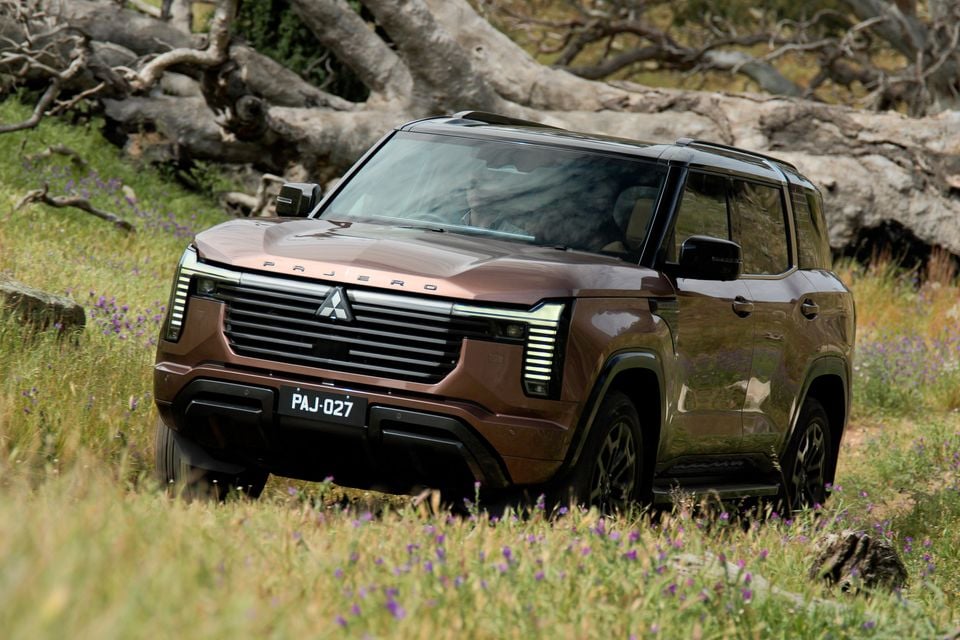
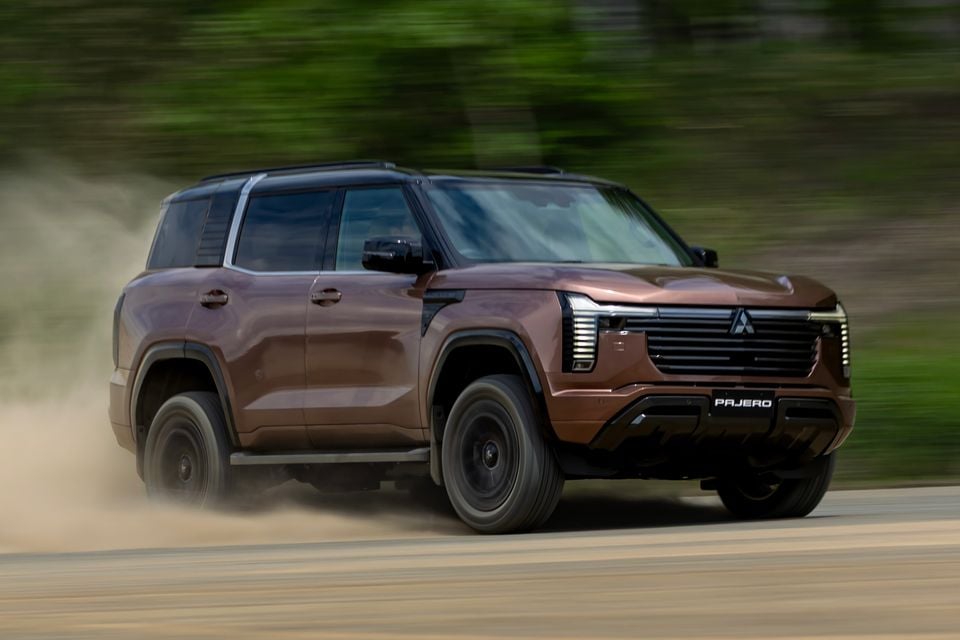
The fifth-generation Mitsubishi Pajero is less than two months from its local launch, and the brand's Australian division says it was explicit in its demands for the model during development.
Speaking with media, including CarExpert, at the Pajero's first local test drive, Mitsubishi Australia (MMAL) product strategy manager Rod Pinedo said there had been constant communication with Mitsubishi Motors Corporation (MMC) "since day one".
"We're talking 2019 when the concept started building in Japan, and at the time, there was no final decision on what this was going to be called, or how the vehicle was going to be, or what was going to be delivered," he said.
"Our previous Pajero was still on sale after almost 20 years, we had already had three or four years of sales for the Pajero Sport, and we already had feedback on that.
"So, 'what would people need in the 4x4 large SUV space?' – that's where we started. MMC took that feedback, and we started discussing, and I guess MMC also did that in many other markets."
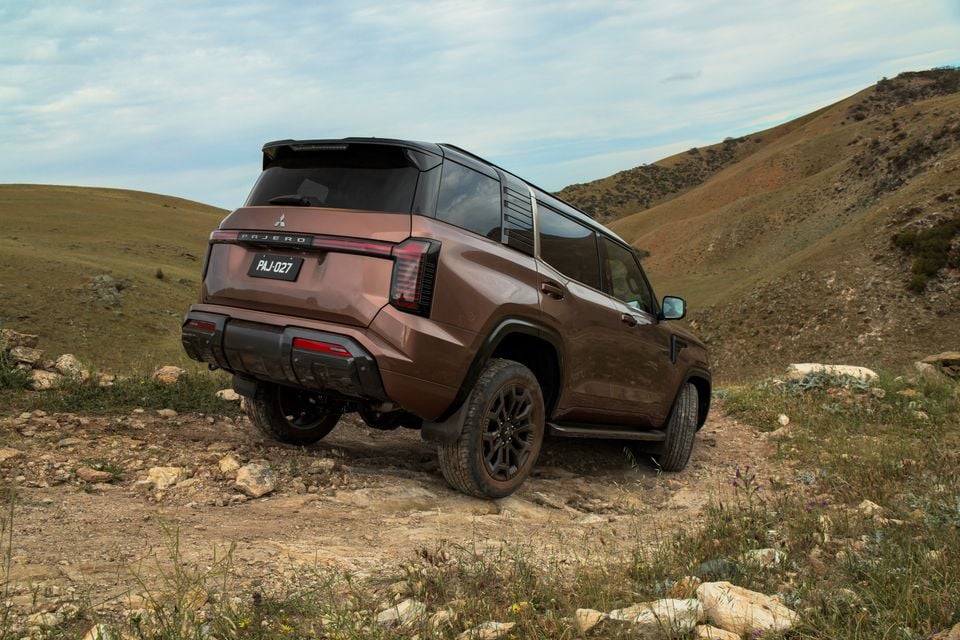
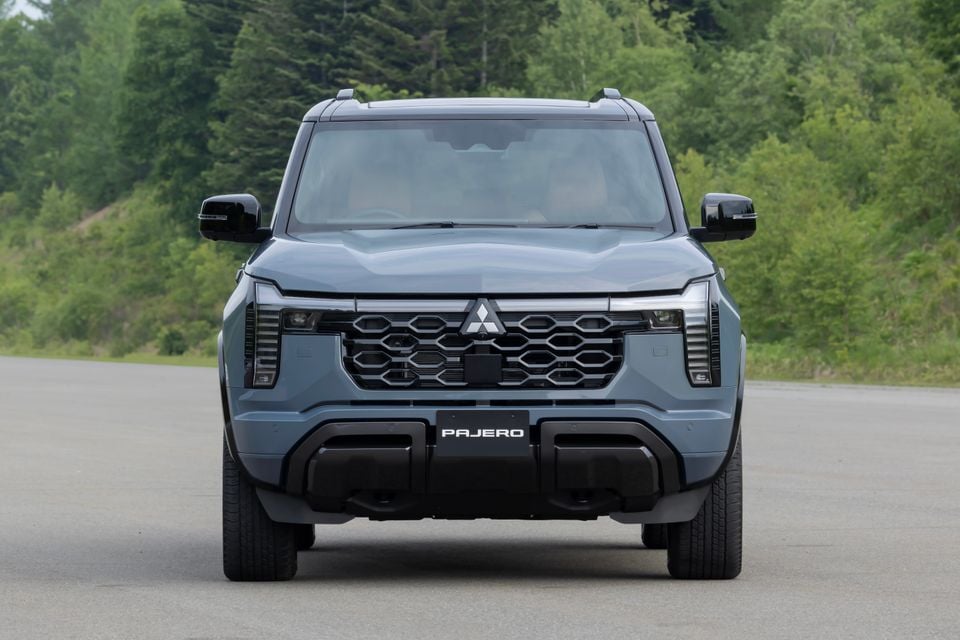
The new Pajero uses a heavily modified version of the ladder-frame chassis underpinning the Triton ute.
Over the Triton, it brings several key upgrades including five-link rear suspension instead of leaf springs, an eight-speed transmission instead of six, and a unique body with up to three rows of seating.
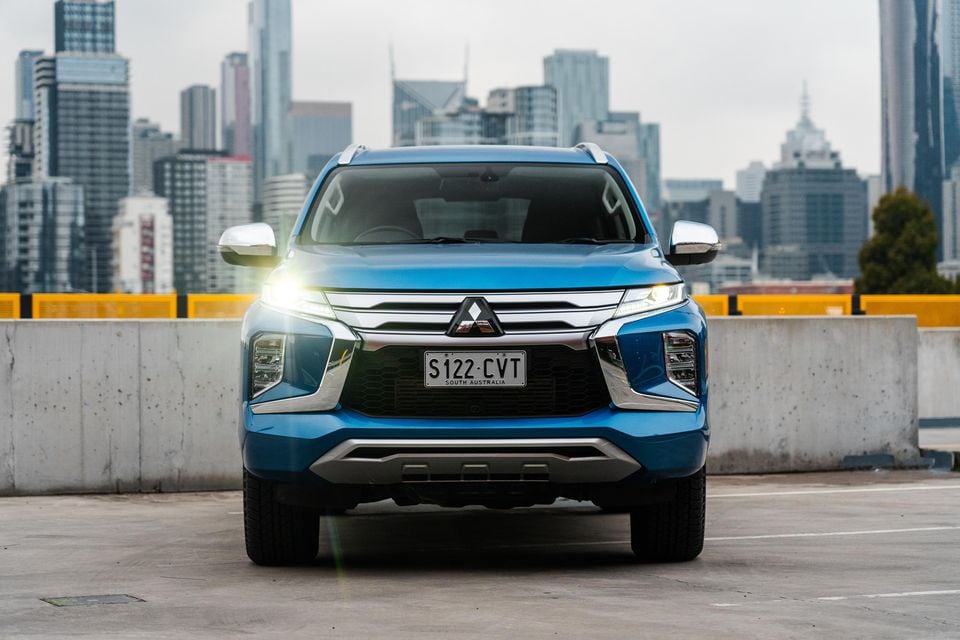
It differs from the unibody fourth-generation Pajero by leaning more towards the Triton-based Pajero Sport that launched locally in late 2015, albeit with a more car-like interior and a lightly upgraded 2.4-litre turbo-diesel engine.
As such, Mr Pinedo said Mitsubishi Australia presented MMC with two non-negotiable requirements during the Pajero's development.
"Two main things, learnings from Pajero Sport: the odd location of the child restraint anchor points was one, and cabin width was the second," he said.
Cabin width is fairly self-explanatory – MMAL wanted the new Pajero to offer increased cabin width over the Pajero Sport for improved interior space, and indeed, the new model is 110mm wider.
The issue of child seat restraints, however, won't be immediately obvious to those with limited Pajero Sport experience, though it isn't particularly complicated.

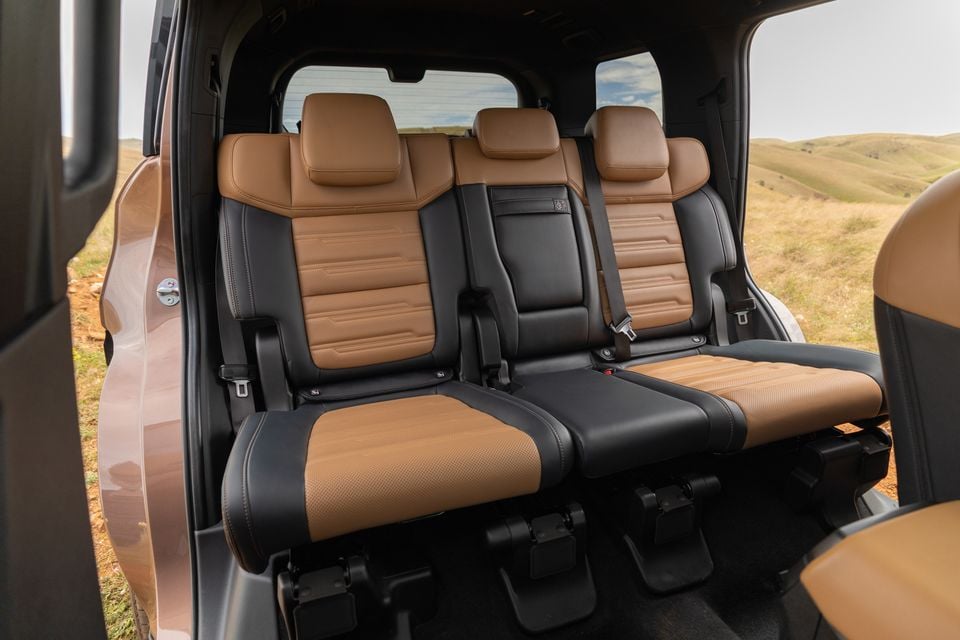
Mitsubishi Australia has confirmed the demand has to do with moving the position of the vehicle's child restraint top-tether points. In the Pajero Sport, they were fitted to the roof, but they've been moved to the second-row seatbacks in the new Pajero.
This, combined with the extra 50mm of second-row width on account of the wider body, allows for more convenient fitment of three child seats.
This is separate from limitations regarding three-abreast child seats, the details of which are explained in an article published by BabyDrive earlier in 2026.
In simplest terms, Mitsubishi advises against fitting three child seats simultaneously in the Pajero Sport's second row. The brand has confirmed the new model has no such limitation.
Beyond those factors, Mr Pinedo explained that MMAL was also involved to dial in the Pajero's ride and handling, leveraging experience from recent Australian chassis tuning for Mitsubishi models.
"After the Pajero name was on the table, we said to MMC: 'you have to deliver on the expectation for this, and the ride and handling has to be perfect'," he said.
"If you remember, we've done a lot of work with MMC on the suspension development for Triton, the suspension improvements for Outlander, so all of that has been taken into consideration for this car."
The Outlander received an update in mid-2025 to improve its on-road behaviour.
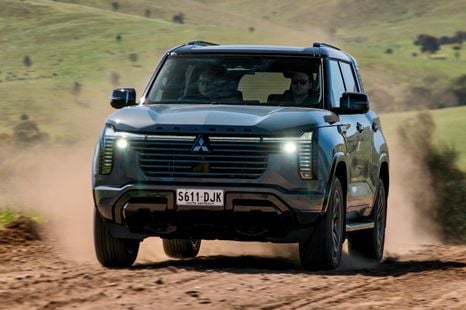
This was achieved through extensive testing and tuning on rough hilly roads south of Adelaide, the same roads once used to develop cars like the locally built Mitsubishi 380.
Mitsubishi Australia even hosted Japanese engineers for several months during development of the updated Outlander, who it says found great value in testing on those poor-condition roads.
"Even MMC has developed some sections of the roads in its proving grounds that resemble Australian roads in a way, and that's an important part of the process to recognise that we actually need really good development in that area to deliver on customer expectations," Mr Pinedo added.
The new Pajero is due to arrive in Australian showrooms in December 2026. Priced from $68,490 before on-road costs, it'll be a direct rival for large off-road SUVs like the Ford Everest, Toyota Prado, and Isuzu MU-X.
Research cars in our Showroom, compare your options or let our New Car Specialists do the running around to find you a great deal.
Max Davies is a CarExpert journalist with a background in regional media, with a passion for Japanese brands and motorsport.
Alborz Fallah
20 Minutes Ago
Max Davies
2 Hours Ago
Max Davies
2 Hours Ago
Alborz Fallah
4 Hours Ago

Josh Nevett
4 Hours Ago


Damion Smy
5 Hours Ago
Add CarExpert as a Preferred Source on Google so your search results prioritise writing by actual experts, not AI.