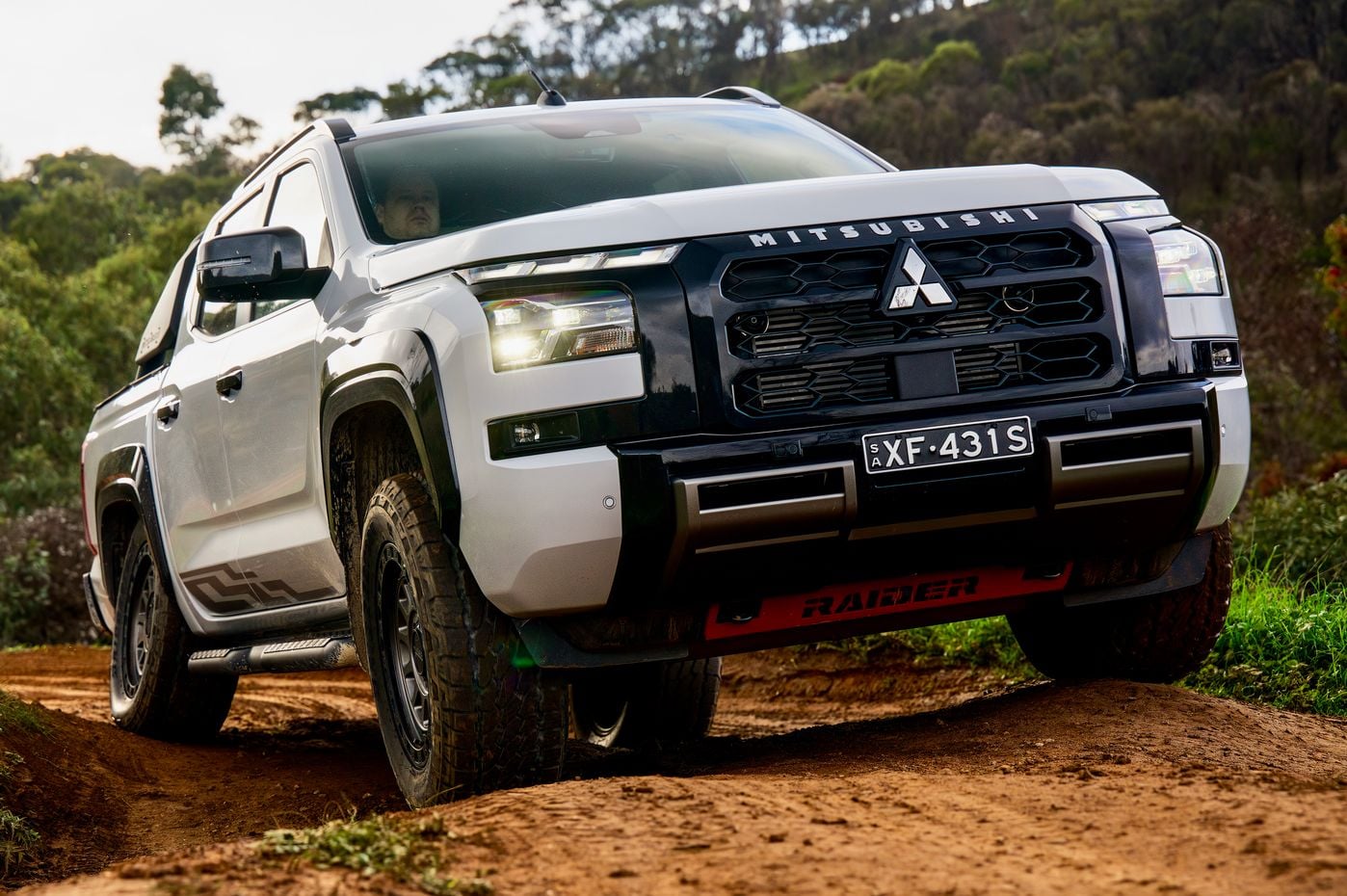
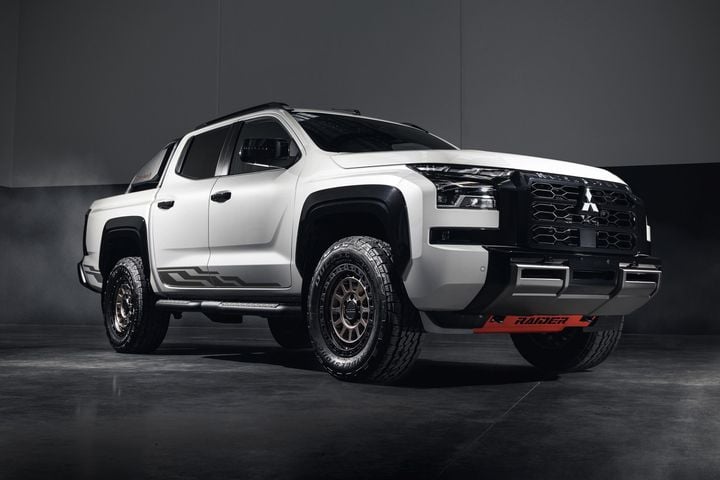
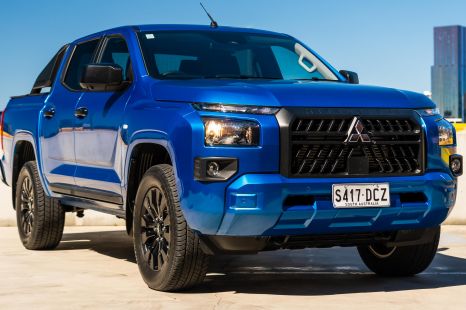
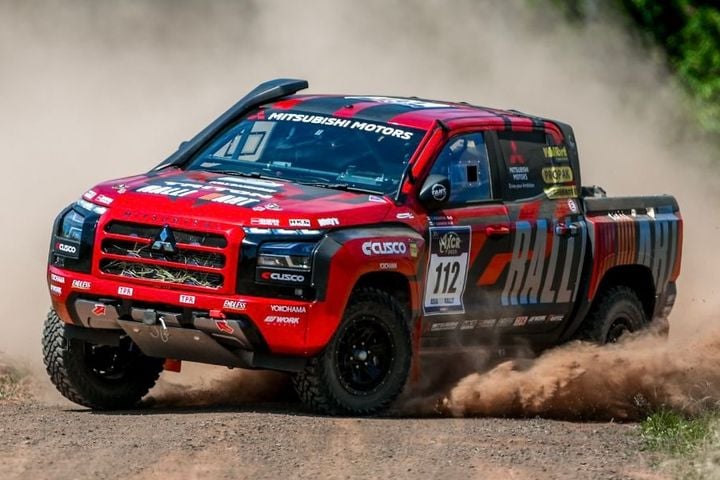
Our first drive of the Mitsubishi Triton takes us to a remote part of South Australia, where the brand developed its sand-driving calibration. These are pre-production vehicles ahead of the 2024 model’s Australian launch, and our time behind the wheel is off-road only. Even within that limited setting, the improvements are encouraging.
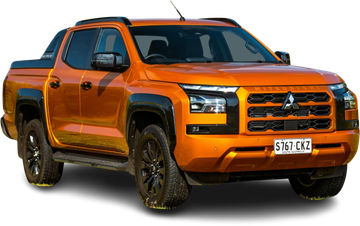
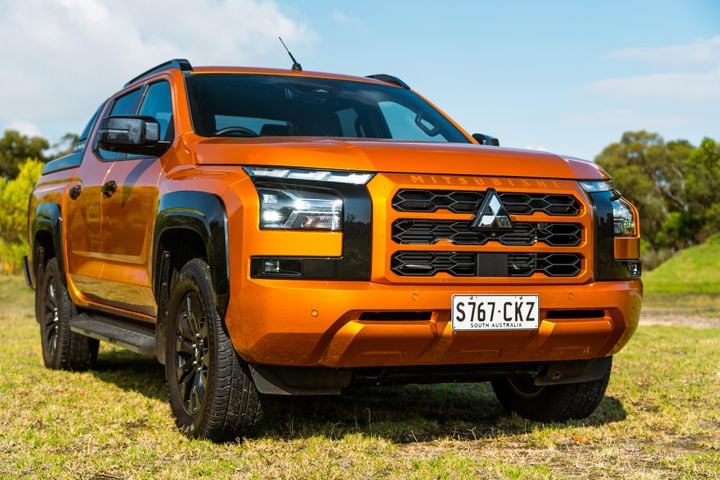
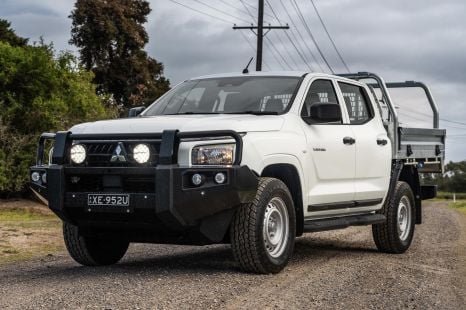
At the time of filming, announced pricing started just below $44,000 for the GLX 4x2 and stretched to just below $64,000 for the GSR 4x4. The GLS shown sat just below $60,000, although it also wore accessories. Those included a 3mm steel bash plate, a snorkel, and substantial side steps; they should not be confused with standard equipment.
Inside, a 9.0-inch touchscreen provides Apple CarPlay and Android Auto, while physical climate-control buttons keep everyday adjustments straightforward. There is also a wireless phone charger and a smaller display ahead of the driver. Rear passengers get USB-A and USB-C charging, but the roof-mounted ventilation simply circulates cabin air rather than providing a separate air-conditioning system.
The 2.4-litre twin-turbocharged diesel produces 150kW of power and 470Nm of torque, with peak torque arriving at 1500rpm. Compared with the previous-generation Triton driven on the same day, throttle response feels much sharper. The new ute responds eagerly rather than taking time to build momentum.
The ride is another clear step forward over bumpy sand. Australian-specific damper tuning helps deliver a smoother experience, while the quicker electric power steering feels responsive and gives useful feedback. The 12.7-metre turning circle is less impressive.
We use sand mode with high-range four-wheel drive and the centre differential locked. The traction-control calibration lets the Triton maintain progress without excessive intervention, and tyre pressures are around 18psi. That preparation matters: selecting sand mode alone is not a substitute for setting the vehicle up properly.
A brief section over rocks also leaves a positive impression of the suspension. However, the driver-monitoring system is switched off at the organisers’ instruction for this off-road drive, and we do not assess on-road behaviour here. A broader verdict needs a proper road test; this first outing suggests Mitsubishi has made meaningful progress.