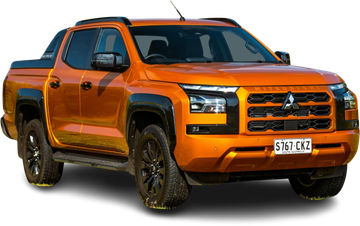
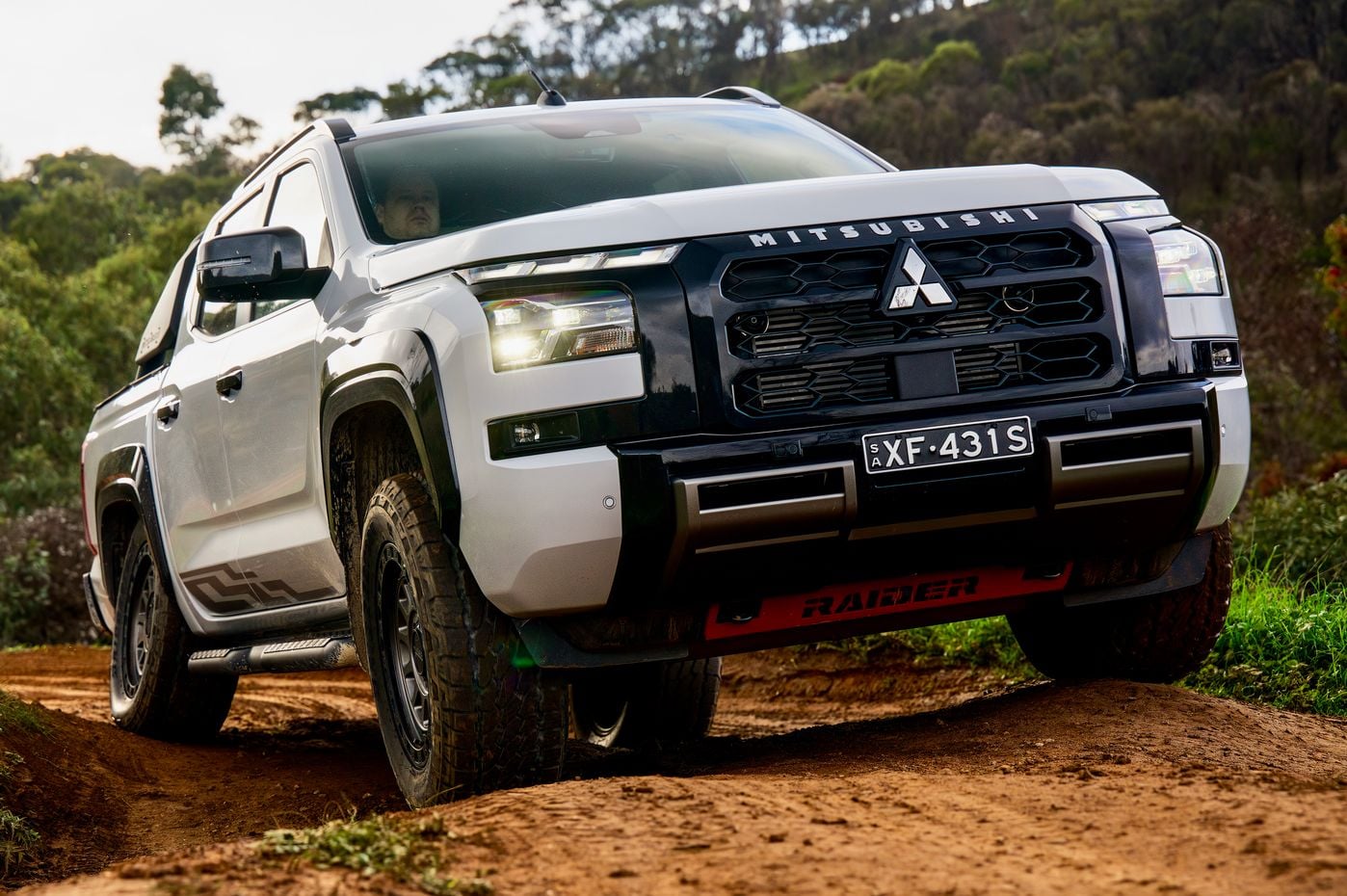
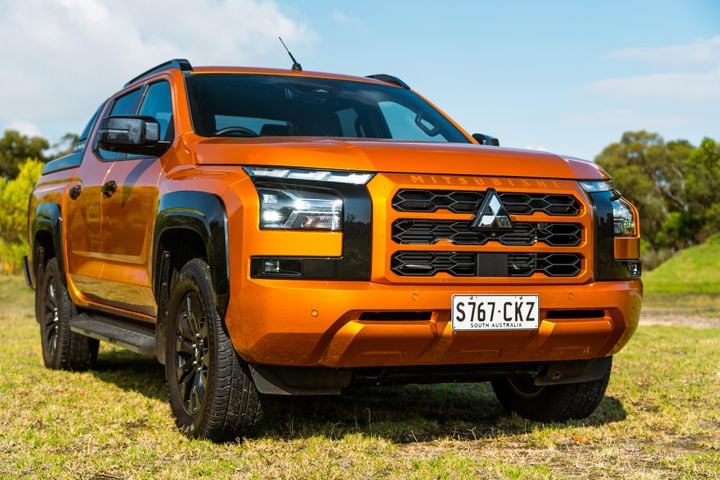
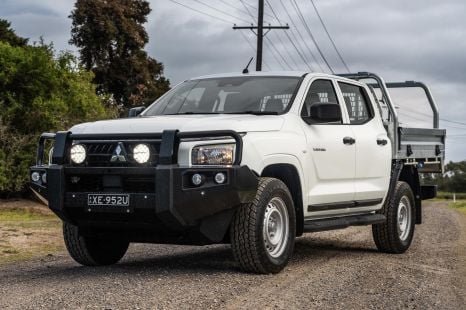
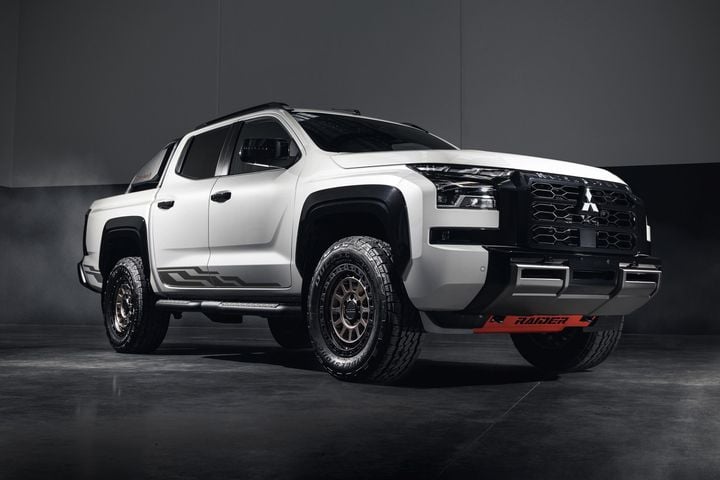
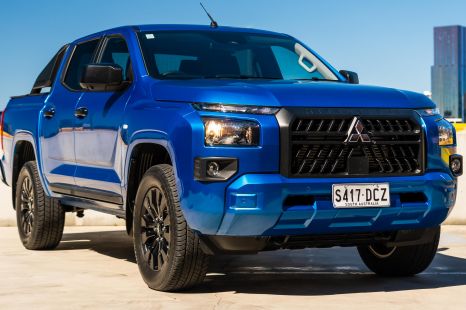
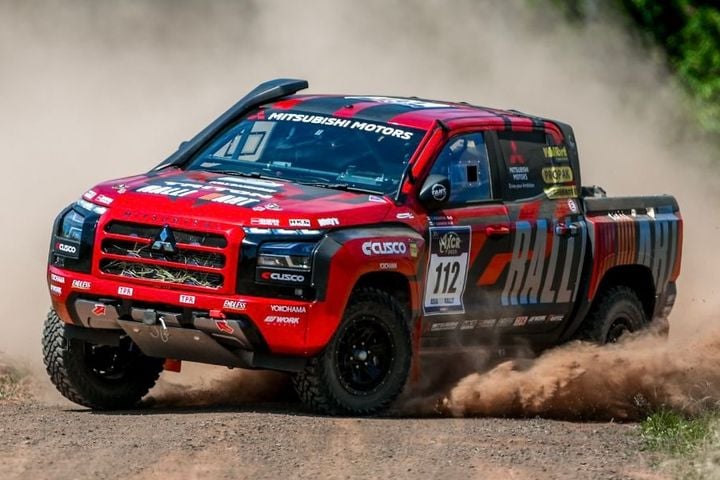
The Mitsubishi Triton GLS makes its strongest case on value rather than class-leading performance. In our 2021 review, it sat one step below the range-topping GSR and cost a little under $50,000. There are more polished dual-cab utes, but the Mitsubishi has a useful trick up its sleeve when the weather turns.
Unlike many rivals, its four-wheel drive system can operate on sealed roads without locking the centre differential. That gives us extra confidence in wet conditions, while low-range gearing, a rear differential lock, and selectable off-road settings broaden its capabilities away from the bitumen.
Our off-road course was particularly muddy after heavy overnight rain. With the centre differential locked and the mud and snow setting selected, the Triton made it up the slippery climb. It also cleared the rocks better than expected, and its hill descent control kept progress impressively steady despite the limited grip.
On the road, the 2.4-litre four-cylinder turbo-diesel delivers 133kW of power and 430Nm of torque through a six-speed automatic transmission. Performance is adequate rather than urgent, and the unladen ride is bouncy on country-road undulations. We saw indicated fuel consumption of 10.8L/100km against the claimed combined figure of 8.6L/100km.
The cabin feels durable but dated, with plenty of hard plastic and plain cloth upholstery. Its 7.0-inch touchscreen includes Apple CarPlay, Android Auto, and digital radio, and we found the phone integration responsive. Autonomous emergency braking and blind-spot monitoring are included, although lane departure warning does not extend to active steering assistance.
Rear-seat accommodation is only reasonable, and the roof-mounted fan recirculates air from the front rather than supplying a separate stream directly from the air-conditioning system. The tray is straightforward too, with a heavy tailgate and few extra conveniences. Payload is 910kg, while braked towing capacity is 3100kg.
Ultimately, we like the Triton's versatile four-wheel drive system and its value proposition. Its drivetrain, towing capacity, and technology lag stronger competitors, however. It suits buyers willing to accept those compromises to spend less, rather than those chasing the best all-round ute in the segment.