




Damion Smy
2027 Ram 2500 Warlock review
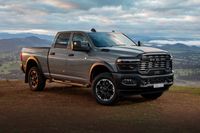
The Hemi V8 makes a comeback to Australia after almost two years in the Ram 2500 Warlock, but is it a return to form or a backward step?
8 Hours Ago
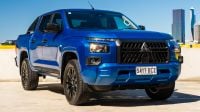
Mitsubishi's new cab/chassis Triton variants are built for work, but the price of the dual-cabs might be off-putting for some.

Journalist
Journalist
Journalist
Journalist
If this is the car for you, we’ll compare offers from trusted dealers, handle the back and forth and manage your purchase from enquiry to delivery.
The new Mitsubishi Triton range continues to grow, and now there’s finally something for tradies in the ute’s sixth generation.
Mitsubishi’s current Triton range arrived in Australia in February 2024, but only in double-cab pickup form. It was bolstered by the re-introduction of the GLX-R variant in July of the same year, and in April 2025 the lineup was fleshed out with single-cab and Club Cab (extended-cab) bodies, as well as cab/chassis versions.
All these model derivatives come with the same twin-turbo diesel engine that debuted in the latest Triton lineup, as Mitsubishi chose to simplify its powertrain options instead of following Ford and Toyota (and Isuzu and Mazda) by putting lower-output entry-level engines in their respective Ranger and HiLux utes.
The result is a ute with a relatively powerful diesel engine and a predictable six-speed automatic (or manual) transmission, but it hasn’t done much to bring the price of the most utilitarian Tritons down.
The Triton was once renowned for being a solid bang-for-buck alternative to the segment leaders, but Mitsubishi’s pricing means it’s now been undercut by several rivals, including value-packed Chinese options like the GWM Cannon.
Watch: Paul’s video review of the 2024 Mitsubishi Triton GSR
Still, the Triton was Australia’s fifth most popular 4×4 ute in the first seven months of 2025, ranking behind only the top-selling Ranger and HiLux, but now also the Isuzu D-Max and the strong-selling, plug-in hybrid BYD Shark 6 dual-cab some 2000 units.
Despite launching just last year, the new Triton is still one of the more ‘traditional’ utes on sale in Australia, not least because of its no-frills, button-heavy interior setup. Of course, there’s still faithful workhorse versions of the HiLux (and to some extent the D-Max) available, but the Triton does have the appeal of being a newer model alongside the higher-tech Cannon and Shark utes.
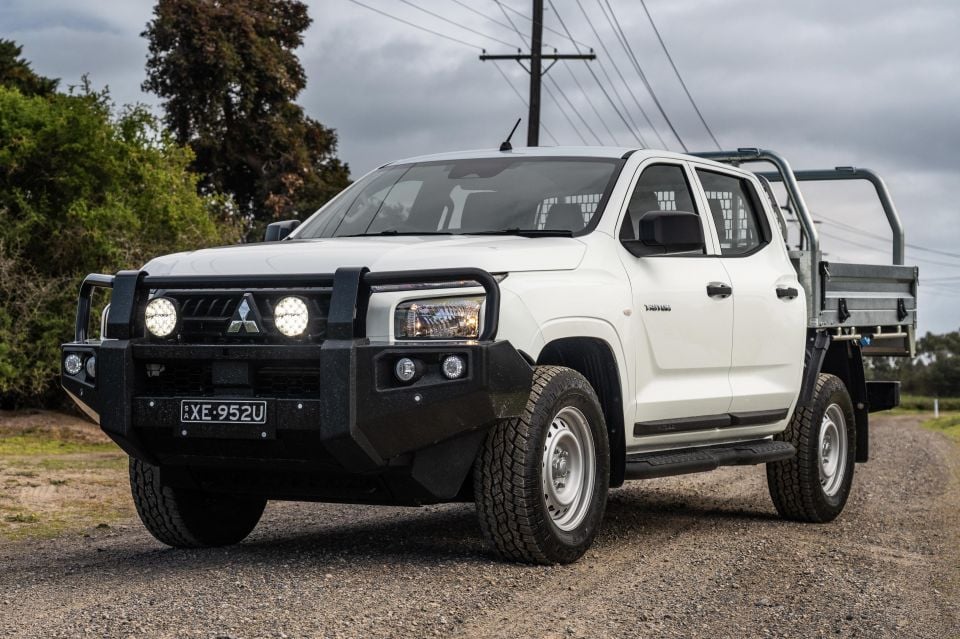
On test here is the 2026 Mitsubishi Triton GLX 4×4 double-cab/chassis, which is among the more expensive GLX sub-variants currently on sale.
Should it be the tradie’s pick, or are there better deals to be found elsewhere?
The GLX is the base trim level in the Triton lineup, but our 4×4 dual-cab/chassis automatic tester is priced towards the top of the range at $49,490 before on-roads.
| Model | Price before on-road costs |
|---|---|
| 2026 Mitsubishi Triton GLX 4×2 single-cab/chassis manual | $34,490 |
| 2026 Mitsubishi Triton GLX 4×2 single-cab/chassis automatic | $36,740 |
| 2026 Mitsubishi Triton GLX 4×4 single-cab/chassis manual | $41,840 |
| 2026 Mitsubishi Triton GLX 4×2 dual-cab pickup automatic | $43,840 |
| 2026 Mitsubishi Triton GLX 4×4 single-cab/chassis automatic | $44,090 |
| 2026 Mitsubishi Triton GLX 4×4 dual-cab/chassis manual | $47,240 |
| 2026 Mitsubishi Triton GLX+ 4×4 Club Cab chassis automatic | $47,240 |
| 2026 Mitsubishi Triton GLX 4×4 dual-cab/chassis automatic | $49,490 |
| 2026 Mitsubishi Triton GLX+ 4×4 Club Cab pickup automatic | $50,340 |
| 2026 Mitsubishi Triton GLX 4×4 dual-cab pickup automatic | $50,940 |
| 2026 Mitsubishi Triton GLX+ 4×4 dual-cab/chassis automatic | $51,990 |
| 2026 Mitsubishi Triton GLX+ 4×4 dual-cab pickup automatic | $53,290 |
| 2026 Mitsubishi Triton GLX-R 4×4 dual-cab pickup automatic | $56,740 |
| 2026 Mitsubishi Triton GLS 4×4 dual-cab/chassis automatic | $57,540 |
| 2026 Mitsubishi Triton GLS 4×4 dual-cab pickup automatic | $59,090 |
| 2026 Mitsubishi Triton GSR 4×4 dual-cab/chassis automatic | $61,540 |
| 2026 Mitsubishi Triton GSR Special Edition 4×4 dual-cab pickup automatic | $63,140 |
| 2026 Mitsubishi Triton GSR 4×4 dual-cab pickup automatic | $63,840 |
Closest-matched to the GLX on price in the Ranger lineup is the XL 4×4 single-turbo double-cab/chassis, which costs $49,230 before on-roads. For context, the Ranger XL Hi-Rider 4×2 opens Ford’s ute range at $37,310 before on-roads.
Toyota’s most direct rival is the HiLux WorkMate 4×4 double-cab/chassis for $50,420 before on-roads, while its cheapest ute is the manual 4×2 petrol WorkMate at $27,730 before on-roads.
Isuzu’s rival is the D-Max SX 4×4 cab/chassis for $51,200 before on-roads, while the related and recently updated 4×4 Mazda BT-50 XT double-cab/chassis is priced at $54,620 before on-roads.
You could also compare the base Volkswagen Amarok Core TDI405 (in cab/chassis guise) for $59,490 before on-roads, the GWM Cannon Lux double-cab/chassis for $43,490 drive-away, and the Nissan Navara SL 4×4 double-cab/chassis at $48,928 before on-roads.
To see how the Mitsubishi Triton stacks up against its rivals, use our comparison tool
Not all that different from most other Tritons, even if it looks much more utilitarian outside.
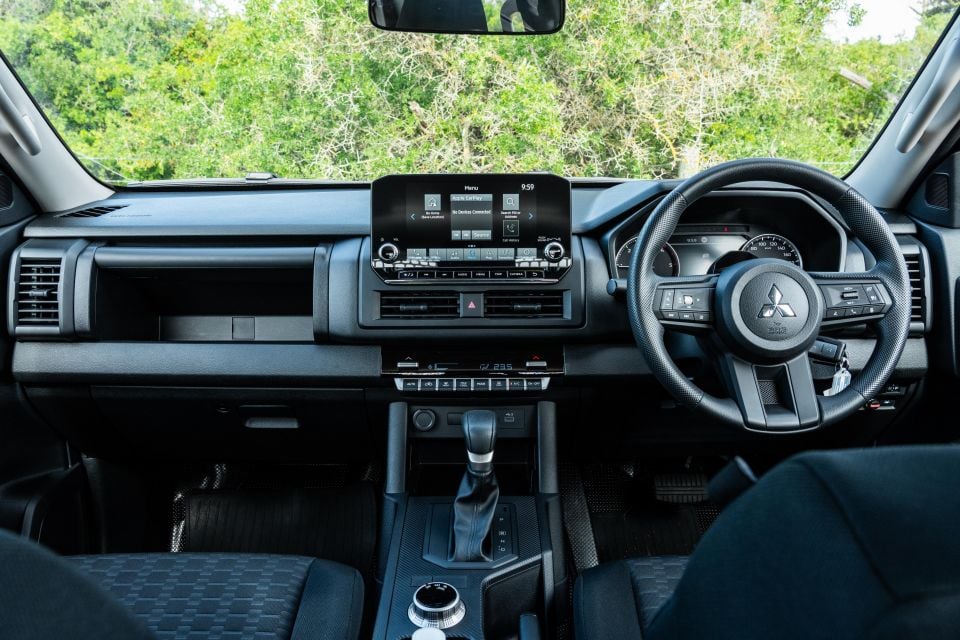
That said, Mitsubishi has understandably kept luxuries to a minimum. Where more expensive Tritons have soft-surfaced armrests and leather-wrapped steering wheels, the GLX is plastic on plastic – apart from the sturdy metal side steps.
The hard plastic door armrests aren’t particularly friendly to bony elbows, but we don’t actually mind the plastic steering wheel. We’re not sure we’ve seen ‘perforated’ plastic on a wheel before, but it’s padded and nice to hold, even if it’s not worthy of a $50,000 vehicle.
Otherwise, the cloth-trimmed seats are comfortable to live with on the daily commute or longer drives. Adjustment is only manual (as with all Tritons except the GSR), but there’s still a wide range of movement for both the driver’s seat and the reach/rake-adjustable tiller.
The Triton’s characteristic faux carbon-fibre trim can be seen on the centre console and door cards, which is still a little tacky but breaks up the uniformity of the scratchy black plastic used everywhere else.
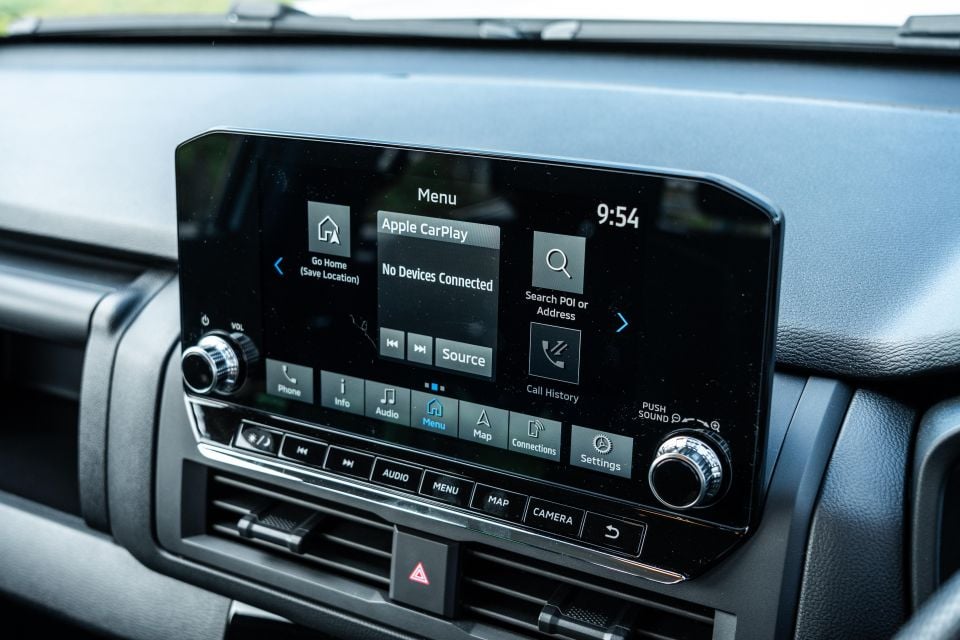
In terms of tech, it’s line astern with the rest of the Triton range. The infotainment display may seem small in comparison with the 10.1-inch vertical unit in the Ranger XL, but Mitsubishi’s more traditional horizontal 9.0-inch unit fits the GLX nicely.
Although it may not be the most modern display in terms of graphics, it remains functional, and owners who rely on either Apple CarPlay or Android Auto will have no issues. Just note that while CarPlay is wireless, Android users will still need to plug in using either the USB-A or USB-C ports up front.
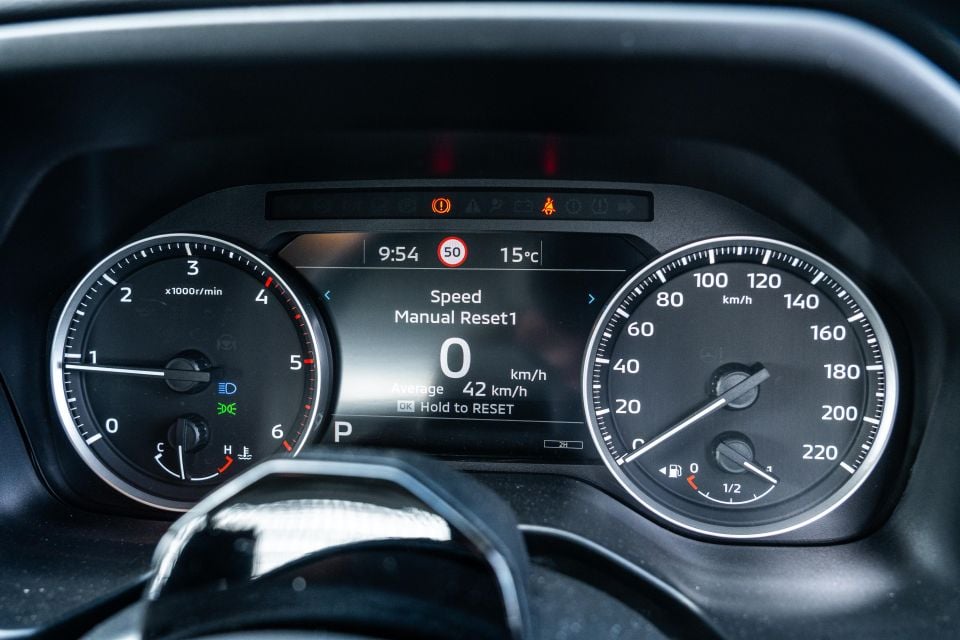
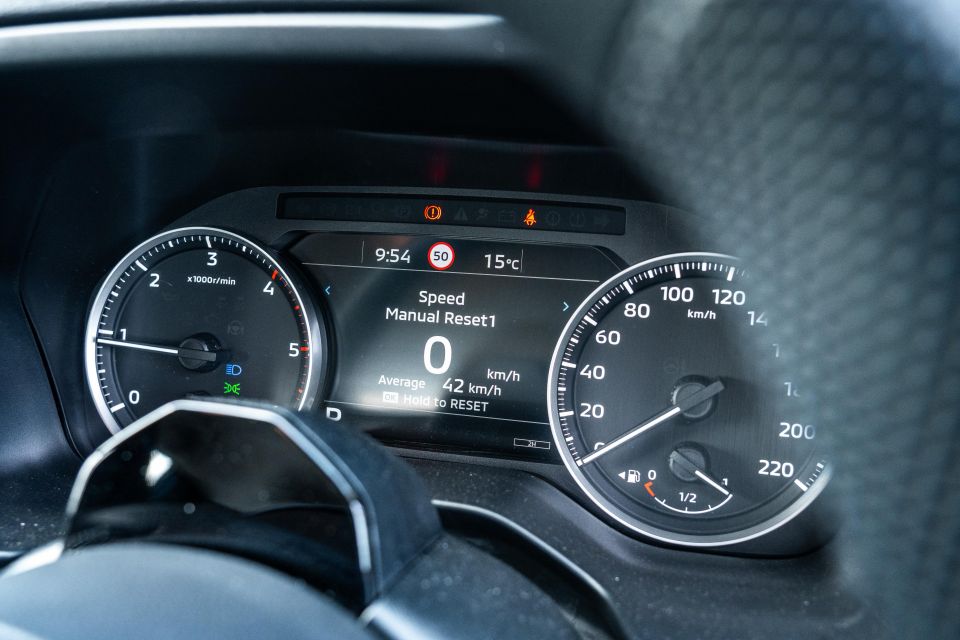
The instrument cluster is basic too, with two large analogue gauges and a small digital screen in the middle. This screen is home to the Triton’s trip computer and settings menu, and it’s easy to navigate using the buttons on the steering wheel.
These buttons are all physical and finished in dull black plastic. The only exception is the silver scroll wheel on the left, which complements the silver accents found elsewhere on the wheel and throughout the cabin.
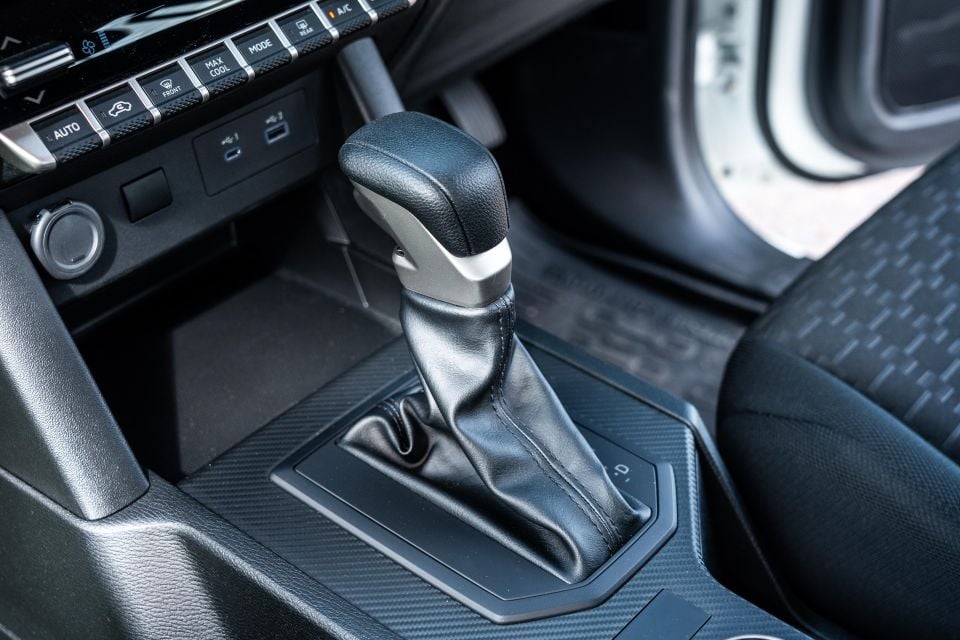
If you hadn’t noticed, the theme here is functionality. Nothing in the Triton is confusing or frustrating to use, and that’s what helps to make it a convincing runabout for people who need to be able to get in and go.
This is also evident with the climate control panel, a primarily physical unit made up of sturdy-looking switches and a simple digital readout. It may take a second to get used to the locations of all these buttons when you first get into the Triton, but the tactility makes it easier to operate than the partially digital setup of a Ranger.
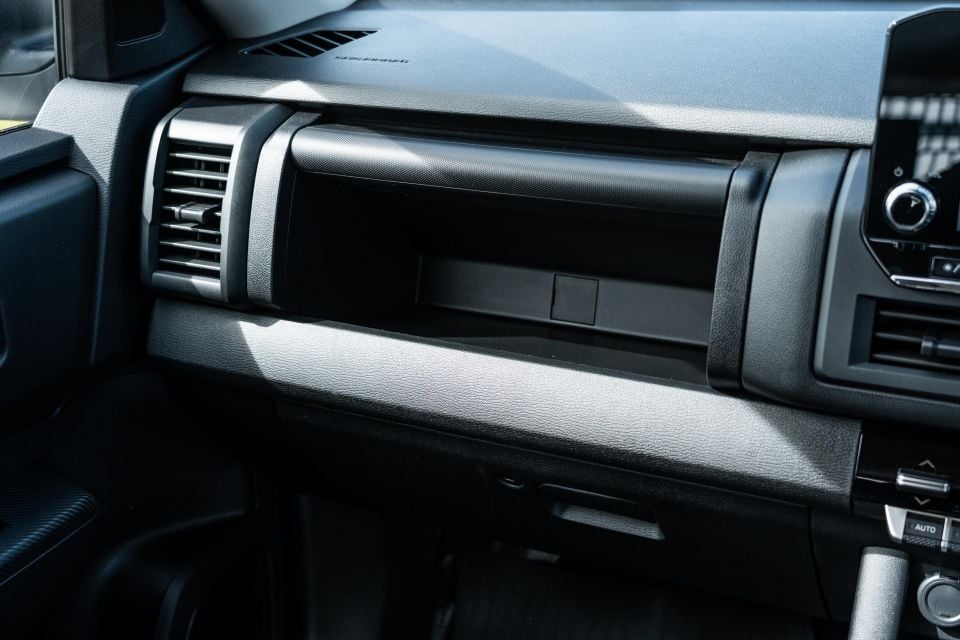
Elsewhere, storage locations are obvious, like the dashboard cut-out that nicely fits a clipboard and paperwork, and the large cupholders in the centre console next to the plastic handbrake lever. You won’t be surprised to learn there’s no wireless phone charger, but there’s still a decent storage cubby ahead of the gear selector.
The front of the cabin comes with a rotary 4×4 controller (in 4×4 models like our tester), a nicely sized storage box under the central armrest, and a sunglasses holder in the ceiling.
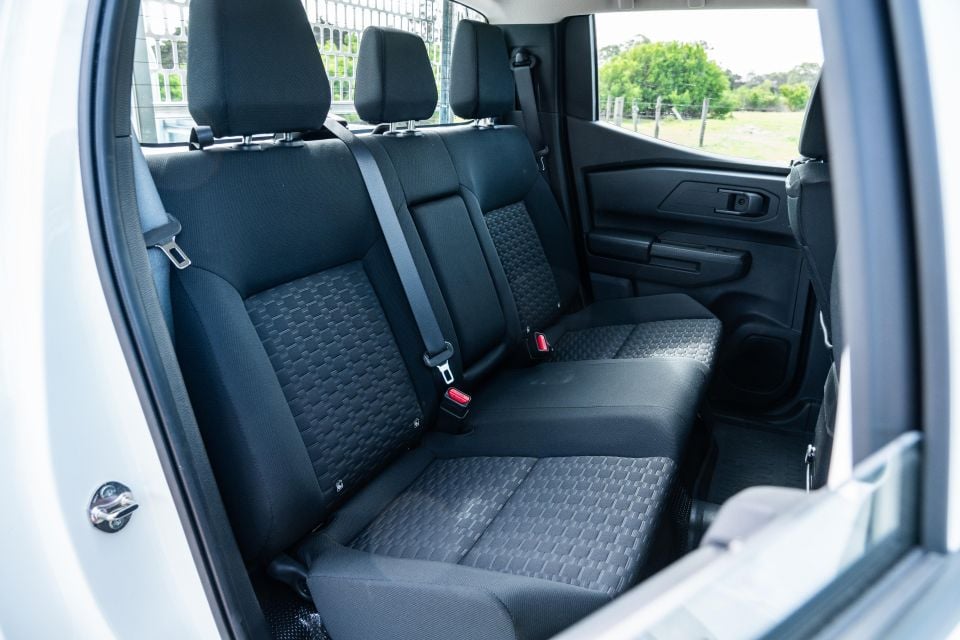
Those metal side steps make it easy to climb into the back too, and you can pull yourself in using grab handles on the B-pillars. You’ll find ample space back here, with passengers unlikely to run into issues with headroom or legroom.
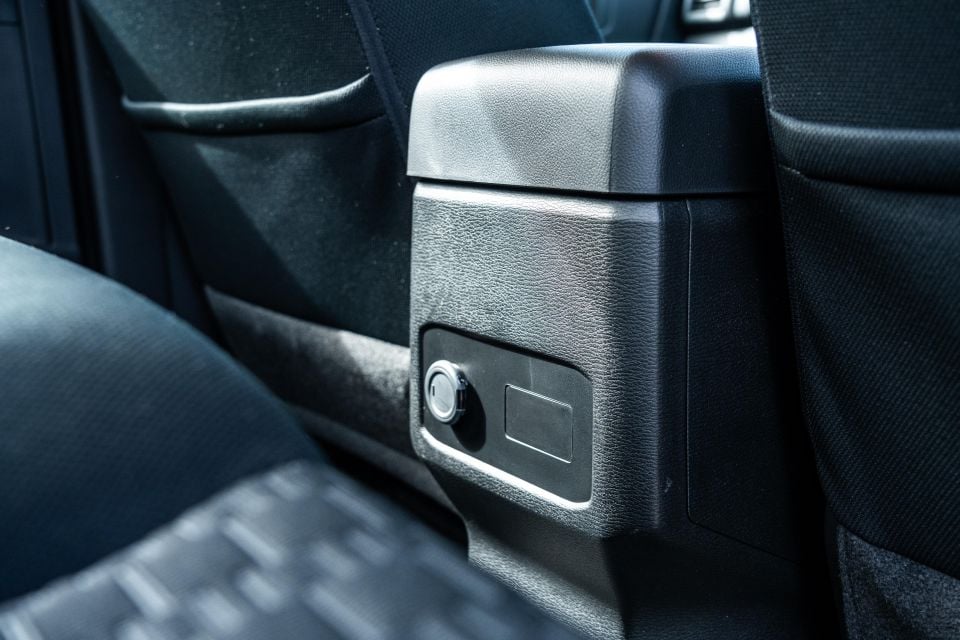
There’s still a 12V outlet and USB ports on the back of the centre console, but you’ll have to look up for air vents. Our GLX 4×4 double-cab/chassis tester is the cheapest in the Triton range to receive a “roof mounted air circulator”, which is simply a set of air vents on the roof.
Although there’s no independent climate control for rear passengers, these vents behave similarly to those on airplanes. It’s fed by a forward-facing intake on the ceiling, and you can control the air’s direction and even stop it from blowing entirely; it’s surprisingly effective, too.
Passengers here also get a fold-down armrest with cupholders, which is much softer than the plastic door cards.
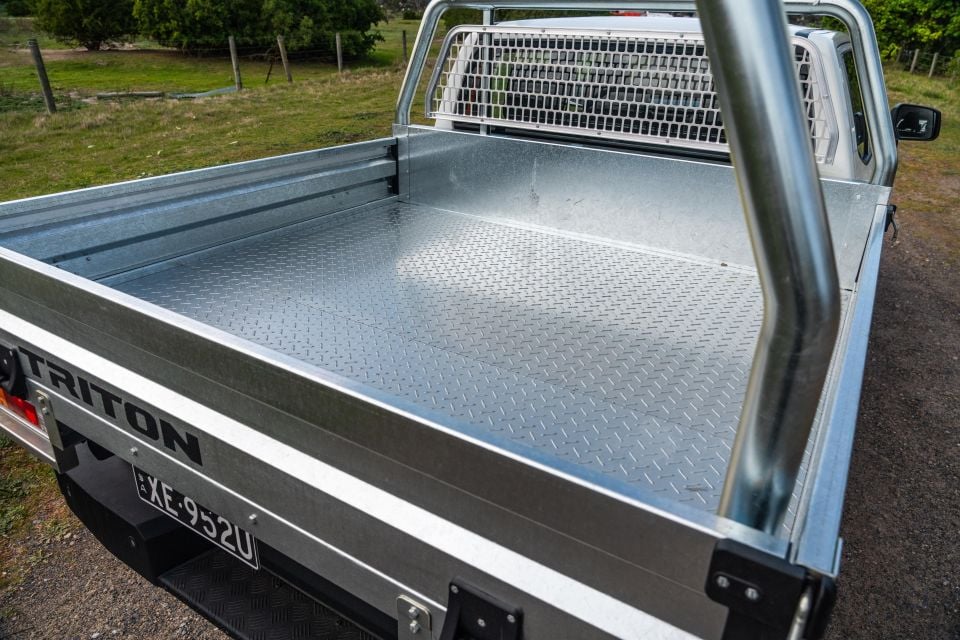
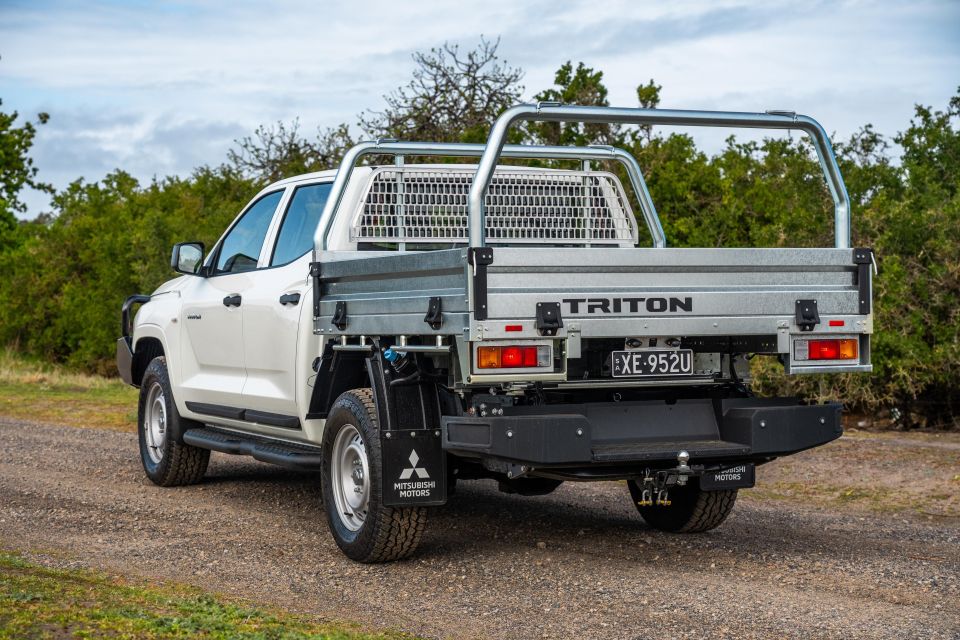
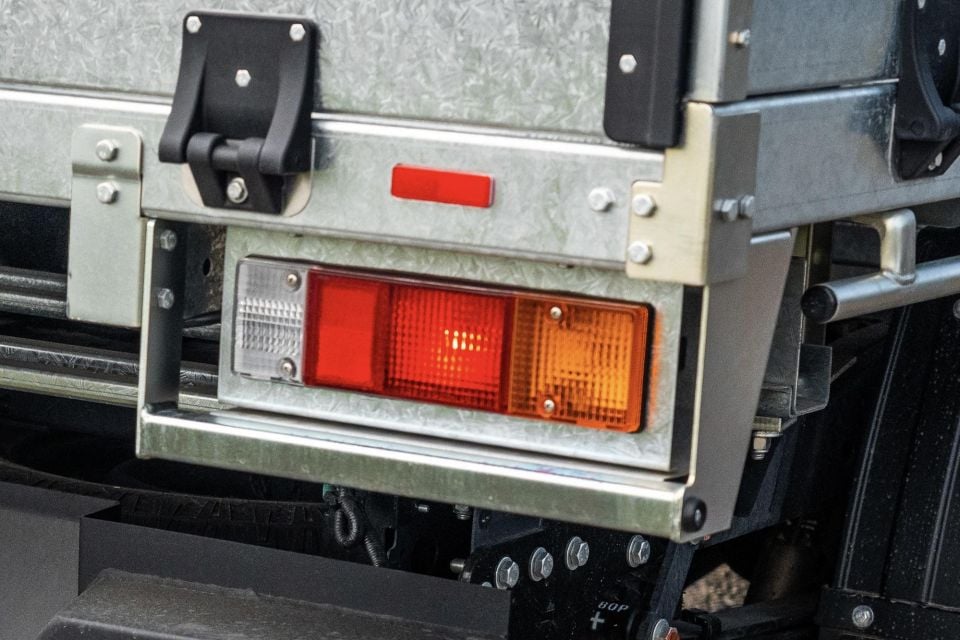
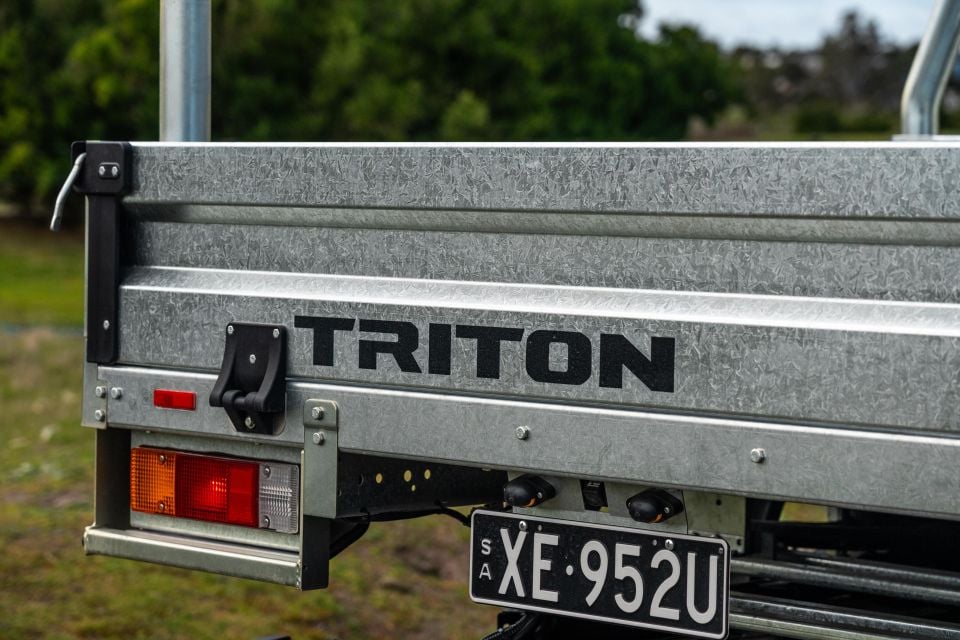
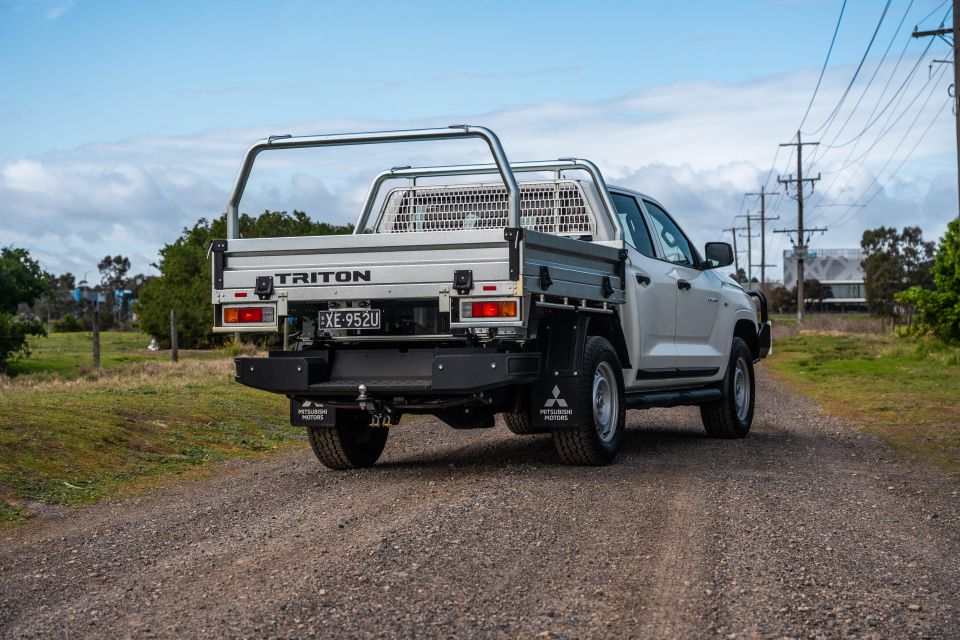
At the back of these Triton models is a tray, available in either aluminium or steel. The latter commands a $2000 premium when unpainted, plus extra for different paint colours.
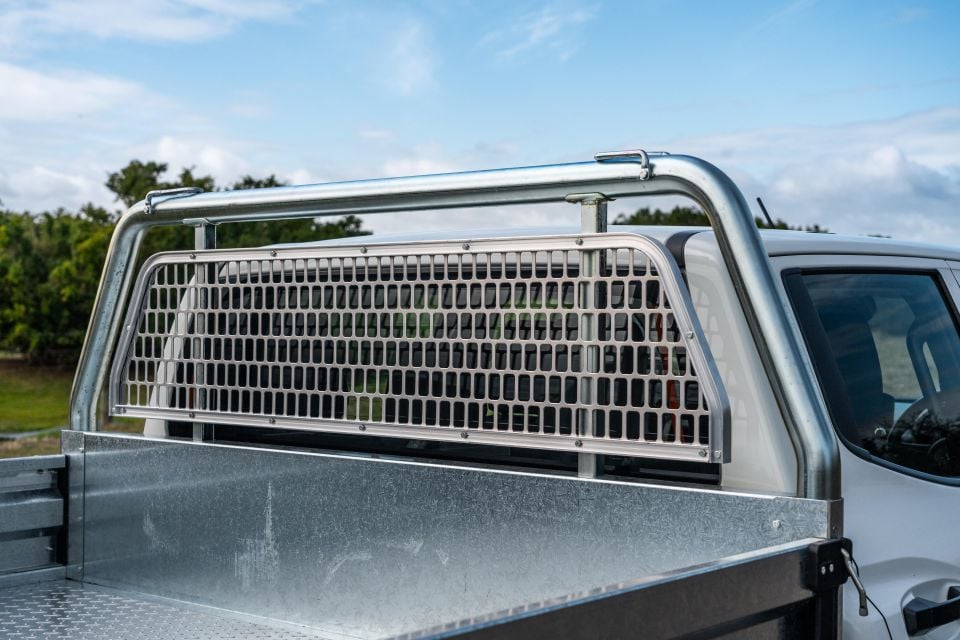
It’s simple, but it gets the job done. You have plenty of space back there, as well as a pair of tall hoops to secure longer items over the cab if needed. These hoops can also be removed by undoing a couple of bolts when not in use.
You’ll notice our tester also features one of several mesh grilles at the front of the tray, which is intended to keep cargo away from the back window. The treatment of the rear bumper below the tray isn’t the most glamorous, but everything’s where it should be and there’s still plenty of space for items like tow bars.
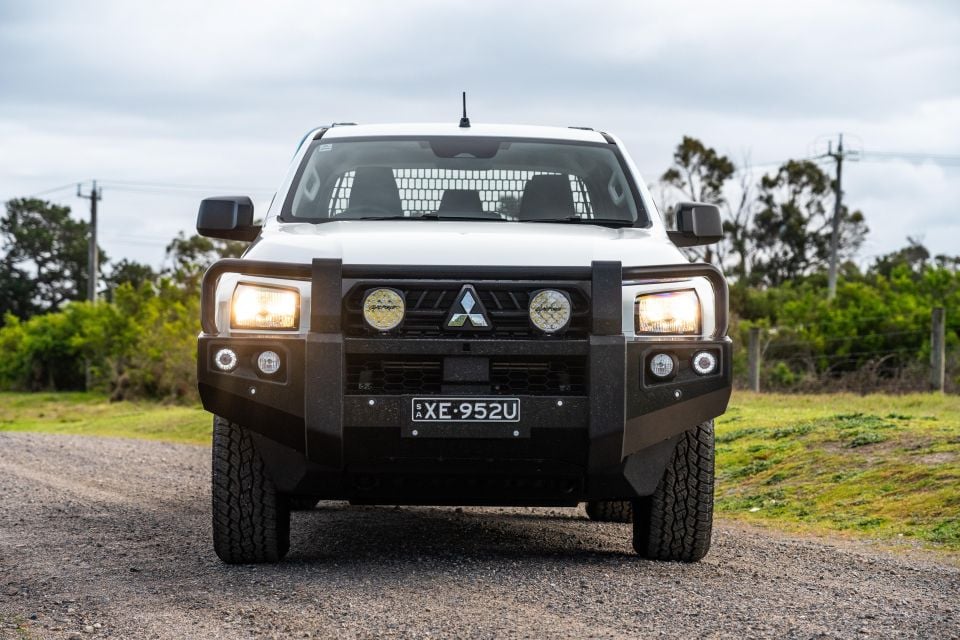
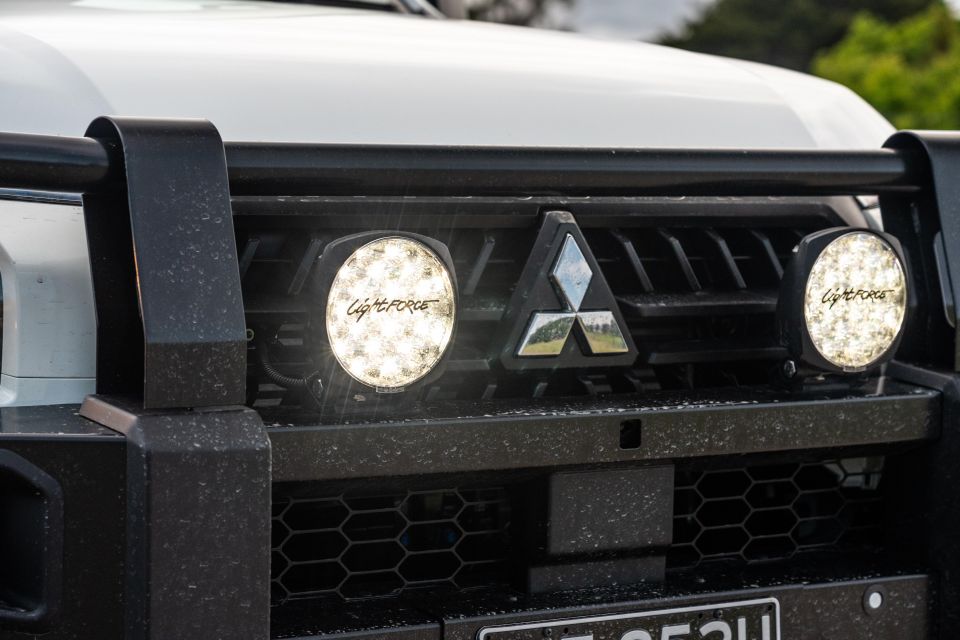
Its utilitarian look is completed by unfinished black plastic door handles and mirror caps, along with a robust black Mitsubishi bull bar adorned with Lightforce spotlights.
| Dimensions | Mitsubishi Triton GLX double-cab/chassis |
|---|---|
| Length | Dependent on tray fitted |
| Width | 1865mm |
| Height | 1795mm |
| Wheelbase | 3130mm |
| Tray length, width, depth | Dependent on tray fitted |
To see how the Mitsubishi Triton stacks up against its rivals, use our comparison tool
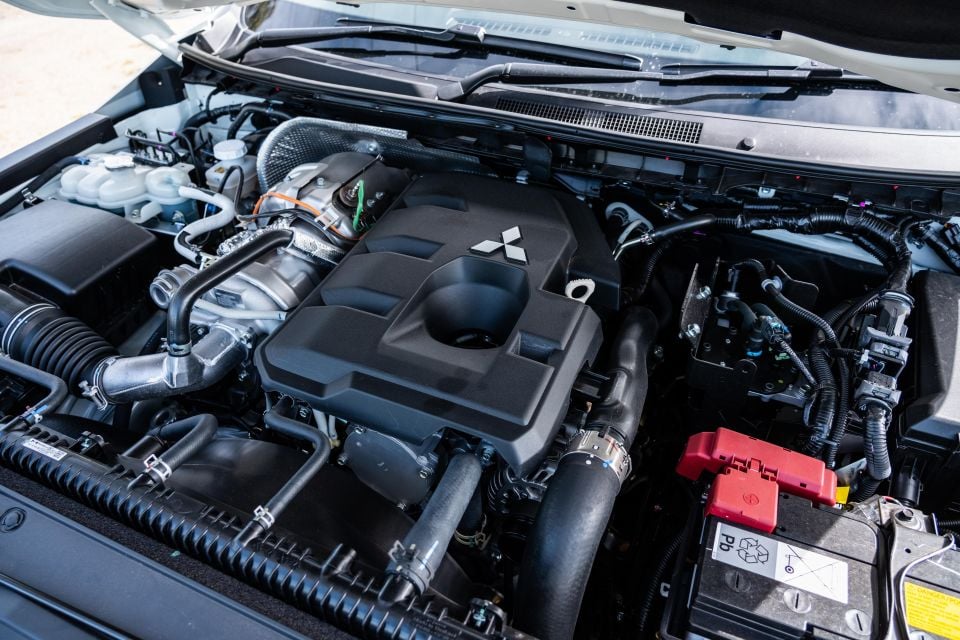
One engine is available across the Triton range: a 2.4-litre four-cylinder twin-turbo diesel. Four-wheel drive variants differ in their 4×4 systems, as the GLX misses out on ‘Super Select II’ full-time 4×4, as seen with the higher-spec GLX-R, GLS, and GSR.
| Specifications | Mitsubishi Triton GLX double-cab/chassis |
|---|---|
| Engine | 2.4L bi-turbo four-cylinder diesel |
| Power | 150kW @ 3500rpm |
| Torque | 470Nm @ 1500-2750rpm |
| Transmission | 6-speed auto |
| Drive type | ‘Easy Select’ part-time four-wheel drive |
| Fuel economy (claimed) | 7.7L/100km |
| Fuel economy (as tested) | 8.1L/100km |
| CO2 emissions (claimed) | 203g/km |
| Fuel tank | 75L |
| AdBlue tank | 17L |
| Kerb weight | 1993kg |
| Payload | 1210kg |
| Maximum towball down load | 350kg |
| Unbraked towing capacity | 750kg |
| Braked towing capacity | 3500kg |
| Gross vehicle mass (GVM) | 3200kg |
| Gross combination mass (GCM) | 6250kg |
Our week with the Triton GLX involved a mix of highway driving and errand-running through Melbourne’s hilly north-eastern suburbs. Most of this was unladen, which contributed to our respectable fuel economy figure, but you can expect bigger consumption numbers while hauling a load or towing.
To see how the Mitsubishi Triton stacks up against its rivals, use our comparison tool
It’s first and foremost a commercial vehicle, and there’s a real rough-and-tumble nature about the Triton GLX.
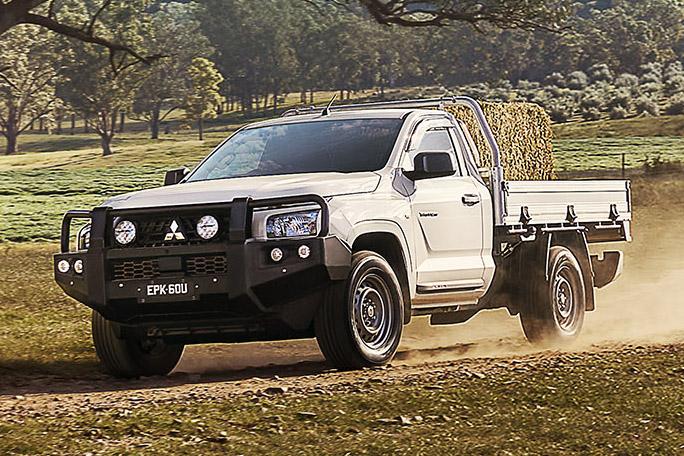
The biggest difference between this and a Triton pickup (with a ‘styleside’ tray as fitted standard from GLX-R level and up) is its rear leaf spring suspension setup. Both the GLX and GLX+ get heavy-duty rear leaf suspension, which means they’re set up more appropriately for heavy loads and trailers.
While that certainly means it can handle plenty of actual work, the trade-off is unladen ride quality. It’s incredibly bouncy at the rear, and has a tendency to get bucked around over bumps as there’s very little weight over the rear axle and its beefier springs.
Of course, this wasn’t unexpected and didn’t ruin our perception of the vehicle. Even loading it with a toolbox helps to mellow the ride, and we actually enjoyed driving the Triton with its more lively suspension tune.
It feels quite old-school and authentic, partly due to the turn-key ignition in place of a more modern push-button starter.
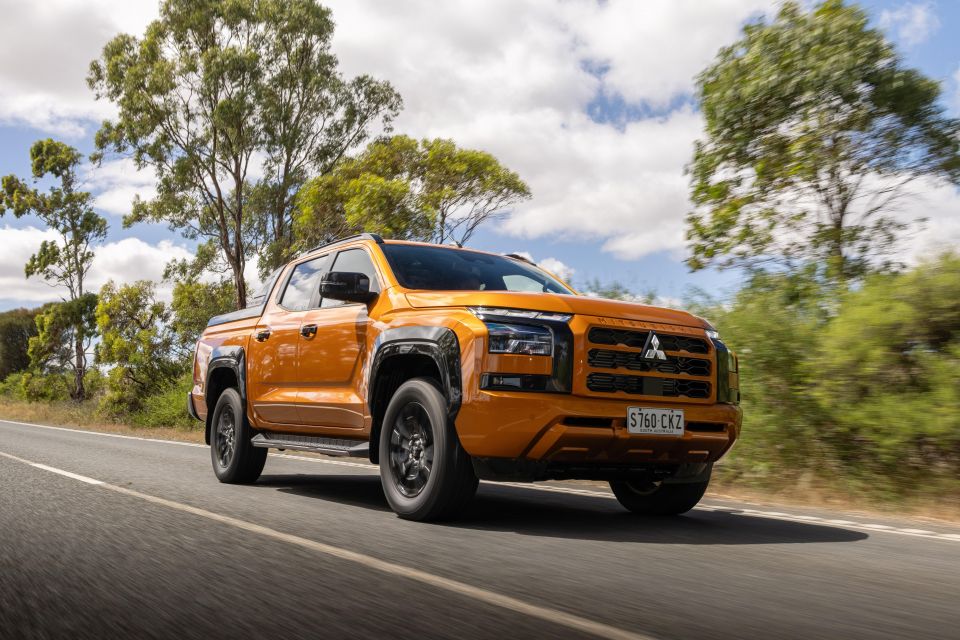
Handling is as to be expected for a cab/chassis ute, which is to say it’s somewhat wallowy without being uncontrollable. Mid-corner bumps will unsettle the Triton when unladen, and you’ll notice that you’re doing more micro-corrections with the steering than you’re used to, even in a straight line.
Again, you could argue (and we do) that this makes it a bit more engaging, if not fun. It never feels unsafe and will comfortably manage unsigned bends on 100km/h rural highways, but naturally the all-terrain tyres fitted to 4×4 GLX models have a limit when it comes to mechanical grip.
That means this Triton isn’t quite as pointy as others with highway-terrain rubber, but the GLX’s steering is still satisfyingly heavy and direct, making the ute feel all the more substantial.
As for the drivetrain, its twin-turbo diesel engine sounds very agricultural – even by GLX standards. Firing it up from cold reveals a loud, rickety idle, indicating there’s less cabin insulation here than in higher-spec variants.
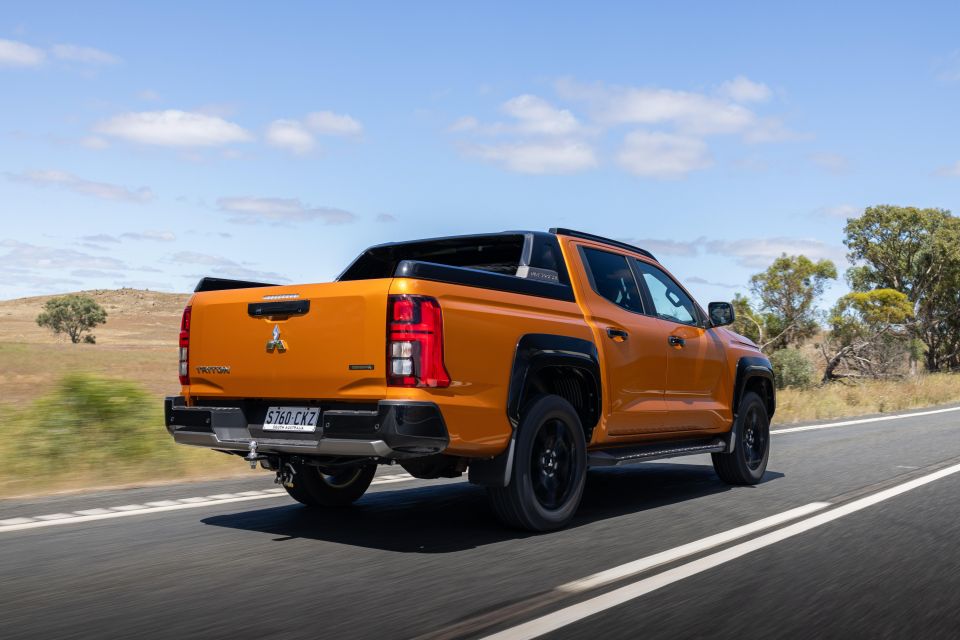
Under load it’s surprisingly loud too. There’s absolutely no masking the fact that it is fundamentally a vehicle meant for work, but it’s perhaps a little too agricultural given it’ll cost you more than $50,000 to buy the model tested here.
The six-speed auto is competent, shifting at the right points and keeping the engine in its ideal operating window. Outright performance is acceptable, but don’t be expecting to set any land speed records.
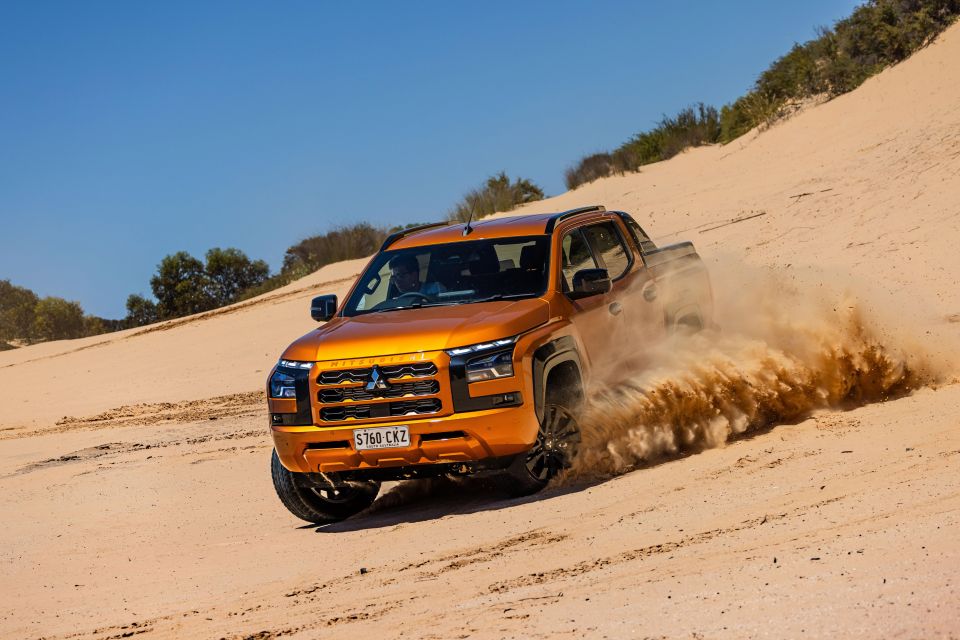
There aren’t any computerised drive modes, and the ‘Easy Select 4WD’ system allows for only three settings: 2H, 4H, and 4L. You’ll likely spend most of your time in 2H, because this more basic 4×4 system can’t be used in four-wheel drive mode on sealed surfaces, unlike ‘Super Select 4WD-II’.
GLX models aren’t fitted with a rear differential lock either. It isn’t the end of the world, and you should still have plenty of traction on hand to tackle basic off-roading or a muddy jobsite – and our previous experience with other Triton variants also suggests the GLX should be just as capable when it comes to towing, even without full-time 4WD.
Fortunately, most of the Triton’s safety gear is standard right across the range, which means the GLX doesn’t miss out on anything major. The only real omission is hill descent control, but that isn’t the end of the world either.
Unfortunately, however, it does mean the GLX has the same pesky driver monitoring system as all other Tritons. While it has been improved since the current-generation Triton launched, it’s still too sensitive.
It’ll ping you for things as simple as quickly checking mirrors or the infotainment, but it’s easy enough to turn off through the car’s instrument display – though you’ll have to do this every time you get in. Otherwise, all safety systems worked as intended, including the adaptive cruise control, which lacks any form of lane tracing function.
Outward visibility is also good, although the tray takes up more space in your side mirrors than expected, and the protective grille behind the rear window slightly obstructs vision through the rear-view mirror.
| Off-road dimensions | Mitsubishi Triton GLX double-cab/chassis |
|---|---|
| Ground clearance | 228mm |
| Approach angle | 30.4° |
| Departure angle | Dependent on tray fitted |
| Ramp breakover angle | 23.4° |
To see how the Mitsubishi Triton stacks up against its rivals, use our comparison tool
The Triton is offered in five trim levels, with the GLX at the bottom. It’s the Triton’s broadest-reaching variant, available in several different body styles, with both 4×2 and 4×4 drivetrains, and with manual and automatic transmissions.
If this is the car for you, we’ll compare offers from trusted dealers, handle the back and forth and manage your purchase from enquiry to delivery.
2026 Mitsubishi Triton GLX equipment highlights:
Trition GLX+ adds:
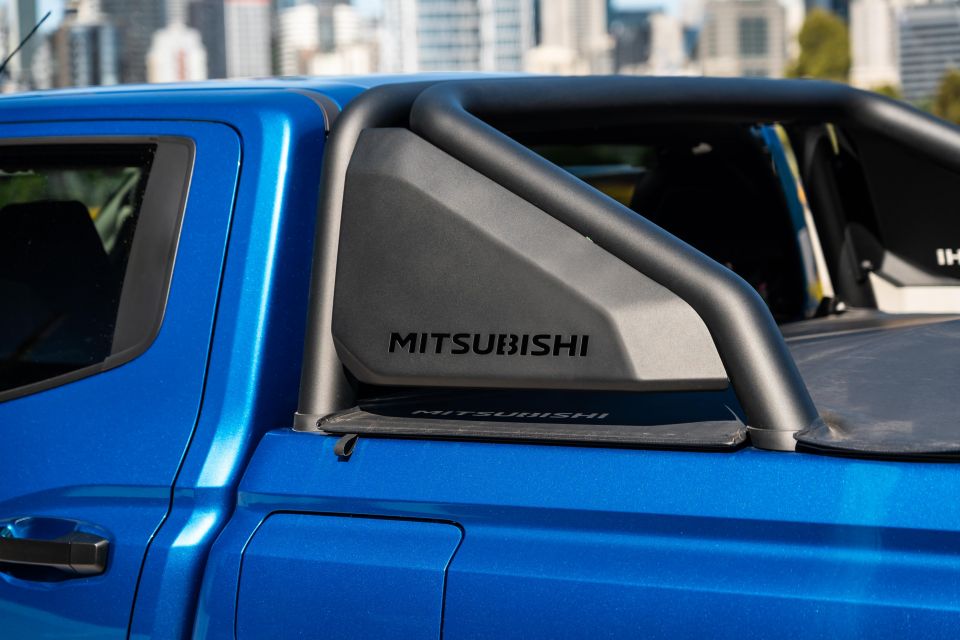
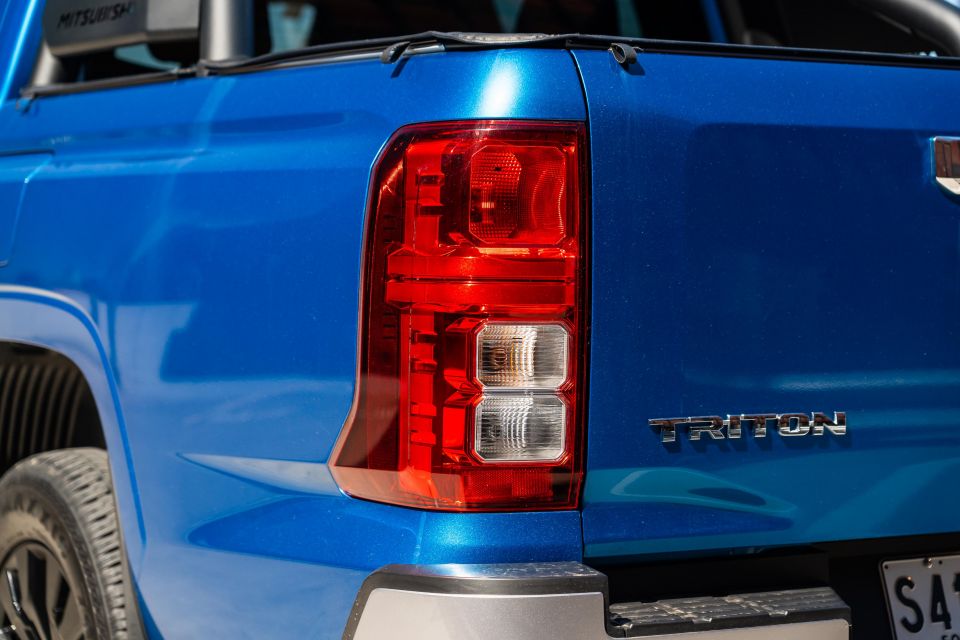
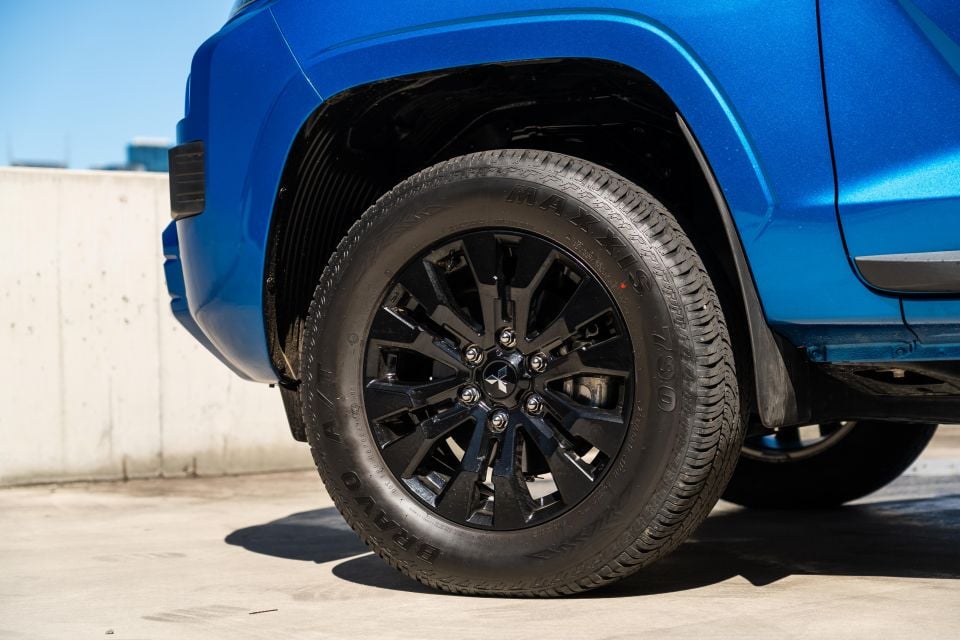
Above: Triton GLX-R
Triton GLX-R adds:
Triton GLS adds:
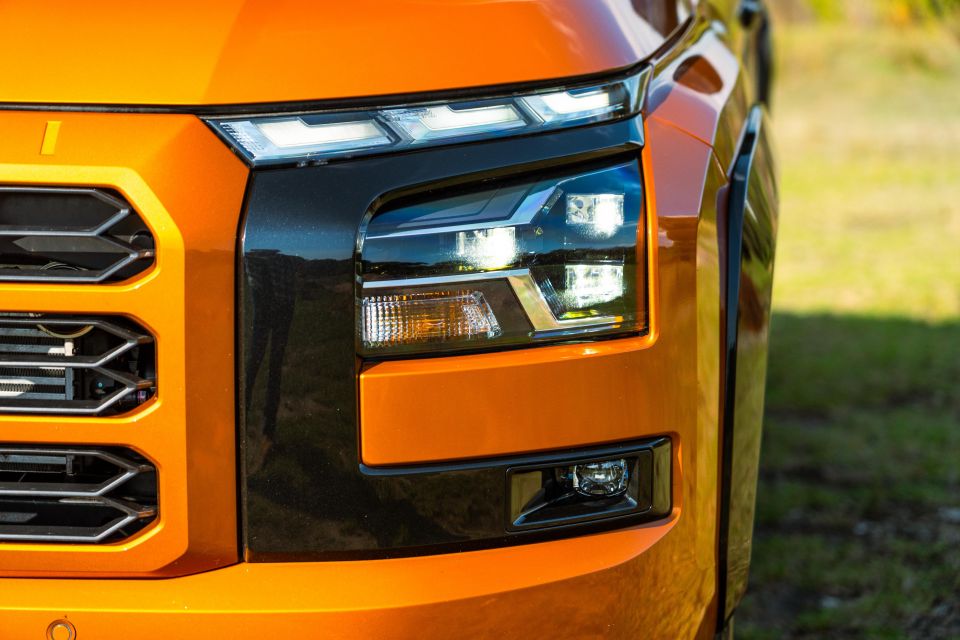
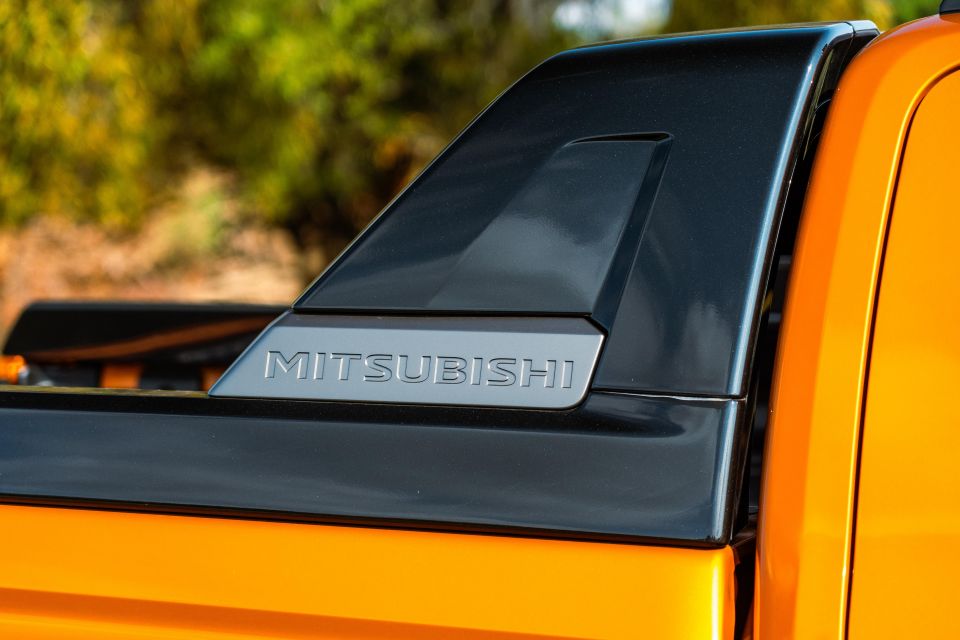
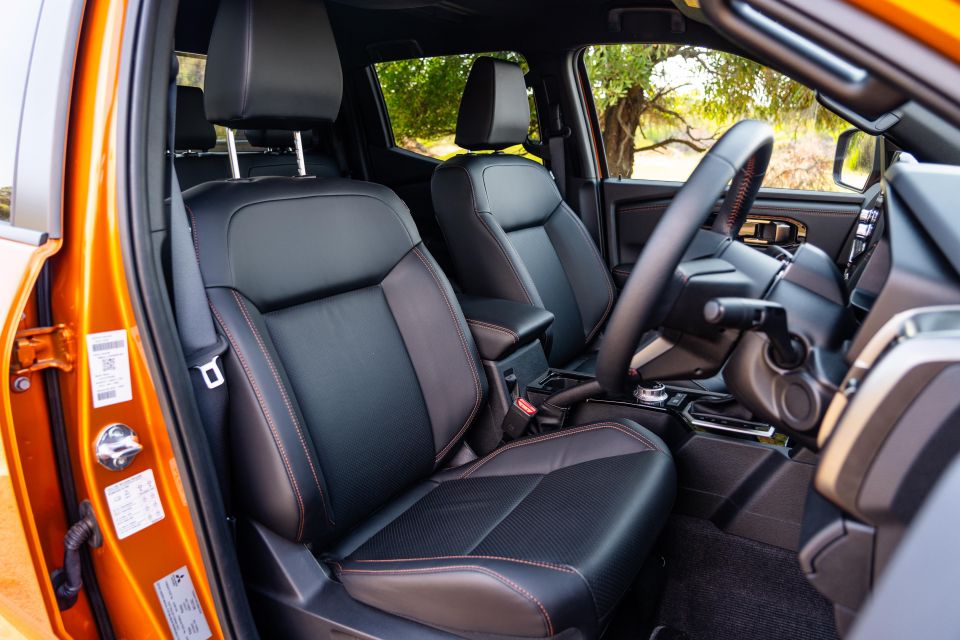
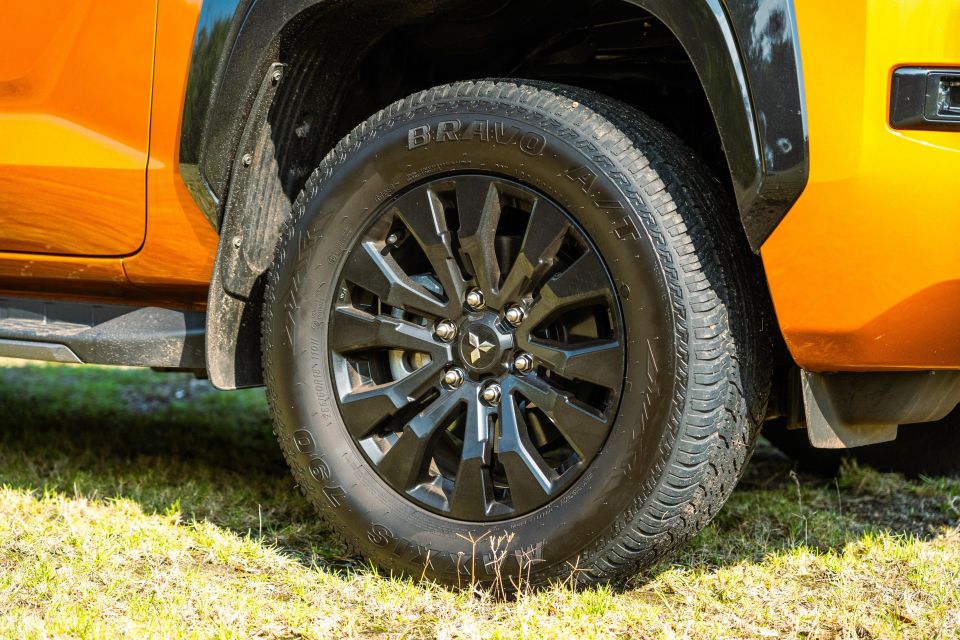
Above: Triton GSR
Triton GSR Special Edition adds:
Triton GSR adds (over GLS):
To see how the Mitsubishi Triton stacks up against its rivals, use our comparison tool
The Mitsubishi Triton was awarded a five-star safety rating by ANCAP in 2024, which expires at the end of 2030.
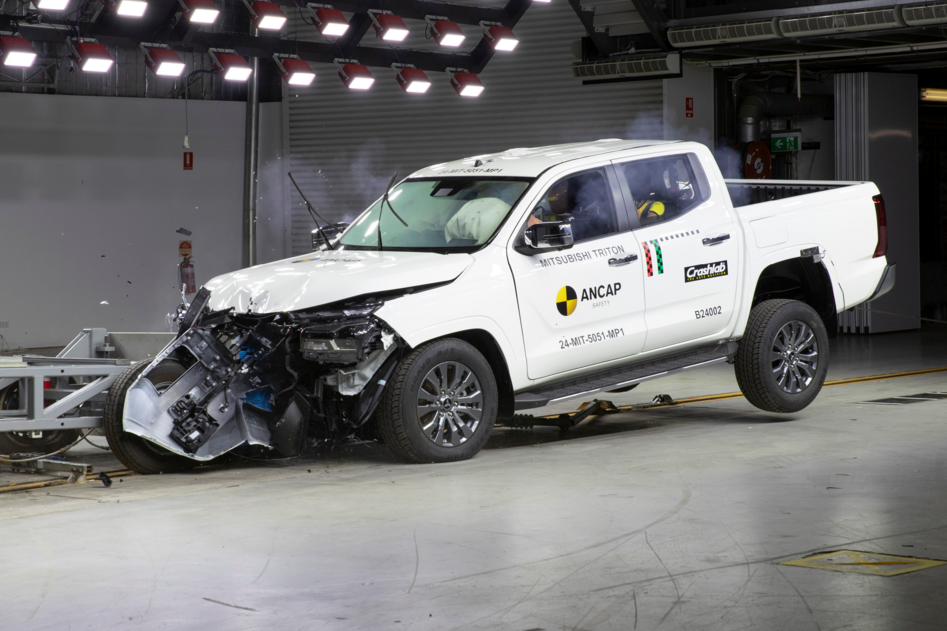
Standard safety equipment includes:
Triton GLX-R adds hill descent control.
To see how the Mitsubishi Triton stacks up against its rivals, use our comparison tool
The 2026 Mitsubishi Triton is backed by a five-year, 100,000km standard warranty, which is extended by one year/20,000km every time the ute is serviced on time at a Mitsubishi dealer, up to the 10-year/200,000km mark.
| Servicing and Warranty | Mitsubishi Triton |
|---|---|
| Warranty | 5 years/100,000km up to 10 years/200,000km (service-activated) |
| Roadside assistance | 12 months complimentary |
| Service intervals | 12 months, 15,000km |
| Capped-price servicing | 10 years |
| Average annual capped-price service cost | $686 |
| Total capped-price service cost | $6860 |
Mitsubishi’s capped-price service schedule for the Triton is detailed below:
| Service | Price |
|---|---|
| 1yr or 15,000km | $499 |
| 2yrs or 30,000km | $499 |
| 3yrs or 45,000km | $499 |
| 4yrs or 60,000km | $499 |
| 5yrs or 75,000km | $549 |
| 6yrs or 90,000km | $799 |
| 7yrs or 105,000km | $719 |
| 8yrs or 120,000km | $999 |
| 9yrs or 135,000km | $849 |
| 10yrs or 150,000km | $949 |
Additionally, Mitsubishi’s Diamond Advantage program includes 12 months of complimentary roadside assistance with all new vehicle purchases, which is extended by another 12 months each time the vehicle is serviced under the capped-price servicing program.
To see how the Mitsubishi Triton stacks up against its rivals, use our comparison tool
The Triton, especially in GLX cab/chassis guise, does a lot right. But the value proposition isn’t what it once was.
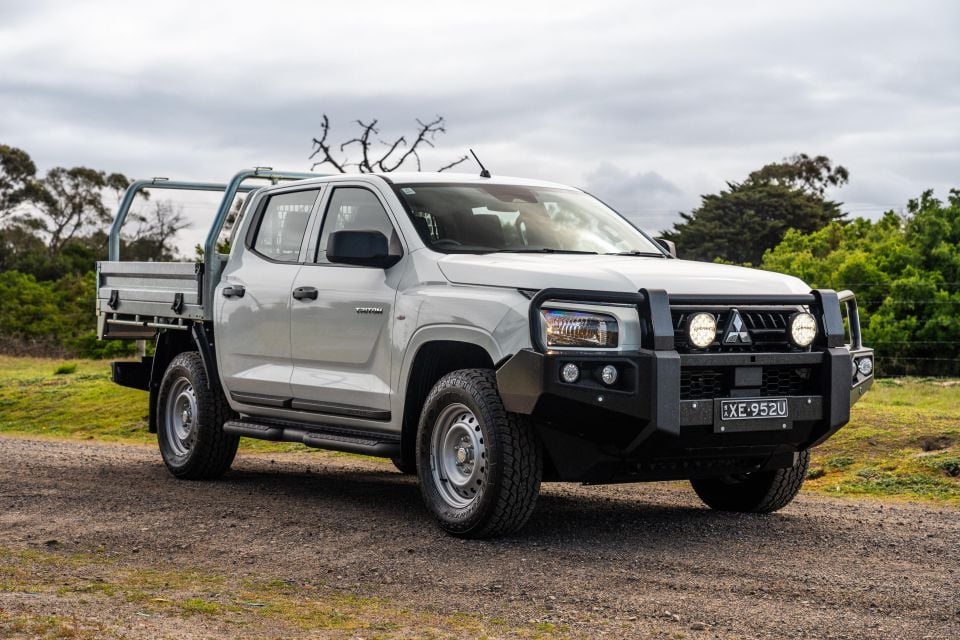
With a 4×4 drivetrain and double-cab body style, the GLX cab/chassis is simply too expensive. This is amplified by the prices of other versions, like the manual, Crew Cab, and single-cab, all of which are cheaper but have the same mechanical setup.
Worse still, the comparable GWM Cannon Lux is around $10,000 cheaper once all is said and done, and that ute arguably has the edge in terms of interior tech.
That said, the GLX is just as well-built as any other Triton, but you won’t feel bad about getting it dirty or putting it through some abuse.
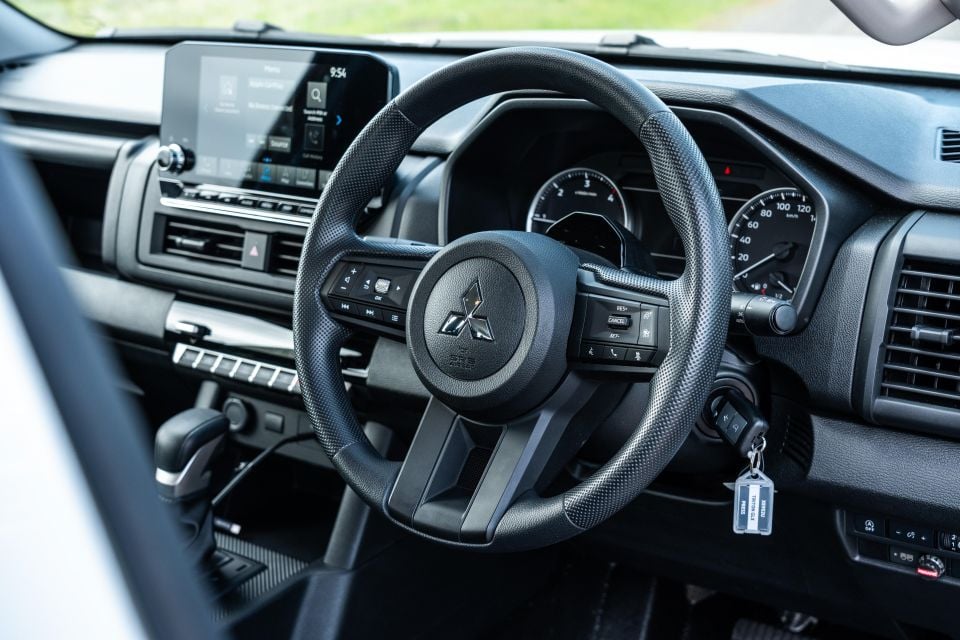
Unfinished exterior plastics, steel wheels, and a steel tray means you won’t have to worry about scratching too much paint, and the interior is equally durable.
Basic as it may be, everything inside works as it should. Physical buttons and non-luxurious materials means the GLX is more tradie-friendly than many other utes, and the rubber floor mats in our tester make a lot of sense too.
If you want a cab/chassis Triton, we’d suggest steering towards better-value single-cab GLX variants to save a penny if you don’t need five seats, or Club Cab alternatives if you need four-seat capacity.
CarExpert can save you thousands on a new Mitsubishi Triton. Click here to get a great deal.
Click the images for the full gallery
If this is the car for you, we’ll compare offers from trusted dealers, handle the back and forth and manage your purchase from enquiry to delivery.
Quickly see how this car stacks up against its competition. Select any benchmark to see more details.
2025
$39,739
2026
$42,159
2025
$56,064
2026
$56,167
2025
$62,914
2026
$63,120
2025
$63,995
2025
$64,201
2026
$64,304
2025
$68,115
2026
$68,424
2025
$69,763
2026
$74,990
Max Davies is a CarExpert journalist with a background in regional media, with a passion for Japanese brands and motorsport.
Add CarExpert as a Preferred Source on Google so your search results prioritise writing by actual experts, not AI.
Damion Smy
8 Hours Ago

William Stopford
10 Hours Ago
William Stopford
11 Hours Ago


James Wong
12 Hours Ago

Ben Zachariah
13 Hours Ago
William Stopford
14 Hours Ago
Add CarExpert as a Preferred Source on Google so your search results prioritise writing by actual experts, not AI.
# Based on VFACTS and EVC data
† Displayed prices are based on the drive-away price of the vehicle, which includes delivery charges, registration fees, number plates, and applicable road taxes, based on a Sydney location. However, prices may vary between states and territories, and additional costs such as compulsory third party (CTP) insurance, dealer delivery fees, and optional extras are not included. These prices are subject to change without notice and may not reflect current market pricing or dealer offers.
 Automotive Vehicle Spec Data & 4K images Powered by JATO Dynamics Ltd