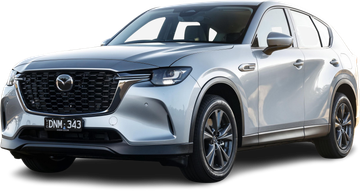
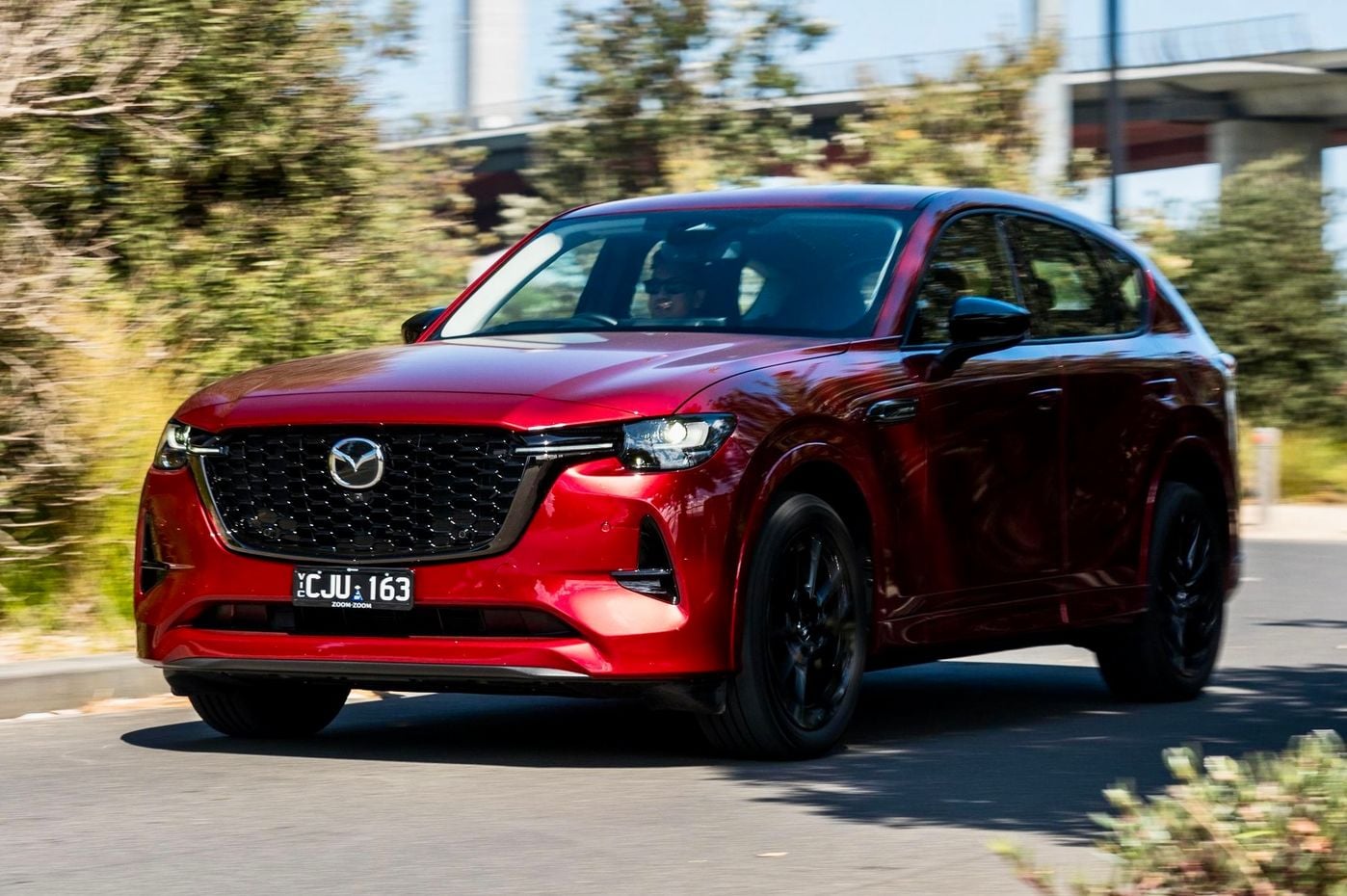
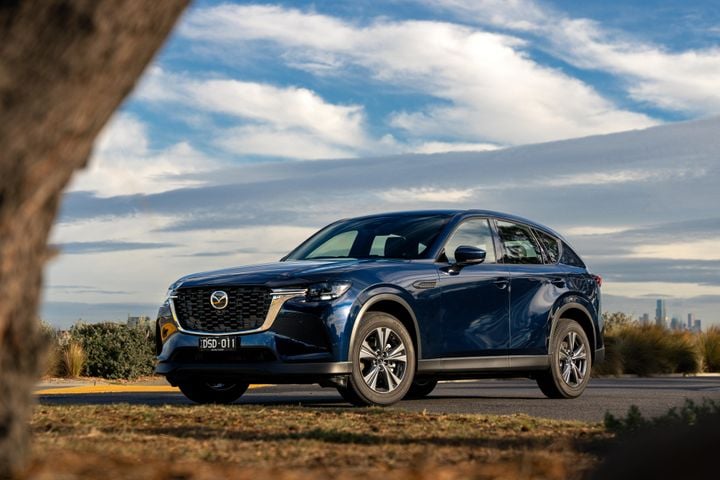
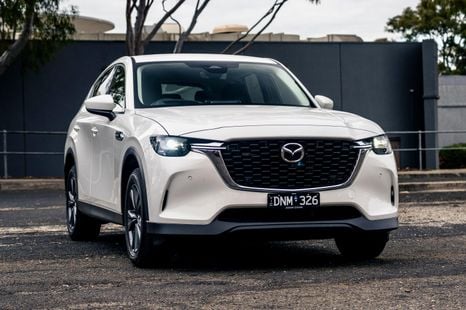
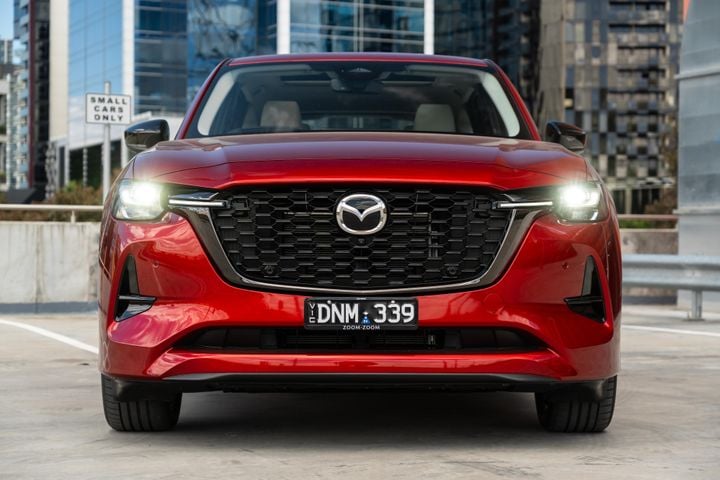
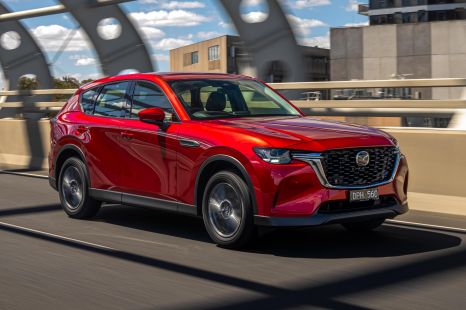
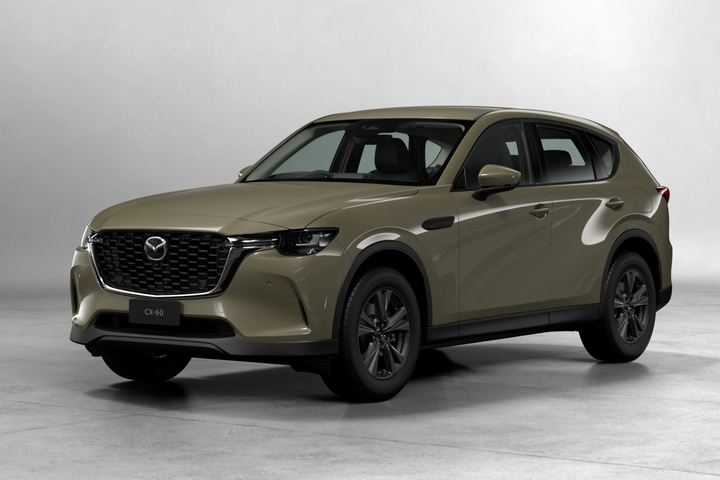
The Mazda CX-60 aims higher than the brand’s familiar family SUVs, with a rear-wheel drive-based platform and European premium rivals in its sights. Our 2022 first drive in Portugal samples the all-wheel drive plug-in hybrid. Crucially, these are pre-production cars, and Australian pricing and final specifications were not confirmed when we filmed.
The cabin makes a promising first impression, with soft-touch surfaces, padded contact points, and a broader sense of space than a CX-5. It is not the more elaborate interior shown on Mazda’s display car, however, and the small centre storage compartment disappoints. We reserve a final build-quality verdict for a production example.
Technology takes a step forward with a 12.3-inch central display and matching digital instrument cluster. Wireless Apple CarPlay and Android Auto are included in the car demonstrated. The driver-personalisation system can adjust the seating position, but our presenter still needed to fine-tune it for his proportions.
Rear accommodation feels airier than a CX-5, with good head room and toe room, although we expected more knee room from the longer wheelbase. A 40:20:40 split-folding rear seat gives useful loading flexibility, and the quoted boot capacity is just under 600 litres.
The drivetrain pairs a naturally aspirated 2.5-litre four-cylinder petrol engine with an electric motor, delivering combined outputs of a little over 240kW of power and 500Nm of torque. Acceleration feels genuinely strong, particularly in Sport mode. Mazda quotes 0-100km/h in 5.8 seconds; that is a manufacturer claim, not our measured result.
Its 17.8kWh battery supports a quoted electric range around 60km. On a roughly 50-55km drive loop, we returned with some charge remaining and fuel consumption around 2.0 litres per 100km. That result relies on starting with a charged battery, and should not be taken as a depleted-battery touring figure. Charging is AC-only, at around 7kW.
The mostly smooth Portuguese roads limit our ride assessment. On rougher sections it feels on the firmer side of comfortable, while the steering is quite heavy. Through corners, though, it stays composed and responds eagerly. Braking generally feels progressive, with some jerkiness when using engine-driven battery charging.
This is an encouraging start, balancing electric commuting ability with real performance. A production car on Australian roads would be the next test before drawing a firm local verdict.