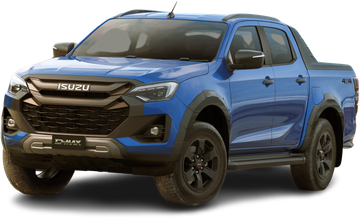
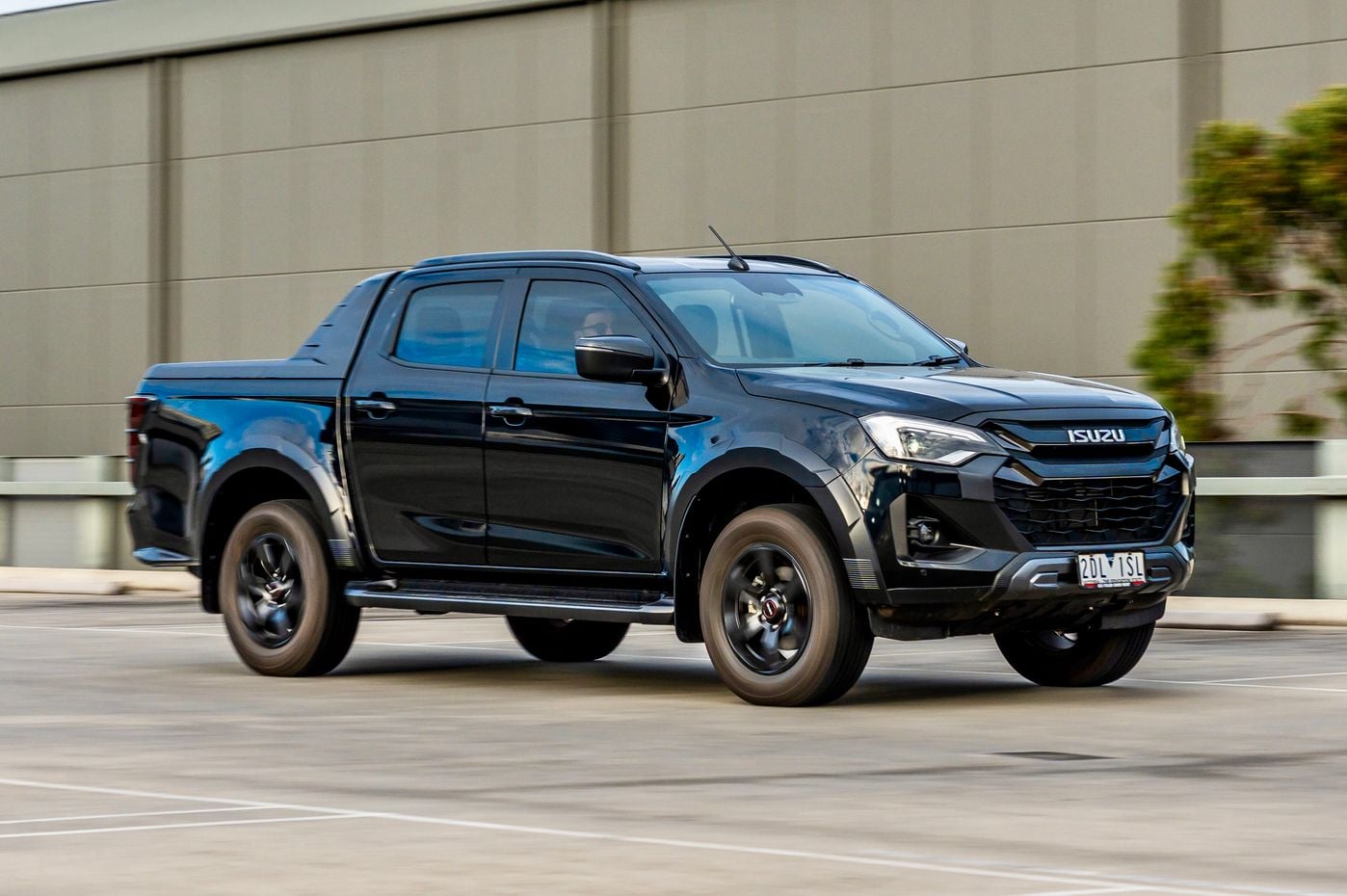
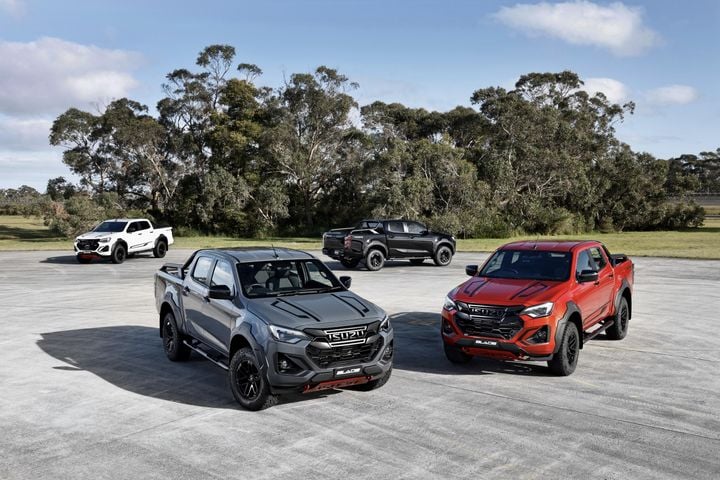
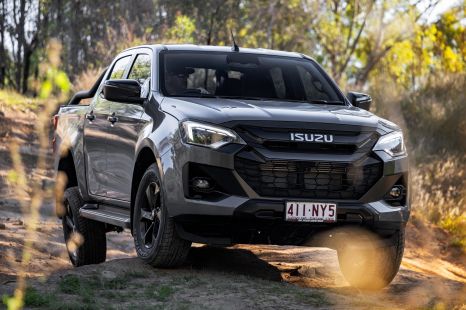
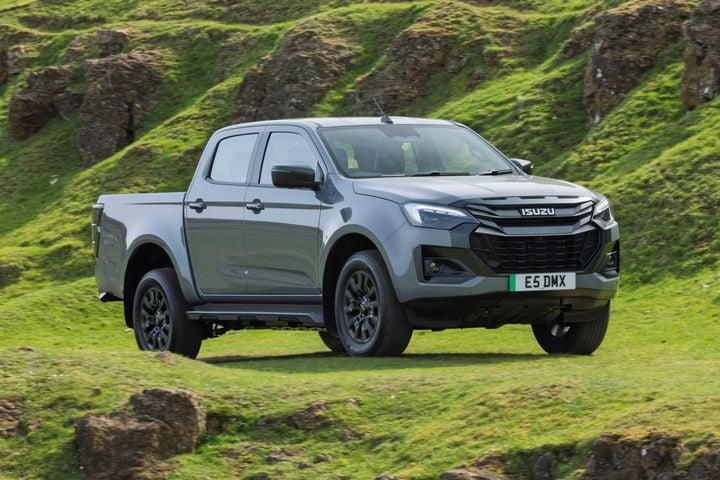
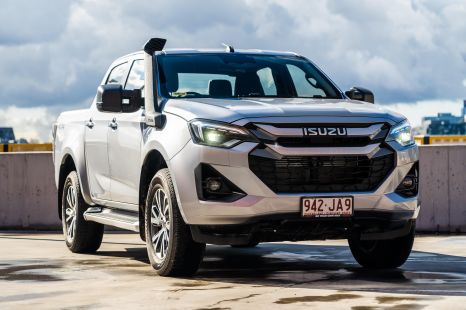
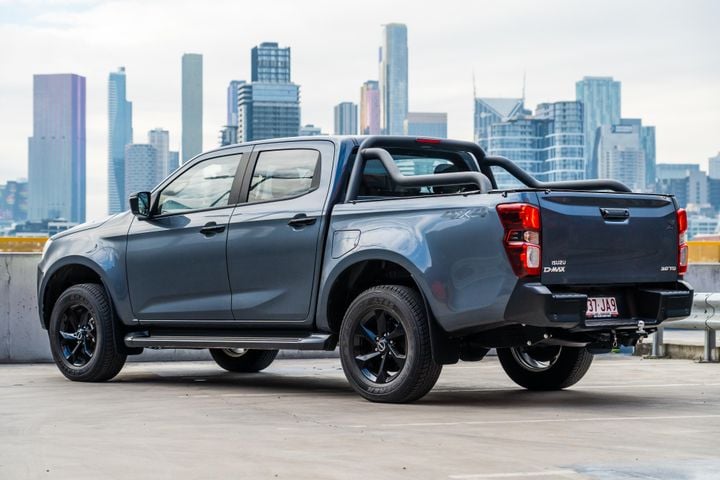
Four-wheel drive controls can seem confusing when you've just bought your first ute or SUV. In this beginner's guide, Paul Maric uses the Isuzu D-Max to demonstrate what happens when grip runs out, and how the right setting can make an obstacle much easier. This is an introduction to the basics, not a guide to advanced off-road driving.
Preparation comes before selecting a mode. We discuss suitable tyres, pressures, underbody protection, and carrying a compressor to reinflate tyres afterwards. Inspect the terrain before committing to it, and check the vehicle's manual for the correct recovery points. Never attach a recovery rope to the tow ball.
Our first demonstration puts a rear wheel in the air while the D-Max is in two-wheel drive. With an open rear differential, the raised wheel spins and progress stops. Traction control tries to manage the wheelspin, but switching it off doesn't solve the problem in this exercise.
Engaging the rear differential lock changes the outcome. The rear wheels must turn together, allowing the wheel with grip to help the ute crawl out. On this D-Max, the rear lock requires low range. Engagement procedures differ between vehicles, so consult the manual and select the appropriate settings before reaching the obstacle.
Next, a steep, uneven log climb shows the benefit of four-wheel drive high range. Where rear-wheel drive struggles, adding drive through the front axle lets the D-Max climb much more easily. These locked driveline settings need a loose surface: using them on high-grip bitumen can cause binding and damage as the vehicle turns. Don't assume every four-wheel drive system operates identically.
Low range is about control rather than speed. On our rocky climb, the lower gearing allows gradual throttle inputs and steady progress. A spotter is useful when tackling unfamiliar terrain, and rushing increases the risk of damage.
Coming downhill, we compare first-gear engine braking with hill descent control. The electronic system works, but lets the D-Max descend faster than Paul prefers in this demonstration. We favour the more deliberate pace achieved through gearing here, rather than presenting that preference as a verdict on every vehicle's system.
The takeaway is simple: understand your vehicle, prepare for the conditions, and choose a sensible line before you're stuck.