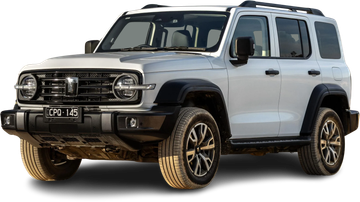
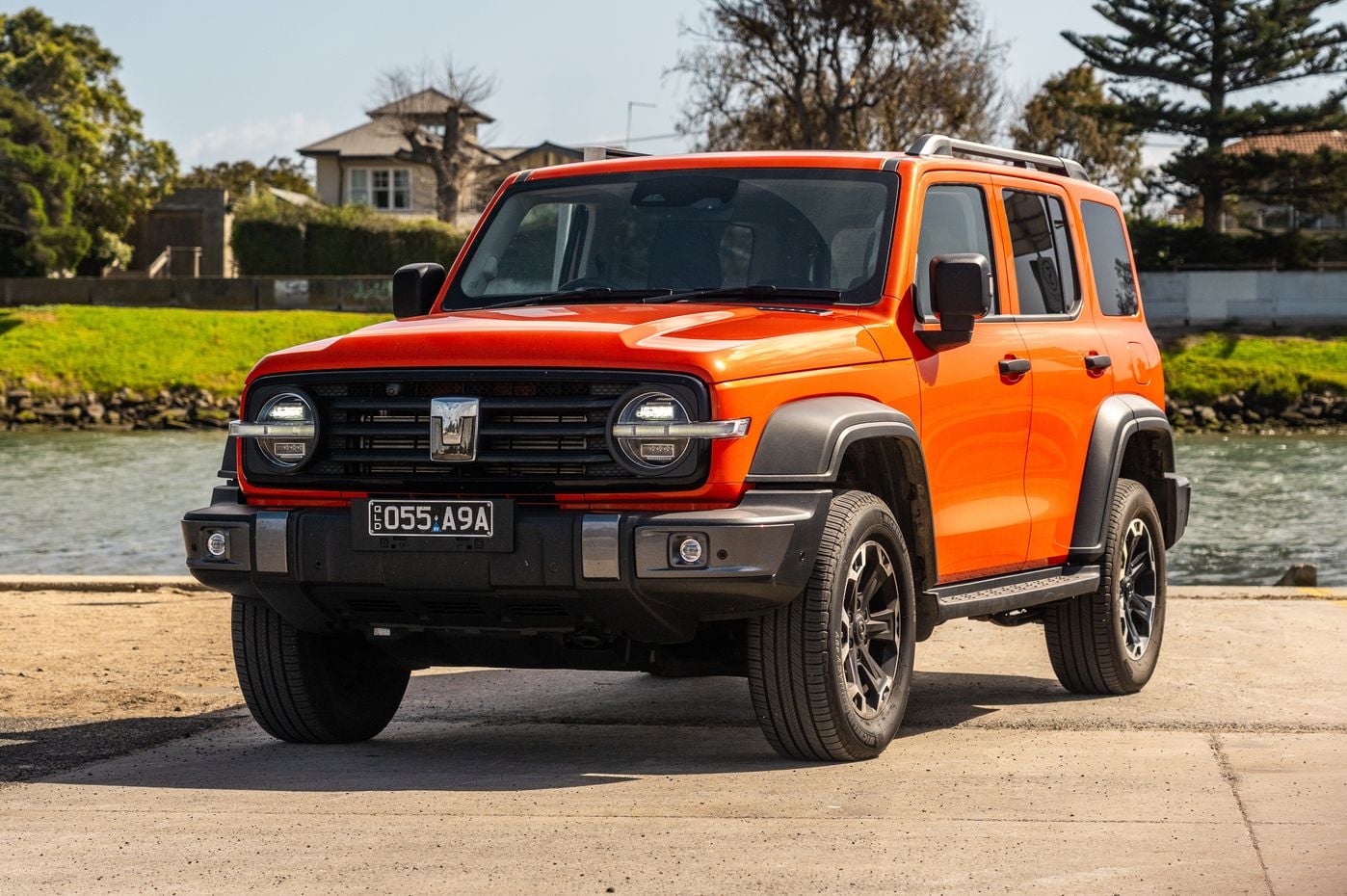
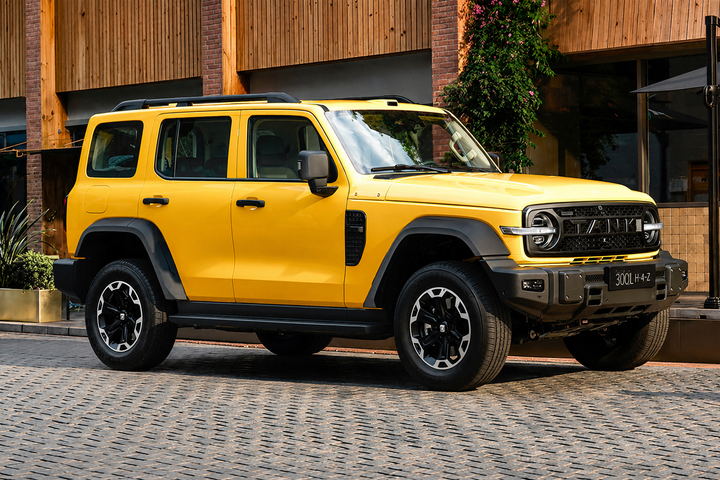
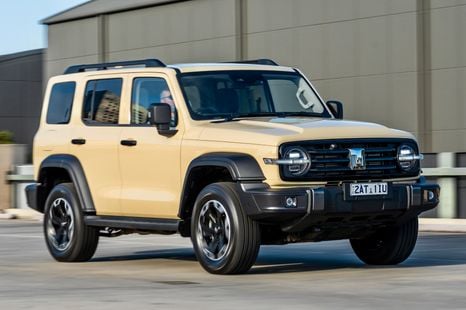
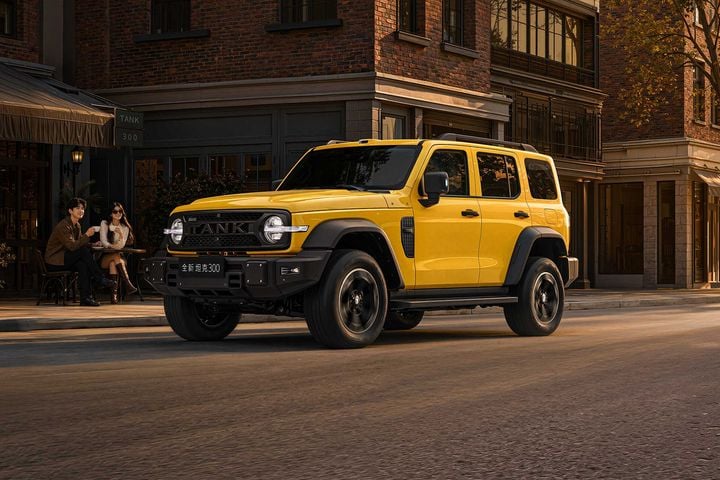
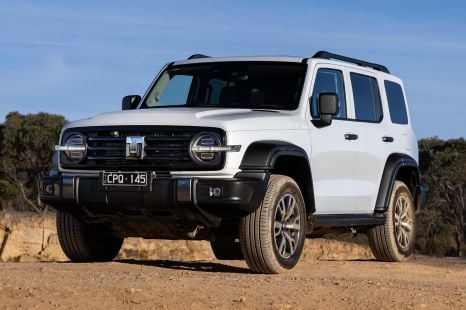
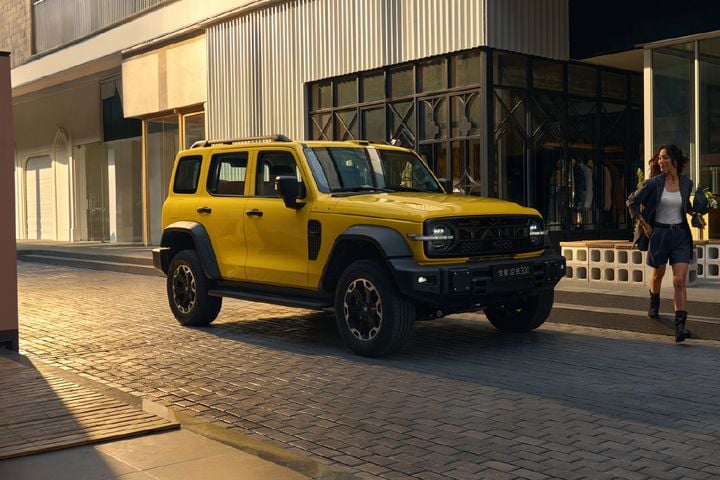
The GWM Tank 300 Hybrid promises more muscle without sacrificing the rugged appeal of the petrol version. In our test, it delivers the acceleration, but the case for spending extra is much less convincing. At filming, the Ultra hybrid cost just under $61,000 drive-away, a $10,000 premium over its non-hybrid equivalent.
There’s plenty to like inside. The cabin looks and feels more expensive than its price suggests, with twin 12.3-inch displays, smartphone mirroring, and massaging seats. Adults have useful space in the second row, although the roughly 400-litre boot isn’t especially generous. Its large side-hinged door also needs room behind the vehicle to open.
A 2.0-litre turbocharged petrol engine works with an electric motor and nine-speed automatic, delivering combined outputs of 258kW of power and 615Nm of torque. The initial shove is impressive: we record 0-100km/h in 7.38 seconds. The 80-120km/h run takes 6.77 seconds, showing how the urgency tapers as speed builds.
Battery charge matters, too. During our circuit driving, depleted charge leaves the petrol engine doing the heavy lifting and noticeably dulls performance. Indicated consumption of 12.5 litres per 100km is also well above GWM’s claim of just over 8.0L/100km. We wouldn’t buy this version expecting an easy fuel-saving payback.
The ride is generally comfortable, but can be busy at low speeds and floaty over repeated bumps. There’s plenty of body roll when pushed. Under hard braking, the hybrid feels more settled than the non-hybrid we previously tested, whose rear wheels lifted. Even so, our first 100-0km/h stop takes 44.43 metres; a second with Dynamic Stability Direction Control enabled takes 45.32 metres and doesn’t track straight.
Light off-roading is more encouraging. The hybrid clears our offset moguls and climbs confidently, with low range, front and rear differential locks, and crawl control providing useful assistance. However, overlapping brake and throttle inputs on rocks cuts torque delivery, reducing fine control compared with a conventional drivetrain.
Our verdict favours the regular Tank 300. The hybrid retains real off-road ability and adds a strong initial burst of speed, but that performance fades with battery charge. At the prices tested, we’d save the $10,000.