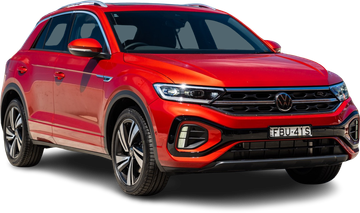
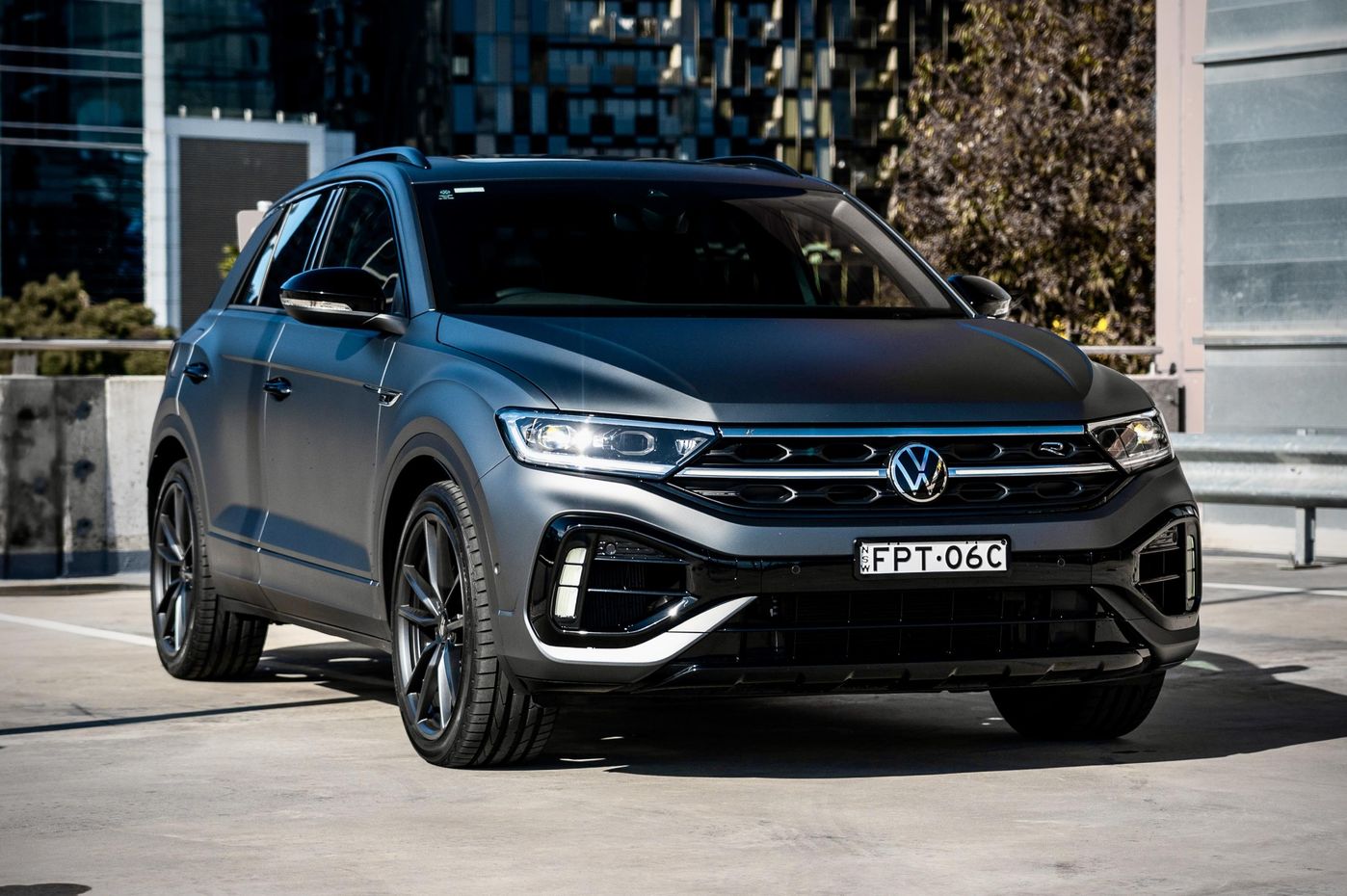
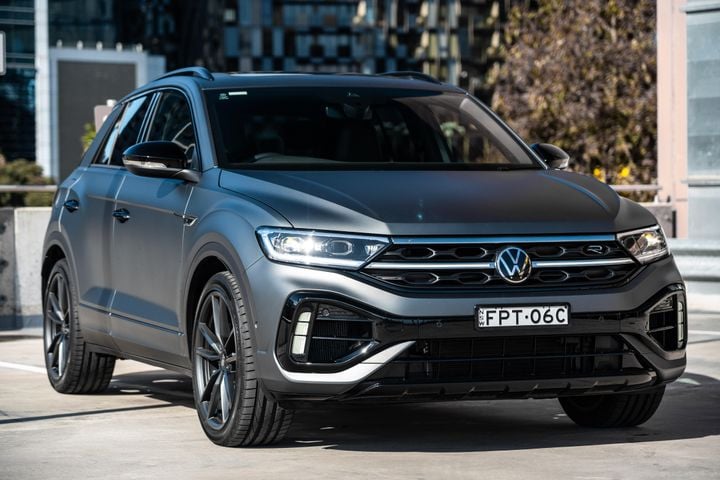
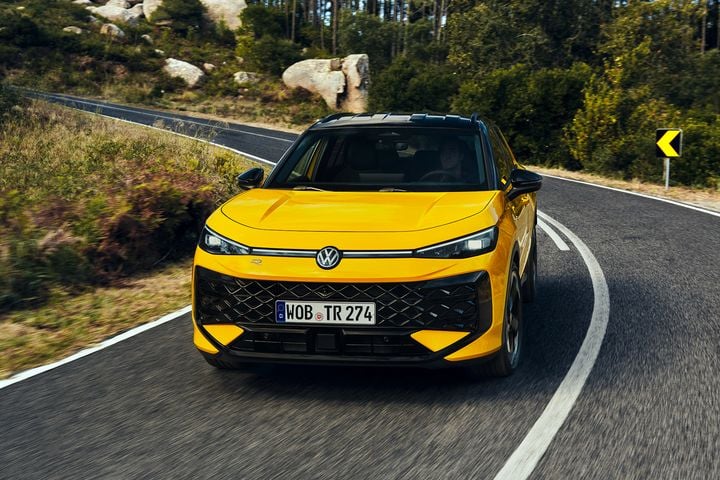
The updated Volkswagen T-Roc addresses one of our biggest complaints about the original: its hard dashboard. In this review of the 2023 R-Line, Paul Maric finds a more inviting cabin and an entertaining small SUV, though it still has compromises for family buyers.
At filming, the R-Line cost a little under $45,000, with the range starting below $40,000. It sits beneath the performance-focused T-Roc R, so the sporty badges shouldn’t be mistaken for the full performance model. Parts shortages were affecting specification at the time, making it important to check the equipment fitted to an individual car.
The softer dashboard makes a noticeable difference, and the cabin feels solidly assembled. An 8.0-inch touchscreen brings satellite navigation and wireless Apple CarPlay and Android Auto. Our car also has the optional Beats audio system and powered tailgate. Less welcome are the extensive glossy black trim, awkward touch-sensitive steering-wheel controls, and an unimpressive reversing-camera image.
Rear leg room is tight behind our driving position, even though head room and toe room are good. Rear air vents and USB-C ports help, but the hard rear-door trim feels less inviting than the front. The boot offers under 400 litres, expanding beyond 1200 litres with the rear seats folded.
The 2.0-litre turbocharged four-cylinder petrol engine delivers 140kW of power and 320Nm of torque through a seven-speed dual-clutch transmission and all-wheel drive. We find it smooth at low speed and punchy once it selects the right gear, although kickdown can hesitate. Our launch-control run records 0-100km/h in 7.3 seconds against a 7.2-second claim.
The adaptive dampers fitted to our car provide a comfortable urban ride and excellent control over the proving ground’s repeated undulations. Sport mode sharpens the experience, and the T-Roc feels more engaging through corners than expected. Coarse-chip road noise remains a weakness.
Our banked-circuit lane-support test triggers fault messages in the outer lane. Volkswagen explains that the angle falls outside the system’s intended operating conditions, so we don’t treat this as proof of failure in normal road use. Following that response, we stop using that section for Volkswagen lane-support testing.
The R-Line makes a strong impression as a compact, enjoyable SUV. Its improved cabin and suspension are highlights, but buyers needing generous rear-seat space should try it with their usual passengers before committing.