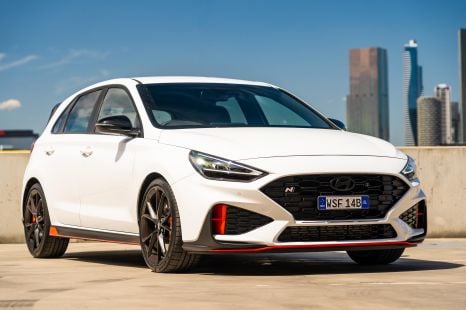
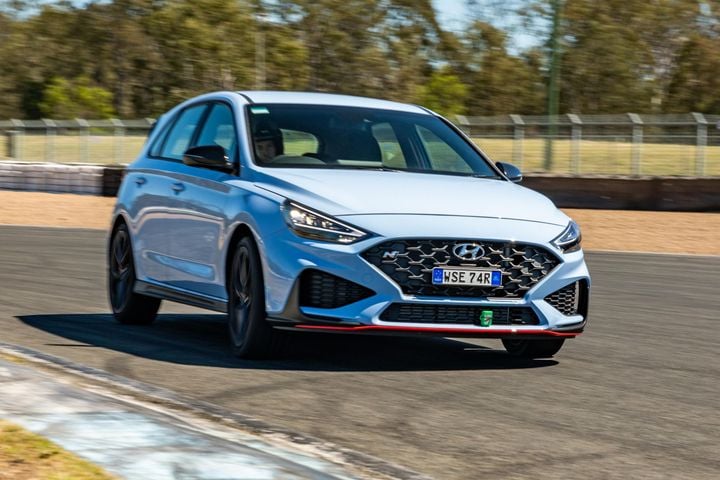
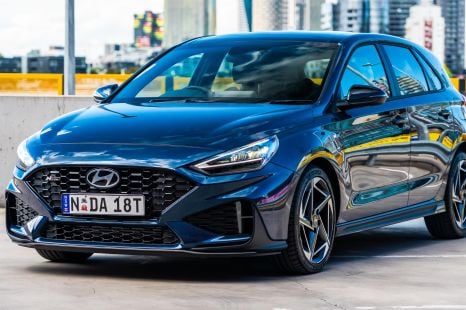
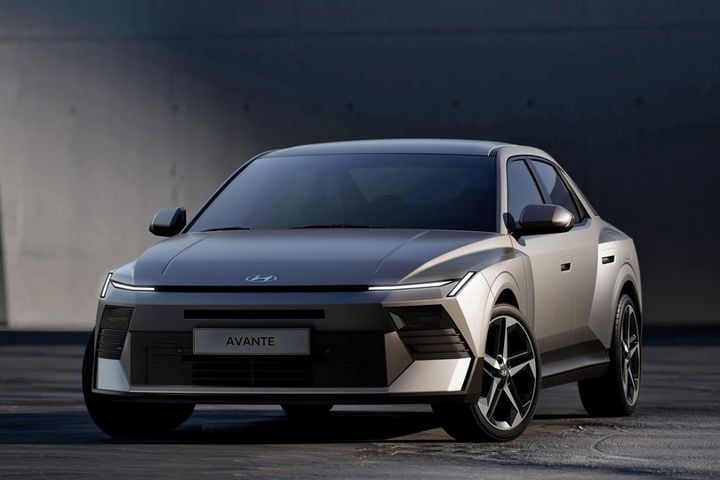
The Hyundai i30 N was preparing to add an automatic option when this preview was filmed in 2020. Footage sent to us by a follower in Sydney showed a camouflaged Fastback testing in Australia, giving us an early look at the dual-clutch version ahead of its expected local arrival in early 2021.
The automatic mattered because the manual i30 N already delivered plenty of hot-hatch character. Opening it up to buyers who wanted two pedals had obvious appeal, but we wanted the new gearbox to preserve the responsiveness and personality that made the existing car so enjoyable.
The test car wore larger exhaust outlets and a different wheel design, with camouflage concealing the broader styling update. Our preview also explored the expected design changes, rather than presenting the disguised vehicle as the final Australian showroom specification.
Its exhaust sound was a major talking point. The drive-by footage lacked the cracks and pops heard from the Australian manual Fastback in our comparison. At the time, we believed the prototype was European specification with a petrol particulate filter. That was an explanation for the difference, not confirmation of how the Australian production automatic would sound.
The key mechanical change was an eight-speed wet-clutch dual-clutch transmission. Unlike a dry-clutch arrangement, its clutches operate in oil to help manage heat and lubrication. We explained why that approach held promise for smoother low-speed behaviour and a performance application, without claiming to have driven or validated the new gearbox ourselves.
Hyundai also outlined several performance functions. N Grin Shift provided a short overboost period, N Power Shift was intended to maintain torque delivery during hard acceleration, and N Track Sense Shift adjusted gear selection and shift timing for enthusiastic driving. These were features described ahead of our own assessment, not measured results from this sighting.
Our enthusiasm came with a clear condition: the automatic needed to be more than a convenient addition. It had to retain the manual car’s sense of fun, including its sound and response. This early look raised expectations, while leaving the final judgement until we could drive the finished car.