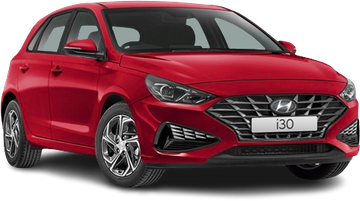
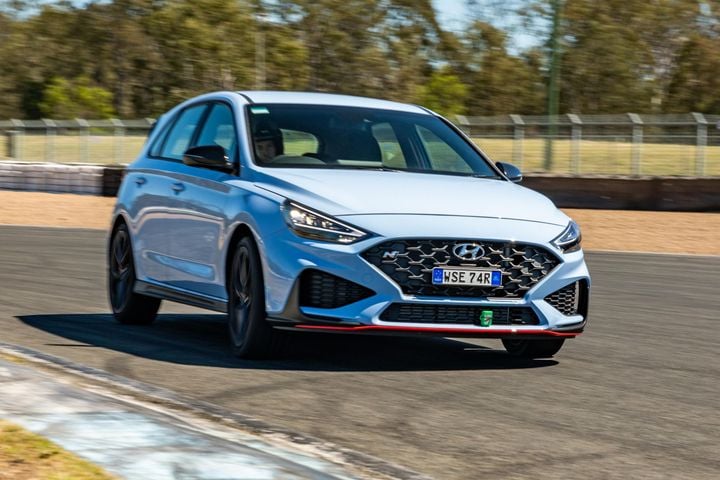
Our first test of the Hyundai i30 N Sedan prompted plenty of comments about octane learning. We went back with another example to find out whether following the activation procedure would actually improve its performance, rather than simply make it feel faster.
This is a back-to-back test on the same day, using 98 RON premium unleaded. The temperature is 29 degrees, so comparing directly with our earlier review would be misleading. Heat affects performance, and our baseline run is slower than the best time we recorded during that previous outing.
We start with the settings that worked best last time: launch control at 3000rpm, electronic stability control switched off, and our chosen N Custom configuration. Before attempting the learning procedure, the turbo boost gauge shows around 14-15psi. We record 0-100km/h in 6.16 seconds and 80-120km/h in 3.79 seconds.
Next, we head to the banked circuit at our test facility. The procedure described in the video calls for holding eighth gear for at least five minutes within a specified speed range. We settle at around 120km/h and continue for six minutes before returning to the acceleration area. This is controlled-track testing, not a procedure we demonstrate on public roads.
There’s no dashboard confirmation that learning has completed, so the next runs provide the evidence. With the same launch-control setting, the car feels noticeably stronger once moving, although there’s also more wheelspin off the line. The gauge now reaches 18psi, and the first attempt delivers 0-100km/h in 5.88 seconds and 80-120km/h in 3.38 seconds.
A second attempt improves those results to 5.66 seconds and 3.31 seconds respectively. That’s a clear change from our same-day baseline, backed by both the acceleration measurements and the higher indicated boost pressure.
Our takeaway is straightforward: octane learning makes a meaningful difference in this i30 N Sedan test. The extra shove is obvious behind the wheel, but the figures are the more useful result. We haven’t established whether other Hyundai N models respond in the same way.