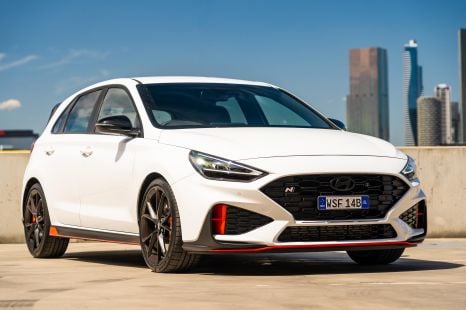
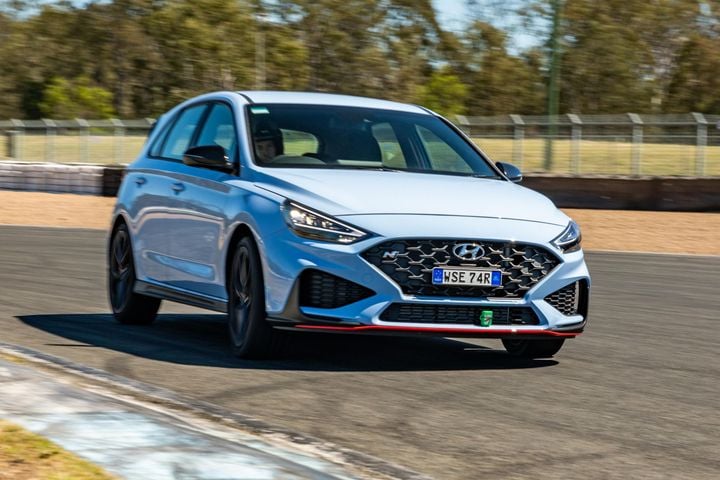
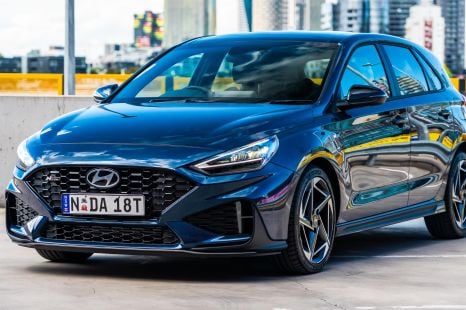
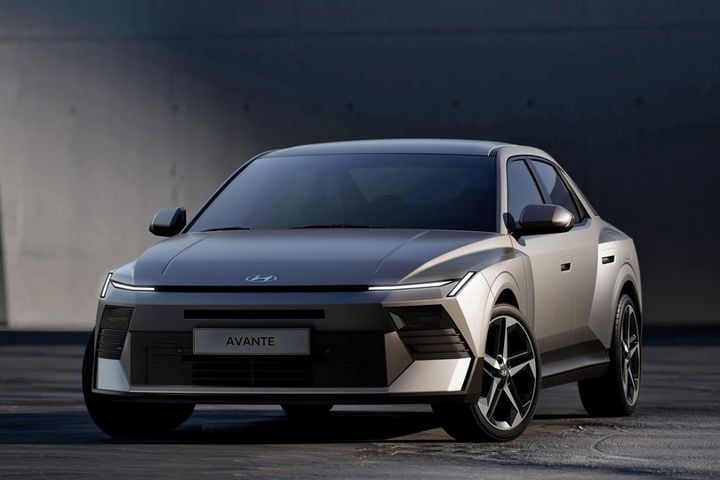
The Hyundai i30 N finally offers an automatic, and the good news is it hasn’t left its personality behind. We test the facelifted Premium with an eight-speed dual-clutch transmission, quoted at $52,000 when filmed, to see whether it keeps the manual’s appeal while becoming easier to live with.
The 2.0-litre turbocharged petrol engine produces 206kW of power and 392Nm of torque, driving the front wheels. More importantly, the new transmission works convincingly: shifts are quick, standing starts are well managed, and reversing uphill doesn’t expose the frustrating behaviour some dual-clutch gearboxes can display.
The exhaust still delivers the cracks and pops that make the i30 N such an entertainer. Strong mid-range acceleration, communicative steering, and confident brake-pedal feel add to the enjoyment. An electronically controlled limited-slip differential helps the front tyres deploy the engine’s output when accelerating from corners.
Conditions during our drive are wet, so traction is limited and the car initially understeers before the tyres warm. It can also rotate on a sudden throttle lift in the more permissive driving setting. Those lively responses reward attention rather than making this a hot hatch to drive carelessly.
Hyundai quotes 0-100km/h in 5.9 seconds, but our soaked-road launch demonstration isn’t a meaningful verification of that claim. We use a stopwatch rather than our GPS equipment, and a proper performance assessment needs dry conditions.
The Australian suspension tune handles uneven roads well in Normal mode, although the ride remains firm. N mode is much harsher; a custom setup lets you keep the exhaust theatrics without the stiffest suspension. Tyre roar on coarse-chip roads is another compromise for longer trips.
Inside, the supportive seats and performance controls lift an otherwise ageing, dark cabin. The 10.25-inch touchscreen offers extensive driving-mode customisation, but Apple CarPlay and Android Auto need a cable. Rear passengers miss out on air vents and USB ports, while the visible rear brace obstructs bulky loads when the seats are folded.
The displayed 11.2 litres per 100km includes other team members’ driving, highway use, and performance testing, so it isn’t a clean everyday economy result. Despite those compromises, the automatic is a real success: it makes the i30 N more accessible without removing the sound and engagement that define it.