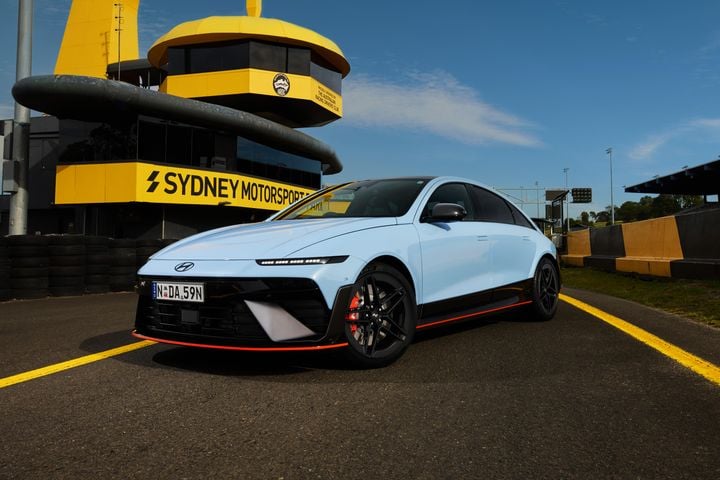
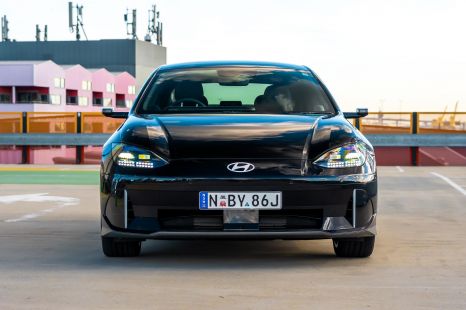
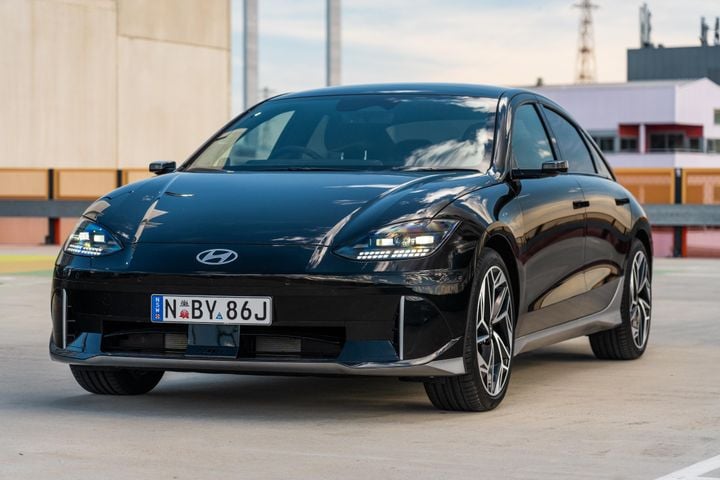
The Hyundai RN22e shows electric performance can be about more than straight-line speed. In this 2022 first drive, we sample Hyundai’s experimental performance technology and find a car with a genuinely playful character, rather than another EV relying solely on a big acceleration hit.
At the time, the RN22e offered a glimpse of the direction Hyundai was taking with the Ioniq 5 N and potentially an Ioniq 6 N. This is a development showcase, not a verdict on either finished production model. The static display car we walk around is also separate from the running vehicle we drive.
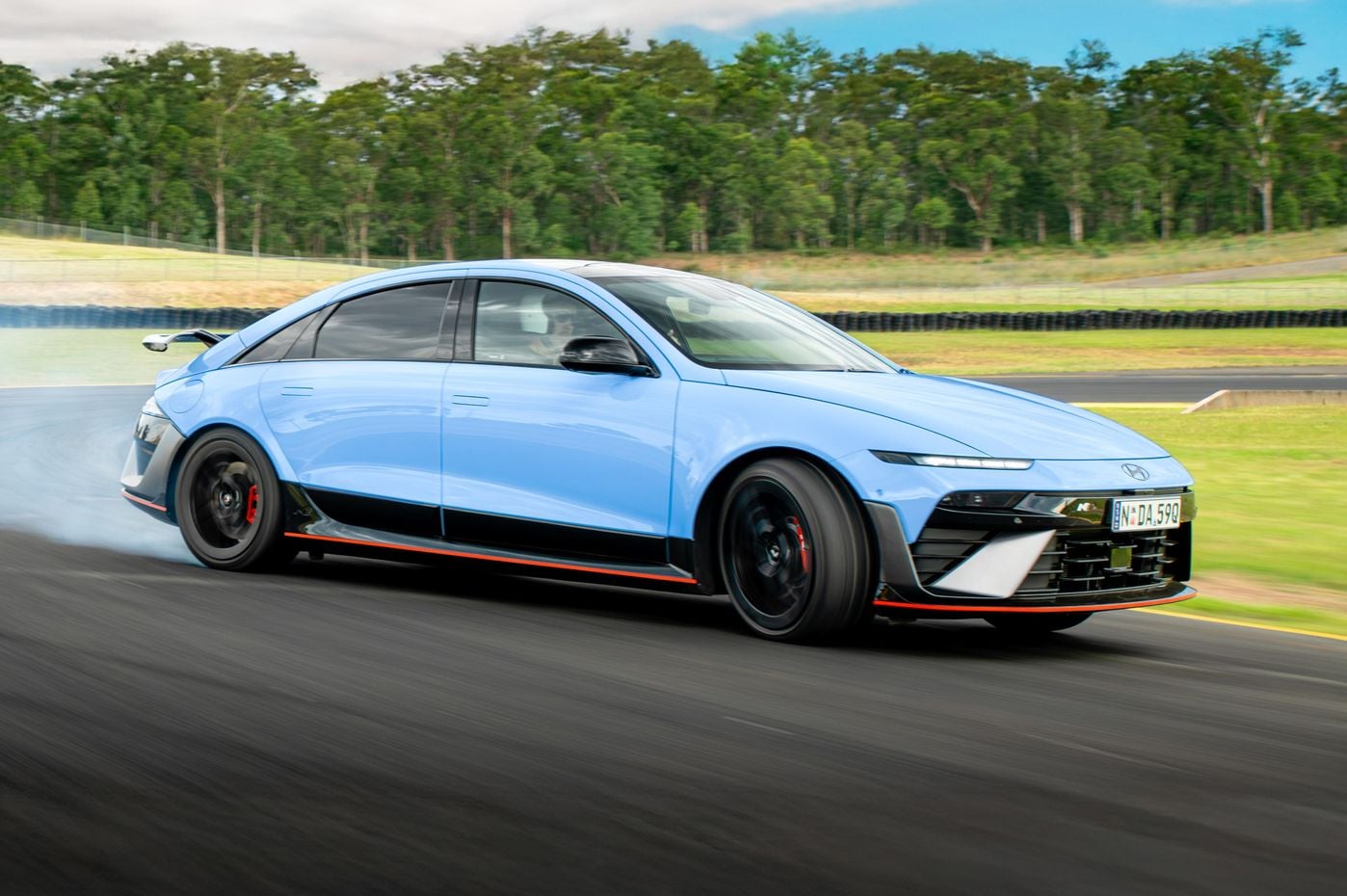
The Ioniq 6-based shape gains substantial cooling openings, a huge rear wing, and a prominent diffuser. Cooling features extend along the body because there are electric motors at both axles, with hardware at the rear needing attention as well as equipment at the front.
The stated powertrain combines a 160kW front motor and a 270kW rear motor for 430kW of power and 740Nm of torque. A 77.4kWh battery sits within the E-GMP platform, with 800V electrical architecture, fast DC charging capability, and vehicle-to-load functionality.
The more intriguing hardware is the twin-clutch arrangement at the rear. It allows torque to be managed across that axle, supporting torque vectoring and the promised drift functionality. That physical system is distinct from the simulated gear changes, which use software and feedback to make the single-speed drivetrain feel more like a conventional performance car.
Behind the wheel, acceleration is properly forceful, but the cornering character makes the bigger impression. Even in the normal driving mode, it feels lively and eager to play. Lift-off behaviour adds another layer of involvement we don’t always find in electric cars.
The paddle-operated simulated shifts initially seem an odd idea. In practice, the sounds and pulses as we work through the virtual gears give the experience an entertaining rhythm. It’s unusual, but we come away enjoying it.
This short drive leaves us keen to see how much of that character reaches the showroom. Hyundai’s experiment makes a strong case for developing driver involvement alongside outright speed, rather than treating the move to electric power as the end of performance-car personality.