




Damion Smy
2027 Toyota RAV4 Cruiser review
Is a 'premium' RAV4 a contradiction or can Toyota's humble mid-size SUV pull off an unlikely double act? We drive the luxed-up Cruiser to find out.
2 Hours Ago
Is a 'premium' RAV4 a contradiction or can Toyota's humble mid-size SUV pull off an unlikely double act? We drive the luxed-up Cruiser to find out.
Deputy News Editor
Deputy News Editor
Deputy News Editor
Deputy News Editor
If this is the car for you, we’ll compare offers from trusted dealers, handle the back and forth and manage your purchase from enquiry to delivery.
The Toyota RAV4 could be the Big Mac of SUVs. A legend. World-renowned. It's been Australia's most popular SUV since it debuted in 1994, racking up more than half a million sales here (and more than 14 million globally) over the past 32 years.
Meanwhile, Toyota has been the local market leader for 23 years and the world's biggest automaker for the past six years, arguably making it the auto equivalent of McDonald’s – the prolific, dominant brand you can depend upon whether it’s midday or 4:00am.
Sure, Maccas sells fancy burgers too – your Angus thingamajig and your Wagyu what-have-you – but they’re still just a beef patty and a few other things slapped between buns, and they typically cost significantly more.
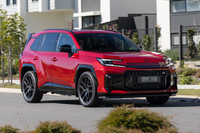
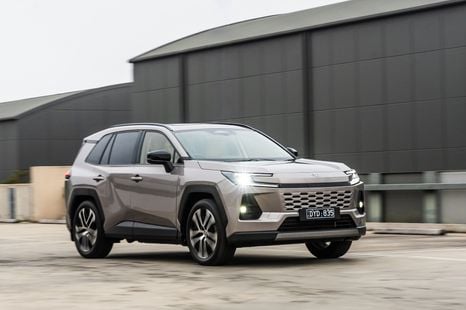
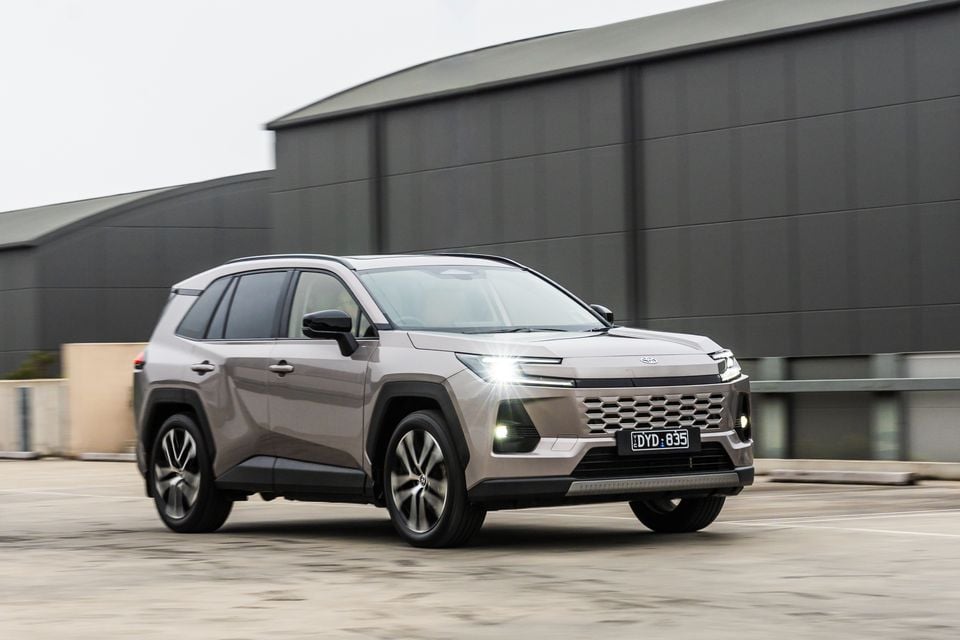
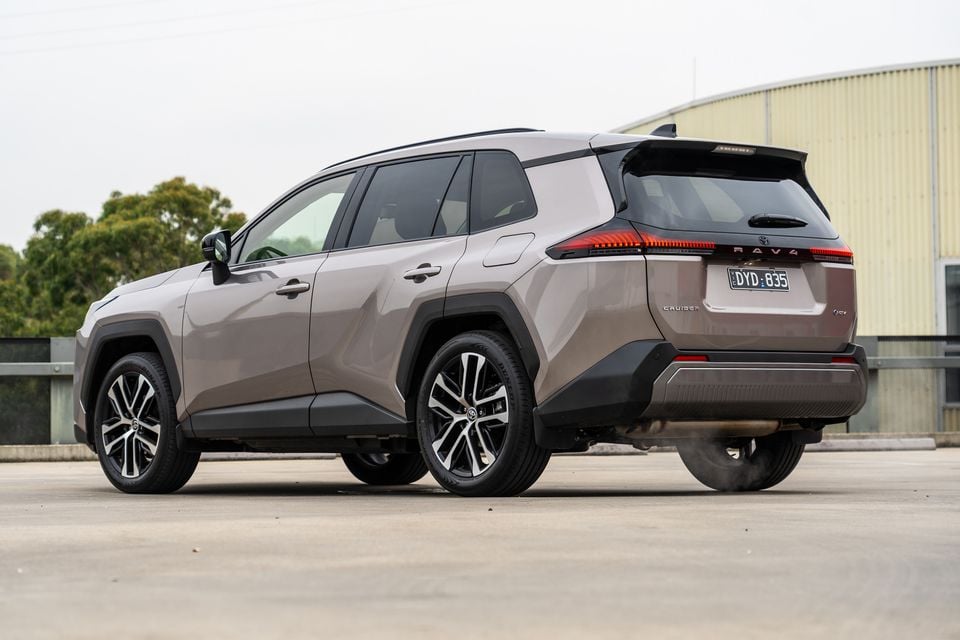
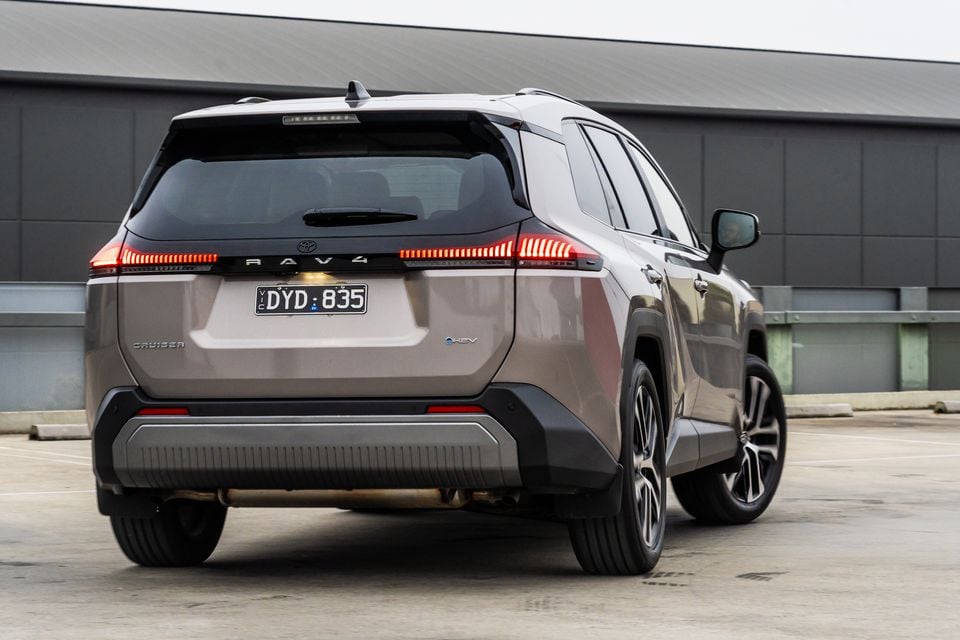
They're also the fast food equivalent of the RAV4 Cruiser, the top-spec plugless hybrid (HEV) version of the uber-popular mid-size SUV with specific upgrades including bigger wheels and leather trim – and a higher price.
It has the same 2.5-litre four-cylinder petrol-electric powertrain with an identical 143kW output to the cheapest RAV4 GX 2WD grade, so is it worth paying a price premium for, given it comes with the same meat in the middle?
And is a high-end version of the RAV4 too much to swallow, like a ‘premium’ late-night kebab, a classy goon bag, or an upmarket polyester suit? The finest, or Coles Finest? We take the RAV4 Cruiser 2WD out of its comfort zone to find out.
The Cruiser HEV sits below the flagship GR Sport plug-in hybrid (PHEV) in the six-grade RAV4 lineup, priced at a cool $56,990 before on-road costs (ORCs).
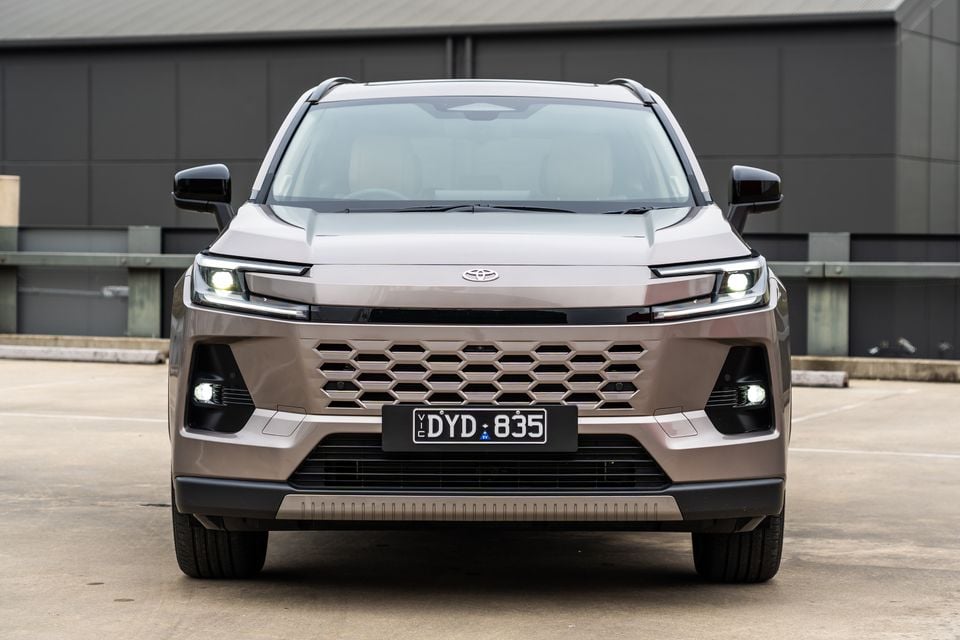
That gets you a 2.5-litre hybrid powertrain and front-wheel drive (2WD), with the ‘E-Four’ all-wheel drive (AWD) version costing another $3350, at $60,340 plus ORCs.
Our test car is finished in Dusty Bronze paint, an extra $675, and the beige leather-trimmed cabin costs the same as the standard black leather, bringing the official price to $57,665 plus ORCs.
It’s worth noting the same powertrain, with an identical combined output of 143kW and 221Nm from its petrol engine, as well as the same passenger and luggage space, can be had in the entry-level front-drive RAV4 GX for $45,990 plus ORCs, and in the RAV4 GX AWD for $49,340 plus ORCs.
There’s an $11,000 step up from the GX 2WD to the Cruiser 2WD, with the $55,340 Edge AWD variant positioned in between.
Beyond Toyota, non-plug-in hybrid rivals include the Nissan X-Trail e-Power Ti with AWD at $54,580 plus ORCs, and the Honda CR-V e:HEV L at $53,900 drive-away.
Worth a look, too, is the Kia Sportage GT-Line HEV at $57,370 plus ORCs, while there’s also the Hyundai Tucson Premium AWD Hybrid at $58,350 plus ORCs to consider.
Toyota RAV4 HEV
| Model | Price before on-road costs |
|---|---|
| 2027 Toyota RAV4 GX FWD | $45,990 |
| 2027 Toyota RAV4 GX AWD | $49,340 |
| 2027 Toyota RAV4 GXL FWD | $48,990 |
| 2027 Toyota RAV4 GXL AWD | $52,340 |
| 2027 Toyota RAV4 Edge AWD | $55,340 |
| 2027 Toyota RAV4 XSE AWD | $58,340 |
| 2027 Toyota RAV4 Cruiser FWD | $56,990 |
| 2027 Toyota RAV4 Cruiser AWD | $60,340 |
Toyota RAV4 PHEV
| Model | Price before on-road costs |
|---|---|
| 2027 Toyota RAV4 XSE FWD | $58,840 |
| 2027 Toyota RAV4 XSE AWD | $63,340 |
| 2027 Toyota RAV4 GR Sport AWD | $66,340 |
To see how the Toyota RAV4 Cruiser lines up against the competition, check out our comparison tool
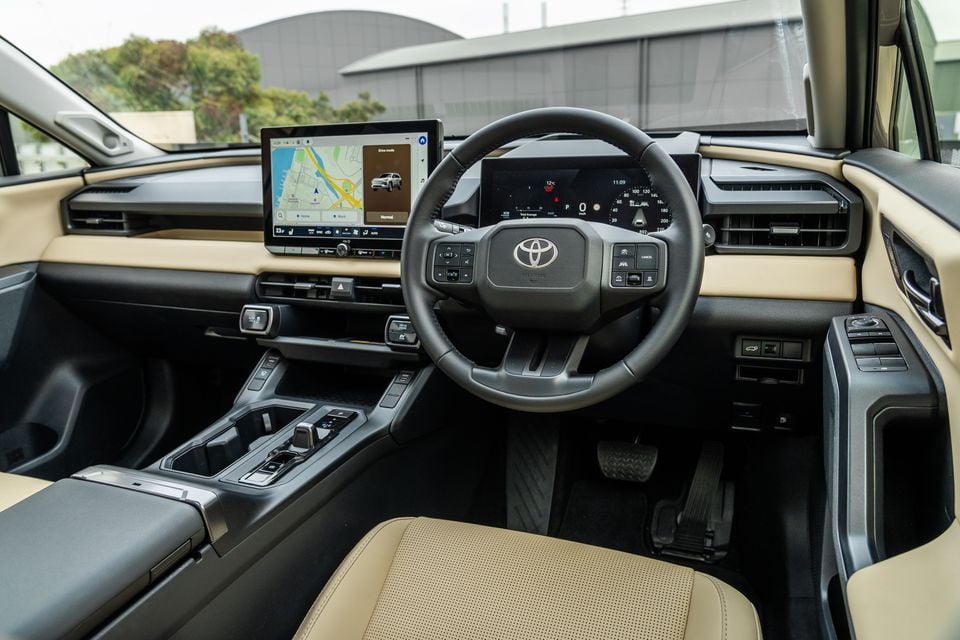
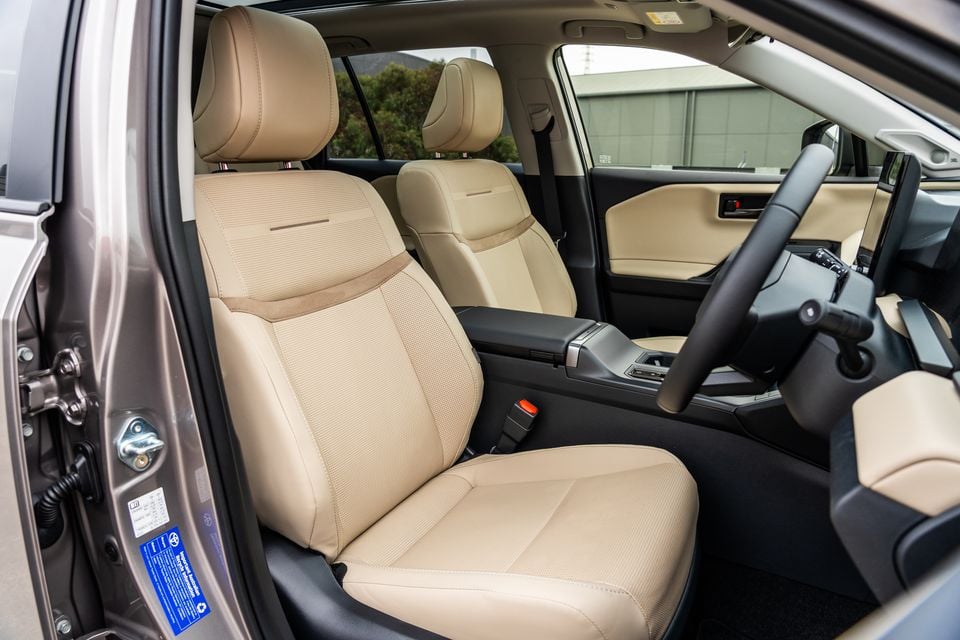
The Cruiser’s cabin is a smooth blend of elegance and Toyota sturdiness, with our test car’s warm beige leather-accented upholstery being a welcome respite from the bitter Melbourne winter.
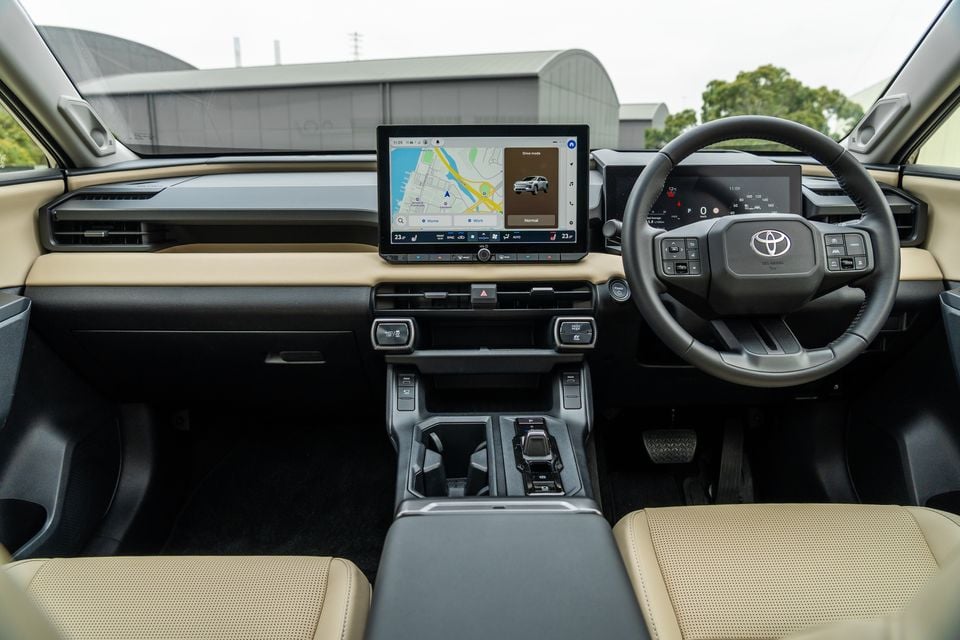
So too are the heated front seats – more than enough to toast your buns – and heated steering wheel, which form part of its added standard equipment. The seats are supportive yet comfortable, and there’s plenty of hip and legroom, even if there’s not loads of headroom in the driver’s seat.
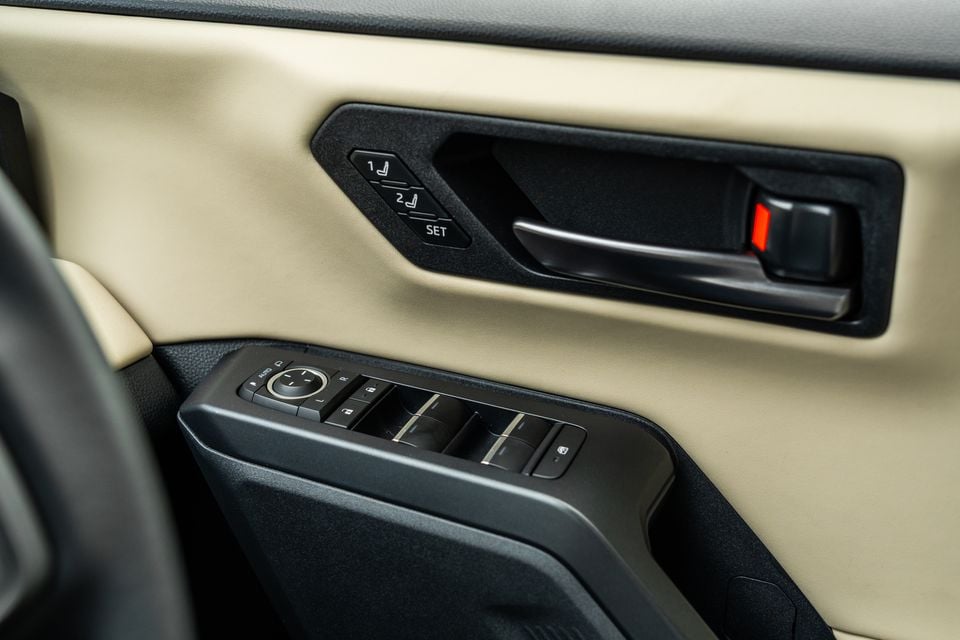
The front seats are power-adjustable, and the upholstery isn’t swathes of smooth, synthetic stuff – instead, there are perforated cushions, piping and detailing that reveal a well thought-out design instead of default spec-box ticking.
The same goes for the doors and dash: the cake-like, layered beige-grey-beige-grey steps once again show deliberate design decisions, adding a thoroughness and authenticity to the upmarket push.
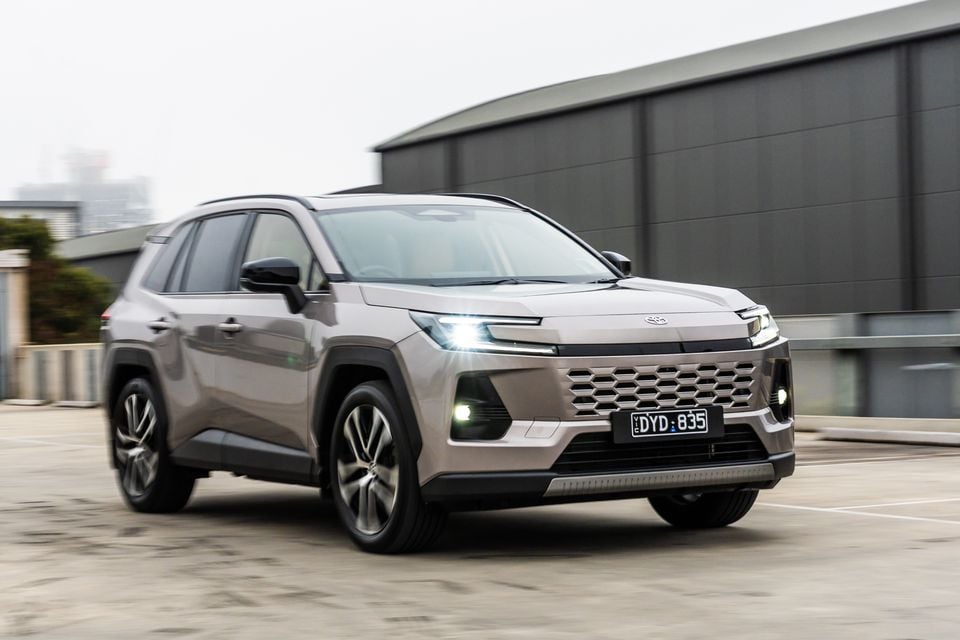
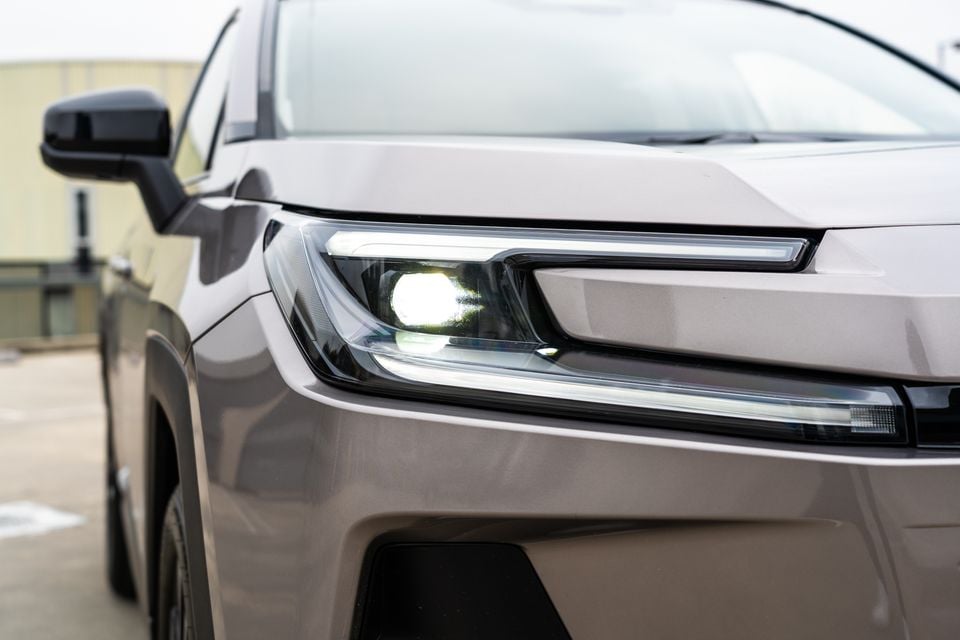
From the driver’s seat, the chunky, square steering wheel boss with its rounded-off edges complements the two turret-like raised bonnet sections flowing from the LED headlights, adding character and giving an impression of ruggedness.
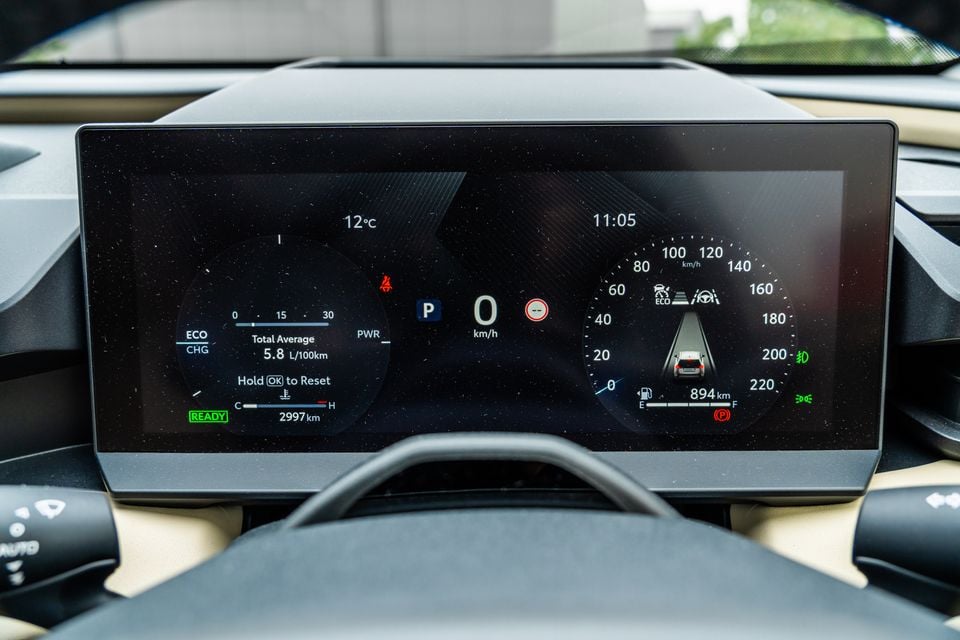
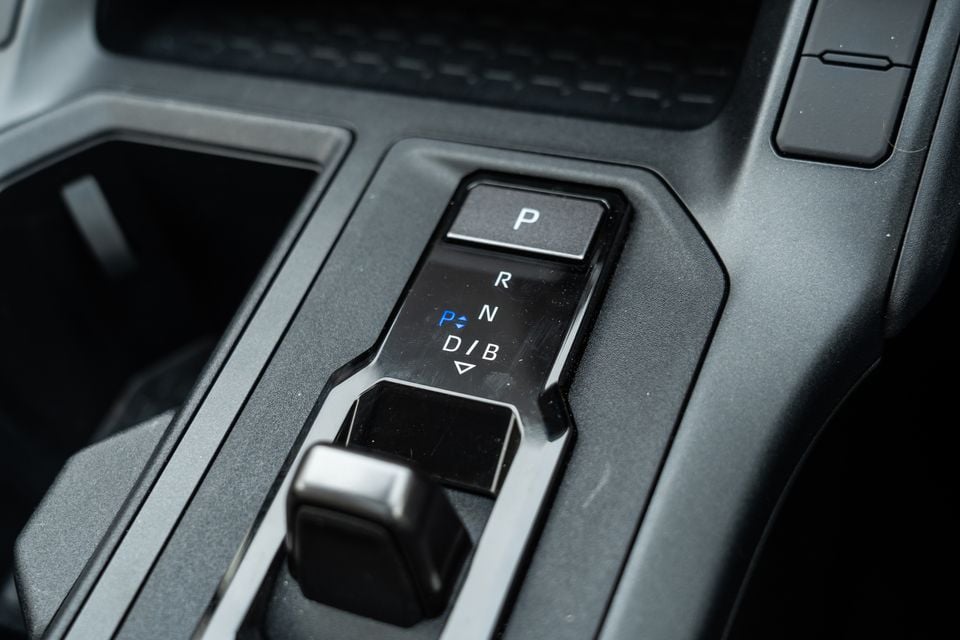
The head-up display is crisp, and the centre console offers two wireless phone charging spaces, a stubby gear selector, and a dual-opening centre bin.
The rattly, plasticky sound of the double-hinged console lid, which cleverly opens towards either the driver or passenger, or can be completely removed, is a rare area of sloppy cheapness, with the rest of the cabin materials being well-finished, smart, and solid.
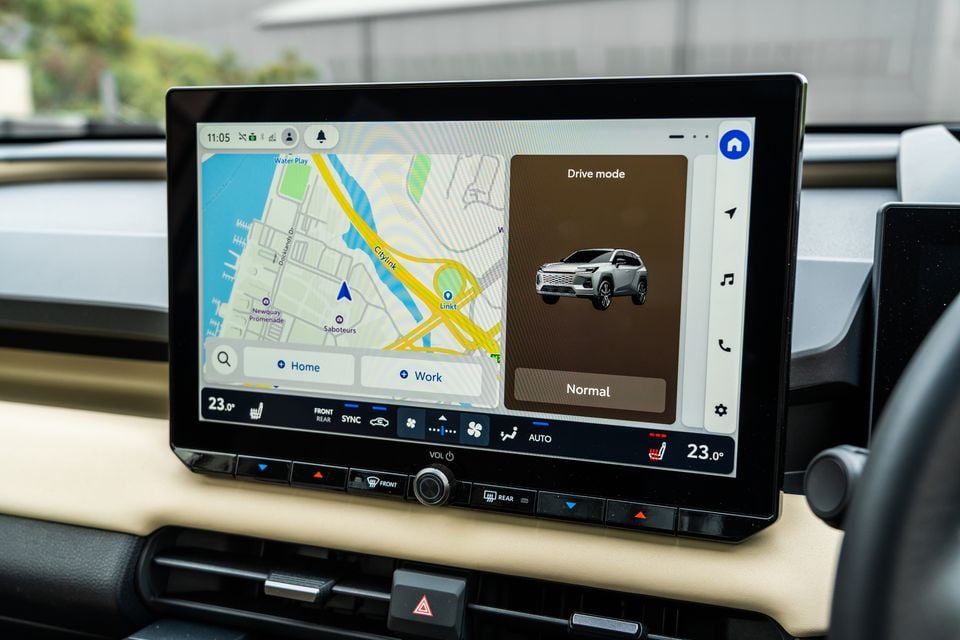
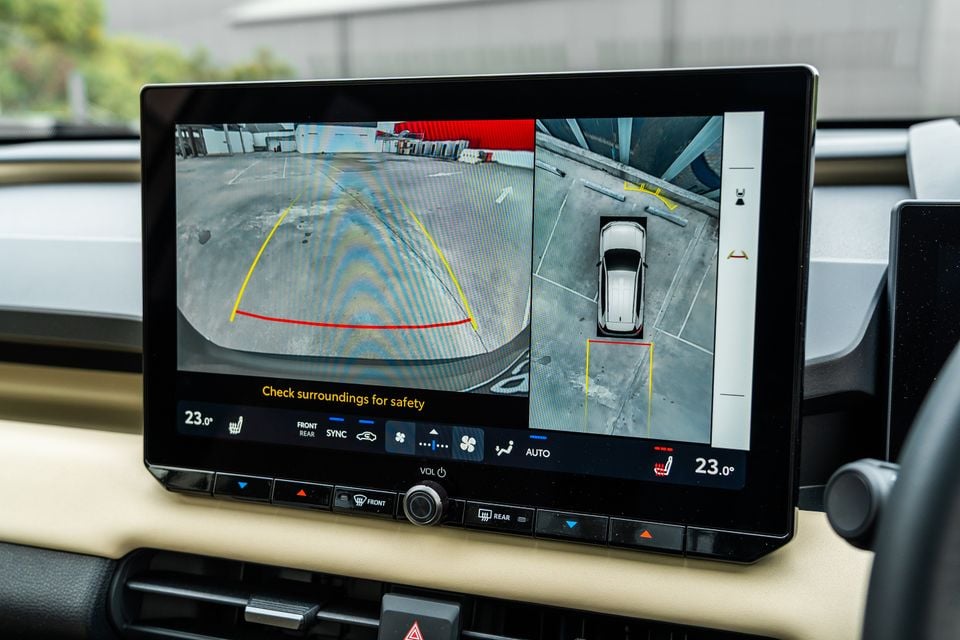
The central infortainment touchscreen has sharp graphics and a row of physical buttons below it for key functions, including a convenient central volume knob, which is not only easy to reach but also means the same layout can be used in left- and right-hand drive vehicles.
While there aren’t physical air-con buttons, the controls are in a fixed graphic along the bottom of the responsive touchscreen, making them more readily accessible being buried within the virtual menu.
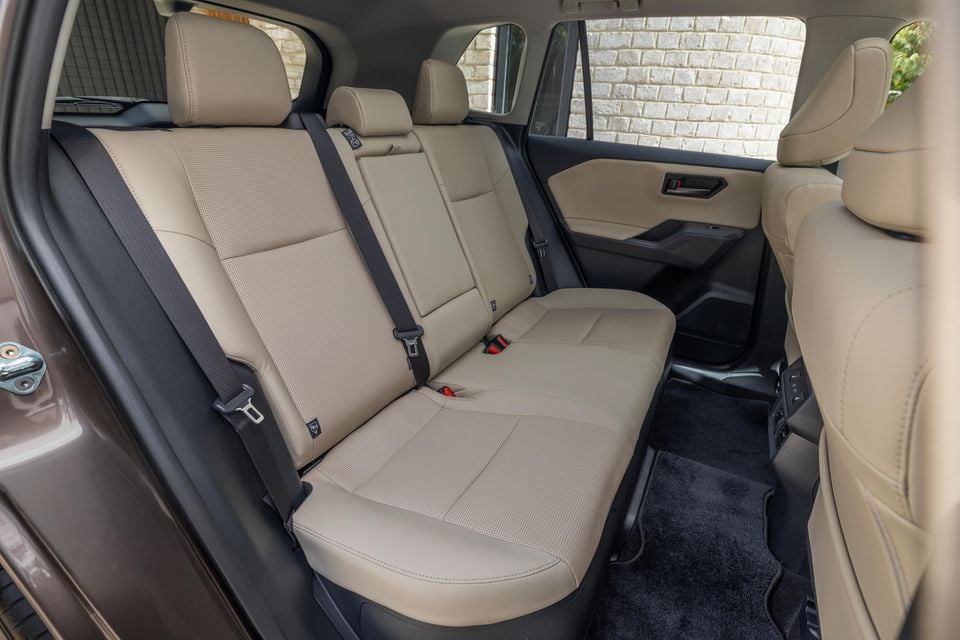
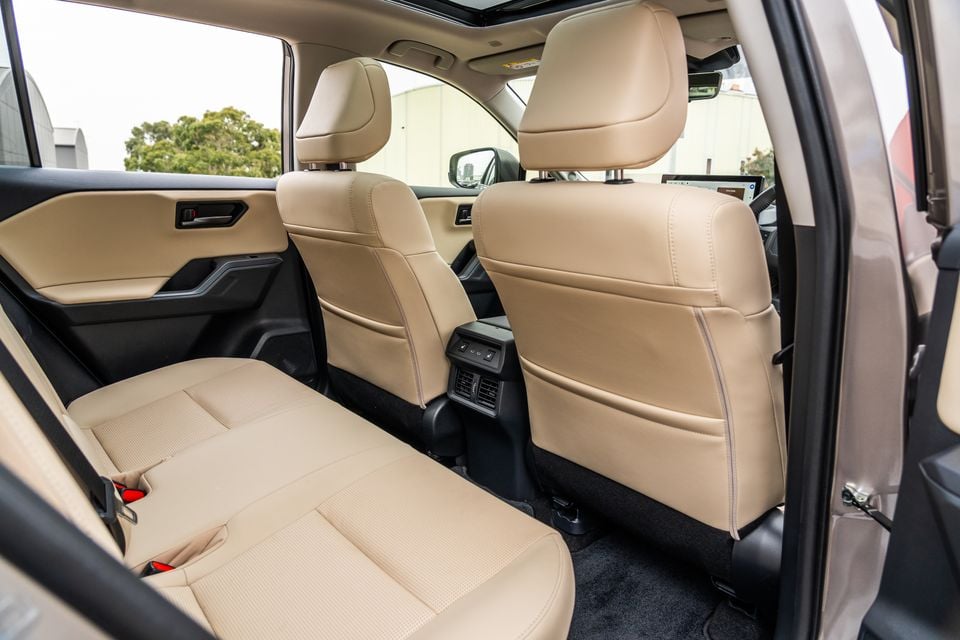
Looking rearward, the standard tilt-and-slide panoramic moonroof stretches over the second row, where there’s more leather-accented upholstery and loads of legroom and headroom.
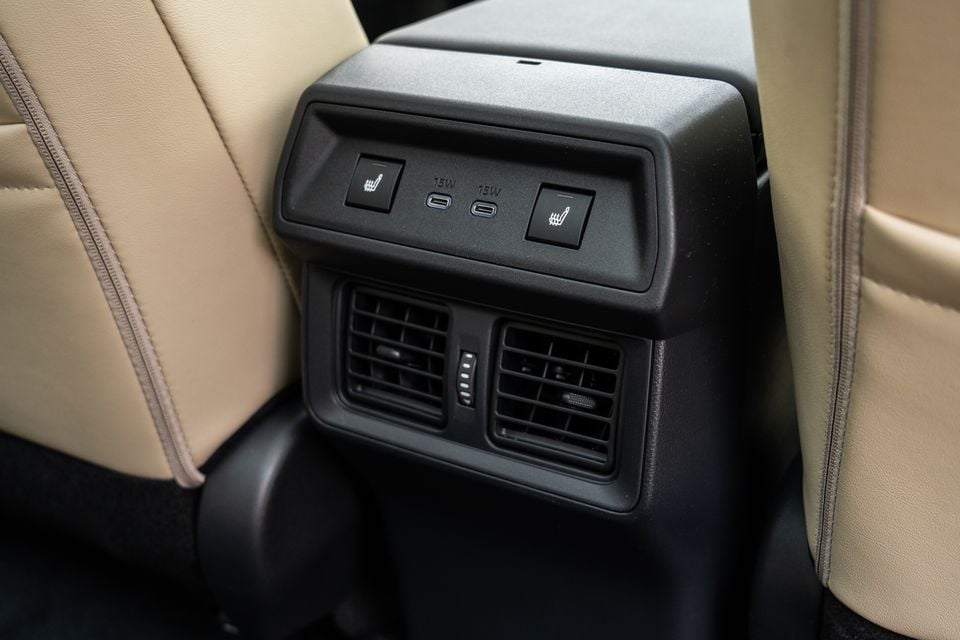
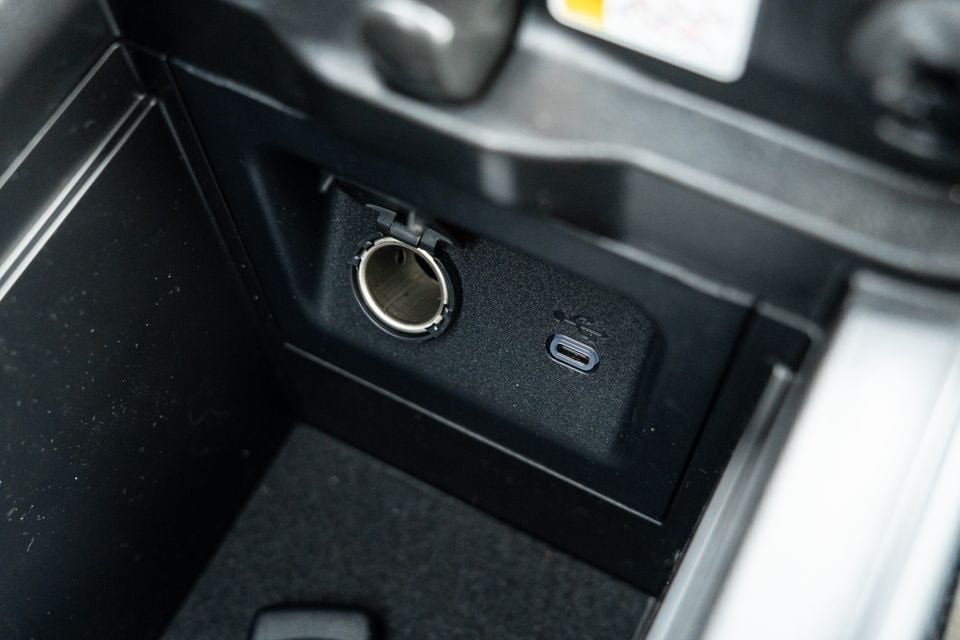
The rear seats are heated, too, and there's a pair of air vents in the back of the centre console to feed air to the rear passengers, plus two USB-C ports.
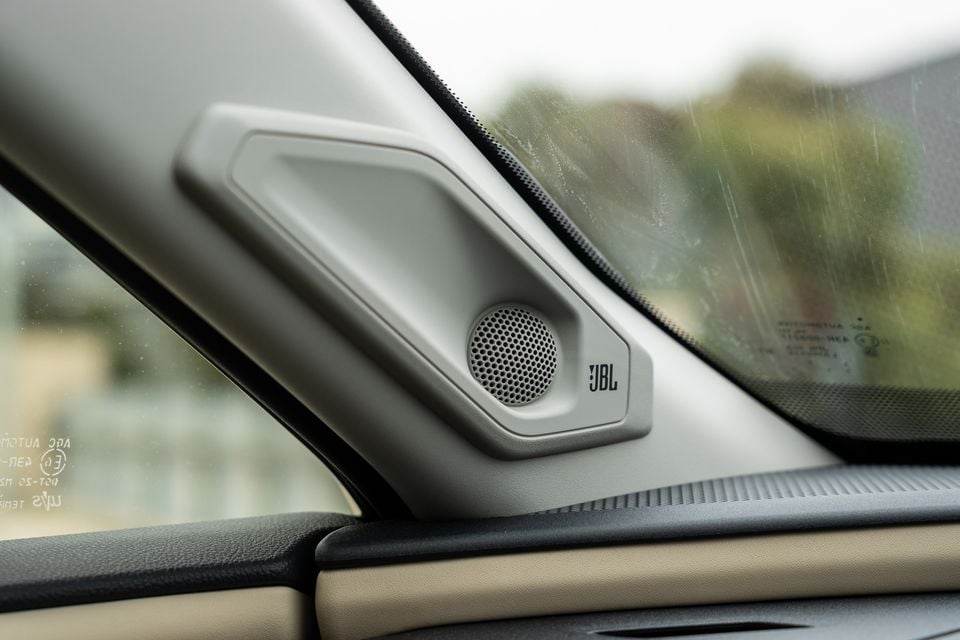
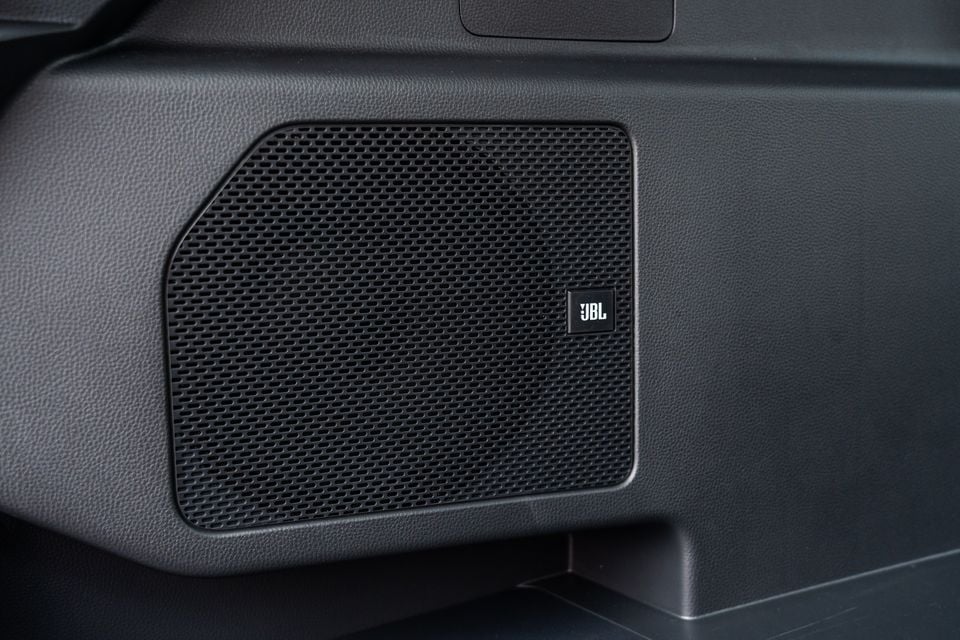
All three rear seats have adjustable head restraints, while a fold-down centre armrest comes with a pair of fixed cupholders. There are also storage bins and speakers in the rear doors, and map pockets in the back of each front seat.
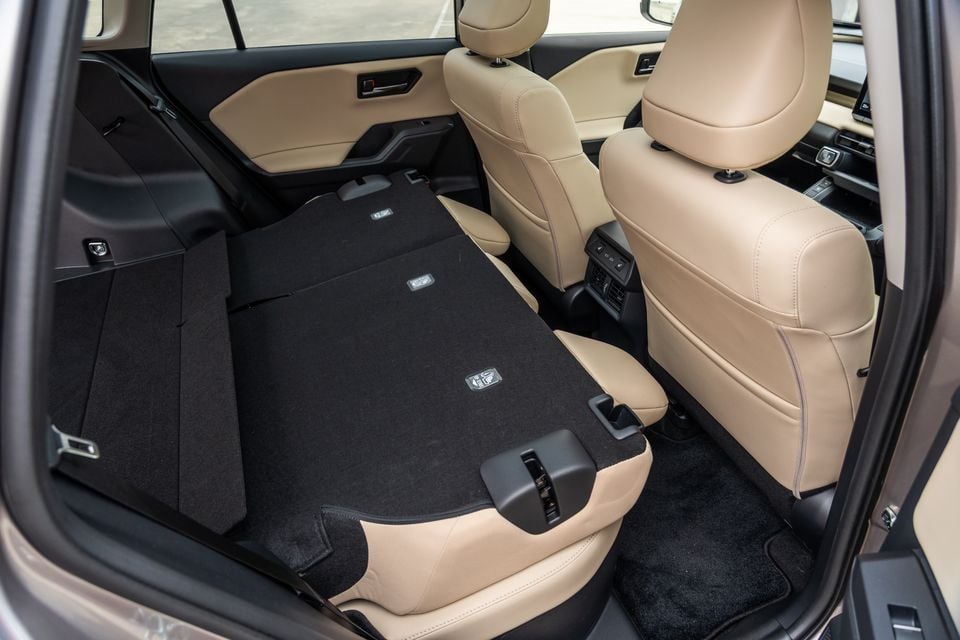
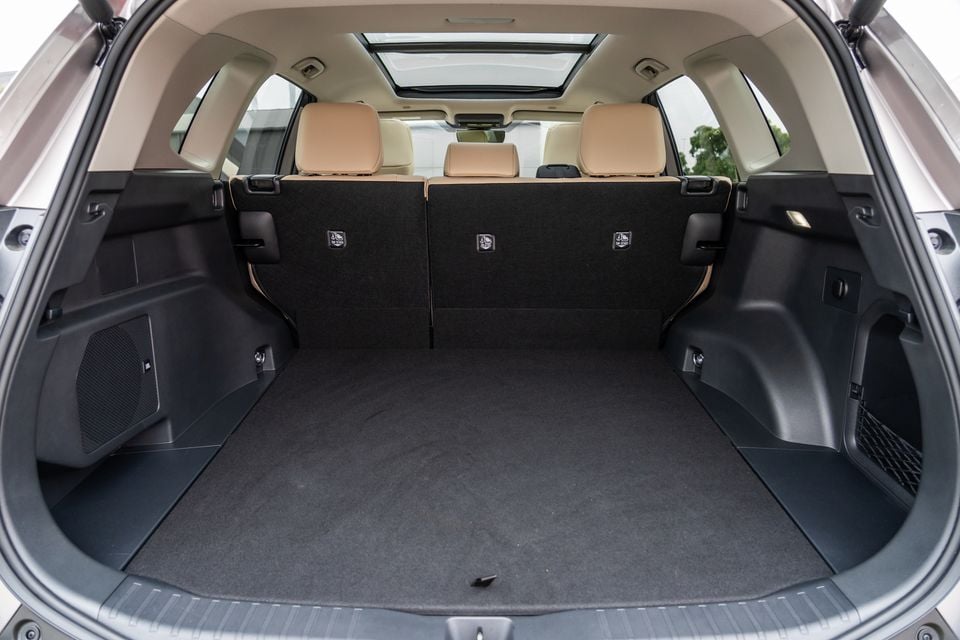
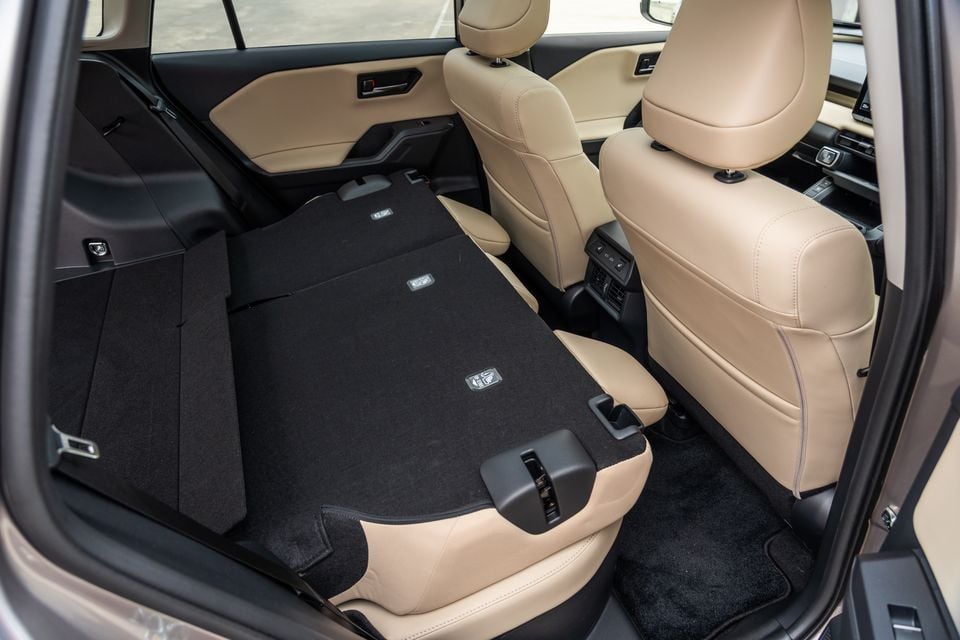
The 60:40-split/folding rear seatbacks provide access to a perfectly flat, carpeted boot area, with the powered tailgate operated via the key fob or a dash-mounted switch next to the driver’s seat.
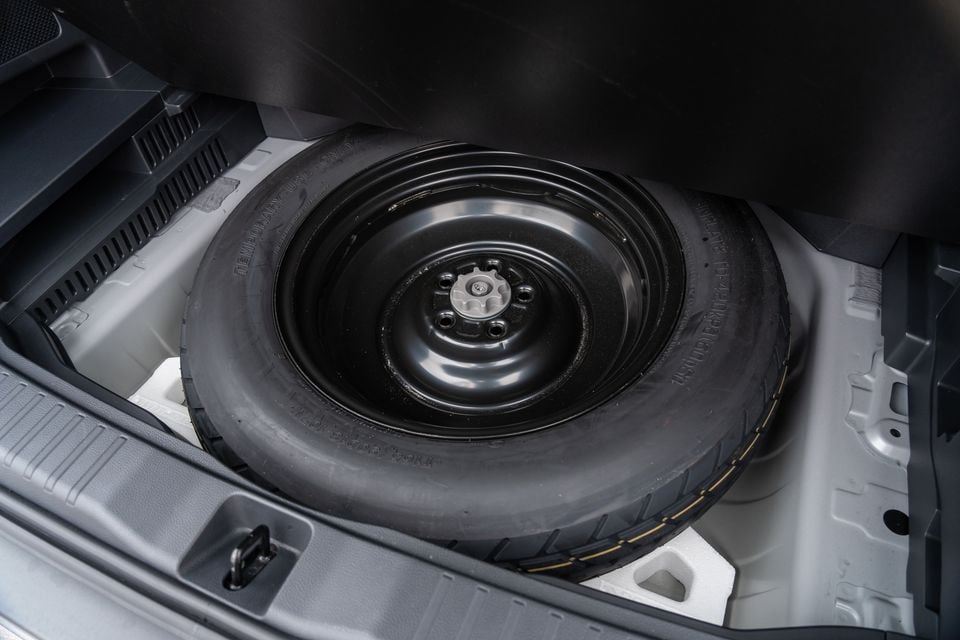
There’s a space-saver spare underneath the single-tier boot floor, multiple shopping-bag hooks, a netted side-storage bin, and a light in the load area, with a standard cargo cover hiding the lot.
| Dimensions | Toyota RAV4 Cruiser |
|---|---|
| Length | 4600mm |
| Width | 1680mm |
| Height | 1680mm |
| Wheelbase | 2690mm |
| Cargo capacity | 705L |
To see how the Toyota RAV4 Cruiser lines up against the competition, check out our comparison tool
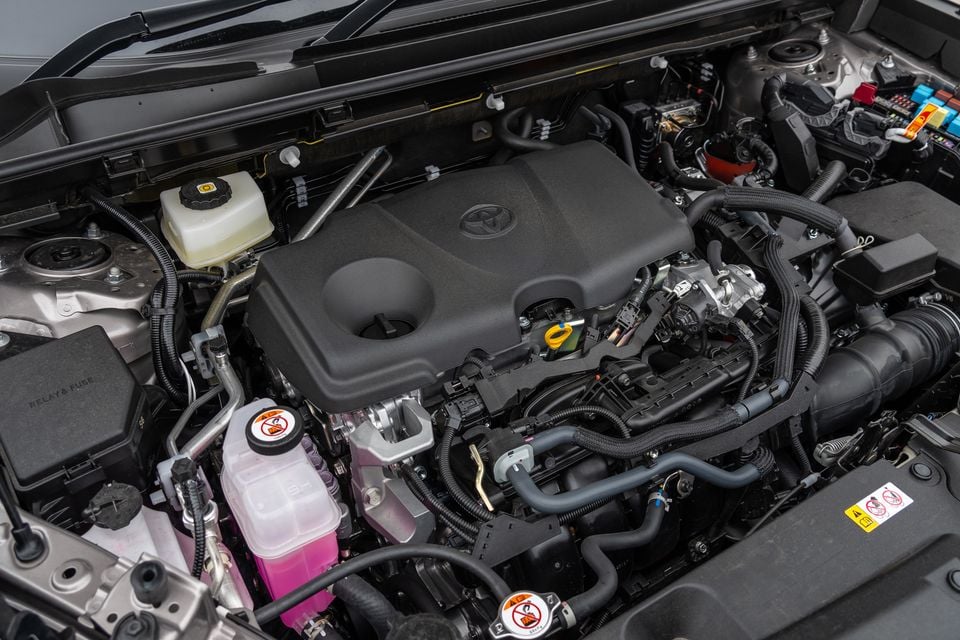
The RAV4 Cruiser runs the same plugless hybrid powertrain as other RAV4 HEVs, consisting of a 2.5-litre four-cylinder petrol engine and an electric motor integrated into the continuously variable automatic transmission (CVT).
| Specifications | RAV4 HEV FWD | RAV4 HEV AWD | RAV4 PHEV FWD | RAV4 PHEV AWD |
|---|---|---|---|---|
| Engine | 2.5-litre non-turbo petrol 4cyl hybrid | 2.5-litre non-turbo petrol 4cyl hybrid | 2.5-litre non-turbo petrol 4cyl PHEV | 2.5-litre non-turbo petrol 4cyl PHEV |
| Engine outputs | 105kW/221Nm | 105kW/221Nm | 105kW/227Nm | 105kW/227Nm |
| Electric motor outputs | 100kW/206Nm | 100kW/208Nm (front) 40kW/121Nm (rear) | 151kW/272Nm | 151kW/272Nm (front) 41kW/123Nm (rear) |
| System outputs | 143kW | 143kW | 201kW | 227kW |
| Battery | 4.4Ah li-ion | 4.4Ah li-ion | 22.7kWh li-ion | 22.7kWh li-ion |
| Transmission | e-CVT | e-CVT | e-CVT | e-CVT |
| Drive type | Front-wheel drive | All-wheel drive | Front-wheel drive | All-wheel drive |
| Electric driving range | – | – | 154km (NEDC) | 144km (NEDC) |
| Max AC charge rate | – | – | 11kW | 11kW |
| Max DC charge rate | – | – | 50kW | 50kW |
The petrol engine produces 105kW/221Nm, while the electric motor makes 100kW/206Nm, for a combined peak power output of 143kW. Toyota does not quote a combined torque figure.
To see how the Toyota RAV4 lines up against the competition, check out our comparison tool
With power comes responsibility – and Toyota hasn’t rested on its laurels when it comes to driveability.
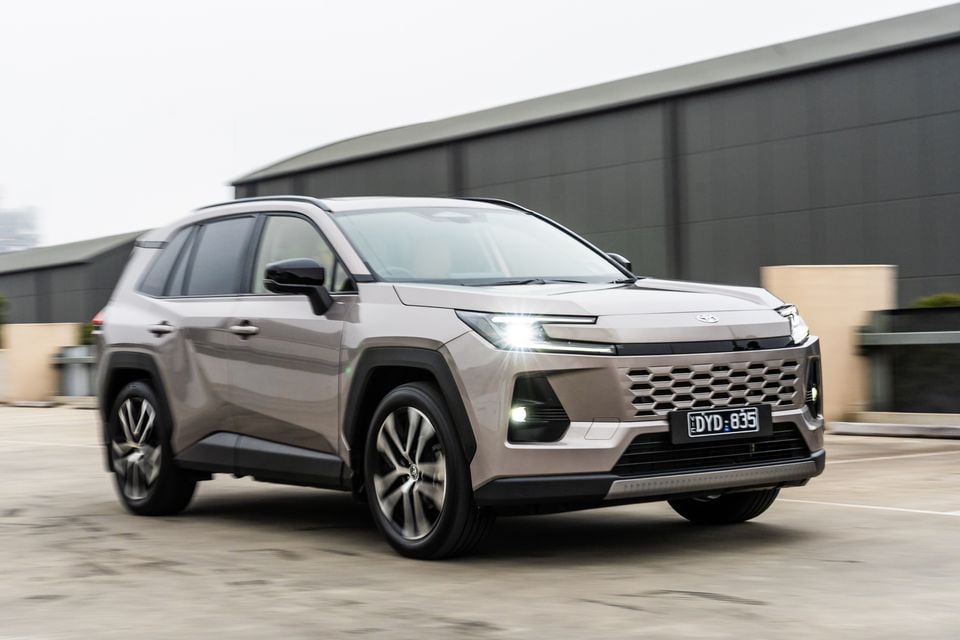
The RAV4 is much, much better to drive than its popularity might suggest: it’s composed, balanced, and comfortable.
It’s not the last word in dynamics, but for the mid-size SUV category, it’s impressive. There’s a good driving position, with significant adjustment in the steering column and electric driver’s seat – which includes lumbar adjustment, whereas the front passenger seat doesn’t.
There’s good vision and solid switchgear, although the indicator and wiper stalks feel a little less solid than the rest of the cabin.
The digital instruments are clean and easy to read, with a choice of configurations including the all-important digital speedo, and the head-up display is also excellent.
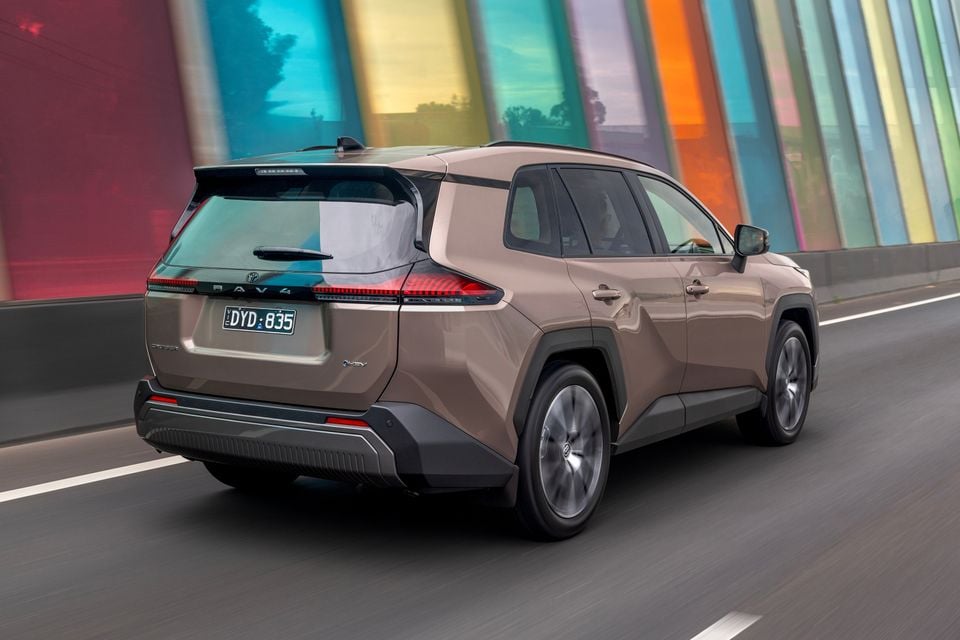
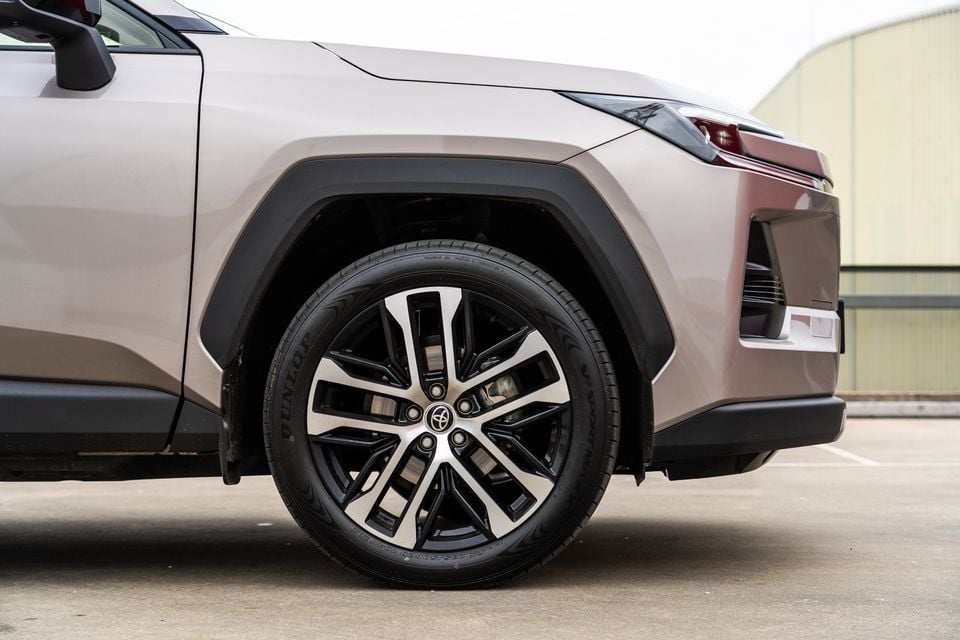
The key change compared with lower grades is the increase in wheel size from 18-inch to 20-inch alloys wrapped in 235/50 R20 Dunlop tyres.
The Cruiser’s steering takes 2.6 turns lock-to-lock, and while there’s a fair bit of play in the steering in a straight line – which means a little bit more arm work through roundabouts – the larger wheels still offer a decent ride.
While larger bumps produce the occasional crash, as you might expect, the core ride quality is very good, smoothing out small and mid-size bumps with a layer of insulation well beyond most mass-market SUVs.
The body control and steering are good, too, and parking is aided by the centre screen’s excellent 360-degree camera display, which shows silhouettes that allow you to 'see through' the vehicle.
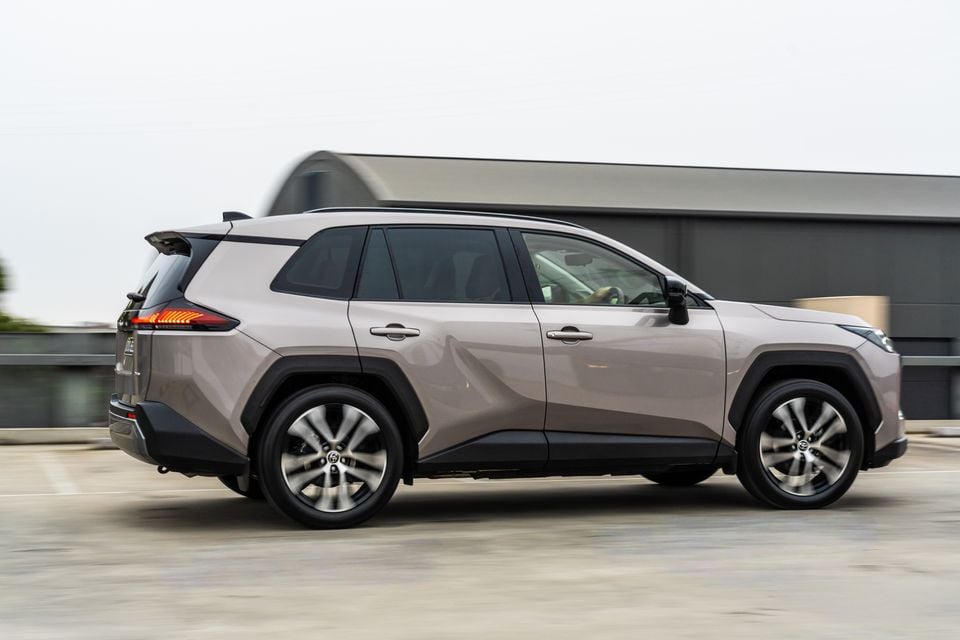
The Cruiser is smooth on the highway, with little powertrain noise. It sits solidly on the open road with good composure, and is easy to change lane in thanks to its effective blind-spot monitor and big side mirrors – which may contribute to a tad of wind noise.
Around town, the Cruiser still takes the edge (pun!) off the bumps, and has a high level of manoeuvrability and obedience on its bigger wheels.
It feels more nimble than its actual size suggests it should, and its brakes are solid and consistent (for a hybrid), but the powertrain is the weakest link in terms of performance.
Here, it gets interesting. The 2.5-litre four-cylinder is adequate, but under full power it proves somewhat underwhelming. Yet the trade-off is superb fuel-efficiency.
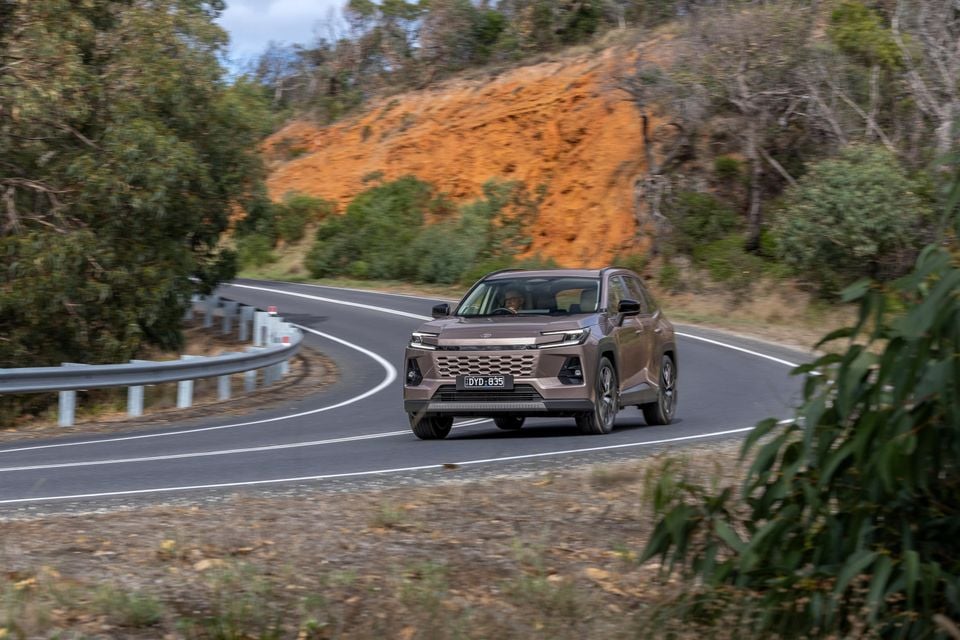
Our 5.7L/100km as-tested figure came on 95-octane petrol – as specified on the fuel flap – after a variety of driving during our test, compared with an official combined claim of 4.5L/100km.
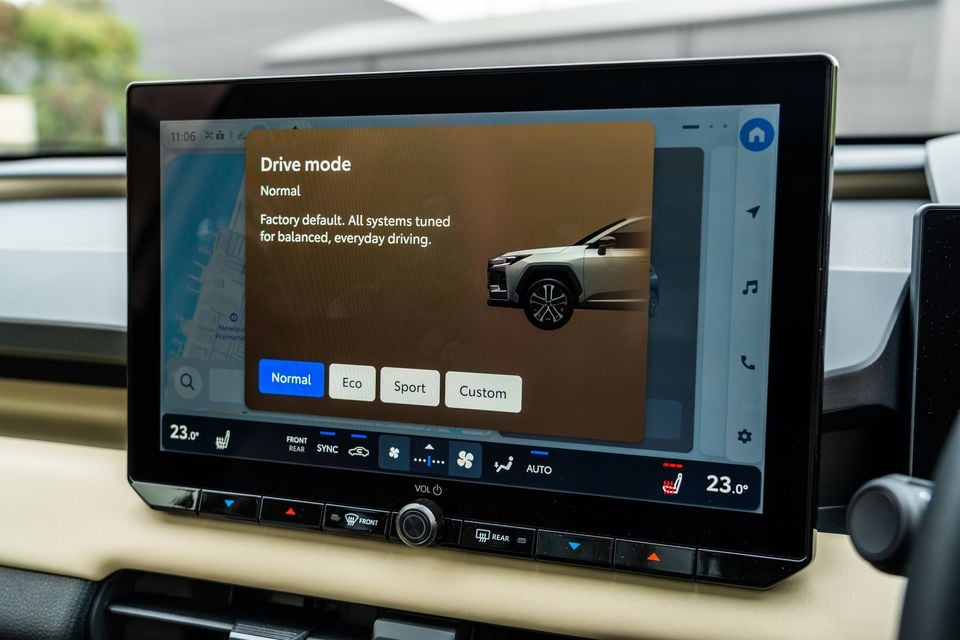
We switched between Eco, Normal and Sport modes, pushed it around corners as if it was a Supra, stood on the solid brakes plenty, and generally abused it in the name of trying to make it crack.
Yet the Cruiser spilled little blood – in fact, it left with barely any bruising, such is ability to deal with the unpredictable and the type of treatment many owners will subject it to over many years.
In Eco mode, the throttle pedal is flaccid, and needs a lot of pressure to get past the initial dead spot – but then the four-cylinder engine starts to whir and it responds well, even if it’s not fire-and-brimstone.
If this is the car for you, we’ll compare offers from trusted dealers, handle the back and forth and manage your purchase from enquiry to delivery.
Switching to Sport mode, which as in so many other cars adds ‘red mist’-themed dials, simply adds weight to the steering. This means it’s no more precise, just heavier, although the dead spot in the throttle seems a tad narrower.
The differences between modes are minimal, with Normal somewhere in between, so you may as well leave it in Eco because the powertrain’s mediocre performance remains no matter what.
If you’re not a fan of idle-stop/start systems, the Cruiser’s hybrid powertrain may also be a winner for you, given its smooth, instant and punchy electric-only acceleration off the line, instead of offering a delayed response before its petrol engine kicks in, as in some rivals (hello, Mazda CX-5).
The initial take-off is good in EV mode, too, but full-throttle acceleration generally results in the petrol engine firing up – as does anything above 35km/h – with little fuss.
Oh, and while annoying safety tech makes all sorts of random noises and tugs aggressively at the steering wheel of many new cars these days, that doesn't happen in a RAV4. Its driver aids rarely interrupt, only making themselves known when they’re needed, as they should. Refreshing.
Overall, the RAV4 hybrid has a well-measured, efficient and capable powertrain teamed with a well-sorted chassis (for a mainstream SUV), and presents few drawbacks, making it surprisingly good to drive.
The RAV4 is available in six trim levels, almost all with multiple powertrain options.
2027 Toyota RAV4 GX equipment highlights:
RAV4 GXL adds (over GX):
RAV4 Edge (AWD HEV) adds (over GXL):
RAV4 XSE (AWD HEV) adds (over GXL):
RAV4 Cruiser adds (over GXL):
RAV4 XSE PHEV adds (over XSE HEV):
RAV4 GR Sport PHEV adds (over XSE PHEV):
To see how the Toyota RAV4 Cruiser lines up against the competition, check out our comparison tool
Despite being one of the most popular vehicles on the market today, from the largest auto brand in Australia, the Toyota RAV4 remains unrated by the Australasian New Car Assessment Program – better known as ANCAP.
Standard safety features include:
RAV4 XSE adds:
RAV4 Cruiser adds:
To see how the Toyota RAV4 lines up against the competition, check out our comparison tool
As with the wider Toyota lineup, the RAV4 is covered by Toyota Australia’s five-year, unlimited-kilometre new-vehicle warranty, and up to 10 years of traction battery coverage with regular health checks through the Japanese brands dealer network.
| Servicing and Warranty | Toyota RAV4 HEV |
|---|---|
| Warranty | 5 years, unlimited kilometres – vehicle Up to 10 years, unlimited kilometres – battery (conditional) |
| Roadside assistance | 4 years |
| Service intervals | 12 months or 15,000 kilometres |
| Capped-price servicing | 5 years or 75,000 kilometres |
| Average annual service cost | $325 |
| Total capped-price service cost | $1625 |
The RAV4 remains one of the cheaper SUVs to service, though this new-generation model has seen yearly maintenance costs rise from about $270 a year to $325 annually. For reference, the Honda CR-V e:HEV costs $199 a year for the first five years.
To see how the Toyota RAV4 lines up against the competition, check out our comparison tool
There’s only one thing the RAV4 Cruiser does at 10/10ths: compromise. That’s not a criticism, but rather the Toyota’s appeal.
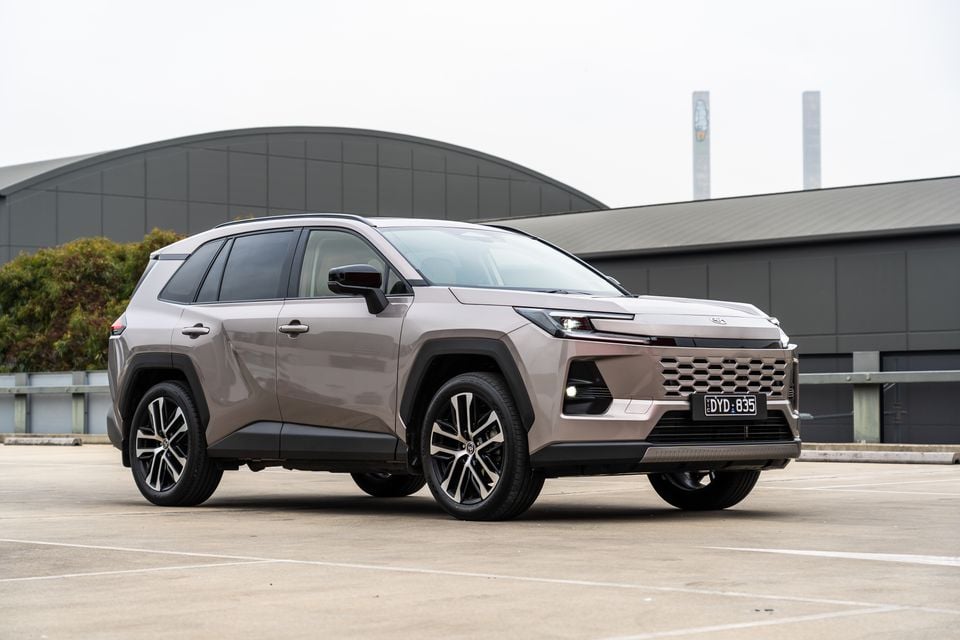
Are there more engaging SUVs available? Yes, but they use more fuel. Are there more economical SUVs on the market? Well, you could go all-electric, but then there's also the RAV4 PHEV to consider. Are there rivals with more features? On paper, yes, but do they actually work…?
Nothing can balance these attributes like the RAV4, which means that – like fast food – it comes down to taste, how many extras you want, and therefore which version you buy.
The RAV4 Cruiser is great, but when it comes to crunching the numbers, it adds few necessities missing from cheaper variants. Yes, there's an extra layer of luxury and comfort, which is its raison d'être, but it’s all largely superficial.
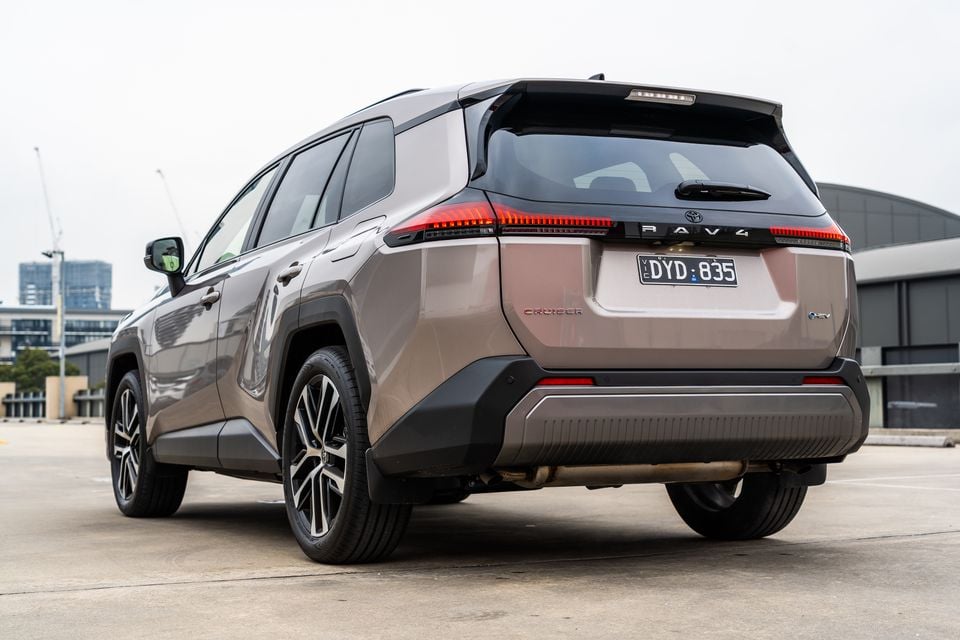
The base RAV4, then, is a solid start. That's why this model is so popular: it offers something for everyone with a comparative lack of fuss, and – with the latest generation – more character and appeal.
The Cruiser adds another layer to that, if you’re willing to pay the additional cost, but it doesn’t add or remove any of this world-beating SUV’s core capabilities.
CarExpert can save you thousands on a new Toyota RAV4. Click here to get a great deal.
Click the images for the full gallery
If this is the car for you, we’ll compare offers from trusted dealers, handle the back and forth and manage your purchase from enquiry to delivery.
Quickly see how this car stacks up against its competition. Select any benchmark to see more details.
Toyota RAV4
Toyota RAV4 Sales rolling 12-months#
*Based on VFACTS and EVC data
Looking for complete Toyota RAV4 price history?
Our Toyota RAV4 Pricing Page shows exactly how prices have changed over time.
2023
$46,368
2023
$50,041
2026
$50,407
2026
$53,557
2023
$55,921
2023
$56,446
2026
$60,225
2026
$61,957
2023
$63,219
2026
$63,375
2026
$71,775
Damion Smy is an award-winning motoring journalist with global editorial experience at Car, Auto Express, and Wheels.
Add CarExpert as a Preferred Source on Google so your search results prioritise writing by actual experts, not AI.
Damion Smy
2 Hours Ago
Damion Smy
2 Days Ago
Damion Smy
3 Days Ago

William Stopford
3 Days Ago
William Stopford
3 Days Ago
William Stopford
4 Days Ago
Add CarExpert as a Preferred Source on Google so your search results prioritise writing by actual experts, not AI.
# Based on VFACTS and EVC data
† Displayed prices are based on the drive-away price of the vehicle, which includes delivery charges, registration fees, number plates, and applicable road taxes, based on a Sydney location. However, prices may vary between states and territories, and additional costs such as compulsory third party (CTP) insurance, dealer delivery fees, and optional extras are not included. These prices are subject to change without notice and may not reflect current market pricing or dealer offers.
 Automotive Vehicle Spec Data & 4K images Powered by JATO Dynamics Ltd