




William Stopford
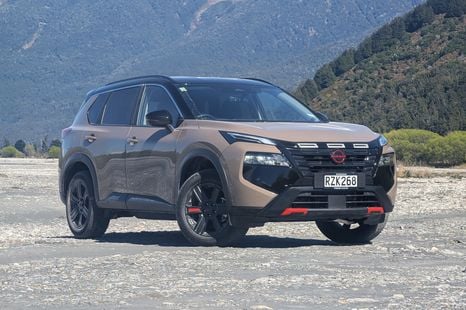
2027 Nissan X-Trail review
The Nissan X-Trail continues to impress in e-Power hybrid guise, especially now you can get front-wheel drive examples for less money.
50 Minutes Ago
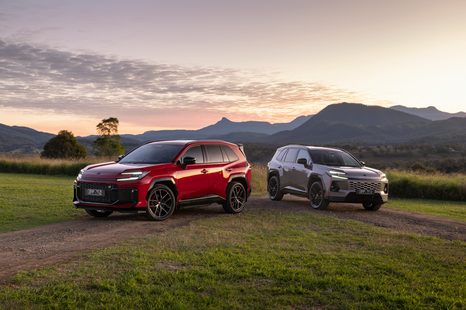
Toyota's best-selling mid-size SUV has taken another step forward with plug-in hybrid power and a GR-badged flagship. Is this peak RAV4?

Deputy Road Test Editor
Deputy Road Test Editor
Deputy Road Test Editor
Deputy Road Test Editor
If this is the car for you, we’ll compare offers from trusted dealers, handle the back and forth and manage your purchase from enquiry to delivery.
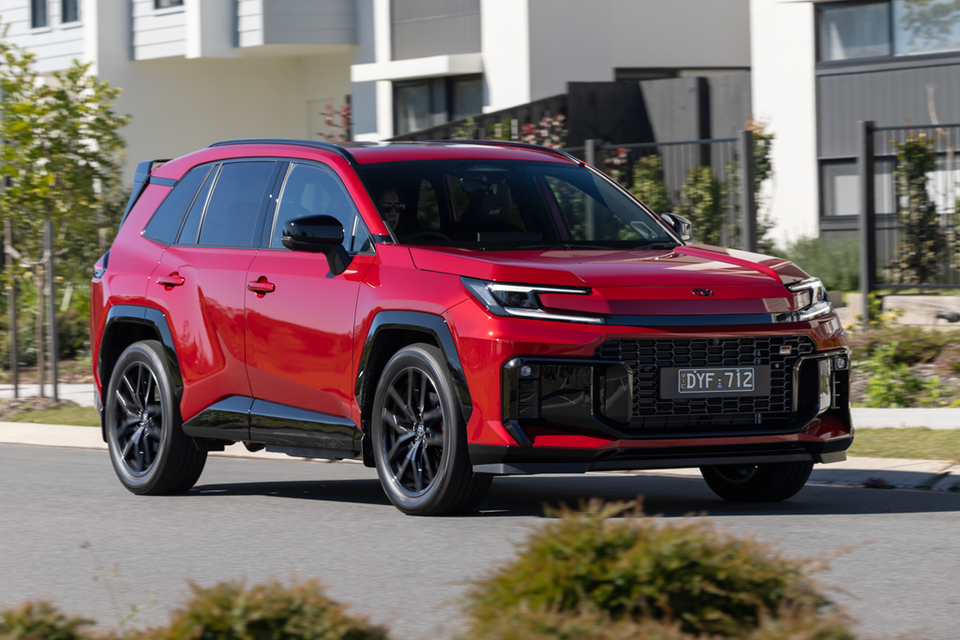
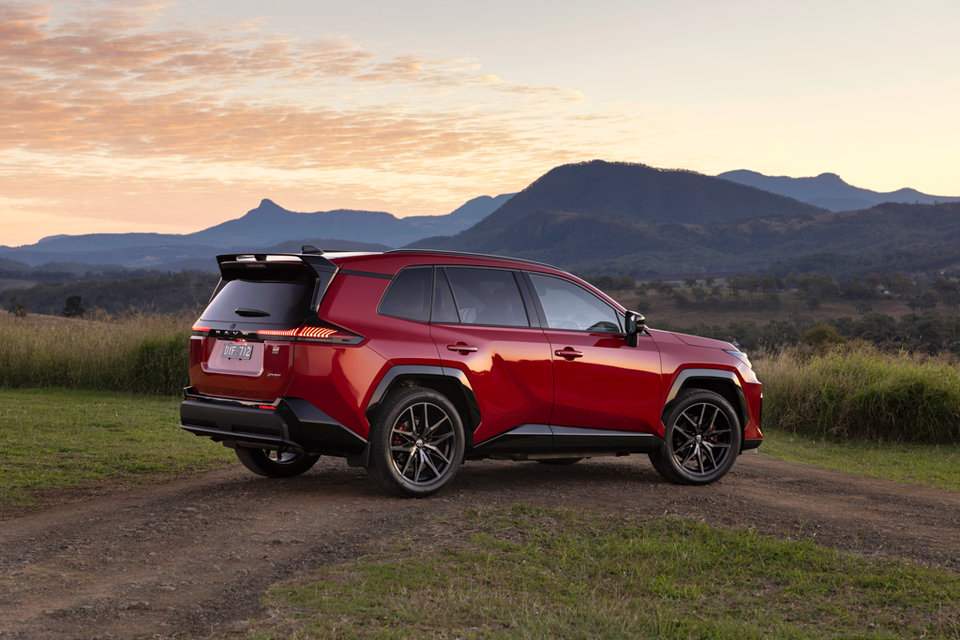
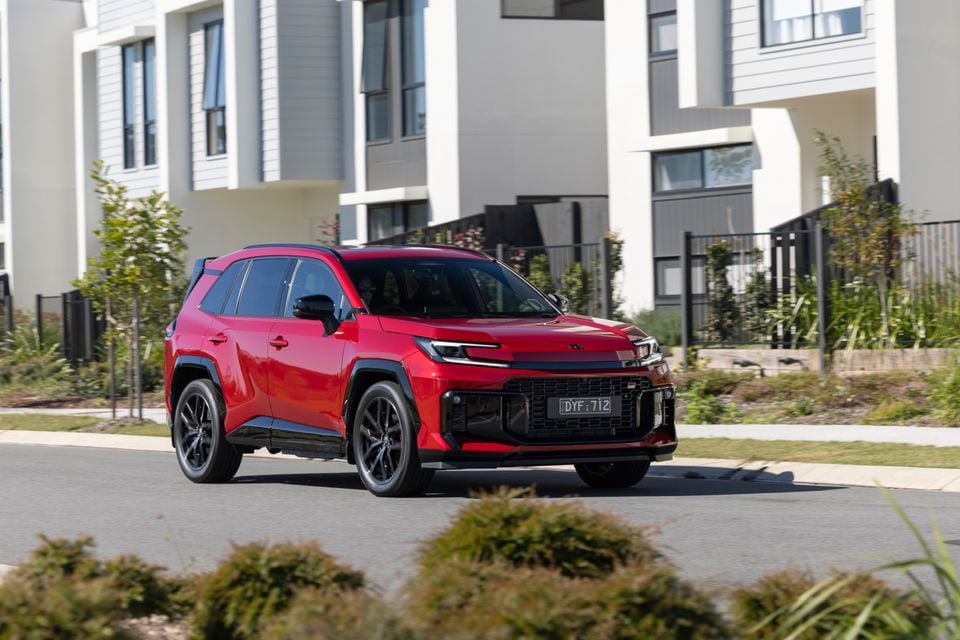
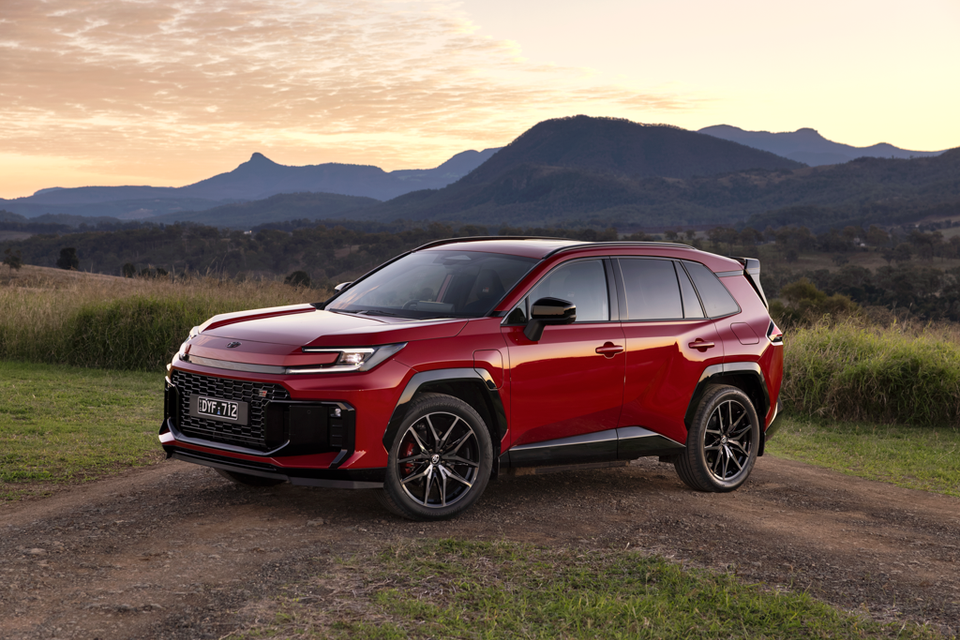
The humble Toyota RAV4 has never looked this good.
It's never been this efficient or versatile, either. As for performance, it's safe to say the first plug-in hybrid (PHEV) version of Australia's favourite SUV sits at the top of the pile, too.
In many ways, the plug-in hybrid, all-wheel drive GR Sport flagship is the most impressive RAV4 produced over six generations and 32 years, at least on paper (and in photos).
But it's also the most expensive, with an asking price well beyond $70,000 drive-away.
So, is it worth spending up for the ultimate incarnation of Toyota's best-seller and the nation's most popular mid-size SUV? Read on to find out.
The sixth-generation RAV4 costs more than its predecessor, starting at $45,990 before on-road costs for the entry-level front-wheel drive GX, and topping out at $66,340 plus on-roads for the GR Sport flagship on test here.
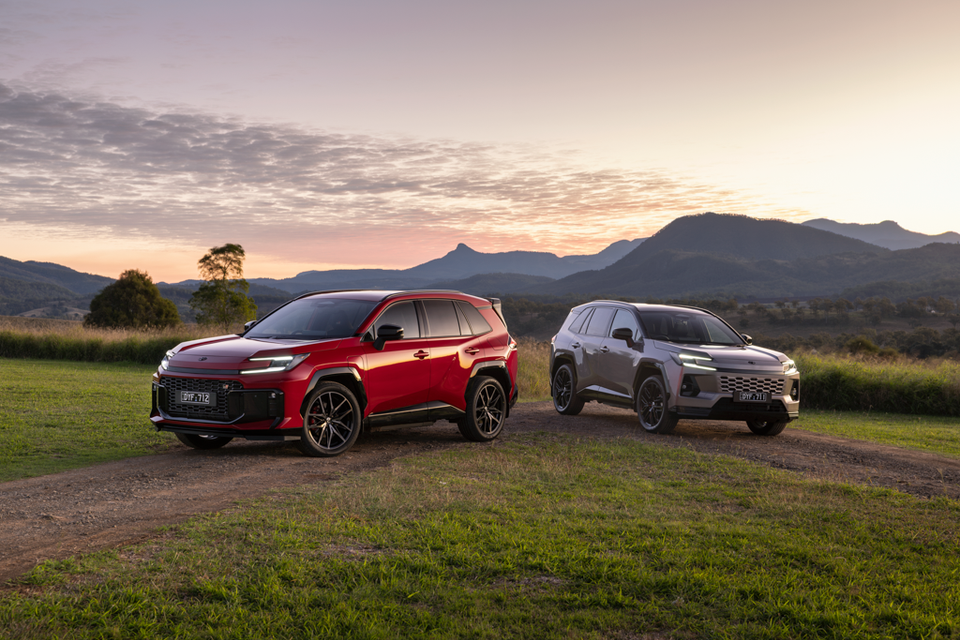
Toyota RAV4 HEV
| Model | Price before on-road costs |
|---|---|
| 2026 Toyota RAV4 GX FWD | $45,990 |
| 2026 Toyota RAV4 GX AWD | $49,340 |
| 2026 Toyota RAV4 GXL FWD | $48,990 |
| 2026 Toyota RAV4 GXL AWD | $52,340 |
| 2026 Toyota RAV4 Edge AWD | $55,340 |
| 2026 Toyota RAV4 XSE AWD | $58,340 |
| 2026 Toyota RAV4 Cruiser FWD | $56,990 |
| 2026 Toyota RAV4 Cruiser AWD | $60,340 |
Toyota RAV4 PHEV
| Model | Price before on-road costs |
|---|---|
| 2026 Toyota RAV4 XSE FWD | $58,840 |
| 2026 Toyota RAV4 XSE AWD | $63,340 |
| 2026 Toyota RAV4 GR Sport AWD | $66,340 |
Now, before everyone loses their minds in the comments, I appreciate that upwards of $70k drive-away sounds like a lot to spend on a RAV4. But after a little market analysis, I'm no longer convinced it's an unreasonable ask.
Let me explain. If you're after a mid-size plug-in hybrid SUV, there are plenty of options in 2026. At the bottom end of the market, you can get something like a Chery Tiggo 7, MG HS, GWM Haval H6 or Geely Starray EM-i for south of $50,000 drive-away.
However, none of these models are even remotely sporty – though I realise the GWM is certainly quick in a straight line – and none of them carries significant badge cachet.
If either, or both, of those criteria matter to you, the minimum spend jumps to at least $60k, for which you'll be looking at the proven and practical Mitsubishi Outlander PHEV – still not a particularly sporty option.
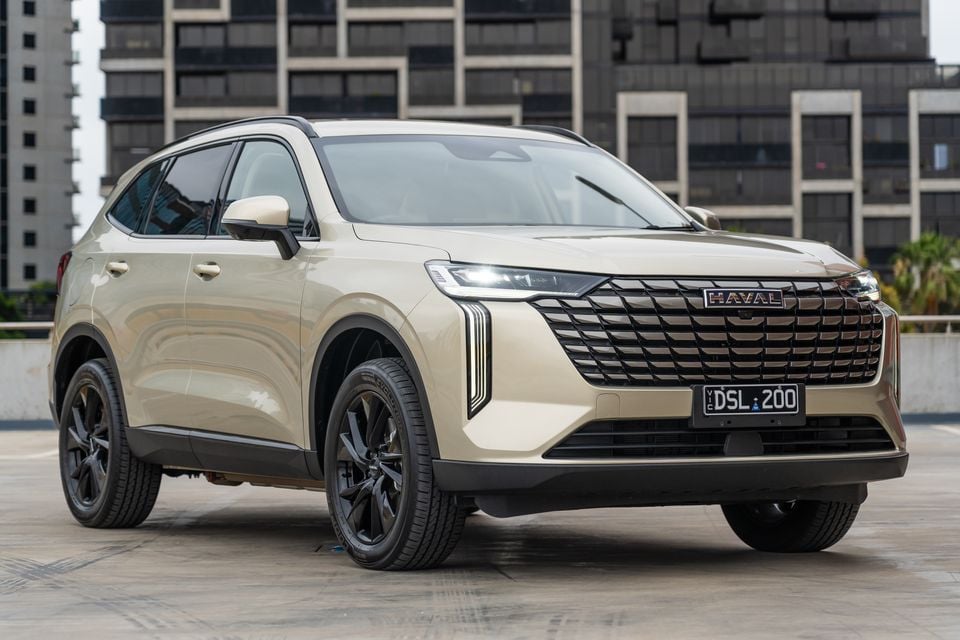
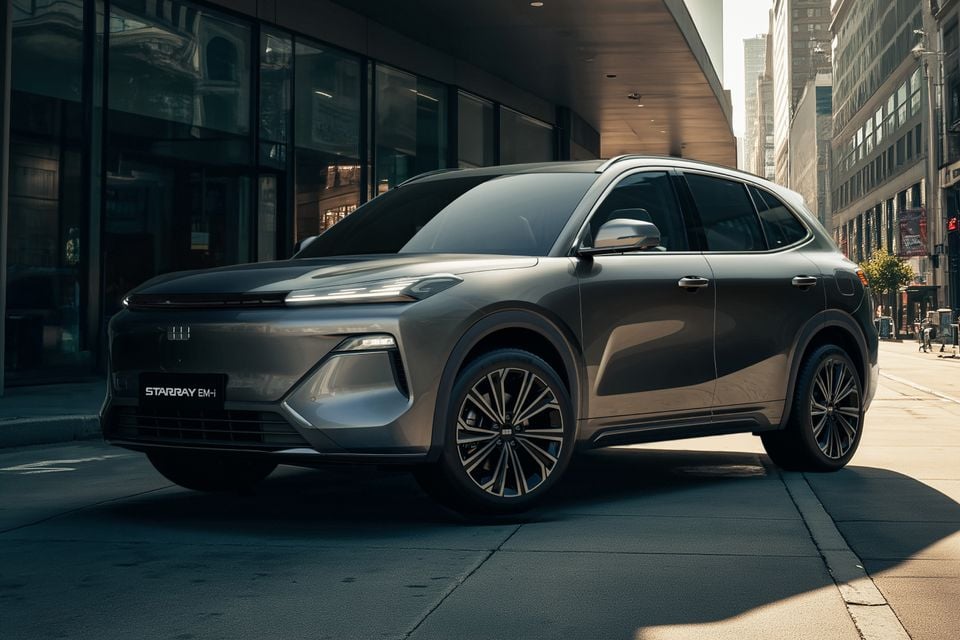
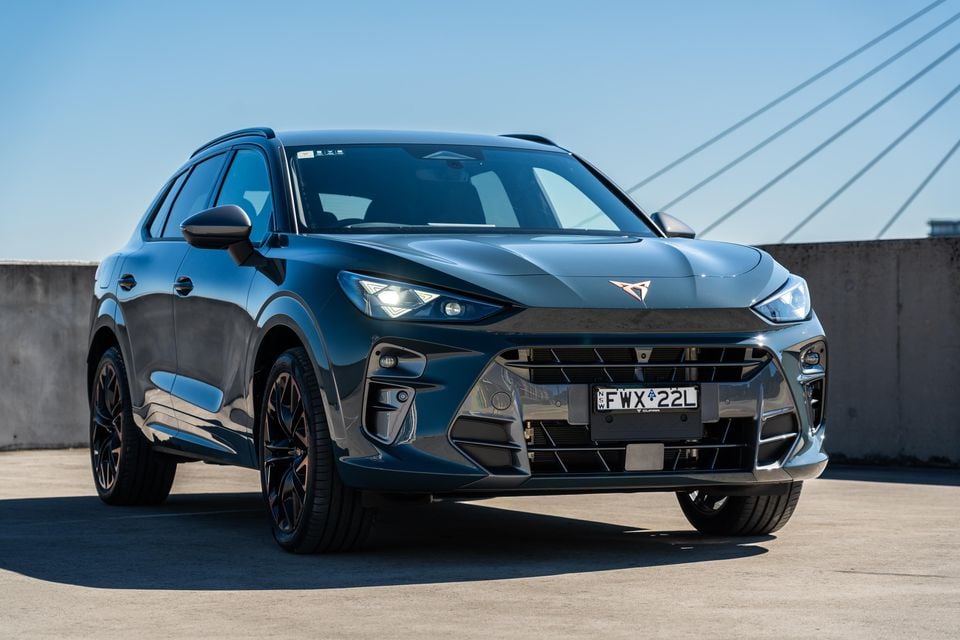
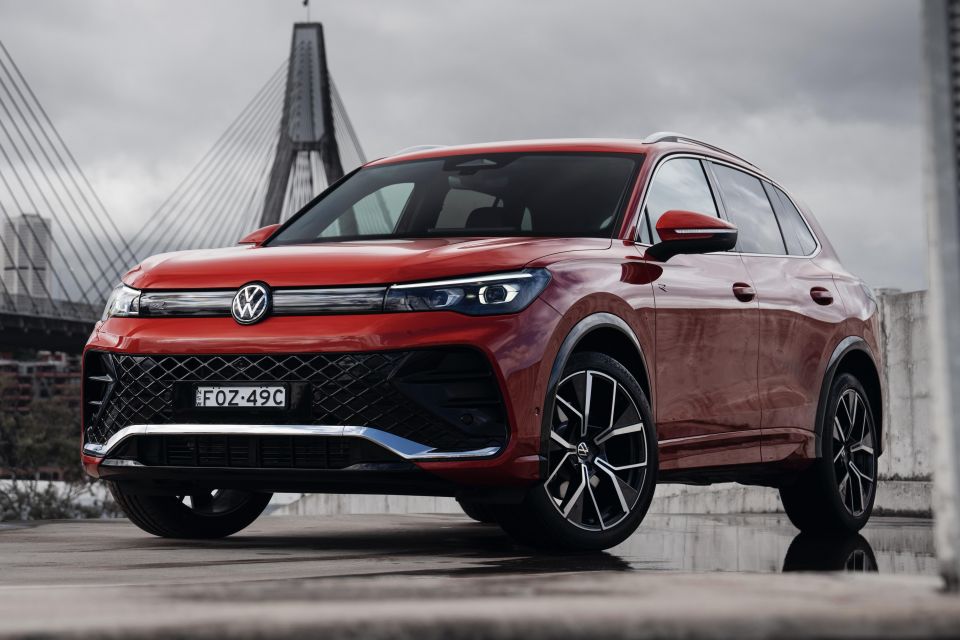
As for alternatives that actually tick the same boxes as the RAV4 GR Sport, well... there aren't many. In fact, I'd probably only consider the platform-sharing Volkswagen Tiguan 200TSI eHybrid R-Line and Cupra Terramar VZe as true rivals, priced at $74,550 and $77,990 plus ORCs respectively.
And neither offers all-wheel drive.
So, all things considered, this full-fruit RAV4 GR Sport doesn't seem like a terrible deal. That said, the equation changes if you're willing to cross-shop it with plug-free hybrid, electric, and conventional petrol-powered competitors.
To see how the Toyota RAV4 lines up against the competition, check out our comparison tool
A few choice GR enhancements elevate the cabin somewhat, but the RAV4 remains a rugged and utilitarian SUV at its core.
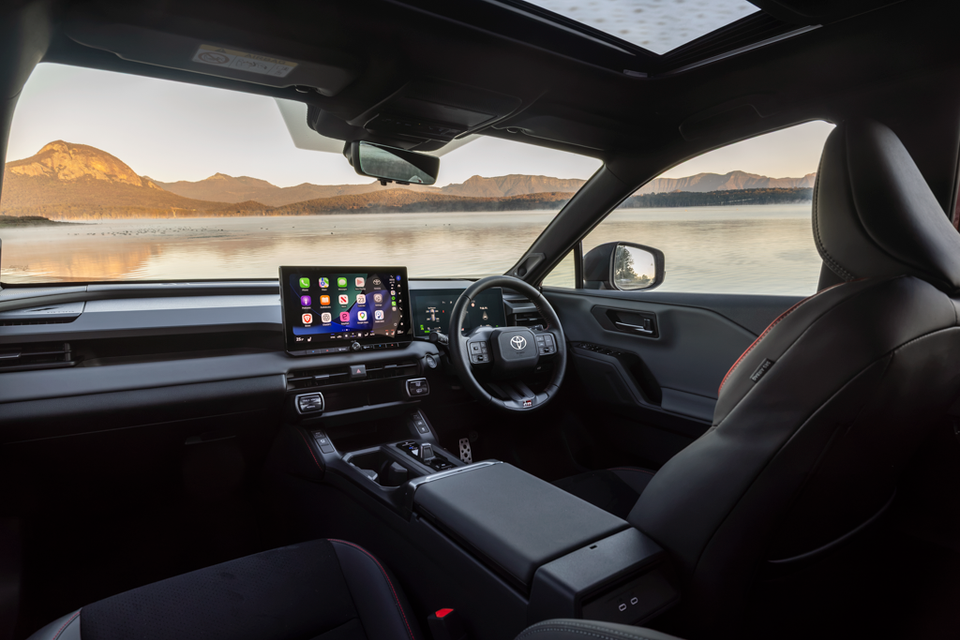
Upgrades for this new top-shelf variant include a heated, perforated leather-clad steering wheel, synthetic leather and suede-trimmed sports seats, suede centre console knee pads, alloy-faced pedals, GR Sport scuff plates, and a digital rear-view mirror.
The latter few items aren't particularly noteworthy, although the new pews and tiller certainly justify their inclusion.
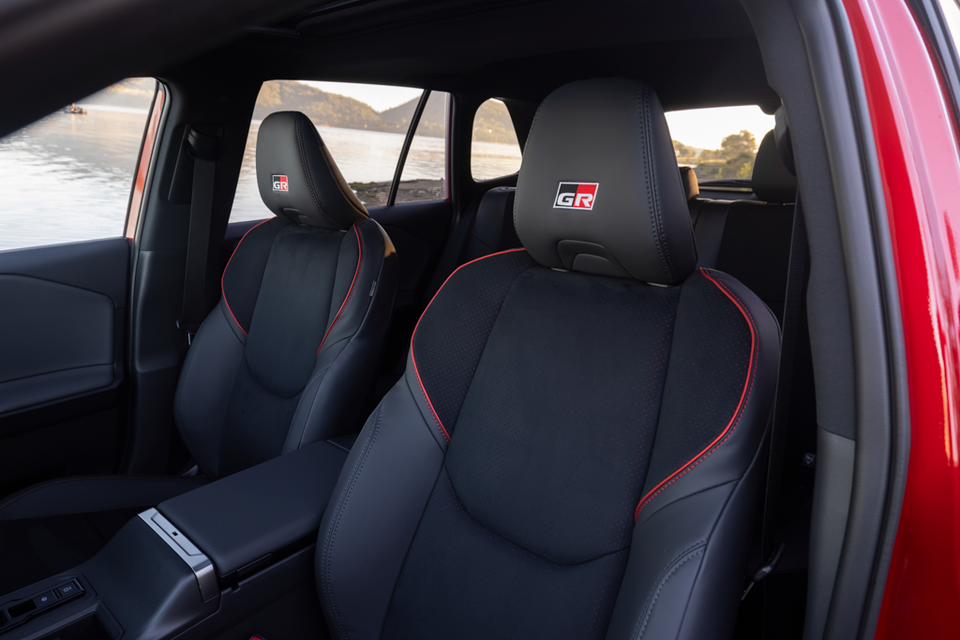
Mixed materials, red piping and GR embroidery give the front seats huge visual appeal, while their shape strikes a happy medium between cornering support and everyday comfort.
You don't sacrifice much functionality, either, as the driver's seat retains eight-way adjustability, lumbar adjustment, and three-stage heating, missing only ventilation.
Add to that a grippy steering wheel with ample tilt and reach adjustment, and the ergonomics of the RAV4 GR Sport are spot-on. It's easy to find a natural driving position, even for taller drivers, and the infotainment screen sits well within reach.
Toyota could've done more with those aforementioned 'knee pads' though, as they’re very thin and don’t provide much cushioning.
Similarly, the wetsuit-esque finishes on the door cards and dash aren't particularly plush, and the same goes for the surrounding plastics.
In that sense, the cabin doesn’t feel as premium as most direct rivals’ – not a huge issue in cheaper RAV4 grades, but more noticeable at the GR Sport's lofty price point.
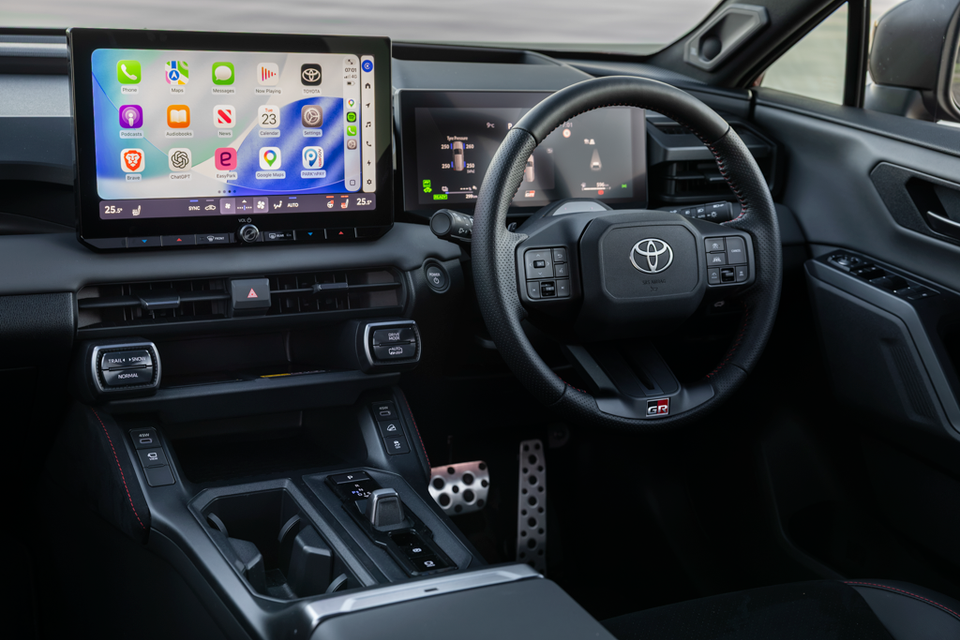
While it mightn't feel like a $70k car inside, the RAV4 is easier to live with than something like a Mazda CX-5, Haval H6/H6 GT or Volkswagen Tiguan because of its intuitive layout and superior storage.
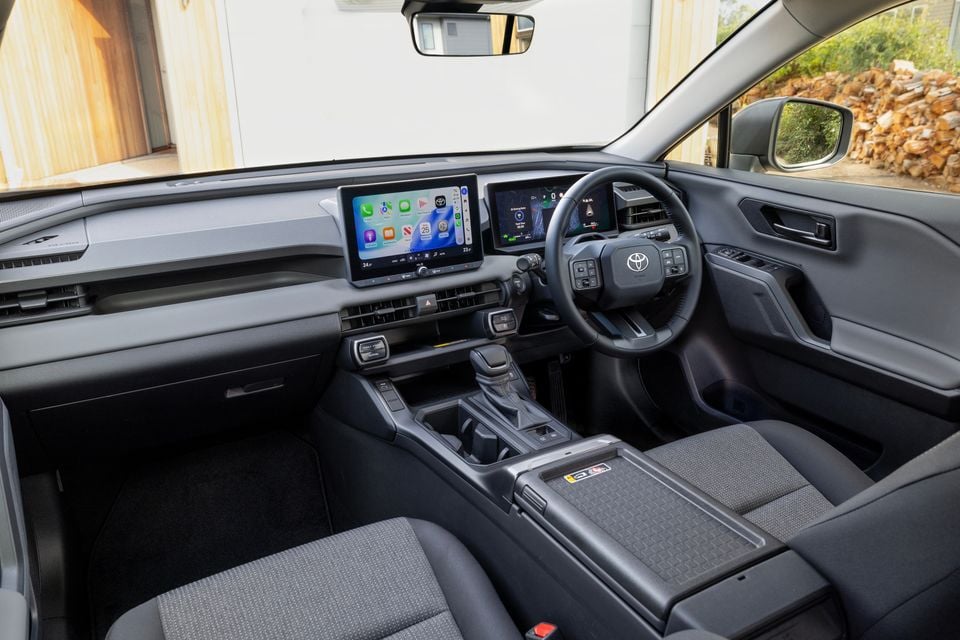
The cabin is clear and easy to understand, with physical controls for drive modes, exterior cameras, temperature, volume, side mirror adjustment, and other key functions. Rather than flashy touch-sensitive or haptic controls, the steering wheel presents with straightforward, clearly labelled buttons, plus a set of tactile regenerative braking paddles.
On the storage front, Toyota has well and truly maximised the space available.
Down low there are wide door bins with bottle cutouts and a central rubber-lined tray, while directly above you'll find centre cupholders with claws and a removable divider, plus two tiers of phone storage with wireless charging.
Valuable items can be kept out of sight in the glovebox or armrest compartment, the latter of which houses USB-C and 12V power outlets. The armrest opens from either side, and its lid can be flipped over and used as a table.
But wait, there's more – namely a set of phone-sized slots near the window switches, an extra shelf above the glovebox, and a sunglasses holder overhead.
The screens in the RAV4 PHEV also align with its no-nonsense character.
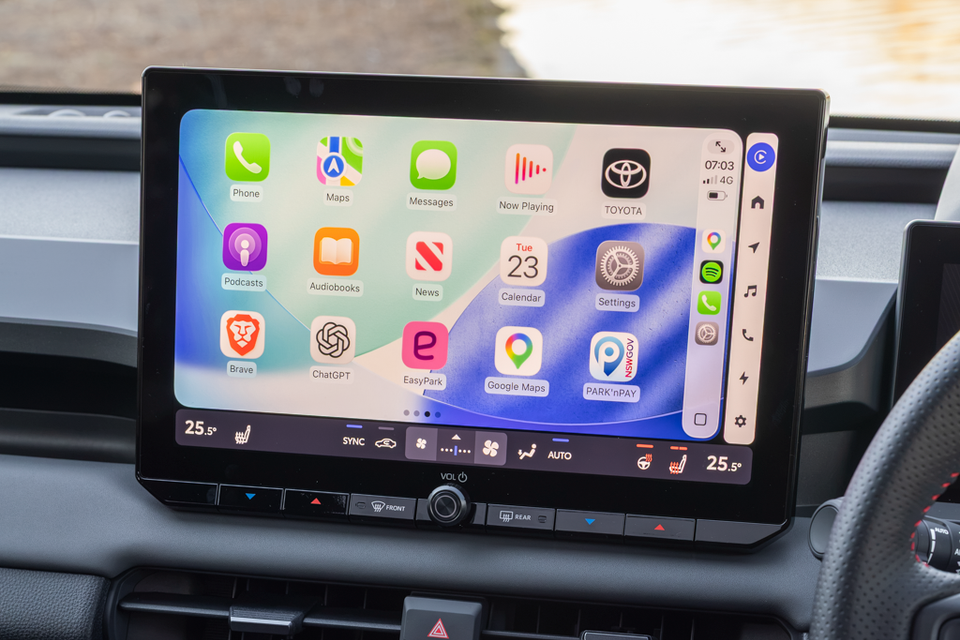
Both the XSE and GR Sport come standard with a 12.9-inch infotainment touchscreen boasting crisp graphics, an uncomplicated interface, and pinned shortcuts that provide easy access to key functions.
It's leaps and bounds better than the system in the old RAV4, and simpler to use than many of the smartphone knockoffs prevalent in this segment.
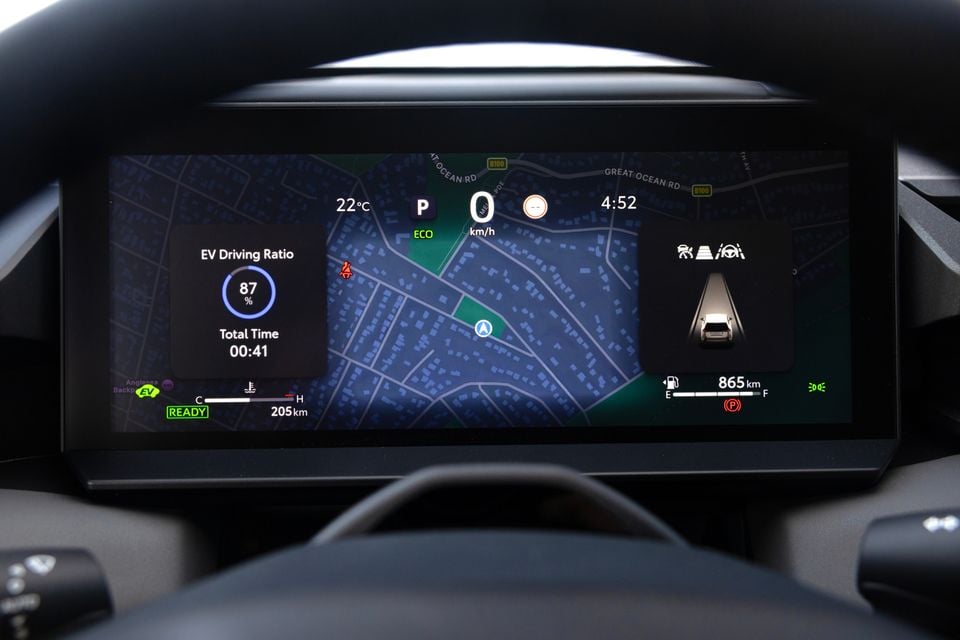
In front of the driver sits a 12.3-inch digital instrument display that can be configured to show a smartphone-mirrored map view, safety assists, or a wide variety of vehicle data – pretty versatile, if you ask me. The visual themes are less boring than you'd expect from a Toyota, too.
As the top-spec model, the GR Sport also gets a basic head-up display and a nine-speaker JBL sound system, the latter billed as premium despite sound quality that's nothing to write home about.
All RAV4 variants come with 5G-enabled Toyota Connected Services, including SOS emergency call functionality and remote app connectivity with vehicle information. These features form part of the Toyota Essentials package, which doesn’t require a paid subscription after the first 12 months.
Toyota Connected+ is complimentary for the first 12 months and adds functions such as remote vehicle tracking, while Toyota Connected Multimedia includes connected navigation services, a Google-powered voice assistant, and connected routing for a six-year complimentary period from delivery.
Spotify integration is also included with a three-month free trial, after which it costs $12.50 per month.
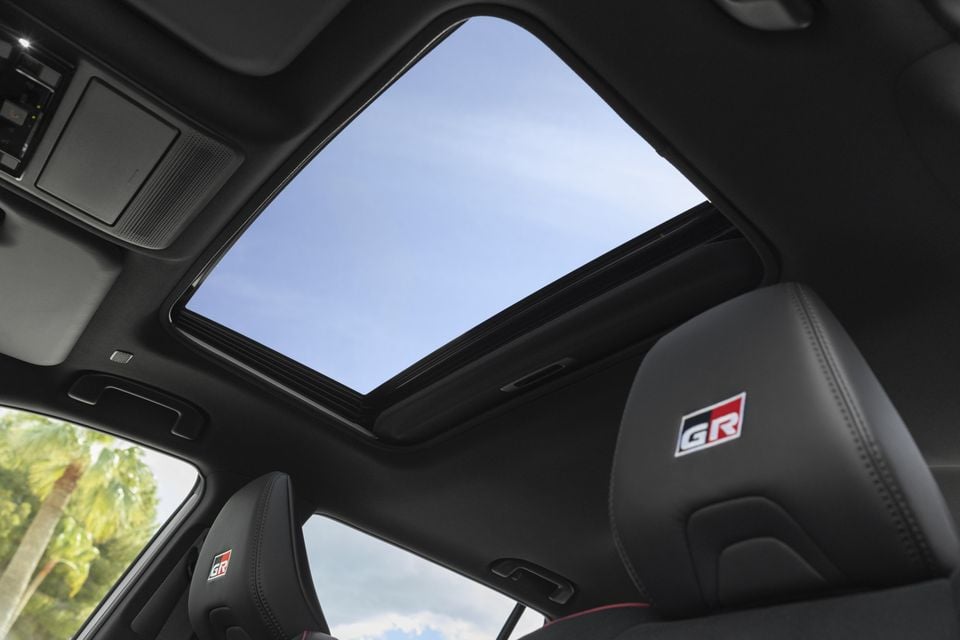
Yet curiously, despite all these tech inclusions, the GR Sport has a single-pane sunroof rather than a full panoramic glass roof as seen in plenty of new SUVs. And at night, the interior illumination offered by a pair of tiny LEDs is very underwhelming. Am I nitpicking? Probably, but these little quirks stand out when you're paying Audi Q3 money for a RAV4.
I have few such complaints about the second row, however, because it's quite accommodating back there.
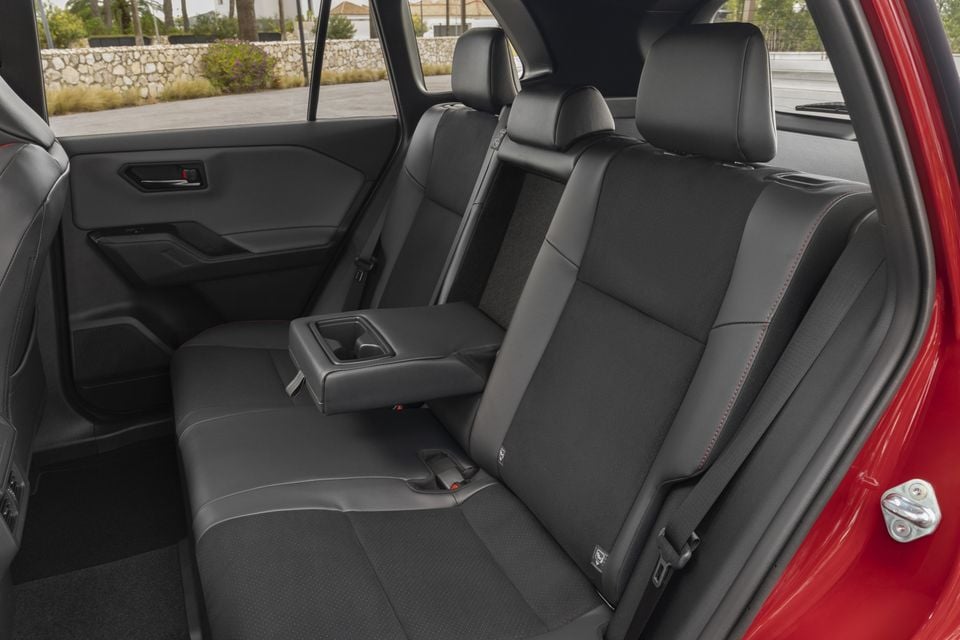
Only professional basketballers are likely to struggle for headroom, and generous knee room allows for a regular-size adult to sit behind the driver without contortion. There’s also space under the front seats to rest your feet, while a relatively small transmission hump keeps the middle seat usable.
Rear passengers get the same suede and synthetic leather upholstery as those up front, plus two 15W USB-C outlets, air vents, door storage, map pockets, and a fold-down centre armrest with cupholders.
Moving further back, Toyota quotes 655 litres of boot space for the RAV4 GR Sport, which is a best-in-class figure. The aperture is wide and square, there's not much of a load lip, and extra capacity can be unlocked by folding the rear bench.
A space-saver spare wheel can be found under the boot floor – better than a can of goo, but not as convenient as a full-size spare.
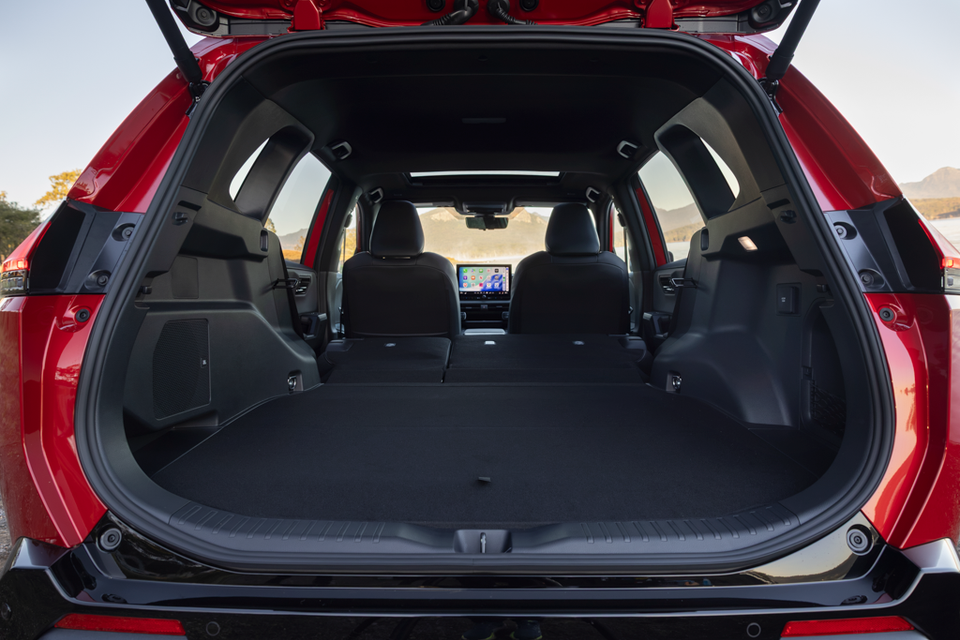
| Dimensions | Toyota RAV4 GR Sport AWD |
|---|---|
| Length | 4645mm |
| Width | 1880mm |
| Height | 1685mm |
| Wheelbase | 2690mm |
| Cargo capacity | 655L |
To see how the Toyota RAV4 lines up against the competition, check out our comparison tool
The RAV4 PHEV features the same familiar 2.5-litre four-cylinder engine found in hybrid variants, but supplements it with larger, upgraded electric motors and a higher-capacity battery.
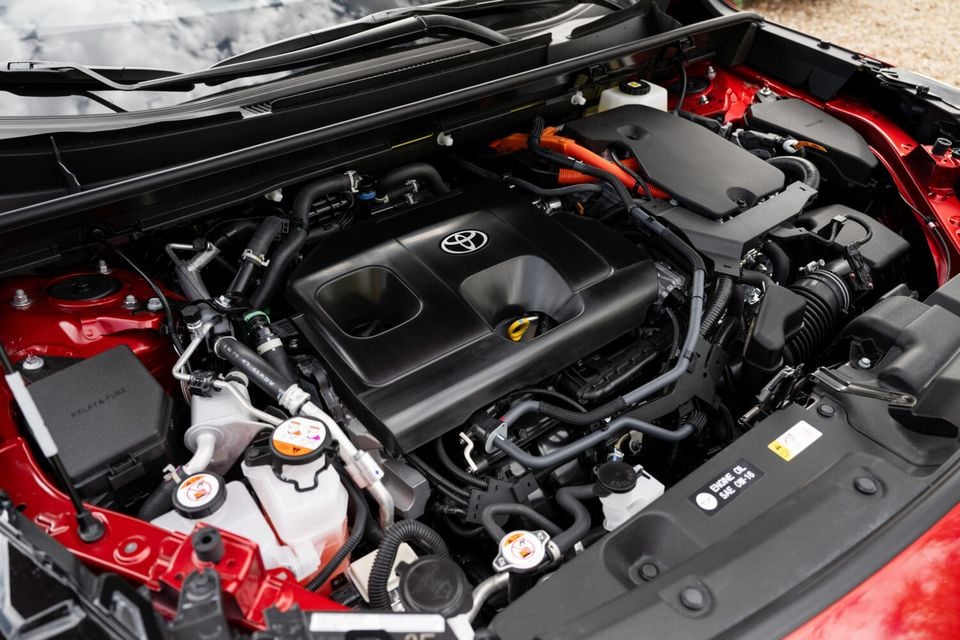
| Specifications | Toyota RAV4 GR Sport AWD |
|---|---|
| Engine | 2.5L 4cyl petrol |
| Engine outputs | 105kW 227Nm |
| Electric motor outputs | 151kW (front) + 41kW (rear)272Nm (front) + 123Nm (rear) |
| System outputs | 227kW |
| Battery | 22.7kWh lithium-ion |
| Transmission | e-CVT |
| Drive type | All-wheel drive |
| Weight | 2025kg |
| 0-100km/h (claimed) | 5.8 seconds |
| Fuel economy (claimed) | 0.7L/100km |
| Fuel economy (as tested) | 0.9L/100km (charged battery)5.6L/100km (depleted battery) |
| Energy consumption (claimed) | 19.1kWh/100km |
| Electric driving range (PHEV) | 113km – WLTP |
| Fuel tank capacity | 55L |
| Fuel requirement | 95-octane premium unleaded |
| CO2 emissions | 17g/km |
| Emissions standard | Euro 6e-bis |
| Braked towing capacity | 1500kg |
The front-wheel drive XSE PHEV uses a front-axle electric motor for a total power output of 201kW, while all-wheel drive versions gain a second smaller motor on the rear axle for a combined 227kW – the most power ever offered in Toyota’s mid-size SUV.
As a result, the Japanese brand claims the flagship GR Sport can sprint from 0-100km/h in just 5.8 seconds, or roughly half a second quicker than its GR86 sports coupe.
As well as being the quickest RAV4 ever, the PHEV is also the most efficient, sipping a claimed 0.7L/100km in GR Sport guise. However, as shown in the table above, that's reliant on the battery being sufficiently charged.
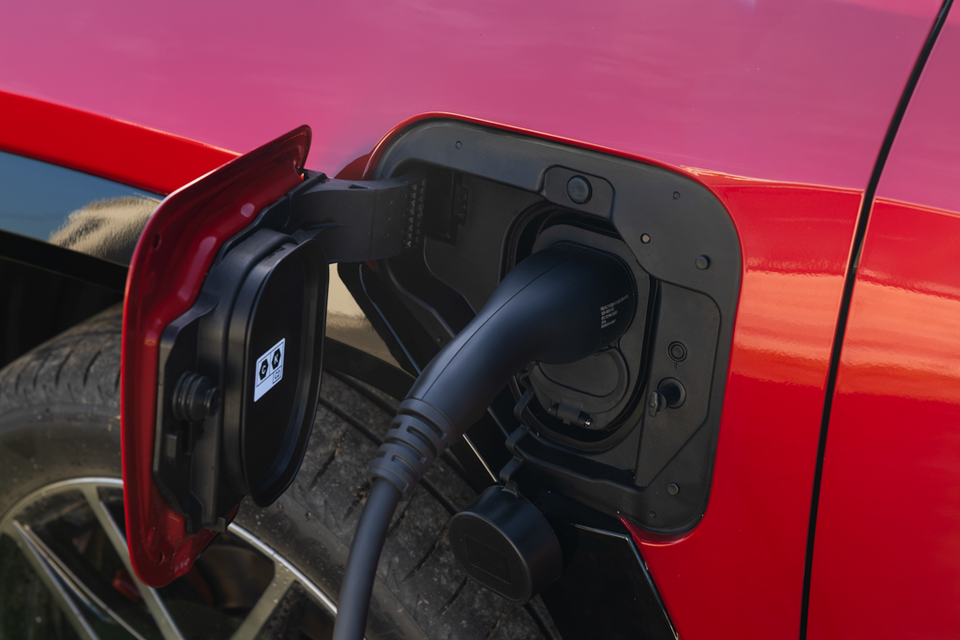
From full, the GR Sport on test here can travel up to 113km on electric power alone, slightly down on the 121km claimed for the XSE PHEV. For most, that'll be enough to handle the daily commute.
To see how the Toyota RAV4 lines up against the competition, check out our comparison tool
It certainly puts the sport in GR Sport, for better and worse.
If this is the car for you, we’ll compare offers from trusted dealers, handle the back and forth and manage your purchase from enquiry to delivery.
Starting on a positive note, the plug-in hybrid system is as well sorted as any in this segment.
It packs a serious punch, that's for sure, offering immediate thrust and strong acceleration up to highway speeds.
That's especially true when the battery is charged, but not untrue when it isn't, which can't be said for all PHEVs. And regardless of charge, the GR Sport feels noticeably more sprightly than the standard RAV4 Hybrid.
Still, it’s better thought of as a warm SUV than a properly focused performance machine in the mould of the Cupra Formentor.
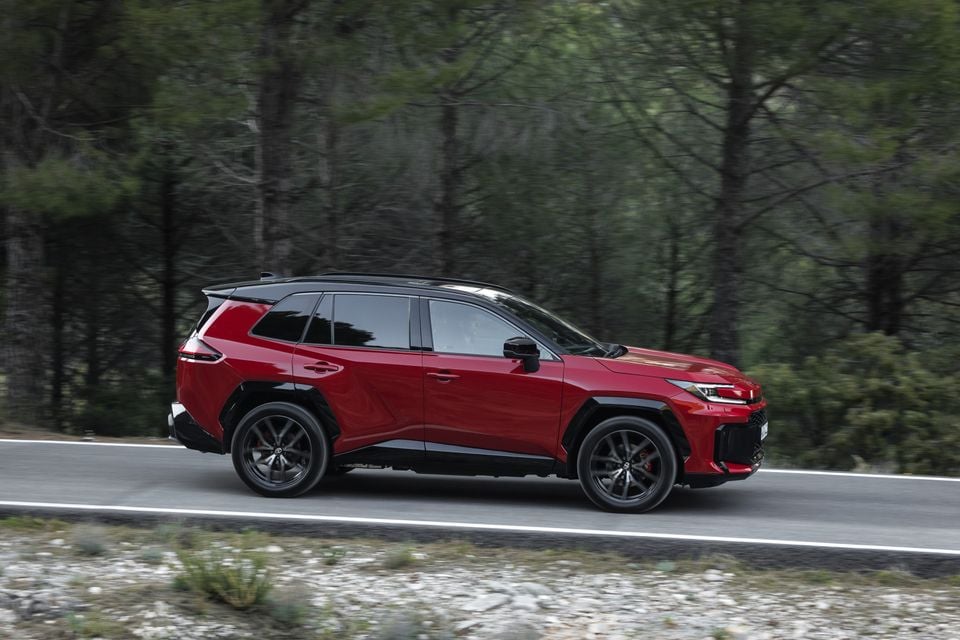
After all, the powertrain is still fundamentally similar to those in the cooking models, which is to say it wasn't designed with engagement front of mind. So, like other Toyota hybrids, the GR Sport makes an unpleasant racket at full load, exacerbated by an e-CVT transmission that denies the reprieve of conventional gearshifts.
The e-CVT hardly promotes driver involvement, either, but there’s a clear payoff in efficiency, especially when you're driving sensibly in the GR Sport's default Auto mode. Here, the powertrain is quiet and cohesive, delivering seamless changeovers between electric and hybrid power, the former indicated by a green 'EV' light on the instrument display.
Indeed, it defaults to EV power as much as possible, only really summoning the combustion engine when you sink your foot into the right pedal.
Switching to Hybrid mode lowers the threshold for engine engagement, although the system remains intelligent enough to ensure refined, frugal running.
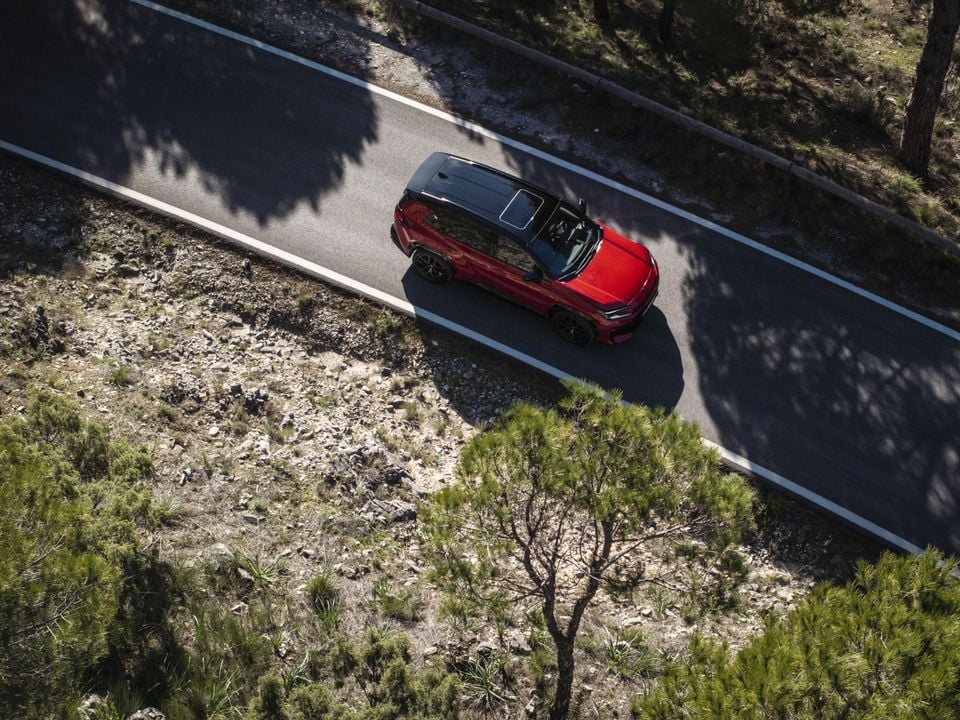
Then, of course, there's the option to drive this RAV4 as a proper EV – a first for this model in Australia. It's still pretty capable as an EV, too, with 113km of claimed electric range and 192kW of combined power from the two motors – perfect for commuting and urban errands.
Beyond the powertrain modes, Toyota has equipped the GR Sport with Eco, Normal, Sport and Custom drive modes, plus Trail and Snow terrain settings with hill descent control for rougher surfaces.
The RAV4's easily manageable dimensions, excellent outward visibility, forgiving safety systems, and full set of high-resolution cameras also underline its credentials as a city-friendly SUV.
PHEV versions add configurable regenerative braking to the mix, with six levels of intensity controlled via steering wheel paddles that fall naturally to hand.
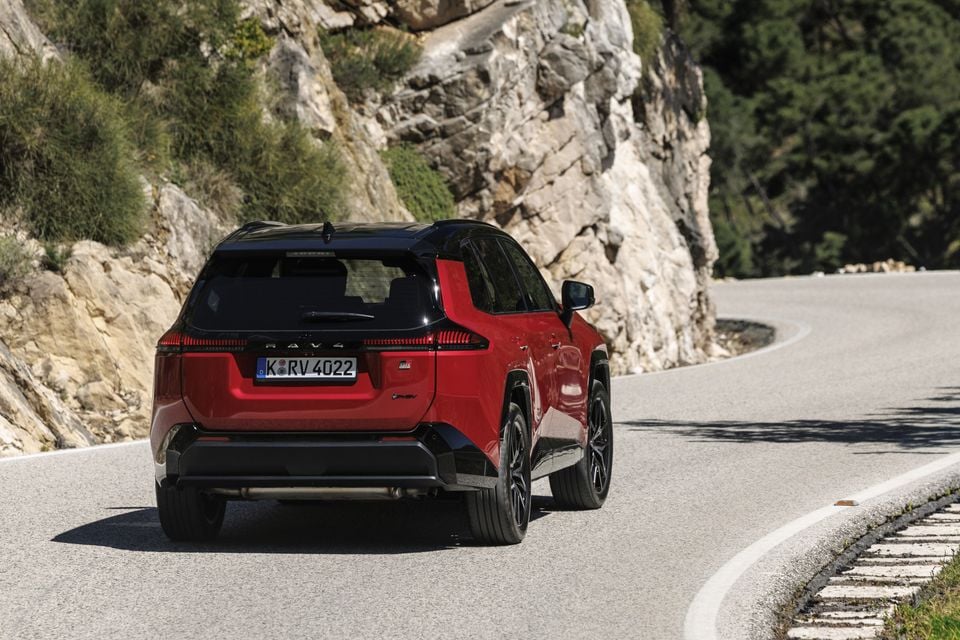
As such, you can theoretically get around town without much use of the brake pedal, although manual regen adjustments are only temporary, so you'll need to keep reaching for the paddles.
That may feel like unnecessary extra work for drivers used to the simplicity of conventional braking, but with no manual gearshifts to play with, the paddles add a welcome layer of interaction.
On that note, this traditionally vanilla crossover acquits itself quite well when driven with some enthusiasm.
Despite weighing over two tonnes, the GR Sport feels light on its feet, responding quickly to sharp steering inputs. The steering itself is light, but not unnaturally fast. Longer, sweeping corners draw attention to an impressively balanced chassis that does a good job of limiting body roll.
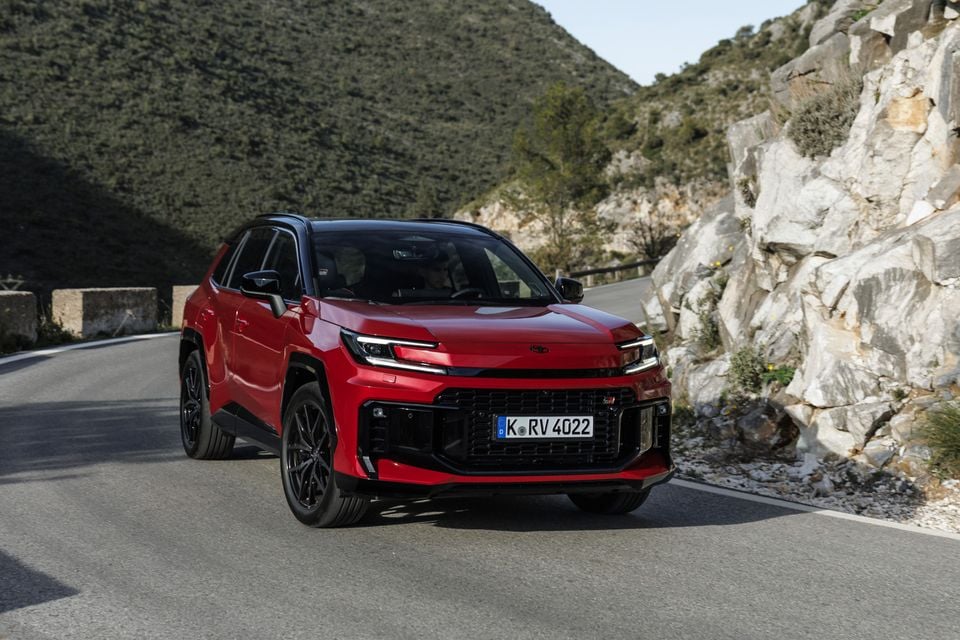
Wet weather isn't cause for concern either, given the grip generated by this variant's competent all-wheel drive system and premium Bridgestone tyres.
Yet, despite its enhanced capability, the GR Sport is still a RAV4. In other words, it's never going to be a car you jump out of bed to drive on a sunny Sunday morning.
And Toyota's fettling of the chassis and suspension components for a more sporty driving experience comes with an unwanted reduction in ride comfort.
It's instantly apparent that the GR Sport is firmer than its model-mates, having been set up to follow the road surface closely. You feel most lumps, bumps and variations in the tarmac, while some sharper hits left me wincing from behind the wheel.
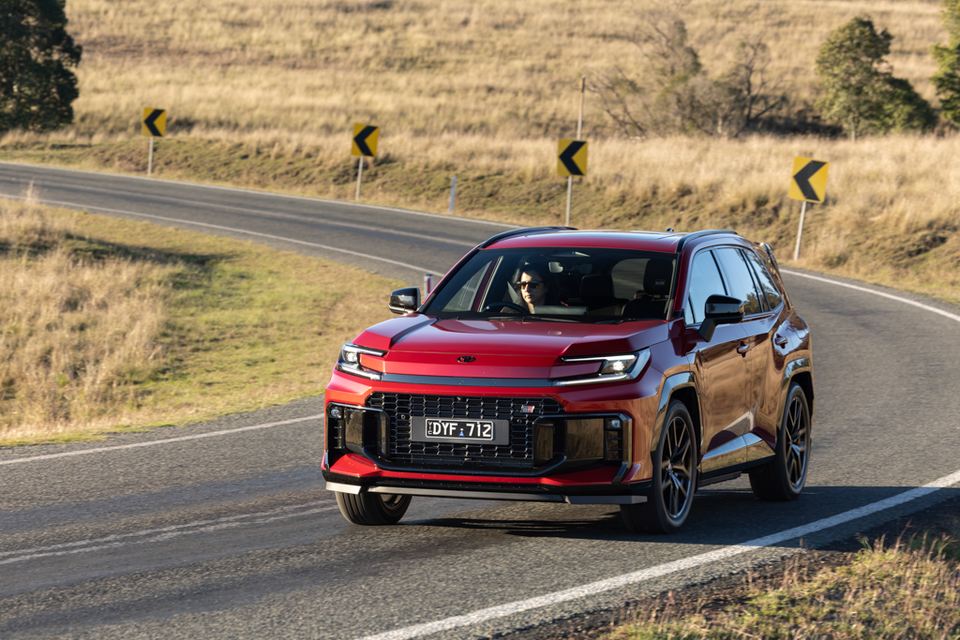
Now don't get me wrong, there are far harsher SUVs going around. I suppose I just didn't expect such busyness from something wearing a RAV4 badge.
To that point, I'd suggest the suspension could have been backed off slightly, given the GR Sport will predominantly be used for family outings, rather than track days.
I'd also welcome additional insulation, as all new-generation RAV4s let in quite a bit of external noise at higher speeds, which doesn't bode well for the enjoyment of long road trips.
The inclusion of adaptive cruise control and a trustworthy lane-centring system help to keep the driver happy, at least. And the safety aids don't kick up a stink unless you do something irresponsible.
To see how the Toyota RAV4 lines up against the competition, check out our comparison tool
The 2026 RAV4 is offered in six trim levels, but only the XSE and GR Sport can be had with plug-in hybrid power.
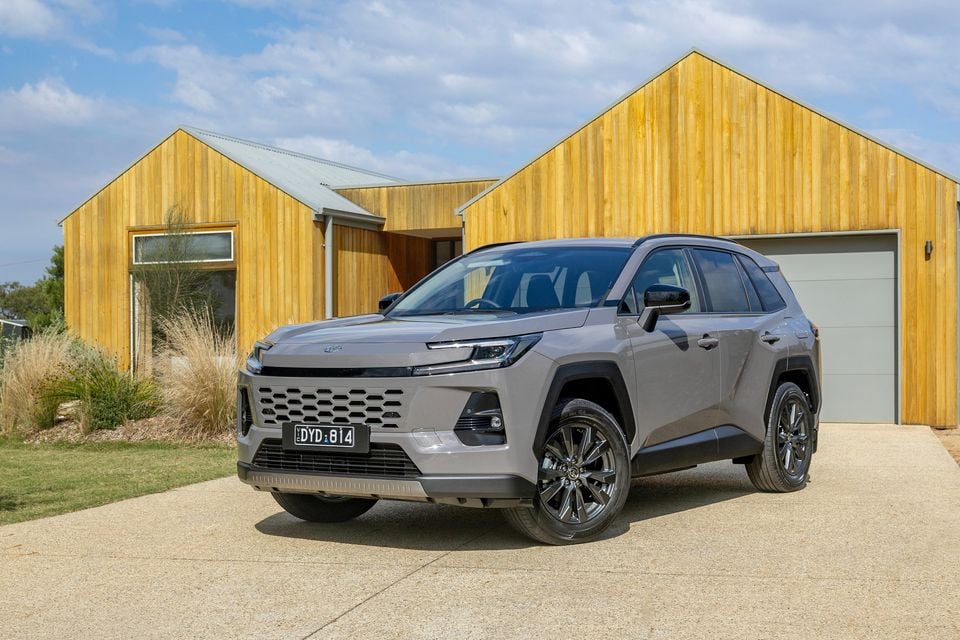
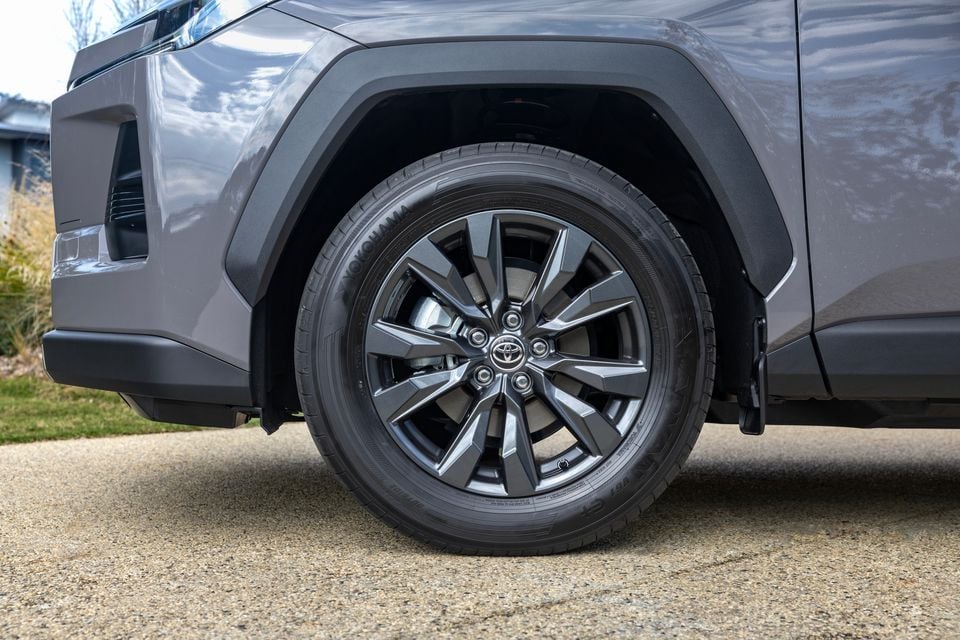
2026 Toyota RAV4 GX equipment highlights:
GXL adds:
Edge adds:
XSE adds:
XSE PHEV adds:
Cruiser adds:
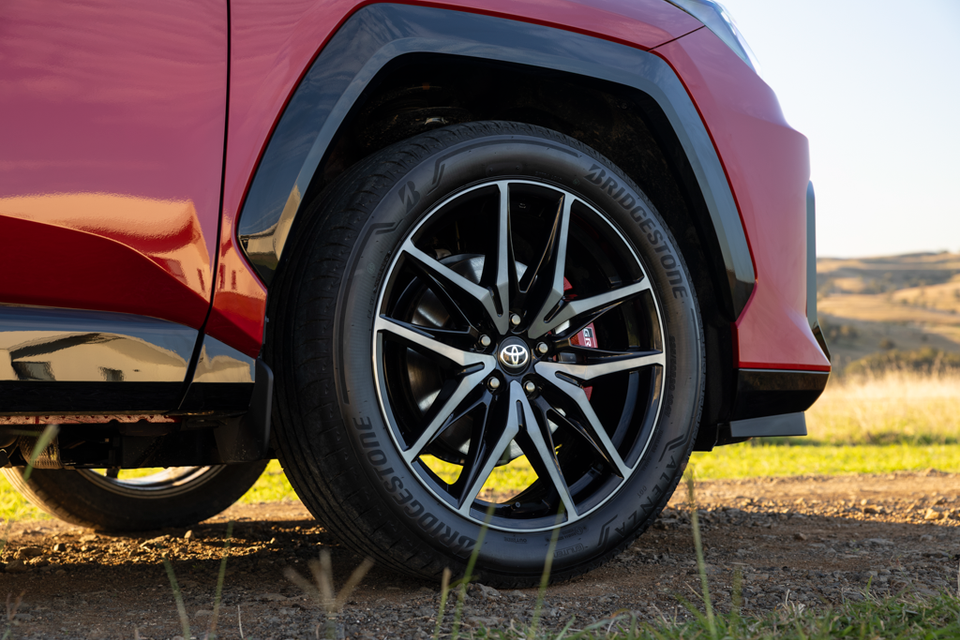
GR Sport adds:
To see how the Toyota RAV4 lines up against the competition, check out our comparison tool
The “safest RAV4 ever” still doesn't have an ANCAP rating, although Toyota has previously promised running upgrades to bring the new model up to five-star safety standards.
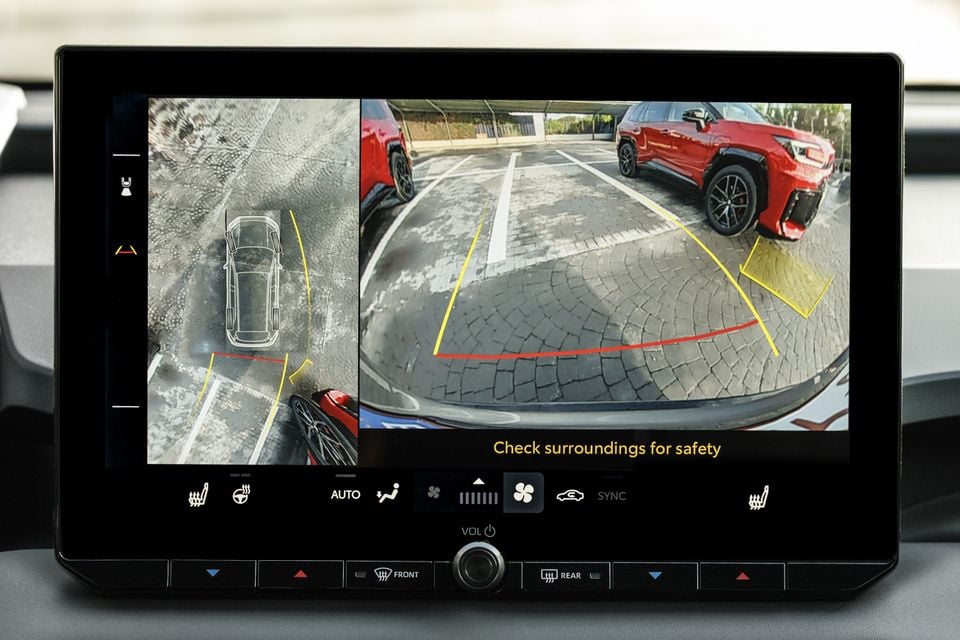
Standard safety features include:
RAV4 XSE adds:
RAV4 Cruiser adds:
To see how the Toyota RAV4 lines up against the competition, check out our comparison tool
As with the wider Toyota lineup, the RAV4 is covered by Toyota Australia’s five-year, unlimited-kilometre new-vehicle warranty, with up to 10 years of traction battery coverage if you service within the brand’s dealer network.
| Servicing and Warranty | Toyota RAV4 PHEV |
|---|---|
| Warranty | 5 years, unlimited kilometres – vehicle Up to 10 years, unlimited kilometres – PHEV battery, service-activated |
| Roadside assistance | Up to 7 years (service-activated) |
| Service intervals | 12 months or 15,000 kilometres |
| Capped-price servicing | 5 years or 75,000 kilometres |
| Average annual service cost | $325 |
| Total capped-price service cost | $1625 |
Service pricing is capped at $325 per visit for the first five years, regardless of powertrain or variant, which is less than you'll pay to maintain most mid-size SUVs.
And being a PHEV, the GR Sport shouldn't cost much to run on a daily basis, provided you make the most of its EV capability.
Over the longer term, Toyotas are renowned for their strong resale values, so depreciation is unlikely to hurt your hip pocket too hard when you decide to sell your RAV4.
To see how the Toyota RAV4 lines up against the competition, check out our comparison tool
The versatility of PHEV power suits the RAV4 – a mid-size SUV that has long traded on its ability to handle just about everything life throws at it.
Whether it's the school run, the city commute, a weekend getaway, or even the occasional spirited drive, the RAV4 PHEV can adapt better than it ever could as a regular hybrid, and that's no small feat.
However, I wouldn't necessarily advocate for the GR Sport.
While it looks tough, the flagship variant takes itself too seriously, adopting unnecessarily firm suspension that hurts its everyday usability.
And let's be real, how many people are actually going to care that it corners 10 or 20 per cent better? Or at least care enough that they're willing to forego comfort to the same degree. Not many, I'd bet.
As such, the considerably cheaper PHEV XSE – either front- or all-wheel drive – represents stronger value for the vast majority of buyers, whereas the GR Sport really only makes sense if you love the look.
But regardless of specification, the RAV4 PHEV is among the most rounded mid-size plug-in hybrid SUVs you can buy. It handles Australian roads better than budget-friendly Chinese rivals, and boasts more standard equipment than the equivalent Outlander, CX-60, or Terramar PHEVs.
The elephant in the room is the Tiguan eHybrid, which can be had in top 200TSI R-Line trim for $73,990 drive-away until at least the end of September. For slightly more than the GR Sport, the VW trades all-wheel drive and some utility for adaptive dampers, a sportier dual-clutch auto, a more premium interior, and European sophistication.
So, if you're shopping in this space, it's well worth taking both for a test drive.
CarExpert can save you thousands on a new Toyota RAV4. Click here to get a great deal.
Click the images for the full gallery
If this is the car for you, we’ll compare offers from trusted dealers, handle the back and forth and manage your purchase from enquiry to delivery.
Quickly see how this car stacks up against its competition. Select any benchmark to see more details.
Toyota RAV4
Toyota RAV4 Sales rolling 12-months#
*Based on VFACTS and EVC data
Looking for complete Toyota RAV4 price history?
Our Toyota RAV4 Pricing Page shows exactly how prices have changed over time.
2023
$46,368
2023
$50,041
2026
$50,407
2026
$53,557
2023
$55,921
2023
$56,446
2026
$60,225
2026
$61,957
2023
$63,219
2026
$63,375
2026
$71,775
Josh Nevett is an automotive journalist covering news and reviews, with a background in motorsport journalism.
Add CarExpert as a Preferred Source on Google so your search results prioritise writing by actual experts, not AI.
William Stopford
50 Minutes Ago

Damion Smy
2 Hours Ago
Damion Smy
2 Hours Ago

Tace Clifford
5 Hours Ago
William Stopford
1 Day Ago
Damion Smy
2 Days Ago
Add CarExpert as a Preferred Source on Google so your search results prioritise writing by actual experts, not AI.
# Based on VFACTS and EVC data
† Displayed prices are based on the drive-away price of the vehicle, which includes delivery charges, registration fees, number plates, and applicable road taxes, based on a Sydney location. However, prices may vary between states and territories, and additional costs such as compulsory third party (CTP) insurance, dealer delivery fees, and optional extras are not included. These prices are subject to change without notice and may not reflect current market pricing or dealer offers.
 Automotive Vehicle Spec Data & 4K images Powered by JATO Dynamics Ltd