
Marton Pettendy
Born-again Ford Mustang Cobra confirmed
The Blue Oval’s famous Cobra nameplate could return on a high-performance naturally aspirated V8 manual Mustang.
11 Minutes Ago

Senior Editor – News
Japanese 660cc kei trucks may appear to be wildly at odds with American buyer tastes, but as in Australia these pint-size cargo-haulers are increasingly popular as grey imports – and now Toyota wants a piece of the action.
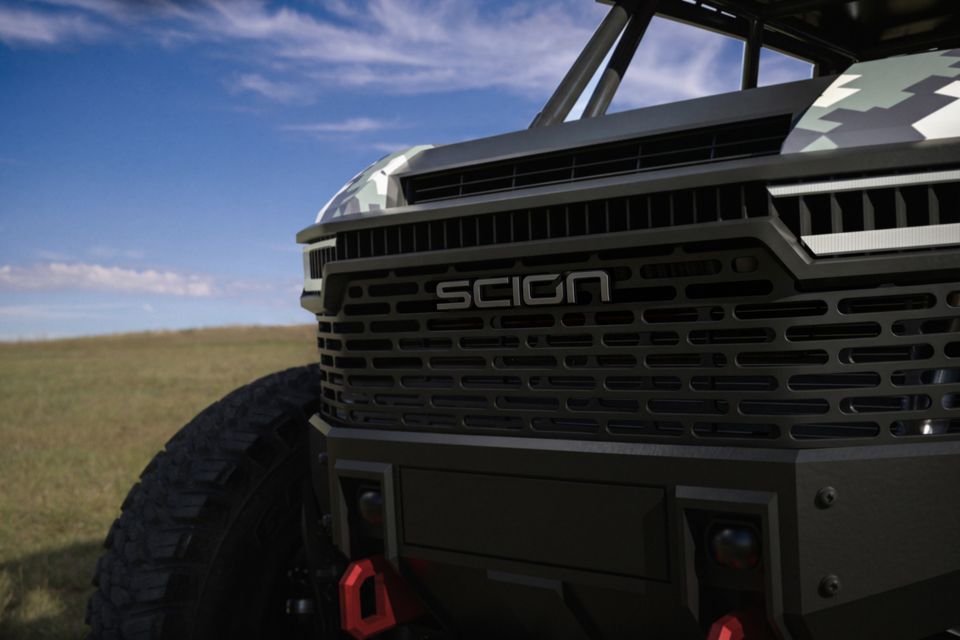
Toyota Motor North America is dusting off the Scion brand name to sell these kei trucks, which will be assembled at its plant in the US state of Indiana.
Scion was initially founded in 2003 as a brand targeting young buyers and offering models like the tC coupe and the quirky xB, the second generation of which was sold in Australia as the Rukus.
However, the brand was shuttered in 2016, with many of its vehicles rebranded as Toyotas. Now, Scion is back – technically as Scion by Toyota – and Toyota says it has the same “experimental spirit” as before, even if it’ll offer very different vehicles.
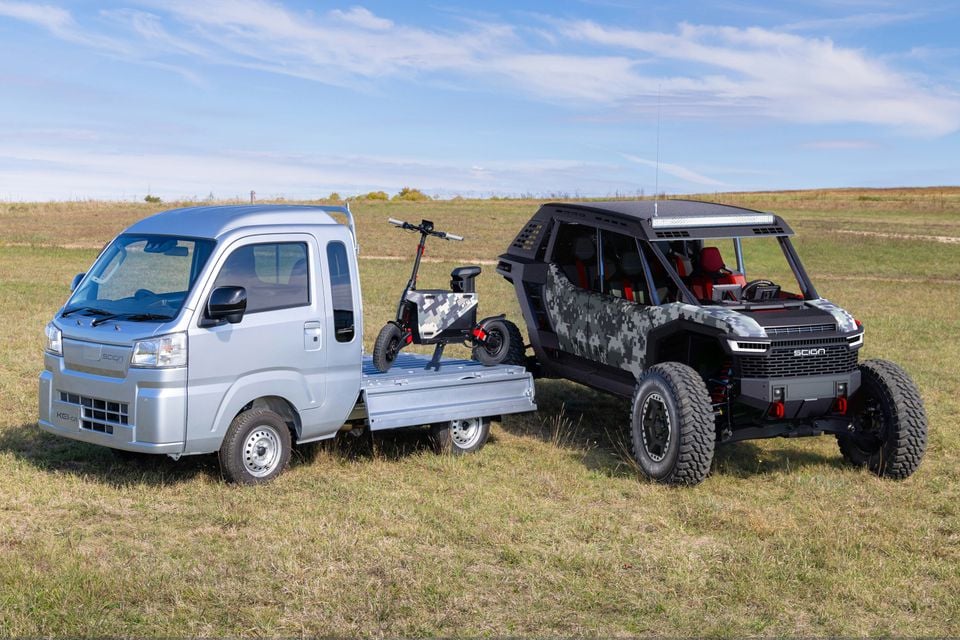
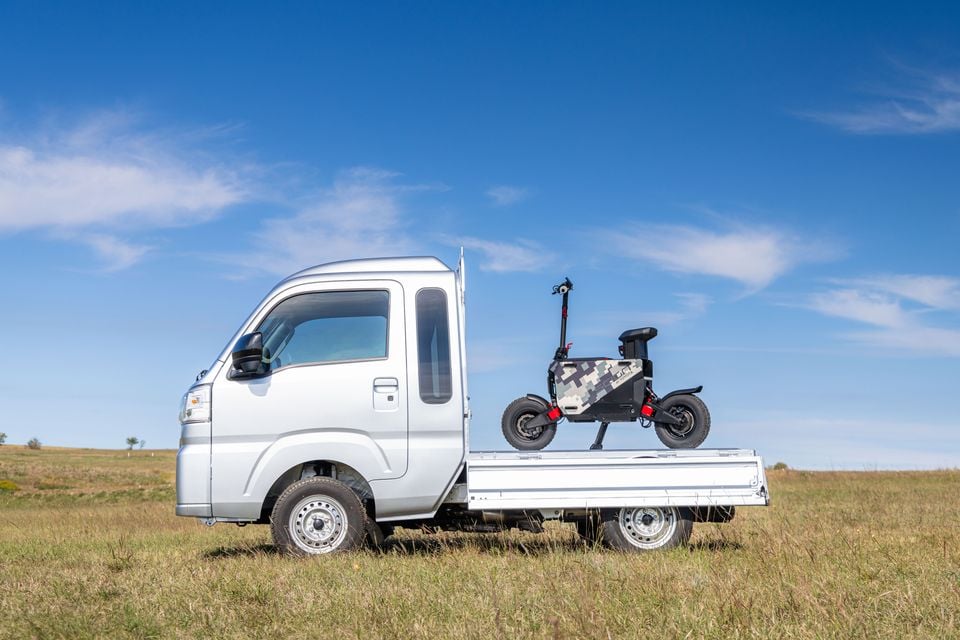
Its first model is the KEI-01, based on the Daihatsu Hijet and due in the US in the second half of 2027. It was revealed alongside two concepts, the BKE and the SxS – a scooter of sorts and a side-by-side, respectively.
Toyota is investing US$34 million (A$49.4m) in its Toyota Motor Manufacturing Indiana operations to assemble the KEI-01, creating 50 new jobs. But it’s also cautioning the KEI-01 will be an “intentionally low-volume, niche vehicle”.
It’s powered by a 660cc three-cylinder engine mated to a continuously variable transmission (CVT) and a four-wheel drive system.
The catch here is it'll be offered in the left-hand drive United States as a right-hand drive vehicle, compliant with federal standards for so-called Low-Speed Vehicles (LSVs). That means its top speed will be limited to 25mph (40km/h), so Americans won’t be taking to their Interstates with these kei trucks.
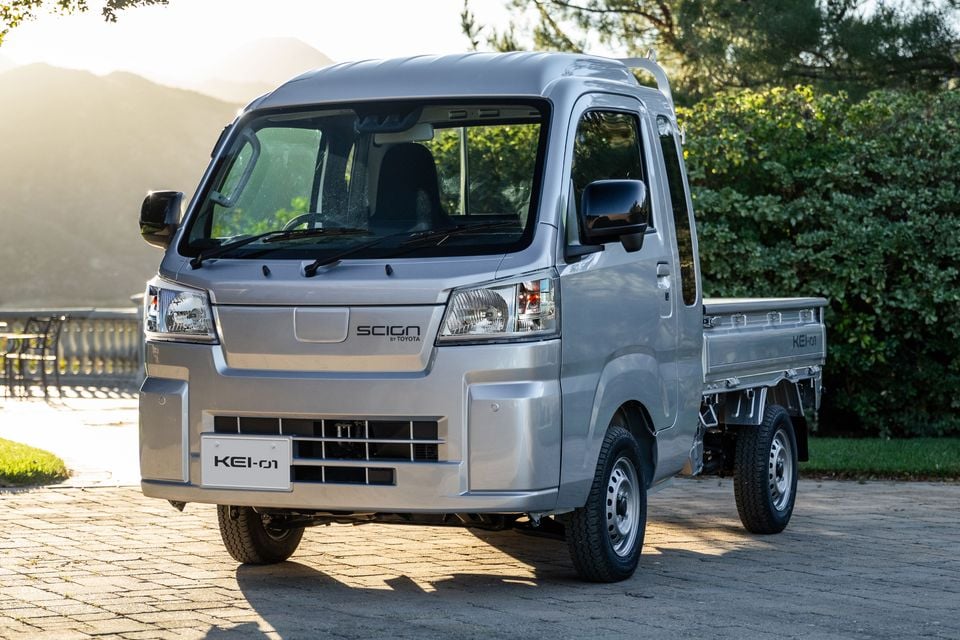
Consequently, these are being targeted at fleet buyers, and the Kei trucks will be sold through a small network of authorised Scion by Toyota dealers within the existing Toyota dealer network. Toyota says it may consider expanding availability to “limited retail sales at a later date”.
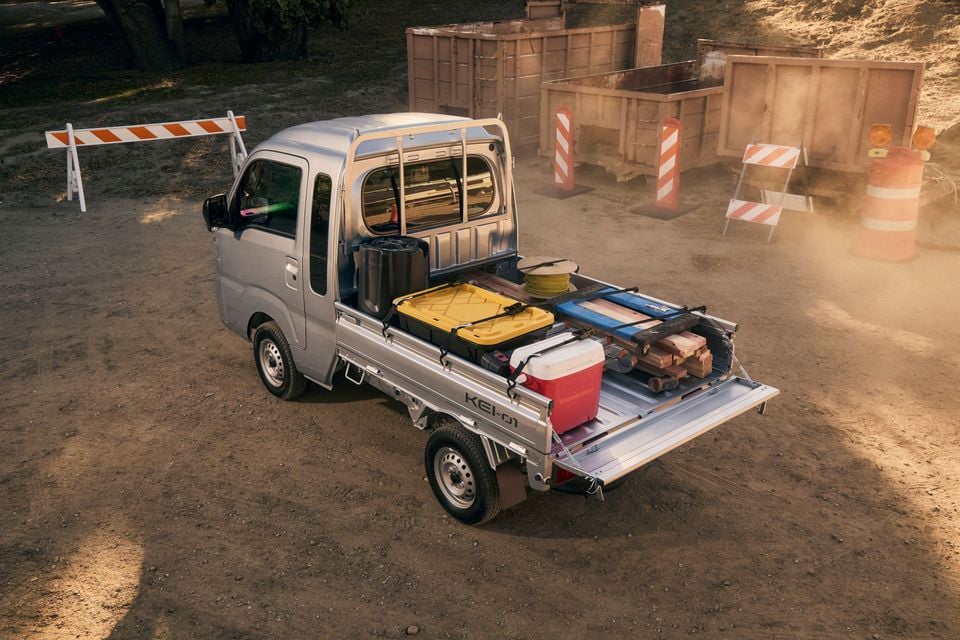
The KEI-01 features a three-way fold-down cargo tray and an extended-cab design that allows for reclining and sliding seats, plus secure interior storage. Payload is up to 272kg in the tray.
Confirmation of the KEI-01 comes after US President Donald Trump said late last year he would permit the sale of new Kei vehicles, calling them “very small” and “really cute”.
While Kei cars have become popular used imports in the US, they are restricted from registration and/or road use in Iowa, Maryland and Oregon.
While US Secretary of Transportation Sean Duffy said in December his department would be “clearing the deck” for the approval of Kei vehicles, the KEI-01 is being made compliant with existing LSV regulations.
LSVs have a multitude of uses, and are often utilised for transport around university campuses and resorts, and by groundskeepers in parks. Toyota specifically cites farmers, ranchers, municipalities, universities and urban delivery providers among the expected users, though it also says it may appeal to outdoor enthusiasts.
The KEI-01 has only been designed to comply for limited road use, despite President Trump’s earlier remarks suggesting a broader approval.
Ahead of the start of local KEI-01 assembly, Toyota has also commenced export of US-built vehicles to Japan – including the Tundra – with the Japanese government loosening restrictions to permit their sale there.
While Toyota hasn’t confirmed any other production Scion vehicles yet, it has showcased two concepts.
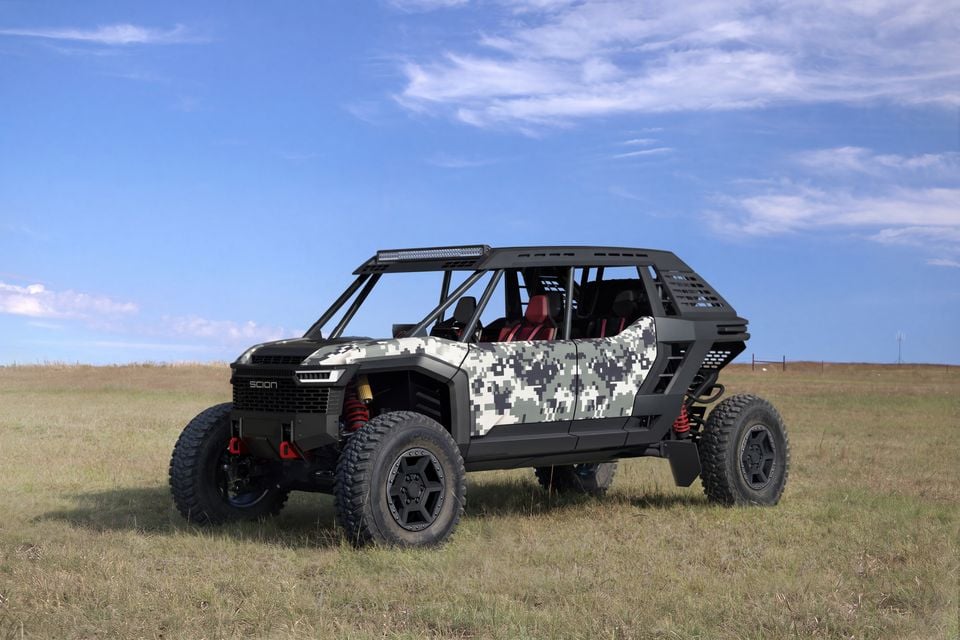
In conjunction with the KEI-01, the SxS Concept and BKE Concept are intended to “represent different expressions of the brand’s vision for future mobility”, with Scion resurrected as a “freedom lab built around bold ideas, curiosity and possibility”.
“Scion by Toyota will learn and evolve through new vehicle concepts, designs, capabilities, and experiences that could help shape the future of Toyota mobility,” the company said in its release.
First shown at the 2025 SEMA Show, the SxS Concept is a side-by-side using a turbocharged four-cylinder hybrid powertrain with more than 300 horsepower (221kW).
It’s designed for "everything from spirited desert running to technical rock crawling”, and Toyota says it will continue to evolve the concept to evaluate its potential.
The original iteration of Scion was focused on young buyers with a heavy emphasis on personalisation, and featured no-haggle pricing and a wide range of accessories.
After reaching a height of 173,034 sales in 2006, sales dropped off and Scion confirmed in 2016 it would be absorbed into the Toyota lineup.
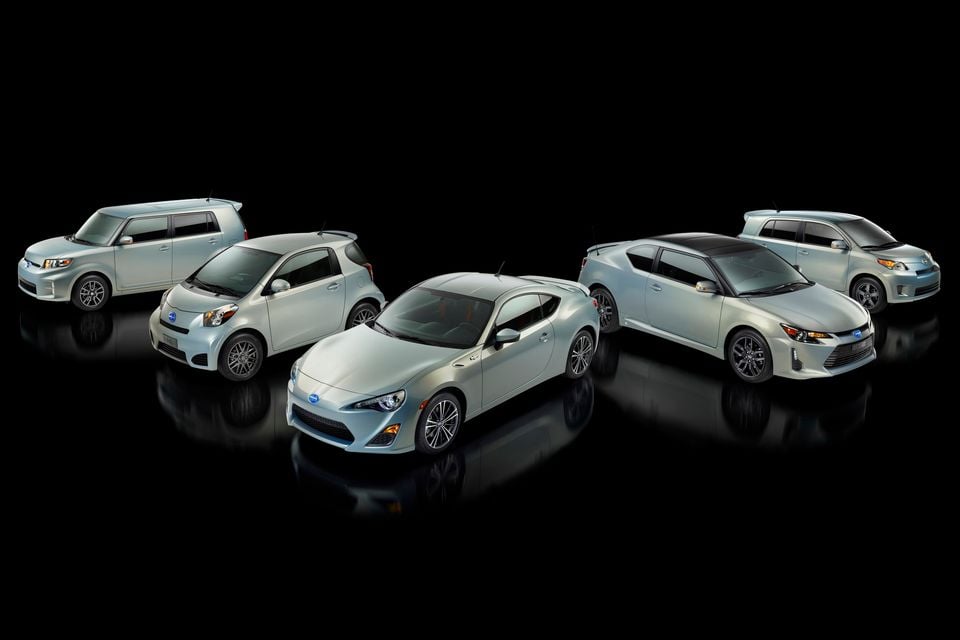
During its 13-year run, Scion offered the iQ micro car; the xA and xD hatchbacks; the boxy xB wagon; the tC coupe; the FR-S, a rebadged Toyota 86; the iA, a rebadged Mazda 2 sedan; and the iM, a rebadged Toyota Corolla hatchback.
Scion isn't the only name Toyota is dusting off.
After teasing its return, Toyota officially confirmed earlier this month it would resurrect the Celica nameplate on a rally car, with a production version of the coupe expected to follow. The Celica nameplate has been dormant for even longer than Scion, with the last example rolling off the production line in 2006.
Research cars in our Showroom, compare your options or let our New Car Specialists do the running around to find you a great deal.
William Stopford is an automotive journalist with a passion for mainstream cars, automotive history and overseas auto markets.
Marton Pettendy
11 Minutes Ago

James Wong
2 Hours Ago
William Stopford
2 Hours Ago
William Stopford
3 Hours Ago
James Wong
7 Hours Ago

Alborz Fallah
14 Hours Ago
Add CarExpert as a Preferred Source on Google so your search results prioritise writing by actual experts, not AI.