





2027 BMW X5 review: Quick drive
The BMW X5 has undergone a visual and technological transformation for its fifth generation, but is the large luxury SUV better for it?

CarExpert's take on the X5
Very Good
What we love
- Drives like an X5, but better
- Much more kit for similar money
- Choice of two epic powertrains
Worth a thought
- No third row, surprisingly pinched second row
- Tech overload with fewer physical controls
- Less classically attractive than predecessor
Are there other rating labels?
- Excellent
- An outstanding car in almost every way. A joy to drive, packed with great features, and highly recommended.
- Very Good
- A well-rounded car that's enjoyable to drive, offers great value or features, and is easy to recommend.
- Good
- A solid choice that does most things well. Comfortable, capable, and worth considering in this segment.
- Average
- Meets the standard for this segment. May not stand out, but still a dependable and reasonable option.
- Below Average
- Falls a bit behind others in the segment, but still passes safety checks and may suit specific needs or budgets.
Introduction
All the way back in 1999, the original BMW X5 pioneered the 'Sports Activity Vehicle' (SAV) concept, proving that a premium family SUV needn't drive like a farm truck.
Fast-forward nearly 28 years, and the X5 is entering its fifth generation. The large luxury SUV remains true to its founding philosophy of marrying utility with driving pleasure, although many of the changes introduced for the latest model are instead aimed at strengthening its luxury credentials.
It's bigger and heavier than before, with a longer wheelbase, yet loses the option of a third row, prioritising second-row comfort and luggage space.
The roomier cabin is also packed with additional equipment and a new Panoramic iDrive technology suite to satisfy the increasingly lofty expectations of modern buyers.
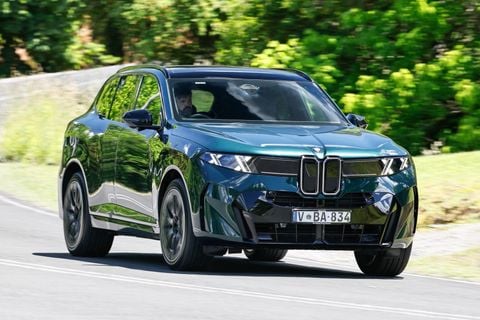
While it doesn't ride on BMW's next-generation Neue Klasse electric vehicle (EV) architecture – though a battery-powered iX5 is coming – the new X5 adopts the same 'monolithic' design language first showcased by the smaller iX3.
The two share similar proportions and styling cues, including a bluff front-end and illuminated kidney grille, although the X5 looks noticeably more muscular.
Oh, and it rocks a set of double-X headlights that make it look like a deceased cartoon character.
Overall, I don't think it's quite as easy on the eye as its predecessor. Bolder, perhaps, but less classically attractive.
Two variants will be available in Australia at launch, both powered by revised versions of the outgoing car's B57 and B58 six-cylinder engines. So, for all the changes elsewhere, it's business as usual under the bonnet... at least for now.
And that's unlikely to cause much of a stir, given the outgoing G05 X5 was a smash hit.
More than one million examples were sold globally, while Australian deliveries topped 25,000 – making it the most successful generation locally, accounting for almost a third of all X5s sold here.
As such, there's pressure on this newcomer to achieve the same. To see whether it's up to the task, we headed to New South Wales for a first drive.
How much does the BMW X5 cost?
The two launch variants – the 40d xDrive and 40 xDrive – are priced $4000 and $2000 higher than their previous-generation equivalents, respectively.
| Model | Price before on-road costs |
|---|---|
| 2027 BMW X5 40d xDrive | $143,900 |
| 2027 BMW X5 40 xDrive | $145,900 |
As before, the X5 takes on the Land Rover Defender, Mercedes-Benz GLE, Audi Q7, Genesis GV80, Volvo XC90, Lexus RX and Porsche Cayenne in the premium large SUV segment.
Of that group, the recently updated GLE350d is the closest match for the 40d xDrive, priced from $142,300 before on-road costs. We'd expect the turbo-diesel launch variants of the third-generation Q7 – due early next year – to be around the same mark, though pricing remains under wraps.
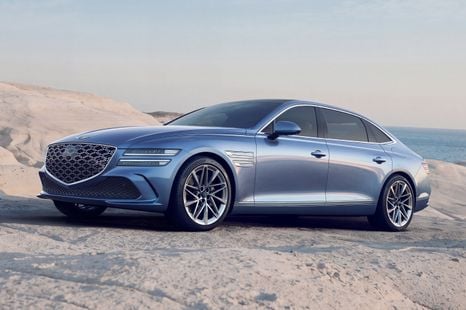
The GV80 3.5T Signature (from $132,000 before ORCs), on the other hand, represents a strong value alternative to the petrol-powered X5, as does the base Cayenne (from $144,900 before ORCs).
Compare the BMW X5
Want to see how the BMW X5 lines up against the competition?
Use our comparison tool for a side-by-side look at the specs, features and prices of the X5 and its rivals.

What is the BMW X5 like on the inside?
Starting on the outside, the new X5 trades traditional door handles for pressure-sensitive winglets – the latest in a long line of alternatives we didn't know we needed.
As far as door handle substitutes go, they're relatively inoffensive – uncomplicated to operate and without an obvious fatal flaw. The little protrusions do look a bit silly, though.
Soft-close doors are now standard across the range – great news for parents with careless children – while automatic doors are available as a $2500 option.
The interior also represents a significant departure from tradition, for better or worse.
For the first time since 2007, there's no rotary controller for BMW's iDrive infotainment, with the central screen absorbing many of the functions previously attached to physical controls on the centre console. The dial alone is no great loss in my eyes, but I'll miss being able to select drive modes and redirect air flow without consulting a touchscreen (yes, I'm aware voice control exists).
My interactions with the infotainment system at least suggest BMW has put some thought into the integration of all the features and functions. Tapping the temperature icon presents shortcuts for 'direct' and 'indirect' air flow, for example. The quirky parallelogram screen is also easy to reach from the driver's seat.
But the app ecosystem and menus are undoubtedly intimidating at first. Everything is clearly labelled, but there's a lot to take in, and you'll probably need an hour in the carpark to figure it all out.
The upside is lots of functionality, including native satellite navigation, wireless smartphone mirroring and a connected app store.
That extends to the passenger screen, which is actually useful! So many aren't, forcing kids back onto their phones, but the system in the X5 allows the shotgun-rider to stream video content, play games and much more, while supporting up to two Bluetooth devices – headphones, game controllers, microphones etc – simultaneously.
Its compatibility with headphones helps to prevent driver distraction, as does a monitor that locks the screen when the steerer glances across at it for longer than 1.5 seconds at a time, or 10 seconds within a 30-second period. This safety mechanism doubles as a means of punishing your misbehaving offspring.
On the subject of screens and distraction, BMW has also done away with a physical instrument display, replacing it with Panoramic Vision – a pillar-to-pillar projection that shows key driving information including speed, trip data, and navigation directions across the base of the windscreen. On this change, I'm neutral-to-positive. The display is highly configurable and helps to keep your eyes up on the road, but combining it with an additional head-up display seems like overkill.
The aforementioned technologies are all powered by BMW's latest operating system, and the visual step up is clear.
The three steering wheel designs, on the other hand, are a visual step down. All are not-quite-circular and littered with glassy haptic buttons that are too closely bunched, while the two standard (non-M Sport) options feature ghastly, confusing vertical spokes. Thankfully, they're much nicer to hold than they are to look at, and the M Sport tiller can be optioned at no cost.
Seemingly unchanged stalks behind the wheel serve as a reminder of BMWs past.
The driving position initially felt a little awkward, with the driver's seat and steering wheel seemingly offset.
Otherwise, comfort isn't an issue. Electric steering wheel adjustment allows a broad, precise range of movement, with more than enough reach to accommodate taller drivers sitting further back.
And the front seats are superbly cushioned, with gentle bolstering, wraparound head restraints and extensive electric adjustment, now controlled through toggles on the doors. Automated seat heating and ventilation are now standard, as is a nine-program massage function. The Comfort Package ($2300) adds heated front armrests and a heated centre armrest among other goodies that help to justify the X5's upmarket positioning.
As does the selection of materials, if you play your cards right.
The new X5 can be specced in dozens and dozens of different ways, with buyers able to select from a variety of different upholstery types, colours, and trim options.
BMW Australia went all out with our test cars, exposing us to the best leathers as well as the 'Clear&Bold' upgrade bringing polished crystal glass elements for the gear selector, start/stop button and seat controls, plus a slate surround for the centre console.
Ticking these boxes certainly makes the car feel expensive, though the reduction in tactile switchgear hurts its cause, and glossy, smudge-prone plastic makes an unwelcome appearance.
Still, hard scratchy plastics are hard to come by, and the build quality is rock-solid.
The cockpit isn't as practical as it should be though, particularly for such a big car. The centre console offers little in the way of cubbies, while the split-opening armrest compartment is shallower than expected.
BMW seemingly couldn't find the budget to line the door bins, so loose items may rattle around.
Phones are best kept on the dedicated pads behind the central cupholders, one of which offers magnetised wireless charging. Two USB-C outlets can be found close by.
Moving back, the second row is surprisingly cosy, considering the wheelbase has grown by 60mm and there's no longer a seven-seat option.
At 185cm tall, I found legroom limited behind my preferred driving position. My knees cleared the cutouts in the front seatbacks, but my shins pressed against the hard plastic map pockets. Foot space under the front seats is also at a premium, although headroom is abundant under the panoramic glass roof.
On a brighter note, the rear bench itself is supremely comfortable with a natural seating angle, generous cushioning and the option of soft head restraint pillows.
The aforementioned Comfort Package adds outboard seat heating and an additional zone of rear climate control, complemented by a total of four separate air vents, so there's no reason to be too hot or too cold.
Storage and charging provisions are plentiful, with highlights being a second magnetic wireless charger and phone holders mounted to the front seatbacks, each with its own USB-C port for endless doomscrolling.
Boot space has never been an issue with the X5, and that's especially true of the G65 now that a third row is off the menu.
But, much to my dismay, BMW has ditched its split tailgate design for a more conventional setup, robbing us of flexible loading options and the option to sit on the fold-down panel.
A space-saver spare wheel lives beneath the boot floor, so you won't be relying on a can of goo to fix a puncture (or worse)!
| Dimensions | BMW X5 |
|---|---|
| Length | 4998mm |
| Width | 2000mm – excl. mirrors 2216mm – incl. mirrors |
| Height | 1751mm |
| Wheelbase | 3035mm |
| Cargo capacity | 655L – rear seats up 1850L – rear seats folded |
To see how the BMW X5 lines up against the competition, check out our comparison tool
What's under the bonnet?
Both launch powertrains use a 3.0-litre inline six-cylinder engine with a 48V mild-hybrid system.
| Specifications | X5 40d xDrive | X5 40 xDrive |
|---|---|---|
| Engine | 3.0L turbo-diesel inline-six | 3.0L turbo-petrol inline-six |
| Electrification | 48V mild-hybrid system w/ 0.9kWh battery, 13kW/200Nm electric motor | 48V mild-hybrid system w/ 0.9kWh battery, 13kW/200Nm electric motor |
| Power | 230kW | 294kW |
| Torque | 670Nm | 540Nm |
| Transmission | 8-speed automatic | 8-speed automatic |
| Drive type | All-wheel drive | All-wheel drive |
| Kerb weight | 2430kg | 2365kg |
| 0-100km/h time (claimed) | 6.1 seconds | 5.3 seconds |
| Fuel economy (claimed) | 7.0-7.3L/100km | 8.6-9.3L/100km |
| Fuel economy (as tested) | 8.2L/100km | 8.4L/100km |
| Fuel tank capacity | 75L | 83L |
| Fuel requirement | Diesel | 95-octane premium unleaded |
| CO2 emissions | TBC | TBC |
| Braked towing capacity | 3000kg | 3000kg |
The diesel-powered 40d xDrive delivers an extra 20kW and 20Nm over the xDrive30d it replaces, while the petrol-powered 40 xDrive produces 14kW and 20Nm more than the xDrive40i.
At the same time, both variants are more fuel efficient than their predecessors, despite gaining 135kg and 125kg respectively.
Plug-in hybrid (PHEV) and electric versions of the new X5 – the latter with up to 845km of claimed driving range – are locked in for Australia, both due here by mid-2027.
To see how the BMW X5 lines up against the competition, check out our comparison tool
How does the BMW X5 drive?
We sampled just about everything the new X5 will offer from launch, including both powertrains, both suspension options and several different wheel sizes, driving from central Sydney down to Bundanon and back via a mix of city streets, multi-lane motorways and country roads.
Based on how it looks and how it feels inside, you'd be wise to assume the fifth-generation model is radically different to drive. But you'd be wrong, because there's a welcome familiarity to how BMW's new large SUV goes down a road.
Understandably, the powertrains play a large role in this. Now synonymous with modern BMWs, both carryover engines are as smooth, efficient and effective as they've ever been.
The B57 turbo-diesel offers the strong low-down torque and touring capability expected from an oil-burner, without the horrible clatter.
On the other hand, the B58 turbo-petrol sings a sweeter tune through its wider power band, making it the choice for keen drivers.
Neither is overly audible, though, as the new X5 is quieter than ever, with both engines so well isolated from the cabin that you could almost mistake them for electric motors at times. There's virtually no vibration through the controls, while active noise cancellation further suppresses unwanted noise.
Both pedals deliver great feel, and the mild-hybrid system remains unobtrusive. BMW's familiar ZF eight-speed automatic shifts as smoothly as any.
Despite its growth spurt and weight gain, the X5 is still easy to place on the road. A large glasshouse, low shoulder line and several high-resolution exterior cameras ensure excellent outward visibility, while light steering makes navigating tight spaces a breeze.
That's true of all variants, yet optional rear-wheel steering is still transformative, unlocking a new level of manoeuvrability by effectively shortening the wheelbase at low speeds.
Previously available as a $2500 standalone option, it's now bundled into a $7000 package that also includes air suspension and active roll stabilisation. That's a substantial jump in cost, but it's still a worthwhile upgrade for those who regularly navigate tight city streets and crowded shopping centre car parks.
Especially considering the two-axle air suspension is likewise revelatory in how it improves the driving experience.
On the standard adaptive dampers, the new X5 rides a little firmer than hoped, not helped by the large 22-inch wheels fitted to our test vehicles. It feels reassuringly planted as a result, but isn't quite as compliant as something like a Hyundai Palisade over bumps and potholes, with smaller imperfections also filtering through into the cabin.
That said, this firmness is fairly typical of European luxury SUVs, and much of the punishment from the road surface is absorbed by the X5's superbly cushioned seats.
But after experiencing both setups, the air springs win hands down.
They take the sting out of the bumps and coarse tarmac that filters through on the standard suspension, delivering a noticeably smoother, more luxurious ride.
Rather than simply carrying over the system from the old car, BMW has refined it for the G65 by separating the rear air springs and dampers. This increases the volume of air within each spring, allowing for softer damping and greater comfort.
So, while it isn't cheap, the Adaptive Chassis Control package comes highly recommended. You're already spending around $150k to put an X5 on your driveway, so what's another $7k to get the best out of it?
By the same token, stay away from the larger wheel options if you can help it, particularly the 23s.
Dynamically, the X5 hasn't lost its sporting edge.
It's agile and composed when hustled along a country road, able to carry speed more confidently than the vast majority of large SUVs. This is even more true of examples equipped with rear-wheel steering.
The steering itself is a little slower off-centre than before. On one hand, that makes the car feel less darty at higher speeds, but it also introduces a hint of vagueness during initial inputs.
Then there's the active roll stabilisation system, which now operates at both the front and rear axles. It allows the wheels to move more independently on straight roads, smoothing out uneven surfaces, before stiffening the anti-roll bars to help the X5 remain flatter through corners.
However, the X5's ballooning weight becomes increasingly apparent the harder you press on. Driven like a sports car, it starts to lose its composure, pitching forward under hard braking and cornering with less precision despite the support of clever chassis tech. The additional mass also asks a lot of the tyres.
It's a good thing most owners won't drive it with such vigour, then.
By my count these entry-level X5 variants offer just two drive modes – Comfort and Sport – which comes as a relief, because cars are becoming needlessly complicated.
The advanced driver assistance systems (ADAS) don't necessitate much fiddling either, only disturbing the peace when strictly necessary. Should your experience differ, there's a digital shortcut icon to 'reduce warnings'.
While not quite as advanced as Tesla's Full Self-Driving (Supervised), BMW's Driving Assistant Plus takes much of the work out of long motorway journeys, handling speed, lane positioning and following distance competently.
My only gripe is that adjusting the latter requires a trip through the touchscreen menus or a voice command.
Regardless, the X5's quiet and comfortable nature renders it a relaxing road trip companion.
To see how the BMW X5 lines up against the competition, check out our comparison tool
What do you get?
Compared to their predecessors, the 40d xDrive and 40 xDrive gain $12,000 worth of additional standard equipment for a relatively modest price premium.
2027 BMW X5 40d xDrive and 40 xDrive equipment highlights:
- 21-inch alloy wheels
- Space-saver spare wheel
- M Sport package
- Adaptive M suspension
- Power tailgate
- Soft-close doors
- Panoramic sunroof
- Comfort Access incl. Digital Key Plus
- Parking Assistant Professional – semi-autonomous parking assist
- Power-adjustable 'multifunctional' front seats
- Heating
- Ventilation
- Massage
- Memory
- Veganza leatherette seat upholstery
- Heated 'Sports' steering wheel
- BMW Panoramic Vision display
- 17.9-inch touchscreen infotainment system
- 3D head-up display
- BMW Passenger Screen
- BMW Digital Premium – three-year subscription
- DAB+ digital radio
- Wireless phone charger
- 18-speaker Bowers & Wilkins sound system
- Ambient lighting
To see how the BMW X5 lines up against the competition, check out our comparison tool
Options
Buyers have plenty of choices to make, as BMW offers a plethora of option packages and standalone options.
The M Sport Pro package ($3600) adds:
- M Sport brakes with red high-gloss or dark blue calipers
- M seatbelts
- M steering wheel
- Glass kidney grille in M Shadowline
- M-specific high-gloss black diffuser
- High-gloss black mirror caps
The Comfort Package ($2300) adds:
- Heat Comfort Package
- Heated front armrests
- Heated centre console armrest
- Heated rear seats
- 4-zone climate control
- Rear window blinds
Standalone options include:
- Adaptive Chassis Control – incl. adaptive air suspension, rear-axle steering: $7000
- 22-inch Jet Black alloy wheels: $3400
- 22-inch aerodynamic wheels: $2700 ($750 if ordered with M Sport Pro package)
- 23-inch alloy wheels: $5400 ($2700 if ordered with M Sport Pro)
- Trailer tow hitch preparation for 3500kg braked towing capacity: $2500
- Automatic doors: $2500 (replaces soft-close doors)
BMW Individual leather-upholstered interiors are available for an additional $8300.
A BMW Individual steering wheel is offered only in conjunction with BMW Individual Smoke White upholstery.
You can also tick the option box for 'Clear&Bold' interior applications, priced at $1900. This brings polished crystal glass elements for the gear selector, start/stop button and seat controls, plus a slate surround for the centre console.
Is the BMW X5 safe?
The new-generation BMW X5 has not yet been assessed by ANCAP, but holds the maximum five-star rating from sister authority Euro NCAP.
Standard safety equipment includes:
- Autonomous emergency braking
- Driving Assistant Plus
- Adaptive cruise control with stop/go
- Steering and Lane Control Assistant – lane-centring
- Automatic speed limit assist
- Surround-view camera
- Front and rear parking sensors
- Tyre pressure monitoring
To see how the BMW X5 lines up against the competition, check out our comparison tool
How much does the BMW X5 cost to run?
BMW Australia backs its vehicles with a five-year, unlimited-kilometre warranty, which is pretty standard for a premium European automaker.
| Servicing and Warranty | BMW X5 |
|---|---|
| Warranty | 5 years, unlimited kilometres |
| Roadside assistance | 3 years |
| Service intervals | Condition-based (detected by vehicle) |
| Prepaid servicing | 5 years or 80,000km |
| Average annual service cost | $714 – Service Inclusive $1142 – Service Inclusive Plus |
| Total prepaid service cost | $3570 – Service Inclusive $5710 – Service Inclusive Plus |
However, the servicing situation is worth a brief discussion.
BMWs use a condition-based maintenance system, meaning the car itself decides when a service is needed depending on its age, trip history, and environmental factors.
And rather than offering a pay-as-you-go capped-price servicing program, BMW instead asks five years worth of maintenance upfront, with two different packages available.
The packages themselves are expensive, but not outrageously so, particularly given it costs $8495 to look after a Mercedes-Benz GLE over the same period.
To see how the BMW X5 lines up against the competition, check out our comparison tool
CarExpert's Take on the BMW X5
By pushing the envelope so far with its exterior design and user interface, BMW has given people a reason to dislike the X5, a model that until now had been relatively subtle and understated in its expressions of luxury.
For some, the changes will be a bridge too far, at least in the short term.
But the Neue Klasse movement isn't about to slow down, and if you're on board with the X5's bold new styling and tech-heavy interior makeover, it's otherwise a clear improvement over the old car.
The screens, love them or hate them, are better than those they replace, while the driving experience is more refined than ever without sacrificing the X5's engaging character.
There are two elephants in the room, though – the facelifted Mercedes-Benz GLE and new Audi Q7. Both are due to arrive in Australia soon, and only then will we know whether BMW has done enough to set a new segment benchmark.
CarExpert can save you thousands on a new BMW X5. Click here to get a great deal.
Click the images for the full gallery





 Automotive Vehicle Spec Data & 4K images Powered by JATO Dynamics Ltd