


Matthew Hansen
General Motors seeking successor to CEO Mary Barra – report
GM is on the lookout for a new CEO amid a turbulent time for the US automotive industry.
2 Hours Ago

Senior Editor – News
Genesis has revealed its second hybrid model, but the Korean luxury brand has yet to confirm which of these two models will come to Australia.
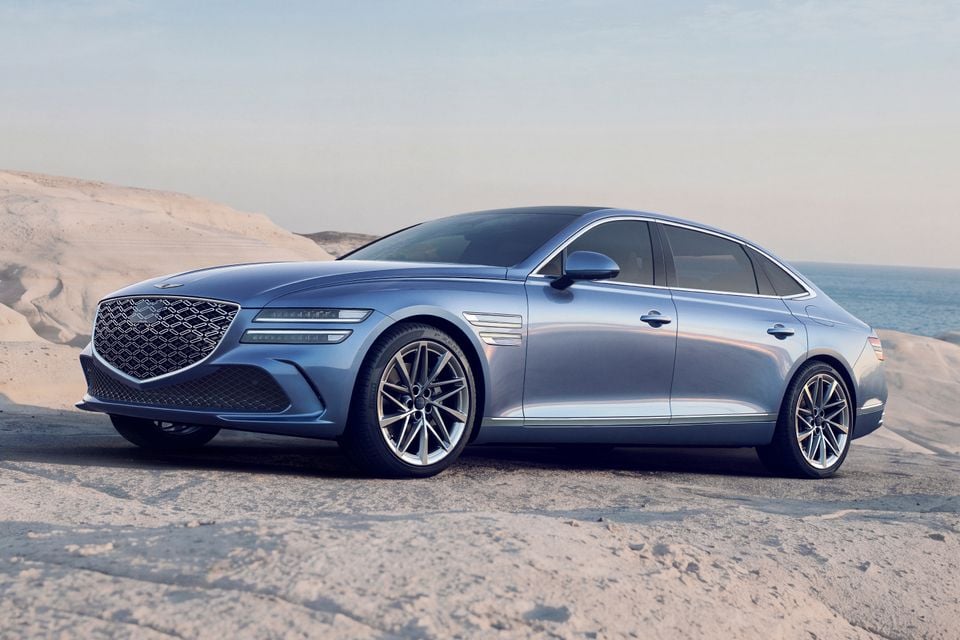
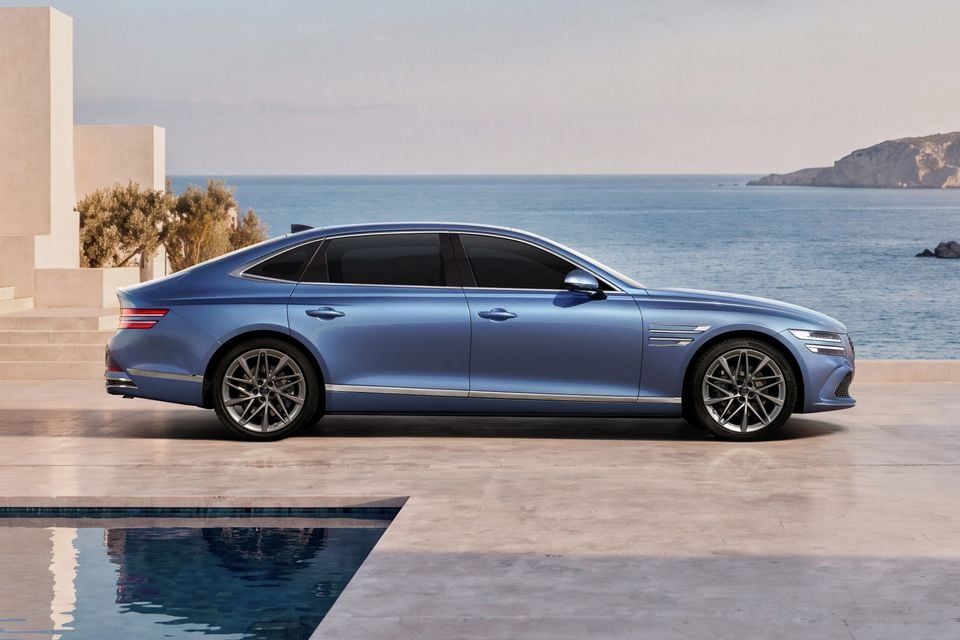
The Genesis G80 Hybrid large sedan has made its global debut in Los Angeles, following the reveal of the GV80 Hybrid large SUV in August 2026.
Genesis Australia confirmed in August it would launch its first hybrid vehicle in 2027.
When asked today which hybrid vehicles will come here and when exactly during 2027, a Genesis Australia spokesperson said: “At this time, we can’t confirm which Australian models will receive hybrid powertrains or when.”
The two models use Genesis’ new Turbo Hybrid System, a parallel hybrid system which features a turbocharged 2.5-litre four-cylinder petrol engine mated with a new seven-speed automatic transmission derived from its existing eight-speed, plus a starter-generator motor and a drive motor.
They also use a liquid-cooled battery, a first for a Hyundai Motor Group hybrid system.
There’s also regenerative braking, which drivers can adjust themselves or rely on a ‘Smart’ setting that does it for them using navigation data.
As seen in the Hyundai Palisade Hybrid, which also features a 2.5-litre turbo-petrol hybrid powertrain, a Hierarchical Predictive Control (HPC) feature is claimed to predict the driving route and manage the battery’s state of charge accordingly.
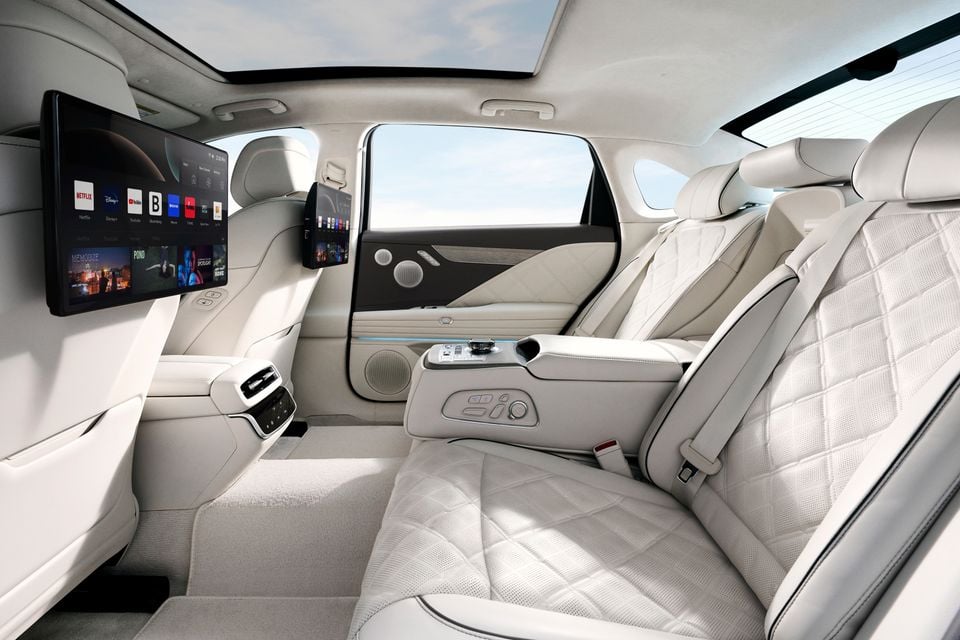
Genesis says its new hybrid system has been “engineered specifically to highlight the brand’s longitudinal, rear-wheel-drive-based architecture and resulting premium driving characteristics”. The GV80 Hybrid will be offered with all-wheel drive, but thus far the G80 has been confirmed only with rear-wheel drive.
Total system outputs are 259kW of power and 530Nm of torque, the latter matching the torque figure of the 3.5-litre twin-turbo petrol V6 offered in both models.
No acceleration figures are available as yet for the G80 Hybrid, but Genesis has previously announced a 7.1-second claimed 0-100km/h time for the GV80 Hybrid.
The hybrid models’ power figure sits neatly between those of the G80 and GV80’s existing 2.5-litre turbo-petrol engine (224kW) and the aforementioned twin-turbo V6 (279kW).
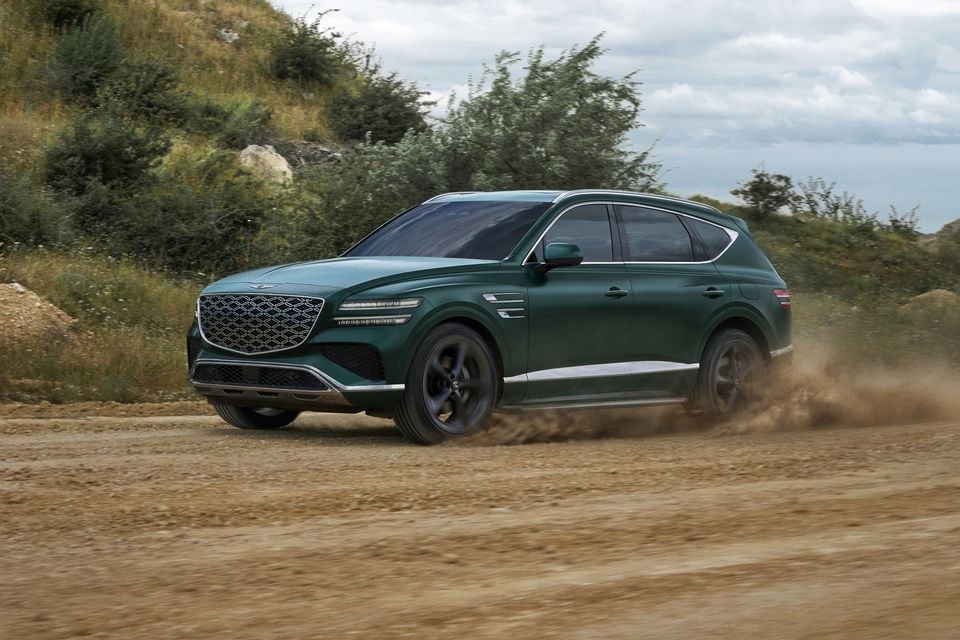
Genesis says that based on internal testing, fuel efficiency has been improved by up to 34 per cent in the G80 Hybrid and 25 per cent in the GV80 Hybrid, compared with G80 and GV80 models with the non-hybrid 2.5-litre turbo four.
For context, Genesis in Australia claims fuel consumption of 8.6L/100km for the rear-wheel drive G80 2.5T, 10.4L/100km for the all-wheel drive GV80 2.5T, 10.7L/100km for the all-wheel drive G80 3.5T AWD, and 11.9L/100km for the GV80 3.5T AWD.
Genesis in the US quotes a total driving range of more than 500 miles (805km) for both models; in Korea, the brand quotes total range of 1029km for the G80 Hybrid.
The brand says it has tuned the hybrid system to deliver quiet, EV-like operation, with rapid and linear acceleration and expanded electric motor engagement across a variety of driving conditions, while new engine crankshaft damper pulley technology is aimed at reducing noise and vibration in the cabin.
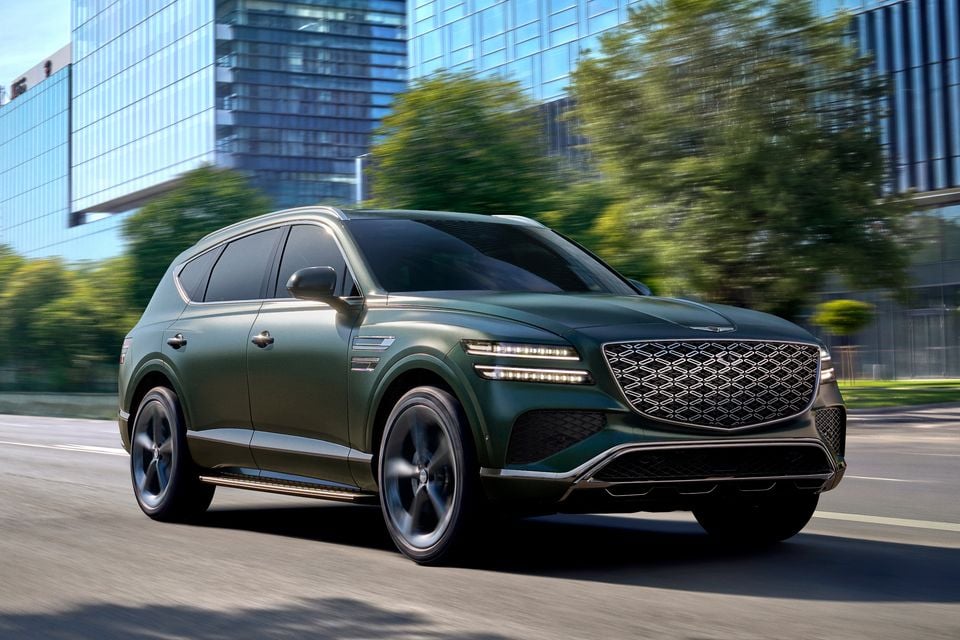
Genesis’ hybrids are distinguished from existing G80 and GV80 models through a redesigned front grille.
The G80 Hybrid also gains new 18- and 20-inch wheel designs, plus new exterior colours such as Milos Blue, Barolo Red and Wadden Grey.
Genesis also says the large hybrid sedan measures 130mm longer than the combustion-powered G80, adopting the longer 3140mm wheelbase of the battery-powered Electrified G80. The brand has confirmed that, at least in Korea, this new extended-length hybrid sedan will be available with reclining rear seats with memory, power door curtains, and doors that close with the push of a button.
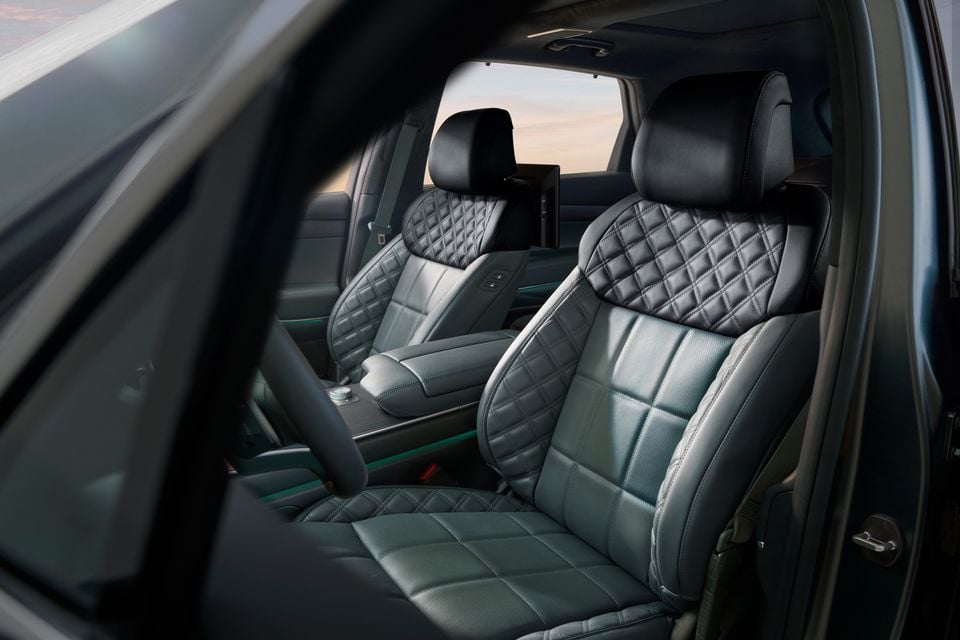
The GV80 Hybrid, meanwhile, gets new 19-, 20- and 22-inch wheel designs, plus three new exterior colours – Seychelles Beige, Cardiff Green, and Brunswick Green Matte – and four new two-tone interior colourways.
Both the G80 Hybrid and GV80 Hybrid will also be offered as Black models, like their petrol-powered counterparts currently are in Australia, with a blacked-out interior and exterior treatment.
As with other G80 and GV80 varuiants, standard equipment includes a 27-inch OLED display incorporating the instrument cluster and infotainment touchscreen, with available features including a Bang & Olufsen sound system, active noise cancellation, and Hyundai’s Blind Spot View Monitor.
There’s also a full suite of active safety and driver-assist technology, including blind-spot assist, rear cross-traffic assist, lane-centring, and Highway Driving Assist 2.
Genesis notes its Road-Preview Electronic Control Suspension will be available for the G80 Hybrid, but doesn’t note the same for the GV80 Hybrid. It has published only limited specifications thus far, with more information to follow closer to their launch.


The company has yet to confirm which of its other models, including the GV70 mid-size SUV which is its biggest seller here, will get hybrid power.
In addition to hybrids, Genesis plans to introduce extended-range electric vehicles (EREVs), and has left the door open for such vehicles to be launched in Australia. It already offers a range of EVs, including the aforementioned Electrified G80.
Genesis confirmed in January 2025 it would scrap its previous goal, announced in 2021, of being EV-only by 2030, with then-global boss Mike Song telling Australian media: “2030, 2035… if we think there are customers for ICE, hybrid, then we’ll do it. This is my answer – even 2050.”
Mr Song, who was succeeded as Genesis' global boss in December 2025 by Sean Lee, confirmed next-generation Genesis products will be developed not only with electric and hybrid powertrains, but also traditional combustion power.
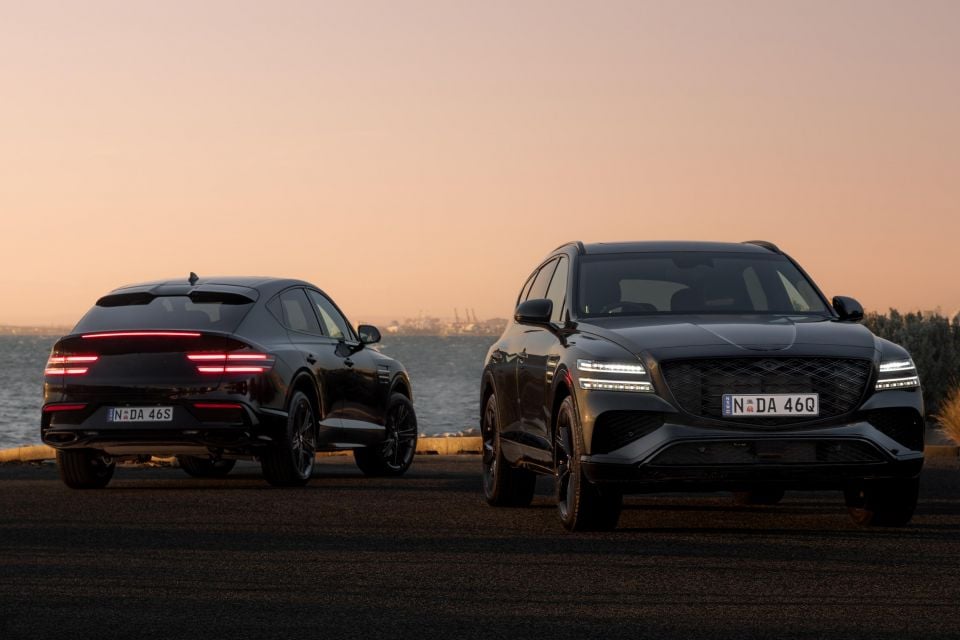
The G80 and GV80 are getting hybrid power fairly late in their lifecycles.
The current G80 and GV80 entered production in 2020, with facelifted versions launched in Korea in 2023 and arriving here the following year. The GV80 also gained a 'coupe' SUV body style at the same time.
As conventional hybrids, the new Genesis models will have little in the way of direct competition, with German luxury brands having prioritised plug-in hybrids (PHEVs) and EVs instead.
The closest competitors for these new models, should they come to Australia, will be hybrid versions of the Lexus ES and RX.
MORE: Explore the Genesis G80 showroom
MORE: Explore the Genesis GV80 showroom
Research cars in our Showroom, compare your options or let our New Car Specialists do the running around to find you a great deal.
William Stopford is an automotive journalist with a passion for mainstream cars, automotive history and overseas auto markets.
Matthew Hansen
2 Hours Ago

Damion Smy
5 Hours Ago

James Wong
5 Hours Ago
Damion Smy
6 Hours Ago

Matt Campbell
7 Hours Ago
Damion Smy
9 Hours Ago
Add CarExpert as a Preferred Source on Google so your search results prioritise writing by actual experts, not AI.