







Damion Smy
2027 GWM Ora 5 vs Hyundai Kona Electric: Spec battle
The GWM Ora 5 small electric SUV has arrived full of character and charm, but how does it stack up against the popular Hyundai Kona Electric?
7 Hours Ago
China versus Korea: We benchtest two of Australia's most popular small hybrid SUVs to see how they compare on paper.

Contributor
Contributor
Contributor
Contributor
As high fuel prices continue to put pressure on household budgets, there’s a way to save some pennies at the pump if you’re currently looking to buy a new car: choose a hybrid.
These petrol-electric combos are designed to be more fuel-efficient without comprising on practicality, performance, or driving range.
In general, hybrids command a price premium over similar models without electric powertrain hardware, but higher fuel prices have made the crossover point at which they start paying you back closer than ever before.
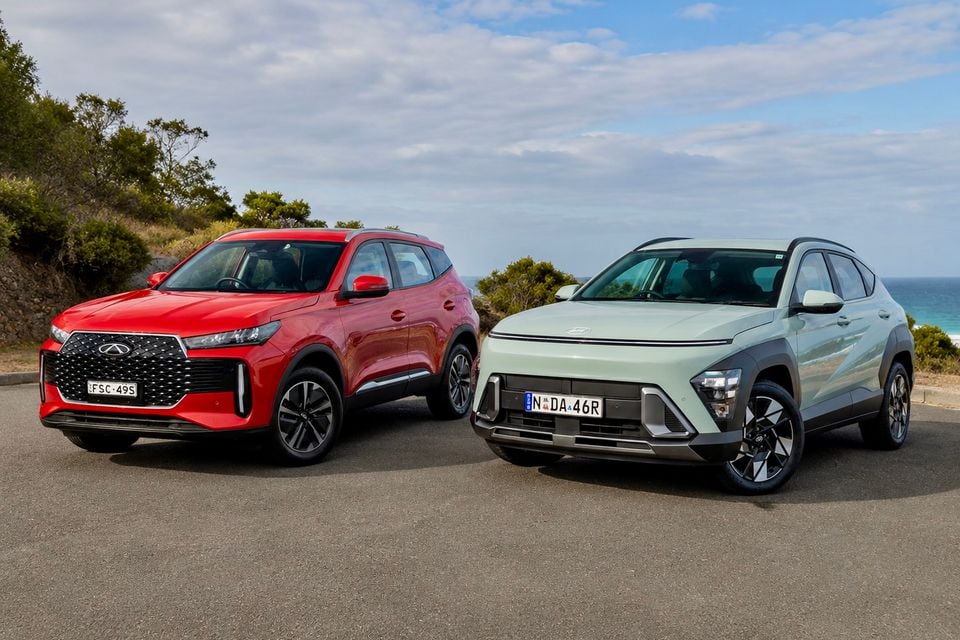
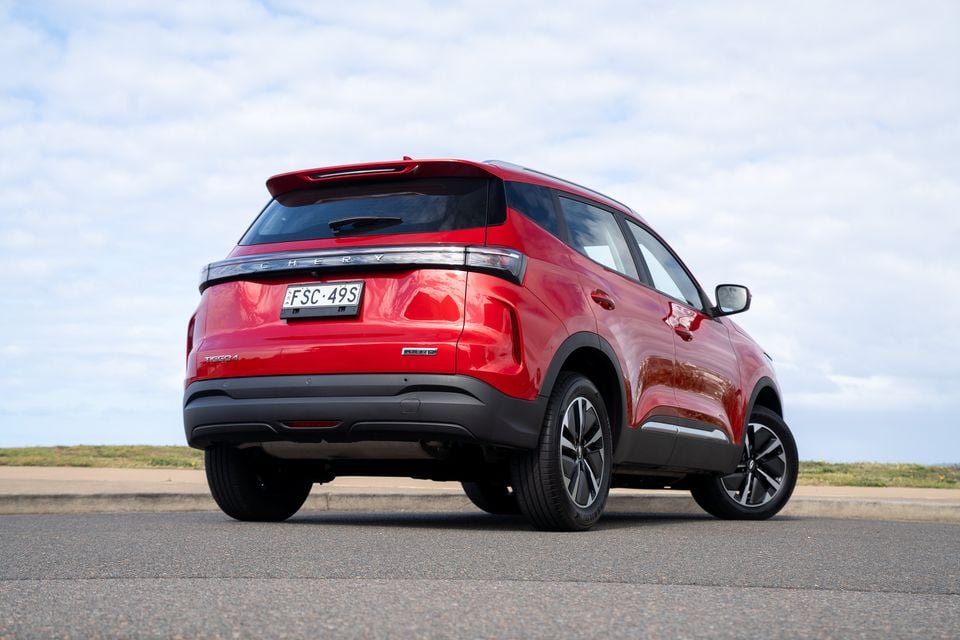
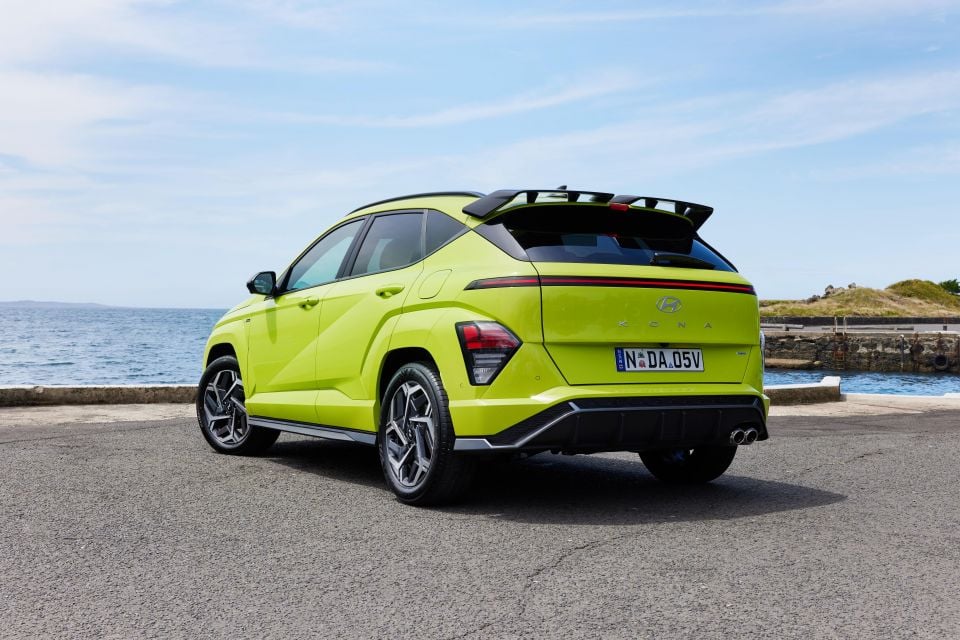
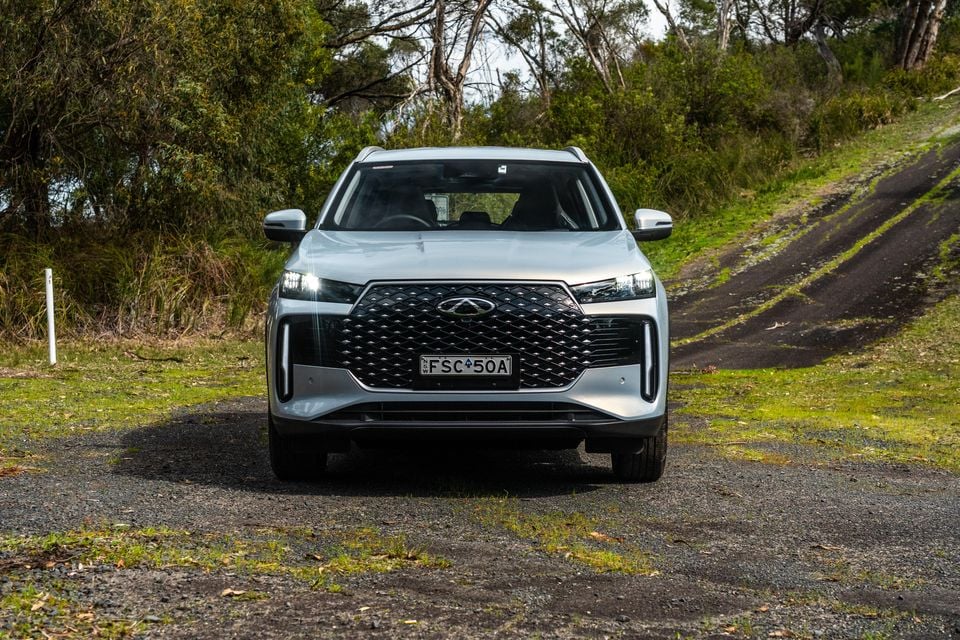
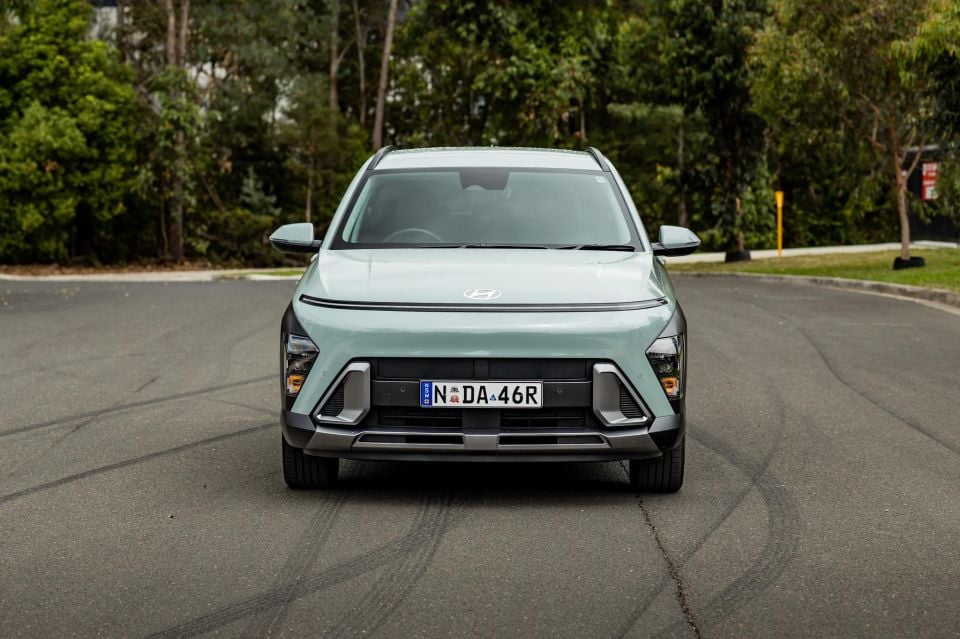
So, if you’re looking for an affordable, efficient urban runabout, here are two of the best small hybrid SUVs to consider: the Chery Tiggo 4 Hybrid and Hyundai Kona Hybrid.
Which one is better on paper? Let’s find out.
The Chery Tiggo 4 Hybrid is the most affordable hybrid small SUV currently available in Australia, with prices starting at $29,990 drive-away for the entry-level Urban variant, while the Hyundai Kona Hybrid range starts at least $10,000 higher.
| Model | Drive-away price (NSW indicative) |
|---|---|
| Chery Tiggo 4 Hybrid | $29,990 – $32,990 |
| Hyundai Kona Hybrid | $39,990 – $50,563 |
To get close to comparing apples with apples in terms of purchase price, we’re going to compare the range-topping Chery Tiggo 4 Hybrid Ultimate with the entry-level Hyundai Kona Hybrid.
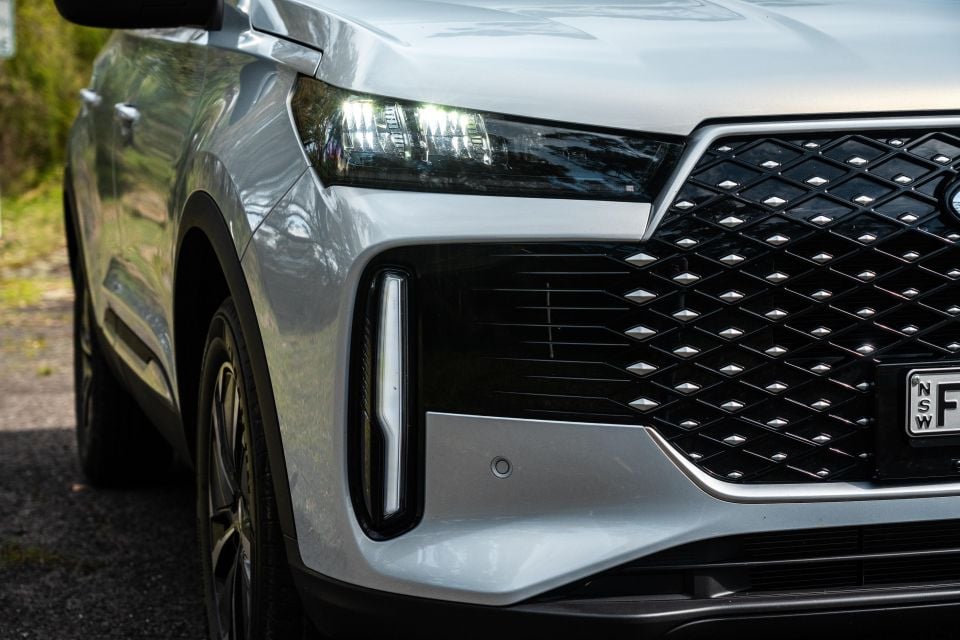
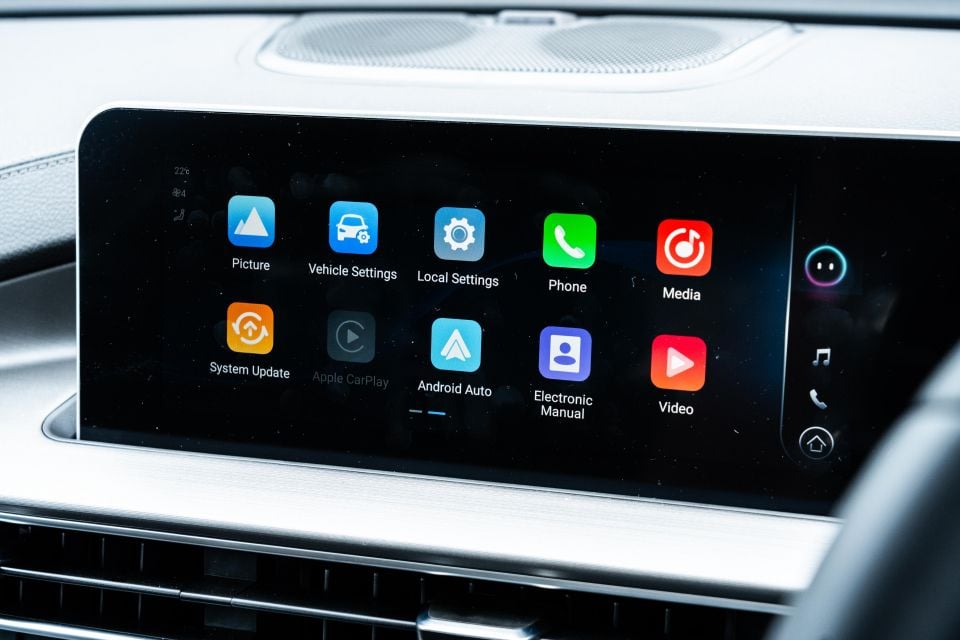
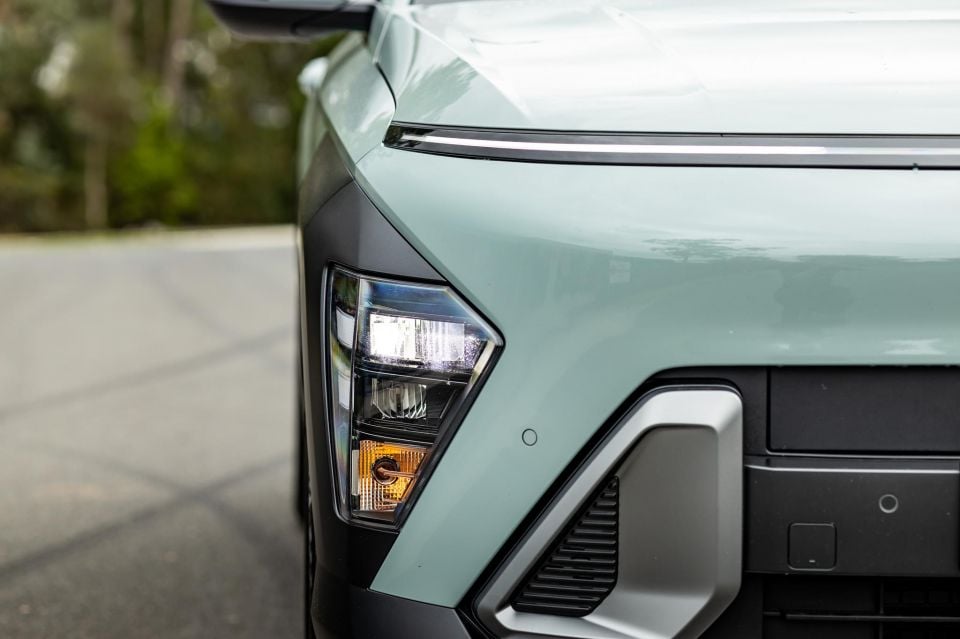
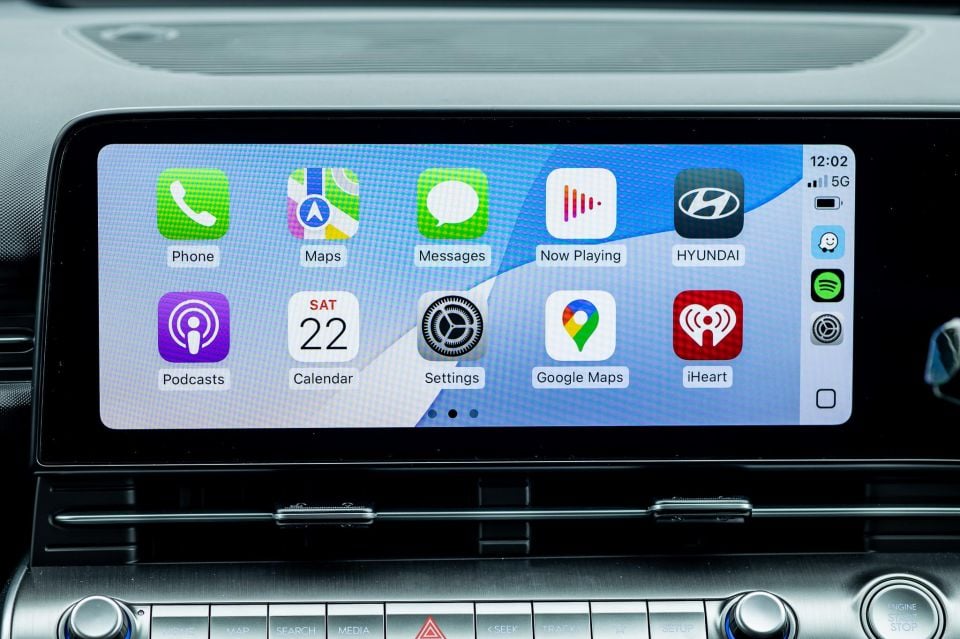
Shared equipment highlights:
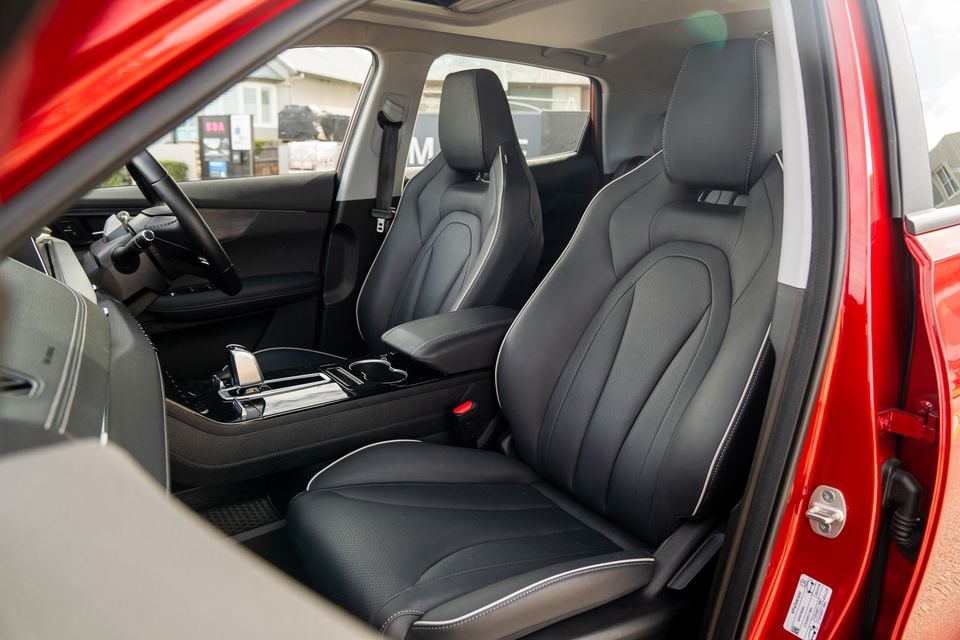
But while the Kona has cloth seat trim and manual adjustment for the front seats, the Tiggo 4 Ultimate has synthetic leather seat upholstery with front seat heating and six-way power adjustment for the driver, plus colour-selectable ambient interior lighting.
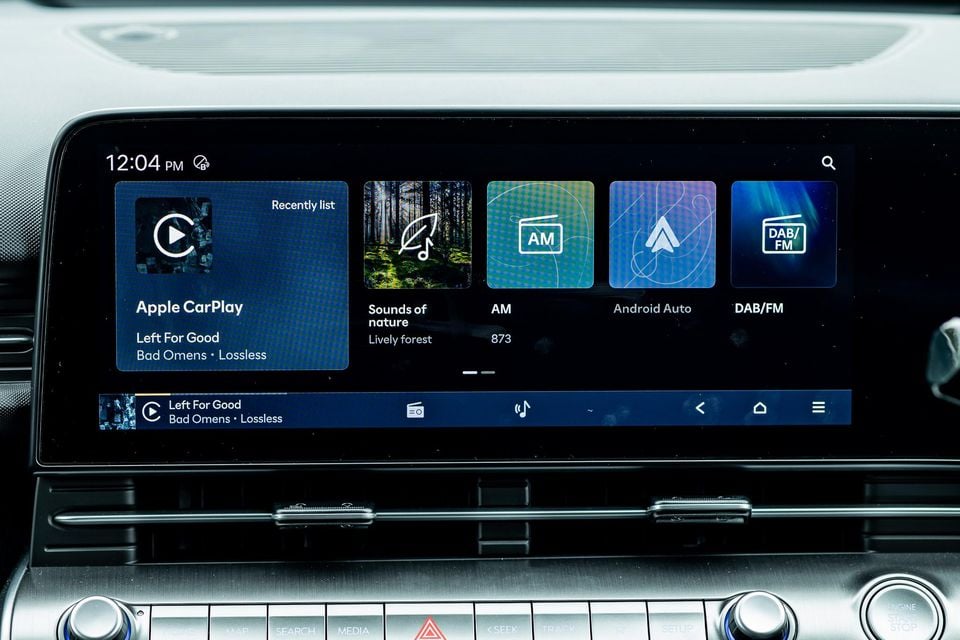
The Chery does have a smaller 10.25-inch infotainment touchscreen compared to the Hyundai’s 12.3-inch unit, but the script is flipped when it comes to instrument clusters as the Kona has conventional gauges with a 4.2-inch TFT screen in the middle, whereas the Chery has another 10.25-inch digital display.
The Kona does, however, come equipped with Hyundai’s Bluelink connected services, which allows remote functions including locking the doors, sounding the horn, activating the hazard lights and vehicle location via a smartphone app, plus automatic an emergency call functionality in the event of an accident and over-the-air software updates.
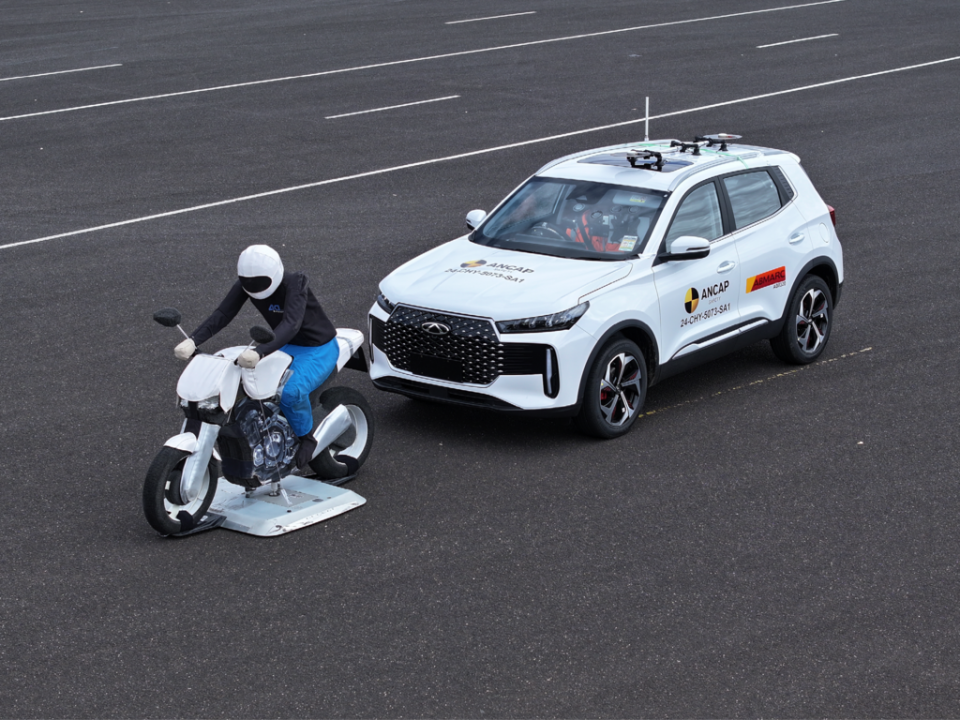
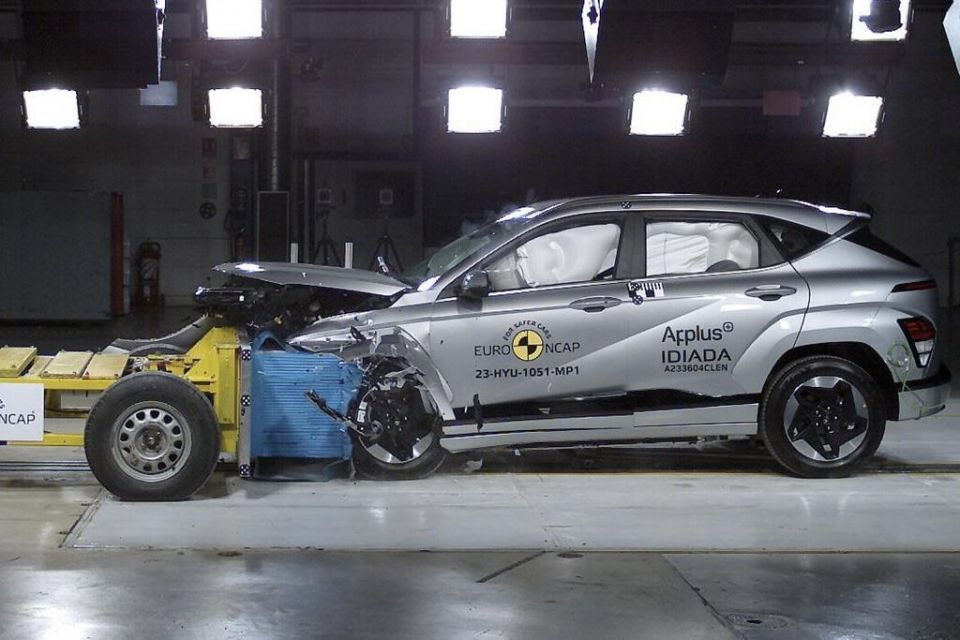
All variants of the Hyundai Kona, including hybrid variants, have a four-star ANCAP safety rating and are fitted with seven airbags.
| Category | Chery Tiggo 4 Hybrid | Hyundai Kona |
|---|---|---|
| Adult occupant protection | – | 80 per cent |
| Child occupant protection | – | 84 per cent |
| Vulnerable road user protection | – | 64 per cent |
| Safety assist | – | 62 per cent |
And, while non-electrified versions of the Chery Tiggo 4 also score the highest five-star safety rating and come with seven airbags, hybrid variants are officially 'unrated' even though they share the same fundamental structure and safety components.
Both vehicles come equipped with a comprehensive array of advanced driver aids and crash avoidance systems, including:
The Hyundai Kona is fractionally larger than the Chery Tiggo 4 in terms of overall length (4330mm vs 4325mm), and rides on a longer wheelbase (2660mm vs 2604mm), which liberates a bit more room inside the cabin.
Both have seating for five and decent-sized boots capable of handling everyday tasks such as the weekly grocery shop, weekend sporting activities, and family getaways.
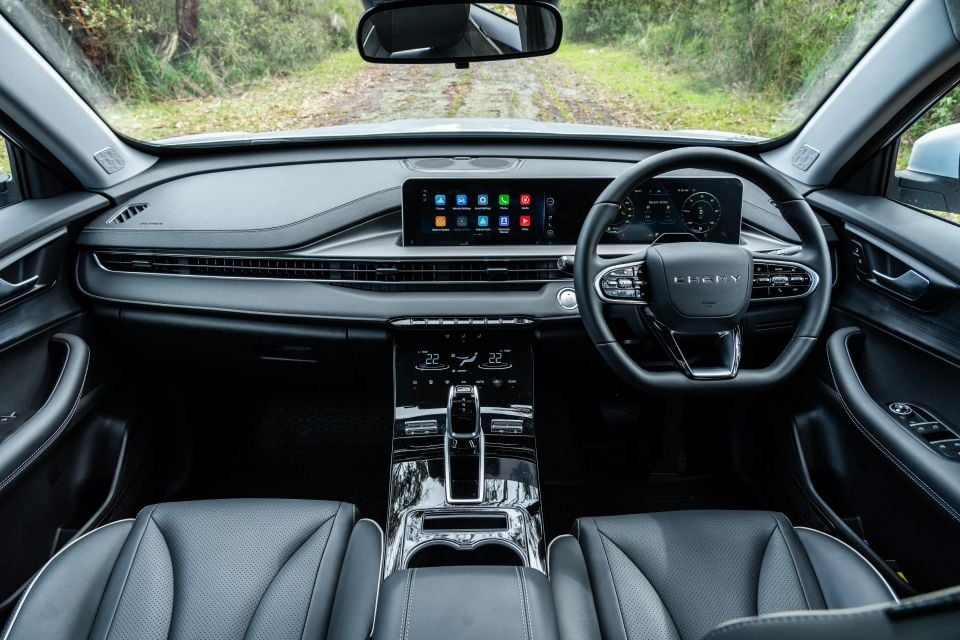
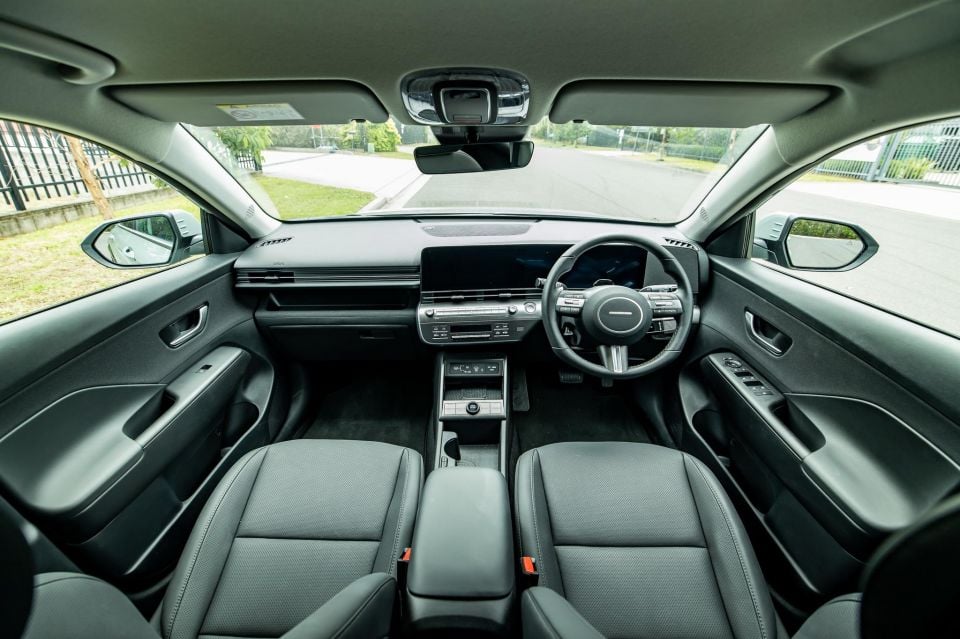
And, in each car, the cabin is well presented with a modern, asymmetrical aesthetic.
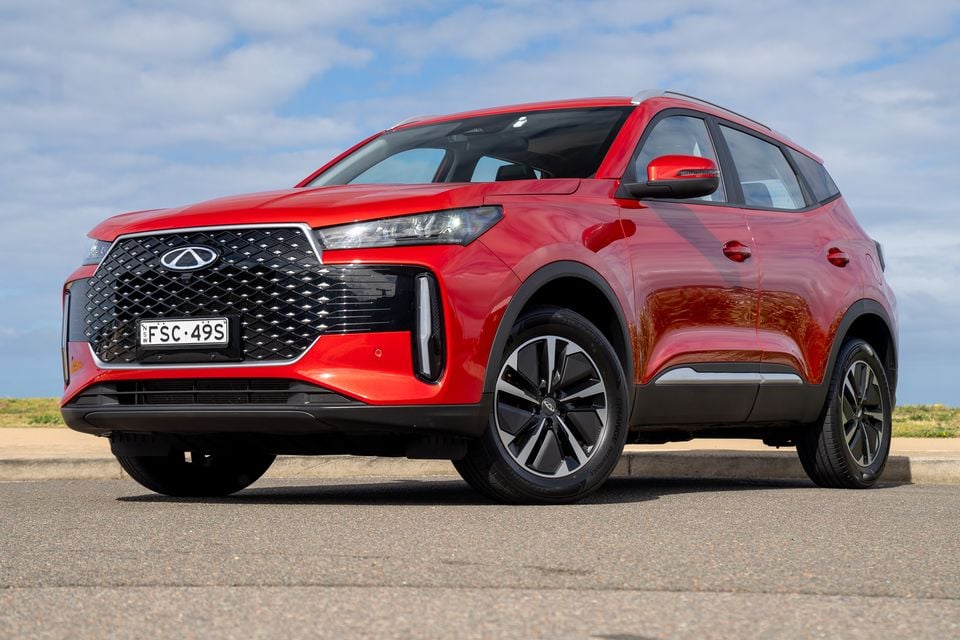
On face value, the Chery appears to be more digital-centric with its twin-screen setup on top of the dashboard, complemented by a large display for the climate controls at the base of the centre console, in front of a stubby little gear selector.
And it’s all fairly easy to use, with a logical menu structure and phone-style widgets for the infotainment system, plus physical buttons for the temperature and fan controls below the screen.
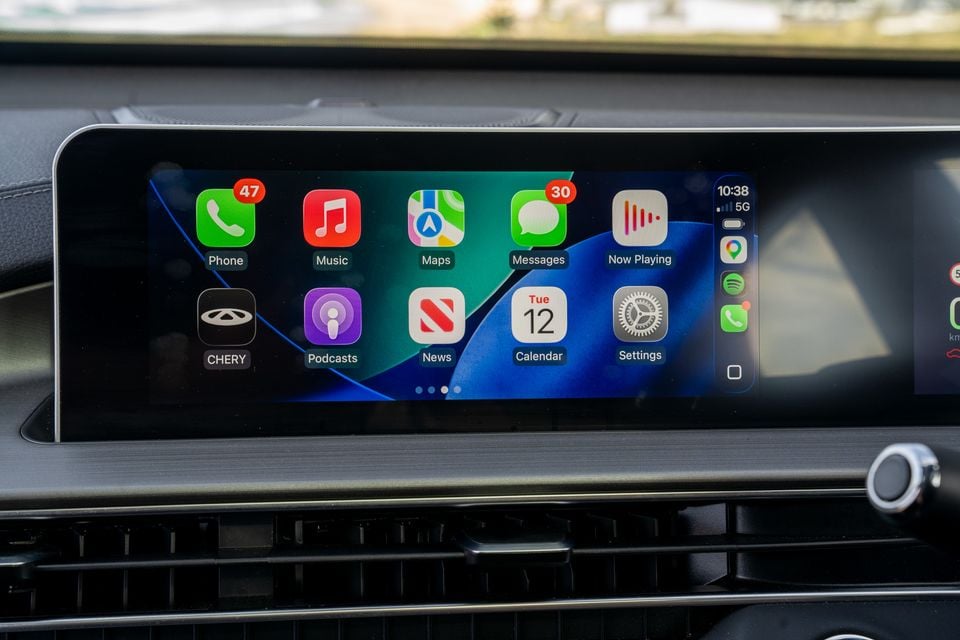
But the highly glossy nature of the piano-black trim in the centre console is prone to fingerprints, which can make it look grubby very quickly.
The front seats are perched high, providing a commanding view of the road ahead, but it might not suit taller drivers, And the lower cushion is relatively short and lacks under-thigh support.
There are a plenty of thoughtful conveniences, including large door bins and a lidded bin between the front seats. At first glance, there may not appear to be much space for small items in the centre console, with just a pair of cupholders and a slotted recess for a mobile device, but there is a hidden storage tray underneath with the wireless phone charger.
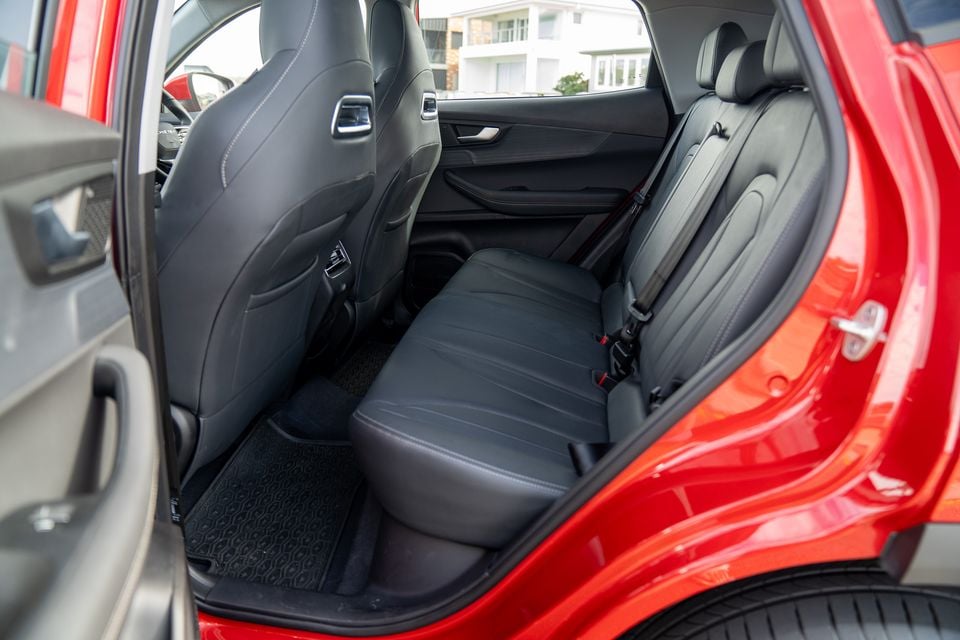
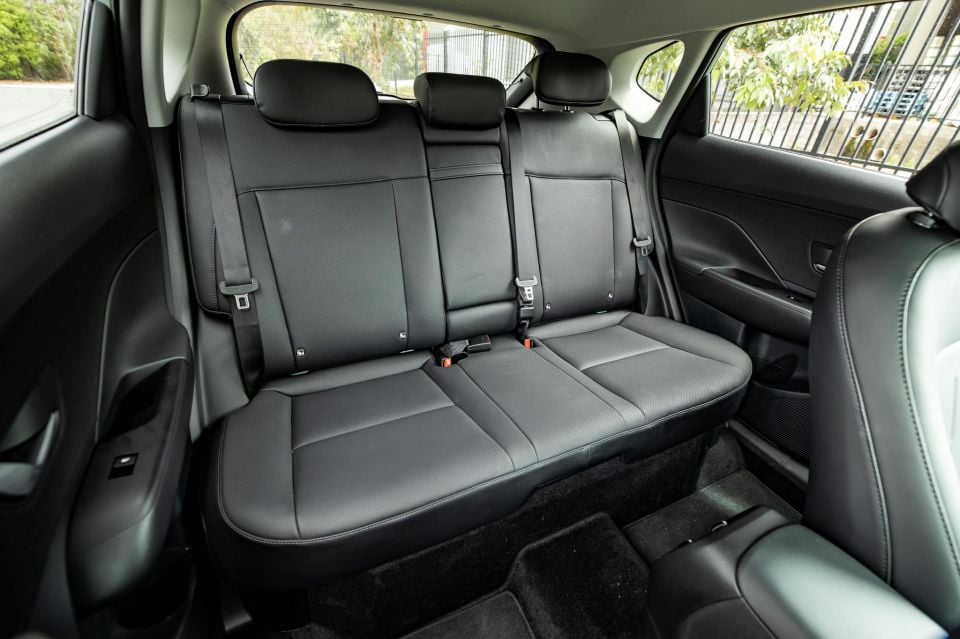
Back-seat passengers have decent legroom and a single rear air vent, as well as a fold-down armrest with additional cupholders. There are also ISOFIX child seat anchor points on the outboard seats.
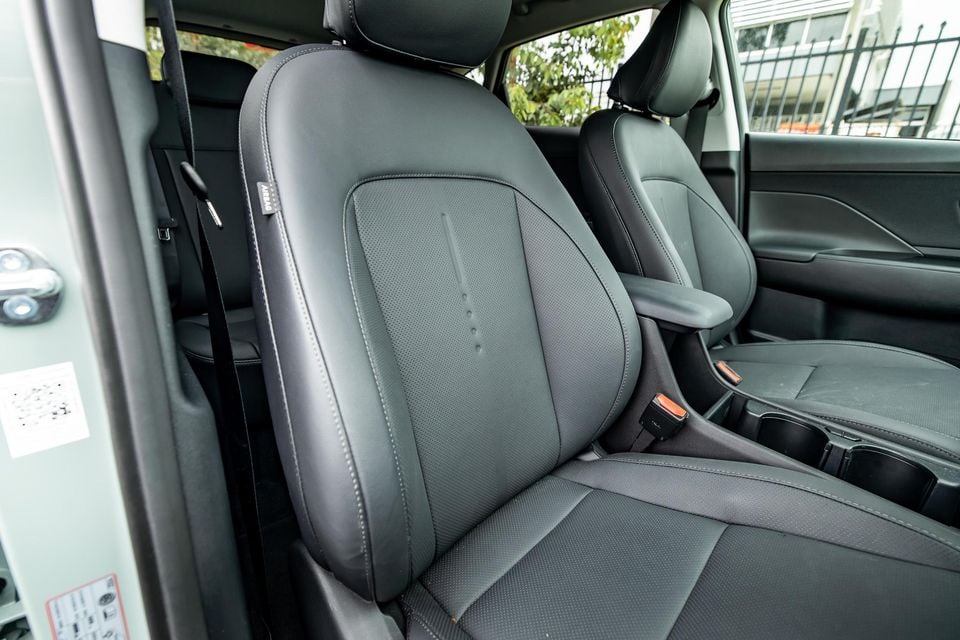
The most obvious sign that you’re in the base-level Kona is the conspicuously ‘old-school’ instrument cluster, and the cloth trim on its manually adjustable, non-heated seats.
Otherwise, the cabin looks modern and feels well built, with high-quality materials and tight panel gaps throughout.
It’s also very practical, with plenty of convenient storage spaces that are easier to access. Repositioning the gear selector as a separate stalk on the steering column frees up a lot of room in the centre console and amplifies its sense of roominess.
The second row is more spacious with excellent legroom and headroom, as well as two directional air vents, and a pair of USB power outlets.
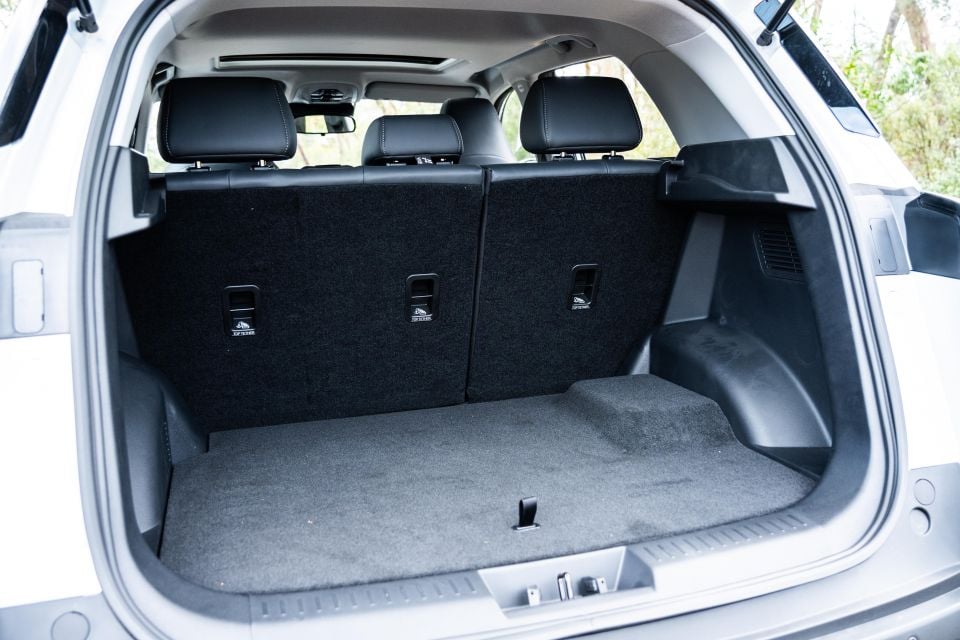
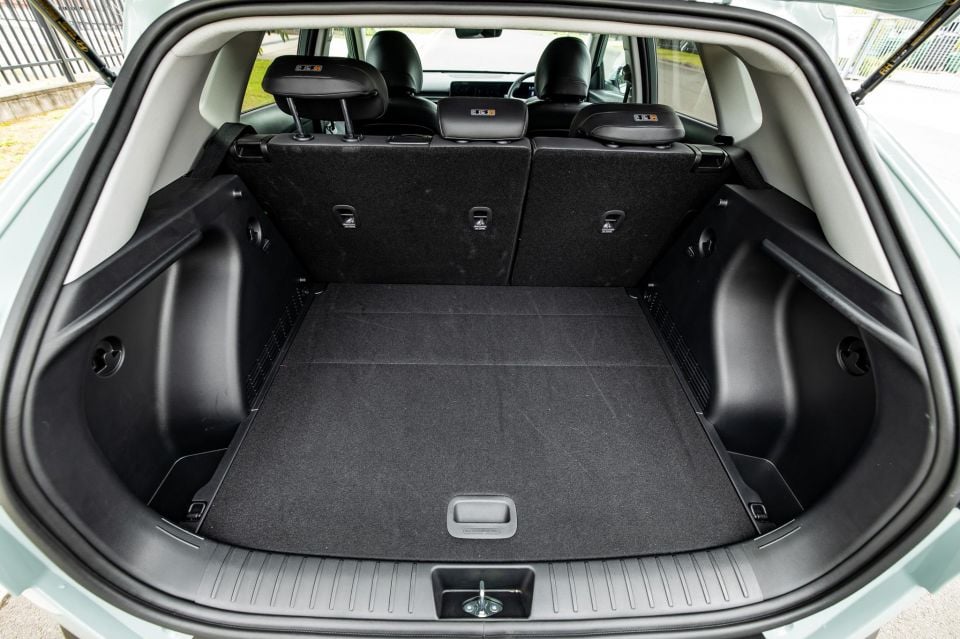
As for cargo-carrying capacity, Hyundai claims the Kona’s boot has a minimum volume of 407 litres (with its standard cargo shelf in place), while Chery says the Tiggo 4 offers 470L of space measured up to the roof.
All variants of the Hyundai Kona are fitted with a space-saver spare tyre, but Chery only includes this with the range-topping Ultimate variant – the Urban has a temporary repair kit.
| Dimensions | Chery Tiggo 4 Hybrid | Hyundai Kona Hybrid |
|---|---|---|
| Length | 4330mm | 4350mm |
| Width | 1830mm | 1825mm |
| Height | 1655mm | 1585mm |
| Wheelbase | 2604mm | 2660mm |
| Cargo capacity | 470L (rear seatbacks up) | 407L (rear seatback up) 1241L (rear seatbacks folded) |
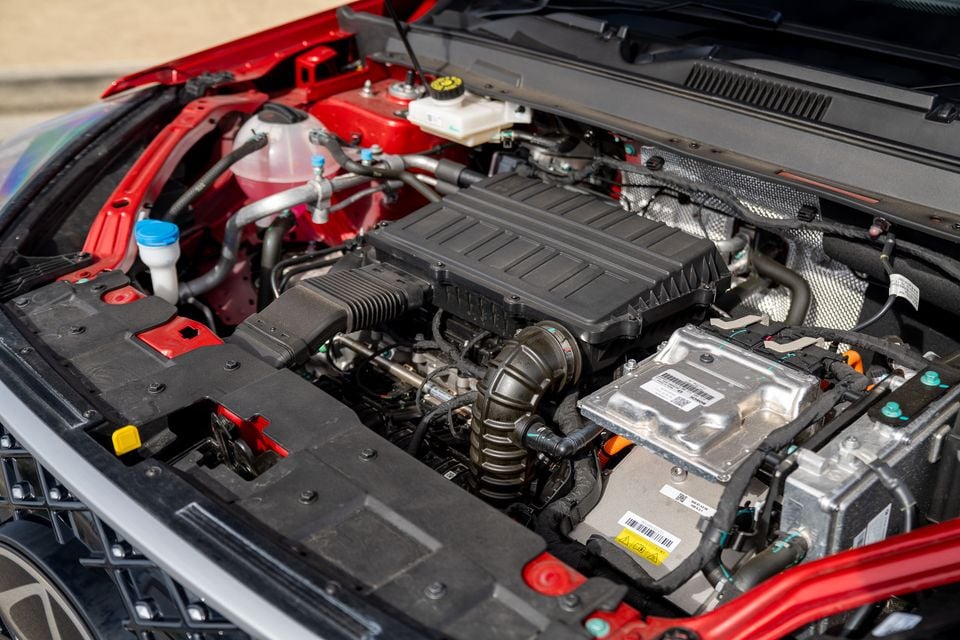
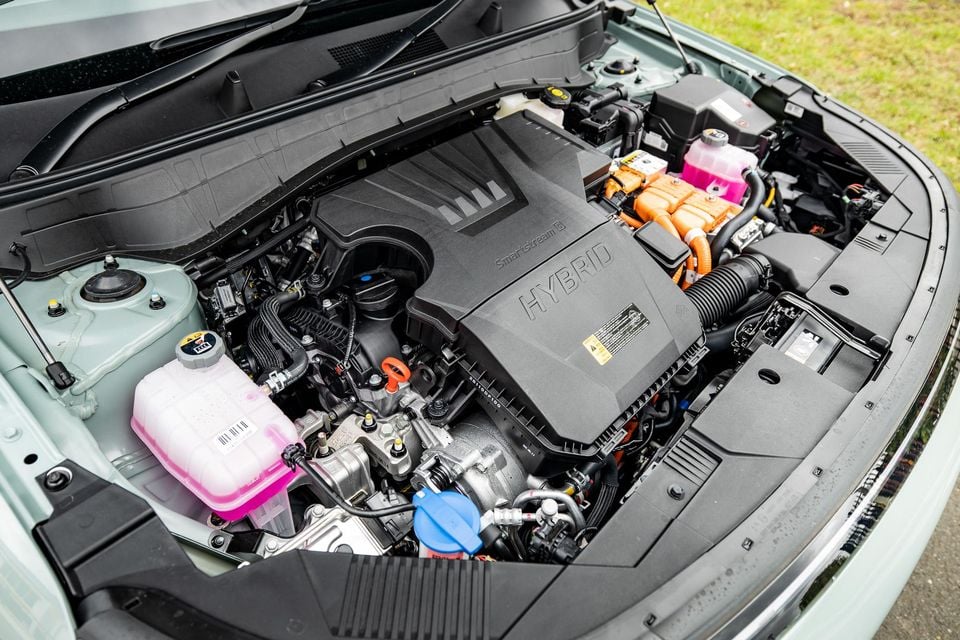
Both vehicles feature a now-conventional hybrid system that pairs a naturally aspirated four-cylinder petrol engine with an electric motor and a small-capacity battery pack.
| Specifications | Chery Tiggo 4 Hybrid | Hyundai Kona Hybrid |
|---|---|---|
| Engine | 1.5L non-turbo 4cyl hybrid | 1.6L non-turbo 4cyl hybrid |
| Engine outputs | 71kW / 120Nm | 77kW / 144Nm |
| Electric motor outputs | 150kW / 310Nm | 32kW / 170Nm |
| System outputs | – | 104kW / 265Nm |
| Battery | 1.8kWh li-ion | 1.3kWh li-ion |
| Transmission | 'Dedicated Hybrid Transmission' | 6-speed dual-clutch auto |
| Drive type | Front-wheel drive | Front-wheel drive |
| Tare mass | 1494kg | 1504kg |
| Fuel economy (claimed) | 5.4L/100km | 3.9L/100km |
| Fuel tank capacity | 51L | 38L |
| Fuel requirement | 91-octane regular unleaded | 91-octane regular unleaded |
| CO2 emissions | 123g/km | 88g/km |
| Emissions standard | Euro 6 | Euro 5 |
| Braked tow capacity | – | 1300kg |
The Tiggo 4 has a 1.5-litre engine that produces 71kW of power and 120Nm of torque, and an e-motor that generates 150kW and 310Nm, powered by a 1.8kWh battery pack. Chery does not quote maximum combined outputs.
The powertrain drives the front wheels via a single-speed dedicated hybrid transmission.
Chery claims its small hybrid SUV has combined fuel consumption of 5.4L/100km, delivering a theoretical maximum driving range of 944km from its 51L fuel tank.
The Kona has a slightly larger 1.6-litre four-cylinder that produces 77kW and 144Nm, but a less-powerful e-motor that generates 32kW and 170Nm, powered by a smaller 1.32kWh battery pack. Hyundai claims the powertrain delivers maximum combined outputs of 104kW and 265Nm.
It drives the front wheels via a six-speed dual-clutch automatic and has combined fuel consumption of 3.9L/100km. Despite only having a 38L fuel tank, it has a slightly longer theoretical driving range of 974km.
Both manufacturers offer a seven-year, unlimited-kilometre warranty for their vehicles. However, Hyundai owners are required to maintain their vehicle within the Korean brand's authorised dealer network to receive this level of coverage. Otherwise, the vehicle is covered by a standard five-year warranty.
| Servicing and Warranty | Chery Tiggo 4 Hybrid | Hyundai Kona Hybrid |
|---|---|---|
| Vehicle warranty | 7 years, unlimited kilometres | 7 years, unlimited kilometres (service-activated) |
| High-voltage battery warranty | 8 years, unlimited kilometres | 8 years, 160,000km |
| Roadside assistance | 12 months, then service-activated up to 7 years | 12 months, then service-activated |
| Service intervals | 12 months or 15,000km | 12 months or 15,000km |
| Capped-price servicing | 7 years | Lifetime |
| Average annual service cost | $359.92 | $618.71 (7 years) |
| Total capped-price service cost | $2519.46 | $4331 (7 years) |
The situation is flipped in terms of roadside assistance though. Hyundai offers this for the life of the vehicle when it is serviced through its dealer network, while the Chinese brand only offers this for the seven-year warranty period.
Both automakers provide a capped-price service plan (lifetime for the Hyundai and seven years for the Tiggo 4), and require regular maintenance every 12 months or 15,000km.
The Hyundai costs significantly more to maintain: $4331 over seven years at an average of $618.71 per annum, whereas the Tiggo 4 costs $2519.46 for the same time period at an average of $359.92 each year.
This is an age-old question: are you better off paying more for less from a known brand, or taking a punt on a newcomer to get more bang for your buck?
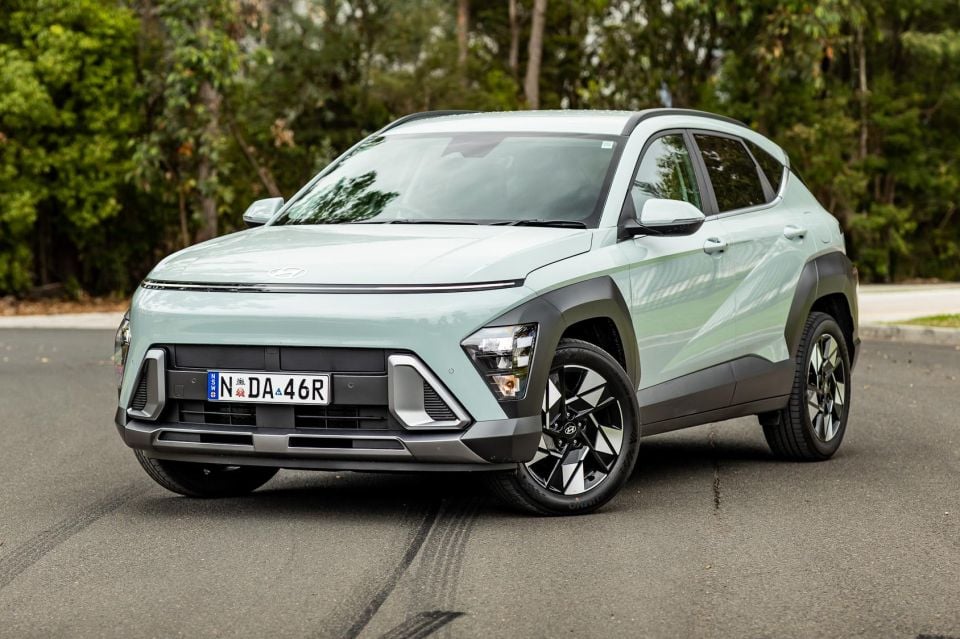
The second-generation Hyundai Kona is a brilliant urban runabout – even in base trim – that is nice to drive, more modern to look at, more spacious and thoughtful inside, and among the most fuel-efficient small SUVs in its class.
However, if your motivation is to spend less, the Chery Tiggo 4 Hybrid Ultimate is cheaper to buy and service (though it's a little thirstier), and delivers more value for money thanks to its longer standard equipment list.
Click the images for the full gallery
MORE: Explore the Chery Tiggo 4 showroom
MORE: Explore the Hyundai Kona showroom
Chery Tiggo 4
Chery Tiggo 4 Sales rolling 12-months#
*Based on VFACTS and EVC data
Looking for complete Chery Tiggo 4 price history?
Our Chery Tiggo 4 Pricing Page shows exactly how prices have changed over time.
2026
$23,990
2026
$26,990
Add CarExpert as a Preferred Source on Google so your search results prioritise writing by actual experts, not AI.
Damion Smy
7 Hours Ago

William Stopford
8 Hours Ago
William Stopford
9 Hours Ago
William Stopford
11 Hours Ago
Damion Smy
11 Hours Ago
William Stopford
12 Hours Ago
Add CarExpert as a Preferred Source on Google so your search results prioritise writing by actual experts, not AI.
# Based on VFACTS and EVC data
† Displayed prices are based on the drive-away price of the vehicle, which includes delivery charges, registration fees, number plates, and applicable road taxes, based on a Sydney location. However, prices may vary between states and territories, and additional costs such as compulsory third party (CTP) insurance, dealer delivery fees, and optional extras are not included. These prices are subject to change without notice and may not reflect current market pricing or dealer offers.
 Automotive Vehicle Spec Data & 4K images Powered by JATO Dynamics Ltd