Damion Smy
Toyota HiLux gets $4000 discount amid Ford Ranger deals
Toyota is offering a $4000 finance bonus on diesel-powered HiLux SR5 utes, less than a year after the new generation arrived.
13 Hours Ago
The Triton GSR faces a growing field of rivals and a flagship within its own range, but chassis upgrades and competitive prices keep it in contention.
Deputy News Editor
Deputy News Editor
Deputy News Editor
Deputy News Editor
If this is the car for you, we’ll compare offers from trusted dealers, handle the back and forth and manage your purchase from enquiry to delivery.
The current-generation Mitsubishi Triton was launched in Australia in February 2024 and since then it's faced a raft of new entries into the hotly contested ute market.
Since the latest Triton’s arrival, shopping lists have expanded to include the GWM Cannon Alpha, JAC T9 and Kia Tasman as freshly minted competitors. Then there’s the new-generation Toyota HiLux, which landed in December 2025.
The Triton GSR we’re testing here has also been usurped from within as Mitsubishi's flagship dual-cab 4x4 pickup, after it formed the basis for the new range-topping Triton Raider.
The Raider was launched earlier this year with Australian-developed off-road suspension, steering calibration and ROH wheels, as a toe in the water for more 'lifestyle-oriented' Triton grades.
So where does that leave the former hero model, the GSR, which received a $1000 price rise with its MY26 update? Perhaps still in a sweet spot.
While the Raider stole the limelight, the GSR received two Yamaha-developed chassis dampers, designed to reduce vibration and sharpen steering response, as standard equipment from May 2026.
These came as part of a broader suspension update across the Triton range, designed to improve driving dynamics.
On top of that, newcomers such as the Tasman don’t have the Triton's lineage stretching back to the L200 of 1978 (whether that matters to some buyers or not), while the JAC T9 has failed to light up the sales charts despite its low price.
The Ford Ranger remains Australia’s best-selling new vehicle, but the wider 4x4 ute segment has faced a difficult year, with sales down 13.6 per cent year-on-year to the end of September.
It’s among the lifestyle utes, such as the Ranger Wildtrak, HiLux SR5 and Triton GSR, that some of the toughest competition is playing out.
It’s where economic pressures weigh heavily, and where the emotional priorities of private buyers sit alongside the practical considerations that drive fleet purchases. Brands matter. Looks matter. Status matters.
The Triton GSR is a strong competitor here, however, armed with three letters associated with the hot Lancer Evolutions that conquered the World Rally Championship (WRC) in the late 1990s. Those cars continued a Mitsubishi rallying lineage stretching back decades.
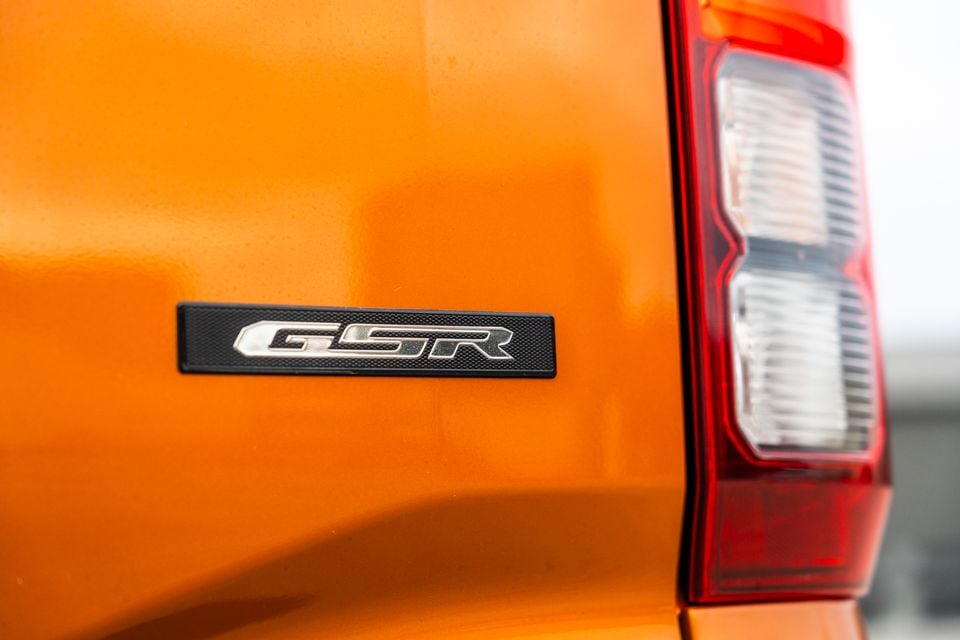
So the GSR badge brings a certain cachet and credibility that some rivals’ models cannot match.
With the chest-beating Raider’s arrival meaning it’s no longer top of the pops in the Triton lineup, is the GSR still a convincing pickup?
We hit the road to find out if the updated GSR is the secret sauce keeping the Triton near the top of the menu for Aussie ute buyers.
The MY26 update saw the Triton GSR pickup's list price rise from $64,590 to $65,590 before on-road costs, meaning it's still the most expensive Triton apart from the Raider.
The latter has essentially the same cabin but a unique package of steering, suspension and wheel upgrades, and is currently advertised from $74,990 drive-away.
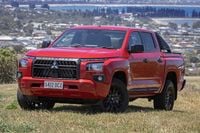
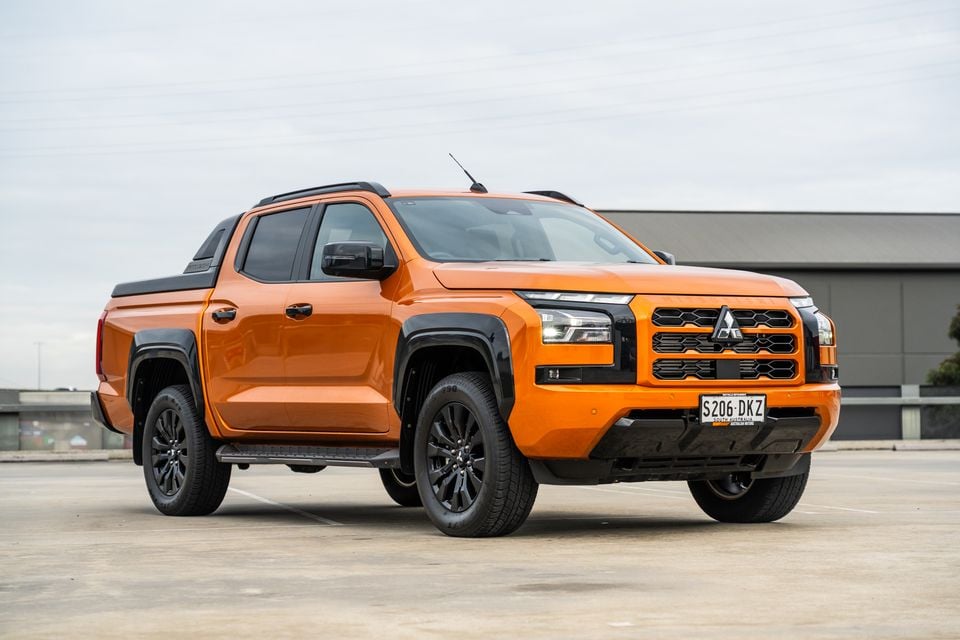
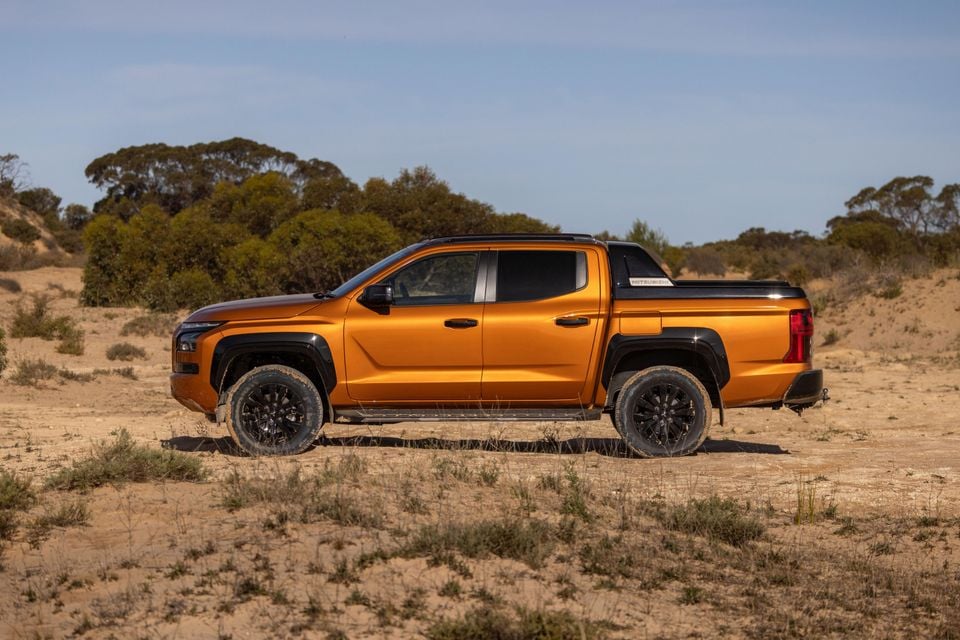
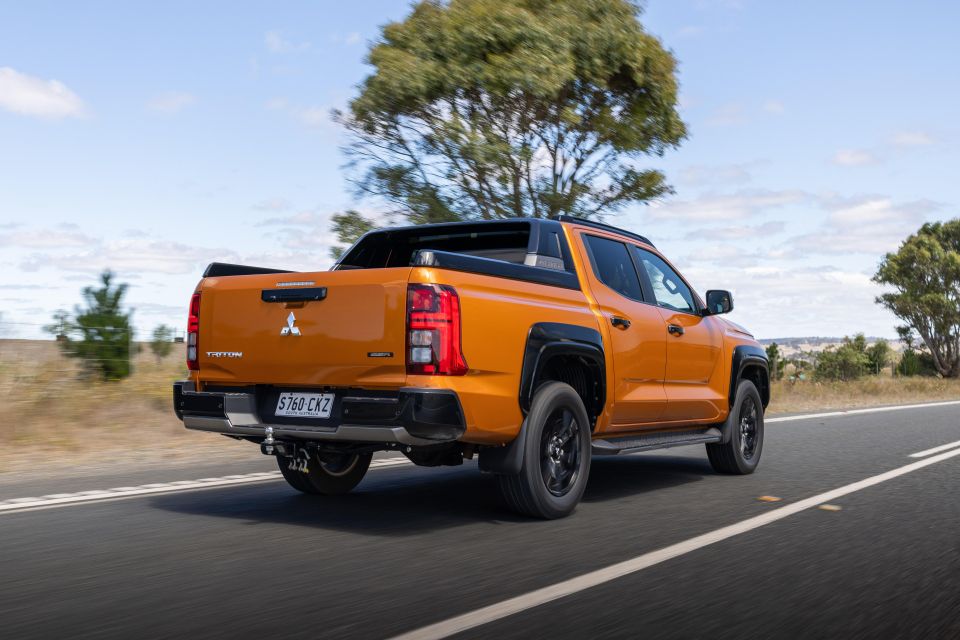
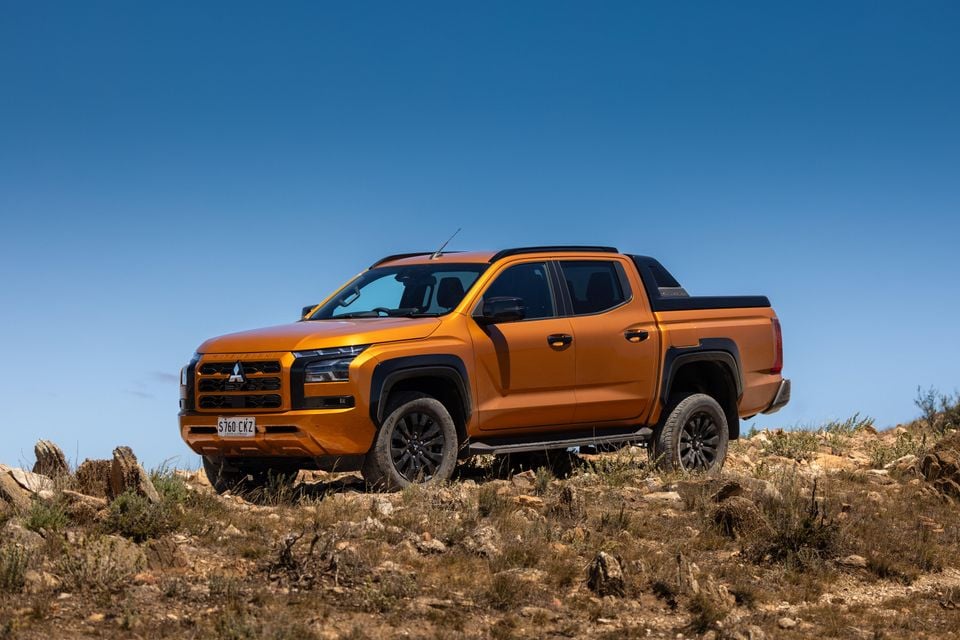
For $65,590 plus ORCs, you get a Triton GSR pickup in Graphite Grey or Black Mica paint. White Diamond or Yamabuki Orange – the colour you see here, named after a Japanese flower – add $200.
You can also get a GSR in dual-cab/chassis form for $62,590 plus ORCs, excluding a tray.
The GSR pickup is more expensive than the Mazda BT-50 XTR ($64,740) and the 3.0-litre Isuzu D-Max LS-U ($65,000), but cheaper than the Toyota HiLux SR5 ($65,990), Ford Ranger XLT V6 ($67,990) and Nissan Navara Pro-4X ($68,418). All prices exclude on-road costs.
Our test vehicle also had an electric roller shutter and towing equipment, which form part of an optional package priced at $8225. Including the $200 paint, this brings its total price to $74,015 plus ORCs.
Like its chief competitors, the Triton GSR is offered only with an automatic transmission, and has Super Select 4WD-II, which allows full-time four-wheel drive on sealed roads.
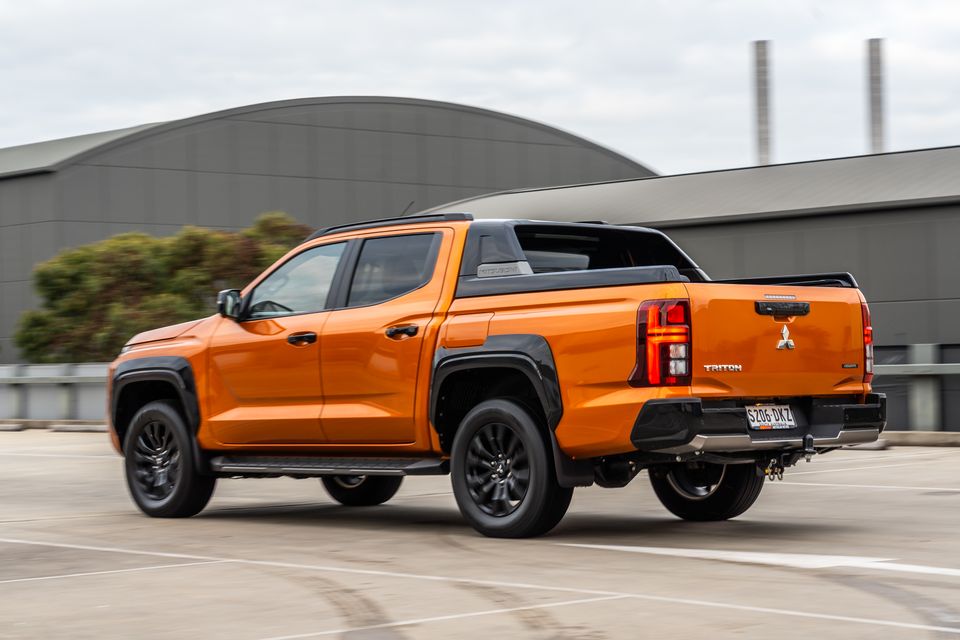
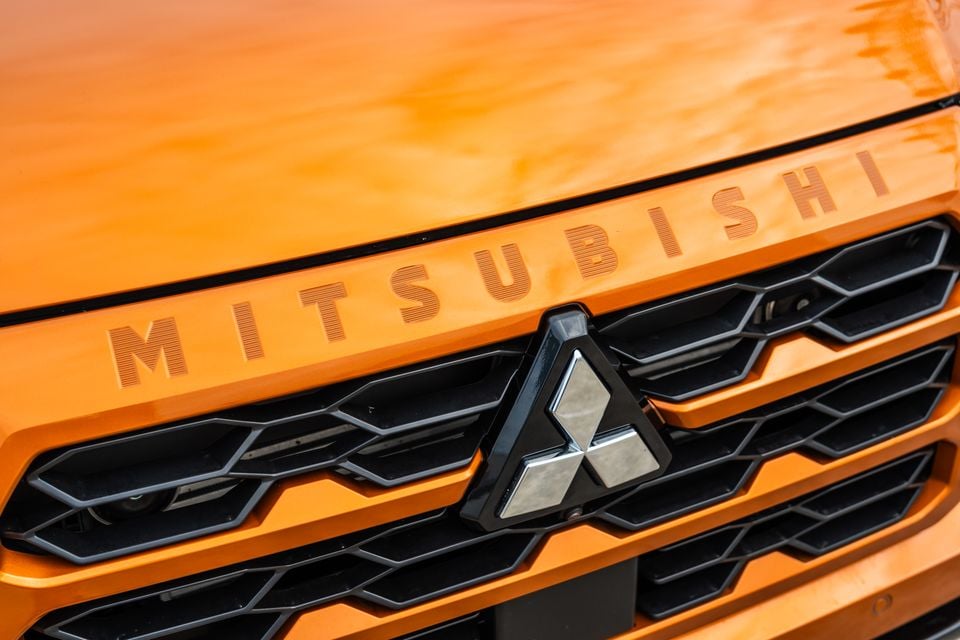
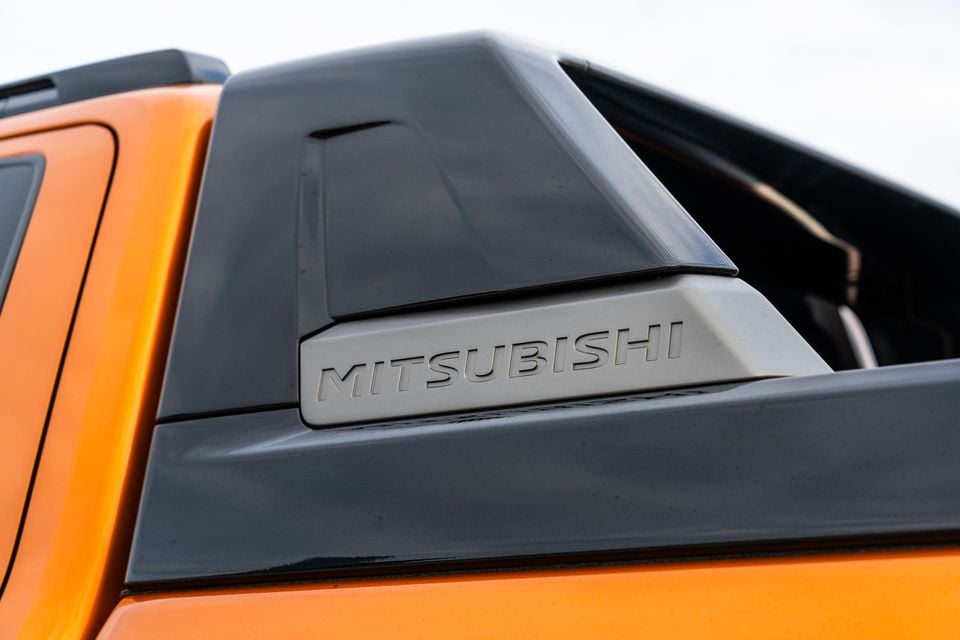
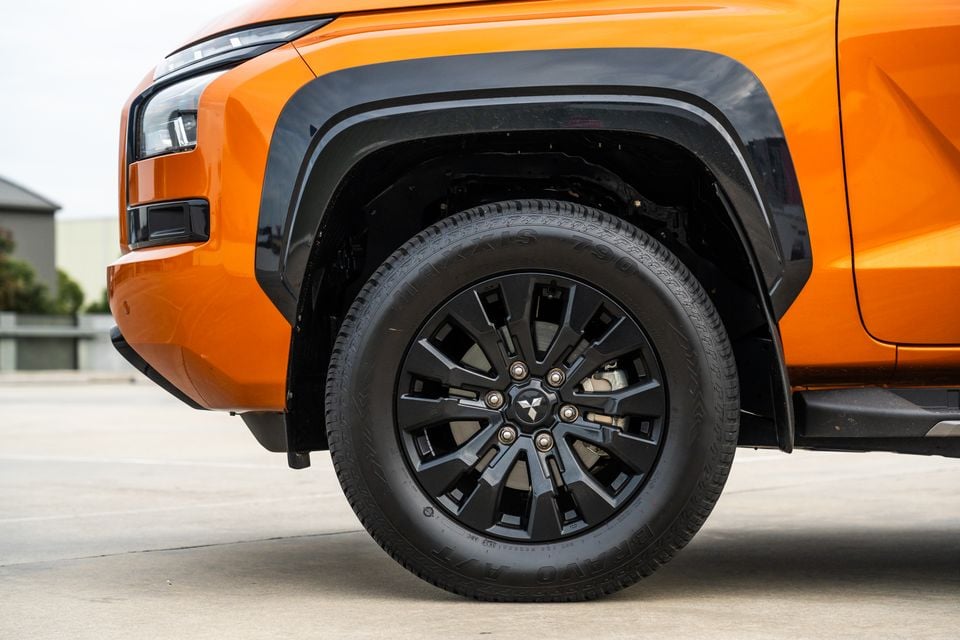
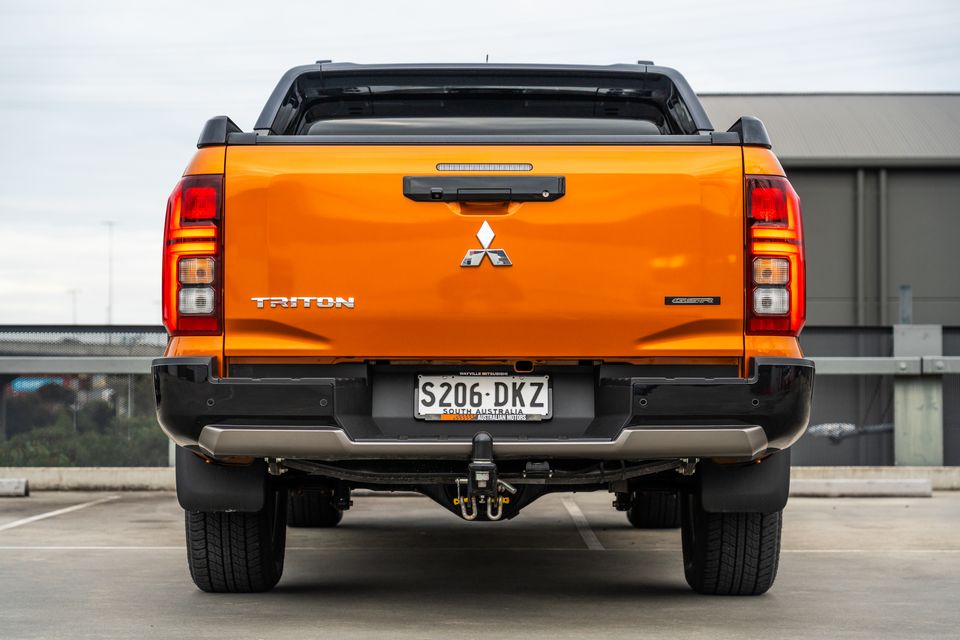
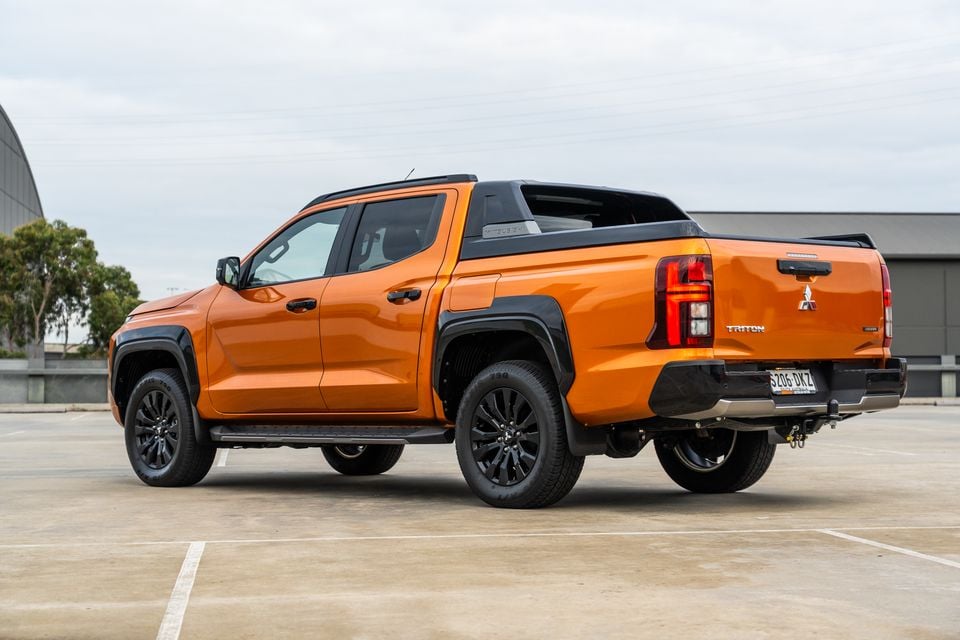
It comes with black 18-inch alloy wheels and black exterior details including headlight surrounds, door handles, mirror caps, window frames, roof rails and the ‘sailplane’ behind the cabin.
| Model | Price before on-road costs |
|---|---|
| 2027 Mitsubishi Triton GLX 4×2 single-cab/chassis automatic | $37,090 |
| 2027 Mitsubishi Triton GLX 4×2 dual-cab pickup automatic | $44,190 |
| 2027 Mitsubishi Triton GLX 4×4 single-cab/chassis automatic | $44,440 |
| 2027 Mitsubishi Triton GLX 4×4 Club Cab chassis automatic | $47,590 |
| 2027 Mitsubishi Triton GLX 4×4 dual-cab/chassis manual | $47,940 |
| 2027 Mitsubishi Triton GLX 4×4 dual-cab/chassis automatic | $50,190 |
| 2027 Mitsubishi Triton GLX+ 4×4 Club Cab pickup automatic | $50,690 |
| 2027 Mitsubishi Triton GLX 4×4 dual-cab pickup automatic | $51,640 |
| 2027 Mitsubishi Triton GLX+ 4×4 dual-cab/chassis automatic | $52,690 |
| 2027 Mitsubishi Triton GLX+ 4×4 dual-cab pickup automatic | $53,990 |
| 2027 Mitsubishi Triton GLX-R 4×4 dual-cab pickup automatic | $57,440 |
| 2027 Mitsubishi Triton GLS 4×4 dual-cab/chassis automatic | $58,590 |
| 2027 Mitsubishi Triton GLS 4×4 dual-cab pickup automatic | $60,140 |
| 2027 Mitsubishi Triton GSR 4×4 dual-cab/chassis automatic | $62,590 |
| 2027 Mitsubishi Triton GSR 4×4 dual-cab pickup automatic | $65,590 |
| 2027 Mitsubishi Triton Raider 4×4 dual-cab pickup automatic | $74,990 drive-away |
To see how the Mitsubishi Triton stacks up against the competition, use our comparison tool
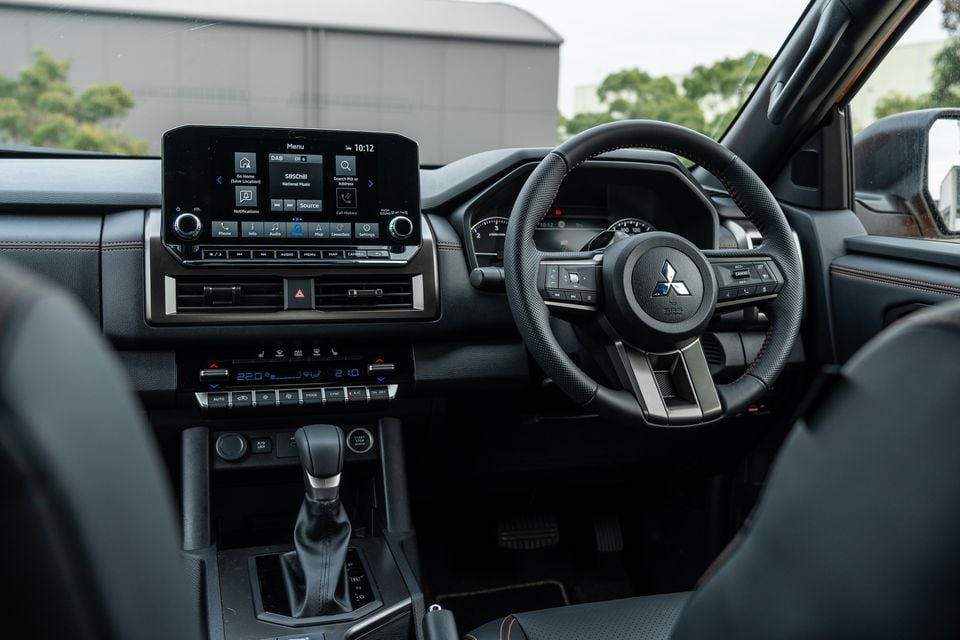
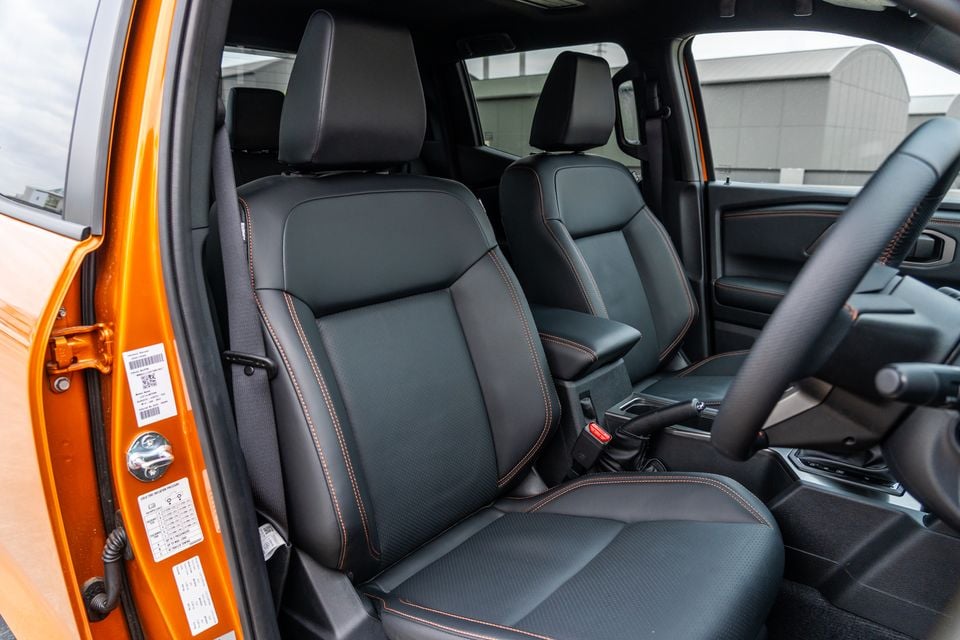
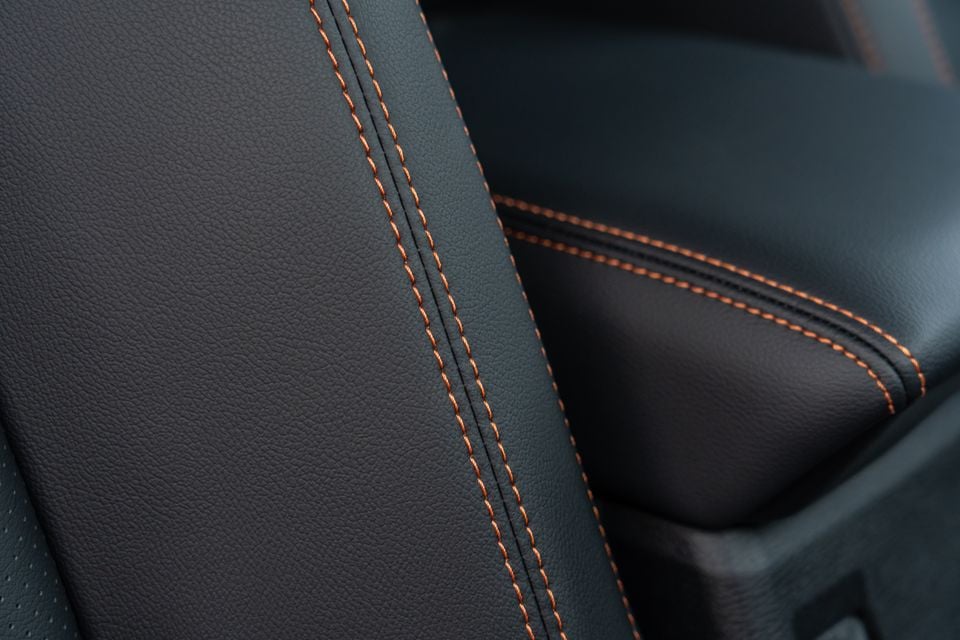
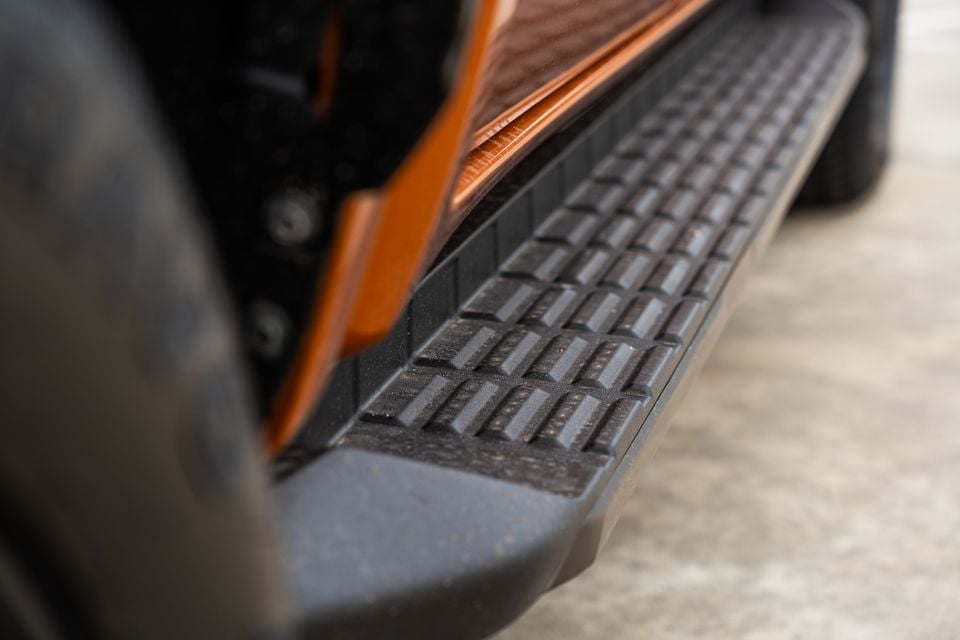
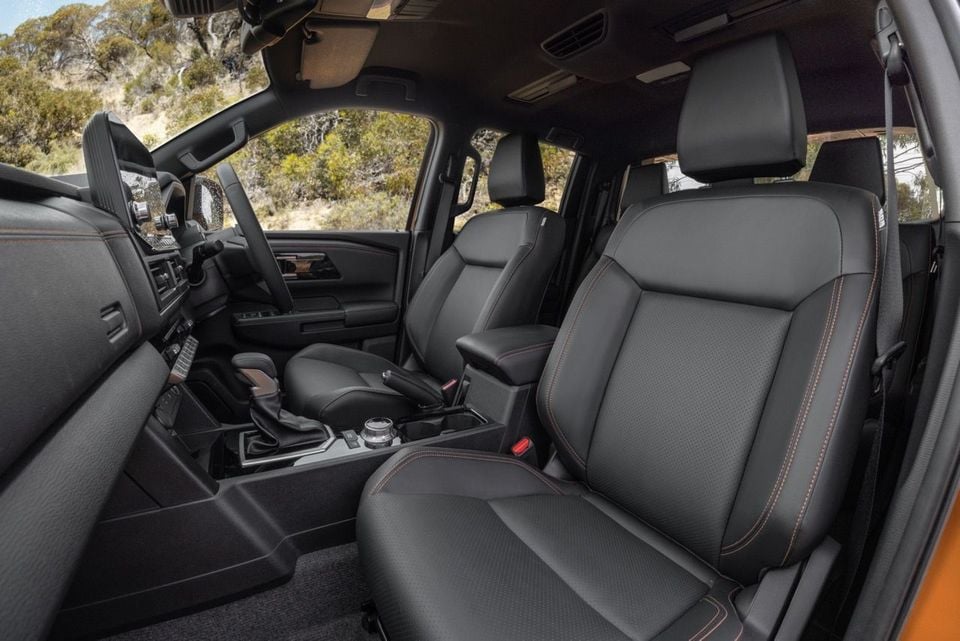
The GSR’s cabin is well laid out, with its dark leather-appointed seat trim and orange stitching matching the Yamabuki Orange exterior, although the stitching is standard regardless of paint colour. The side steps and solid A-pillar grab handles make getting in and out easy.
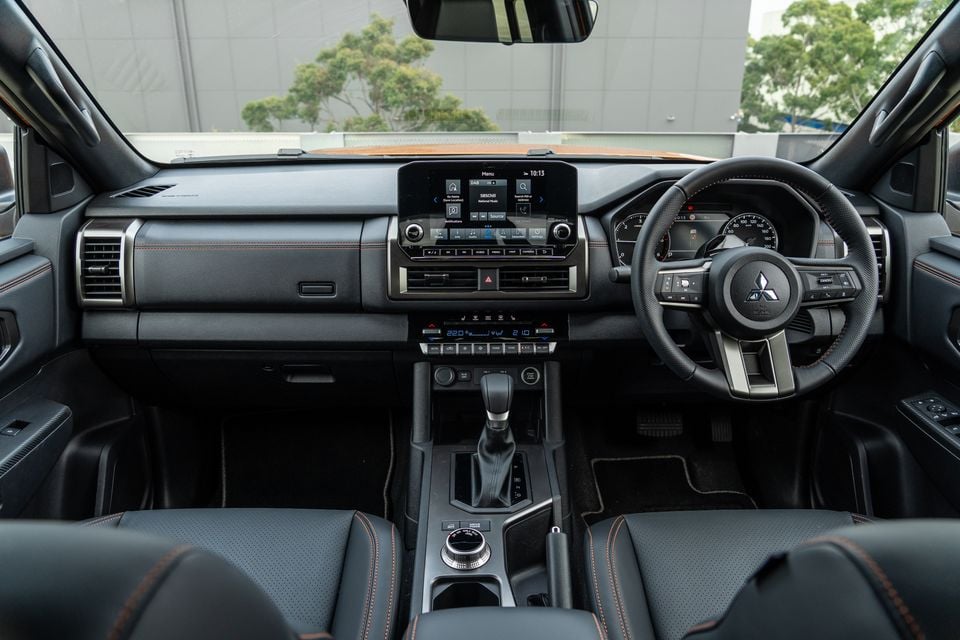
It feels well made overall. The hard plastics on the dashtop and door tops are easily forgotten and par for the course in this segment, and much of the cabin is otherwise well finished.
The front seats – both heated, with electric adjustment for the driver and manual adjustment for the passenger – are well bolstered. Leather trim on the centre console-mounted gear selector and chunky three-spoke steering wheel adds sophistication to the overall look.
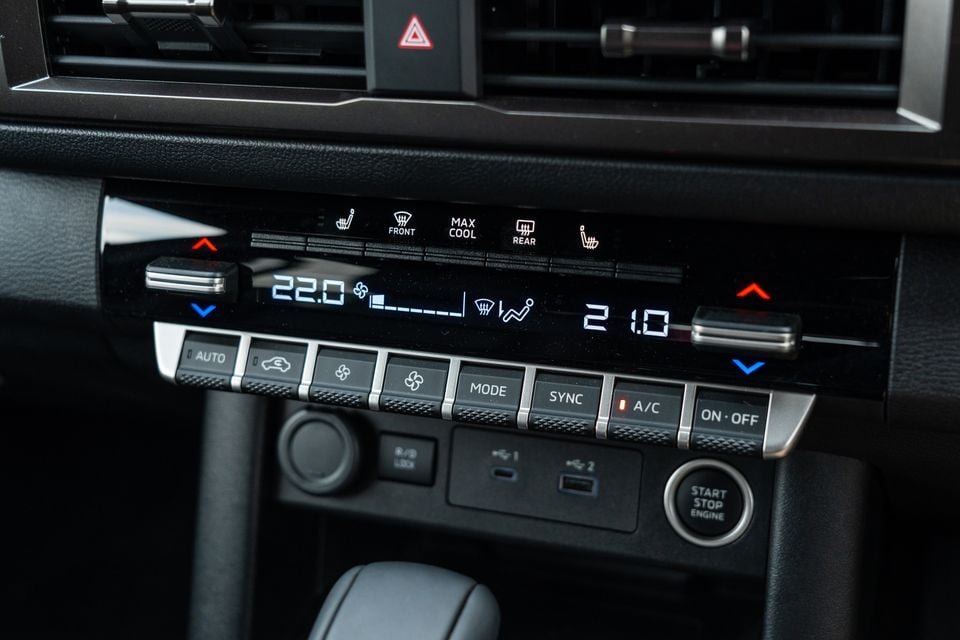
Amid the sharp angles and creases, the dark theme incorporates carbon-fibre-look door trims and silver detailing on the centre console and around both the air vents and the 'floating' 9.0-inch central infotainment touchscreen, with an excellent row of sturdy physical controls below it.
Physical controls handle the air-conditioning, front-seat heating and windscreen demisting, avoiding a labyrinth of touchscreen menus for these key functions.
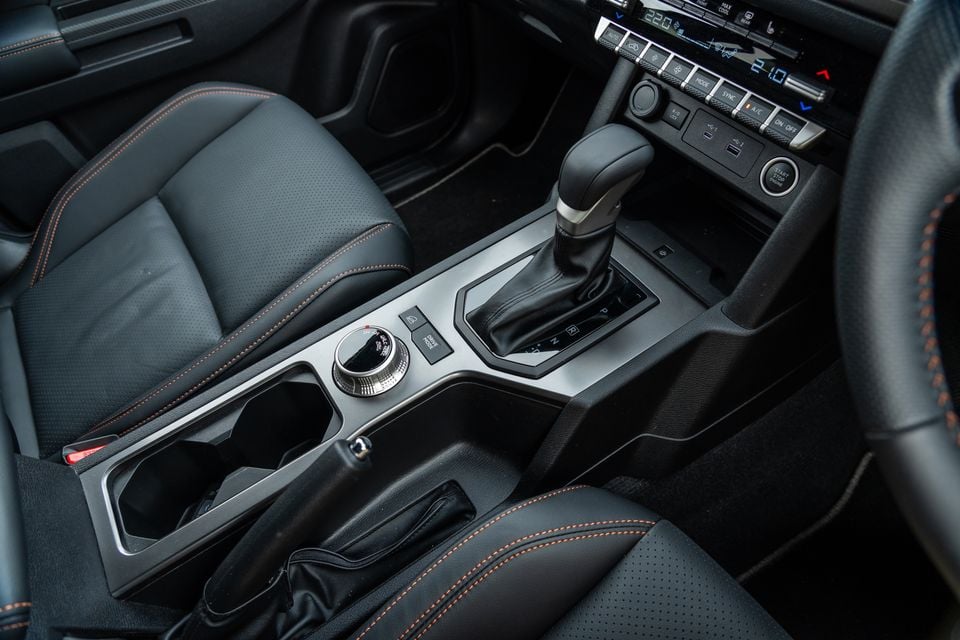
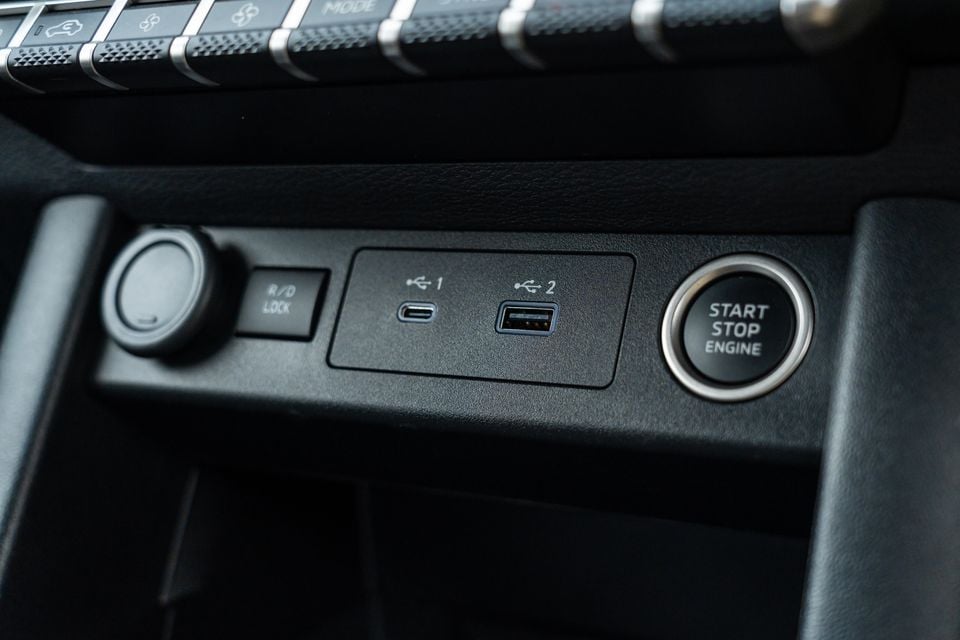
Beneath the centre-stack controls sits the circular engine start button on the driver’s side, across from the rear differential-lock switch, with USB-A and USB-C ports between them and a wireless phone charging tray underneath.
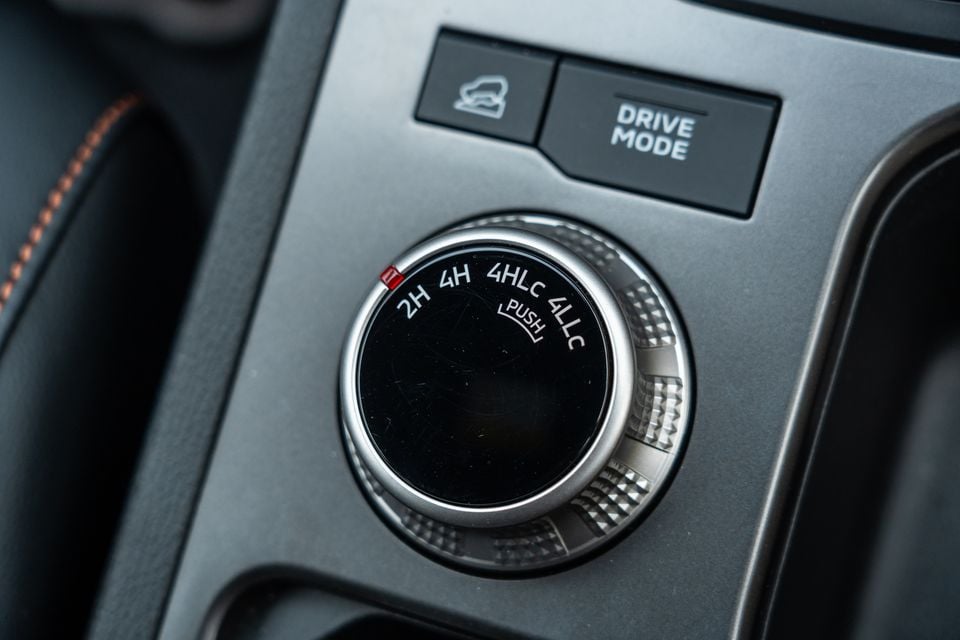
The centre console has a conventional leather-bound handbrake lever and a small storage bin with a padded lid, while the four-wheel drive selector sits ahead of two cupholders.
There’s plenty of storage space, with reasonably sized door bins and twin gloveboxes – one in the usual position and another above it – plus two dash-mounted cupholders.
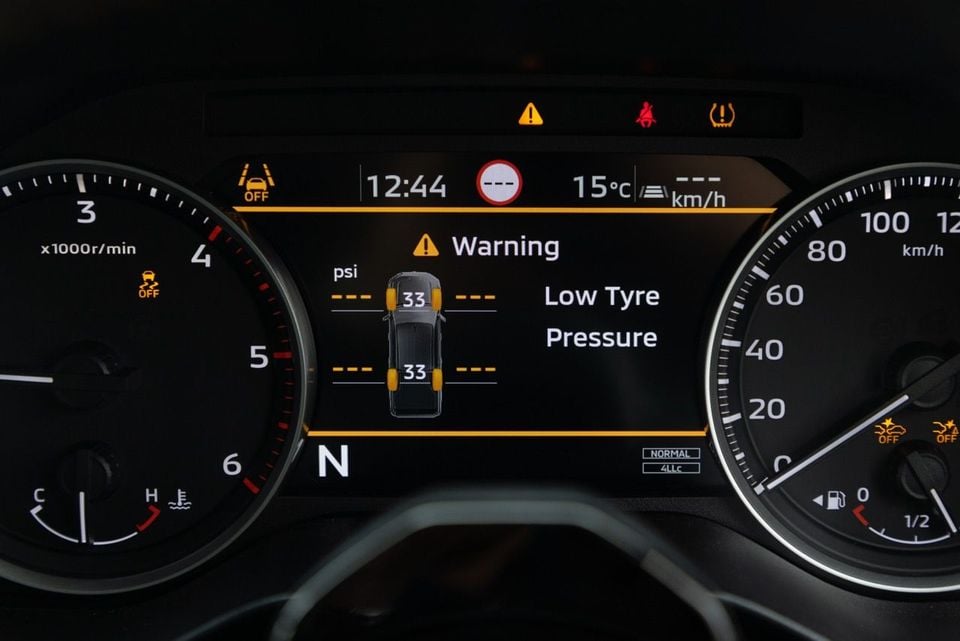
Hit the start button and the instrument cluster comes to life with a mix of old and new: a digital display in the centre, an old-school backlit speedometer to its right, and a rev counter to its left.
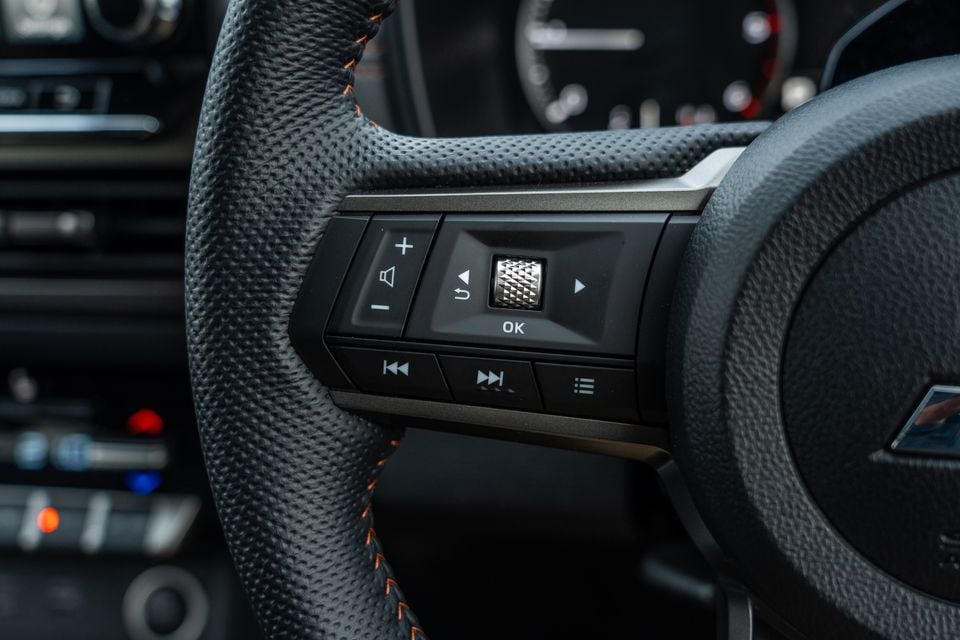
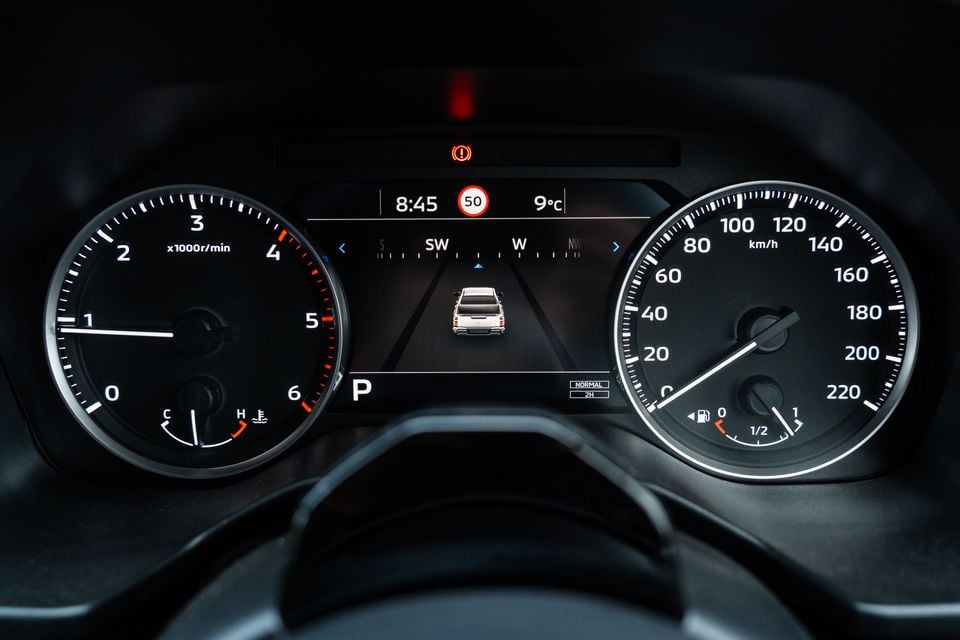
The central display can be changed using the steering wheel buttons, while the traditional dials remain fixed.
The touchscreen’s graphics are a little dated and the display isn’t as crisp as in some rivals, while the fonts and design appear basic rather than elegant.
Hats off to Mitsubishi for a proper volume knob, though, even if it’s on the passenger side. It allows easy adjustment by a passenger, while the driver can use the steering wheel controls.
In the second row, the leather-appointed trim continues across the bench and the single-piece folding backrest prevents you from folding part of it while retaining passenger space. There are two ISOFIX child-seat anchors and two top-tether points.
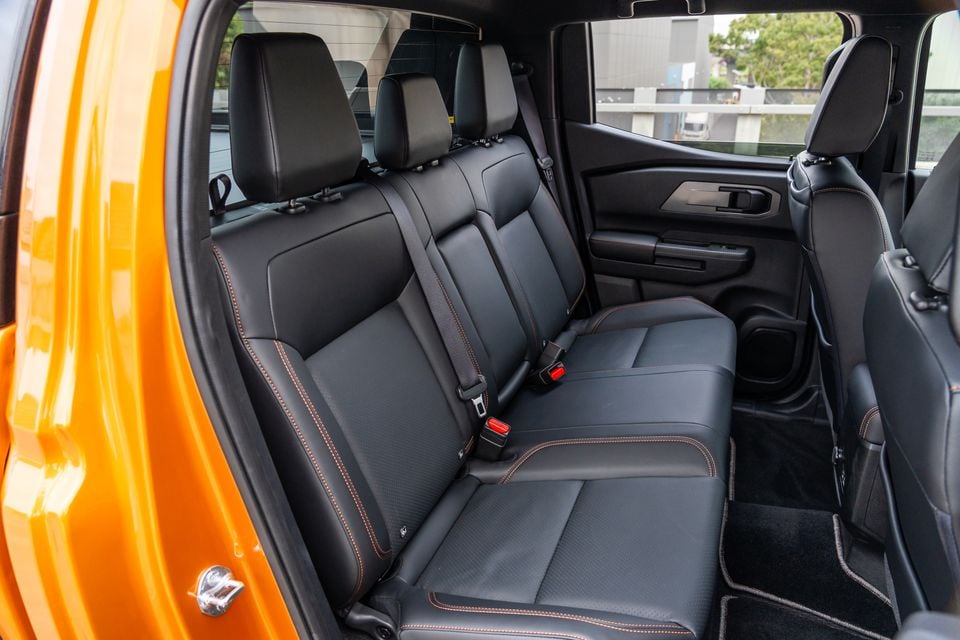
There also a centre armrest with a pair of cupholders, USB outlets behind the centre console, and map pockets on the backs of the front seats. Rear passengers also get a roof-mounted air circulator.
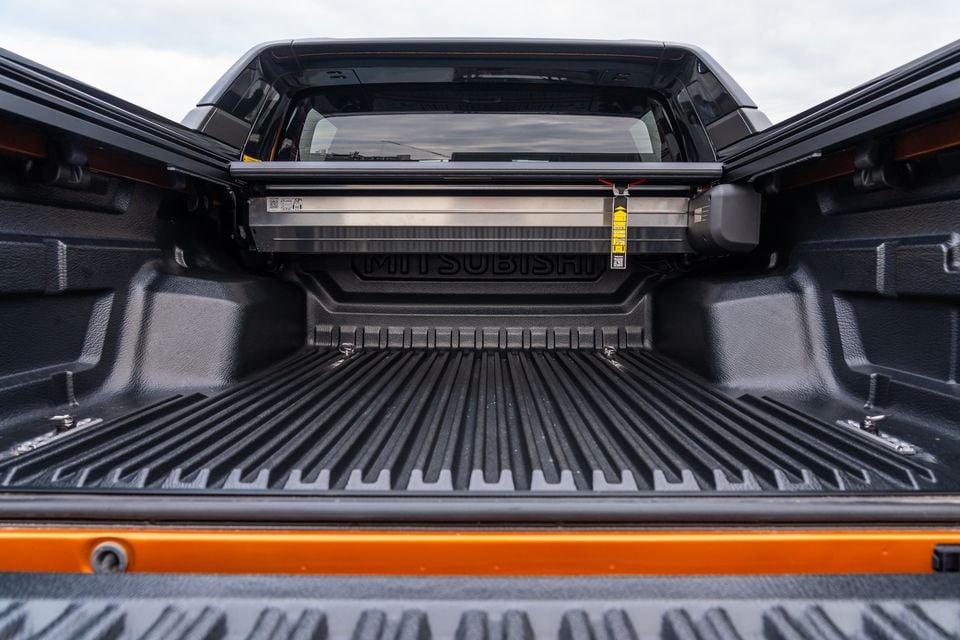
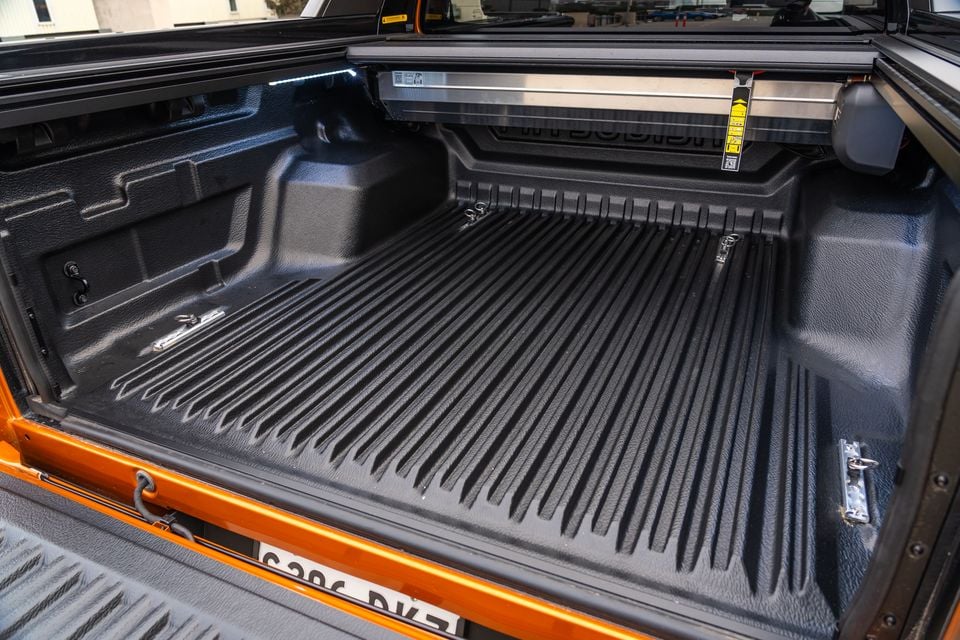
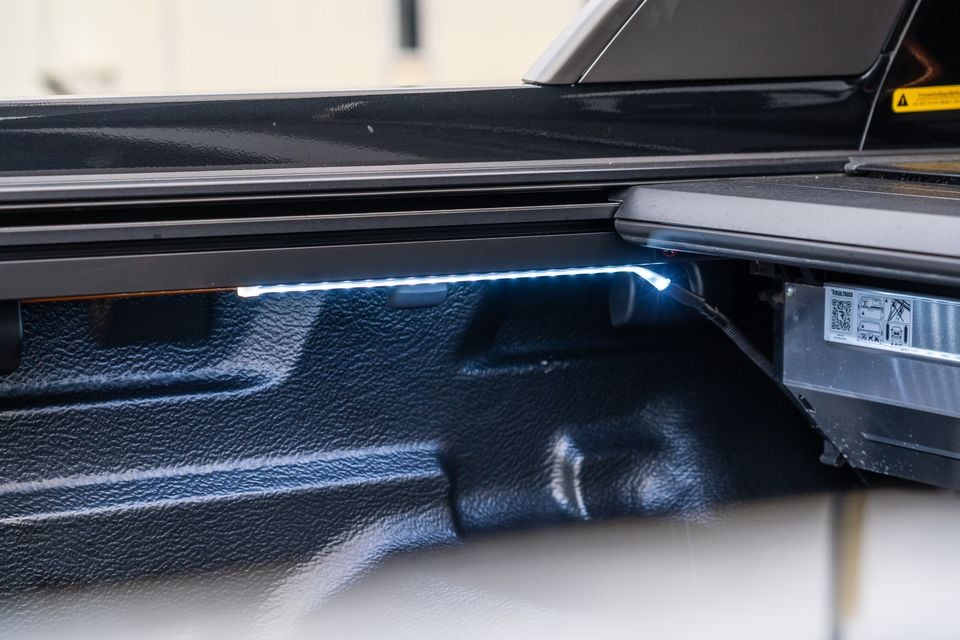
The tray on our test vehicle came with an optional electric roller shutter, operated by remote control. We’d have liked a dedicated button on the dash or elsewhere within the cabin, too.
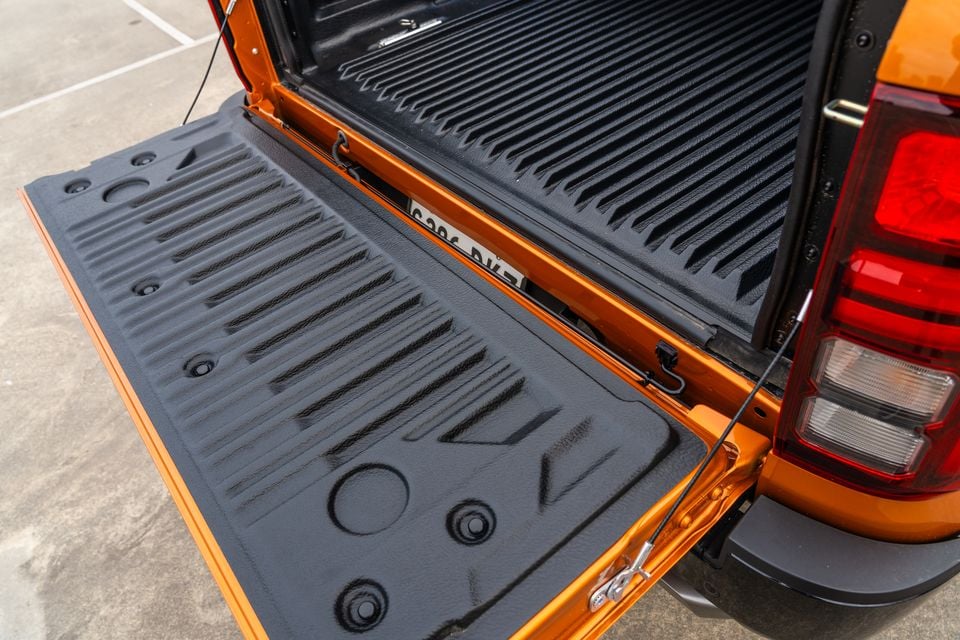
A drop-in bedliner is standard, while our test vehicle also had additional cargo tie-down equipment. The tailgate-assist system controls the tailgate’s descent and makes it easier to lift shut, which works a treat.
Overall, the Triton GSR's interior and cargo hold are in the same ballpark as its chief competitors in terms of packaging and appointments.
| Dimensions | Mitsubishi Triton GSR |
|---|---|
| Length | 5320mm |
| Width | 1930mm |
| Height | 1815mm |
| Wheelbase | 3130mm |
| Tub length | 1555mm |
| Tub width | 1545mm |
| Tub depth | 526mm |
To see how the Mitsubishi Triton stacks up against the competition, use our comparison tool
The Triton GSR comes with a 2.4-litre four-cylinder bi-turbo diesel engine, a six-speed automatic transmission and Super Select 4WD-II. The four-wheel drive system offers rear-wheel drive, full-time four-wheel drive and high- and low-range 4x4 with the centre differential locked. A locking rear diff is also fitted.
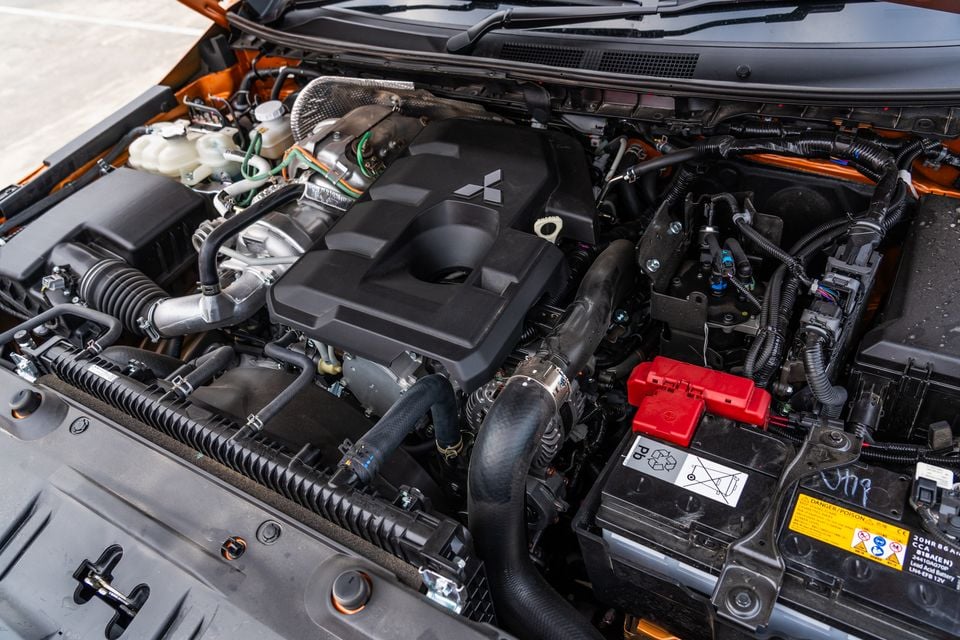
The engine produces 150kW of power at 3500rpm and 470Nm of torque between 1500 and 2750rpm, matching the outputs of the rest of the Triton range. Braked towing capacity is 3500kg.
Those outputs compare with 150kW and 500Nm for the automatic HiLux. The Toyota’s claimed combined fuel consumption of 7.4L/100km is marginally better than the GSR’s 7.7L/100km, and both are more economical on paper than the admittedly more potent Ranger V6 at 8.3L/100km.
Both the Triton and the Navara, which is twinned with the Mitsubishi, require AdBlue to reduce exhaust emissions.
| Specifications | Mitsubishi Triton GSR |
|---|---|
| Engine | 2.4L four-cylinder bi-turbo diesel |
| Power | 150kW at 3500rpm |
| Torque | 470Nm at 1500–2750rpm |
| Transmission | Six-speed automatic |
| Drive type | Selectable four-wheel drive with full-time 4WD capability |
| Fuel economy, claimed | 7.7L/100km |
| CO2 emissions, claimed | 203g/km |
| Fuel tank | 75L |
| AdBlue tank | 17L |
| Kerb weight | 2166kg |
| Payload | 1030kg with 3200kg GVM; 910kg with 3080kg GVM |
| Braked towing capacity | 3500kg |
| Gross vehicle mass (GVM) | 3200kg |
| Gross combination mass (GCM) | 6250kg |
To see how the Mitsubishi Triton stacks up against the competition, use our comparison tool
The Triton’s driving experience starts with the supportive leather-appointed driver’s seat. Its electric adjustment and the telescopic steering column make it easy to find a comfortable driving position.

Large side mirrors incorporate blind-spot warning indicators and combine with the interior mirror to provide good rearward visibility.
There’s wireless Apple CarPlay, but Android Auto users need to connect their phones by cable through a USB port in the console.
Hit the start button and the 2.4-litre engine rumbles into life with a rugged sound but a smooth idle. It remains well-mannered on the move, although there’s a long dead spot in the throttle pedal before the engine responds.
Once you’ve become accustomed to that, the powertrain responds well. It’s easy to drive the GSR smoothly around town, with its size and weight becoming less noticeable as you settle into its predictable responses.
Despite its ruggedness, this is no rattly old diesel. While you won’t mistake it for a petrol engine, especially at higher revs, it’s relatively refined with both noise and vibration kept well in check when cruising.
In a rare win, even the engine idle-stop/start function was quick and smooth enough not to interrupt the traffic-light shuffle.
There are no steering wheel paddles, but slide the gear lever across to select manual mode and the six-speed auto will hold gears towards the top of the rev range – useful when towing or heading off-road.
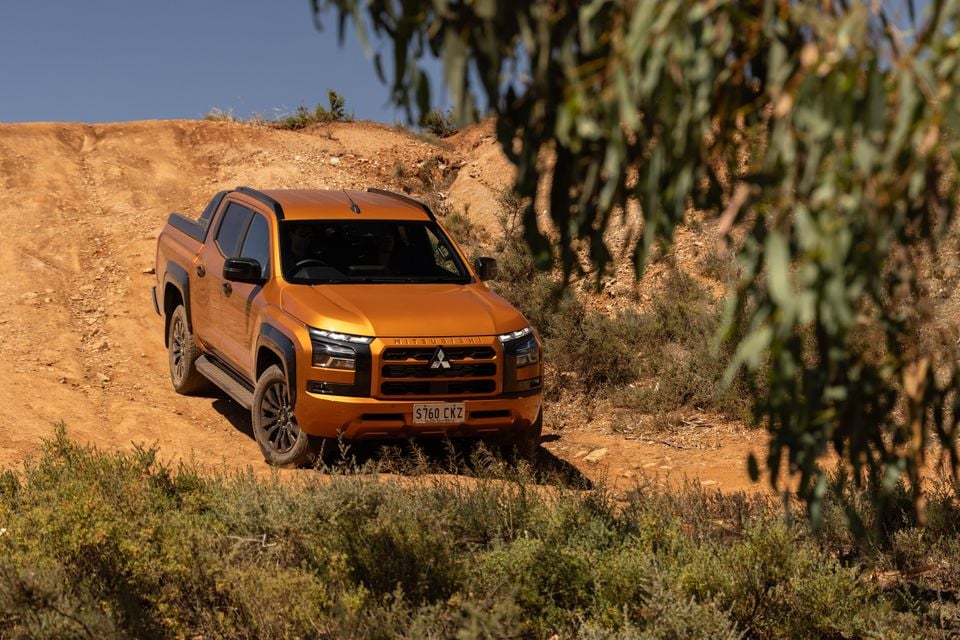
We didn’t give the GSR a thorough off-road test this time around and a Triton wasn’t available for our recent 21-vehicle Off-Road Mega Test, although a Navara with its own suspension tune was among the solid contenders.
If this is the car for you, we’ll compare offers from trusted dealers, handle the back and forth and manage your purchase from enquiry to delivery.
The Triton's suspension changes introduced in May 2026 include a reduced front spring rate, revised rubber body mounts and new high-response valves for all four shock absorbers. The GSR also gains larger-diameter rear shocks, but retains the three-leaf, solid-axle rear suspension underpinning all Tritons.
The GSR specifically gains two Yamaha Performance Dampers, one fitted across the front of the chassis and the other across the rear, to damp chassis flex and vibration. Mitsubishi claims these also improve stability, roadholding and steering response.
On the road, the updated GSR proves a well-sorted dual-cab 4x4 ute, with the chassis upgrades being particularly effective.
The GSR’s 18-inch alloy wheels wear 265/60R18 Maxxis Bravo AT-790 tyres. Despite their name, Mitsubishi classifies them as highway-terrain tyres, with the Raider getting chunkier all-terrain rubber to suit its position at the top of the Triton tree.
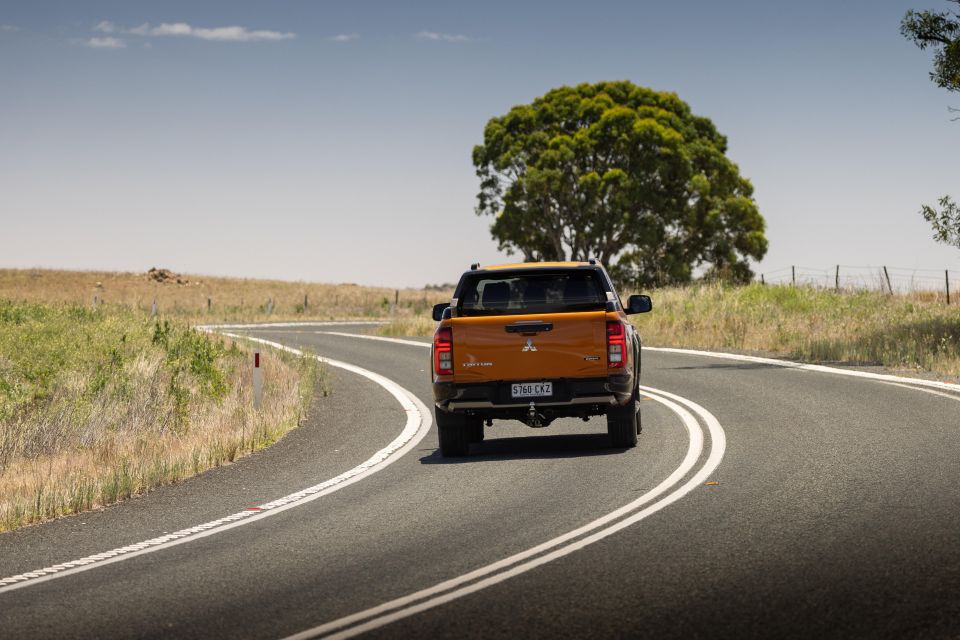
The ride follows smaller bumps closely and can feel pattery even on the freeway, but it’s not jarring or unsettling. Larger bumps are quickly dealt with, while mid-corner potholes and ruts don’t significantly disturb the GSR.
Body control is also commendable for a ute, even if describing the Triton GSR as ‘car-like’ would be a stretch, but there is more chassis-induced body movement over bumps than in both the new HiLux and the class-leading Ranger.
The steering has decent feel without being overly heavy, although its 3.4 turns lock-to-lock mean tighter manoeuvres require many armfuls of input.
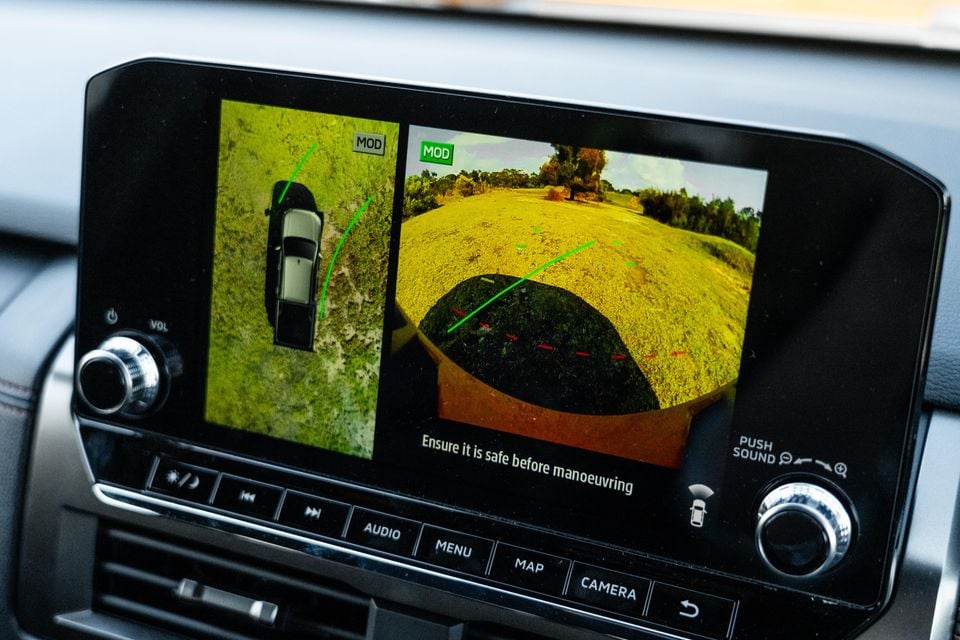
The surround-view camera is clear enough, despite the dated graphics elsewhere, to make parking the GSR or attaching a trailer to the genuine-accessory towbar easier.
The brakes work well, but the pedal is a tad spongy. Like the throttle, it seems geared towards measured inputs when towing or off-roading rather than the sharper responses families might expect from an everyday sedan or SUV.
The strong powertrain and composed chassis allow the GSR to be driven briskly, although it seems geared towards carrying a load in comfort and with composure, rather than attempting to be a ‘sports ute’.
One persistent issue is the Triton’s advanced driver-assistance system (ADAS), particularly its driver attention monitor which continues to be a persistent bugbear. After unsuccessful attempts to use voice recognition, we turned to the touchscreen – only for the monitor to interrupt with another warning.
The repeated alerts become frustrating when you’re trying to operate the vehicle controls and remain a burden despite a 2024 update intended to address the issue.
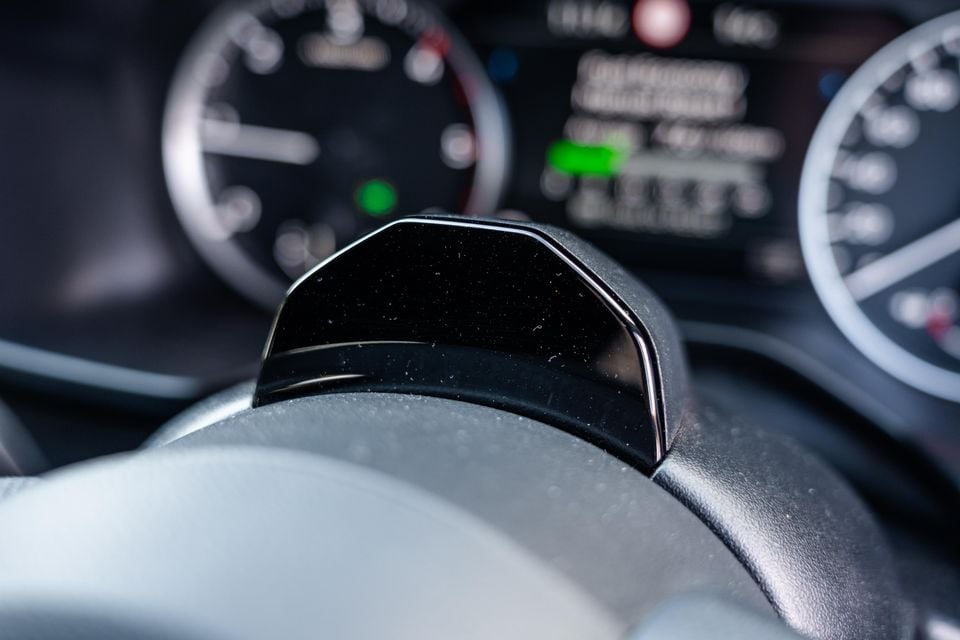
The controls become easier to use with familiarity, but the overzealous monitor shows there’s room to improve the Triton’s on-road experience. Even so, the GSR still ranks among the better-driving dual-cab 4x4 utes currently in showrooms.
| Off-road dimensions | Mitsubishi Triton GSR |
|---|---|
| Front track | 1570mm |
| Rear track | 1565mm |
| Ground clearance | 228mm |
| Approach angle | 30.4° |
| Departure angle | 22.8° |
| Ramp breakover angle | 23.4° |
To see how the Mitsubishi Triton stacks up against the competition, use our comparison tool
The GSR sits below only the Raider in the Triton lineup, making it one of the most highly equipped variants in the range.

Equipment varies by body style, ie: single-cab, Club Cab and dual-cab variants. The dual-cab 4×4 range starts with the Triton GLX.
2027 Mitsubishi Triton GLX equipment highlights:
Triton GLX+ adds:
Triton GLX-R adds or replaces:
Triton GLS adds or replaces:
Triton GSR adds or replaces:
Triton Raider adds or replaces:
To see how the Mitsubishi Triton stacks up against the competition, use our comparison tool
The Mitsubishi Triton has a five-star ANCAP safety rating based on testing conducted in 2024.

| Category | Mitsubishi Triton |
|---|---|
| Adult occupant protection | 86 per cent |
| Child occupant protection | 89 per cent |
| Vulnerable road user protection | 73 per cent |
| Safety assist | 70 per cent |
Standard safety equipment includes:
Front cross-traffic alert is available as a no-cost dealer-fitted option. It is not compatible with the genuine front protection bar.
Hill descent control is included from GLX-R upwards.
To see how the Mitsubishi Triton stacks up against the competition, use our comparison tool
The 2026 Mitsubishi Triton GSR comes with a standard five-year, 100,000km warranty. Eligible vehicles can receive service-activated extensions up to a maximum of 10 years or 200,000km when the servicing requirements are met.
| Servicing and warranty | Mitsubishi Triton GSR |
|---|---|
| Warranty | Five years/100,000km, service-activated up to 10 years/200,000km |
| Roadside assistance | Up to 10 years, service-activated |
| Service intervals | 12 months or 15,000km, whichever comes first |
| Capped-price servicing | Up to 10 years/150,000km, subject to program conditions |
| Average annual scheduled service cost over 10 years | $702.30 |
| Total capped-price service cost over 10 years | $7023 |
Mitsubishi’s capped-price service schedule for MY26 Tritons purchased from April 1, 2026:
| Service | Price |
|---|---|
| One year or 15,000km | $489 |
| Two years or 30,000km | $489 |
| Three years or 45,000km | $489 |
| Four years or 60,000km | $599 |
| Five years or 75,000km | $639 |
| Six years or 90,000km | $850 |
| Seven years or 105,000km | $719 |
| Eight years or 120,000km | $980 |
| Nine years or 135,000km | $869 |
| 10 years or 150,000km | $900 |
Even with its servicing conditions, Mitsubishi’s decade-long aftersales program remains among the best in Australia.
Its maximum warranty duration exceeds Ford’s seven-year conditional coverage and Isuzu’s six-year warranty, although Nissan offers service-activated coverage of up to 10 years or 300,000km.
Scheduled servicing for the Triton GSR totals $2705 over the first five years, compared with $2495 for the Navara, $2445 for the Isuzu D-Max, and $1995 for an eligible MY26 Ranger over the same period.
To see how the Mitsubishi Triton GSR stacks up against its rivals, use our comparison tool
The Triton GSR is a well-sorted, accomplished dual-cab 4x4 ute with strong capability both on-road and off, reasonable fuel consumption, and a competitive ownership package.
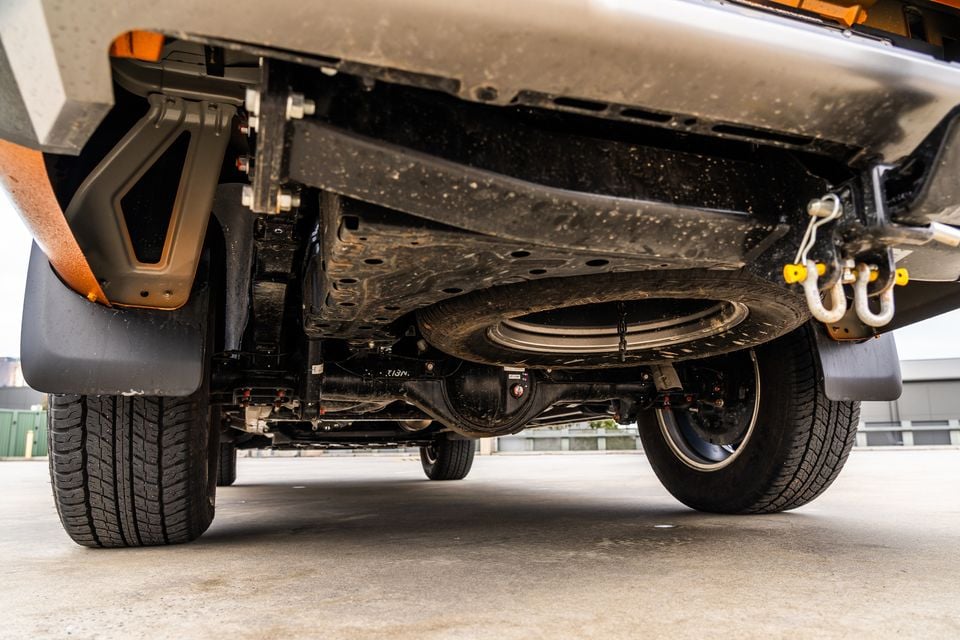
Its black alloy wheels and exterior detailing give it a smart, polished look, while at the business end an integrated rear bumper step and standard bedliner add practicality. Our test vehicle’s optional remotely operated roller shutter added convenience and security.
The GSR’s equipment lifts the already fit-for-purpose cabin to a higher level of comfort, complementing a well-mannered powertrain and useful towing and payload capacities.
The interior is roomy enough, and the balance of physical controls and touchscreen functions is well judged. Most everyday features are intuitive enough that there’s no need to Google how to operate them.
There’s room for improvement, though. The touchscreen’s dated graphics need a birthday, while the GSR lacks the fully digital instruments found in other Mitsubishis such as the Outlander. There’s also the overbearing driver attention monitor, which could still do with some fine-tuning.
The Triton GSR is priced competitively against its key diesel-powered rivals, even if cheaper hybrid alternatives could tempt some buyers. Its long warranty, established dealer network and pleasant driving experience, thanks in part to the latest updates, help it remain among the better utes in the dual-cab 4x4 category.
CarExpert can save you thousands on a new Mitsubishi Triton. Click here to get a great deal
Click the images for the full gallery
MORE: Explore the Mitsubishi Triton showroom
Editorial Disclosure
This vehicle was supplied by Mitsubishi for evaluation.
If this is the car for you, we’ll compare offers from trusted dealers, handle the back and forth and manage your purchase from enquiry to delivery.
2025
$39,739
2026
$42,159
2025
$56,064
2026
$56,167
2025
$62,914
2026
$63,120
2025
$63,995
2025
$64,201
2026
$64,304
2025
$68,115
2026
$68,424
2025
$69,763
2026
$74,990
Damion Smy is an award-winning motoring journalist with global editorial experience at Car, Auto Express, and Wheels.
Add CarExpert as a Preferred Source on Google so your search results prioritise writing by actual experts, not AI.
Damion Smy
13 Hours Ago

Josh Nevett
2 Days Ago


William Stopford
4 Days Ago

Alborz Fallah
4 Days Ago
Josh Nevett
5 Days Ago

Derek Fung
5 Days Ago
Add CarExpert as a Preferred Source on Google so your search results prioritise writing by actual experts, not AI.
# Based on VFACTS and EVC data
† Displayed prices are based on the drive-away price of the vehicle, which includes delivery charges, registration fees, number plates, and applicable road taxes, based on a Sydney location. However, prices may vary between states and territories, and additional costs such as compulsory third party (CTP) insurance, dealer delivery fees, and optional extras are not included. These prices are subject to change without notice and may not reflect current market pricing or dealer offers.
 Automotive Vehicle Spec Data & 4K images Powered by JATO Dynamics Ltd