




Damion Smy
2027 GWM Ora 5 vs Hyundai Kona Electric: Spec battle
The GWM Ora 5 small electric SUV has arrived full of character and charm, but how does it stack up against the popular Hyundai Kona Electric?
7 Hours Ago
The CX-70 is Mazda's largest five-seat SUV, but with a steep price tag and a few notable flaws, it isn't the most logical.

Journalist
Journalist
Journalist
Journalist
If this is the car for you, we’ll compare offers from trusted dealers, handle the back and forth and manage your purchase from enquiry to delivery.
The CX-70 is one of Mazda’s slowest-selling models, but poor sales performance isn’t necessarily indicative of a bad car.
The CX-70 forms one quarter of the Japanese brand’s strategy to break into the more premium end of Australia’s booming SUV market, and we've now had plenty of time for the dust to settle and for us to reflect on the sales figures Mazda forecasted in late 2024.
Mazda’s four-model premium SUV lineup comprises the CX-60, CX-70, CX-80, and CX-90, which were predicted to collectively find 1400 customers per month. The mid-size CX-60 was forecast to account for 550 sales, alongside the larger five-seat CX-70 (60), the seven-seat CX-80 (650), and the flagship seven-seat CX-90 (100) large SUVs.
Suffice to say those expectations have not been met. In recent months, the CX-60 notched up roughly 500 sales, the CX-80 did 200-odd, and neither the CX-70 nor CX-90 could break the 40 barrier. Given those figures have stayed fairly consistent, it seems this is where they’ve settled.
It’s worth noting Mazda knew the CX-70 would be a niche model, given it has a higher base price and fewer seats than the CX-90 flagship, which shares its body, but it's still proving to be only about half as popular as Mazda expected.
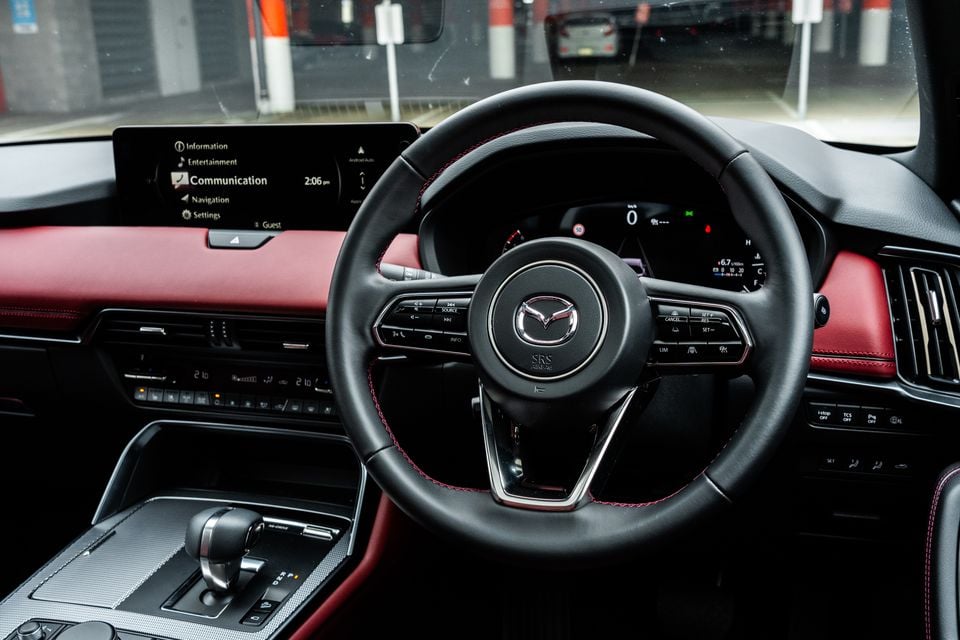
Critics have long argued there’s too little separation between Mazda's four Large Architecture models, that they’re too expensive, and that there are ongoing issues with their ride quality and transmissions that are yet to be fully remedied. Their sales performance could be down for any or all of those reasons.
Whatever the case, there’s no doubt Mazda will be wanting to turn things around in 2026, when all four SUVs continue without any major changes following price rises in mid-2025.
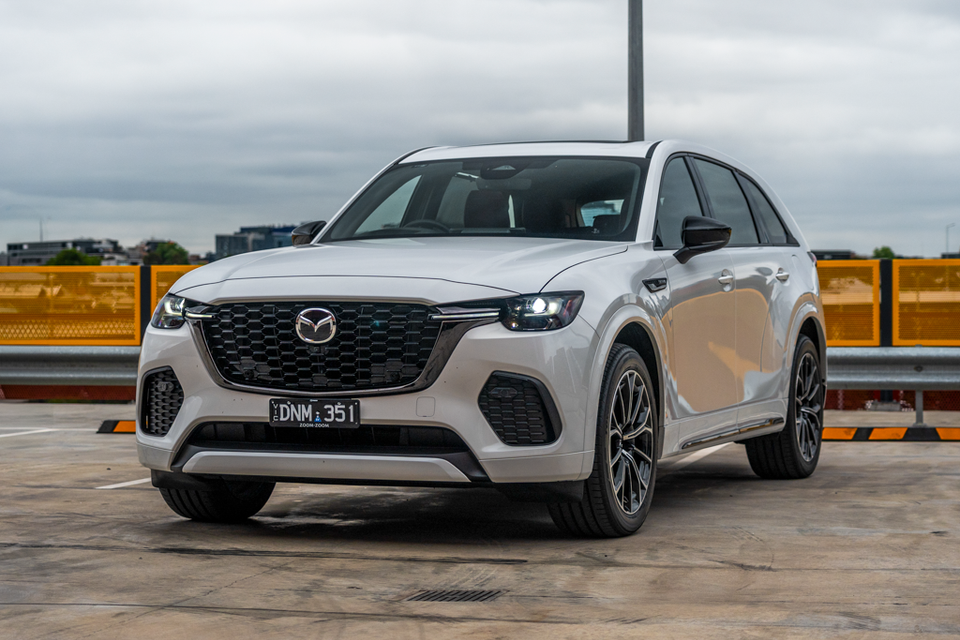
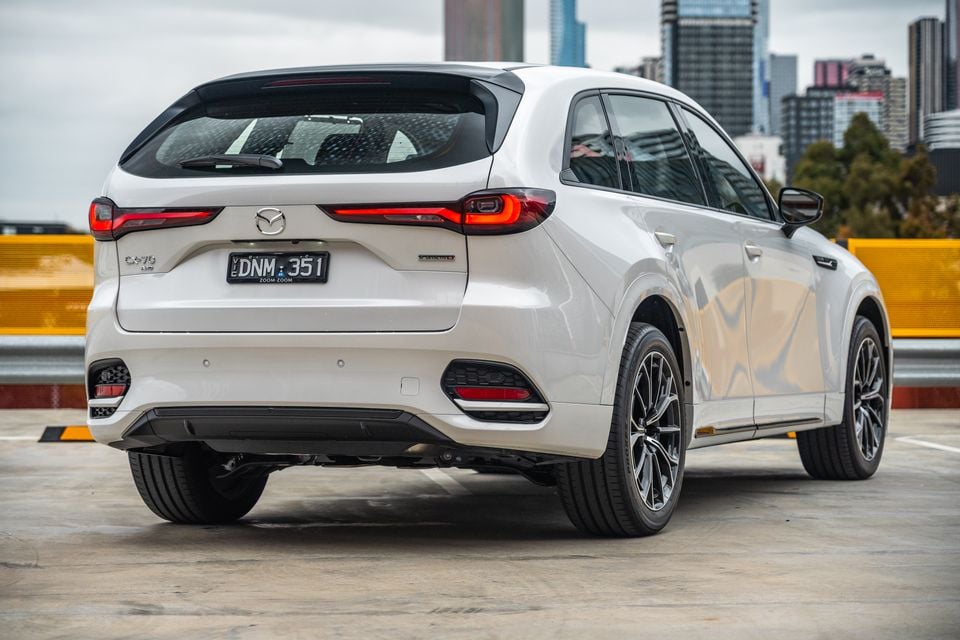
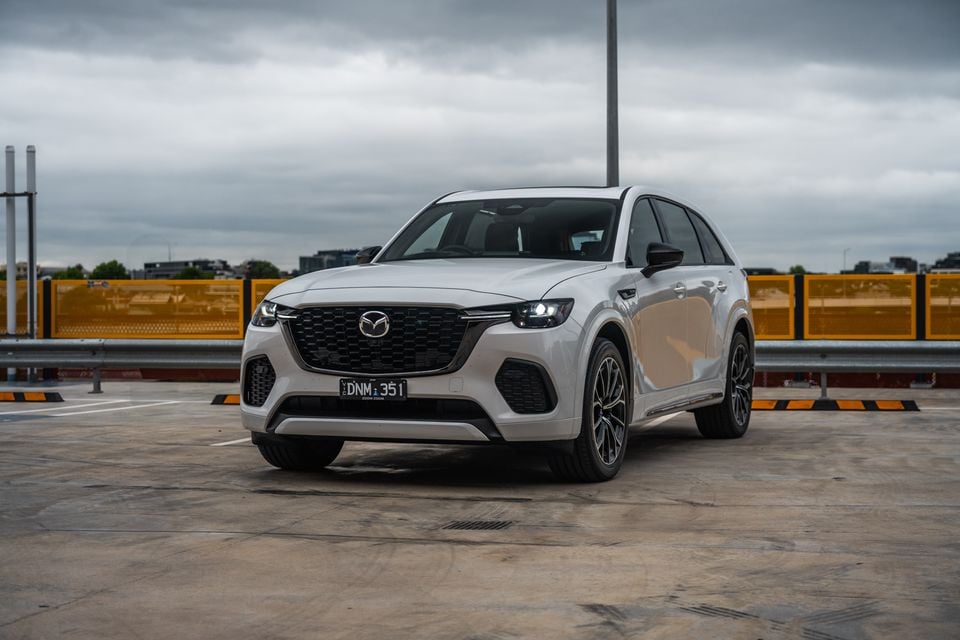
On test here is the 2026 Mazda CX-70 D50e Azami, the most expensive version of Mazda’s flagship five-seat SUV. It shares its body and engine with the seven-seat CX-90, placing it between the narrower CX-60 and CX-80 in terms of length.
Does it really deserve to be among the least popular large Mazda SUVs?
Our tester, in Azami trim with a diesel engine, is the most expensive CX-70 currently on sale. It's priced at $87,266 before on-road costs, which is $2046 more than it was before mid-2025.
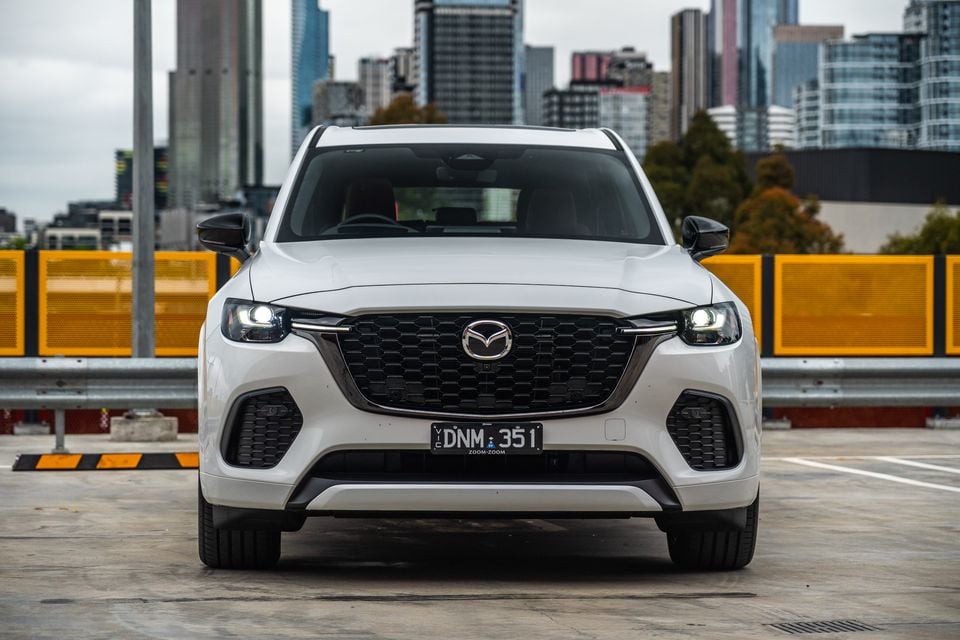
| Model | Price before on-road costs |
|---|---|
| 2026 Mazda CX-70 G50e GT | $76,720 |
| 2026 Mazda CX-70 D50e GT | $78,720 |
| 2026 Mazda CX-70 G50e Azami | $84,666 |
| 2026 Mazda CX-70 D50e Azami | $87,266 |
However, like-for-like, the CX-70 GT and Azami variants are around $8000 cheaper than their CX-90 equivalents. The CX-70 has the most niche positioning of the four SUVs, as reflected in its generally higher price compared to the CX-60 and CX-80.
Outside Mazda’s stable, the CX-70 has several rivals, but its price is closest to that of models from typically non-luxury brands. These include the flagship Toyota Kluger at $85,135 before on-roads, the Hyundai Palisade at $89,900 before on-roads, and the Kia Sorento GT-Line PHEV at $86,040 before on-roads.
You could also consider options from luxury brands like the Lexus RX from $93,550 before on-roads, or the BMW X5, Audi Q8, and Mercedes-Benz GLE, but all of these large German SUVs cost upwards of $130,000.
To see how the Mazda CX-70 stacks up against its rivals, use our comparison tool
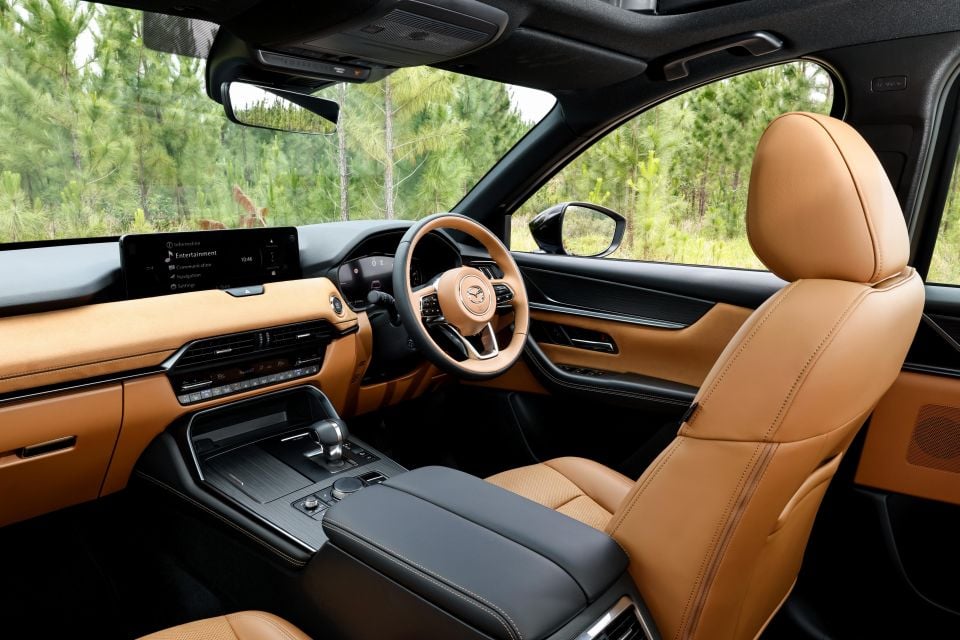
There’s no doubt the CX-70 has a premium interior, even if it’s fundamentally the same as what you get in its cheaper siblings.
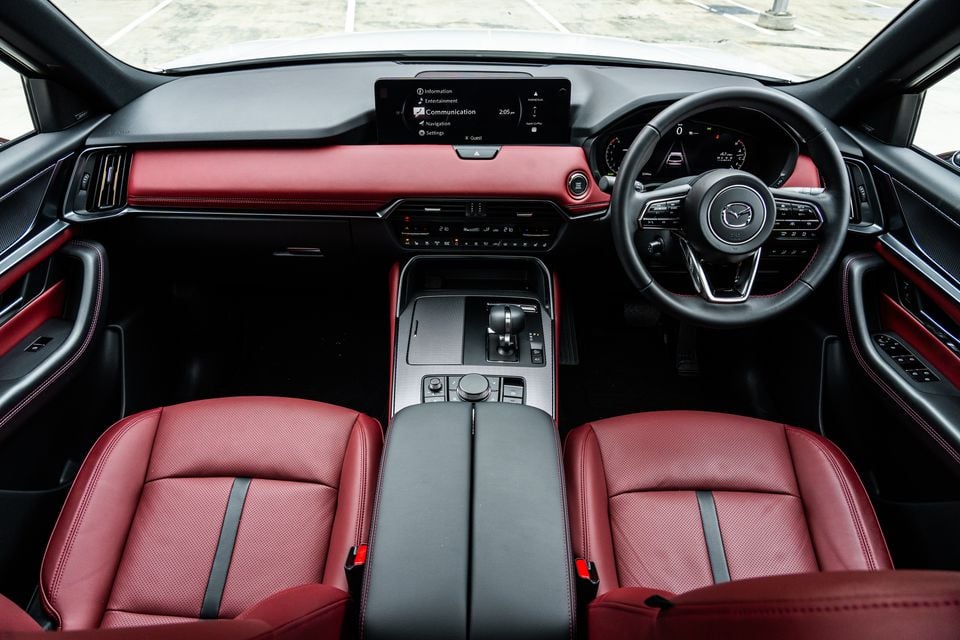
Of course, same-same interiors aren’t anything new. Hell, premium player Mercedes-Benz offers a very uniform look across its entire SUV lineup, and that hasn’t stopped people from buying its vehicles.
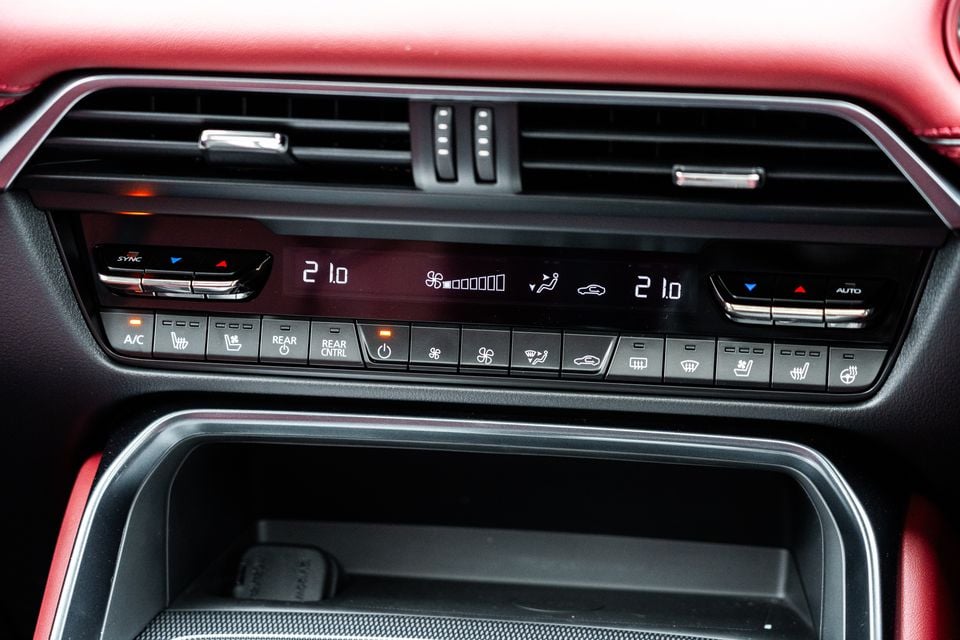
Mazda at least has the advantage of an interior design language that still has some old-school flavour, as evidenced by its continued use of real buttons and switches everywhere. The climate control system alone is a sight to behold, and much more satisfying to use than any touchscreen alternative.
The only thing is that it’ll take you a while to figure out where every button is, given the dashboard's physical width and the breadth of functions at hand. This is the top-spec CX-70 too, which means all 21 buttons (yes, we counted them) have assigned functions.
Similarly, Mazda’s central rotary dial and shortcut buttons on the centre console will confuse newcomers. The rotating controller is unintuitive to navigate the infotainment menus, particularly when using Apple CarPlay, but at least you can tick a box to enable touch controls. It should really be on by default, though.
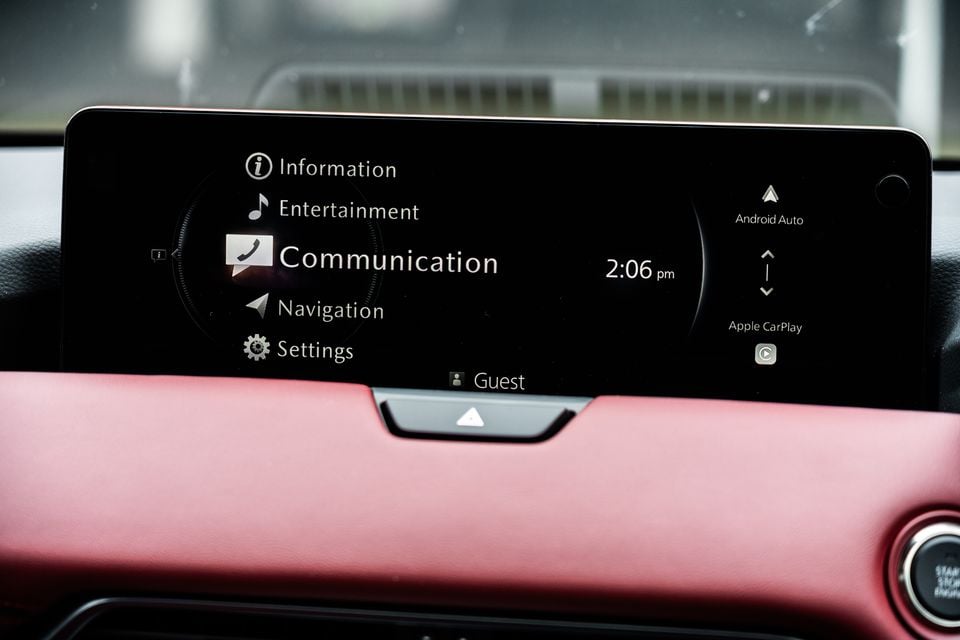
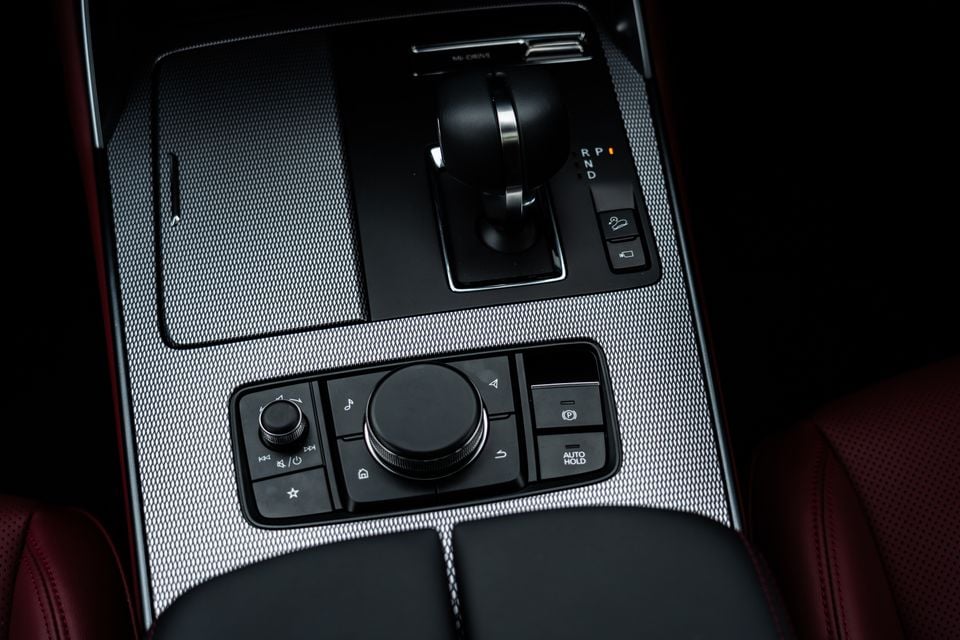
That said, I’ve always liked Mazda’s infotainment dial. I find it comfortable to lean on the central armrest and use the controller without much effort, and it’s easy enough to get used to how it all works. The screen is also quite far away, forcing you to lean out of your seat if you want to touch it.
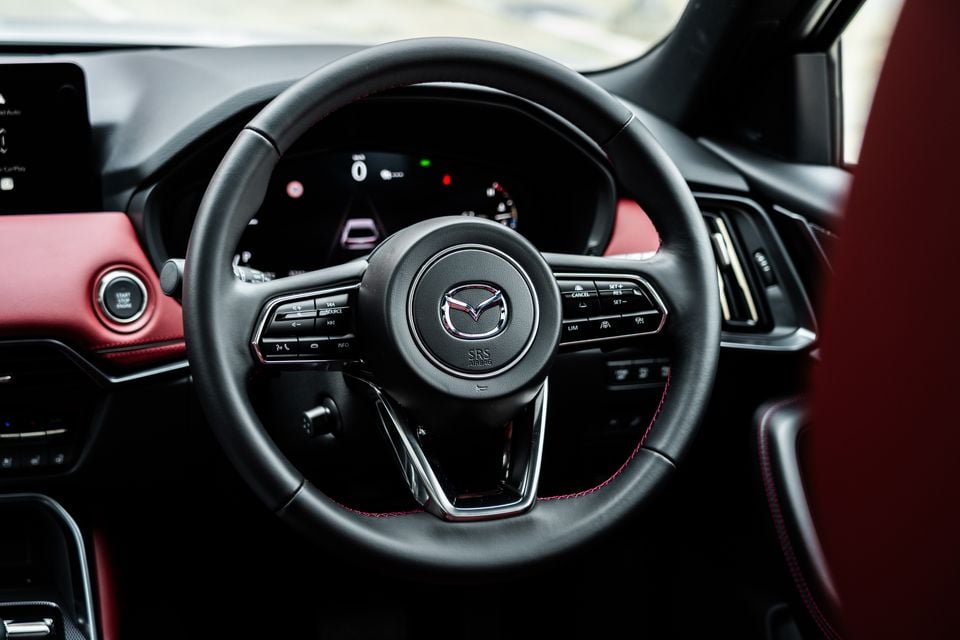
Otherwise, you’ll find more physical controls on the steering wheel, which is actually a fairly plush unit in general. Its meaty proportions provide a real sense of purpose from the driver’s seat, while its leather finish is buttery smooth.
We also like the metallic accents on the wheel and dashboard, as they’re simple additions that nicely tie the cabin together visually. More importantly, we love that there’s no glossy black plastic anywhere.
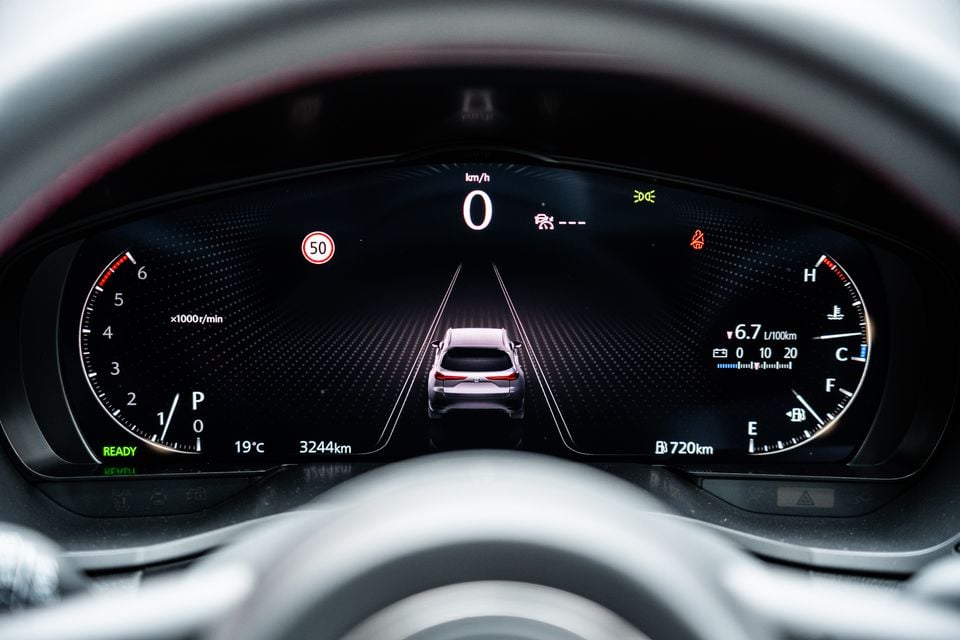
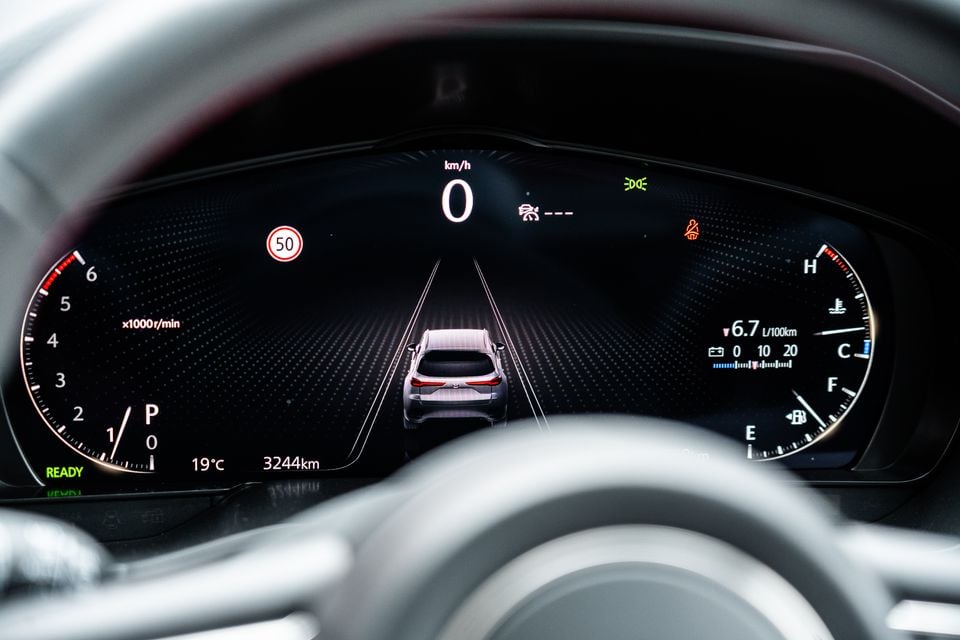
In front of the wheel you get a 12.3-inch digital instrument display, which is graphically simple but retains an elegant touch with its font and general style and layout.
There are also a handful of different looks to choose from, along with several themes that are tied to the car’s Mi-Drive drive modes.
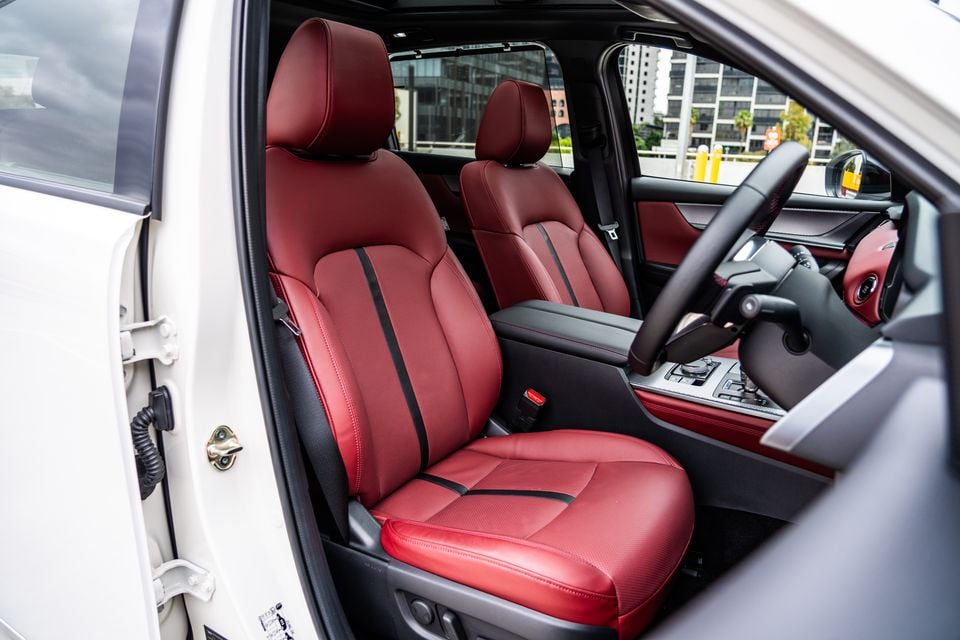
Overall, the front of the CX-70’s cabin is spacious, stylish, and comfortable. That’s the theme across the whole of Mazda's CX-badged large SUV family, and there’s even a somewhat American vibe in the wide centre console and split-opening central storage box.
The seats are also comfortable, and there’s a wide range of powered adjustment for both front seats and the steering wheel. Front-row occupants get heating and ventilation as standard, along with a plethora of soft-touch surfaces on the armrests and dashboard.
Storage options could be more generous, especially given the car’s size. The centre console houses two lidded cupholders and a decent-sized storage box, as well as a wireless phone charger tucked under the climate panel. You’ll also find bottle holders in the doors.
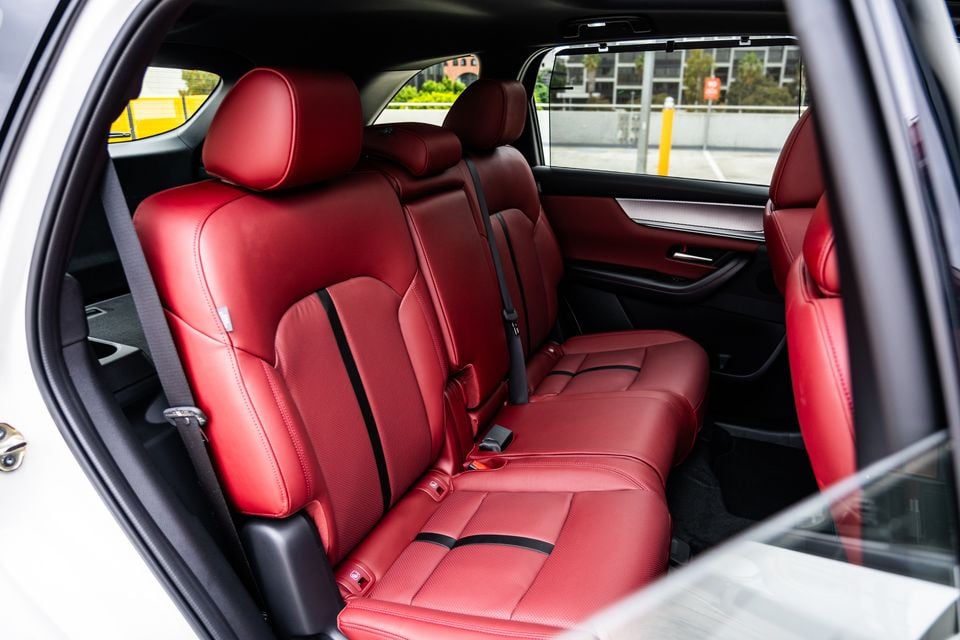
As you may have guessed, the second row is incredibly spacious. This is arguably a highlight of the CX-70’s capabilities: there are no issues whatsoever with legroom or headroom, the rear doors open to almost 90 degrees for maximum accessibility, and there’s an abundance of amenities.
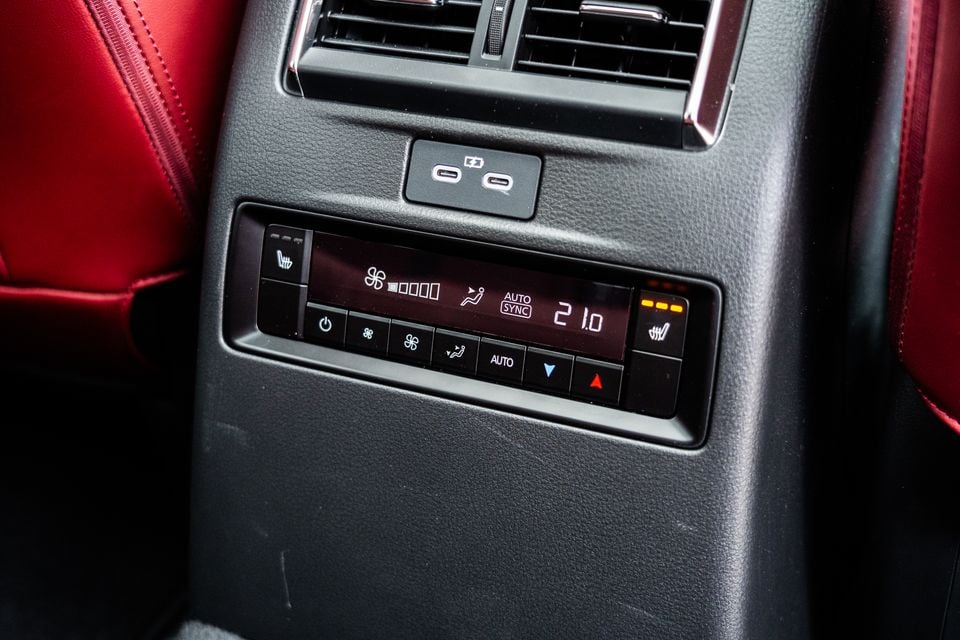
Highlights include heating for the outboard seats and a fully isolated climate-control zone, both of which can be operated via the climate panel on the back of the centre console. There’s also a fold-down central armrest with cup and bottle holders in the doors.
We’re fans of the panoramic sunroof above, which extends rearward to well above the rear seats, making the space feel very airy. If you somehow aren’t satisfied with the comfort of the rear bench, it can also slide and recline as you please.
Our only complaint is that middle-seat foot room is severely compromised by a driveline hump. You can otherwise fit three people here comfortably, but what if the CX-70 had the CX-90’s option of two ventilated captain’s chairs instead? Now that’d be opulent.
You also get two ISOFIX anchors and three top-tether points for child seats.
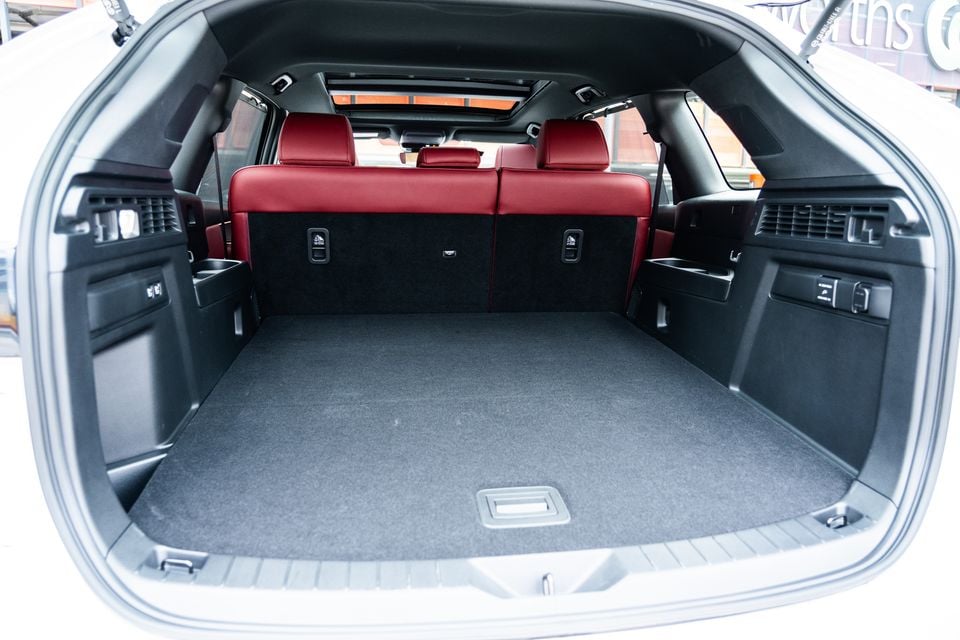
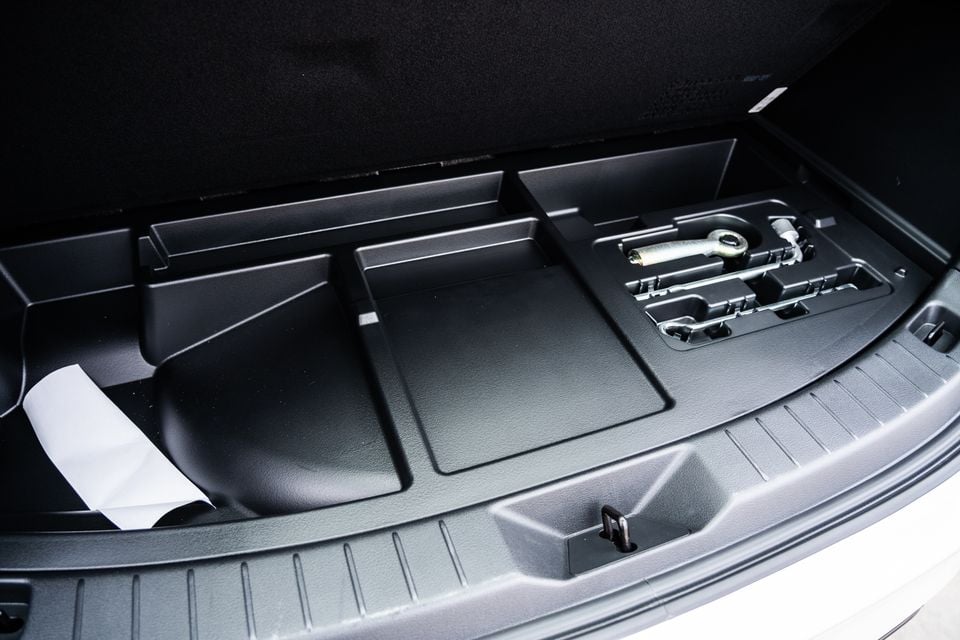
Of course, this large five-seat SUV's boot is even more impressive. That’s to be expected when you remove the third row from what was a seven-seater, and the result is a space that should genuinely be able to carry anything you could ever need – weekend Ikea runs will be a breeze.
It’s not perfect, though. We find it somewhat lazy that the CX-90’s rearmost cupholders haven’t been removed, even if we understand that re-engineering interior panels for a niche model isn’t very cost-effective. Cargo space on either side could also be a bit more generous.
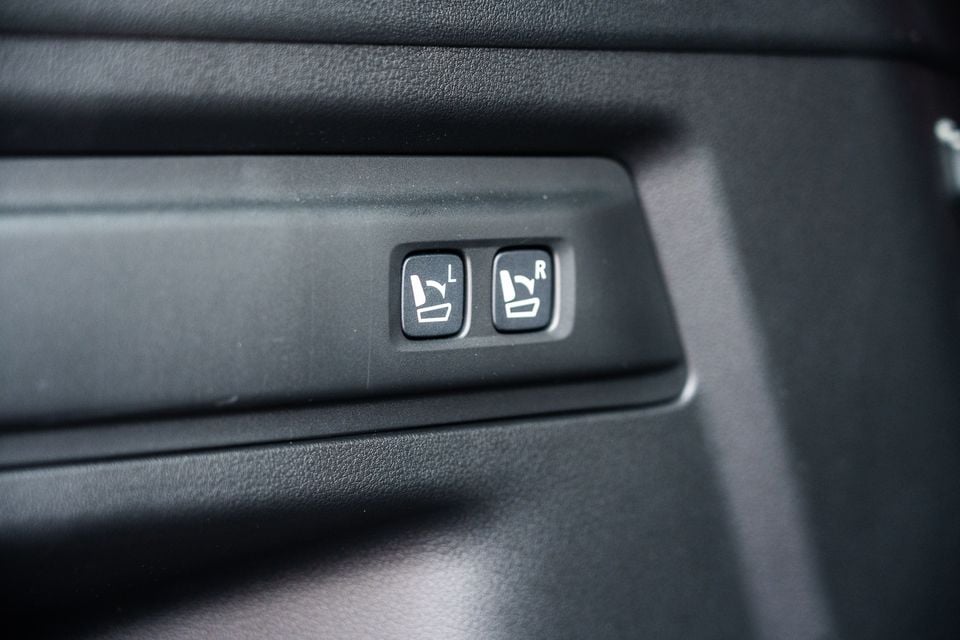
Still, you get handy cargo hooks and some buttons to electrically fold the second row of seats. A hands-free power tailgate is also standard, as is a space-saver spare wheel, which is stored under the boot floor.
| Dimensions | Mazda CX-70 D50e Azami |
|---|---|
| Length | 5120mm |
| Width | 1994mm |
| Height | 1745mm |
| Wheelbase | 3120mm |
| Cargo capacity | 598L (rear seats up) 2015L (rear seats folded) |
To see how the Mazda CX-70 stacks up against its rivals, use our comparison tool
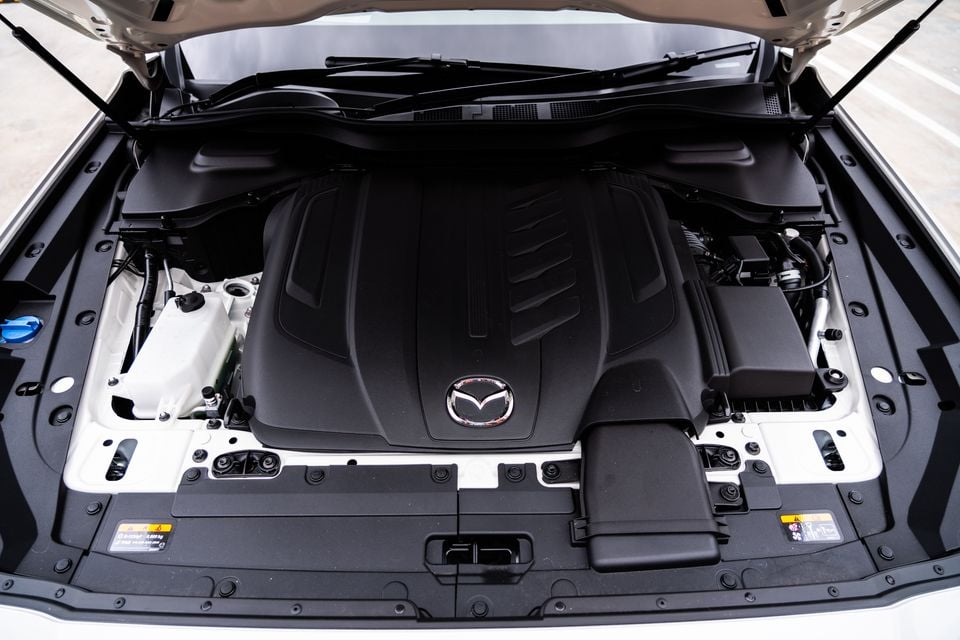
Powering the CX-70 D50e is a 3.3-litre inline six-cylinder turbo-diesel engine, which produces 187kW of power and 550Nm of torque, and is paired with a 48V mild-hybrid system. Drive is sent to all four wheels through an eight-speed automatic transmission.
| Specifications | Mazda CX-70 D50e |
|---|---|
| Engine | 3.3L 6cyl turbo-diesel |
| Power | 187kW |
| Torque | 550Nm |
| Transmission | 8-speed auto |
| Drive type | All-wheel drive |
| Electrification | 48V mild-hybrid |
| Kerb weight | 2216kg |
| Fuel economy (claimed) | 5.4L/100km |
| Fuel economy (as tested) | 6.8L/100km |
| Fuel tank capacity | 74L |
| Fuel requirement | Diesel |
| CO2 emissions | 143g/km |
| Emissions standard | Euro 5 |
| Braked tow capacity | 2500kg |
Our week with the car involved a variety of driving conditions and scenarios. There were stints on the highway and trips through Melbourne’s CBD, linked together by a fair few busy inner-suburban roads.
The skew towards lower-speed driving resulted in a recorded fuel economy figure that was a little higher than Mazda’s claim; not high enough to raise serious concerns, but still worth noting.
For context, the 3.3-litre six-cylinder turbo-petrol alternative is claimed to consume 8.1L/100km, and we recorded 10.0L/100km in our most recent review of it.
To see how the Mazda CX-70 stacks up against its rivals, use our comparison tool
Firing up the diesel six brings about a fairly unappealing cold idle, a characteristic of pretty much every modern oil-burning Mazda. Don’t let that give you the wrong impression, because it’s actually a smooth unit.
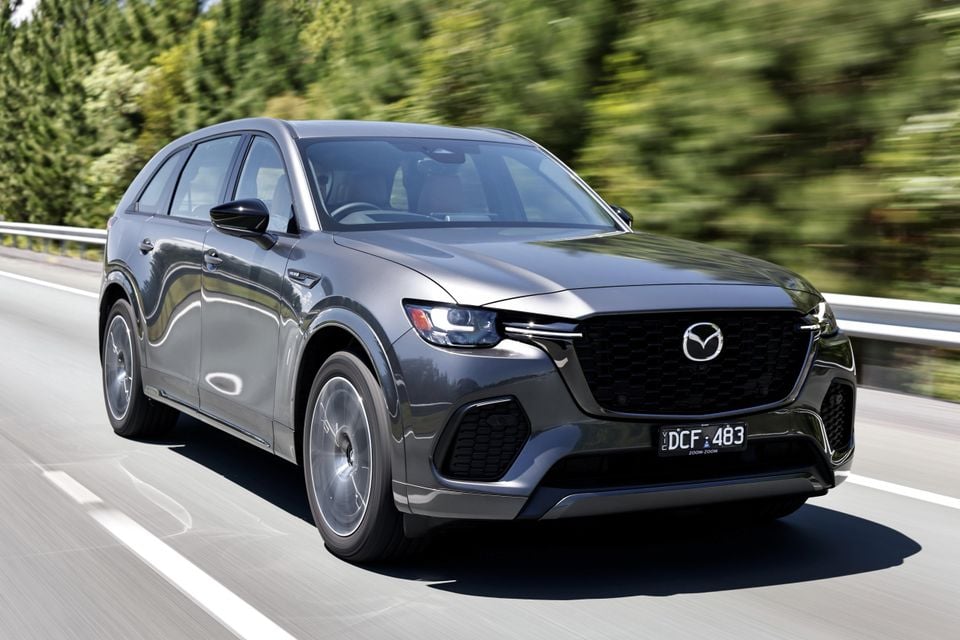
What it lacks in outright power, it makes up for in effortless torque. And it climbs through the rev range with no issues, hauling the 2.2-tonne CX-70 up to speed in good time.
It’s also fairly efficient, particularly compared to the petrol alternative of the same displacement. That might make it more appealing to people with long commutes or who regularly venture far from home, not to mention those who like to tow.
There are issues, though, and some are more serious than others. A trivial complaint is the fake engine noise played through the interior speakers, which isn’t particularly convincing and sounds pretty average – Mazda's large SUVs do a comparatively better job of hamming up the petrol six.
But a more critical observation is that the transmission just isn’t very smooth. This directly contrasts with the otherwise refined diesel powertrain, as the harsh gear changes at lower speeds are impossible to miss.
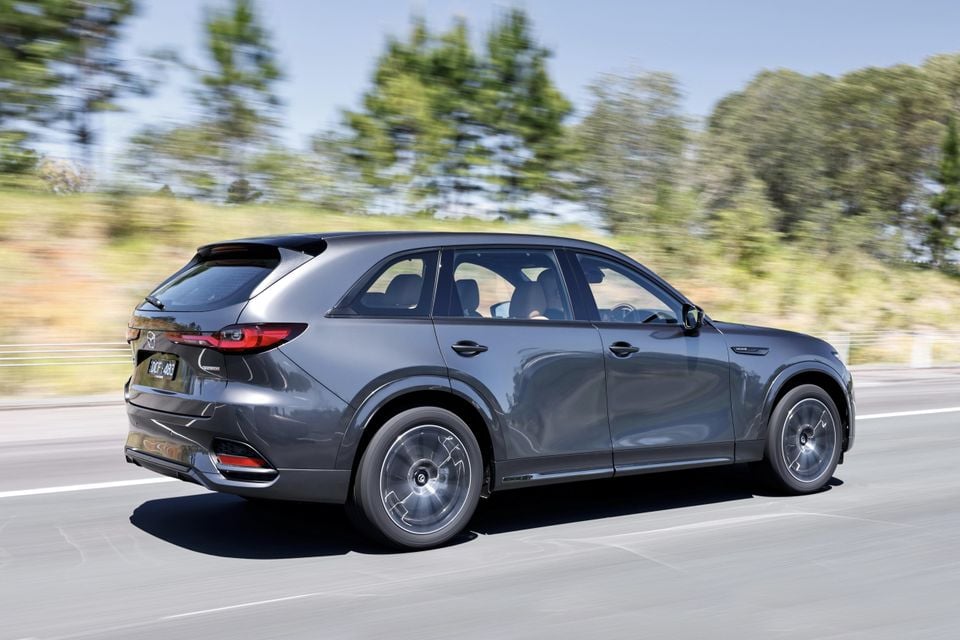
The eight-speed auto behaves much more like a dual-clutch transmission than a more traditional torque converter, which makes sense given it’s a relatively unique unit that relies on a multi-plate clutch.
Put simply, that results in some clunky gear changes, and crawling in traffic isn’t particularly easy.
On multiple occasions, we noticed the transmission stumbling at low speeds. It seems to get confused if your throttle inputs aren’t perfectly consistent or predictable. We’re not saying it’s undriveable, just that it lacks the finesse you’d expect from a ‘luxury’ vehicle.
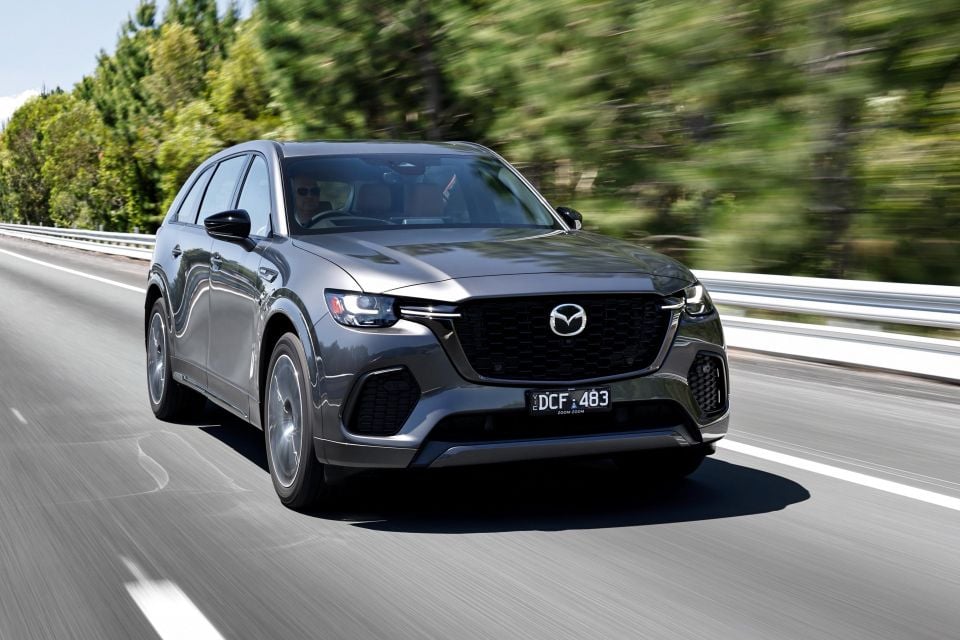
It’s the same story for the CX-70’s ride, which lacks compliance. This has long been a complaint about Mazda's large CX models, and while it’s considerably better than the crashy launch-spec CX-60, there’s still some work to be done.
If this is the car for you, we’ll compare offers from trusted dealers, handle the back and forth and manage your purchase from enquiry to delivery.
Bumps move the car around more than you’d expect, and harsh road imperfections aren’t all that well absorbed. There’s a level of refinement missing here, making it somewhat unpleasant at lumpy suburban and rural roads – although it feels plush on smooth roads and highways.
Of course, the upside of the firm ride is that the CX-70 feels somewhat sporty, which inspires confidence if you’re on a twistier road. But this isn’t a sports car, so a more supple ride would be preferable.
In contrast, we find the CX-70’s steering to be a highlight. It’s appropriately heavy for a vehicle of this stature, and it gives the driver a clear sense of what the front wheels are doing.
The vehicle’s rear-biased all-wheel drive system doesn’t make itself known in daily driving, but it does give you the impression that the front-end of the vehicle is a touch more ‘awake’ than in most other SUVs. The CX-70 is an enjoyable steer once you’re at speed, provided the road isn't very rough.
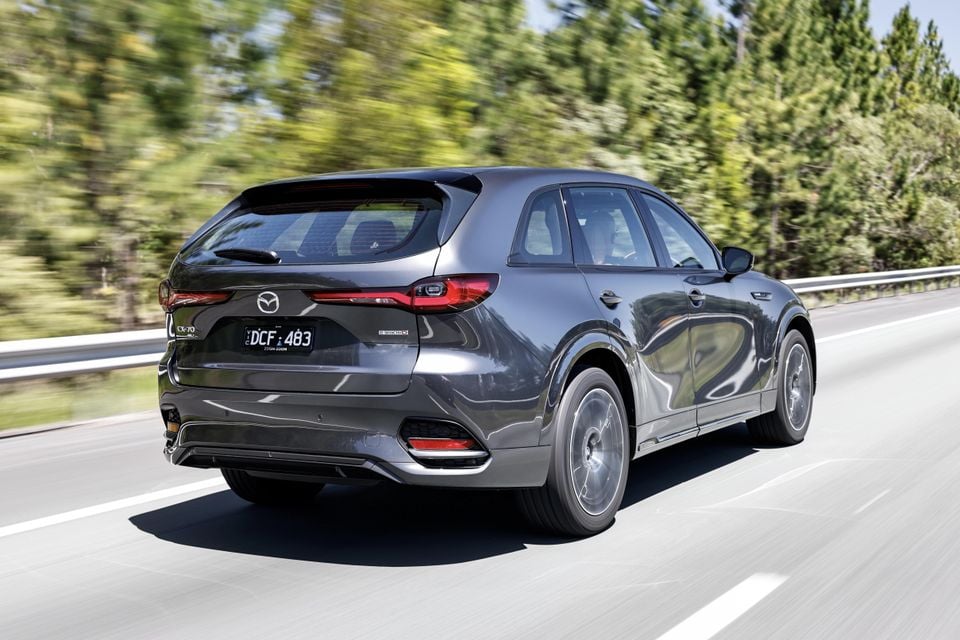
There’s a little customisation available too, namely in the selection of Mi-Drive modes. These comprise Sport, Off-road, and Towing mode, all of which do what they say on the tin – Sport and Towing modes are nice to have, and we showed this platform can hold its own off-road in a recent megatest video with the CX-60.
A bonus is that cabin refinement is very good, with very little road or wind noise. And, as with all of Mazda's large CX models, there's a level of body rigidity here that makes them feel a little more premium than smaller SUVs including the CX-5.
Backing that up is a strong suite of safety gear, all of which works as intended without notable faults. Adaptive cruise and lane-centring are highlights, as they have no difficulty in matching traffic or following lanes respectively. Given our tester was a top-spec CX-70, none of Mazda's safety features have been left out either.
To see how the Mazda CX-70 stacks up against its rivals, use our comparison tool
Unlike the CX-60, CX-80, and CX-90, there are just two trim levels available for the CX-70 – GT and Azami – though the latter can be had with an optional SP package.
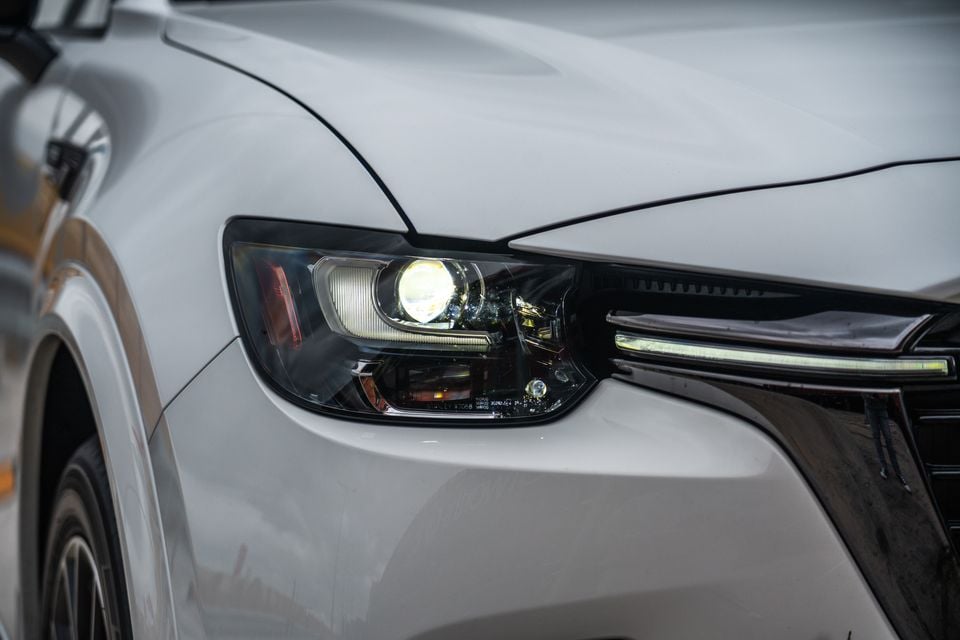
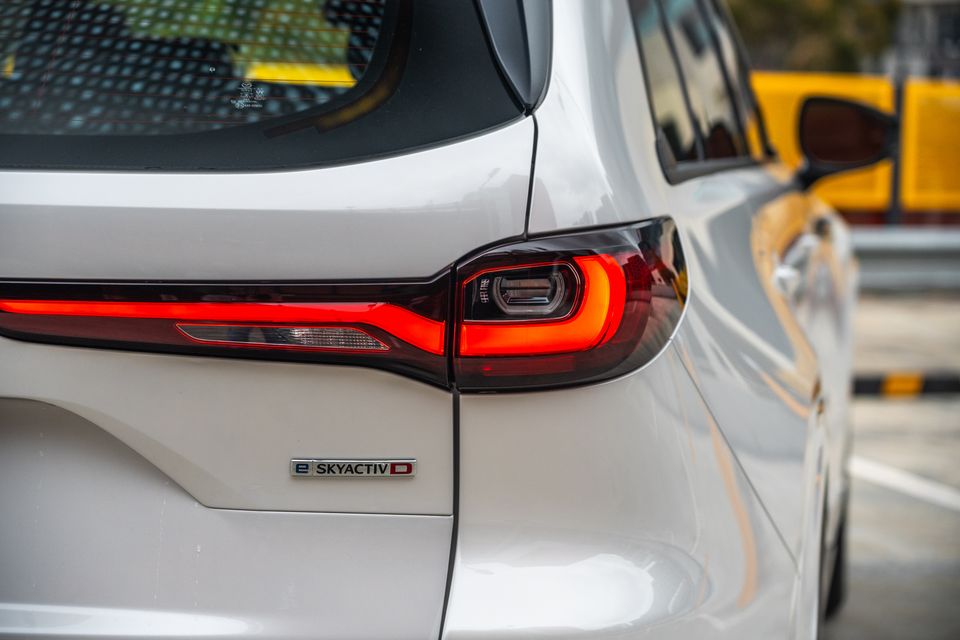
2026 Mazda CX-70 GT equipment highlights:
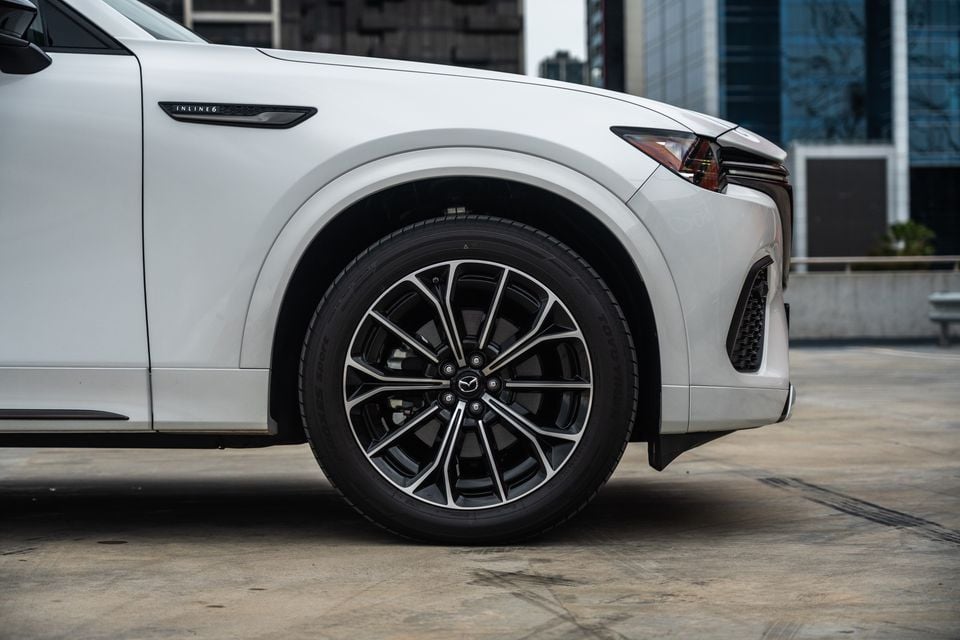
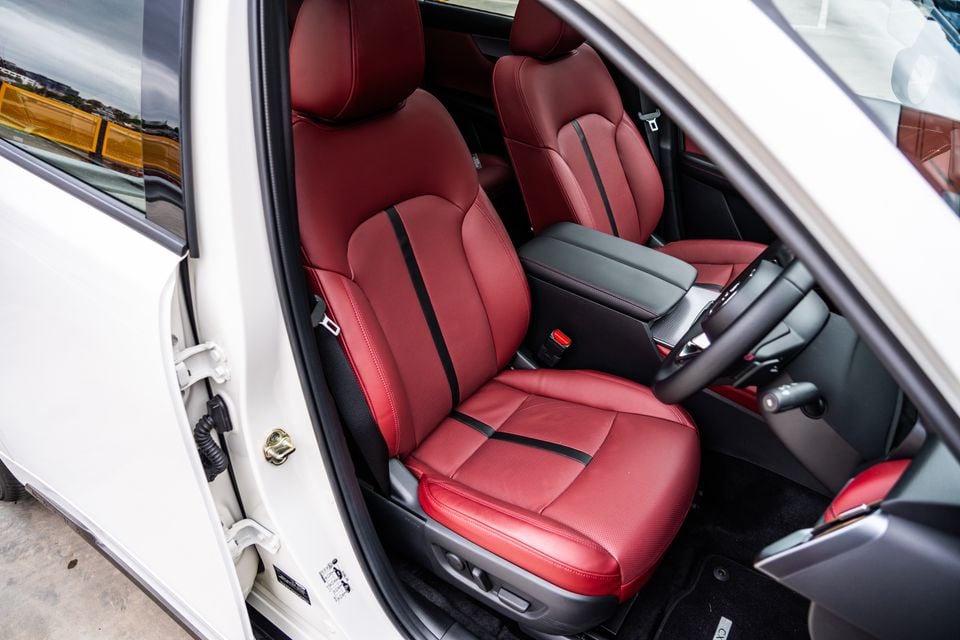
CX-70 Azami adds:
All CX-70 variants come with Mazda Connected Services, allowing you to use the MyMazda app to remotely control the locks and lights. Other features include:
There’s only one option package available for the local CX-70 range.
Mazda CX-70 SP Package ($4550) adds:
To see how the Mazda CX-70 stacks up against its rivals, use our comparison tool
The Mazda CX-70 has not been crash-tested by ANCAP or Euro NCAP and is therefore 'unrated' by the independent auto safety organisations, despite the related CX-60 boasting a five-star ANCAP rating.
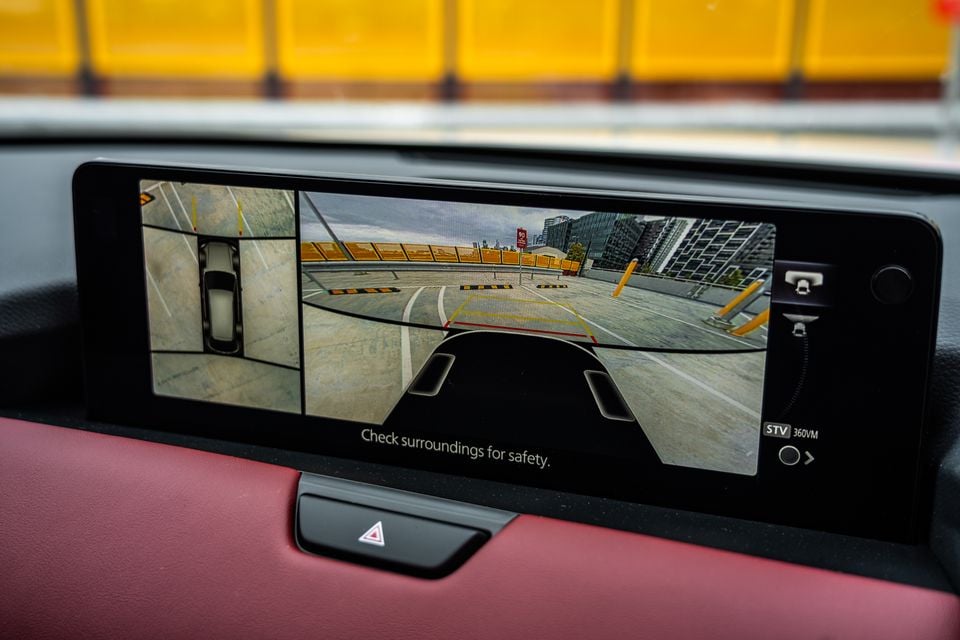
Standard safety equipment highlights:
CX-70 Azami adds:
To see how the Mazda CX-70 stacks up against its rivals, use our comparison tool
Mazda Australia backs the CX-70 with a five-year, unlimited-kilometre warranty. Service intervals for the D50e diesel variants are 12 months or 15,000km (which was recently upped from 10,000km to match petrol vehicles), whichever comes first.
| Servicing and Warranty | Mazda CX-70 D50e |
|---|---|
| Warranty | 5 years, unlimited kilometres |
| Roadside assistance | 5 years |
| Service intervals | 12 months or 15,000km |
| Capped-price servicing | 6 years |
| Average annual service cost | $851 |
| Total capped-price service cost | $5109 |
Mazda’s individual service costs are detailed below:
| Service | Price |
|---|---|
| 12 months, 15,000km | $511 |
| 24 months, 30,000km | $1070 |
| 36 months, 45,000km | $694 |
| 48 months, 60,000km | $1070 |
| 60 months, 75,000km | $511 |
| 72 months, 90,000km | $1253 |
Rounding down to five years makes for easier comparisons and brings the total down to $3856. It’s still considerably more expensive than the Toyota Kluger over that time, which costs $1675.
The Hyundai Palisade, meanwhile, costs $2630 to service over five years, and the Kia Sorento costs $3409. The important thing there is that all three of those models are hybrids.
A more direct comparison can be drawn with the Sorento diesel, which costs $2662 to service over five years. Of course, the CX-70 is still cheaper to maintain than its premium European rivals.
To see how the Mazda CX-70 stacks up against its rivals, use our comparison tool
The CX-70 is fundamentally a plush, well-appointed large SUV, but a handful of key factors appear to be holding it back.
We’ll first run through the positives. Its interior is lovely, spacious and high-quality, its boot is colossal, and its diesel engine is a powerful yet efficient unit that makes the CX-70 a joy to drive in long-distance hauling.
But it’s undermined by a sub-par transmission that struggles to work itself out at low speed, and rough road surfaces expose the lack of compliance in the SUV’s suspension tune. The CX-70's large SUV siblings exhibit similar tendencies, but it does eat away at the top-level sheen of this near-$90,000 Mazda.
Indeed, it's the price that makes these issues harder to ignore. And it's important to remember that most of its rivals offer full hybrid powertrain tech, which will always outclass the mild-hybrid systems of Mazda’s large CX models regardless of how strong their combustion engines are.
All in all, as a large near-premium five-seat SUV, the CX-70 does its job well, but is let down a little by its often-abrupt ride and transmission. If you know what you’re getting into, you probably won’t be disappointed. It’s just that many rivals – including its own seven-seat twin, the CX-90 – make a bit more sense.
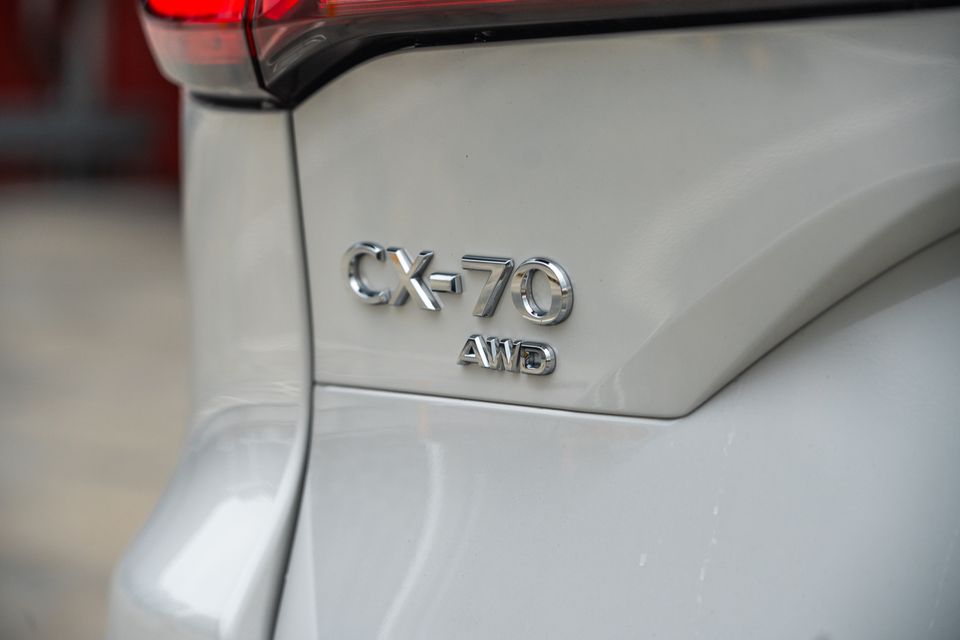
CarExpert can save you thousands on a new Mazda CX-70. Click here to get a great deal.
Click the images for the full gallery
If this is the car for you, we’ll compare offers from trusted dealers, handle the back and forth and manage your purchase from enquiry to delivery.
Quickly see how this car stacks up against its competition. Select any benchmark to see more details.
Mazda CX-70
Mazda CX-70 Sales rolling 12-months#
*Based on VFACTS and EVC data
Looking for complete Mazda CX-70 price history?
Our Mazda CX-70 Pricing Page shows exactly how prices have changed over time.
2026
$78,789
2026
$86,139
2026
$90,667
Max Davies is a CarExpert journalist with a background in regional media, with a passion for Japanese brands and motorsport.
Add CarExpert as a Preferred Source on Google so your search results prioritise writing by actual experts, not AI.
Damion Smy
7 Hours Ago

William Stopford
8 Hours Ago
William Stopford
9 Hours Ago
William Stopford
11 Hours Ago
Damion Smy
11 Hours Ago
William Stopford
12 Hours Ago
Add CarExpert as a Preferred Source on Google so your search results prioritise writing by actual experts, not AI.
# Based on VFACTS and EVC data
† Displayed prices are based on the drive-away price of the vehicle, which includes delivery charges, registration fees, number plates, and applicable road taxes, based on a Sydney location. However, prices may vary between states and territories, and additional costs such as compulsory third party (CTP) insurance, dealer delivery fees, and optional extras are not included. These prices are subject to change without notice and may not reflect current market pricing or dealer offers.
 Automotive Vehicle Spec Data & 4K images Powered by JATO Dynamics Ltd