




Damion Smy
2027 GWM Ora 5 vs Hyundai Kona Electric: Spec battle
The GWM Ora 5 small electric SUV has arrived full of character and charm, but how does it stack up against the popular Hyundai Kona Electric?
7 Hours Ago
Mazda has leveraged its Chinese links to give Australians an attainable electric successor to the Mazda 6. Has the gamble paid off?

Deputy Road Test Editor
Deputy Road Test Editor
Deputy Road Test Editor
Deputy Road Test Editor
If this is the car for you, we’ll compare offers from trusted dealers, handle the back and forth and manage your purchase from enquiry to delivery.
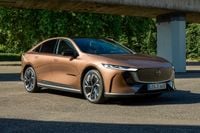
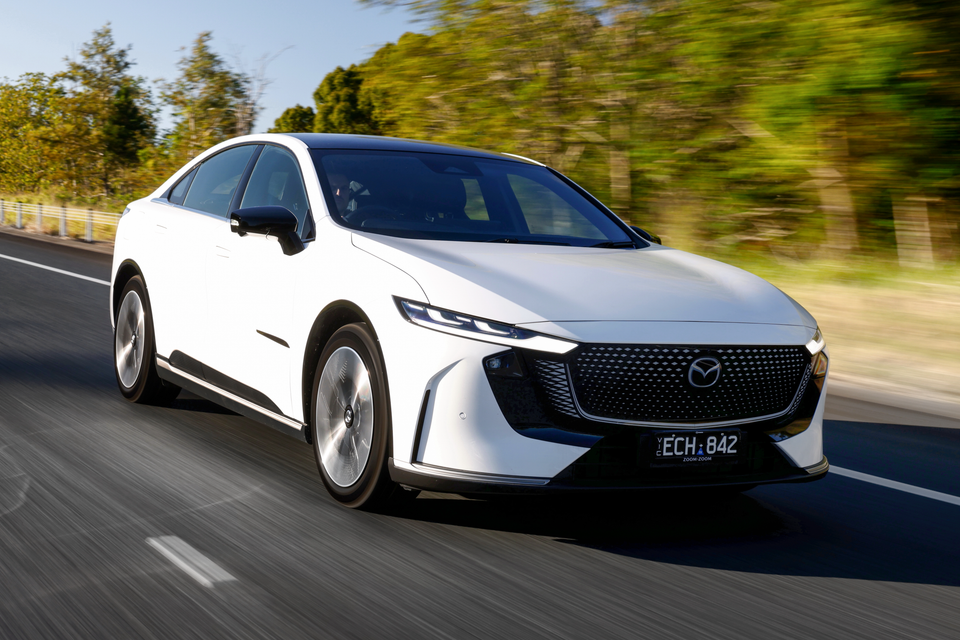
Mazda's Tesla Model 3 fighter – the 6e – has finally arrived in Australia.
Pitched as an indirect successor to the long-lived Mazda 6 sedan, the 6e is an electric take on the mid-size passenger car, developed in collaboration with Changan Automotive – the Japanese automaker's Chinese affiliate.
Changan supplied the vehicle platform, electric powertrain, and cabin technology, while Mazda took charge of the exterior design, interior materials, and chassis tuning.
All of those ingredients come together in the Changan Mazda plant at Nanjing in China, where the 6e is instead known as the EZ-6.
So, Mazda's all-new mid-size electric liftback isn’t exactly Japanese through and through, nor is it simply a rebadged Chinese EV.
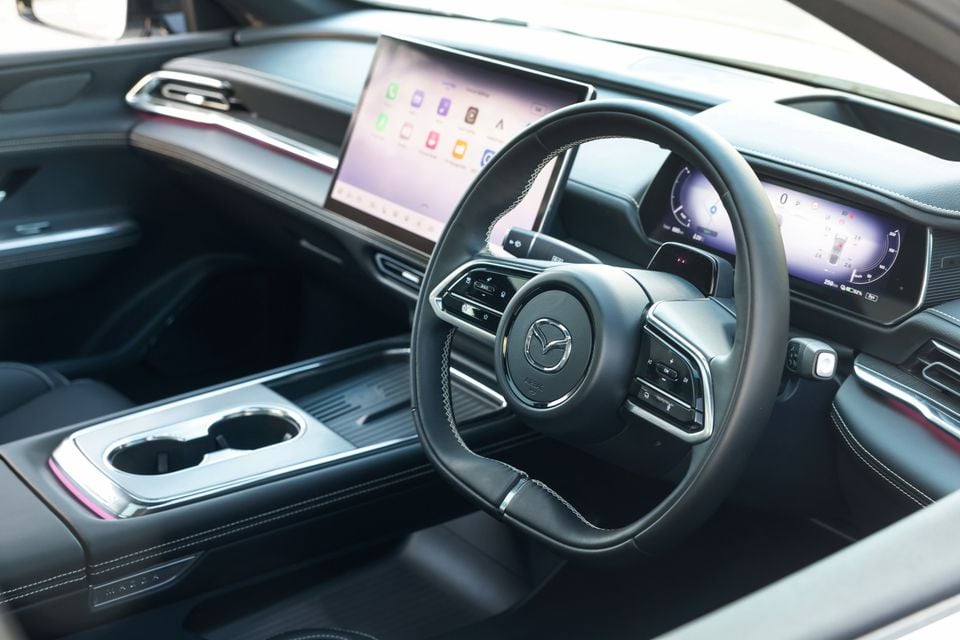
The benefits of this cross-continent partnership are clear to see. By saving on platform and battery development costs, Mazda has been able to bring the 6e to Australia as the most affordable EV in its class.
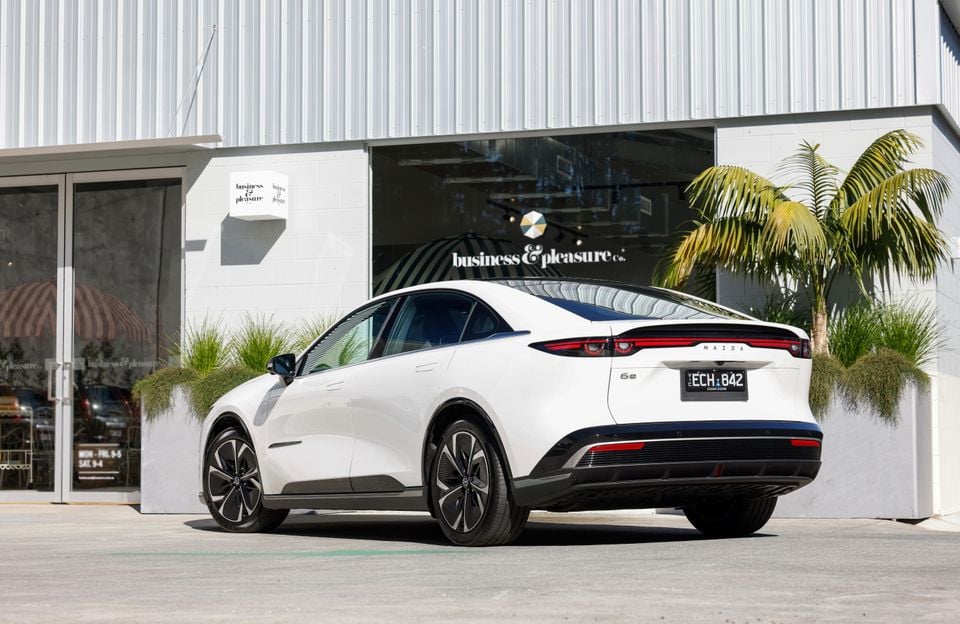
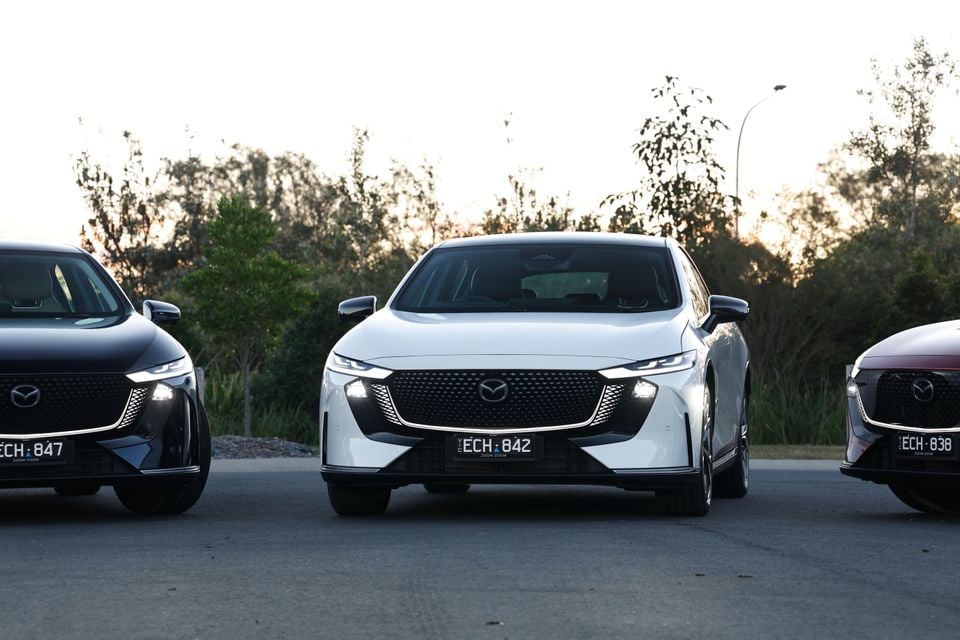
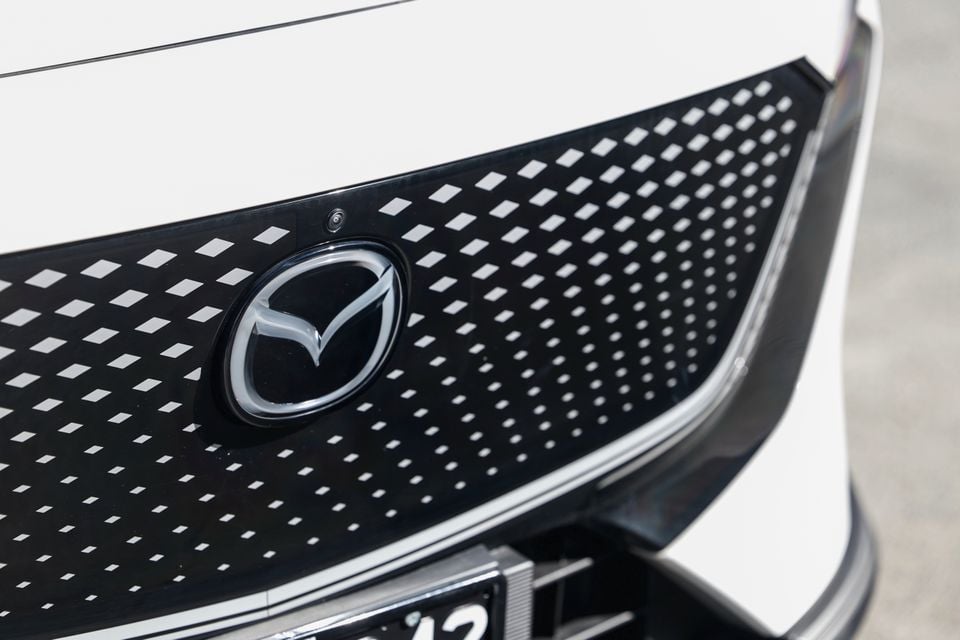
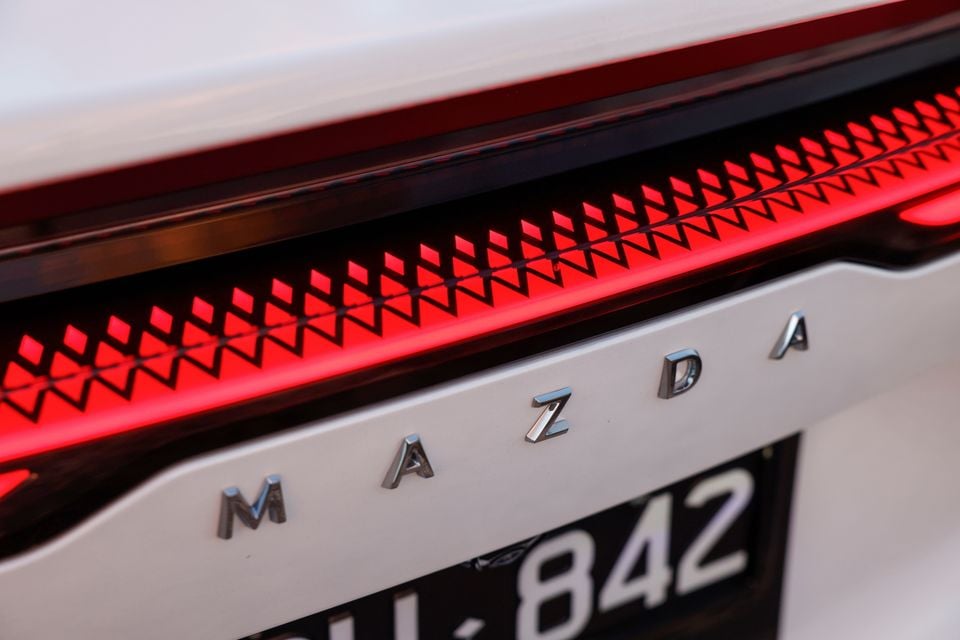
Then there’s how it looks. With relative freedom to design around Changan’s platform, Mazda has delivered a liftback so sleek and elegant that it was recognised as 2026 World Car Design of the Year, beating out the Kia PV5 and Volvo ES90.
On paper, then, the 6e shapes up as a winner.
Does that hold true in the real world? We headed to Byron Bay to find out.
The departure of the base BYD Seal Dynamic leaves the entry-level 6e GT as the cheapest electric liftback or sedan in Australia, alongside the Kia EV4 Air Standard Range.
| Model | Price before on-road costs |
|---|---|
| 2026 Mazda 6e E35 GT | $49,990 |
| 2026 Mazda 6e E35 Atenza | $52,990 |
Even in flagship Atenza trim, the 6e is still more affordable than the most basic versions of electric equivalents such as the Tesla Model 3 ($54,900 before on-road costs), Seal ($52,990 plus ORC), and MG IM5 ($60,990 drive-away).
For that reason, the 6e shapes up as a bit of a bargain.
EVs aside, the Toyota Camry, Honda Accord, Skoda Octavia, MG7, and Hyundai Sonata are all priced in a similar ballpark and deserve consideration.
To see how the Mazda 6e lines up against the competition, check out our comparison tool
Close your eyes for a second and imagine the interior of a new car co-created by Mazda and a Chinese automaker. Now open them. I'm guessing it looked something like this, right?!
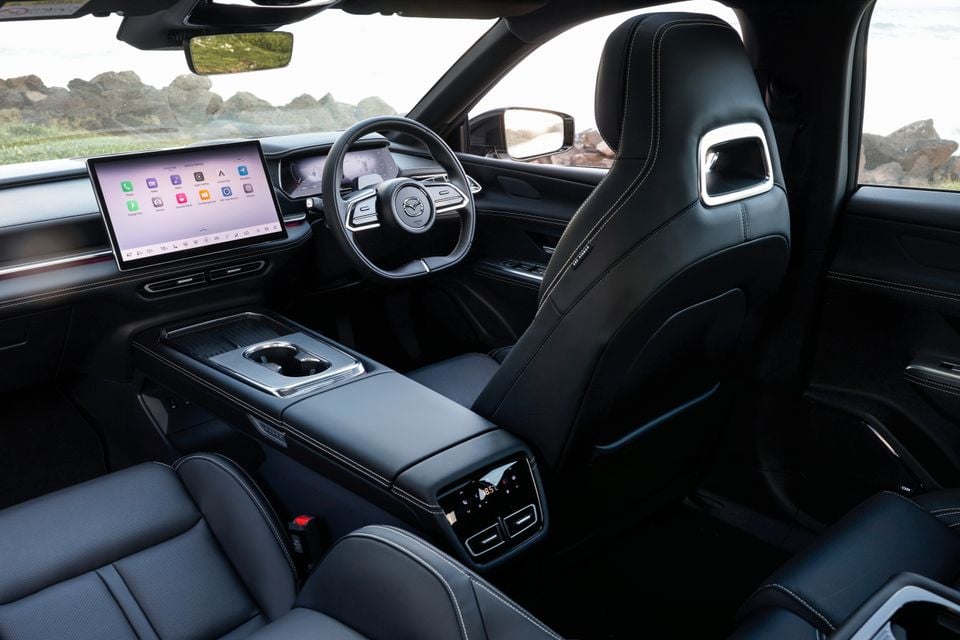
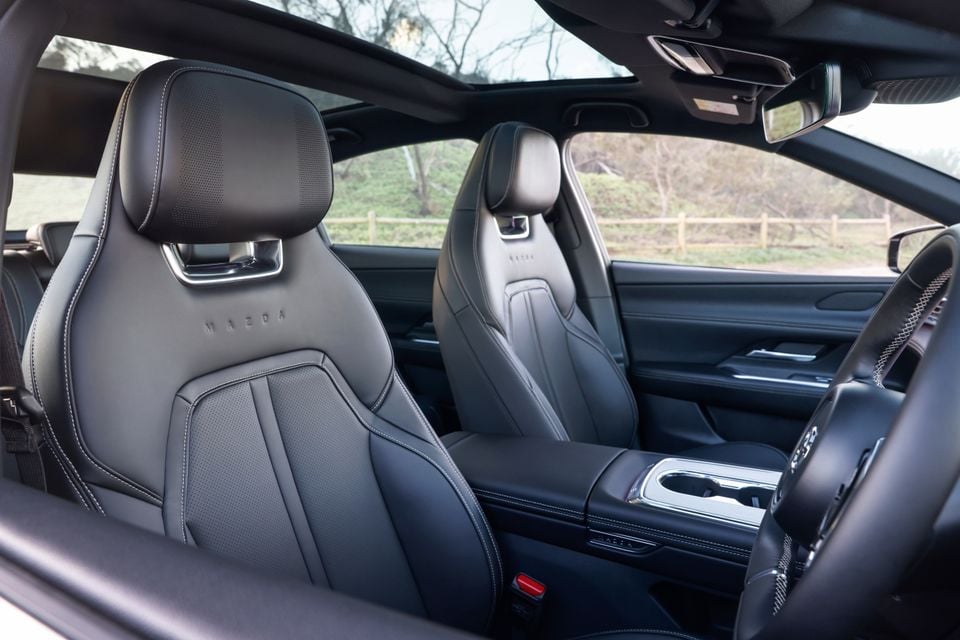
The materials and design are unmistakably Mazda, which we like, because the brand has developed a reputation for delivering premium feel at an affordable price.
And for $50k, you can't ask for much more than what you get here.
Gentle curves create a smooth flow between the dash and door cards, both of which are finished in textured synthetic leather – or suede, if you spend up for the Atenza – with neat contrast stitching, while the centre console is similarly soft to the touch.
It's all very attractive, and the same can be said of the flat-bottomed steering wheel and single-piece front seats likewise trimmed in Mazda's convincing leather substitute.
However, my perspective changed dramatically once I spent some time behind the wheel.
Before getting to ergonomics, I'll firstly say I’m not completely sold on the 6e’s build quality, as two of the cars I rode in displayed dash and centre console creaks.
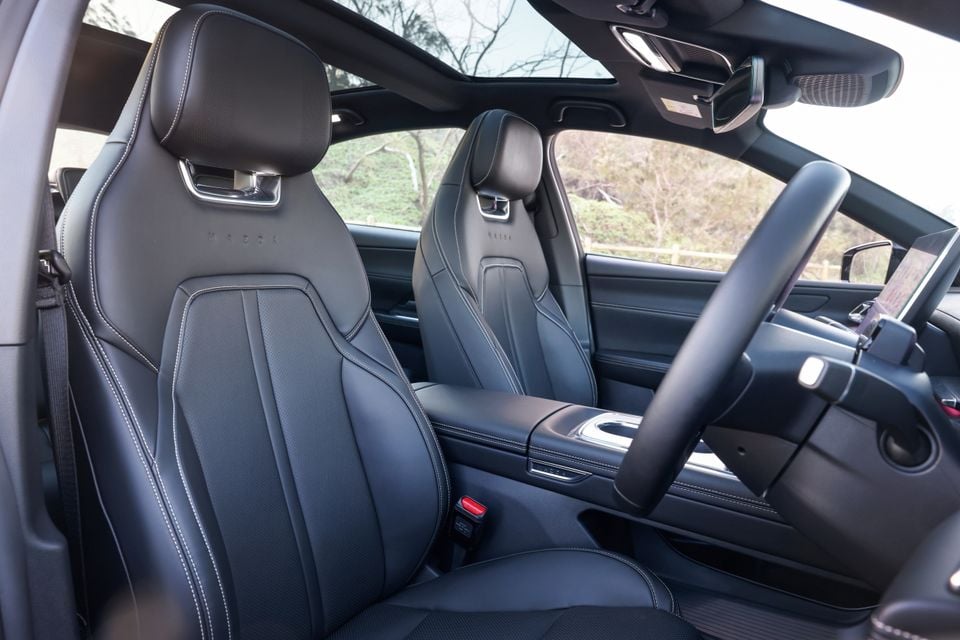
The bigger concern, though, is the driving position. Even in its lowest setting, the driver’s seat sits too high, perched up on top of the vehicle's big 78kWh battery, and there isn’t enough steering wheel reach adjustment. As such, taller drivers – hardly a rarity in Australia – may struggle to get comfortable, although a dual-pane glass roof (with an electric sunshade) makes the space feel less cramped.
The front passenger is even worse off, though, as they have no way to adjust seat height.
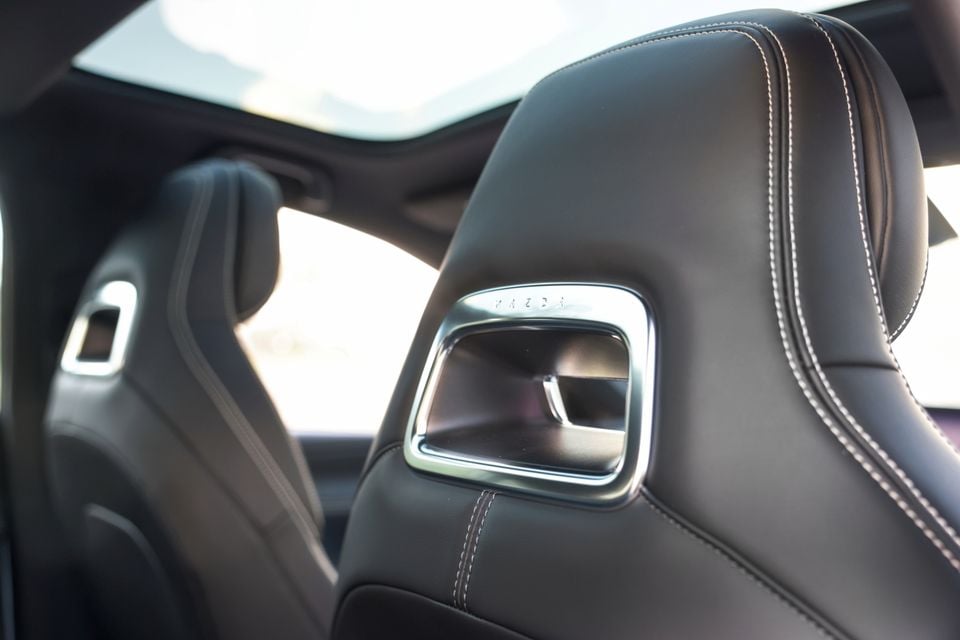
These issues were raised in our conversations with top Mazda executives, who said the arrangement 'meets internal standards'... but only just.
The seats themselves aren’t perfect either. Those one-piece seatbacks with inbuilt head restraints look great but limit adjustability, while the backrests don’t offer much lateral support around the ribcage.
In terms of features, both front seats are heated and ventilated, although only the ventilation control appears permanently on the infotainment screen. Switching on the steering wheel heating is also more of a faff than it should be, requiring a dive into the settings unless you’re willing to use voice control.
In fact, you need to be fluent in tech to do just about anything in the 6e, given there are very few physical cabin controls bar a small selection of unseparated steering wheel buttons that are too easy to press accidentally while driving.
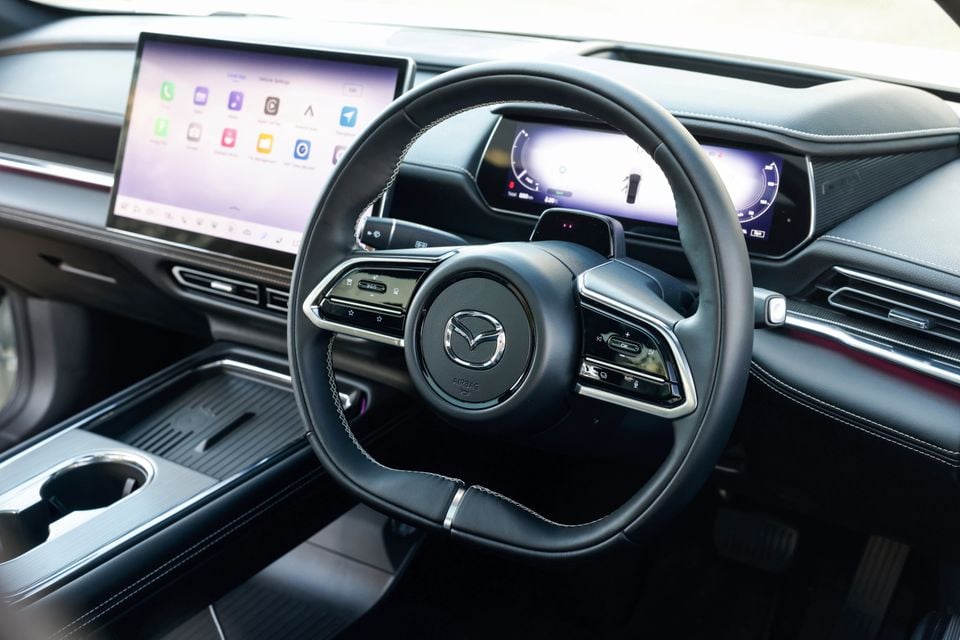
That alone will be enough to deter some prospective buyers, yet the screen that defines this interior experience is far from perfect.
For starters, it looks like an iPad stuck to the dash, which detracts from the 6e’s otherwise classy cabin aesthetic. The software doesn't redeem it, either.
Developed by Changan, the system resembles those found in many other Chinese EVs, with a generic layout, fonts, and app ecosystem, as well as a deeply layered settings menu.
Further, the interface finds several ways to make simple tasks more complicated than they ought to be. Cabin temperature changes require at least two taps, while the seat settings menu pops up every time you make an adjustment, interrupting whatever you’re using the screen for at the time.
Then there’s the awkward mismatch between the centre screen and the flush, sharp-looking driver's display, which uses familiar Mazda fonts completely at odds with those in the infotainment system. It’s more than just a visual upgrade, too, offering useful functionality including a navigation view.
Rounding out the technology suite is an augmented reality head-up display, while the 6e also brings new functionality for Mazda in Australia, becoming the brand’s first local model to offer a Bluetooth key. The dedicated 6e app also allows owners to remotely adjust the climate control, windows and locks, among other functions.
The 6e's tech may be hit-and-miss, but it definitely trumps rivals in the cabin storage stakes.
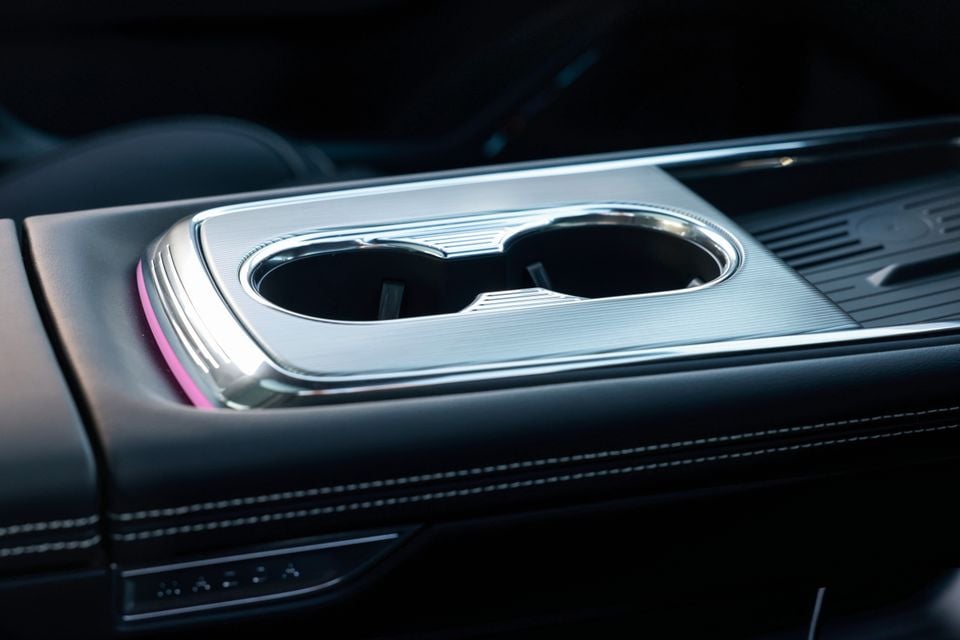
Up front, there’s a deep centre armrest compartment, a lower tray with USB-A and USB-C outlets, two centre cupholders, a wireless phone charging pad and an additional phone tray. You can also fit a large drink bottle in each door, and there’s a glovebox – hardly a given these days – for extra odds and ends.
In other words, the 6e is well equipped to swallow all your stuff. Just be prepared for things to rattle around, as the various storage areas aren’t carpeted like those in a Model 3.
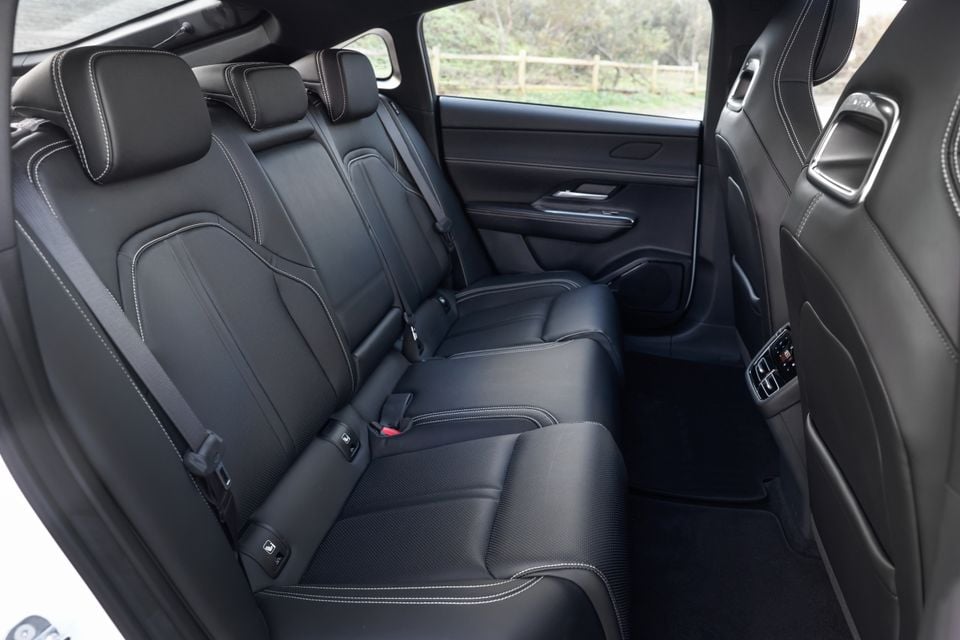
The second row is practical, too, both in terms of storage and passenger space.
I'm on the taller side at six-one, yet found no issues getting comfortable behind my preferred driving position, something that can't be said of the Model 3, nor other similar vehicles such as the BMW 3 Series.
The base of the driver's seat can impede on toe room when set to its lowest position – as I had it – but otherwise there's plenty of space for your knees, and headroom is abundant.
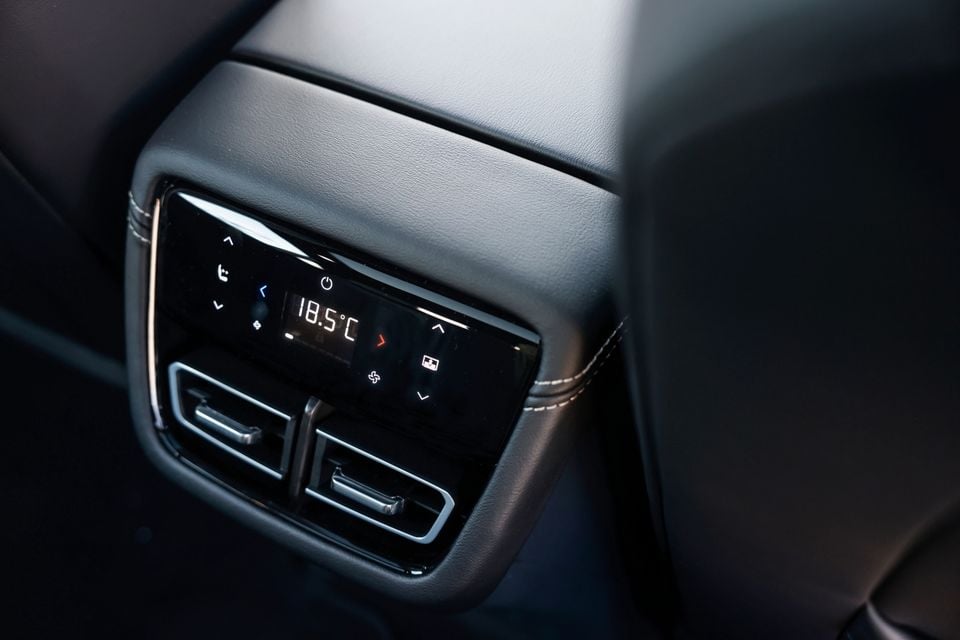
Add to that a comfy rear bench boasting fixed lumbar support, a slight upward tilt, and soft head restraints, and the back of the 6e is pretty damn pleasant.
And, as I alluded to earlier, there's no shortage of storage – loose items of various shapes and sizes can be safely stowed in the generous door bins, map pockets, centre cupholders, or a phone-sized nook at the base of the centre console.
Above is a single USB-C outlet (two would've been nice), a set of air vents, and a small control panel that incorporates climate functions, sunshade controls, and a slider for the front passenger seat.
Mazda quotes 337 litres of boot space for the 6e – less than you get in just about any equivalently sized passenger car.
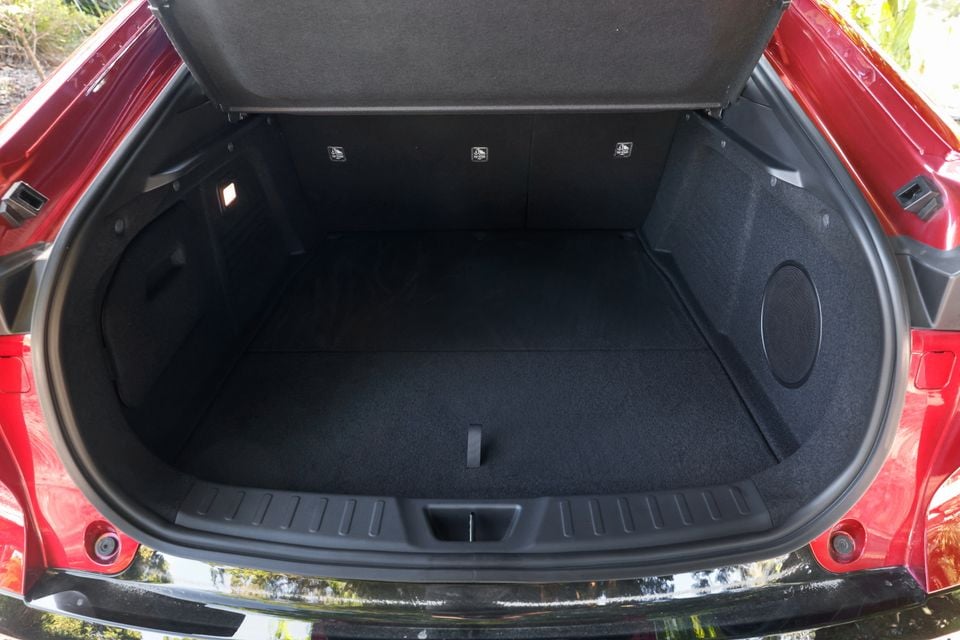
However, the numbers barely tell half the story, as the 6e's liftback layout makes it easier to utilise all the available space. On top of that, a roomy 'frunk' solves the problem of charging cable stowage.
As is the case with many modern cars, the 6e isn't sold with a physical spare wheel. Instead, it comes with a less useful tyre repair kit.
| Dimensions | Mazda 6e |
|---|---|
| Length | 4921mm |
| Width | 1890mm (excl. mirrors) |
| Height | 1485mm |
| Wheelbase | 2895mm |
| Cargo capacity | 337L (boot to belt line, incl. under-floor storage)72L (under-bonnet storage) |
To see how the Mazda 6e lines up against the competition, check out our comparison tool
Australian-spec Mazda 6e vehicles are powered by a single, rear-mounted electric motor producing 190kW of power and 290Nm of torque, hooked up to a 78kWh LFP battery.
| Specifications | Mazda 6e E35 |
|---|---|
| Drivetrain | Single-motor electric |
| Battery | 78kWh lithium iron phosphate (LFP) |
| Power | 190kW |
| Torque | 290Nm |
| Drive type | Rear-wheel drive |
| Weight | 2090kg |
| 0-100km/h (claimed) | 7.9 seconds |
| Energy consumption (claimed) | 15.9kWh/100km |
| Energy consumption (as tested) | 17.1kWh/100km |
| Claimed range | 560km (WLTP) |
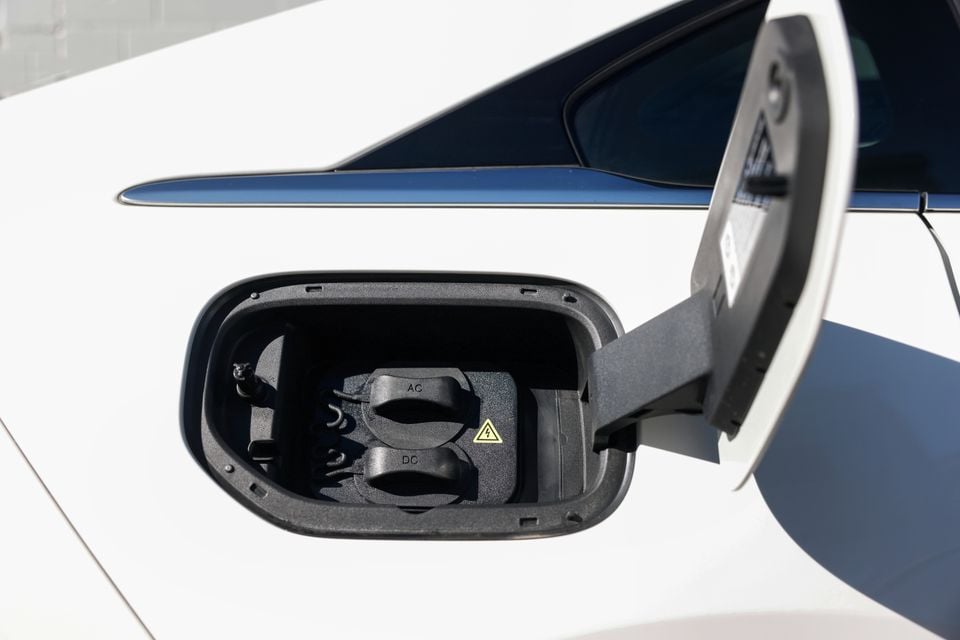
| Max AC charge rate | 11kW |
| Max DC charge rate | 194kW |
There are currently no plans for a dual-motor all-wheel drive version.
Nor are there plans to introduce the extended-range electric vehicle (EREV) version of the 6e sold in China.
To see how the Mazda 6e lines up against the competition, check out our comparison tool
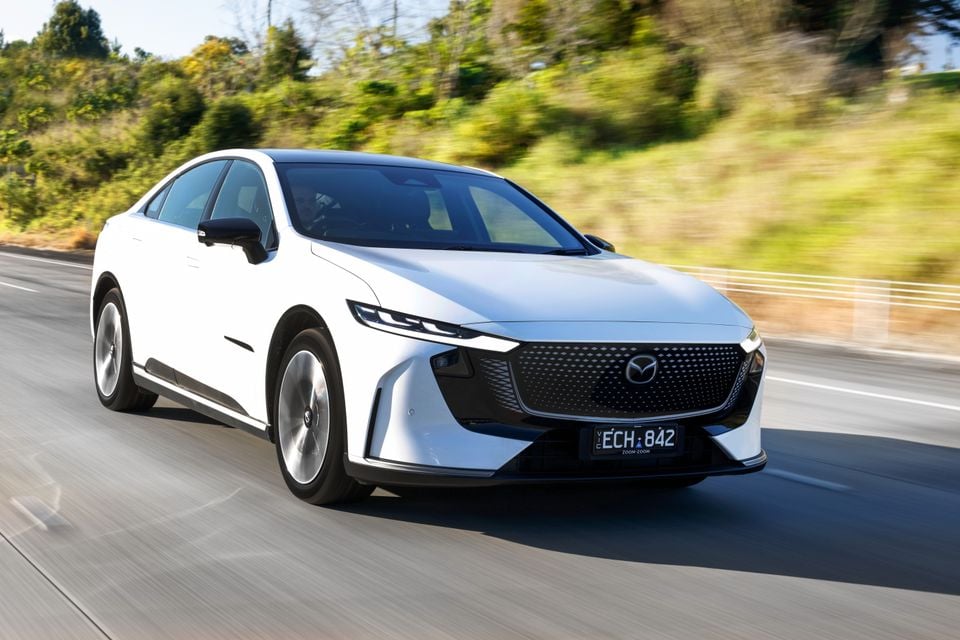
As was the case with the interior, you can feel the influences of both Mazda and Changan in how the 6e drives.
If this is the car for you, we’ll compare offers from trusted dealers, handle the back and forth and manage your purchase from enquiry to delivery.
The startup procedure is Chinese EV through and through – there's no start/stop button, and the drive selector is a steering column-mounted stalk.
For those who've owned Mazdas previously, that's a big change in itself.
But once you start driving, it quickly becomes apparent that novel cabin controls are but the tip of the iceberg.
Obviously, being just Mazda's second EV in Australia, there's an unfamiliar quietness to how the 6e operates. It slinks around in silence at lower speeds, and remains hushed on the open road, with wind and tyre noise kept mostly in check. Regardless of speed, a subtle synthetic soundtrack is played through the cabin speakers when you accelerate with some intent.
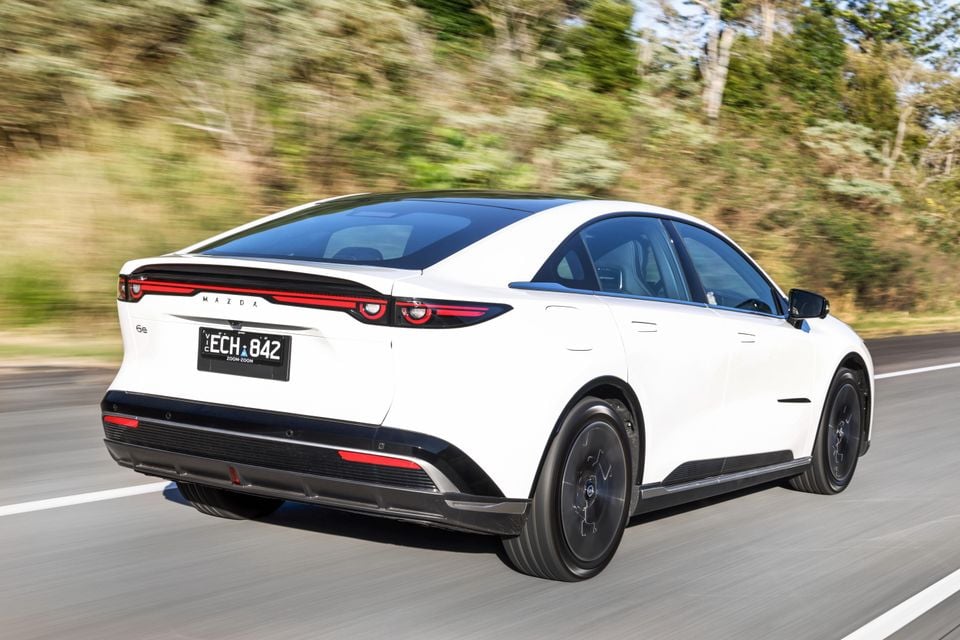
Doing so reveals straight-line performance that's... adequate. The numbers will tell you that the 6e just about keeps up with most single-motor rivals, and that seems about right. It's certainly not as quick as any version of the Model 3, but I was rarely left wanting for more, likely because the 6e doesn't really encourage you to drive fast.
Instead, it shines brightest when steered in a relaxed manner. That’s partly down to the powertrain, and partly down to the suspension.
It’s quite softly sprung, this 6e, certainly more so than other Mazdas. While Australian cars receive a European suspension tune, there’s still a discernibly comfort-first flavour to the ride. As a result, the 6e is refreshingly forgiving – albeit a little floaty at times – over Australia’s roughest country roads, absorbing ruts and potholes without fuss.
The damping is less convincing, however, so the 6e can feel jittery over smaller imperfections, struggling to truly settle unless the surface is perfectly smooth.
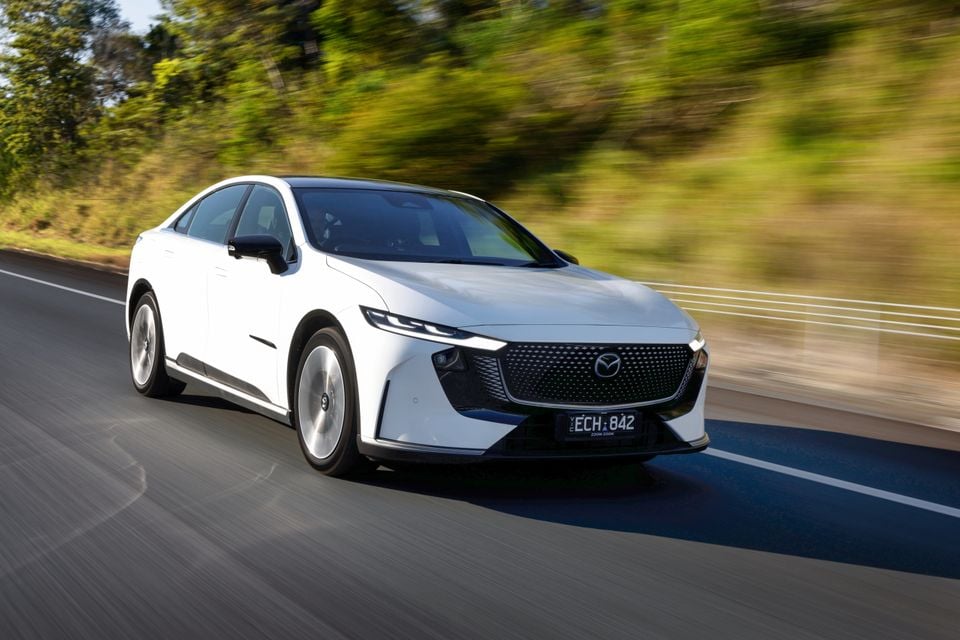
All that means it never feels quite as balanced as a Kia EV4, nor as planted as a Tesla Model 3. That said, I'd prefer the Mazda for long-distance touring. As for the daily commute, it's hard to be sure, given this launch drive didn't include much urban driving.
Despite its softer setup, the 6e is no slouch in the handling department. It turns willingly for a car weighing more than two tonnes, keeps body roll in check, and benefits from an engaging rear-wheel drive layout and grippy Michelin tyres that inspire confidence.
The steering is pretty good, too, communicating some road texture through the wheel. It’s quicker and lighter than you might expect of a Mazda, though its weight can be adjusted through the settings menus.
I wouldn't liken the 6e to a true sports sedan, but it certainly possesses some of Mazda's 'jinbai ittai' – a Japanese phrase that translates to "horse and rider as one body", which has become a brand mantra.
The option to 'ride' a little lower in the driver's seat would further boost its credentials as a driver's car, although any changes are unlikely given the battery lives directly beneath the floor.
The regenerative braking system needs no such qualification, as the 6e begins to decelerate smoothly as soon as you lift off the throttle. Regen intensity is configurable, with four distinct levels available. Again, though, adjustments can only be made through the infotainment screen, which makes the absence of tactile, user-friendly steering wheel paddles feel like a missed opportunity.
Continuing the theme of missing physical controls, there’s no switch for the drive modes, so you’re forced to search through the screen whenever you want to toggle between Normal, Sport and Individual – a needless, inconvenient extra step.
Overbearing advanced driver assist systems (ADAS) also detract from the overall experience. In short, the 6e emits lots of safety-related beeps and bongs – a prevalent drawback of new vehicles in 2026.
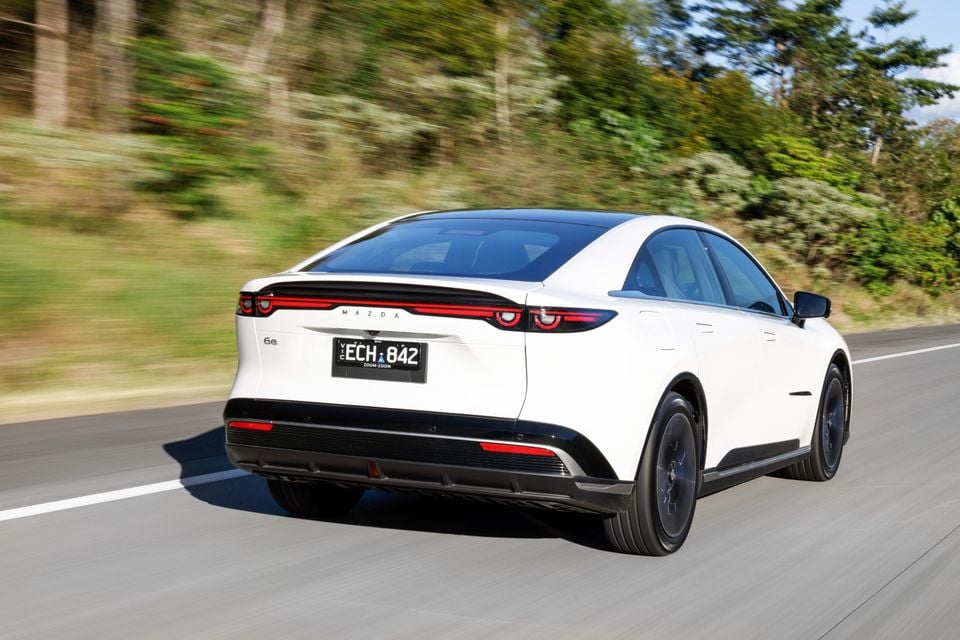
More specifically, the camera-based driver monitor, lane-keep assist and overspeed warning are too sensitive. With that said, the volume of the chimes is relatively low, and you can set up a steering wheel shortcut to disable the latter system. You'll also want to switch off the 'sharp turn ahead' message that plays through the 6e's native navigation system. Thankfully, there's a single-tap permanent solution for this.
On a more positive note, the semi-autonomous cruise control tech is quite effective, seemingly able to handle straightforward motorway trips without much driver intervention. In saying that, Tesla's full self-driving (FSD) is still the gold standard, and the 6e performs similarly to the EV4, Ioniq 6, and Camry.
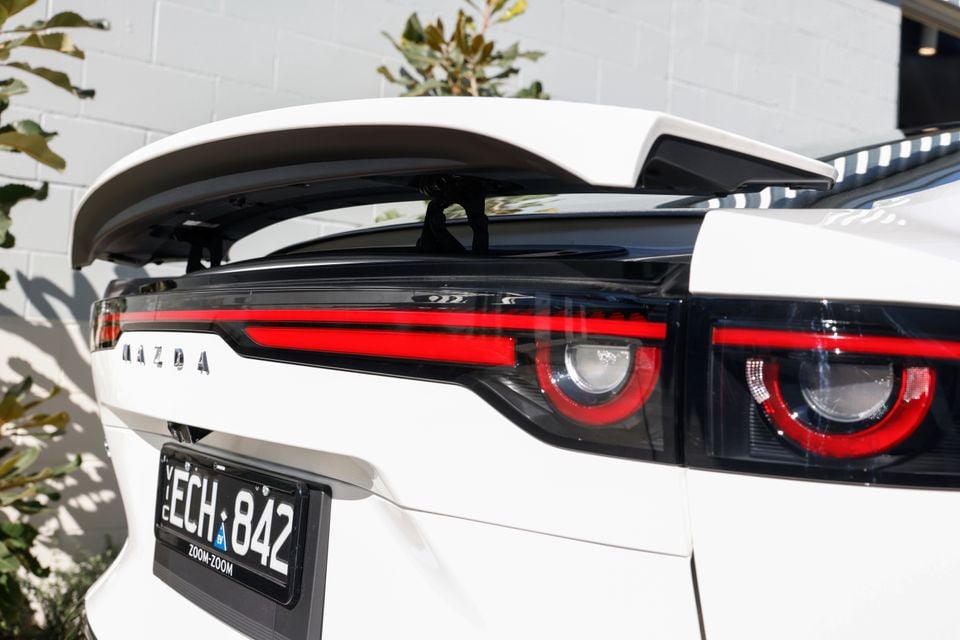
It's also worth noting that rear visibility can be a bit of an issue, as the back window is low and narrow. That's made worse at higher speeds by the 6e's active rear spoiler, which raises automatically above 90km/h, further restricting your view rearward.
Thankfully, low-speed manoeuvring is much easier than that limited outward visibility suggests. While the 6e is a properly large mid-size car at 4921mm long (closer to a Camry than a Model 3 or EV4), its surround-view camera with see-through view and front and rear parking sensors take much of the stress out of tight situations.
To see how the Mazda 6e lines up against the competition, check out our comparison tool
There are two trim levels in the Mazda 6e lineup, differentiated by upholstery and, curiously, a glovebox light.
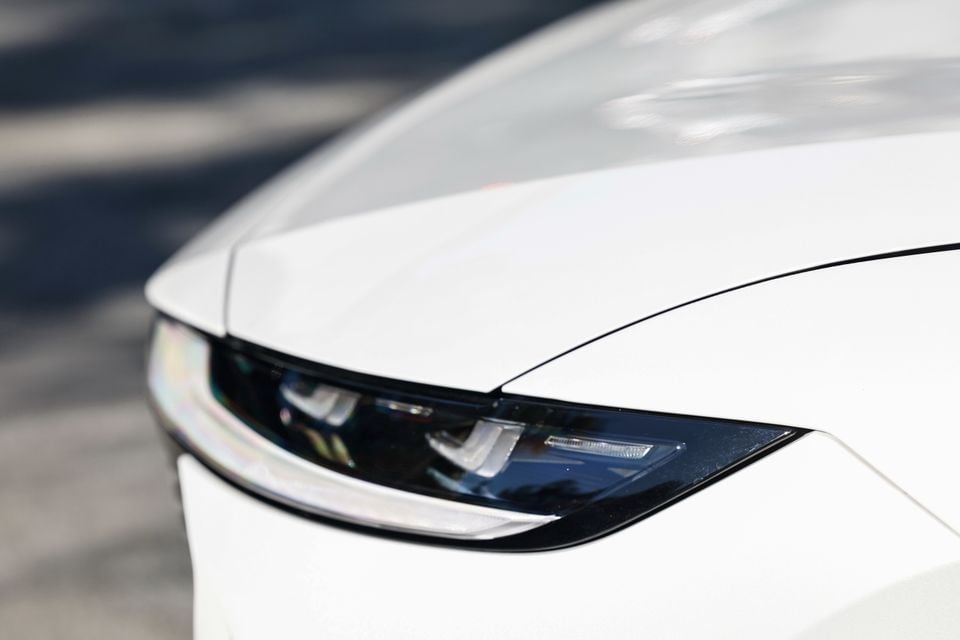
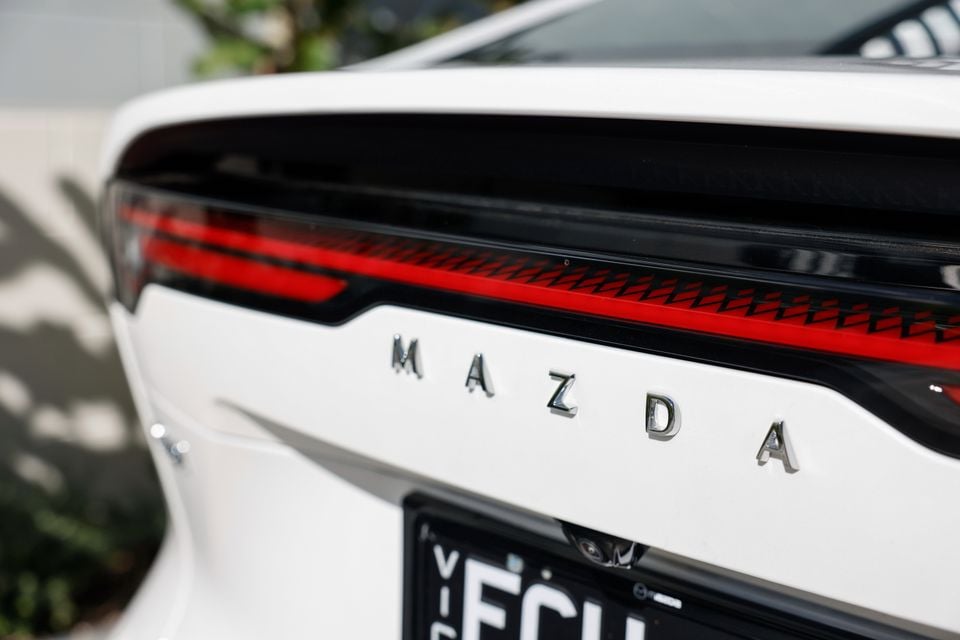
2026 Mazda 6e GT equipment highlights:
Atenza adds:
The GT comes standard with a black interior, although a Warm Beige colourway is available for an additional $1000.
To see how the Mazda 6e lines up against the competition, check out our comparison tool
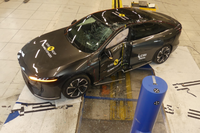
The Mazda 6e has yet to be assessed by independent safety authority ANCAP, though its European counterpart Euro NCAP awarded the EV a five-star rating in 2025.
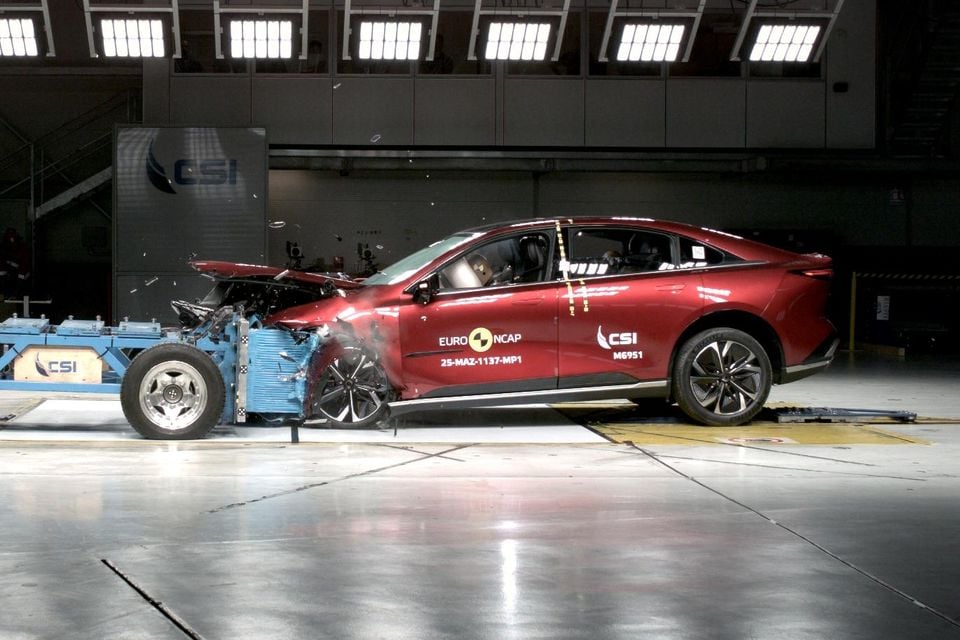
It received an adult occupant protection rating of 93 per cent, a child occupant protection rating of 93 per cent, a vulnerable road user protection rating of 74 per cent, and a safety assist rating of 77 per cent.
Standard safety equipment includes:
To see how the Mazda 6e lines up against the competition, check out our comparison tool
Mazda backs its vehicles with a five-year, unlimited-kilometre warranty, which includes roadside assistance for the same period.
| Servicing and Warranty | Mazda 6e |
|---|---|
| Warranty | 5 years, unlimited kilometres |
| Roadside assistance | 5 years |
| Service intervals | 12 months or 20,000km |
| Capped-price servicing | Lifetime |
| Average annual service cost (5 years) | $360 |
| Total capped-price service cost (5 years) | $1802 |
Service pricing is capped for the lifetime of the vehicle; the first five visits cost $220, $318, $726, $318, and $220 respectively.
That's more than you'll pay to maintain an Accord, Camry, EV4 or Seal over the same period, while the Model 3 isn't subject to set maintenance intervals. However, none of the aforementioned models come with lifetime capped-price servicing.
And, given the cost gap between petrol and electricity, the 6e should still be cheaper to run than combustion-powered alternatives if you’re able to charge at home.
That advantage is lessened by the fact the Mazda isn’t as efficient as most rival EVs, meaning it won’t be quite as cheap to power.
To see how the Mazda 6e lines up against the competition, check out our comparison tool
It's hard to argue with the value of the 6e, especially in base GT trim.
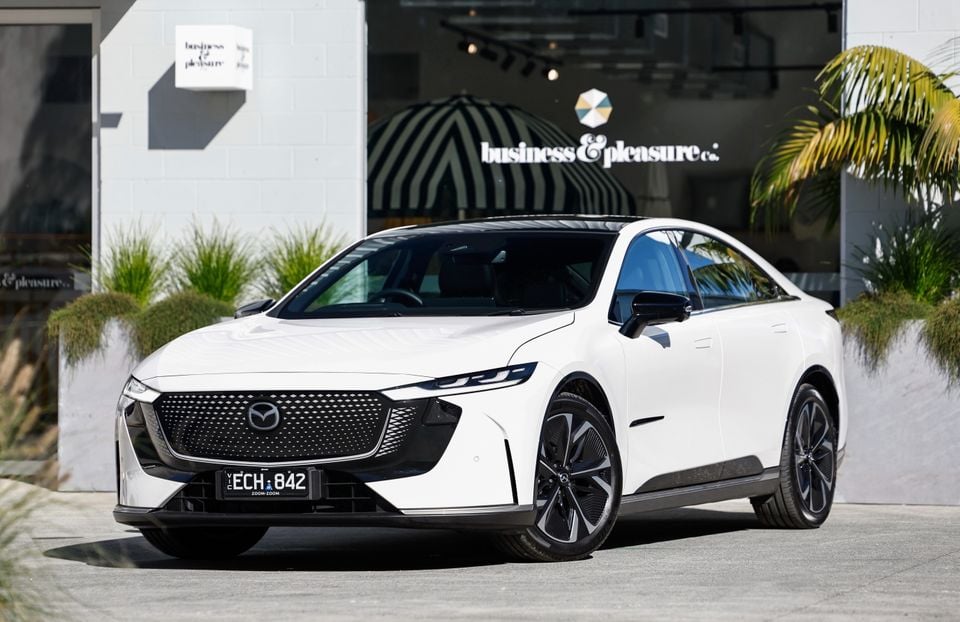
For a smidge over $50k drive-away, you're getting an attractive, practical and well-equipped electric liftback from a trusted marque.
That's not to say the 6e is peak Mazda, because it's a little rough around the edges.
Inside, the lack of physical controls puts a lot of pressure on the user interface, which is generic and needlessly complex. For taller drivers, the high seating position is a major drawback.
From a driving perspective, regular safety warnings get annoying quickly, and the Model 3 is just as refined yet noticeably sharper.
But the cheapest Tesla asks nearly $5000 more than the 6e – a significant sum in these trying times – and you'll need to find an extra $3000 to get into a BYD Seal.
And while you can get a Kia EV4 for 6e money, it'll have a smaller battery, shorter range, less power, slower DC charging, and less standard equipment.
All of which makes the 6e a compelling new addition to the local EV market, even if it isn't quite the complete package.
CarExpert can save you thousands on a new Mazda 6e. Click here to get a great deal.
Click the images for the full gallery
If this is the car for you, we’ll compare offers from trusted dealers, handle the back and forth and manage your purchase from enquiry to delivery.
Quickly see how this car stacks up against its competition. Select any benchmark to see more details.
2026
$54,607
2026
$57,757
Josh Nevett is an automotive journalist covering news and reviews, with a background in motorsport journalism.
Add CarExpert as a Preferred Source on Google so your search results prioritise writing by actual experts, not AI.
Damion Smy
7 Hours Ago

William Stopford
8 Hours Ago
William Stopford
9 Hours Ago
William Stopford
11 Hours Ago
Damion Smy
12 Hours Ago
William Stopford
13 Hours Ago
Add CarExpert as a Preferred Source on Google so your search results prioritise writing by actual experts, not AI.
# Based on VFACTS and EVC data
† Displayed prices are based on the drive-away price of the vehicle, which includes delivery charges, registration fees, number plates, and applicable road taxes, based on a Sydney location. However, prices may vary between states and territories, and additional costs such as compulsory third party (CTP) insurance, dealer delivery fees, and optional extras are not included. These prices are subject to change without notice and may not reflect current market pricing or dealer offers.
 Automotive Vehicle Spec Data & 4K images Powered by JATO Dynamics Ltd