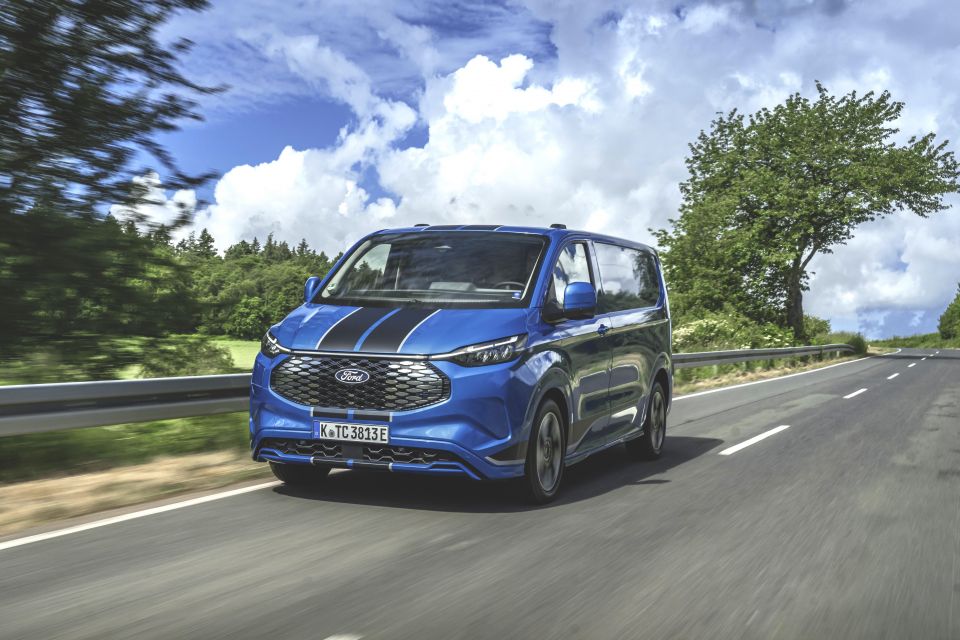
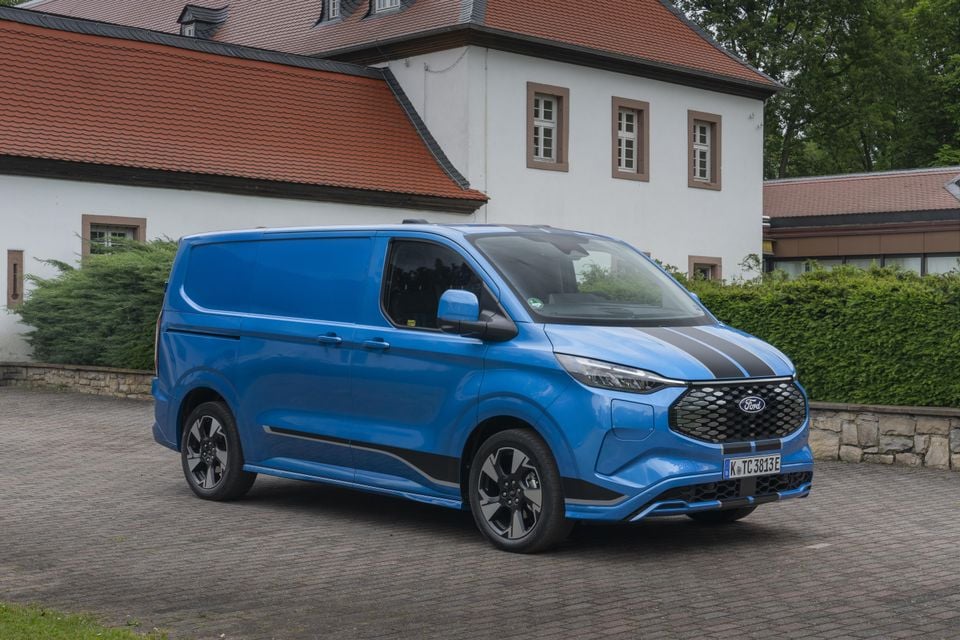
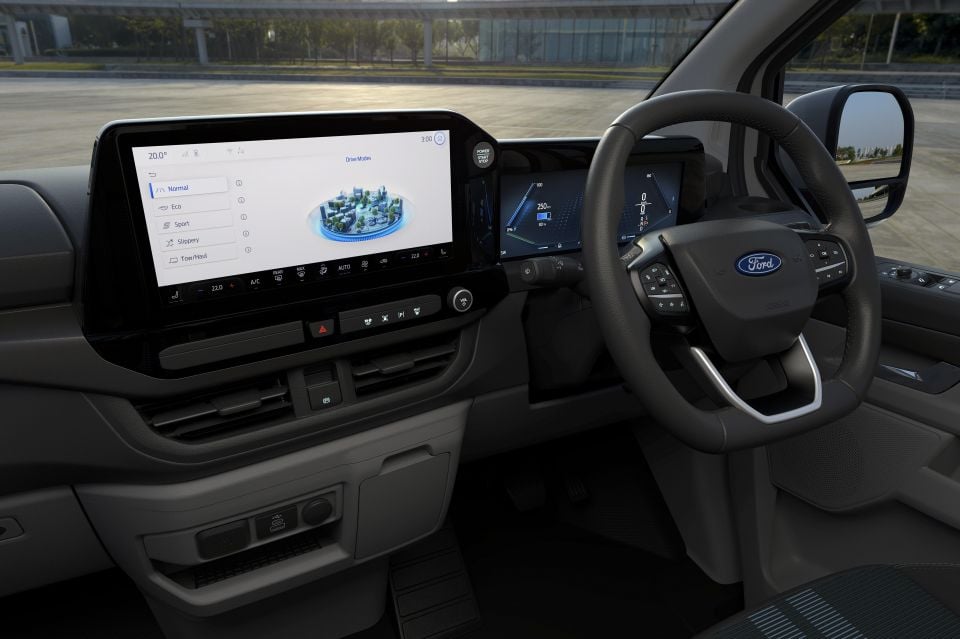
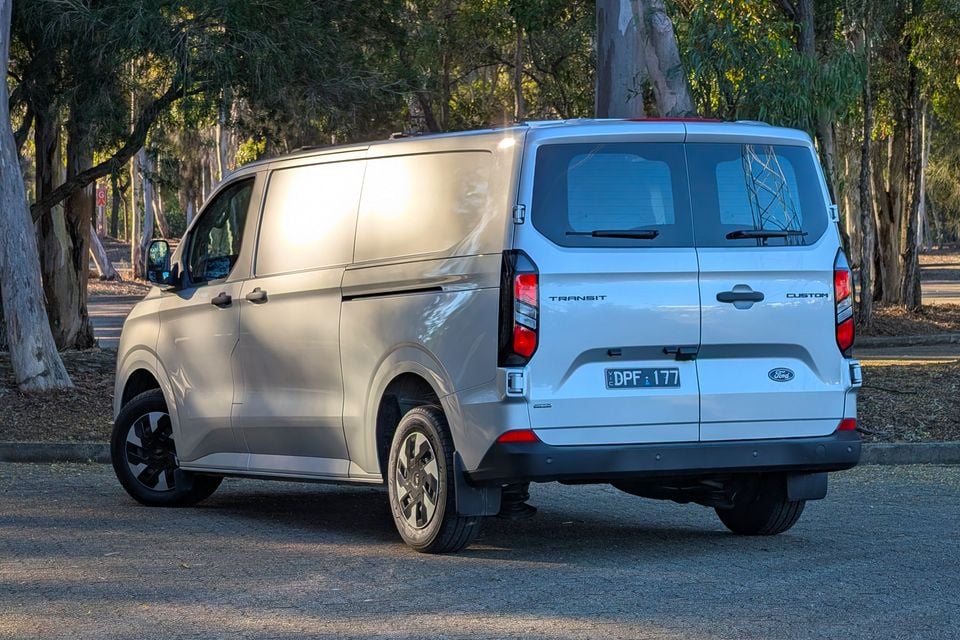
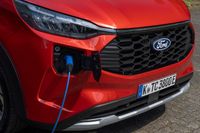
Electrified versions of the Ford Transit Custom have received price cuts and additional equipment across all four model grades as part of an updated 2027.25 lineup due in showrooms next year.
Ford has cut $3900 from the price of each of the two Transit Custom plug-in hybrid (PHEV) variants and two battery-electric E-Transit Custom variants.
This brings the Transit Custom PHEV’s starting price down to $63,990 before on-road costs for the Trend LWB, while the Transit Custom PHEV Sport SWB drops to $66,390 before on-road costs.
Updated vehicles are due in showrooms from May 2027.
The Transit Custom is currently the only PHEV commercial van in its segment offered by any manufacturer in Australia, though the Volkswagen Transporter eHybrid – which uses the same underpinnings – is due here before the end of 2026.
Ford has cut the price of the battery-electric E-Transit Custom Trend LWB to $73,990 before on-road costs, while the E-Transit Custom Sport SWB drops to $76,390 before on-road costs, with arrivals expected from March 2027.
This brings the E-Transit Custom closer in price to the recently announced Hyundai Staria Load electric van, priced from $70,990 before on-road costs, and well below the Peugeot E-Expert Pro, which starts at $79,990 before on-road costs.
There are still cheaper electric alternatives, including the Farizon SV (SuperVan) at $62,990 before on-road costs and the LDV eDeliver 7, priced from $61,042 drive-away.
As part of the update, the E-Transit Custom also gains a larger nickel manganese cobalt (NMC) battery pack, with capacity increasing from 64kWh to 71.45kWh in both model grades.
As a result, claimed range increases from 301km to 340km for the E-Transit Custom Trend, while the Sport’s range rises from 307km to 346km.
By comparison, the recently announced Transit City electric van – scheduled to reach local showrooms in November priced at $50,000 drive-away – has a claimed WLTP combined range of 254km.
Ford says the Transit City can travel up to 380km on the WLTP city cycle, however.
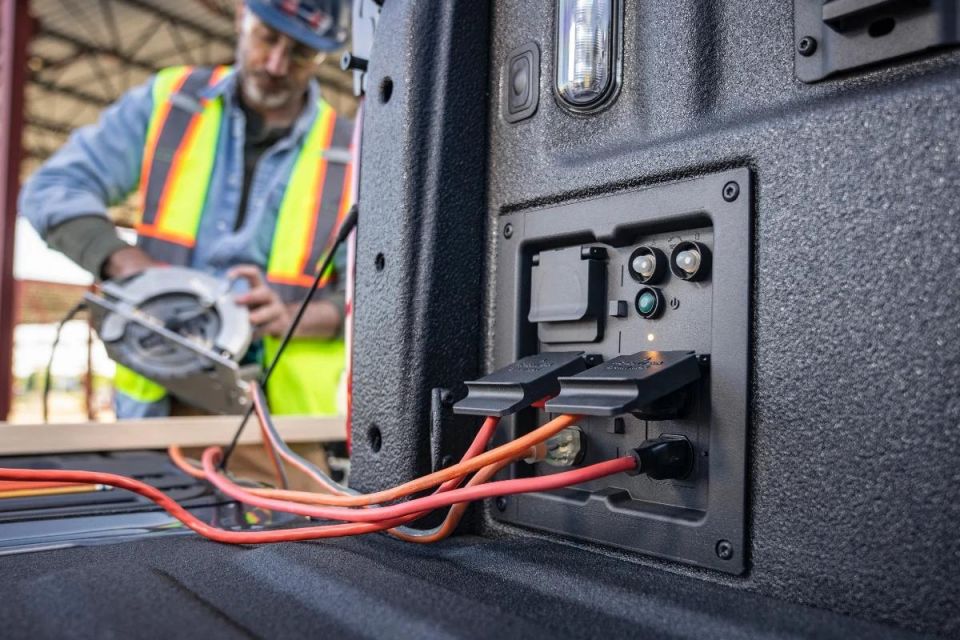
The 2027.25 Transit Custom and E-Transit Custom lineup also gains a 2.3kW Pro Power Onboard system as standard across all four variants, with Vehicle-to-Load (V2L) capability for the first time.
Already offered on the Ford Ranger PHEV, Pro Power Onboard uses a built-in inverter to convert direct current (DC) from the high-voltage battery into 230V alternating current (AC), allowing owners to run power tools, compressors and other equipment.
In terms of sales, the Transit Custom trails only the Toyota HiAce within its segment, with PHEV versions accounting for around 8.5 per cent, or 111, of the 1307 Transit Customs sold to the end of June.
The E-Transit Custom recorded just 10 sales over the same period.
Ford recently confirmed it will drop the 2.0-litre turbo-diesel engine from the Transit Custom-based Tourneo people mover, with the Tourneo lineup adopting the Transit Custom PHEV’s powertrain instead.
The automaker has also announced a seven-year, unlimited-kilometre warranty across its lineup for all customer types, effective from September 1, 2026, provided owners service their vehicles through the Ford dealer network.