




William Stopford
2027 Mazda 6e Atenza review
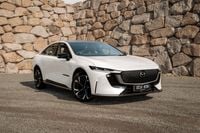
Mazda's return to the Australian electric vehicle market is an impressive one, thanks to the help of its Chinese partner.
1 Hour Ago
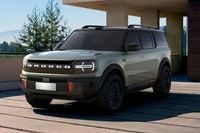
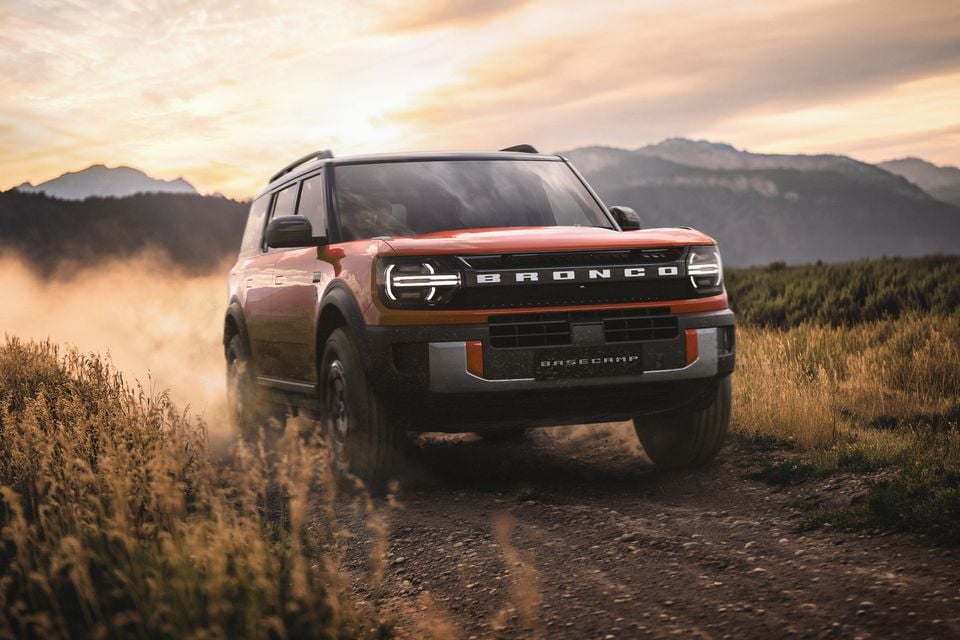
Ford will bring the Bronco Basecamp SUV to Australian showrooms in 2027 as it seeks to reduce its reliance on the hugely popular Ranger and Everest.

Deputy News Editor
Deputy News Editor
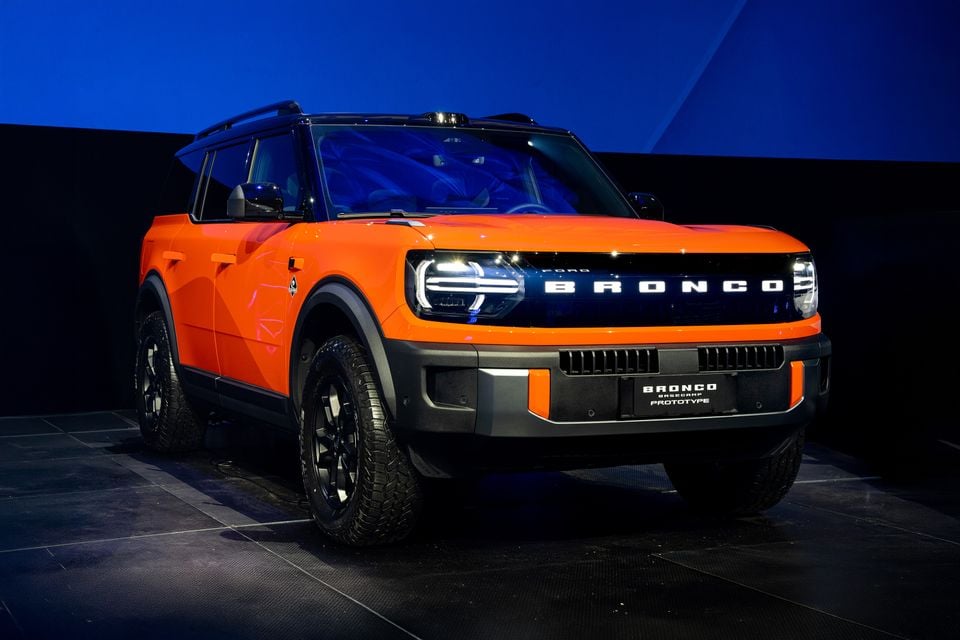
Ford Australia has confirmed the Ford Bronco Basecamp will join its local lineup with a plug-in extended-range electric all-wheel drive powertrain, with its arrival scheduled for the second half of 2027.
It will be the second Chinese-built model in Ford Australia’s new-model pipeline, joining the Transit City one-tonne electric van, which is due here this November and is also manufactured by Ford’s joint-venture partner, Jiangling Motors Corporation (JMC).
The Bronco Basecamp is a five-seat, five-door SUV that uses car-like monocoque construction, like the electric Ford Mustang Mach-E. In contrast, the Ford Everest uses the same body-on-frame construction as the Ranger, as well as the traditional Bronco offered overseas.
Ford Australia has confirmed the Bronco Basecamp will be introduced with an extended-range electric vehicle (EREV) powertrain, rather than the battery-electric option also offered in China.
EREVs typically use a petrol engine to charge the battery and add extra driving range, allowing drivers to travel further without having to rely on charging infrastructure. The setup differs from plug-in hybrids (PHEVs), where the combustion engine can send drive directly to the wheels.
The company didn't identify any key rivals. Off-road-focused plug-in hybrid models currently offered in Australia include the GWM Tank 500 Ultra Hi4-T PHEV, priced at $79,990 drive-away, and the Denza B5, priced from $74,990 before on-road costs.
However, the Denza and GWM both use ladder-frame construction and are conventional PHEVs rather than extended-range electric vehicles (EREVs).
The Land Rover Defender 110 – with a name arguably as iconic as the Bronco badge – is perhaps the closest rival to the Bronco Basecamp in size, technical makeup and off-road adventure focus, though the Ford isn't expected to cost anywhere near the Defender PHEV’s $136,800 before on-road costs.
Ford Australia hasn't confirmed pricing or full equipment details. In China, where the Bronco Basecamp is part of the Bronco New Energy range, pricing starts at ¥229,800, equivalent to around A$47,565.
For comparison, the Ford Ranger made and sold in China – which uses a different powertrain from Australian models – starts at ¥145,800 (A$30,178). The Australian Ranger lineup starts at $37,130 before on-road costs.
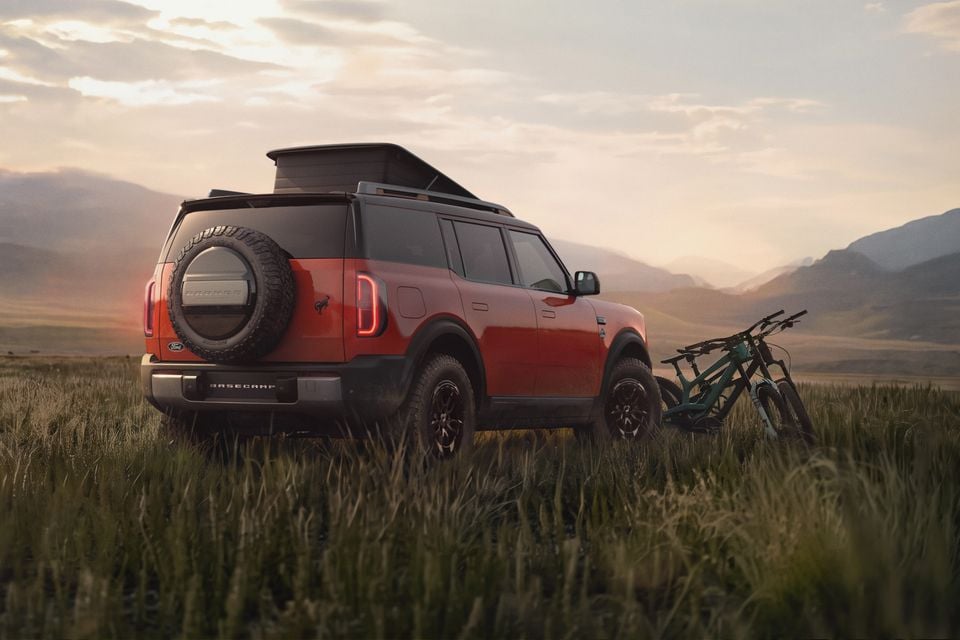
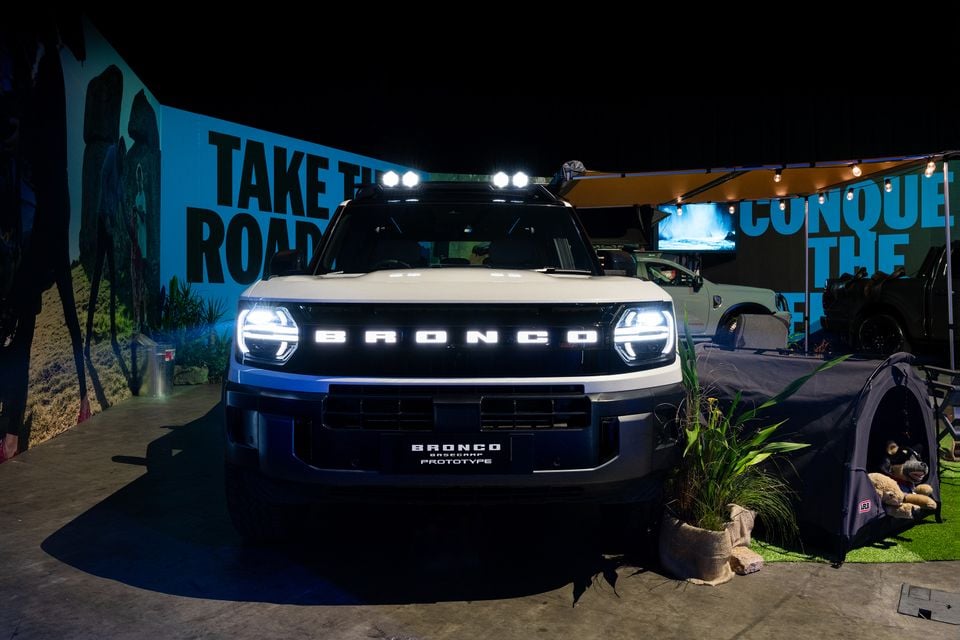
Despite its distinctive Bronco design cues – including LED headlights, illuminated BRONCO grille lettering, muscular proportions and an aggressive stance – the Basecamp is unrelated to the body-on-frame Bronco currently sold overseas.
Chinese-market versions measure 5025mm long and 1960mm wide, with 1670mm front and rear tracks and total height ranging from 1815mm to 1840mm, depending on the variant.
That makes the Bronco Basecamp similar in size to the Everest, but with a 50mm-longer wheelbase measuring 2950mm.
Chinese specifications list 220mm of ground clearance and a 600mm wading depth. The Bronco Basecamp uses double-wishbone front suspension and a five-link independent rear suspension, while the flagship Outer Banks EREV also gains front and rear mechanical differential locks.
Although the Bronco Basecamp was developed with JMC, Ford Australia is carrying out local development on public roads and at its You Yangs proving ground near Geelong, Victoria.
The Australian Bronco Basecamp will combine a 1.5-litre turbocharged four-cylinder petrol engine with two electric motors – one on each axle – providing standard all-wheel drive.
Ford Australia said its research showed 89 per cent of its customers regularly use their vehicles’ four-wheel drive capability, while 81 per cent tow.
Australian power outputs haven't been confirmed, but the Chinese-market EREV produces 310kW and 600Nm and has a claimed 0-100km/h time of 5.8 seconds. Ford doesn't publish a towing capacity for the Chinese EREV.
Ford Australia has confirmed a 49.9kWh battery, replacing the 43.7kWh lithium iron phosphate (LFP) pack used by the current Chinese model. The Australian version is expected to offer a claimed total range of between 800km and 900km.
Chinese models offer a claimed combined range of 1220km, including 220km of electric-only driving, under the more lenient CLTC testing standard. Ford Australia has yet to announce an electric-only range for the local Bronco Basecamp.
The Chinese EREV can charge its battery from 30 to 80 per cent in 27 minutes, while a 20-minute charge can add a claimed 113km of CLTC range.
Australian versions will come standard with Ford’s 6.6kW Pro Power Onboard vehicle-to-load (V2L) system, allowing owners to run induction cooktops, coffee machines, lights and other electrical accessories.
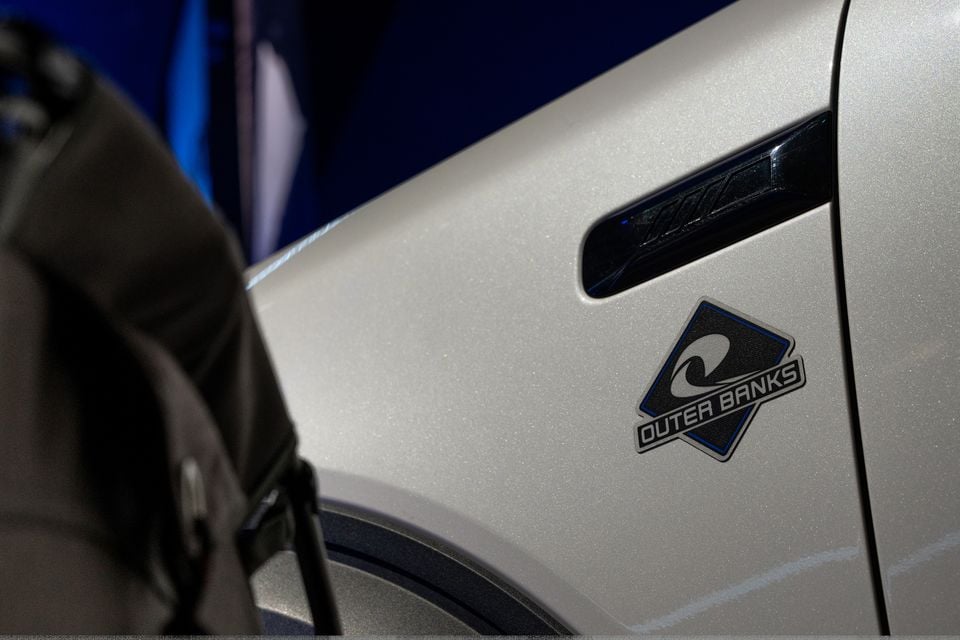
The local model range hasn't been detailed further, but Ford has dropped some clues by showing an Outer Banks model. It's the highest of the three grades offered in China, sitting above the entry-level Big Bend and mid-range Black Diamond.
Ford says the Australian-market Bronco Basecamp Outer Banks will come standard with a pop-up roof and a 7.5-litre heating and cooling storage compartment.
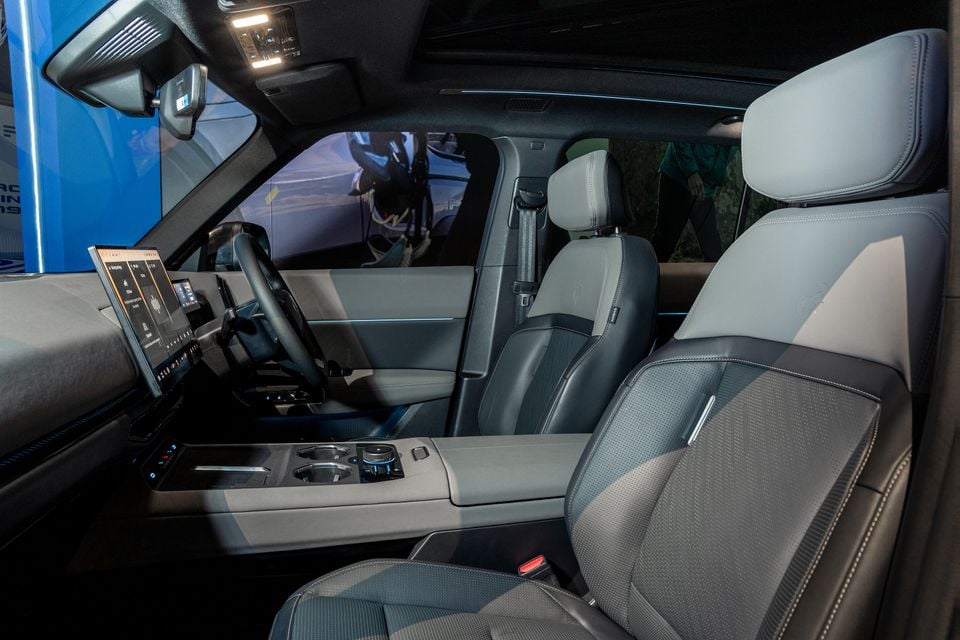
The Outer Banks prototype shown to Australian media was also fitted with 19-inch alloy wheels, synthetic leather upholstery, ambient lighting, a digital instrument cluster and a 15.6-inch centre touchscreen with a 360-degree surround-view camera.
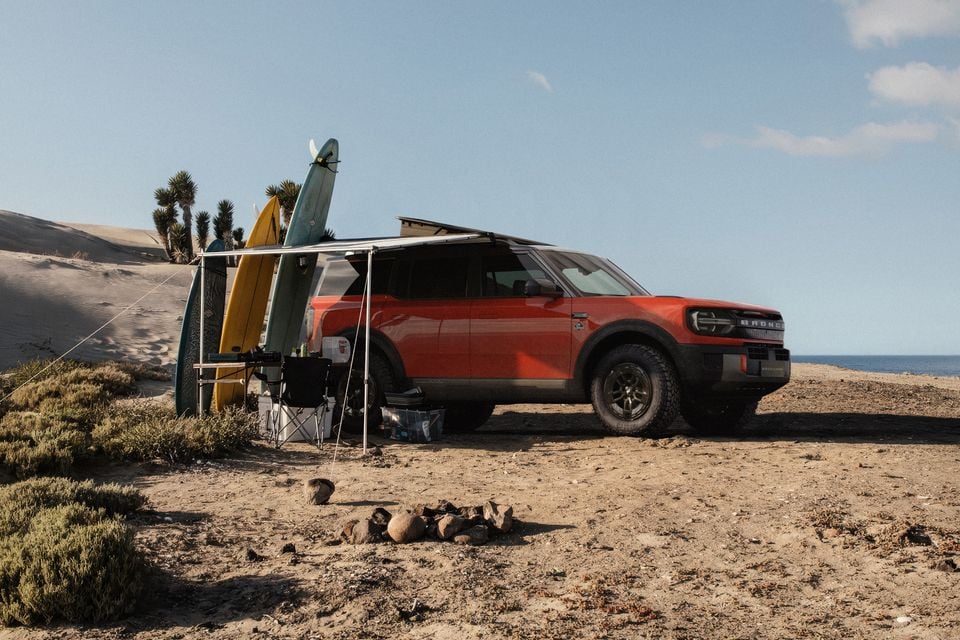
All Bronco Basecamps will have five seats that can fold completely flat, with a mattress accessory available to convert the cabin into a bed.
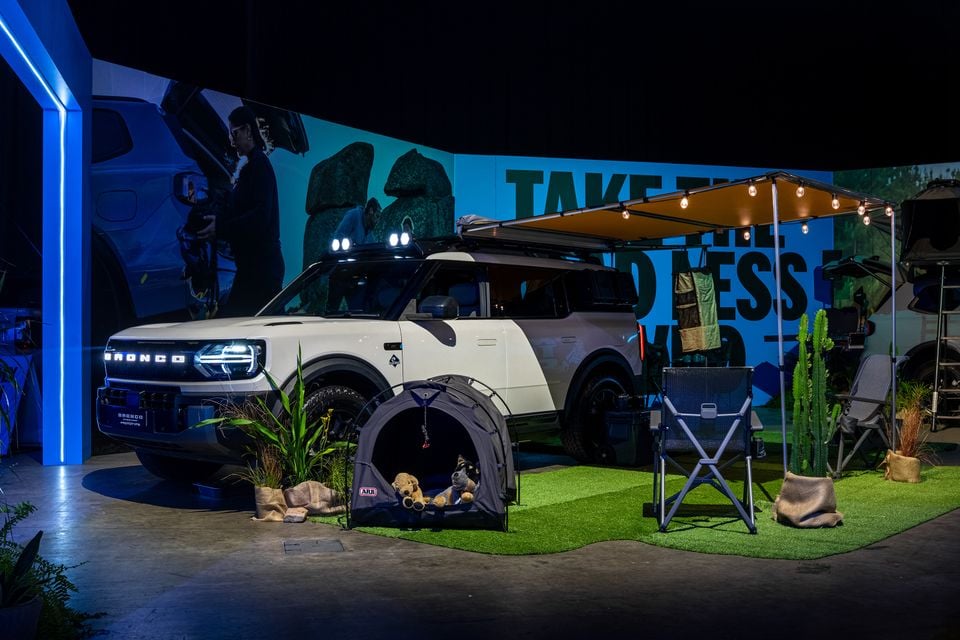
There's also a ‘Wild Kitchen’ integrated into the side-hinged tailgate, which opens towards traffic in Australia and carries a full-size spare wheel. It includes a fold-down table.
Speaking at a media event in Melbourne, Ford Australia marketing director Ambrose Henderson said the Bronco Basecamp’s introduction was another example of the brand “leveraging its global footprint” to enter market segments in which it hasn't competed for some time.
The Bronco Basecamp will be Ford Australia’s first SUV combining petrol and electric power since the slow-selling, Spanish-built Escape PHEV was offered here between 2022 and 2023. Ford currently offers PHEV powertrains locally only in the Ranger ute and Transit Custom van.
While the Ranger has been Australia’s top-selling new vehicle for the past three years, and the Everest has overtaken the Toyota LandCruiser Prado to lead its segment, Ford has relied on the closely related pair for around 90 per cent of its sales. Another half-dozen nameplates have accounted for the remaining 10 per cent.
More details are expected ahead of the Ford Bronco Basecamp’s scheduled Australian arrival in the second half of 2027.
Research cars in our Showroom, compare your options or let our New Car Specialists do the running around to find you a great deal.
Damion Smy is an award-winning motoring journalist with global editorial experience at Car, Auto Express, and Wheels.
William Stopford
1 Hour Ago
Damion Smy
8 Hours Ago

Tace Clifford
8 Hours Ago
William Stopford
9 Hours Ago
Damion Smy
10 Hours Ago
Damion Smy
11 Hours Ago
Add CarExpert as a Preferred Source on Google so your search results prioritise writing by actual experts, not AI.