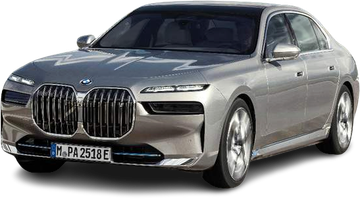
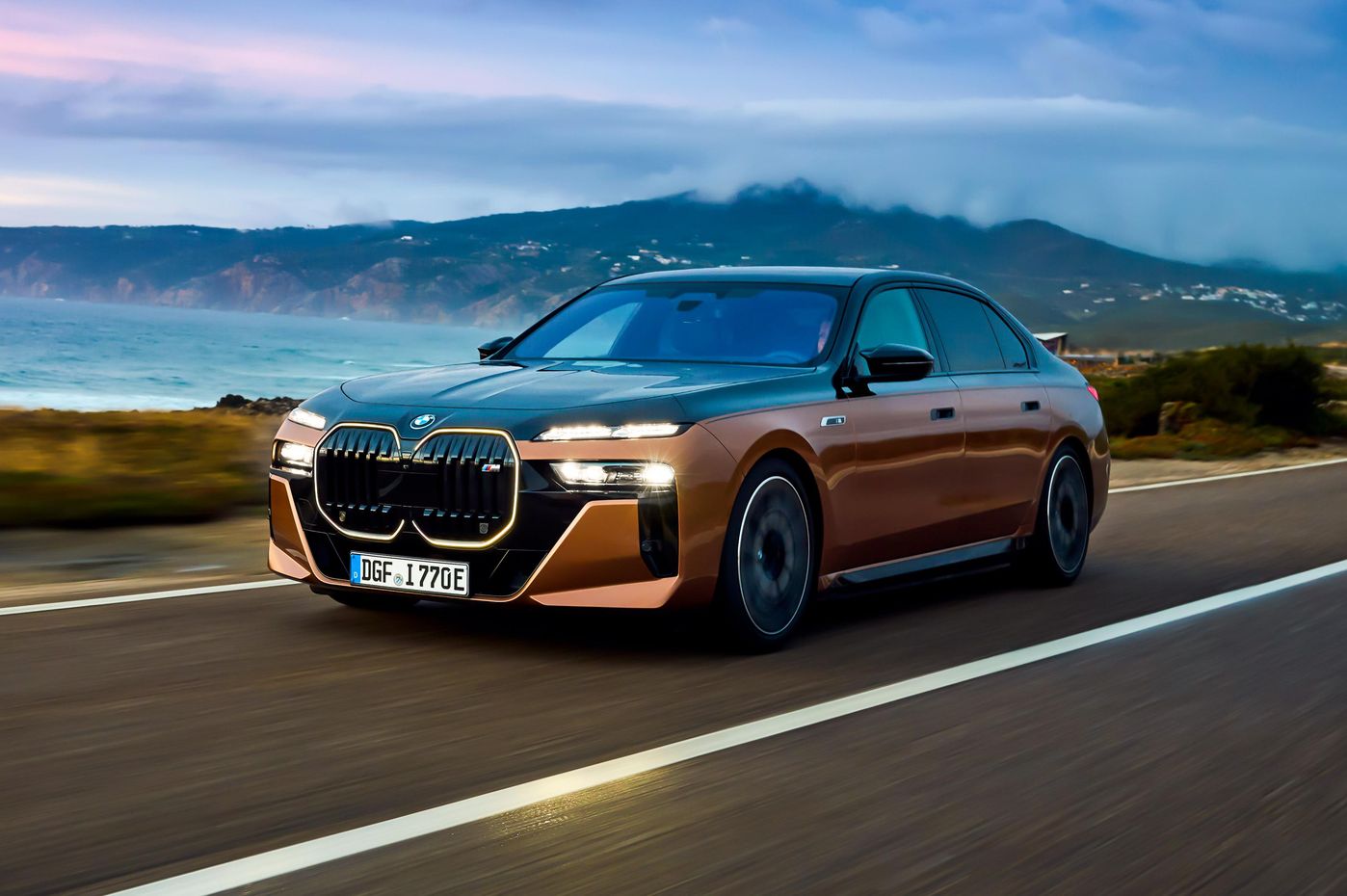
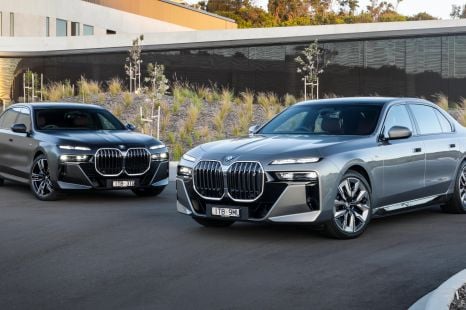
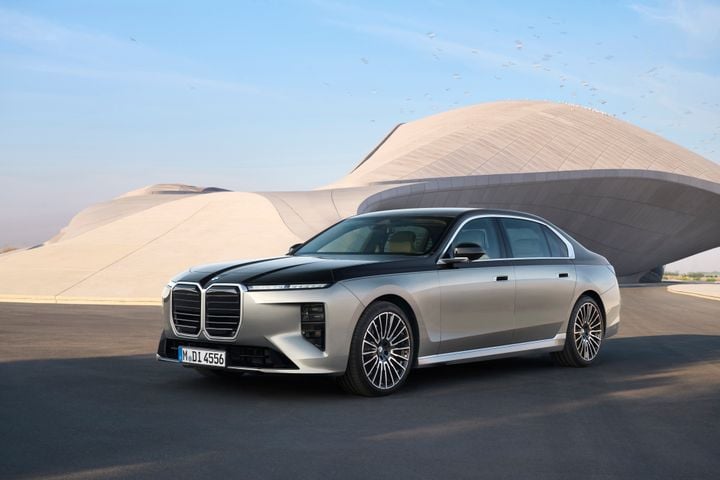
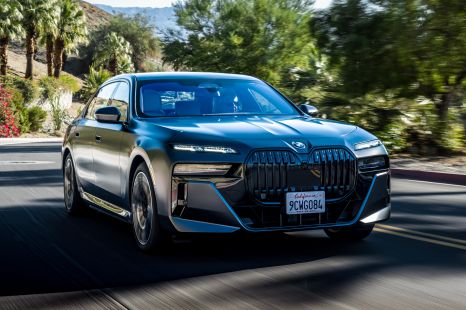
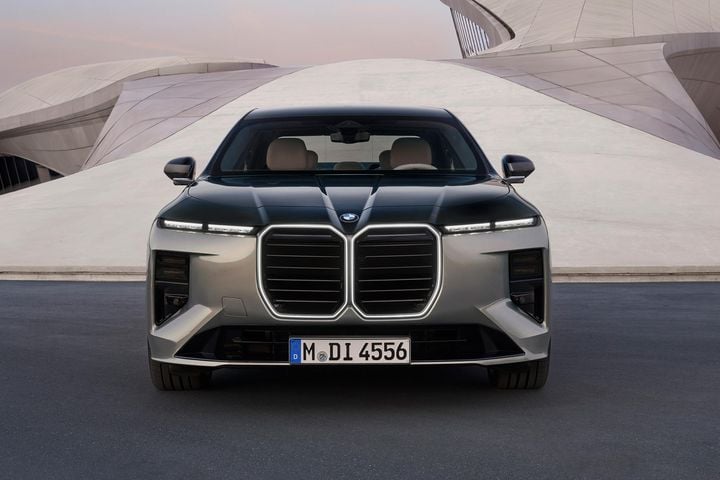
The BMW i7 makes an enormous first impression, and not just because of its size. In this walkaround of the 2023 i7 xDrive60, we explore a luxury sedan packed with theatrical touches, from crystal lighting to a rear-seat cinema. Australian pricing announced at the time started just below $300,000 before options.
This is a stationary first look, not a road test. The electric i7 shares its platform with the petrol-powered 7 Series, and the new body is longer than even the previous generation’s long-wheelbase version. Its tall, imposing proportions and split front lighting won’t appeal to everyone.
Swarovski crystals sit in the upper lighting elements, shimmering under LED illumination or sunlight. The main headlights sit lower down, while an illuminated surround highlights the large kidney grille. It’s a dramatic design, particularly when the lighting and powered doors come into play together.
Those doors can open electrically using the key, with sensors helping stop them before they hit an obstacle. Inside, a button closes the driver’s door, and electric assistance also helps when moving the heavy door by hand.
The front cabin combines a curved display running BMW’s iDrive OS8 with wood trim, leather, and illuminated crystal-like detailing. The example we inspect also has cashmere wool seating and recycled materials in its roof lining and carpets. Separate touch-sensitive fan controls and physical air-vent adjusters help avoid unnecessary trips through screen menus.
The rear cabin is the real showpiece. An 8K touchscreen measuring more than 30 inches folds down from the roof, with Amazon Fire TV for streaming entertainment. A reclining rear-seat position moves the front passenger seat forward so the occupant behind can stretch out. Raising the rear blind helps screen the display from following traffic, but also blocks the driver’s view through the rear window.
The car shown features a 35-speaker Bowers & Wilkins sound system, while boot space is 500 litres with cable storage underneath. DC charging peaks at 195kW, below the fastest-charging rivals discussed during our visit.
Quoted outputs are 400kW of power and 745Nm of torque from two electric motors, with a claimed 0-100km/h time below 5.0 seconds. Those figures promise plenty, but we reserve judgement on performance and ride until we drive it. For now, the i7’s extraordinary cabin takes centre stage.