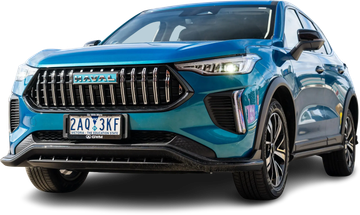
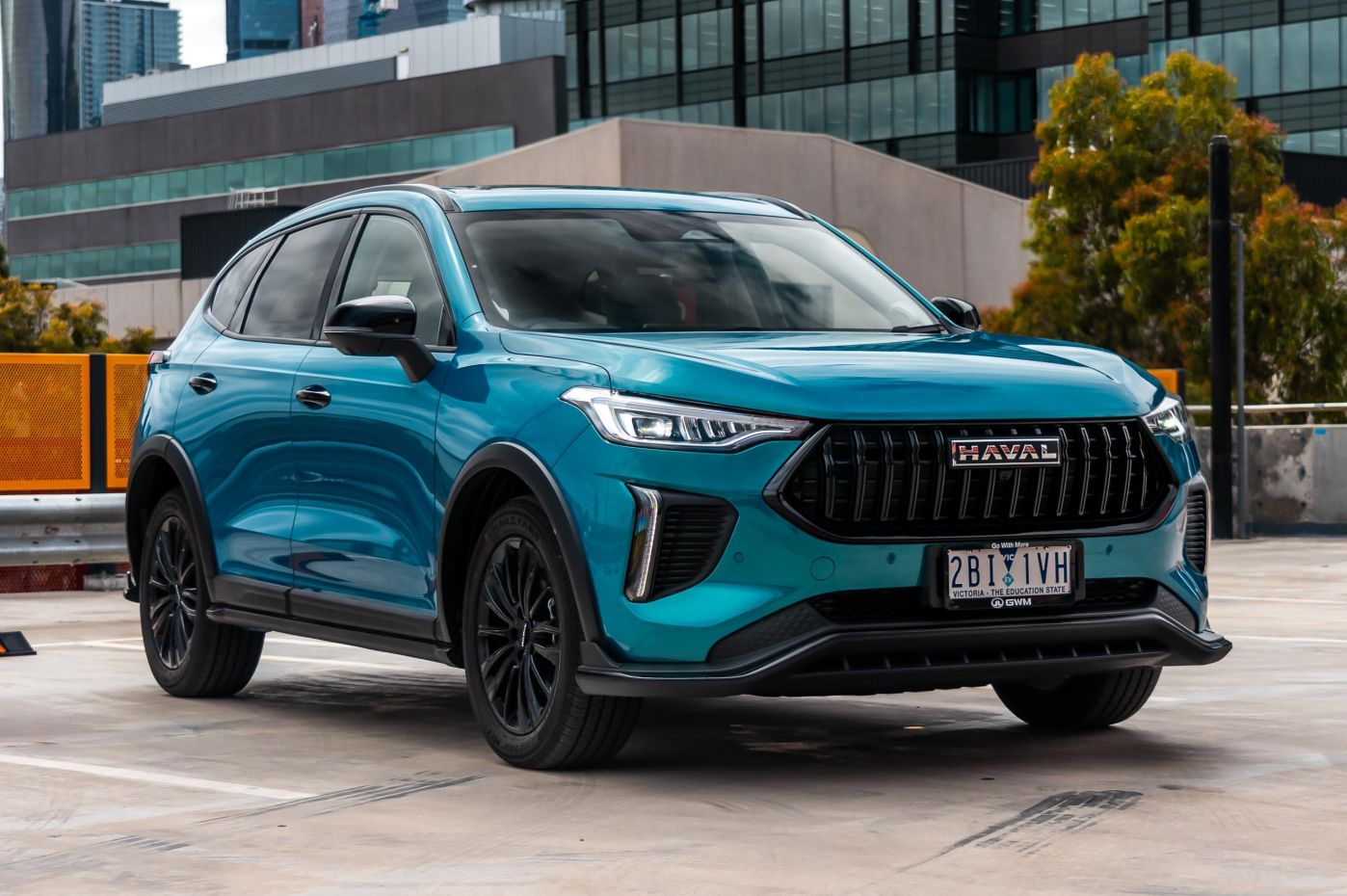
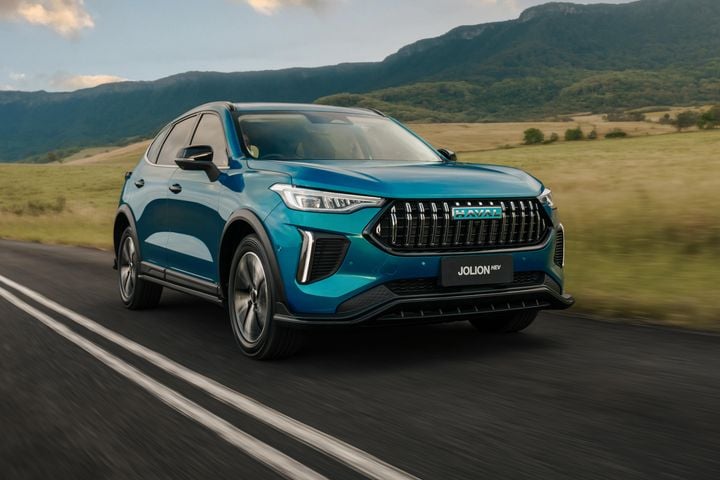
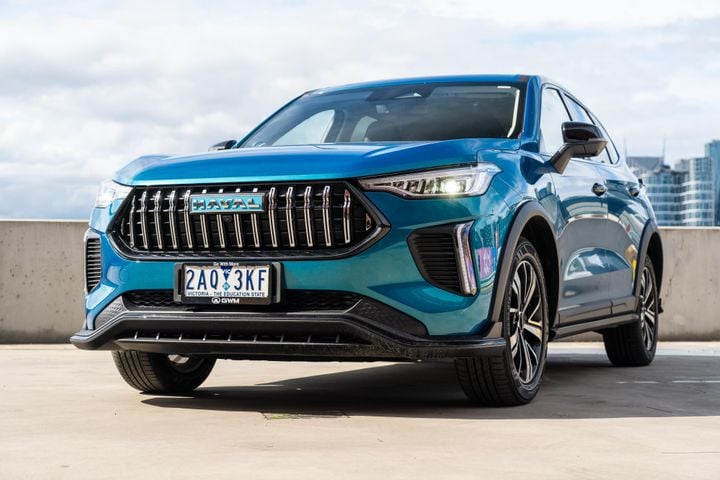
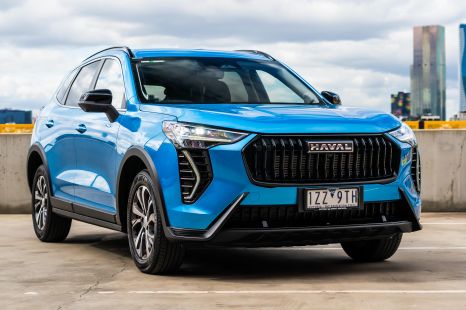
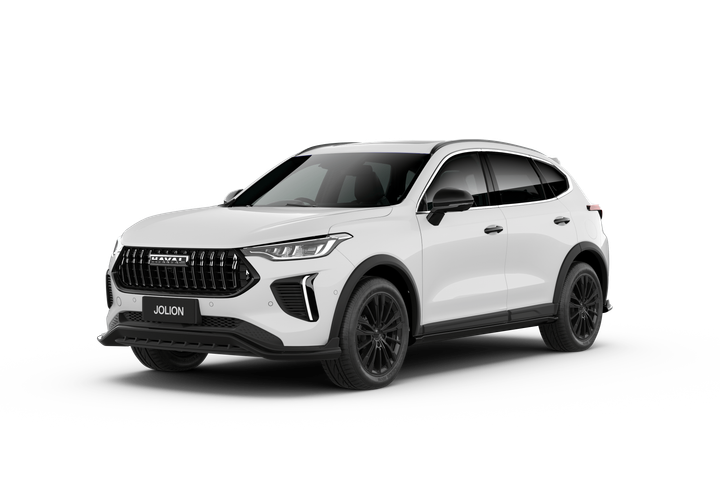
The Haval Jolion hybrid promises an affordable step towards electrification without needing a charging plug. In our 2022 test of the 2023 Ultra hybrid, its price was just under $41,000. That put it roughly $7000 above the non-hybrid Jolion, making the fuel-saving argument an important part of its appeal.
Its front-wheel drive powertrain combines a 1.5-litre petrol engine with an electric motor for system outputs of 139kW of power and 375Nm of torque. A two-speed transmission helps the system switch between different operating modes, including electric driving and petrol power driving the wheels directly.
Around town, the transition between power sources is impressively smooth. We see indicated consumption of 6.3L/100km against a combined-cycle claim of 5.0L/100km. That’s a useful result from this test, rather than a guarantee of what every owner will achieve. The strongest regenerative braking setting could still slow the car more decisively.
The cabin makes a good first impression, with soft surfaces and a sharp central display. Wired Apple CarPlay and Android Auto are included, but built-in satellite navigation and digital radio are missing. The high-resolution surround-view camera is a highlight, making it easy to see around the vehicle when parking.
Finding a comfortable driving position is harder. The steering wheel adjusts for tilt but not reach, and the seat base leaves us feeling as though we’re sliding forwards. Rear passengers fare better, with generous knee room, a flat floor, air vents, and USB ports. The raised boot floor limits luggage space, and there’s a tyre repair kit rather than a spare.
The suspension is comfortable over urban bumps, but body control deteriorates on our higher-speed undulation test. There’s also noticeable body roll, while tyre and wind noise undermine highway refinement. Lane centring holds the first two lanes of our banked test circuit but cannot consistently manage the steepest outer lane.
Performance feels adequate, though we use a stopwatch for the acceleration run because our usual timing equipment isn’t available. Ultimately, the hybrid is capable and reasonably economical, but its substantial price premium is hard to ignore. Unless your driving makes the fuel savings worthwhile, we’d lean towards the cheaper conventional Jolion.