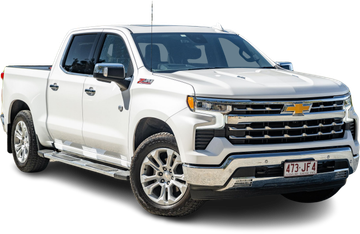
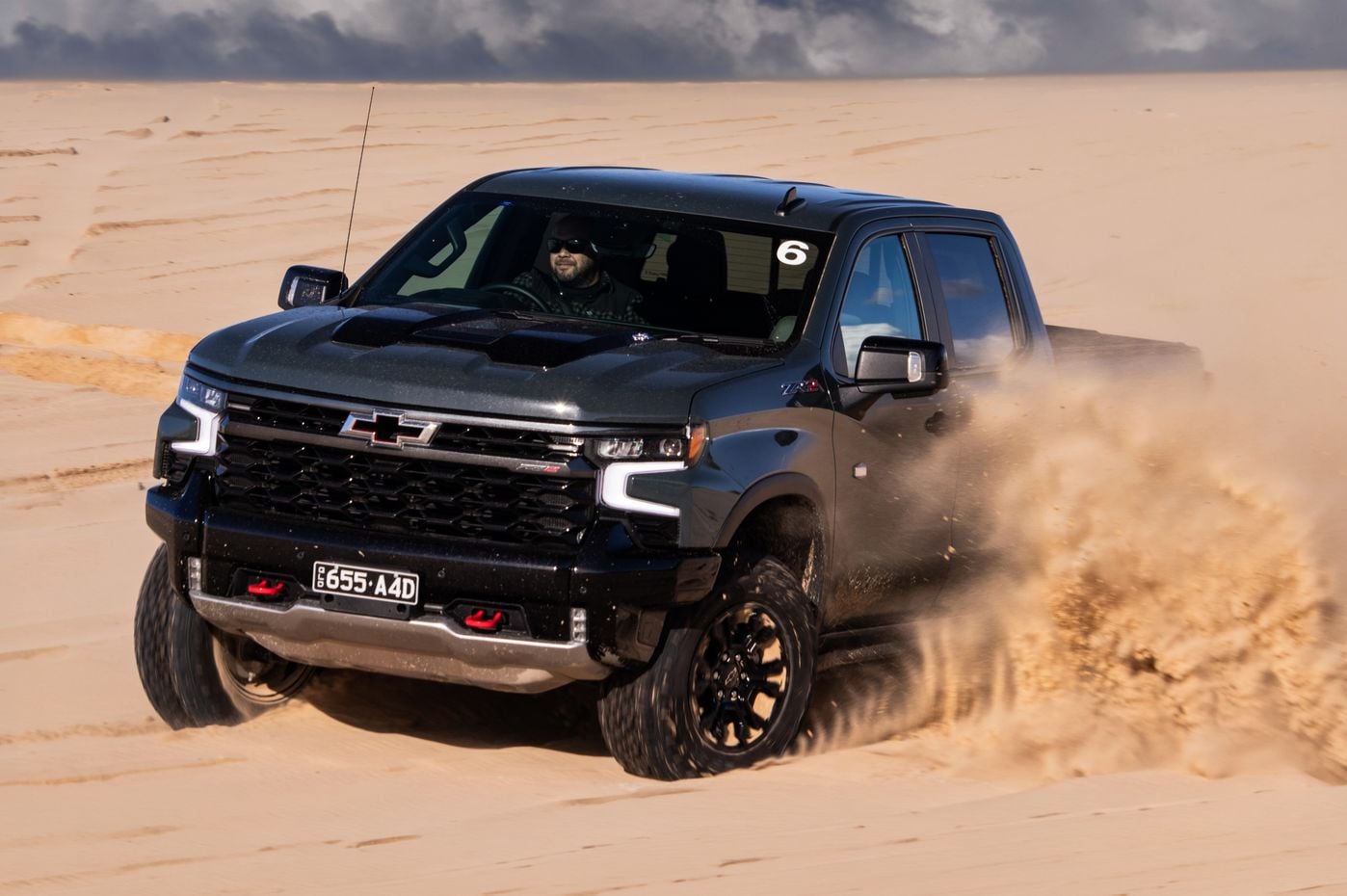
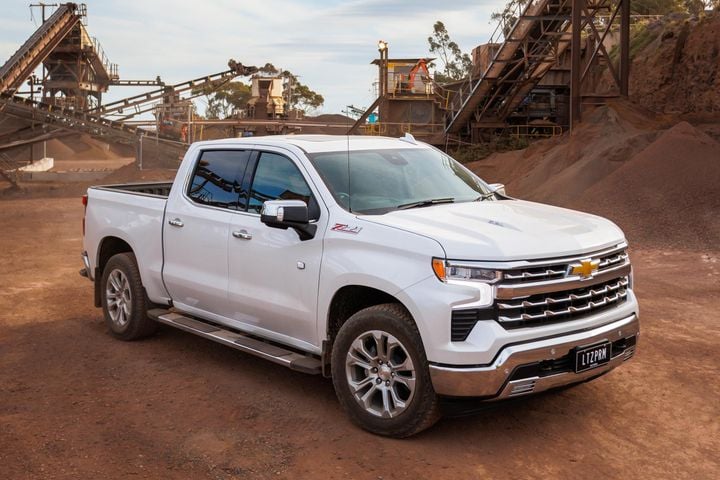
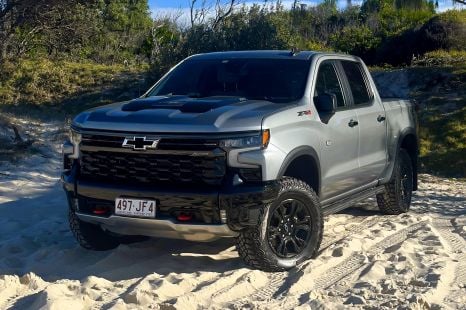
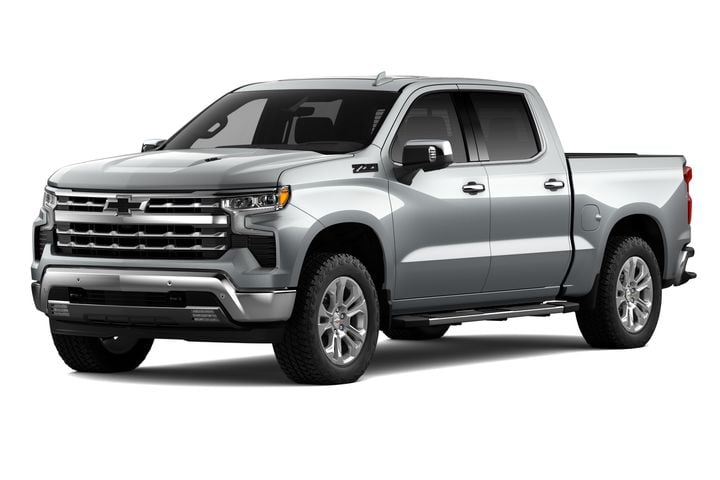
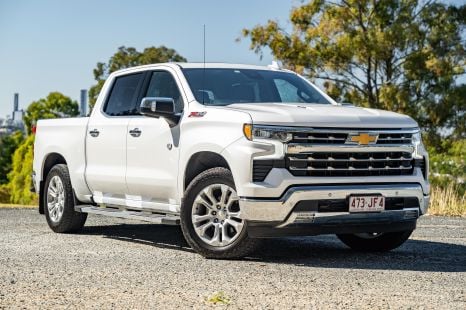
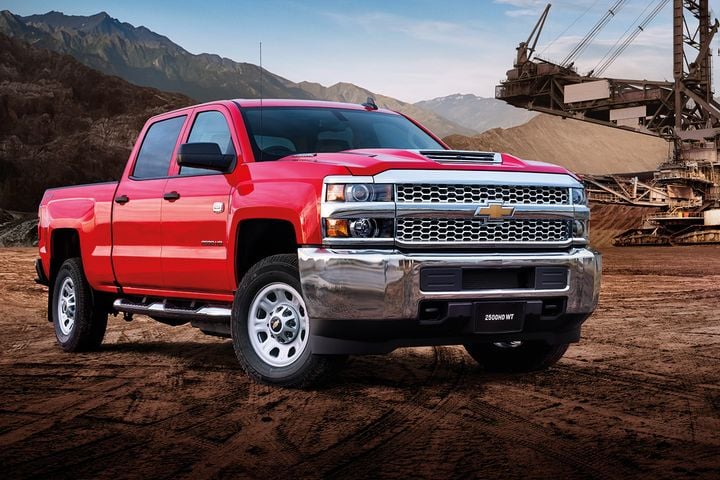
The Chevrolet Silverado 1500 Trail Boss has plenty of appeal if you like your utes big and your engines bigger. In this review, published in early 2022, the Australian entry-level Trail Boss cost a little over $100,000. We’re testing the earlier cabin and exterior, before the updated Silverado discussed in the video.
At almost six metres long and more than two metres wide, it dwarfs a typical Australian dual-cab ute. The payoff is a spacious interior, particularly in the back, and a tray with almost 1800mm of load length. Towing capacity exceeds four tonnes with the correct tow ball, while a brake controller is fitted inside.
The 6.2-litre naturally aspirated V8 delivers 313kW of power and 624Nm of torque through a 10-speed automatic transmission. It sounds terrific and feels strong, with the gearbox responding cleanly rather than constantly hunting between ratios. The Australian right-hand drive conversion also feels impressively natural from behind the wheel.
Ride comfort is another highlight. The Trail Boss soaks up bumps well and feels surprisingly composed for something this large. Its all-terrain tyres generate noticeable highway noise, though, and a 14.1-metre turning circle makes tight urban manoeuvres hard work. The side mirrors could offer a better view, too.
Fuel consumption needs perspective. We saw an indicated 17.3 litres per 100km against a 12.3L/100km claim, after off-roading and idling. That isn’t a controlled economy comparison, but buyers should still budget for a thirsty petrol V8.
The cabin offers comfortable cloth seats and abundant storage, although its design already felt dated during filming. The 8.0-inch touchscreen supports wired Apple CarPlay and Android Auto. More concerning is the lack of autonomous emergency braking and lane-support systems on this grade, despite having blind-spot monitoring, rear cross-traffic alert, and parking sensors.
On our light off-road course, clearance, articulation, and hill descent control impress. The automatic rear differential lock is less convincing, engaging with a sharp jolt, while automatic four-wheel drive waits for rear-wheel slip before bringing in the front axle. We’d prefer more direct control.
There’s a versatile family, work, and weekend vehicle here, but it’s expensive to buy and run. The charm is undeniable; the size and equipment compromises deserve just as much attention.