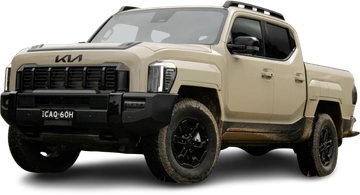
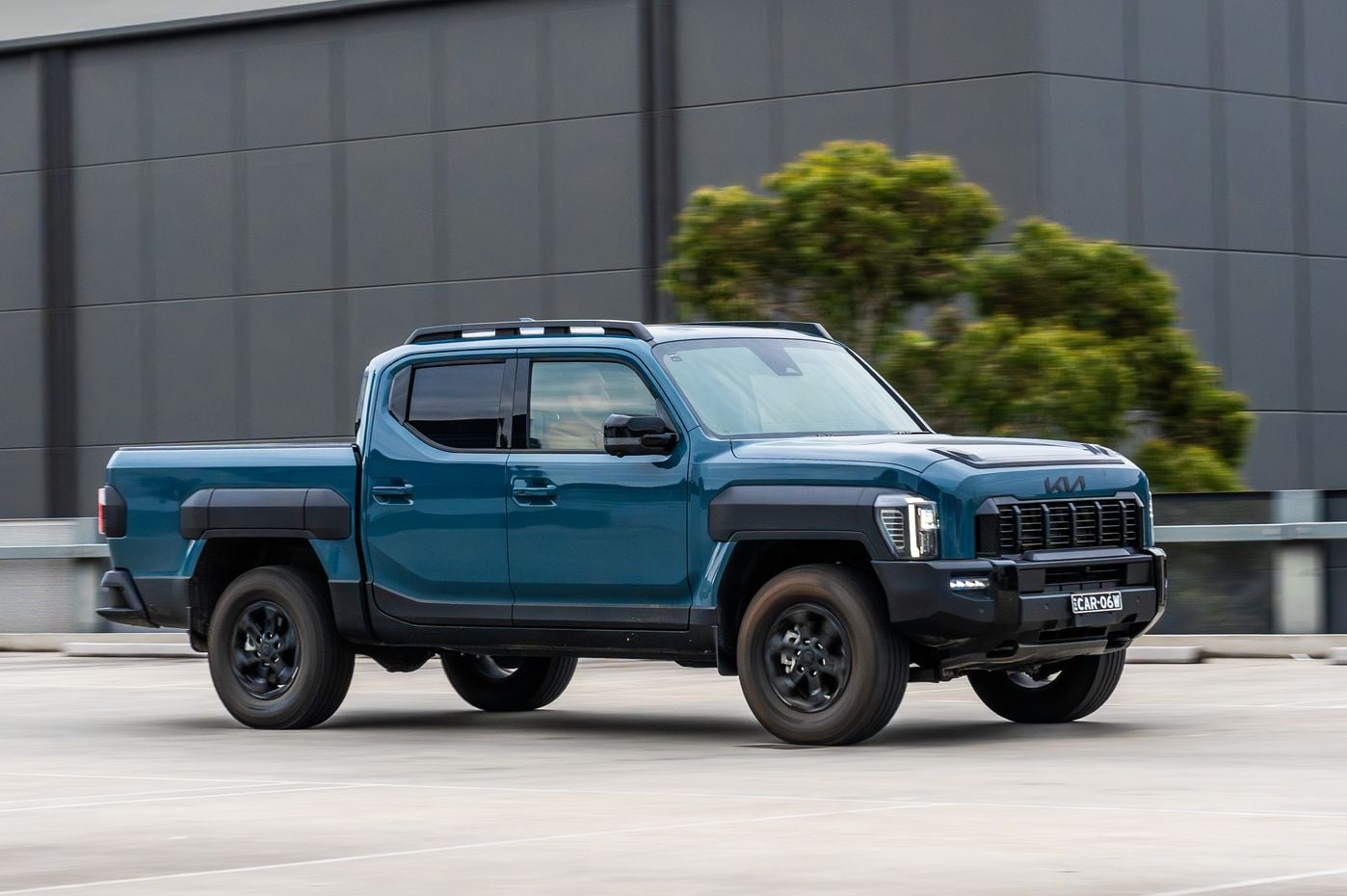
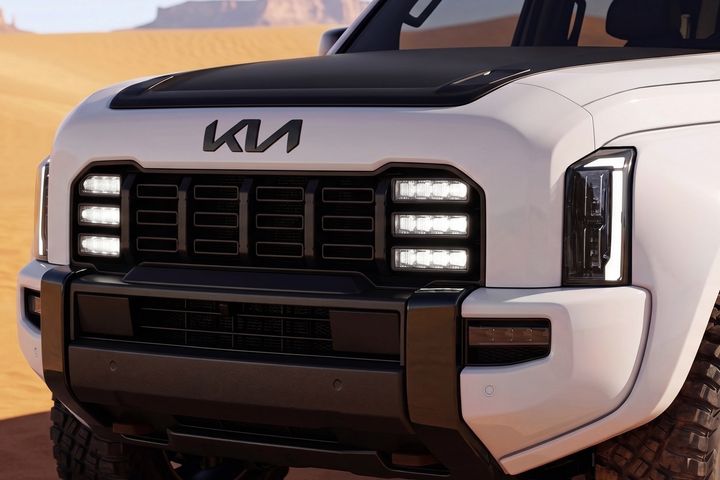
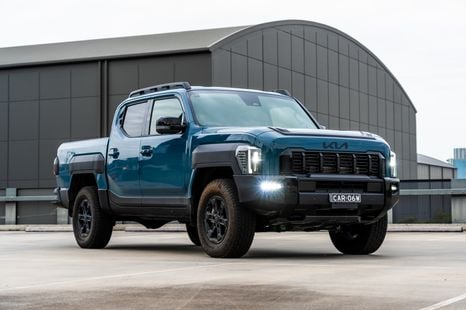
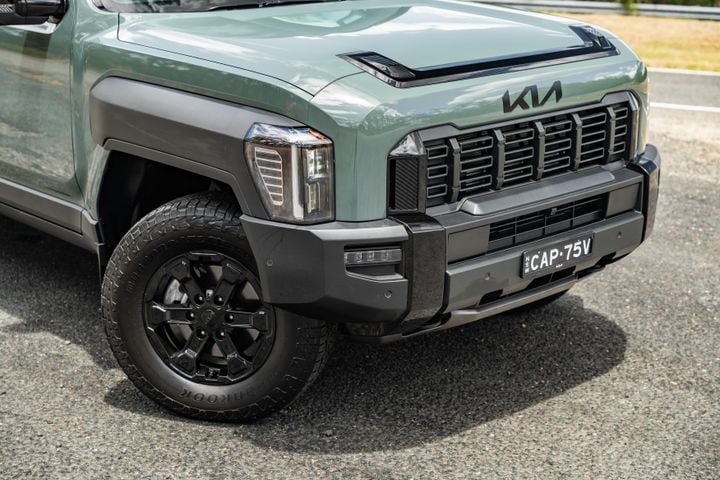
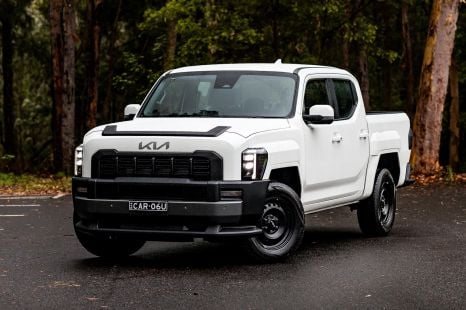
The Kia Tasman X-Pro delivers a better drive than its specifications initially suggest. In our detailed test with Paul Maric, the premium cabin and excellent off-road performance make a strong impression, even if the styling and price remain hurdles. The flagship was just under $75,000 before on-road costs when we filmed.
Its 2.2-litre four-cylinder turbo-diesel produces 154kW of power and 440Nm of torque through an eight-speed automatic. That torque figure looks modest alongside rivals, but our quickest 0-100km/h run took a respectable 9.37 seconds in automatic four-wheel drive. More impressive was the 38.17-metre stop from 100km/h, achieved on the X-Pro’s all-terrain tyres.
The transmission is less convincing in normal driving. Small throttle inputs trigger downshifts, and the constant hunting becomes tiring on inclines or behind traffic. The ride also feels firm and busy over minor imperfections, with unsettled body movement over our high-speed undulations. Still, the steering feels good, handling is predictable, and highway tyre noise is lower than we expected.
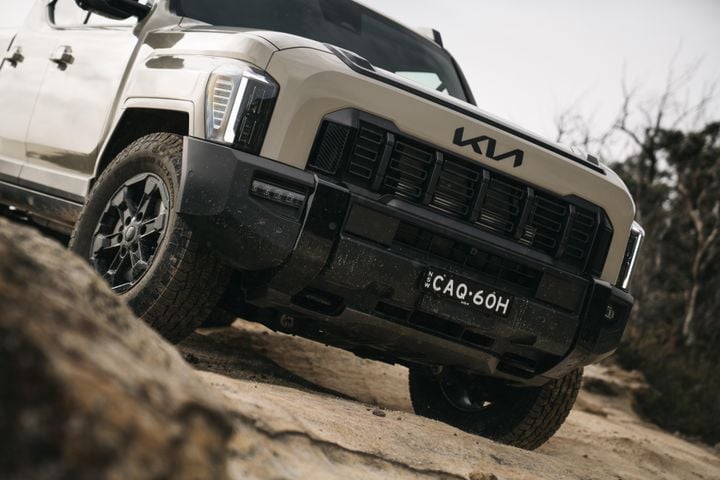
Off-road, the Tasman really shines. Traction control pulled it through our offset moguls in two-wheel drive without the rear differential locked. It also climbed our hill in low range without needing the lock, then repeated the job using its variable-speed crawl system. The hill had been compacted, so that context matters, but the ease and control were genuinely impressive. The tyres also helped it ride comfortably over rocks.
Our underbody inspection found steel protection beneath the front and engine, but plastic protection for the fuel tank. We also questioned how exposed the headlights might be to branches. Those are details worth considering alongside its capability.
Inside, the cabin feels more premium than a typical dual-cab ute, with heated and ventilated front seats, wireless smartphone mirroring, and useful rear-seat amenities. However, the steering wheel obscures the small climate screen, and climbing aboard is awkward without sidesteps.
Lane support needs refinement too: it drifted during our test and failed to hold the outermost lane. We also haven’t tested its 3.5-tonne braked towing capability; this vehicle had no tow bar. That remains a crucial follow-up, particularly given the gearbox behaviour. For now, there’s plenty of substance beneath the divisive design, but the price demands careful consideration.