Honda has shifted its focus onto hybrids of late, particularly for its SUV range – so is it still worth looking at one of its petrol-only options?
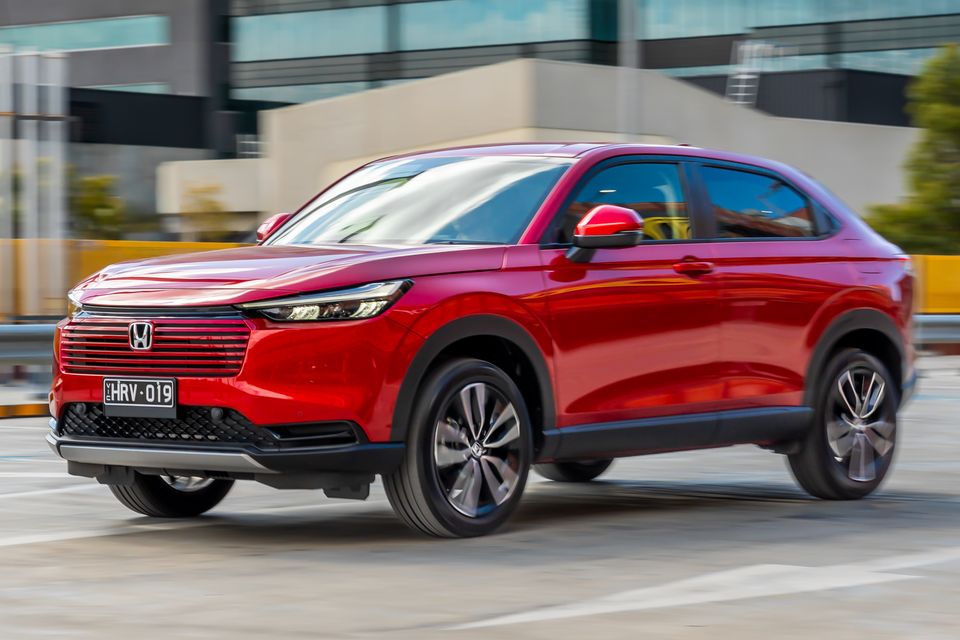
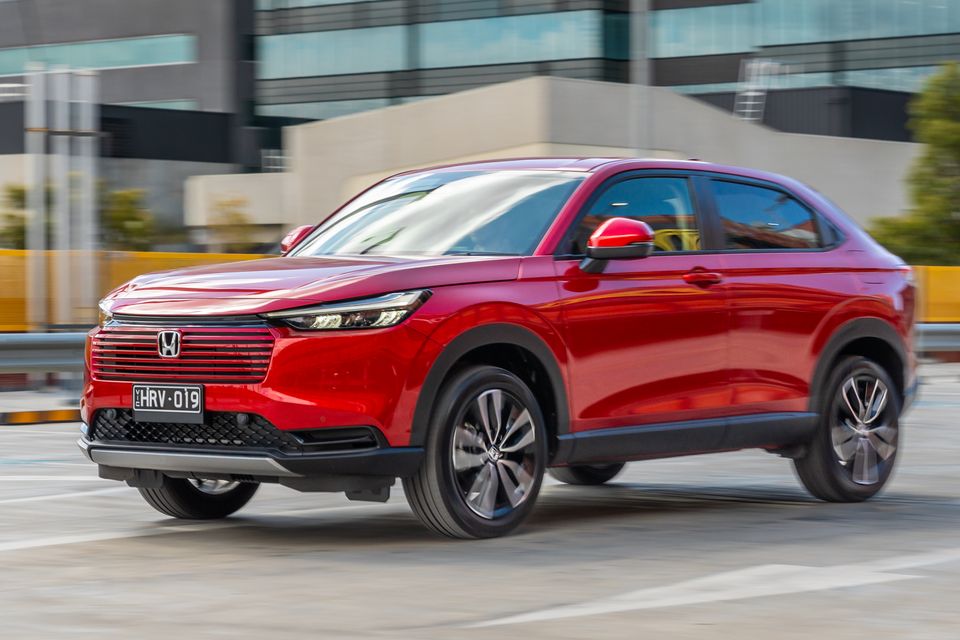
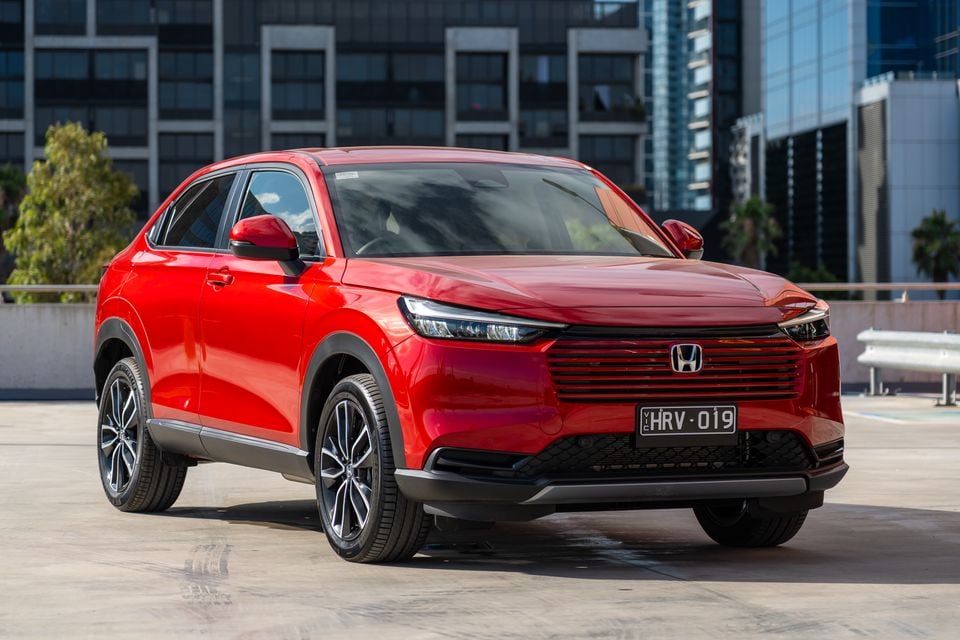
The 2026 Honda HR-V Vi X is the Japanese brand's most affordable SUV model in the Australian market, and it's no doubt overlooked in the now three-strong 'e:HEV' hybrid variant range within the HR-V lineup.
Priced from just under $33,000 drive-away, the petrol-powered HR-V is one of the cheapest new SUVs you can buy in Australia from a non-Chinese brand, undercutting its most affordable hybrid counterpart by a whopping $7000 – which buys you a lot of fuel.
While its powertrain lacks electric assistance – and therefore the fuel efficiency benefits that come with that – the base HR-V retains the nameplate's functional interior and Honda Sensing driver assistance suite, as well as Honda Connect infotainment and connected services as standard.
If you want a small, cheap SUV but aren't convinced by the likes of the ultra-cheap and similarly sized Chery Tiggo 4 or Jaecoo J5, should the HR-V be at the top of your list?
How much does the Honda HR-V cost?
The Vi X was originally priced at $34,900 drive-away, but has since been reduced to $32,900 drive-away.
| Model | Drive-away pricing |
|---|
| 2026 Honda HR-V Vi X | $32,900 |
| 2026 Honda HR-V e:HEV X | $39,900 |
| 2026 Honda HR-V e:HEV L | $42,900 |
| 2026 Honda HR-V e:HEV RS | $44,400 |
That drive-away pricing makes the HR-V one of the most affordable entrants in the VFACTS small SUV segment, particularly among legacy car brands. However, the Chery Tiggo 4 (from $23,990 drive-away) and Jaecoo J5 (from $25,990 drive-away) can still be had for much less, if budget is your absolute top priority.
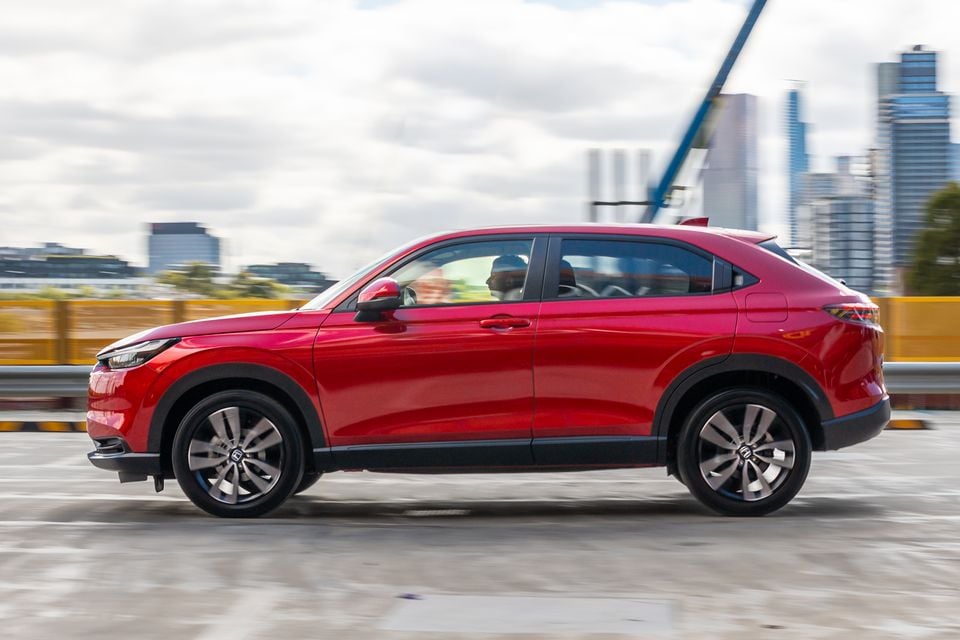
Among rival brands from Japan and Korea, the HR-V undercuts the Hyundai Kona (from $35,990 drive-away) and outgoing Kia Seltos ($33,990 drive-away), as well as the Mazda CX-30 (from $33,990 drive-away). That said, the HR-V is physically smaller than these competing crossovers and also only offers four seats rather than five.
Given the HR-V's light-car underpinnings, perhaps more accurate comparisons can be drawn between Honda's smallest SUV and the likes of the Hyundai Venue (from $25,990 drive-away) and Kia Stonic (from $29,990 drive-away) light SUVs, the latter featuring mild-hybrid assistance for its turbocharged three-cylinder petrol engine, as opposed to the HR-V's naturally-aspirated and non-electrified petrol four.
To see how the Honda HR-V lines up against the competition, check out our comparison tool
What is the Honda HR-V like on the inside?
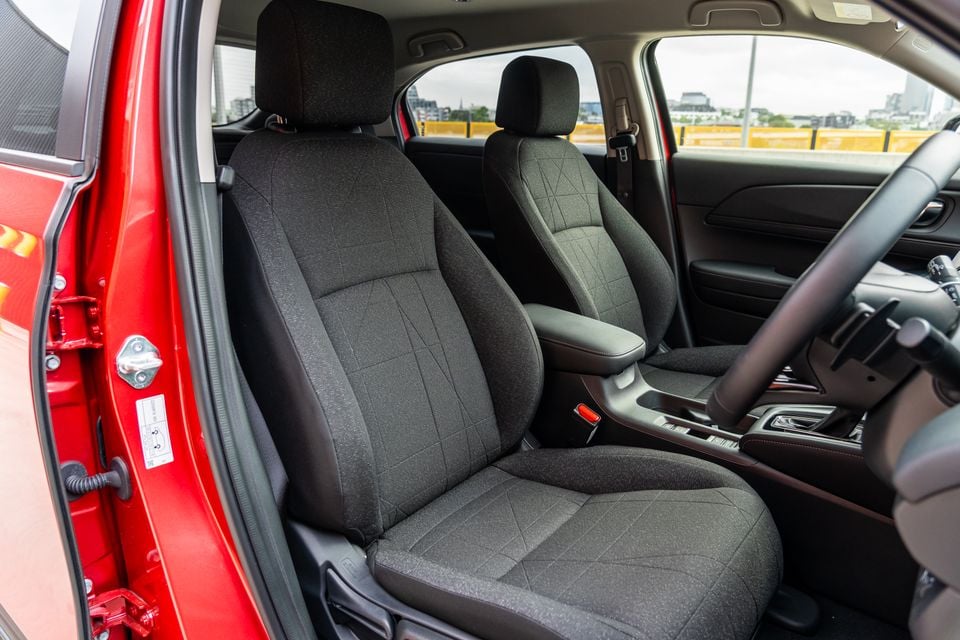
Where a lot of smaller crossovers at this end of the market can feel quite plain and cheaply made, the HR-V blends thoughtful design with a mix of quality material finishes and textures to create a nice vibe.
The base Vi X spec includes cloth seat trim featuring a cool pattern and offering cushy support, while the dashboard and doors have softer materials around the mid-tier region where you're likely to press or rest a knee or elbow against, but the areas above and below are harder surfaces.
Find your perfect new car with CarExpert
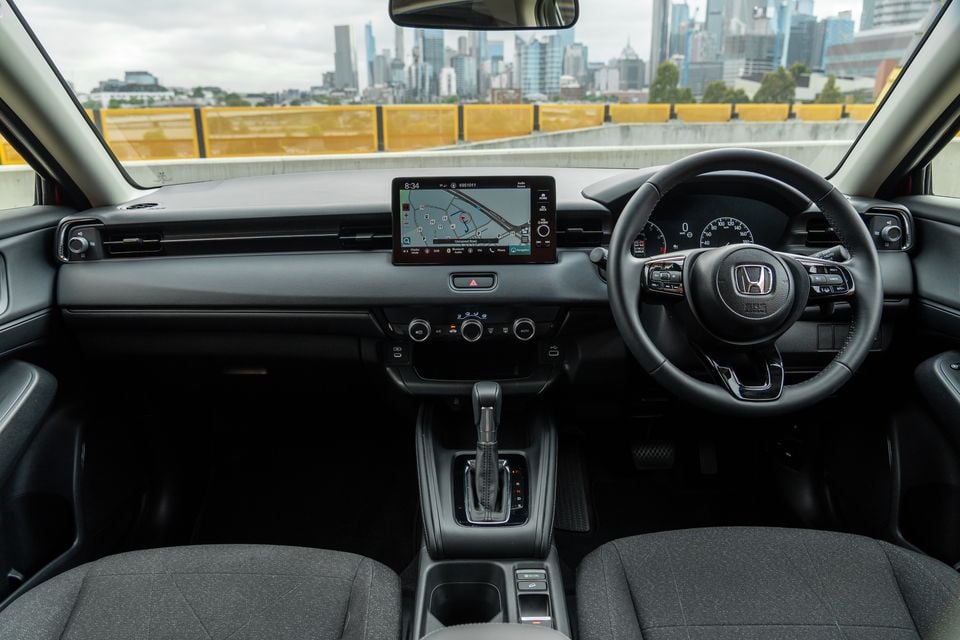
It’s very clean and minimalistic, creating a sense of calm and spaciousness, and that extends to the consistency and cleanness of the typeface used across the switchgear, instrument cluster, and the infotainment system. It almost feels European.
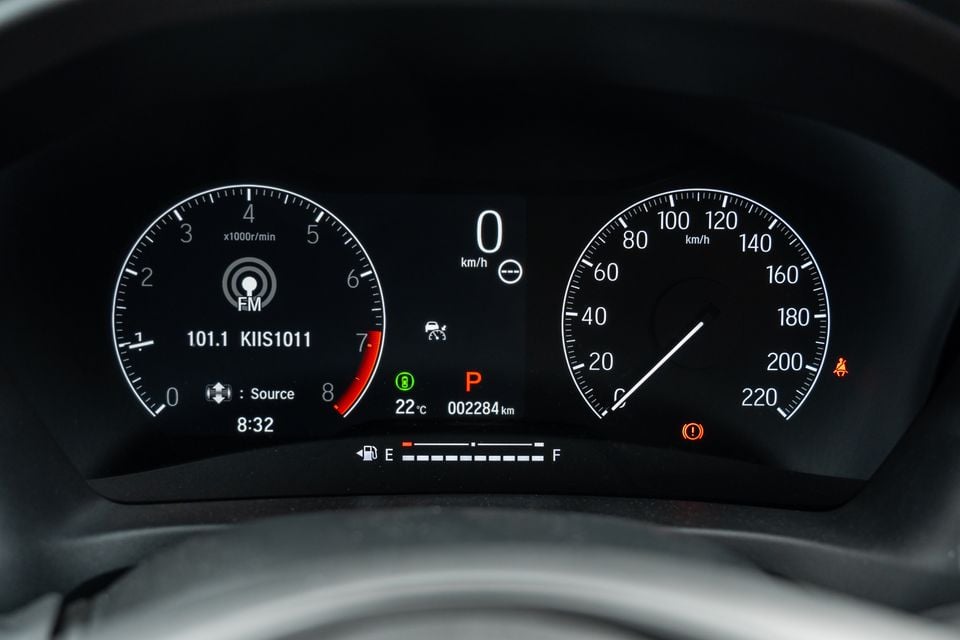
A conventional analogue speedometer is complemented by a 7.0-inch TFT display, which offers plenty of different widgets within a virtual tachometer. Between the virtual and analogue dials is a virtual supervision display that has a digital speedo readout and various symbols for the driver-assist systems, all coming together quite nicely to blend the analogue and digital worlds.
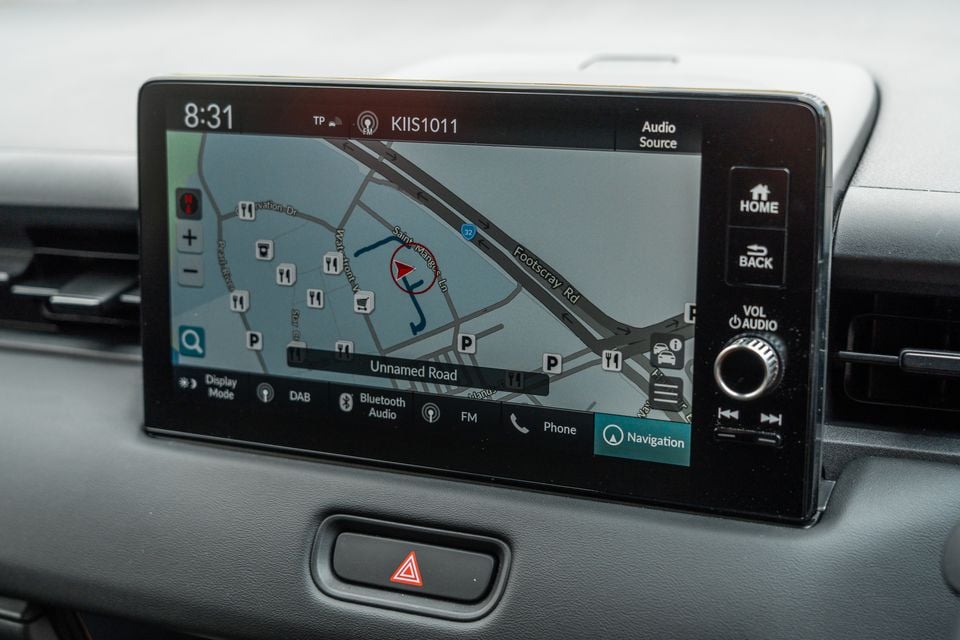
Sitting atop the dash is an updated 9.0-inch touchscreen, which offers Google Built-in as well as Honda Connect services, which means Google Maps and Google Assistant functionality embedded in the system, and Honda's online services and features that include SOS call and the like, as well as remote functions via the compatible smartphone app.
The new interface is simple and easy to use thanks to the tiled interface and minimal layers to the menu structure, and wireless Apple CarPlay worked seamlessly during our time with the vehicle.
Furthermore, hard buttons for 'Home' and 'Back' commands within the interface, as well as a physical volume knob and hard track buttons are welcome in a world of ever-increasing virtual controls.
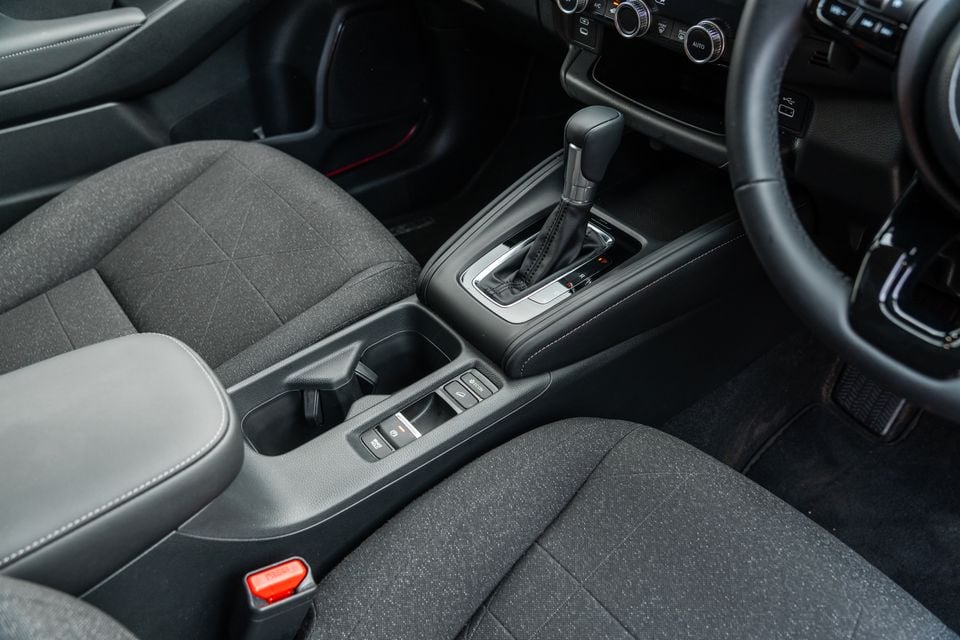
Storage in the first row is likewise pretty good, with big toothed cupholders in the centre console, bottle holders in the doors, and a couple of shelves in the dashboard – which are quite accommodating but lack any sort of grippy lining to stop things sliding around.
There's also a cubby under the squishy front-centre armrest, while the clicky tactility of the climate controls on the dash add a really nice touch of class, reminiscent of previous-generation Audis.
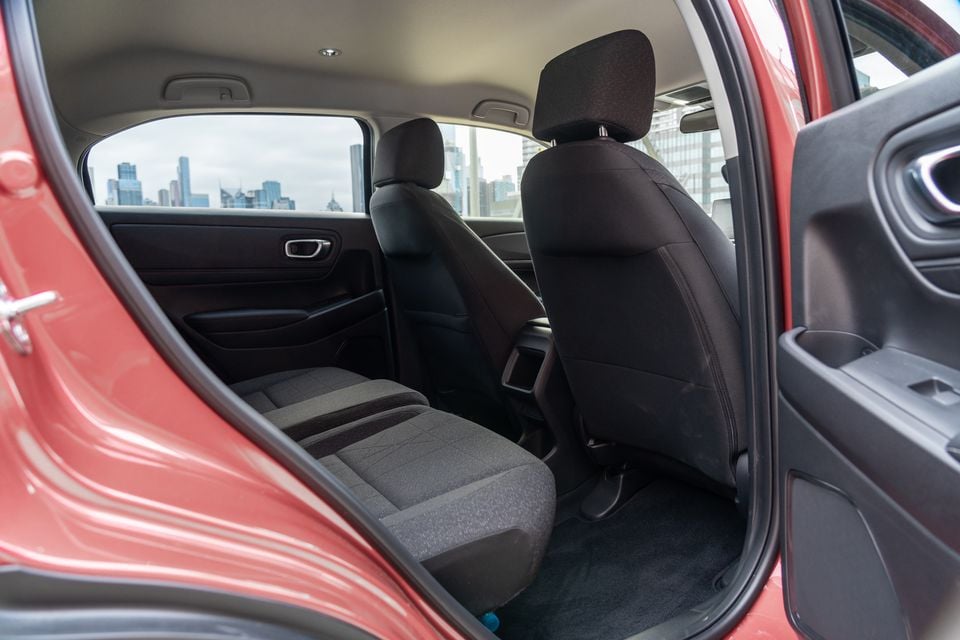
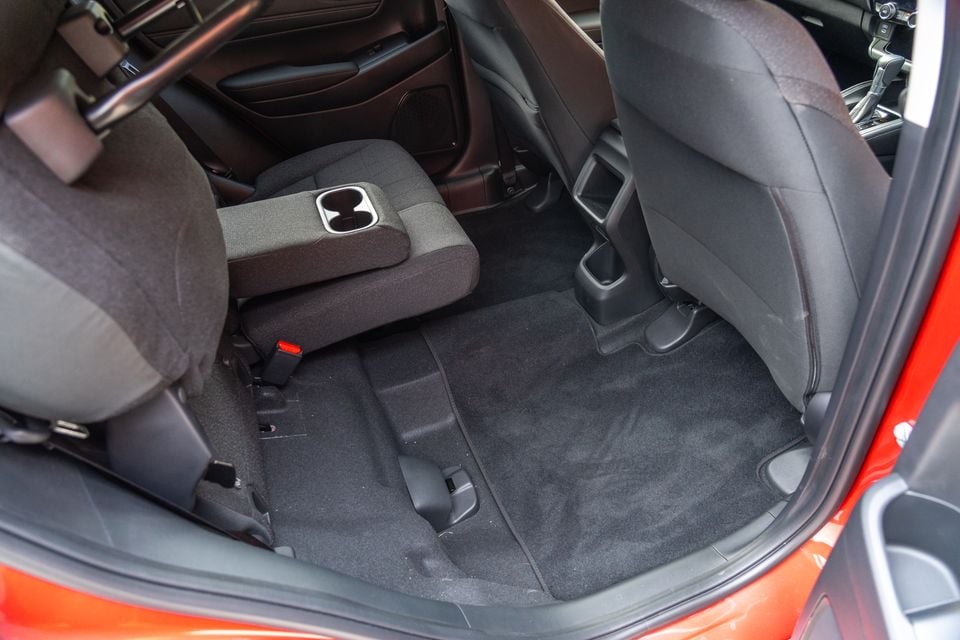
Now, the rear of the cabin is a little controversial, mainly due to the four-seat configuration. As most global markets don't demand a top-tether child seat anchor across all rear seats like Australian Design Rules (ADRs) do, Honda opted not to invest in engineering one for this market and instead removed the centre seatbelt, making the HR-V strictly a four-seater locally.
That could be a deal-breaker for some, but as a compact four-seater it's actually quite good. The tall and boxy body opens up a surprising amount of rear passenger space, with good headroom, legroom and kneeroom for even taller passengers like 6'1" me.
A fold-down rear armrest with cupholders and 'Magic Seats' come in handy, and make an already practical space even more configurable. Sadly there are no rear air vents, but there are some storage cubbies dotted about for cups, bottles and other odds and ends.
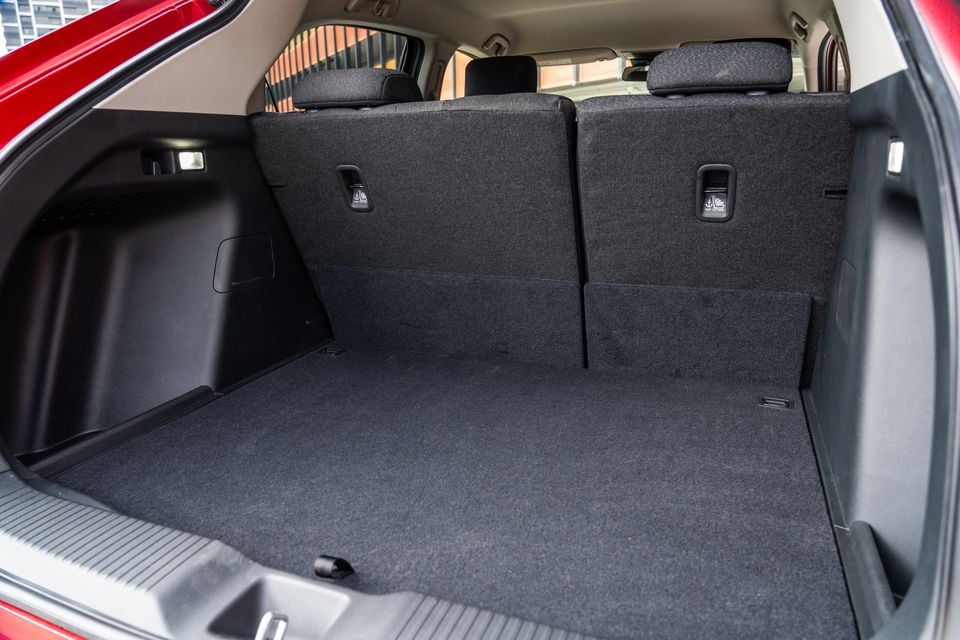
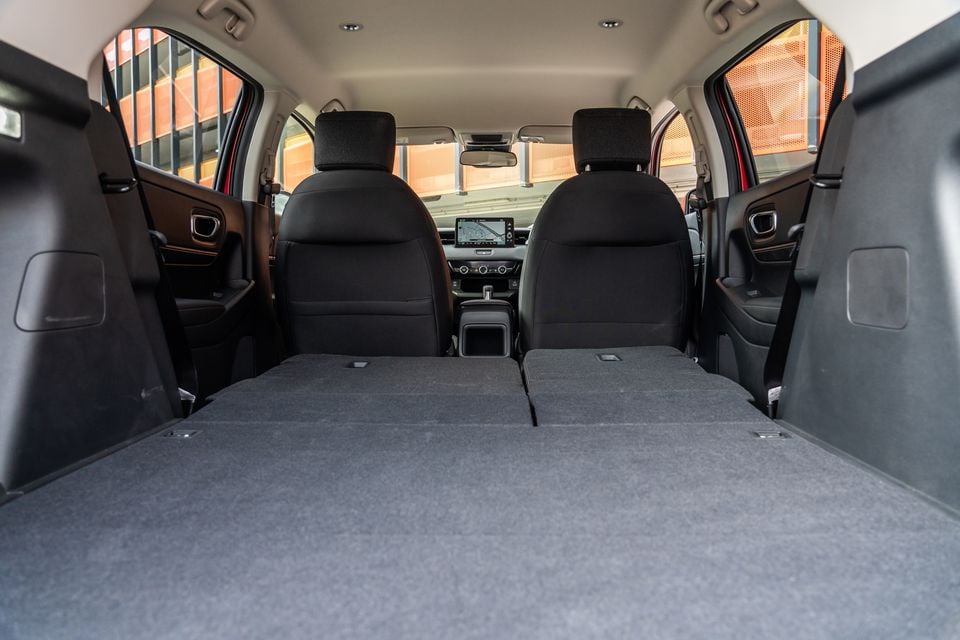
Further back, the HR-V offers a relatively average 304 litres of cargo capacity with the rear seats in use, opening up to a more usable 1274L with the rear seatbacks folded. The main point here is that in both configurations the load space is nicely wide and flat, and when the rear seats are dropped the floor is pretty much completely flat too.
No HR-V offers a spare wheel of any description, however. There's just a tyre repair kit.
| Dimension | Honda HR-V Vi X |
|---|
| Length | 4345mm |
| Width | 1790mm |
| Height | 1590mm |
| Wheelbase | 2610mm |
| Boot space | 304L-1274L |
To see how the Honda HR-V lines up against the competition, check out our comparison tool
What's under the bonnet?
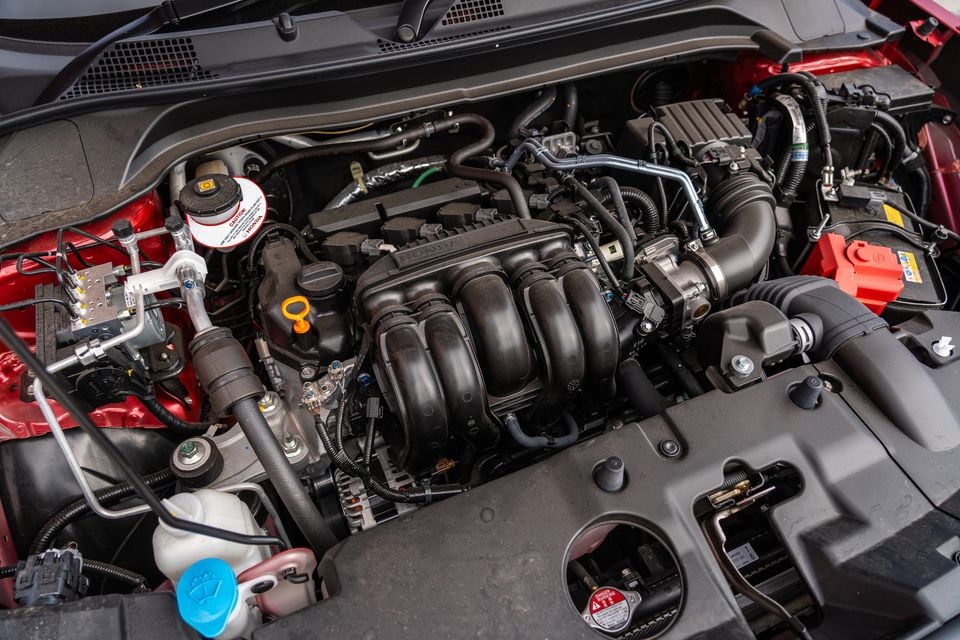
The base HR-V is powered by a 1.5-litre four-cylinder 'i-VTEC' naturally aspirated petrol engine, minus the electric motors and battery pack of e:HEV hybrid versions – though while the bore and stroke of the Vi X's motor is consistent with the e:HEV's, the compression ratio of 10.6:1 is lower than that of the hybrid engine's 13.5:1.
| Specifications | HR-V Vi X |
|---|
| Engine | 1.5L 4cyl petrol |
| System power | 89kW at 6600rpm |
| System torque | 145Nm at 4300rpm |
| Transmission | CVT |
| Drive type | Front-wheel drive |
| Weight | 1267kg – Kerb |
| Fuel economy (claimed) | 6.2L/100km |
| Fuel economy (as tested) | 6.3L/100km |
| Fuel tank capacity | 40L |
| Fuel requirement | 91 octane regular unleaded |
| CO2 emissions | 142g/km |
| Emissions standard | Euro 6b |
On paper, the HR-V's meagre outputs are lagging behind most in this segment, particularly the torque figure alongside turbocharged rivals.
However, despite the omission of idle stop-start technology in Australian models, we were able to finish our time with the Vi X with an indicated fuel consumption figure of 6.3L/100km following a mix of urban, city and freeway commuting, favouring the latter.
To see how the Honda HR-V lines up against the competition, check out our comparison tool
How does the Honda HR-V drive?
As long as you don't intend on getting anywhere particularly quickly, the HR-V is quite a pleasant and charming little thing to drive every day.
Small, low-output naturally aspirated petrol engines are something of a rarity these days, but the HR-V Vi X's i-VTEC motor has trademark traits of the Japanese brand's petrol engines.
Honda has done a great job of minimising droning and rev flaring by stepping the CVT auto through 'ratios' to make it feel more like a conventional torque-converter automatic under harder acceleration, and at lower speeds it keeps the engine on the boil when you need it.
It's also probably the correct pairing for such a small and low-output engine, given it can rev harder when you need it and settle at a cruise to minimise fuel consumption.
Even under load, there's an acceptable level of engine noise that enters the cabin, and it's far from an unpleasant note in the broader scheme of things. It does need to be worked often, though.
If you're just driving mostly at urban and city speeds, you'll rarely test the base HR-V's limits. Even on the freeway at 100km/h, the Vi X hums away nicely. It just won't get to the speed limit all that quickly.
But the urban focus does come to the fore in other areas, namely cabin insulation. While engine noise is kept to acceptable levels, road noise – particularly on rougher stretches of bitumen – gets quite prominent at higher speeds. It can all get a bit echoey and boomy after a while, which isn't great for longer-distance comfort. And this is an HR-V thing, not just a Vi X thing.
At least the ride strikes a very nice balance between comfort and body control, while Honda's excellent steering calibration offers lovely response and accuracy with a Goldilocks weighting, meaning it's not so light it feels vague and not so heavy that it makes tighter manoeuvres a chore.
The HR-V's overall handling character is quite keen and chuckable too, with keen front-end response and good roadholding, combined with playful body roll and a rev-happy powertrain. It's fun, just not fast.
The Honda Sensing driver-assistance suite is also thankfully included from the base grade, and this latest iteration does everything rather well.
Adaptive cruise control and lane-centring functions do a good job at taking the load off on longer stints on the highway, and the way it accelerates, brakes and manages following distance is pretty intuitive.
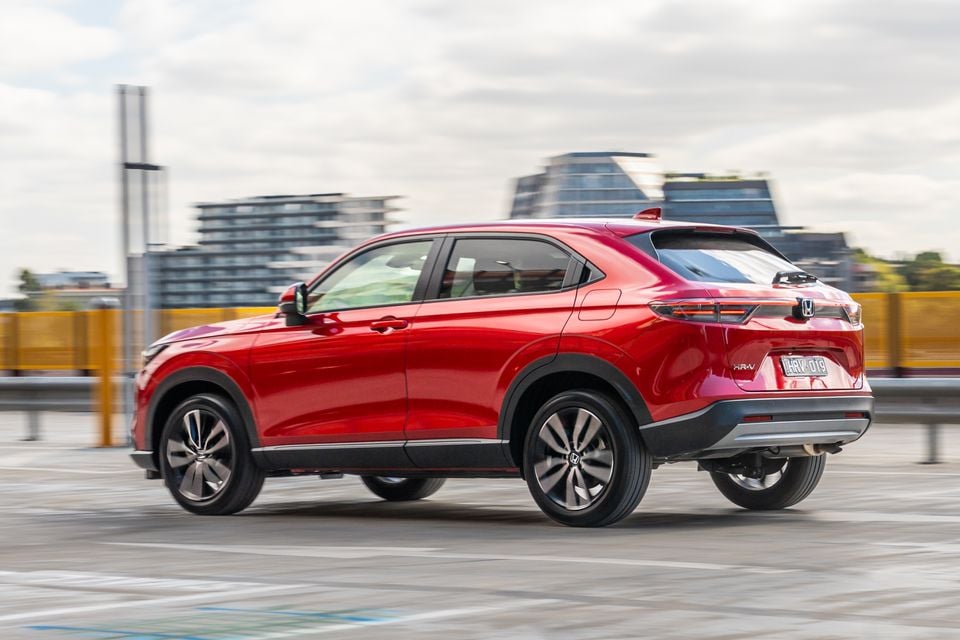
There's no blind-spot monitoring or rear cross-traffic alert in this spec, but thankfully the big side mirrors and tall glasshouse mean outward visibility is generally pretty good.
However, the lack of blind-spot monitoring in this base spec and the thick rear pillars make over-the-shoulder head checks important when changing lanes, though when parking the reversing camera with dynamic guidelines helps to pick up some of that slack.
To see how the Honda HR-V lines up against the competition, check out our comparison tool
What do you get?
The HR-V range now spans four separate variants across X, L and RS trim levels – though there are spec differences between the Vi X and e:HEV X.
2026 Honda HR-V Vi X equipment highlights:
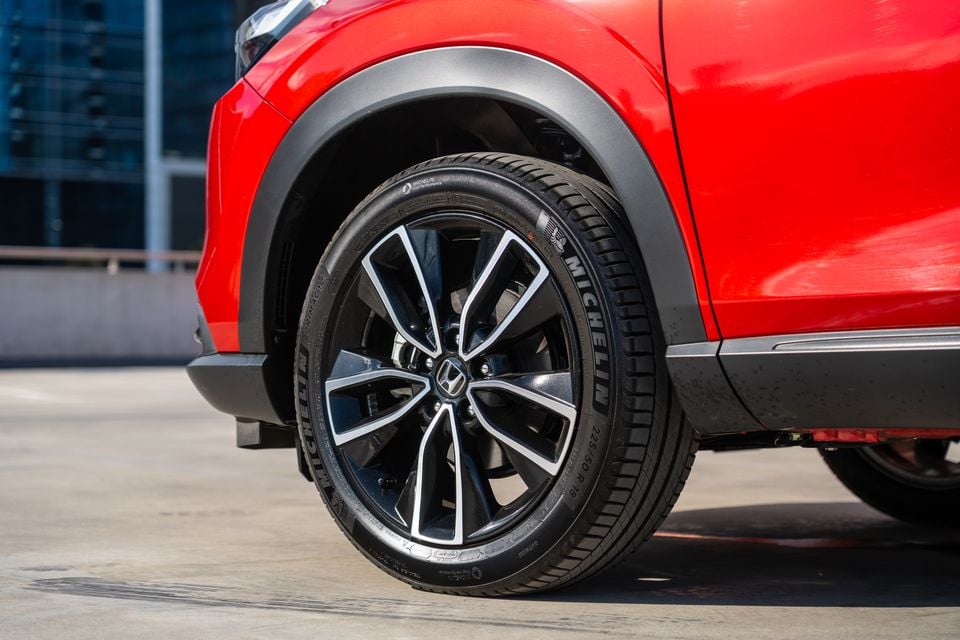
- 18-inch alloy wheels
- Tyre repair kit
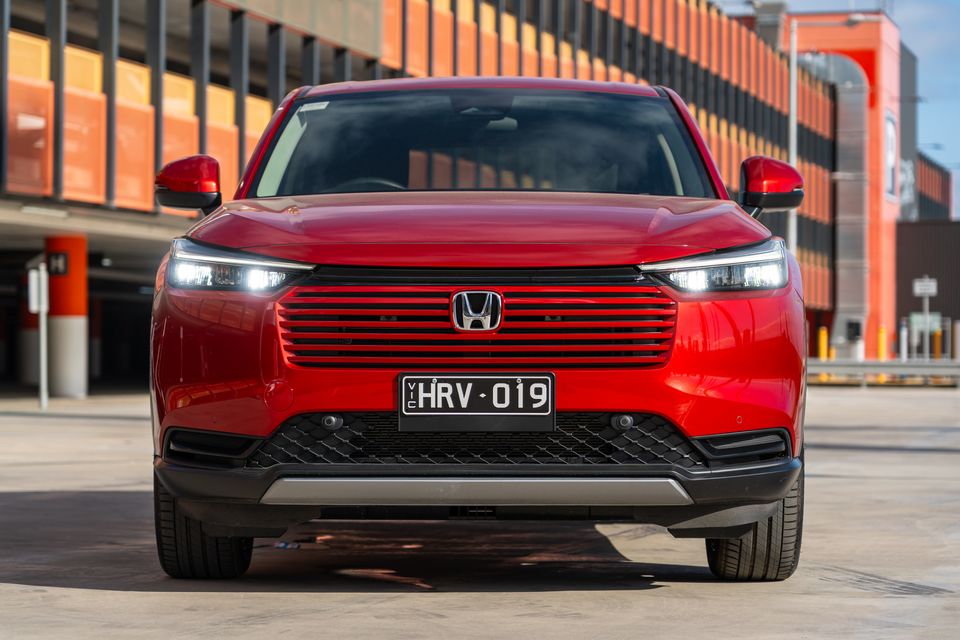
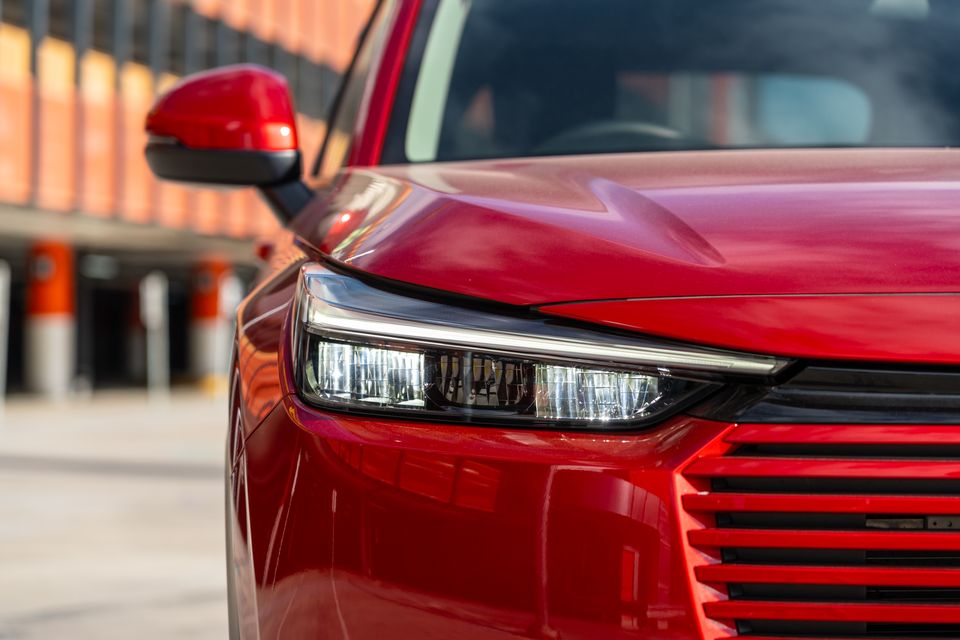
- LED headlights
- Auto dusk-sensing
- Auto high-beam
- LED daytime running lights
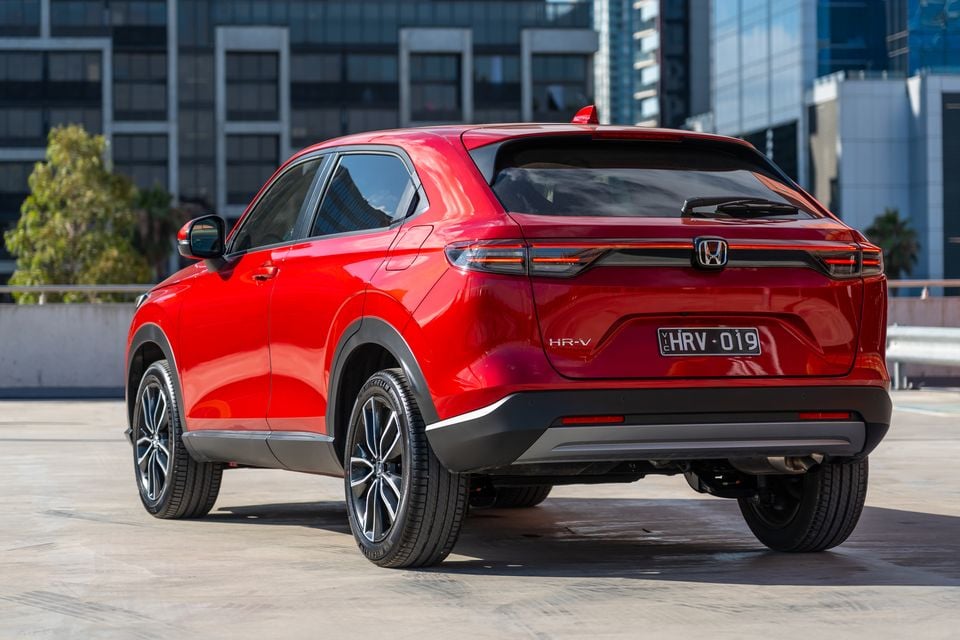
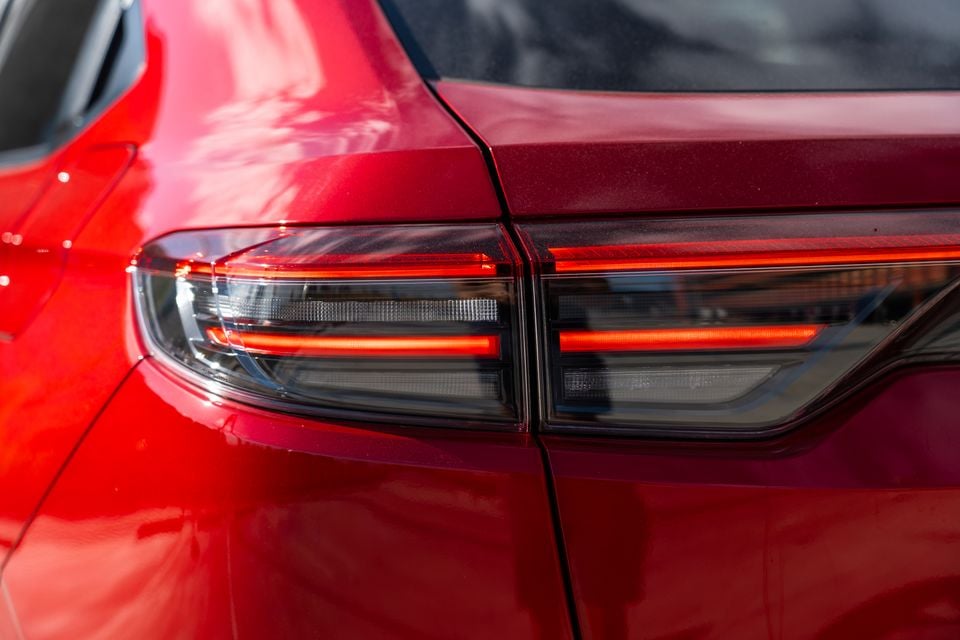
- LED tail-lights
- Rear privacy glass
- Power-adjustable side mirrors
- Matte black wheel-arch cladding, side skirts, front and rear bumper trim
- 9.0-inch touchscreen infotainment system
- Wireless Apple CarPlay, Android Auto
- DAB+ digital radio
- Satellite navigation
- 2 USB ports
- 7.0-inch LED driver information interface
- 4-speaker sound system
- Single-zone climate control
- Black cloth upholstery
- Leather-wrapped steering wheel
- Leather-wrapped gear selector
- Paddle shifters
- Manual front seat adjustment
- Rear Magic Seats
- 60/40 split, fold down and tip up
- Smart keyless entry
2026 Honda HR-V e:HEV X adds:
- Auto-levelling headlights
- LED front fog lights
- LED active cornering lights
- Gloss-black wheel-arch cladding, side skirts, front and rear bumper trim
- Acoustic windscreen
- 6-speaker sound system
- Heated front seats
- Black leatherette and cloth upholstery
2026 Honda HR-V e:HEV L adds:
- Rain-sensing wipers
- Heated, hydrophilic side mirrors with auto passenger side reverse tilt
- Auto-dimming rear-view mirror
- 4 USB ports
- Dual-zone climate control
- Dual rear-facing air vents
- Heated steering wheel
- Hands-free power tailgate
2026 Honda HR-V e:HEV RS adds:
- 18-inch alloys in Bernina Black
- Bernina Black exterior accents
- RS grille
- RS badging
- Red RS interior styling
To see how the Honda HR-V lines up against the competition, check out our comparison tool
Is the Honda HR-V safe?
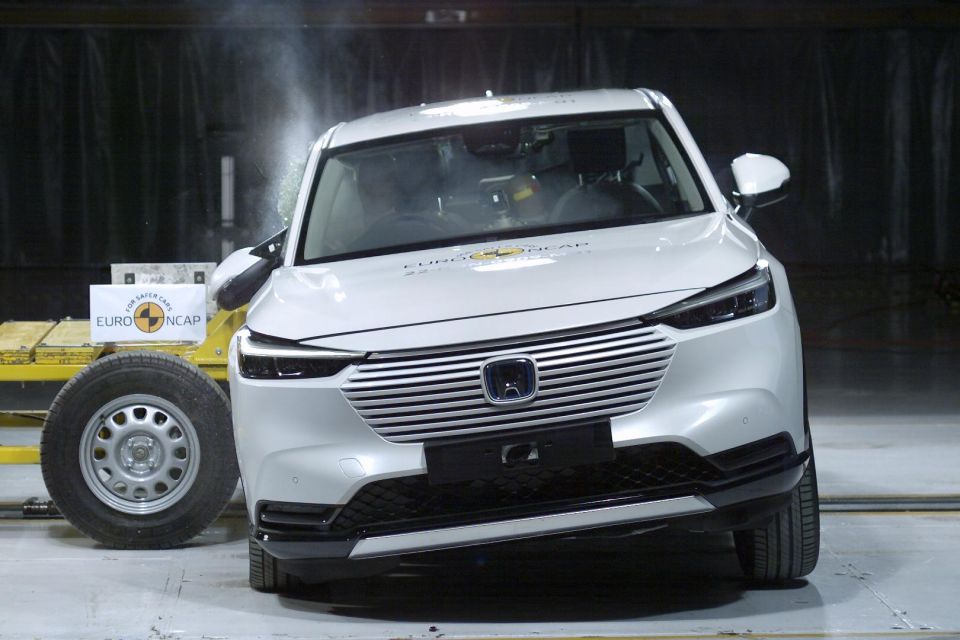
The Honda HR-V wears a four-star ANCAP safety rating, based on testing conducted in 2022.
| Category | Honda HR-V |
|---|
| Adult occupant protection | 82 per cent |
| Child occupant protection | 77 per cent |
| Vulnerable road user protection | 72 per cent |
| Safety assist | 69 per cent |
"The HR-V fell short of five stars in two of the four key areas of assessment – Child Occupant Protection and Safety Assist," said ANCAP at the time.
"A Weak head protection score was recorded for the 10-year-old child in the side impact test, and both occupancy detection for rear seating positions and driver fatigue monitoring are not available.
"Good scores were recorded for the HR-V’s lane-keeping and forward-travel autonomous emergency braking ability."
Standard safety features across the HR-V range include:
- 6 airbags
- Front
- Front side
- Full-length side curtain
- Autonomous emergency braking
- Oncoming motorcycle collision detection
- Pedestrian and bicycle front cross-traffic collision
- Lane-keep assist
- Lane departure warning
- Adaptive cruise control
- Traffic Jam Assist
- Traffic sign recognition
- Reversing camera
- Front, rear parking sensors
- Hill descent control
- Tyre pressure monitoring
- Automatic walk-away door locking
HR-V e:HEV X adds:
- Blind-spot monitoring
- Intelligent speed limiter
- Rear cross-traffic alert
To see how the Honda HR-V lines up against the competition, check out our comparison tool
How much does the Honda HR-V cost to run?
As with the wider Honda lineup, the HR-V is covered by a five-year, unlimited-kilometre warranty with five years of roadside assistance, and the first five scheduled services are capped at $199 apiece.
| Servicing and Warranty | Honda HR-V |
|---|
| Warranty | 5 years, unlimited kilometres |
| Roadside assistance | 5 years |
| Service intervals | 12 months or 10,000km |
| Capped-price servicing | 5 years |
| Total capped-price service cost | $995 ($199 each) |
To see how the Honda HR-V lines up against the competition, check out our comparison tool
CarExpert's Take on the Honda HR-V
It's flawed in a few ways, but I find it quite charming.
Ready to buy? We’ll help you get a great deal.
If this is the car for you, we’ll compare offers from trusted dealers, handle the back and forth and manage your purchase from enquiry to delivery.
For those not fussed about the leisurely performance or the lack of a fifth seat, the base HR-V makes for a solid and affordable crossover runabout with a fun-to-drive feel and a relatively spacious interior to boot.
The naturally aspirated powertrain may not be all that quick, but it has a charming character and proved to be pretty efficient despite the lack of electrified assistance or idle-stop tech, plus it will happily run on cheaper 91-octane unleaded.
But there's no denying the lack of urgency relative to turbocharged powertrains in cheaper Chinese competition, nor the metal-for-your-money equation those rivals from Chery and Jaecoo offer, given the Tiggo 4 and J5 are bigger cars with five-seat interiors.
Family buyers may also be wary of the HR-V's four-star safety performance, which lags behind the five-star Chery Tiggo 4, though the Jaecoo J5 is not yet ANCAP-rated and many alternatives from other mainstream brands are now unrated in 2026.
Still, the HR-V is a solid offering from the Japanese brand, particularly if you're after a compact crossover from a legacy automaker.
CarExpert can save you thousands on a new Honda HR-V. Click here to get a great deal.
Click the images for the full gallery
MORE: Explore the Honda HR-V showroom

















 Automotive Vehicle Spec Data & 4K images Powered by JATO Dynamics Ltd