




William Stopford
Australia's cheapest seven-seat diesel SUV just got cheaper
Mahindra is offering up to $4000 off the drive-away price of the Scorpio, which was already Australia's cheapest seven-seat diesel SUV.
2 Hours Ago
The small off-road SUV segment may not be densely populated, but Renault is bringing the challenge to Suzuki's cult classic.

Journalist
Journalist
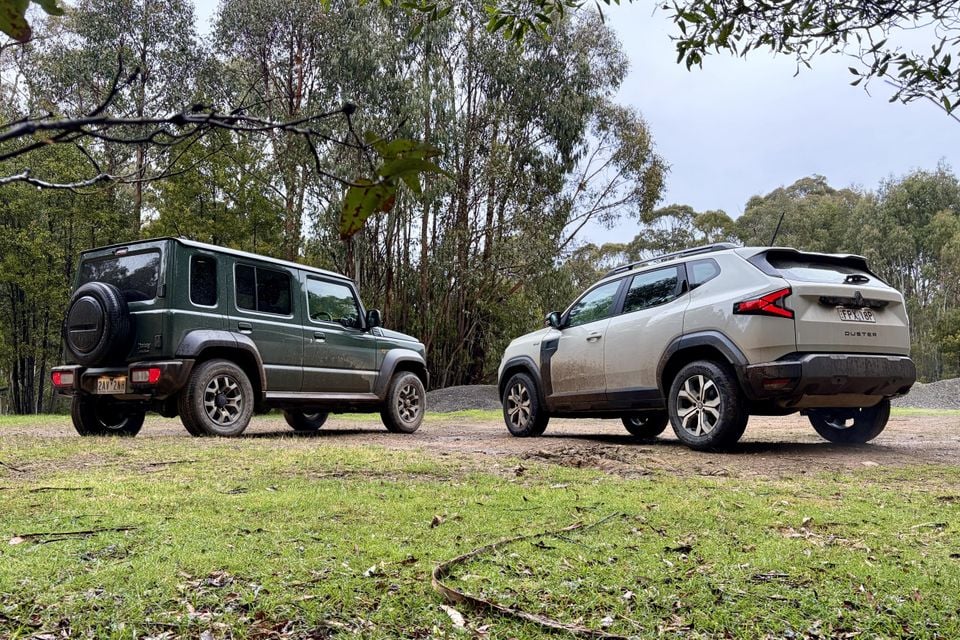
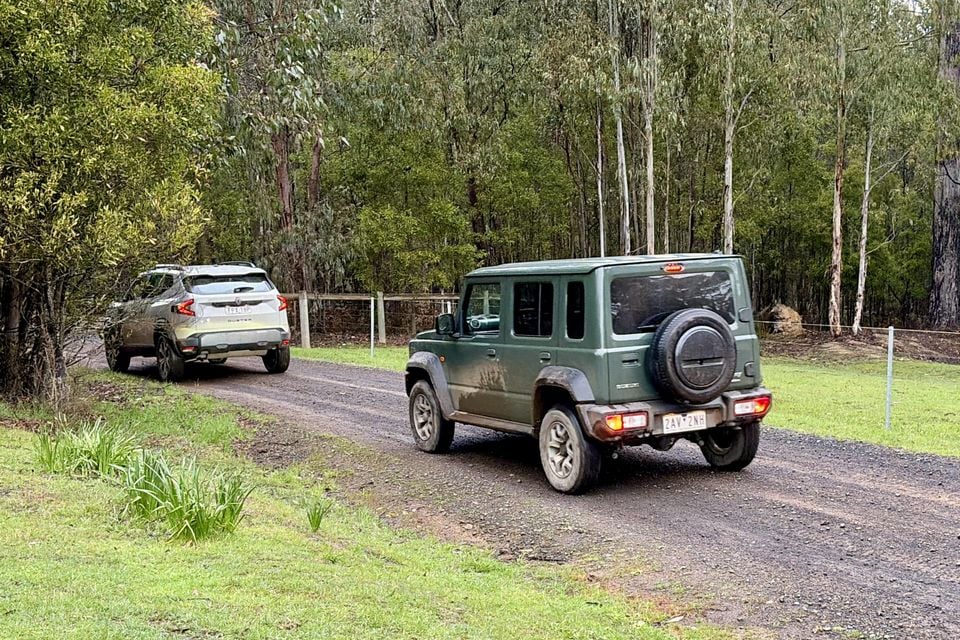
Gear up for a battle of two tiny titans: the 2026 Suzuki Jimny and 2026 Renault Duster.
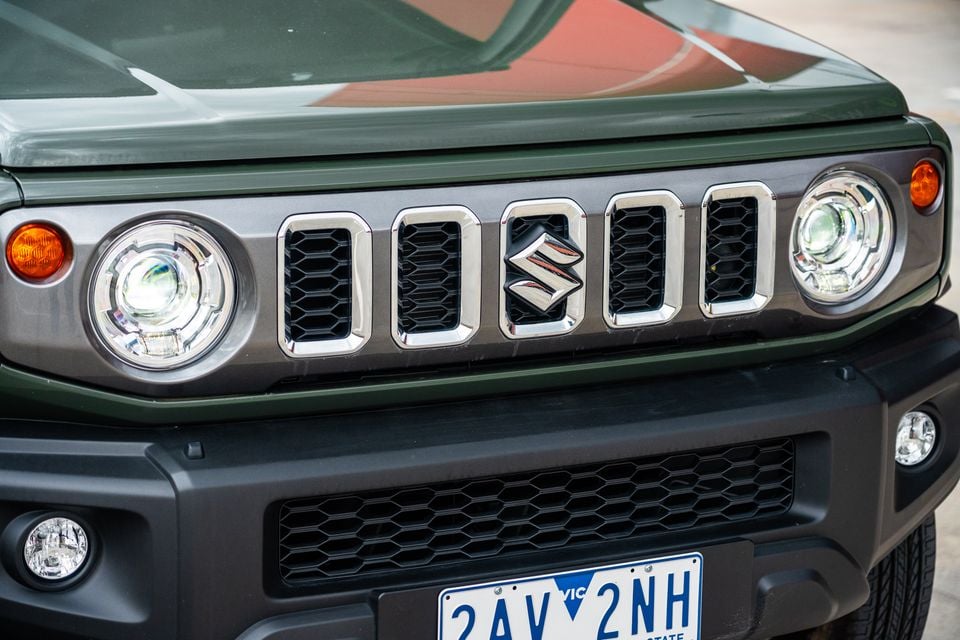
In the green corner is the 2026 Suzuki Jimny XL automatic, the five-door version of the Japanese small-car brand’s iconic little off-roader.
With part-time four-wheel drive, low-range gearing, and an endearing old-school design, the Jimny continues to solidify its status as a lovable weekend toy with some serious off-road chops.
This generation of Jimny launched in 2018, while the five-door XL you see on test here joined the range in 2023. While its three-door counterpart received a safety update for 2026, the XL remains unchanged – aside from the addition of the limited-run Rhino in June.
Notably, the Jimny XL is built in India, whereas the three-door maintains its Japanese origins. They both offer the same running gear, though the XL brings an extra level of practicality to an otherwise compromised package.
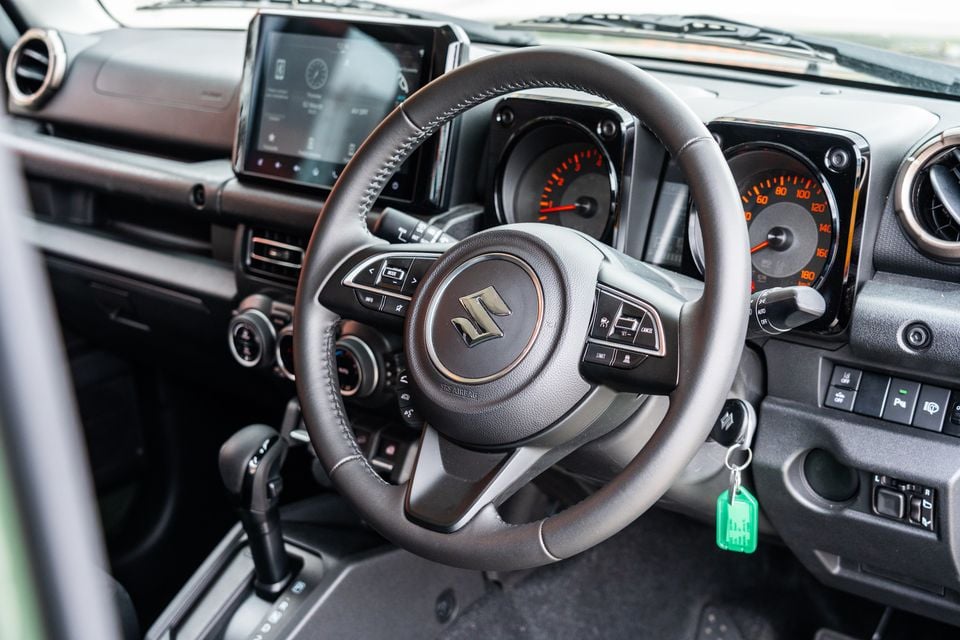
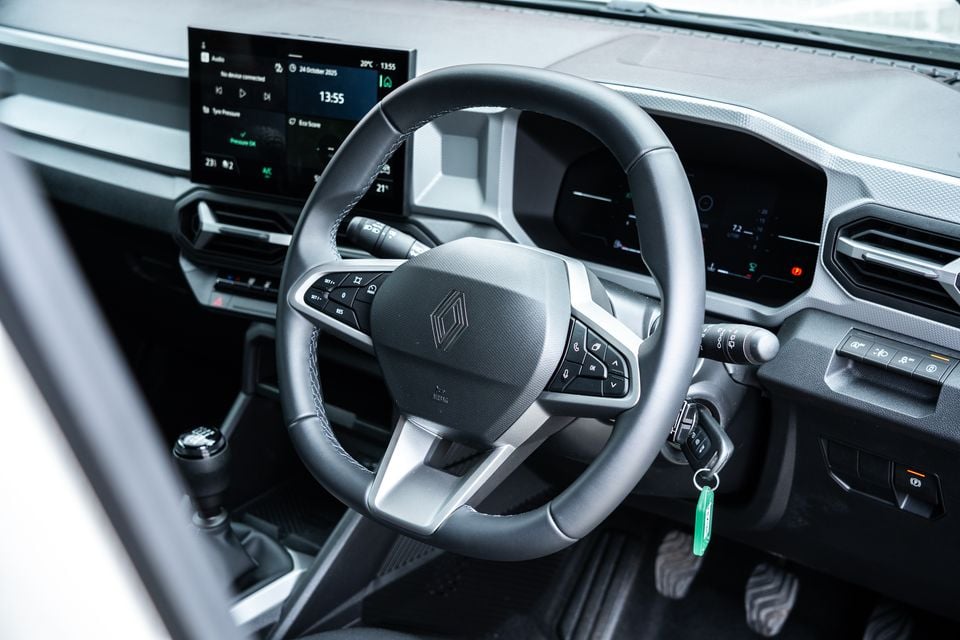
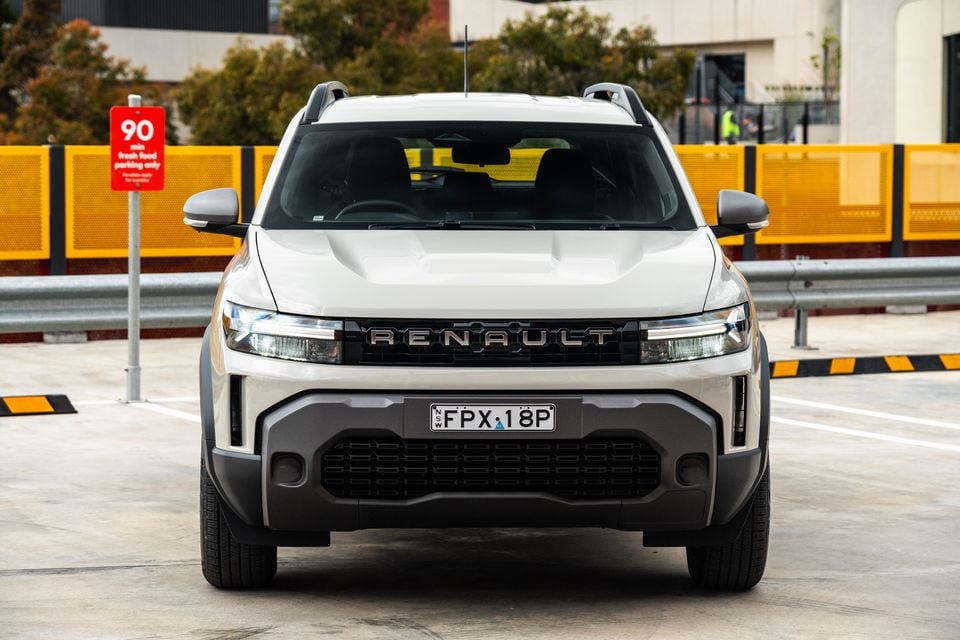
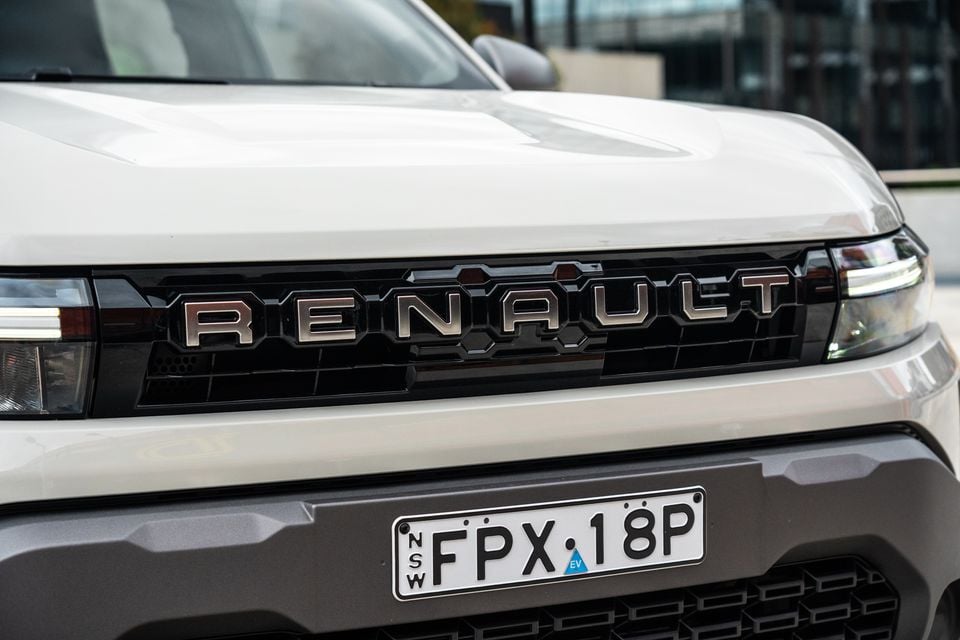
In the beige corner is the new kid on the block: the 2026 Renault Duster Evolution 4×4. Launched in 2025 as a never-before-seen nameplate in Australia, the Duster promises off-road capability but lacks the mechanical goodies found in the Jimny.
In all-wheel drive form, it is manual, which is a key difference between these two cars on test.
That said, it’s newer, has more modern interior fittings, and is physically larger than the Jimny, which should make for a more comfortable cabin.
Although badged as a Renault in Australia, the Duster is a model from the Renault-owned Dacia brand. That means it’s built in Romania, which is why it may look like an odd fit within the rest of the sleek, modern Renault lineup.
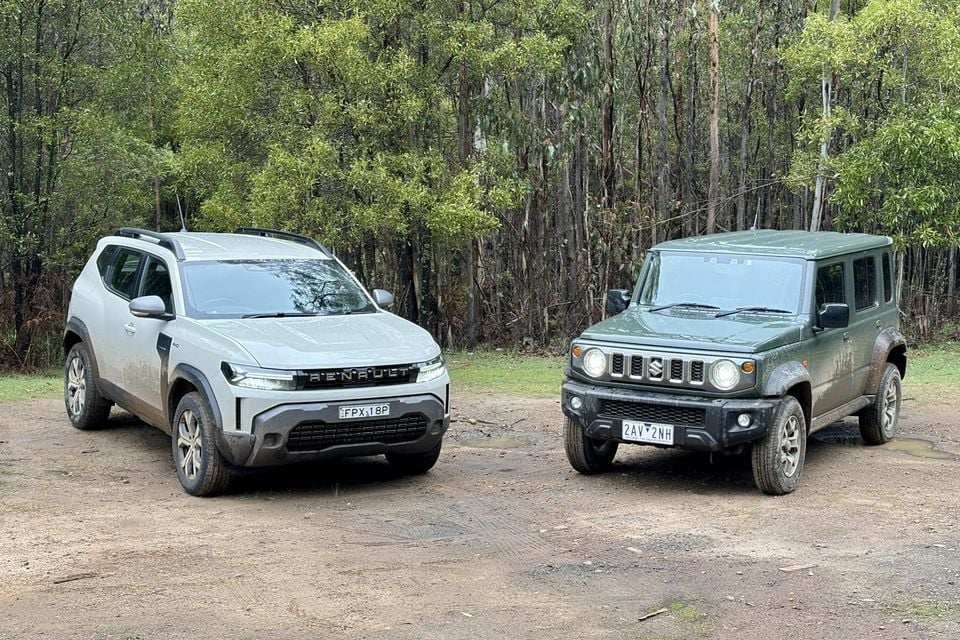
You’ll notice some inconsistencies between the two models in this comparison. Obviously, one is the transmissions, but another is that the XL auto is the most expensive Jimny variant on sale locally, while the Duster Evolution is technically an entry-level grade, as the top-spec Techno 4×4 manual had not yet arrived at the time of writing.
All that aside, these two SUVs both promise ‘work hard, play hard’ lifestyles, meaning they should be competent for day-to-day driving but a blast during weekend off-road adventures. How do they really stack up?
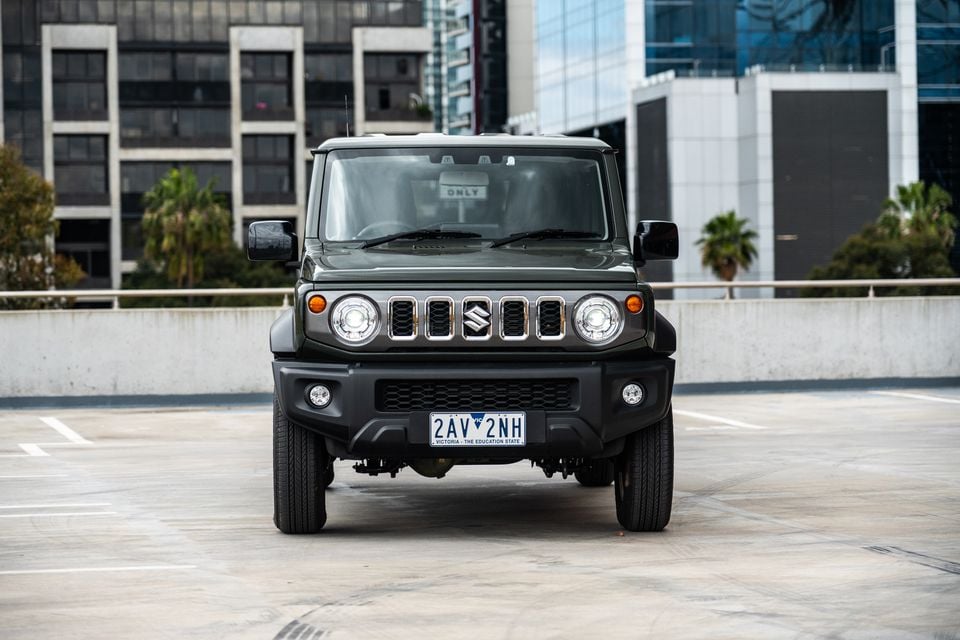
The Duster on test here is a base-spec vehicle, and it’s exactly $1000 cheaper than the Jimny XL auto, which is the most expensive Jimny you can currently buy. The Jimny costs $37,490 and the Duster $36,390, both before on-roads.
| Model | Price before on-road costs |
|---|---|
| 2026 Suzuki Jimny XL auto | $37,490 |
| 2026 Renault Duster Evolution 4×4 manual | $36,490 |
Generally though, the Duster is more expensive than the Jimny, but not by much – it tops out at $37,990 before on-roads for the Techno 4×4.
For those interested, the Duster starts at $31,990 before on-roads for the base Evolution 4×2 auto, while the cheapest Jimny is the stripped-back three-door Lite manual 4×4 for $30,490 before on-roads.
Both interiors are fairly simple and dominated by hard plastics, but each feels unique.
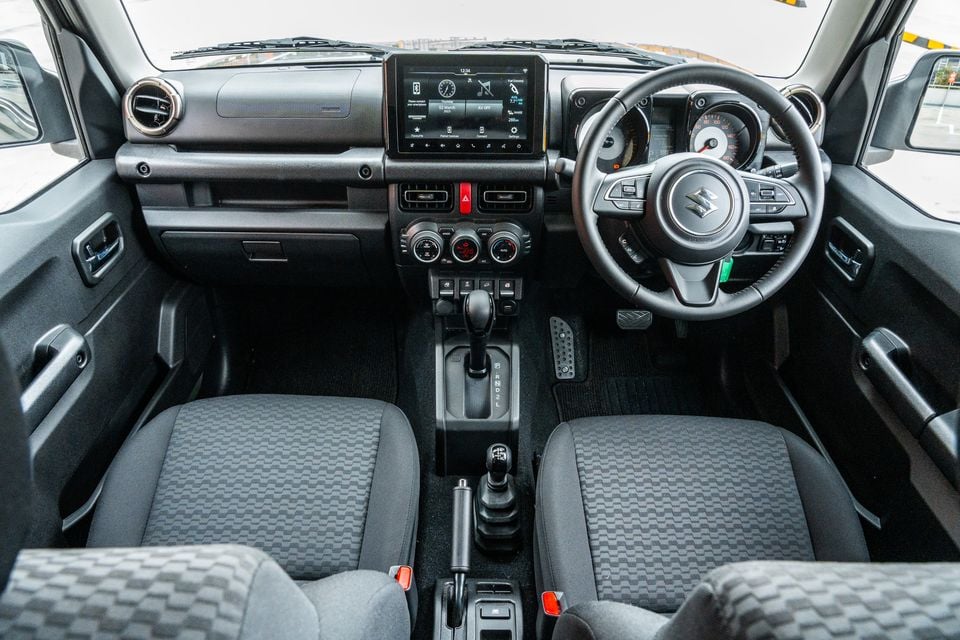
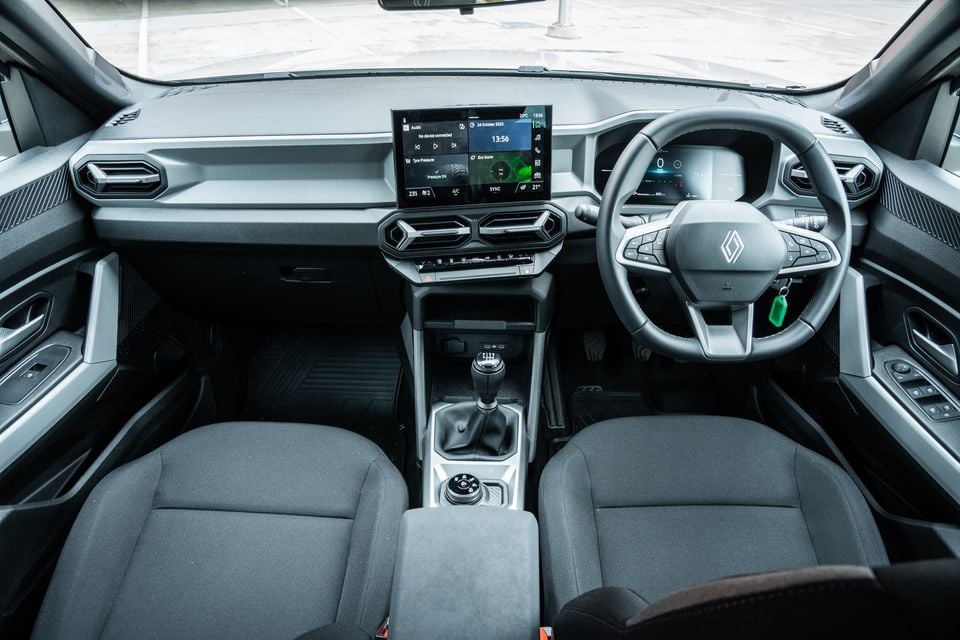
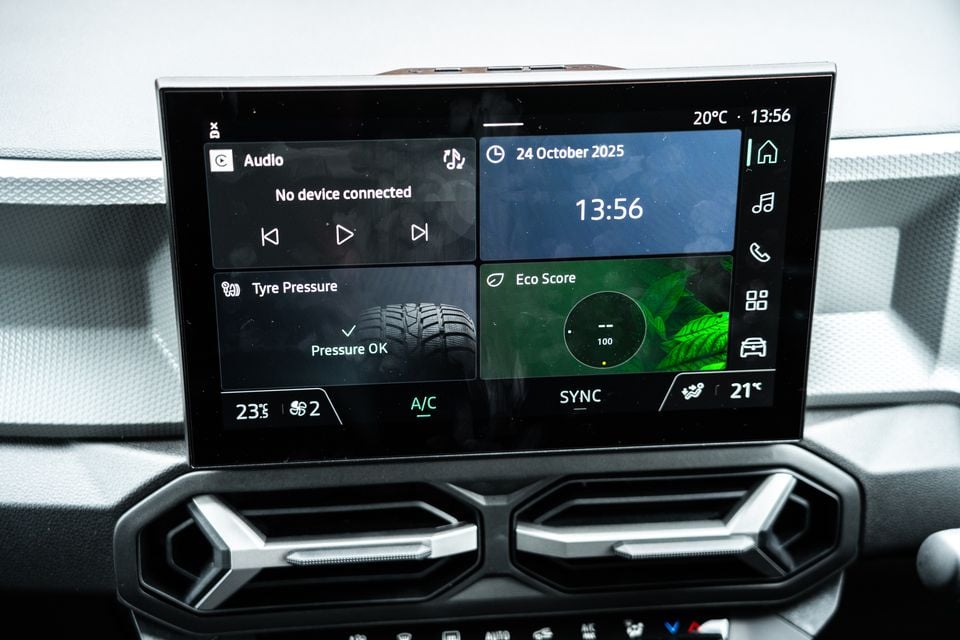
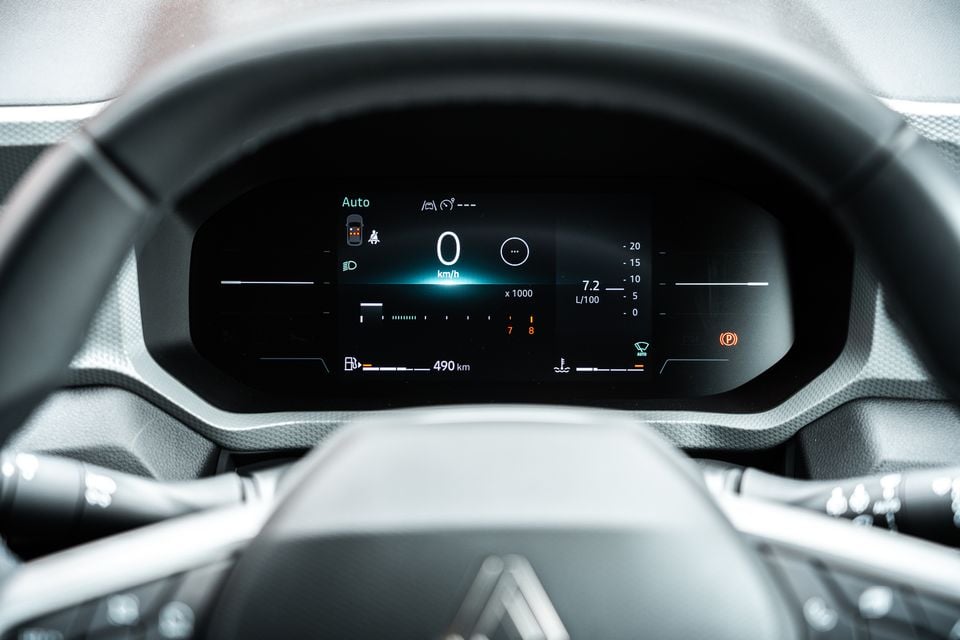
Upon first impressions, the Duster is better sorted inside. The more spacious cabin created by the larger exterior dimensions immediately gives you a greater sense of roominess, while all of its tech looks much more modern.
There are reasonably sized screens for the touchscreen infotainment system and the digital instrument cluster, both of which are operated using buttons on the steering wheel – albeit with one exception. There’s a curious stalk behind the wheel, which houses audio controls.
This is the main way to skip audio tracks or change volume, and you’d be forgiven for missing it at first. It isn’t new for Renault, but given most Australians aren’t that familiar with the French brand, it’ll take a second to adjust.
The Suzuki, meanwhile, is far more traditional. All the buttons are where you’d expect them, and the largely tech-averse setup makes it appear much less intimidating.
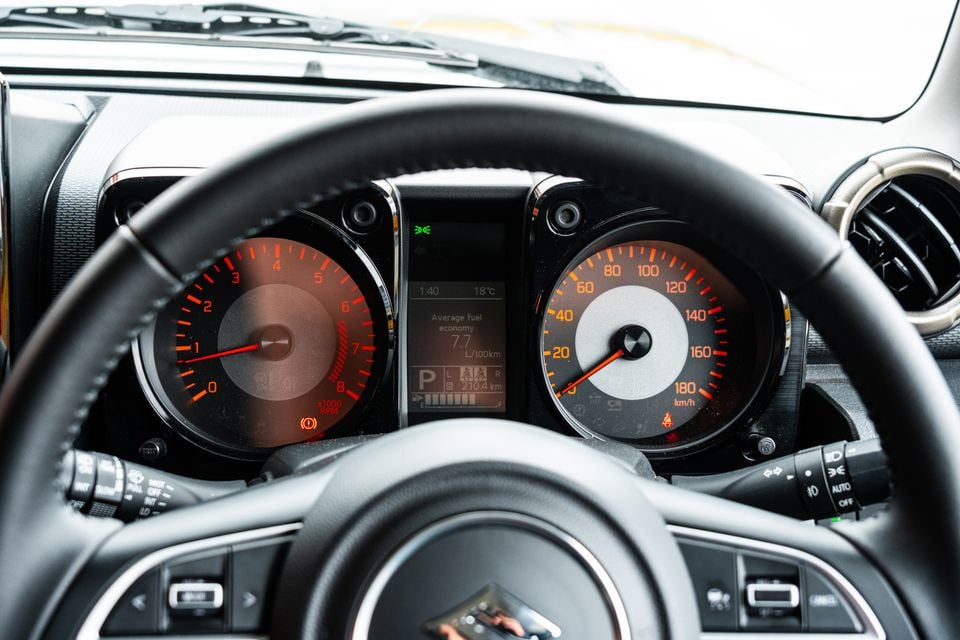
In fact, the large climate controls, angular design, and exposed (probably fake) bolt heads play into the cute-tough vibe of the Jimny’s exterior, like it’s trying to convince you to take it bush-bashing. And it makes a persuasive case.
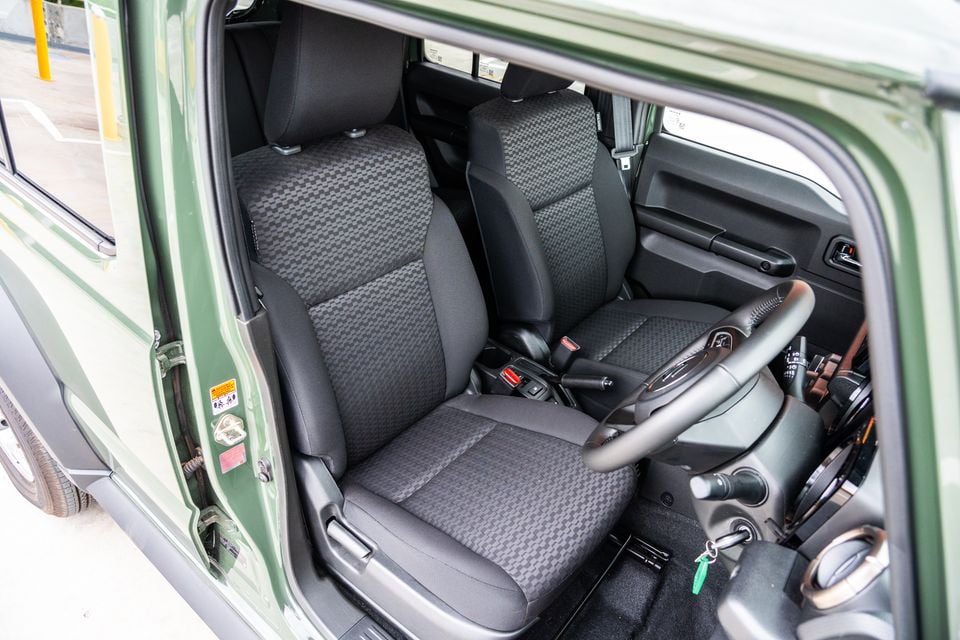
It does feel very cramped though, and your front passenger will seem especially close. Suzuki has tried to extract as much space as possible within its smaller, boxier exterior, as evidenced by the non-existent centre console and the centrally located window switches – the latter presumably intended to reduce bulk in the plastic door cards.
That said, there’s a loveable charm to the Jimny’s interior. The gauge cluster is particularly characterful, with two large dials bolted to the dash, and there’s still a useful cluster screen showing only the most vital vehicle information.
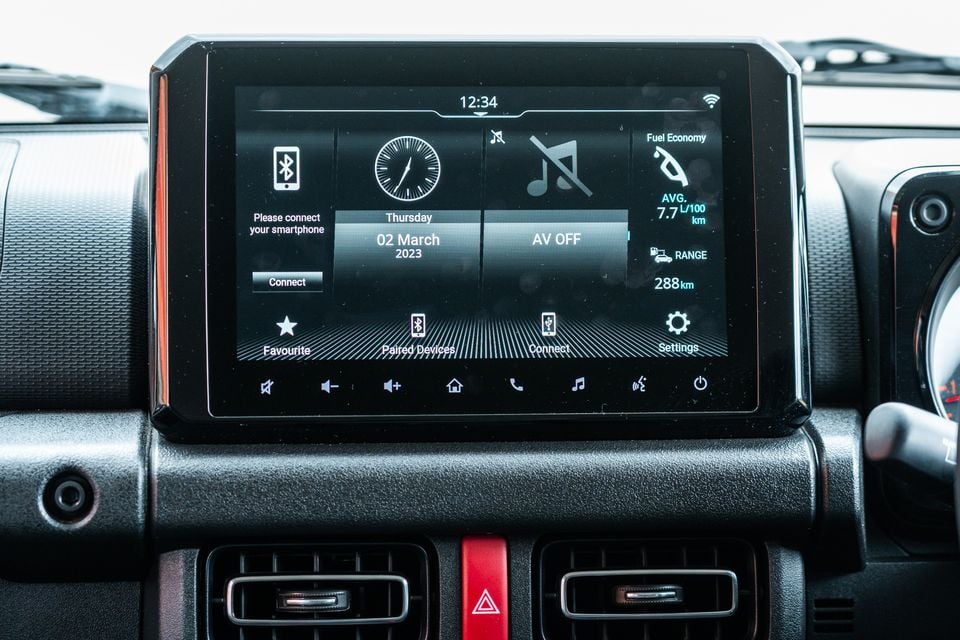
However, its infotainment screen is arguably what makes the cabin look the most dated. We like that there’s wireless Apple CarPlay (though only wired Android Auto), but its graphics look pretty old, and it can be slow to load and respond to inputs.
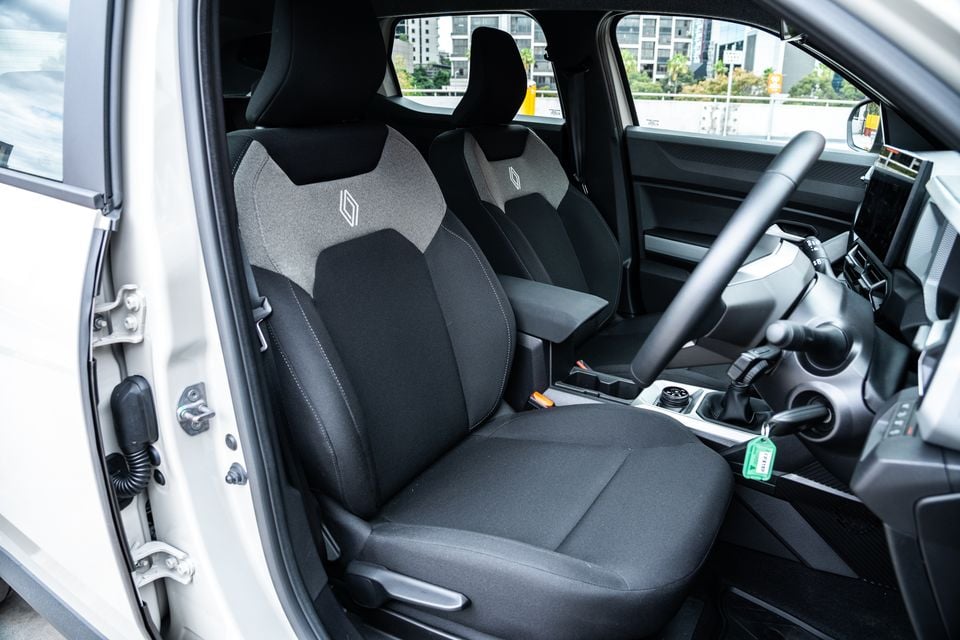
Of course, this is all fairly antiquated compared to the Duster, which also offers wireless Apple CarPlay but has the added advantage of greater comfort. There’s still a fair bit of plastic – annoyingly on the door armrests in particular – but it boasts a cleaner design.
Sure, this erodes some of the exterior’s mild ruggedness, but we’d much rather be in the up-to-date Renault for daily driving than the Suzuki. Where it feels like you sit on top of the Jimny’s seats and not in them, the Duster feels pretty much like any mainstream car.
Both cars also stick with tried-and-tested cloth for their seat upholstery, which will be more durable in the long term, if not a little stain-prone.
Additionally, our Jimny tester was fitted with carpet floor mats, which was unfortunate in the muddy off-roading you’ll see we tackled later on. Rubber mats were fitted to our Duster, but they’re optional in both cars; $149 for the Renault, and $293.68 for the Suzuki.
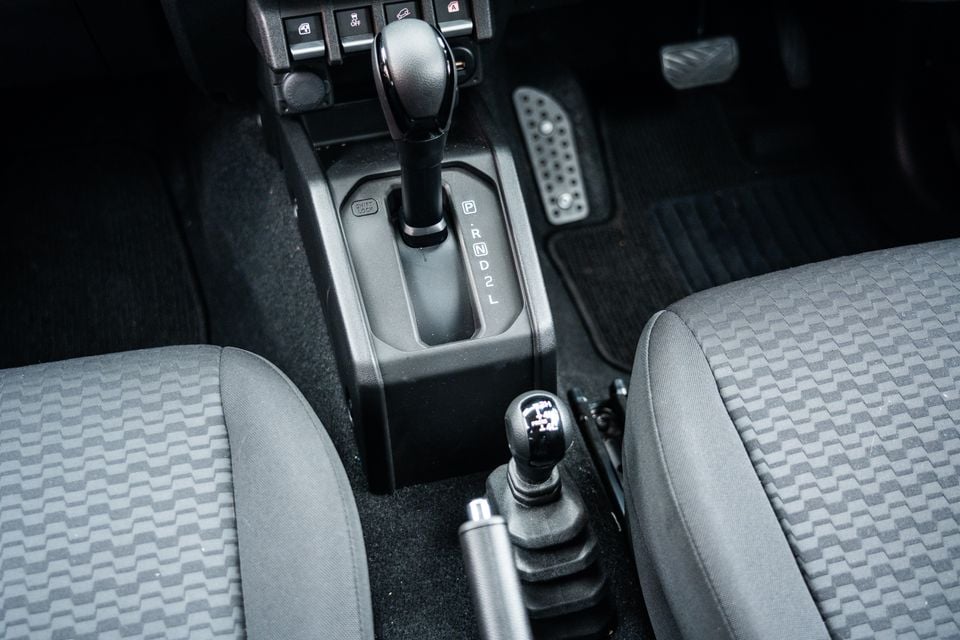
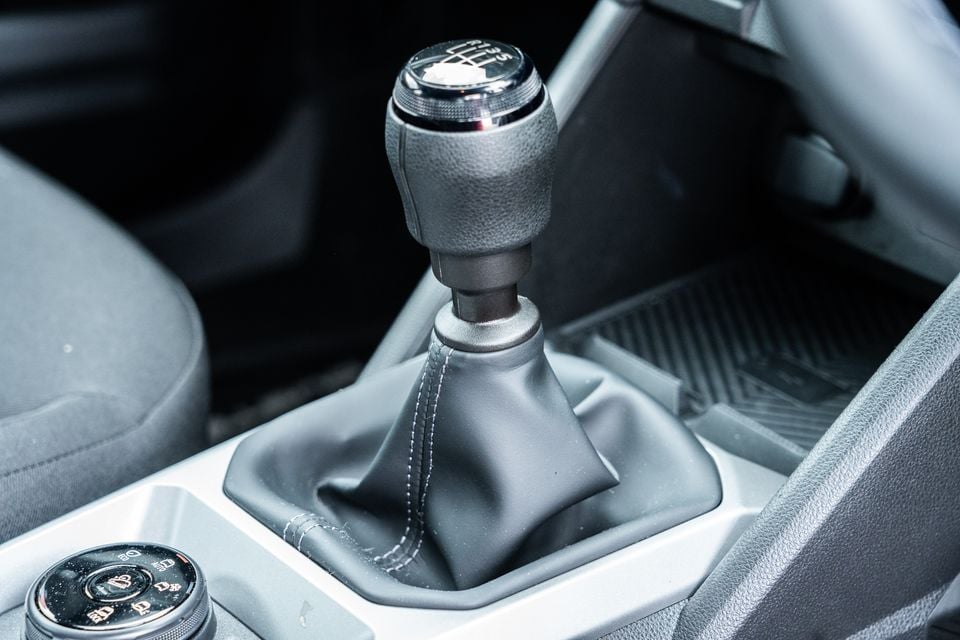
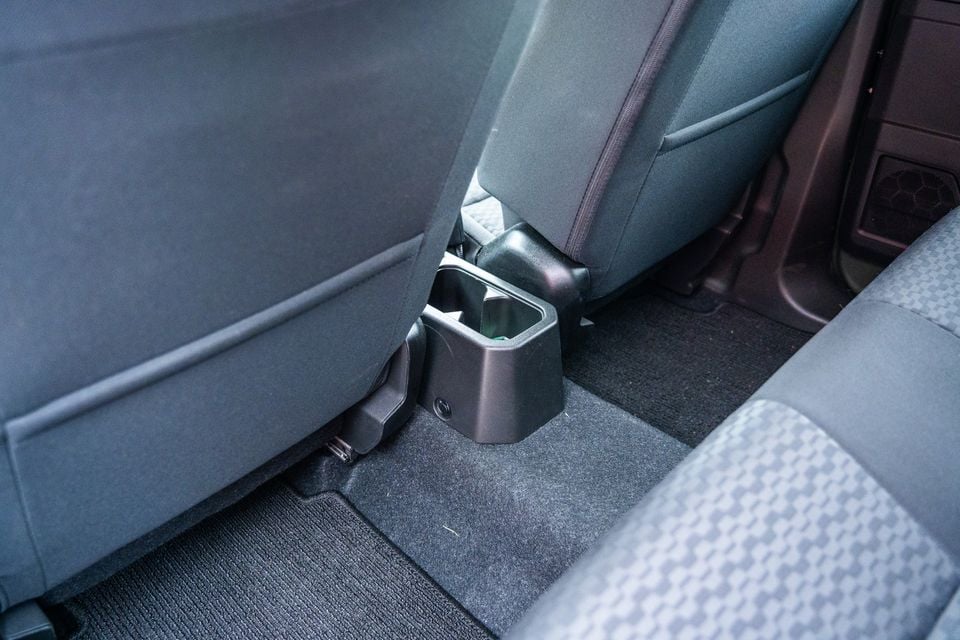
Storage options are limited in both models, as is often the case in light SUVs. The Jimny does have cupholders, but they’re behind the centre console to make room for the low-range shifter and almost feel like they’re meant for second-row occupants… and maybe they are.
It’s a similar story in the Duster, though you get two cupholders that are somewhat nestled under the central armrest. This armrest can get in the way when interacting with the long-throw gear shifter.
Renault has at least considered additional storage options here, with several cubbies for smaller items like phones or wallets. There are also small pockets in the door cards, along with a handful of so-called YouClip points for various accessories, like phone holders.
A final note on the front of both cars’ cabins is usability. As mentioned, the Jimny is traditional and easy to get accustomed to, but the Duster has a bunch of sparsely labelled buttons on the climate control panel and steering wheel. These aren’t impossible to use, but they’ll take a second to get used to.
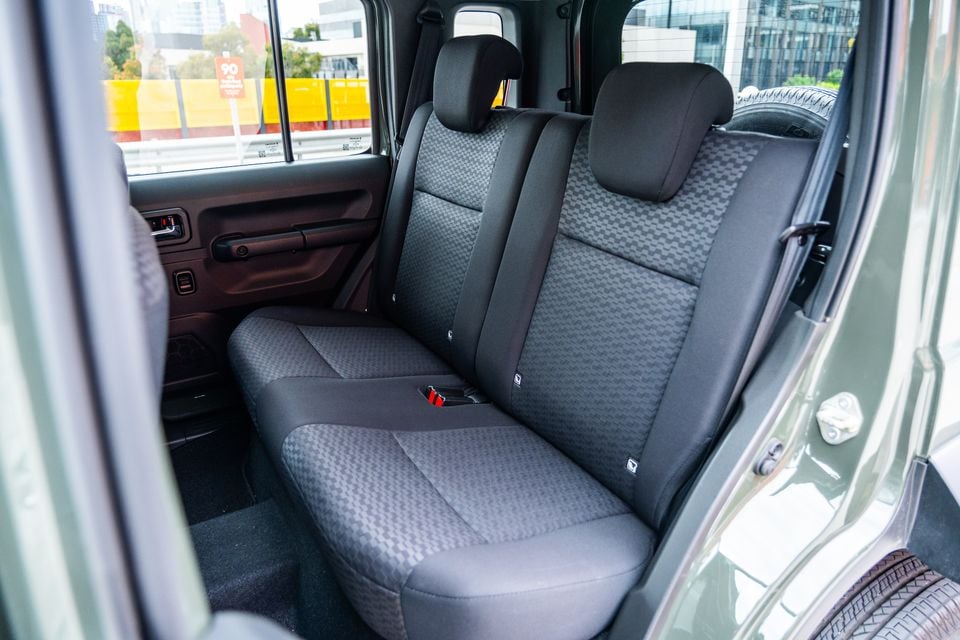
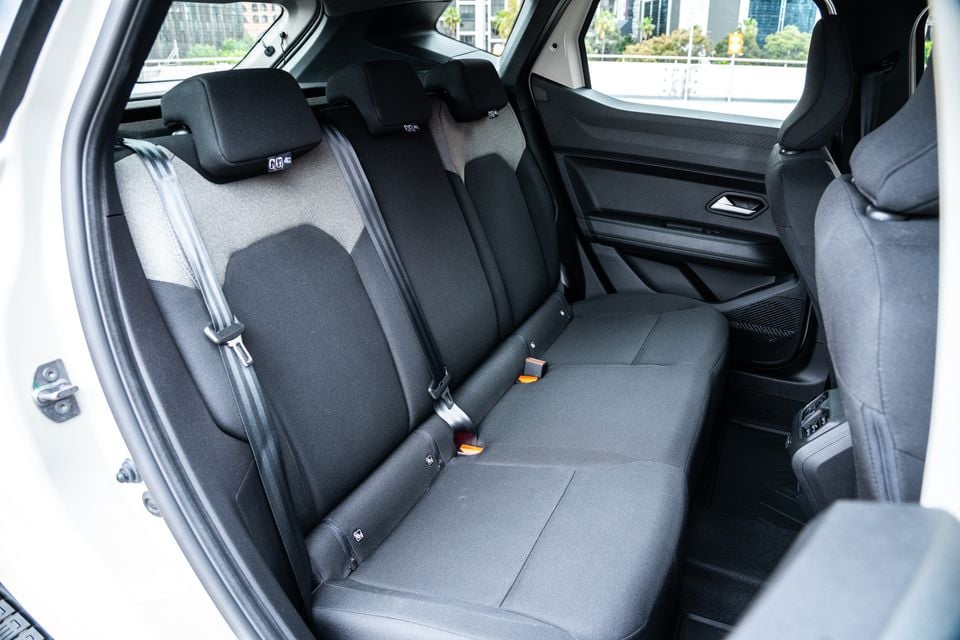
Unsurprisingly, the Duster offers greater second-row space, but the Jimny can fit a pair of fully grown adults with relative ease. A big reason for this is the Duster’s wider body, which allows the fitment of a three-person rear bench seat, making it a five-seater – the Jimny can only seat four.
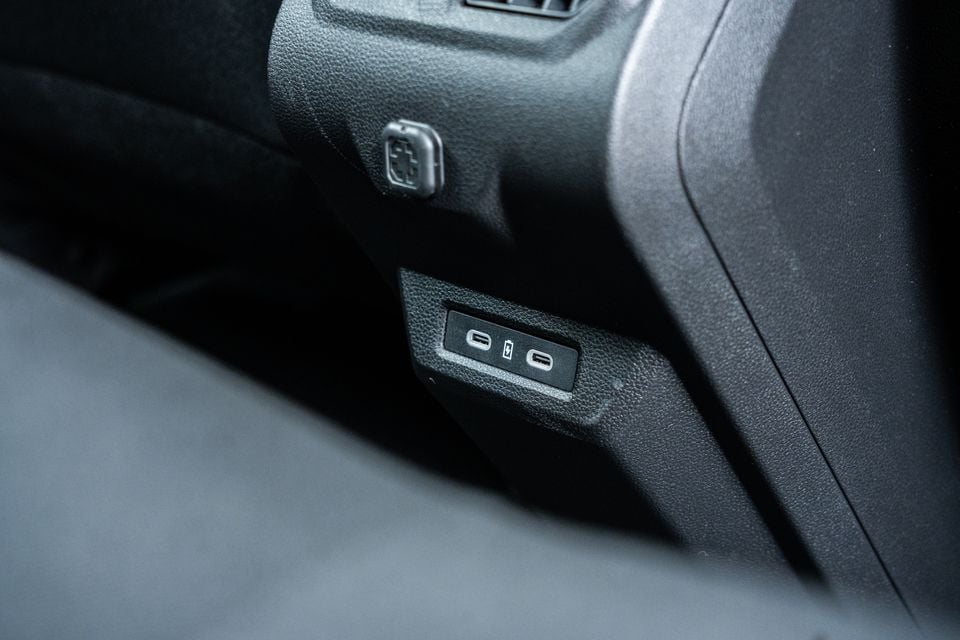
There aren’t too many amenities to speak of in the rear of either model – not even a fold-down armrest in the Duster – but Renault has fitted two USB-C ports and a YouClip point that can hold a small storage tray. The Suzuki? No armrest, no USB outlets, and not even air vents.
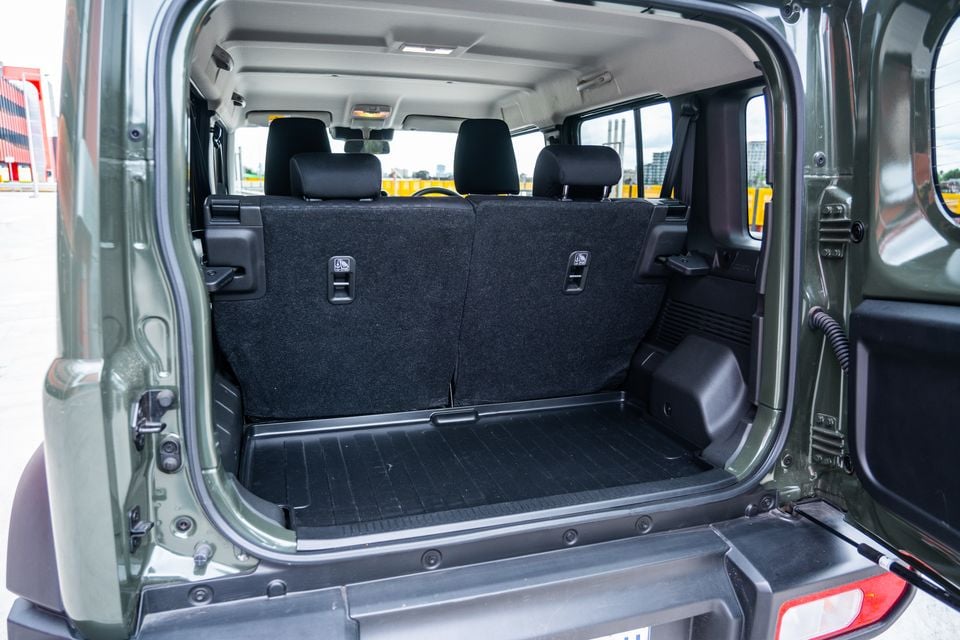
Similarly, the Duster’s boot is much more usable. Cargo space extends much further towards the front of the car, and the roof-mounted hinges mean the tailgate doesn’t get in the way when open, unlike the Jimny’s side-hinged setup.
Neither car’s seatbacks fold down completely flat, but you do get reasonably sized spare wheels in both – under the floor for Renault, and on the tailgate for Suzuki. It is mildly amusing that the Duster’s emergency jack is completely exposed inside the boot.
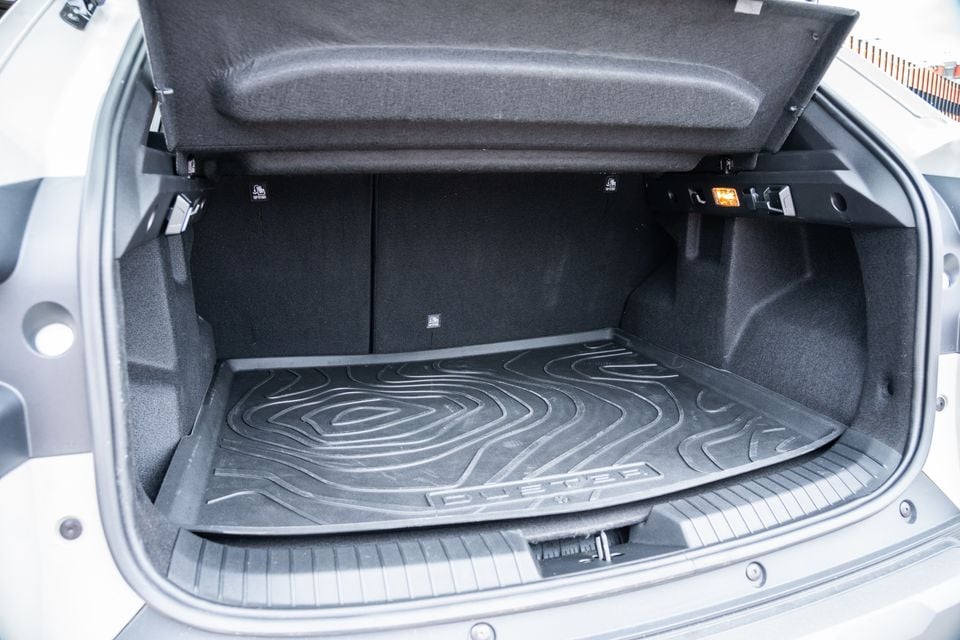
| Dimensions | Suzuki Jimny XL | Renault Duster Evolution 4×4 |
|---|---|---|
| Length | 3965mm | 4345mm |
| Width | 1645mm | 2069mm |
| Height | 1725mm | 1650mm |
| Wheelbase | 2590mm | 2658mm |
| Cargo capacity | 211L (rear seats up) 332L (rear seats folded) | 358L (rear seats up) 1424L (rear seats folded) |
The Duster has the edge on outright performance, and it even has some form of electrification in its mild-hybrid system. It does, however, require more expensive fuel, though it offers a more user-friendly full-time all-wheel drive setup.
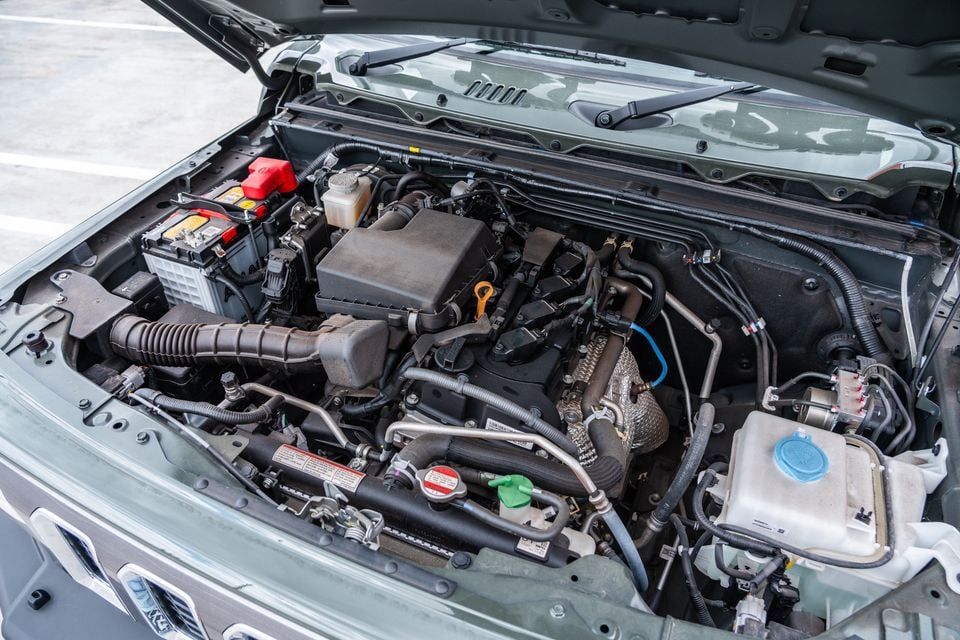
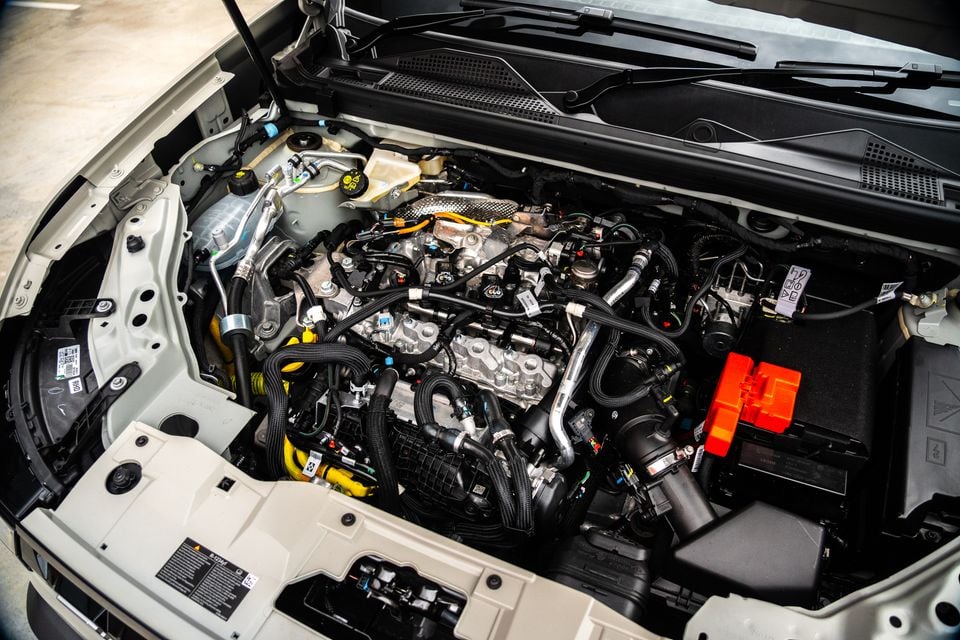
| Specifications | Suzuki Jimny XL auto | Renault Duster Evolution 4×4 |
|---|---|---|
| Engine | 1.5L naturally aspirated petrol 4cyl | 1.2L turbo-petrol mild-hybrid 3cyl |
| Power | 75kW @ 6000rpm | 96kW @ 4500rpm |
| Torque | 130Nm @ 4000rpm | 230Nm @ 2250rpm |
| Transmission | 4-speed auto | 6-speed manual |
| Drive type | Part-time four-wheel drive, low-range | All-wheel drive |
| Fuel economy (claimed) | 6.9L/100km | 5.7L/100km |
| Fuel economy (as tested) | 8.3L/100km | 7.2L/100km |
| Fuel tank | 40L | 55L |
| Fuel requirement | 91-octane regular unleaded | 95-octane premium unleaded |
| CO2 emissions (claimed) | 161g/km | 129g/km |
| Emissions standard | – | Euro 6 |
| Kerb weight | 1210kg | 1422kg |
| Payload | 345kg | 501kg |
| Braked towing capacity | 1300kg | 1500kg |
| Gross vehicle mass (GVM) | 1545kg | 1925kg |
During our week with the cars we put them through much of the same driving conditions. Plenty of highway stints, some time spent in the inner-city, and a long afternoon spent off-roading in Victoria’s Mt Disappointment State Forest.
The fuel economy for both cars matched or beat their manufacturers’ claims before we hit the trails, but after that consumption skyrocketed, before settling within about 1.5L/100km of their official combined numbers. Given the Jimny’s asthmatic four-pot has to work harder to get things moving and has no turbo or hybridisation to help it out, it’s much less efficient than the mild-hybrid Duster.
This is where you’ll find the biggest difference between the two. Of course, that shouldn’t come as a surprise, given that compared to the Duster the Jimny is a bit like a mobile garden shed.
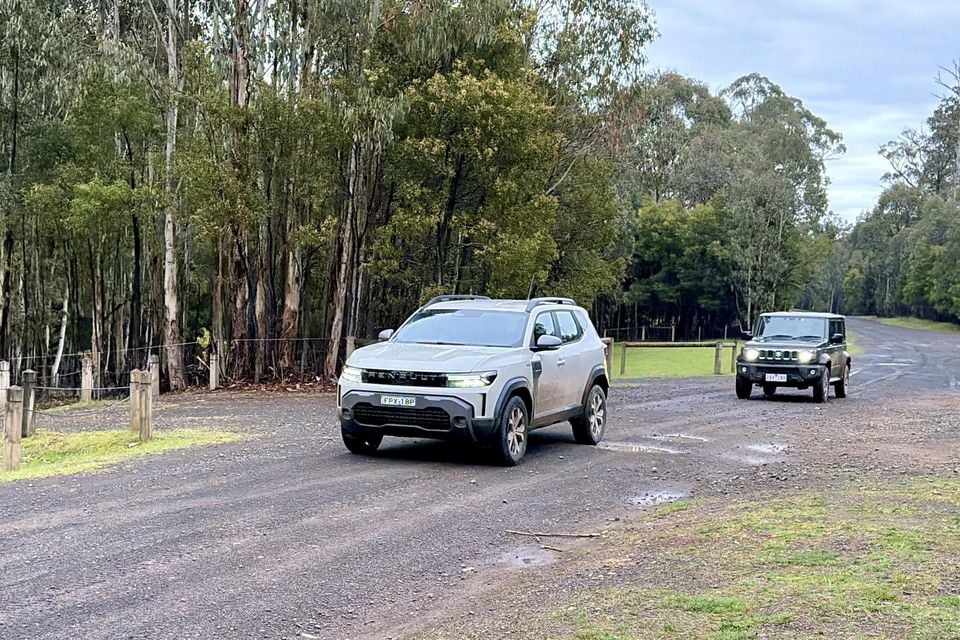
The Suzuki's on-road flaws waste no time in making themselves apparent. For one, its steering is incredibly vague, requiring constant correction on the highway and much more lock during parking manoeuvres than one should reasonably expect.
It’s also deceptively heavy for a car as small as the Jimny is, which can also make navigating carparks a chore. In contrast, the Duster’s steering is weighted appropriately and feels quite direct.
While it isn’t necessarily robust, the Duster behaves predictably, making it easy to hop in and drive, even if you’re unfamiliar with it. The Jimny requires a fair bit more thought and concentration, and it takes many minutes to feel genuinely comfortable – if you get to that point at all.
The Duster’s pain-free motoring talent was made abundantly clear throughout the week, especially on the first day, when I hopped in and drove across the Melbourne CBD at peak hour like it did it every day. It happily darts through narrow streets and around sharp bends, while soaking up bumps nicely.
If this is the car for you, we’ll compare offers from trusted dealers, handle the back and forth and manage your purchase from enquiry to delivery.
At no point during this lower-speed driving did the Duster feel unsettled. Tram tracks were never an issue, and there’s simply a degree of confidence to the Duster’s ride that you’ll notice when you tackle speed bumps or clatter over manhole covers.
The Jimny’s handling, meanwhile, is aptly described as wobbly. There is a lot of body roll around even the slightest turns, and it feels as if those pizza-cutter wheels could fold under the car if you hit a bump the wrong way. Of course, that’s an exaggeration intended to give you an idea of how flimsy it feels.
Heaven forbid you have to drive it on a 110km/h freeway, particularly in windy conditions, as the Jimny could almost pass as a light aircraft in terms of its weight and the ungodly 3500rpm racket it makes at cruising speed. This is where it makes the Duster look like a Bentley – a comparison further solidified by its performance.
Neither car is quick, but the Duster boasts a characterful turbo three-pot that’s more than capable of getting it up to speed before the end of a freeway on-ramp – the Jimny… not so much. If you block your ears and close your eyes, full-throttle provides no more than gentle acceleration.
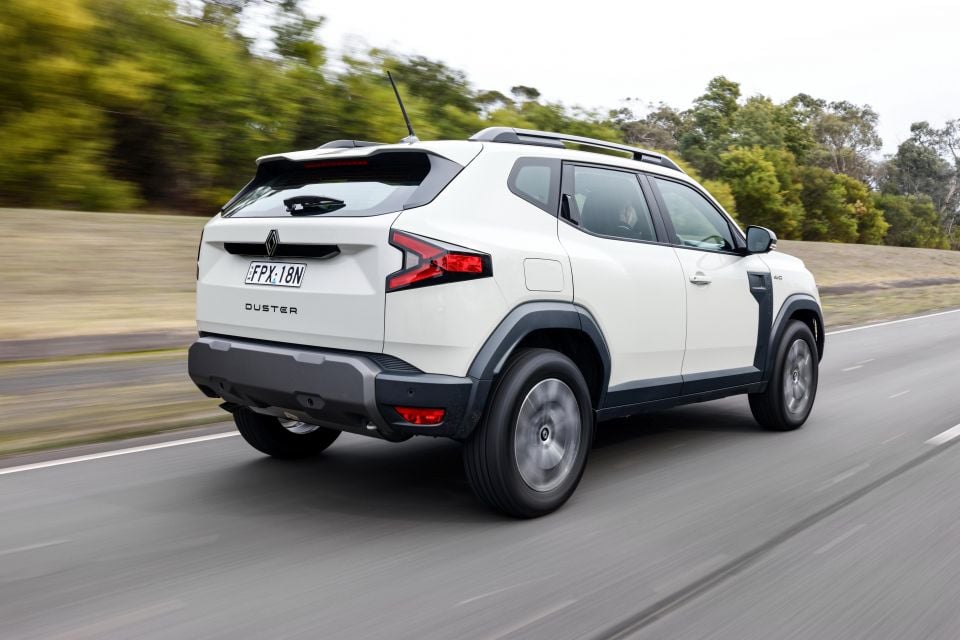
Its naturally aspirated four-cylinder is wheezy and underpowered, but it isn’t the only reason the Jimny is slow. Holding it back further is the four-speed automatic, which is antiquated and struggles to keep the engine in its ideal operating range.
The aforementioned engine speed on the freeway is one thing, but we often found that even at 60km/h it would kick down at the sight of a slight incline, and the spaces between gear ratios aren’t exactly tight. This at least makes for a good laugh, and as objectively poor as everything we’ve already mentioned is, the Jimny is a hoot to throw around.
It’s just so different from everything else on sale, and its drawbacks give it an endearing, old-school quality that makes you understand why it has such a cult following. Yes, it’s louder than the Duster on the move and, yes, it’s scarier to drive alongside big trucks, but if you don’t do much freeway driving, you’ll be totally fine.
That said, the Duster is a much better all-rounder and feels just like any other small SUV once you’re on the move. The compact dimensions of both cars makes them easy to place on city roads, and the Jimny has a slight advantage when it comes to outward visibility – but it does miss out on blind-spot monitoring and lane-keep assist.
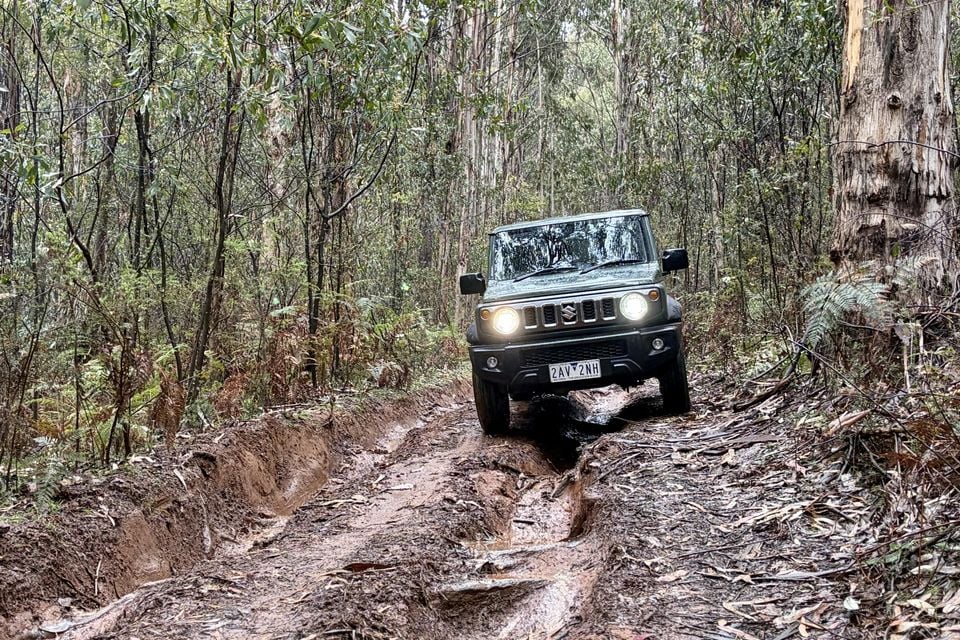
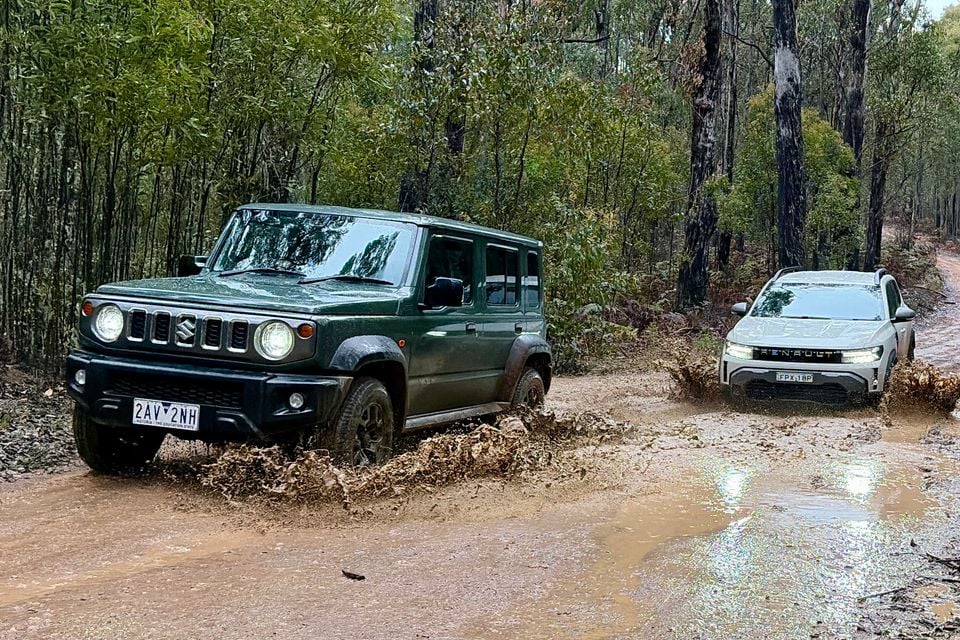
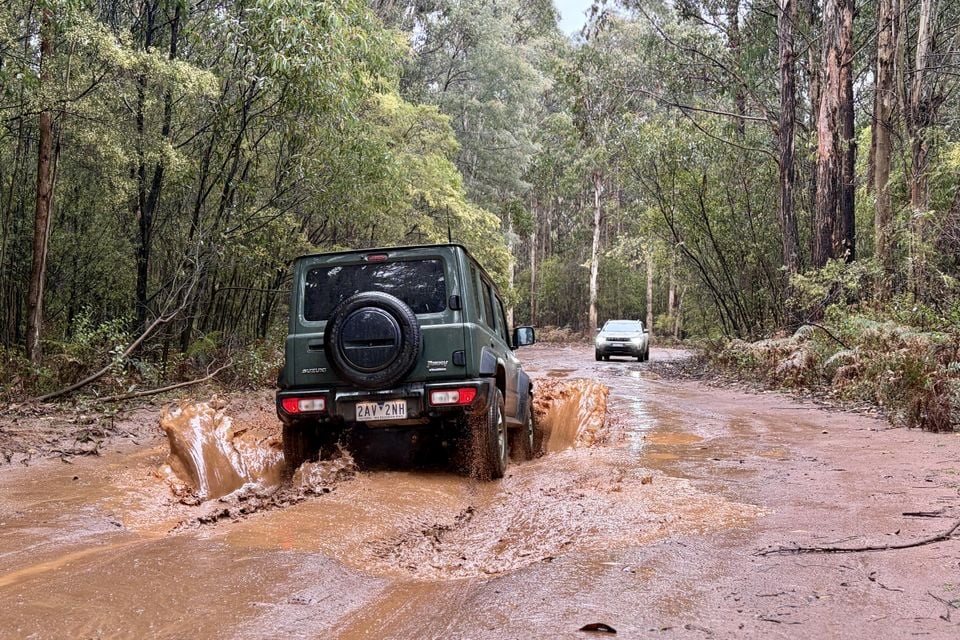
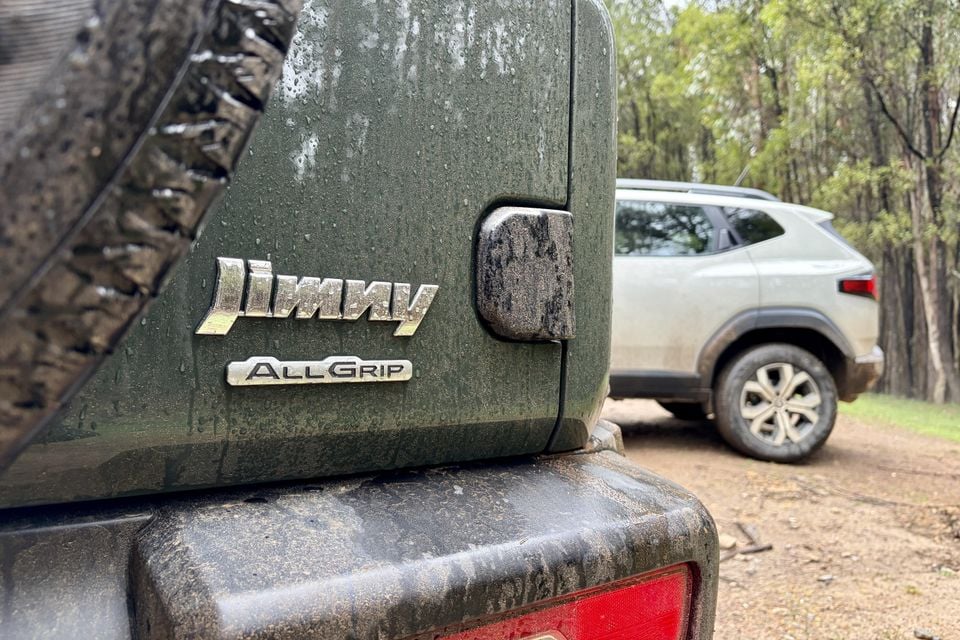
Everything starts to make sense once you hit the trails, however. Despite its longer wheelbase and therefore reduced rampover angle compared to the three-door, the Jimny’s mountain-goat status isn’t lost with the XL, which is still more than happy to be thrown at any rock, puddle, hill climb or hill descent you could imagine – provided a Ranger hasn’t already been through and torn everything up.
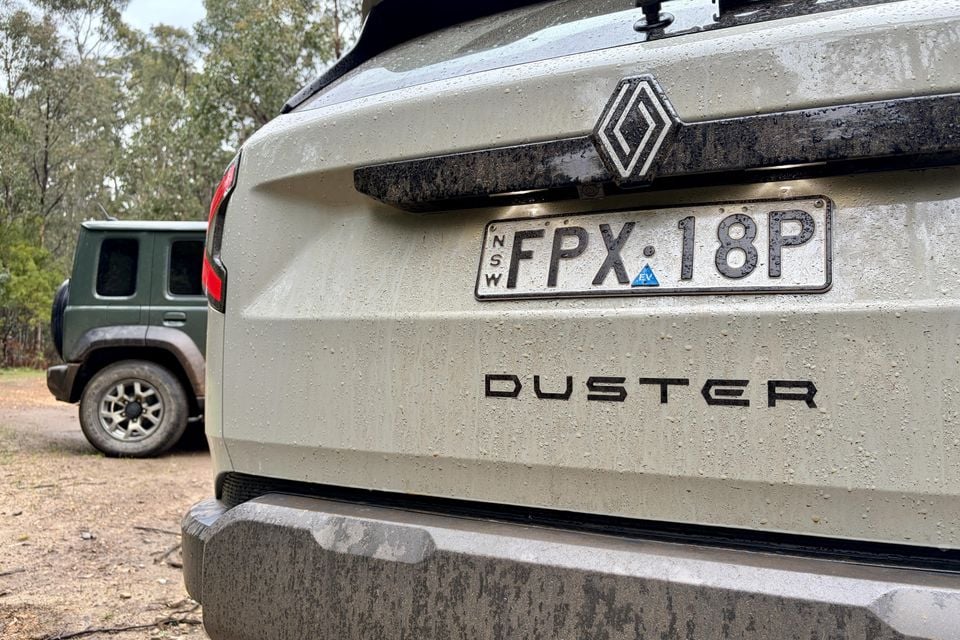
Its narrow track makes it easy to avoid ruts that would trouble larger 4×4s, and its generous ground clearance means it rarely scrapes. The Duster, meanwhile, is still quite capable and more stable with its wider track, but its biggest drawback is greater ride-height variation due to its independent suspension, which doesn’t provide much leeway off-road, despite its good approach and departure angles.
This meant it was often forced to sit out some of the more challenging trails, while the live-axle Jimny scampered on ahead with its 'fixed' ground clearance. Mind you, the Jimny falters when loaded up with four adults, and not just because of its wheezy engine. Its piddly payload quickly diminishes its advantage in ground clearance with a load on board – the Duster just about gets by in this area.
And while the Suzuki's automatic transmission is reasonably competent at low speed, it takes quite a bit of force to get the low-range shifter into position. That said, switching between 4×2 and 4×4 is nice and easy, which is fortunate, given you’ll have to swap back to 4×2 once you’re back on the tarmac.
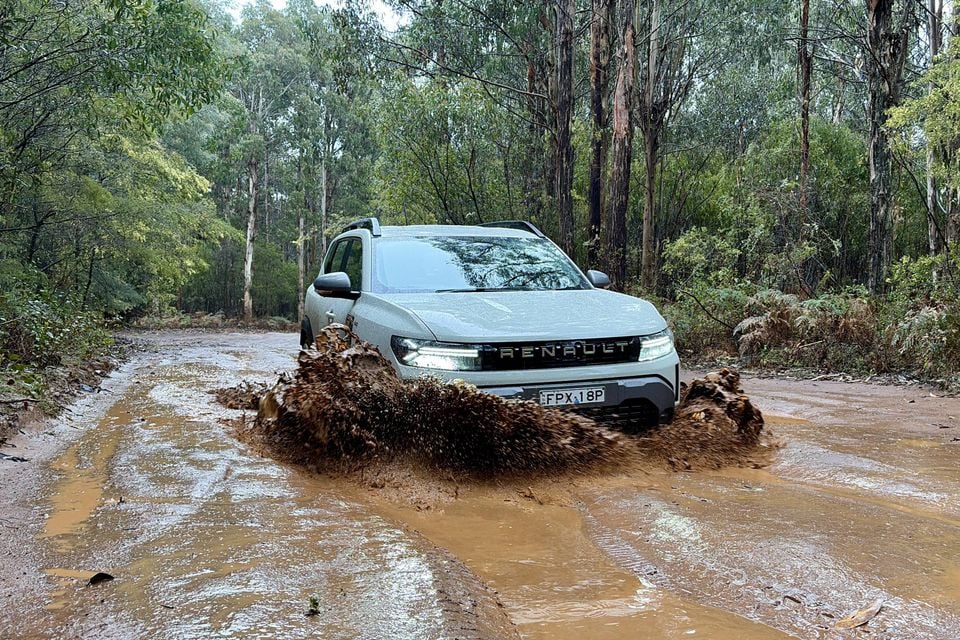
The Duster is undeniably more fun with its manual gearbox, though the shifter’s throw and the clutch pedal’s bite point are both vague. It’s still easy to drive both on- and off-road, even if it takes a second to get used to, and you have the advantage of full-time all-wheel drive that eliminates some of the messing about when hitting different surfaces.
Both four-wheel drive systems seem solid, with both cars able to pull themselves out of most trouble, even in the very wet conditions on our test. The Duster impressed us as it continued to power along outside its comfort zone, while feeling more mature than the relatively agricultural Jimny.
Again, this gives credence to the Duster’s all-rounder status. The Jimny isn’t great on the road but excels on the trails, whereas the Duster is pretty good at everything.
It's also slightly better on the safety front, as we had two instances of phantom autonomous emergency braking warnings while driving the Jimny. Still, it’s impossible to deny that the Suzuki is a lot of fun – perhaps more so overall than the more civilised Renault.
| Off-road dimensions | Suzuki Jimny XL auto | Renault Duster Evolution 4×4 |
|---|---|---|
| Track front and rear | 1395mm (front) 1405mm (rear) | 1580mm (front) 1560mm (rear) |
| Ground clearance | 210mm | 212mm |
| Approach angle | 36º | 31º |
| Departure angle | 47º | 36º |
| Ramp breakover angle | 24º | – |
The Duster may be $1000 cheaper than the Jimny, but it boasts a much more impressive list of standard equipment.
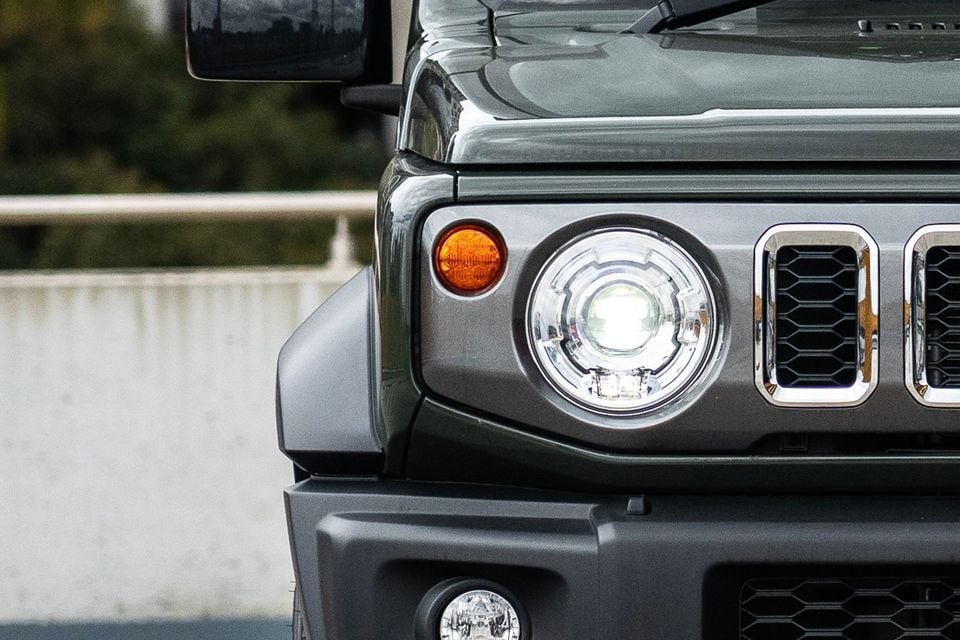
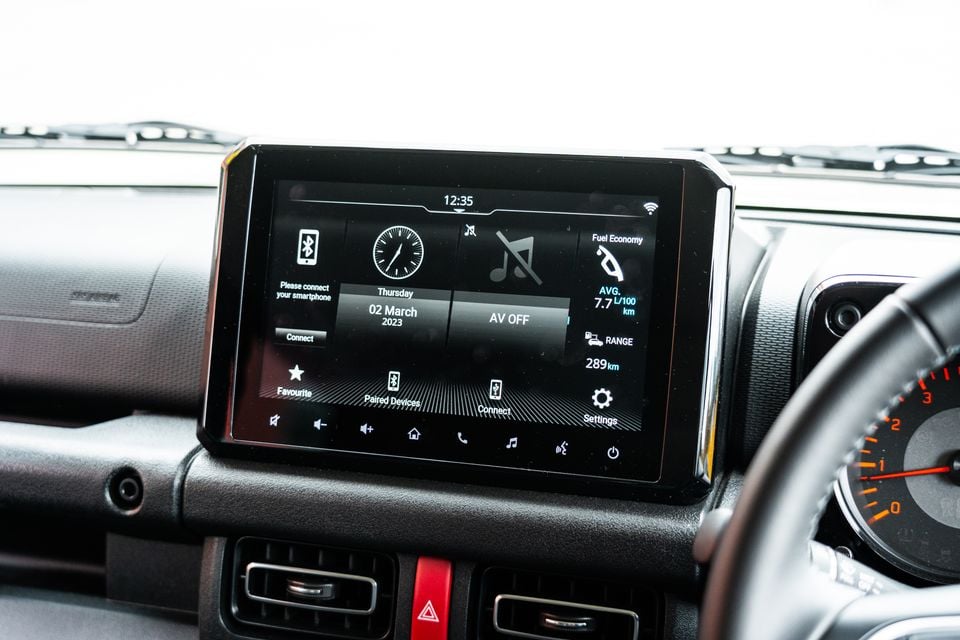
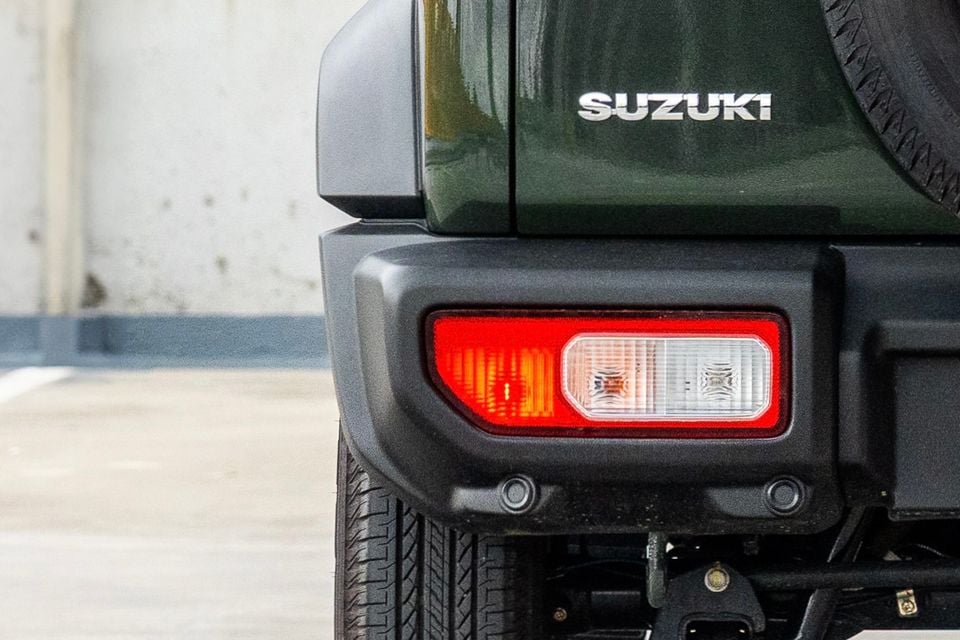
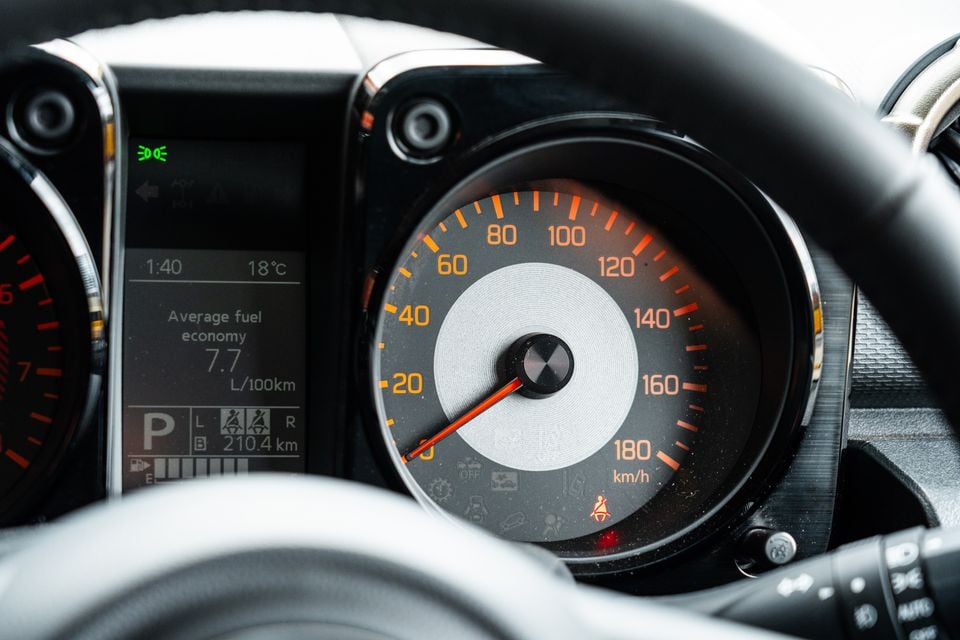
2026 Suzuki Jimny XL equipment highlights:
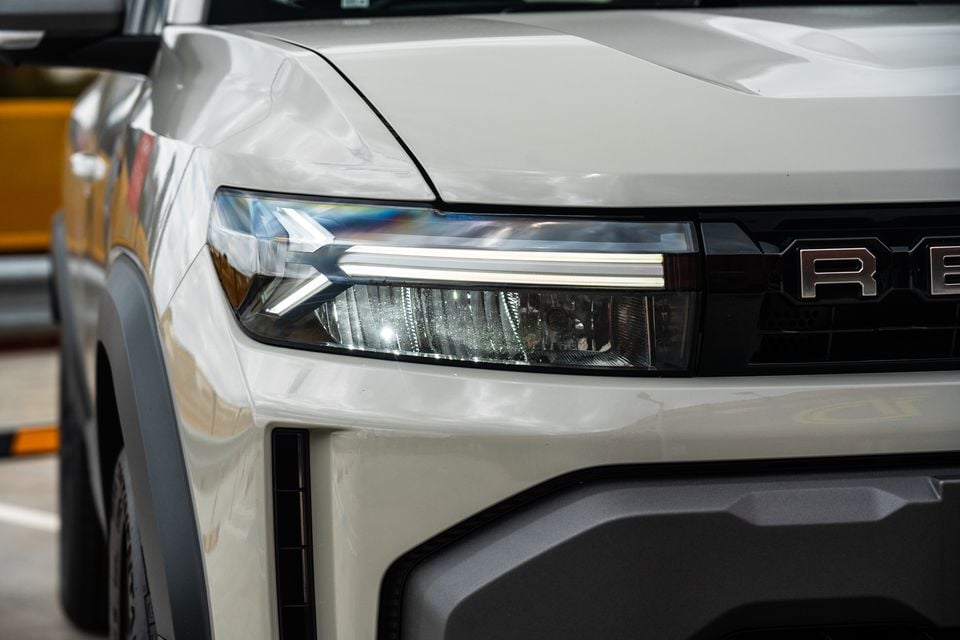
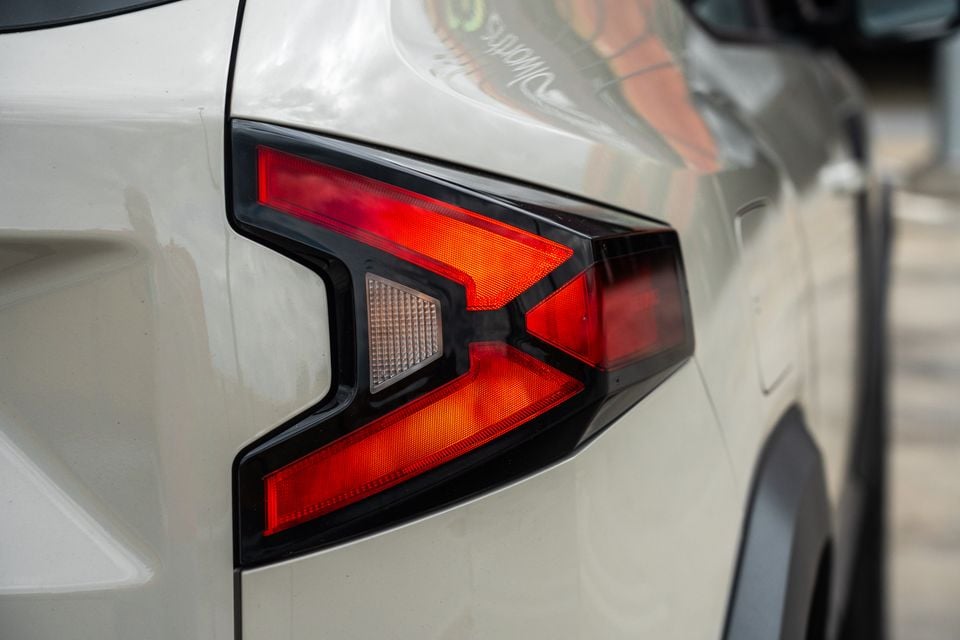
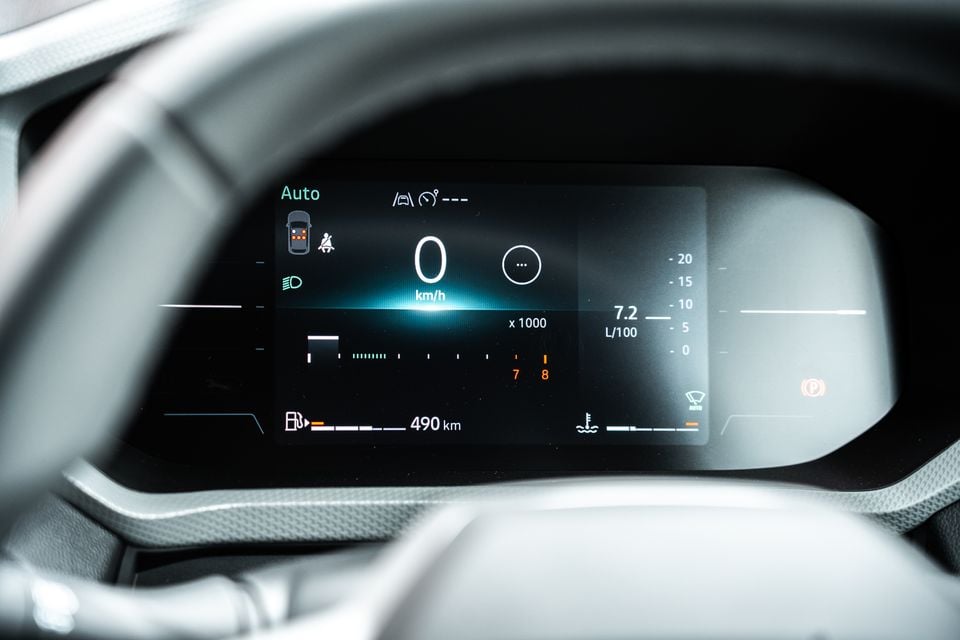
2026 Renault Duster Evolution equipment highlights:
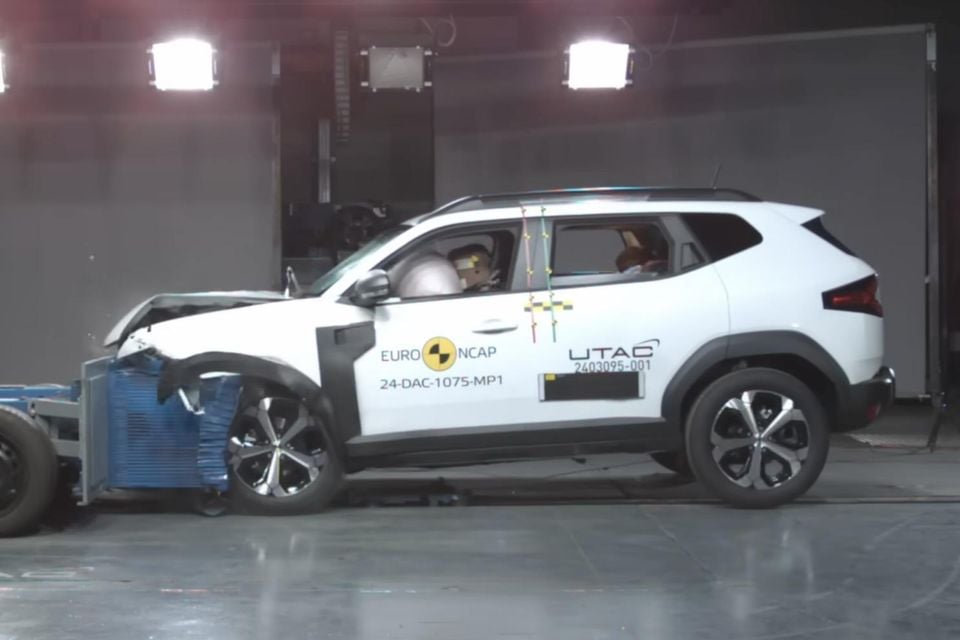
The Suzuki Jimny XL doesn’t have an ANCAP safety rating, and the three-door Jimny’s three-star rating from 2019 has now expired. The Duster matches those three stars, and both results were derived from Euro NCAP testing.
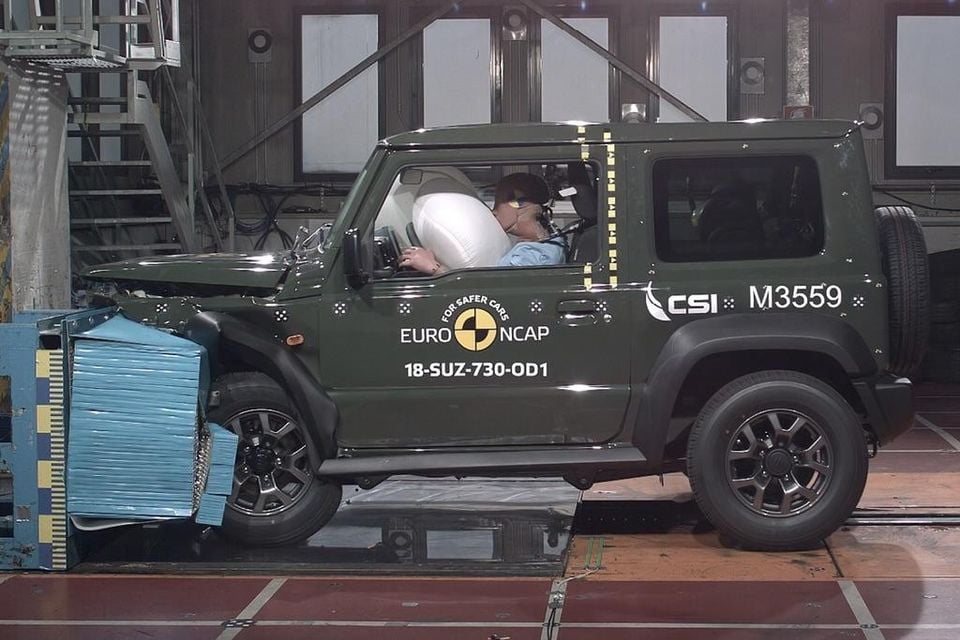
| Category | Suzuki Jimny | Renault Duster |
|---|---|---|
| Adult occupant protection | – | 70 per cent |
| Child occupant protection | – | 86 per cent |
| Vulnerable road user protection | – | 60 per cent |
| Safety assist | – | 58 per cent |
| Total score | – | 3 stars |
2026 Suzuki Jimny XL auto safety equipment highlights:
2026 Renault Duster Evolution safety equipment highlights:
Both cars are covered by five-year, unlimited-kilometre warranties, though the Duster has longer 30,000km service intervals than the Jimny’s 15,000km gaps. Renault is available with a pre-paid scheduled servicing plan that is cheaper than Suzuki’s capped-price plan.
| Servicing and Warranty | Suzuki Jimny XL | Renault Duster Evolution 4×4 |
|---|---|---|
| Warranty | 5 years, unlimited kilometres | 5 years, unlimited kilometres |
| Roadside assistance | Up to 5 years – service activated | 5 years |
| Service intervals | 12 months or 15,000km | 12 months or 30,000km |
| Capped-price servicing | 5 years | 5-year pre-paid plan |
| Average annual service cost | $473 | – |
| Total capped-price service cost | $2365 | $2100 |
Objectively, and for the sake of a clear comparative result, the Duster is the winner here.
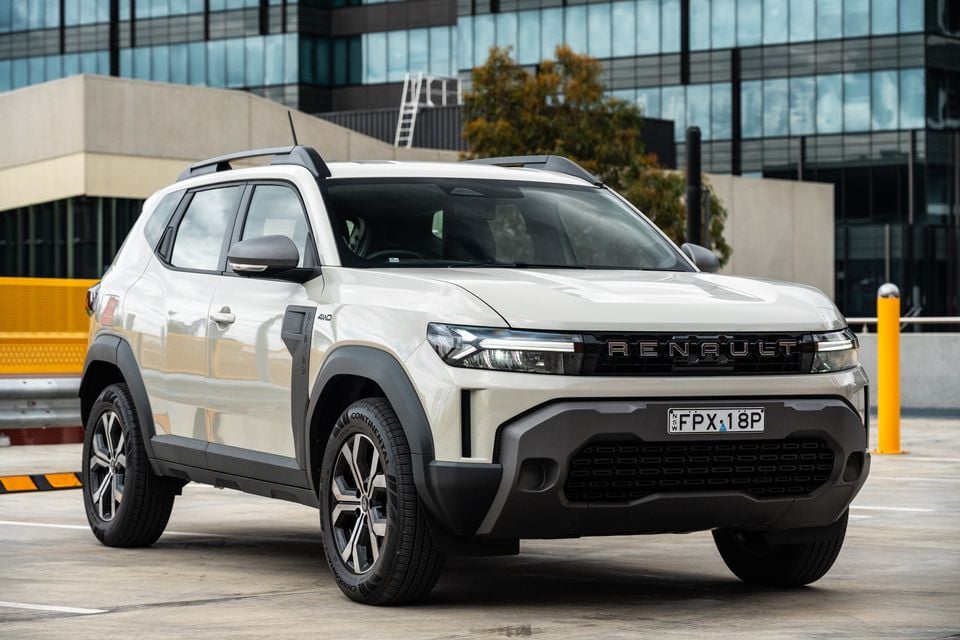
A big reason for that is because it still feels like a car, as rhetorical as that may sound. It presents decent road manners and a high level of interior sophistication, and while it has its fair share of hard, scratchy cabin plastics, it doesn’t detract from the Duster’s vibe.
It’s simply more mature and much more substantial. You could very easily live with the Duster day-to-day, even in manual guise, as its clutch and gearbox are user-friendly enough – neither are by any means sharp or precise, but that means they’re unintimidating.
Better yet, the Duster can go surprisingly far off-road if need be. Its all-wheel drive system is relatively competent, and while its ground clearance may not stack up to the Jimny's, it’s far more capable than just about every mainstream compact SUV alternative.
On the other hand, the Jimny is wobbly on the road, has vague steering, and is incredibly slow. It’s rare that a new car available in 2026 requires you to counter-steer to stay in a straight line on the freeway, yet here we are.
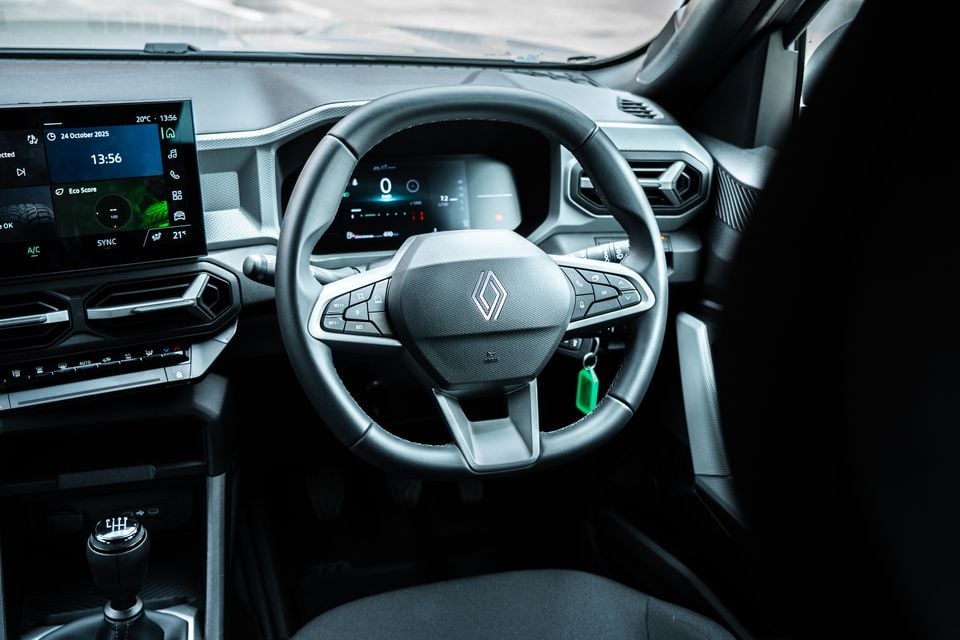
Its interior is also cramped and cheap-feeling, and it generally feels very old once you get it alongside a vehicle like the Duster. Buying it as a daily driver is therefore highly illogical, particularly if you go for a top-spec five-door like the one you see here.
The once-cheap Jimny no longer stacks up in terms of value for money either. The Duster we tested is better-equipped, nicer to drive, and feels newer in every respect, yet it’s cheaper – not to mention more affordable to service, which is crazy given the Jimny's utilitarian powertrain and the reputation of Euro cars for high maintenance costs.
That said, the Jimny is a blast off-road even in stock form, and often a good laugh on-road with its impossible sluggishness and unpredictable ride – especially if you’re a glass-half-full kind of person. There aren’t many cars out there with this level of character, and it’s easy to see why the Jimny is so popular among the off-road community.
It therefore makes a lot of sense to get a Jimny for use as a weekend off-road toy, and making it your own via the aftermarket is certainly enticing. But if you want something for that and everything else, get a Duster.
CarExpert can save you thousands on a new Suzuki Jimny or Renault Duster. Click here to get a great deal on a Jimny, and here for a Duster.
Click the images for the full gallery
Share your thoughts with us in the comments below!
Max Davies is a CarExpert journalist with a background in regional media, with a passion for Japanese brands and motorsport.
Share your thoughts and write a review of a car you own and get featured on CarExpert.
William Stopford
2 Hours Ago
William Stopford
2 Hours Ago

Damion Smy
2 Hours Ago

Ben Zachariah
10 Hours Ago

Dave Humphreys
13 Hours Ago
William Stopford
17 Hours Ago