




Damion Smy
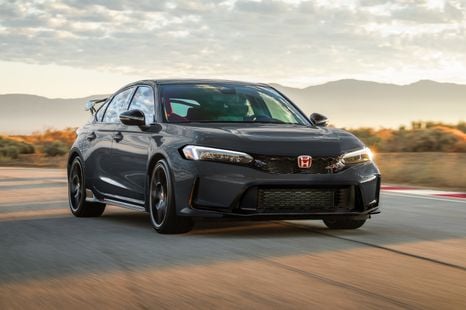
2027 Honda Civic Type R: Facelifted hot hatch revealed
Styling and interior tweaks as well as a new colour come ahead of the Civic Type R’s 30th anniversary in 2027.
6 Hours Ago
The Blue Oval says its new single-turbo 2.0-litre four-cylinder is its most responsive diesel engine yet.

Managing Editor
Managing Editor
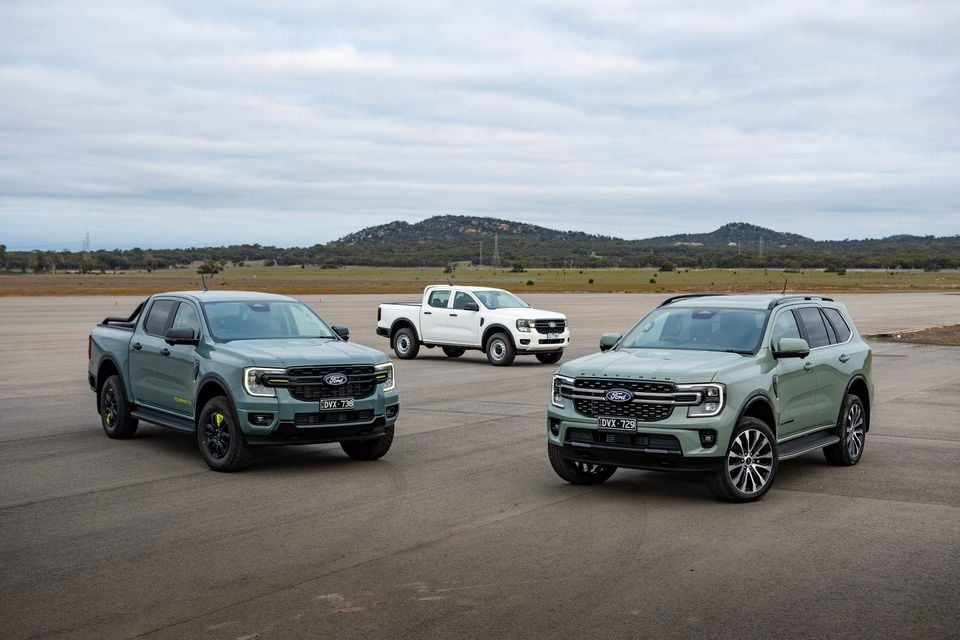
The updated MY2026.50 Ford Ranger ute and Everest SUV might look largely unchanged, there’s at least one big tweak that is likely to prompt plenty of discussion – their new entry-level turbo-diesel engine.
The fresh single-turbo 2.0-litre four-cylinder, derived from an engine employed across the brand’s Transit van range, replaces the volume-selling 2.0-litre 'Bi-Turbo' diesel that debuted in the original Ranger Raptor before eventually trickling down into the wider Ranger and Everest lineups.
Switching from a twin-turbo to single-turbo setup has resulting in the 'upgraded' Ranger and Everest producing less power and torque than their predecessors.
Where the outgoing bi-turbo 2.0-litre produced 154kW of power and 500Nm of torque, the new single-turbo diesel makes just 125kW and 405Nm – a considerable 29kW/95Nm less.
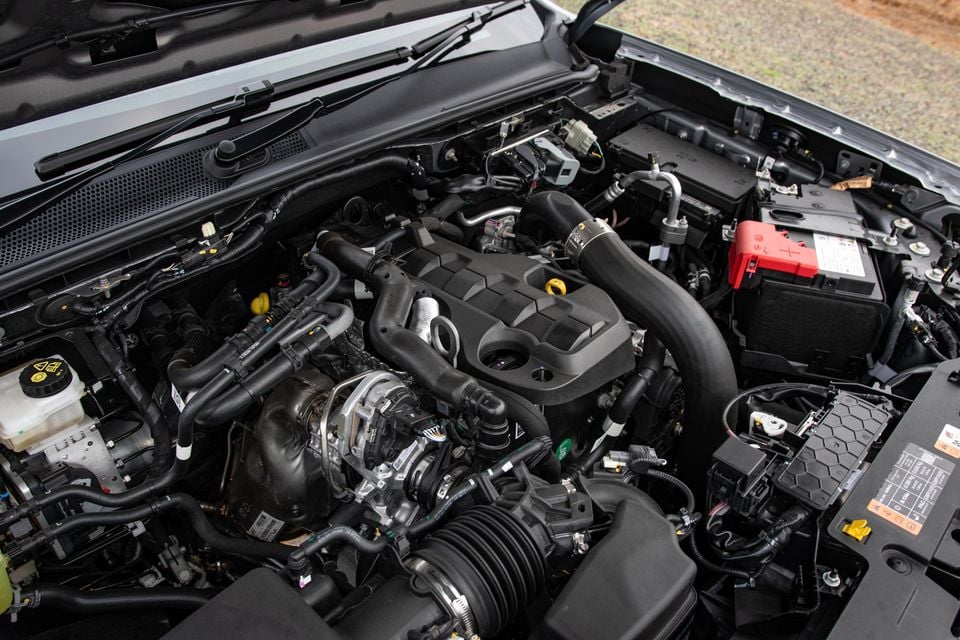
Ford defended the lower outputs of the new engine, which does away with the problematic wet cambelt design of the old bi-turbo engine, which has been discontinued globally, at the launch of the MY26.50 Ranger and Everest, claiming it is the most responsive diesel engine it had ever offered.
“Any of us can write down what we like on paper. What really matters is how an engine and a vehicle performs on the road," said Ford Australia director of marketing Ambrose Henderson.
"That engine, compared to others on paper, sure, but if you do a back-to-back comparison, you think about are they as responsive, they won't be. This is the most responsive diesel engine that we've ever produced. What's their torque curve look like? Actual usable torque, not torque that we write down on a piece of paper.
"The maximum available torque on that engine is over a far greater spread, even than the Bi-Turbo, which was a fantastic engine in its own right, and much bigger than most of the competitors. So, the actual real-world ability of that engine, the drive of that engine, the refinement of that engine, is far in advance of what the competitors have."
For reference, the new Toyota Hilux lineup is powered by a 2.8-litre turbo-diesel producing 150kW and 500Nm (420Nm for manual variants), while the Mitsubishi Triton and Nissan Navara (which now share the same platform and powertrain) are powered by a 2.4-litre bi-turbo diesel engine making 150kW/470Nm.
Mr Henderson noted that the Bi-Turbo's retirement from the local Ranger and Everest lineup was part of a “global engine rationalisation” plan designed to help the Ranger meet emissions regulations in other markets.
While power and torque is down, Ford's new single-turbo diesel engine is claimed to be both more refined and efficient. In the Ranger, its official combined fuel consumption figures are 6.8-7.6L/100km (4x2/4x4), an improvement on the outgoing bi-turbo engine's 7.6-8.2L/100km.
Mr Henderson added that the Ranger lineup has the “broadest range of engines” in the dual-cab ute segment. Along with the entry-level 2.0-litre turbo-diesel, the Ranger is also available with a 3.0-litre V6 turbo-diesel, a 2.3-litre plug-in hybrid petrol-electric powertrain, and the 3.0-litre twin-turbo petrol V6 in the Raptor performance flagship.
“It's about choice. If the customer wants the all-out best on paper, we've got that,” said Mr Henderson.
“We've got a V6 petrol in Raptor, we've got a V6 diesel across the entire range. Now, if they want all the capability of Ranger with no compromise but lower fuel economy, we've got [an engine] that serves that. For the customer that wants the combination of capability and value, we've got the new 2.0-litre new engine.”
Apart from ditching a turbocharger, Ford's new single-turbo diesel engine brings a host of other hardware and software changes, and comes matched with a 10-speed automatic transmission (rather than the old six-speed unit), and a shorter final drive ratio.
"Based on listening, based on understanding our customers, we recognize that capability is still core, and with the 2.0-litre you get that capability, including 3.5-tonne towing, but you also get efficiency and refinement from pairing it with both the 10-speed transmission now and also a final drive ratio of 3.73," said Pritika Maharaj, the chief program engineer for Ford's global T6 platform.
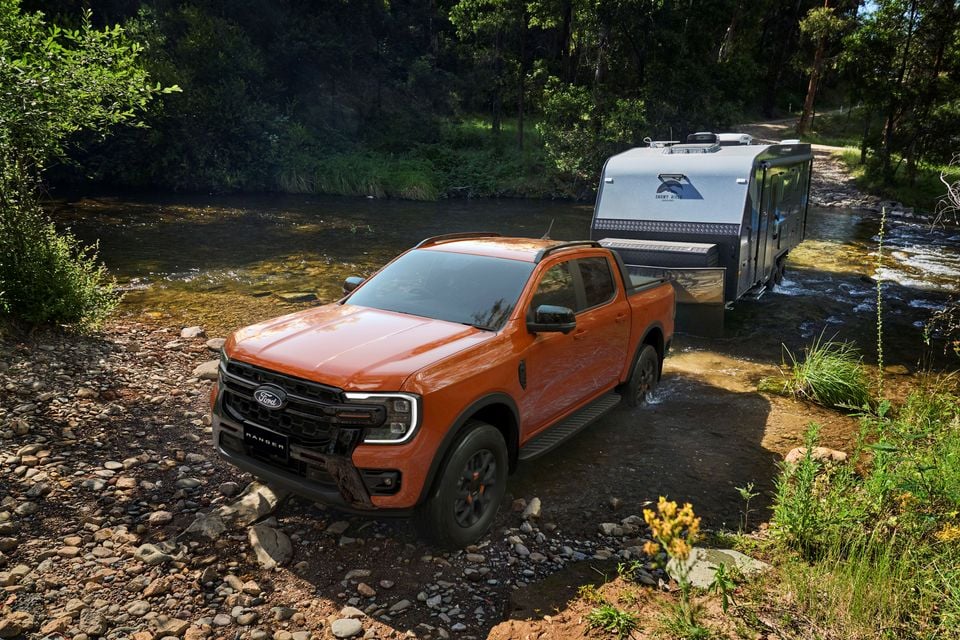
"But we've also completed a full calibration of both the engine and transmission to really give you a connected, responsive drive experience. The 2.0-litre turbo is our most responsive diesel yet.
"We didn't just stop there, though. We've also upgraded the fuel system, so we've got [new] fuel injectors and fuel pumps, we've moved from the wet belt to a chain drive, and that's really in response to understanding that cost of ownership is a key priority for our customers.
"So we wanted to take out the servicing need and take that away, and we've also upgraded to steel pistons to take advantage of their thermal properties in combustion."
Marton Pettendy is a veteran motoring journalist and editor with decades of experience across Australia’s leading automotive titles.
Damion Smy
6 Hours Ago

William Stopford
6 Hours Ago
Damion Smy
8 Hours Ago
William Stopford
9 Hours Ago
Damion Smy
10 Hours Ago

Josh Nevett
11 Hours Ago
Add CarExpert as a Preferred Source on Google so your search results prioritise writing by actual experts, not AI.