




Josh Nevett
2027 Mazda CX-5 Evolve review: Long-term introduction
It's bigger, edgier and more tech-heavy, so how does the overhauled Mazda CX-5 handle an active urban lifestyle? We’ve got three months to find out.
3 Hours Ago
Mazda's biggest, most expensive SUV in Australia is available with a choice of petrol or diesel engines. Which is better?

Contributor
Contributor
Mazda wants to move further upmarket, and the CX-90 is a key part of that plan.
It comes on the back of a significant investment from Mazda in a new platform and new engines, at a time where rivals are trying to make their old cars last longer, and are cutting back their investment in internal combustion.
That’s not to say the CX-90 is stuck in the past. Its engines feature 48V mild-hybrid assistance, and the diesel in particular offers the sort of efficiency unimaginable in large cars just a few years ago.
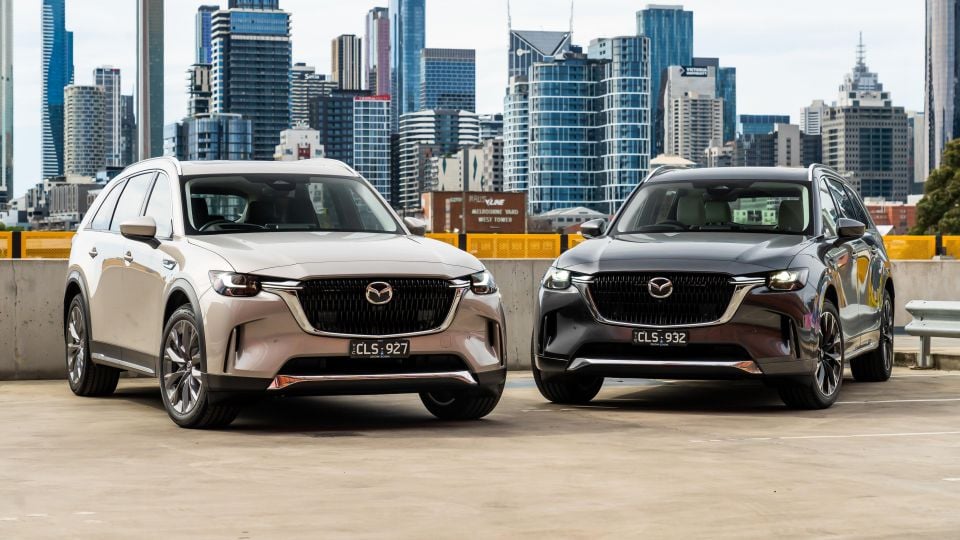
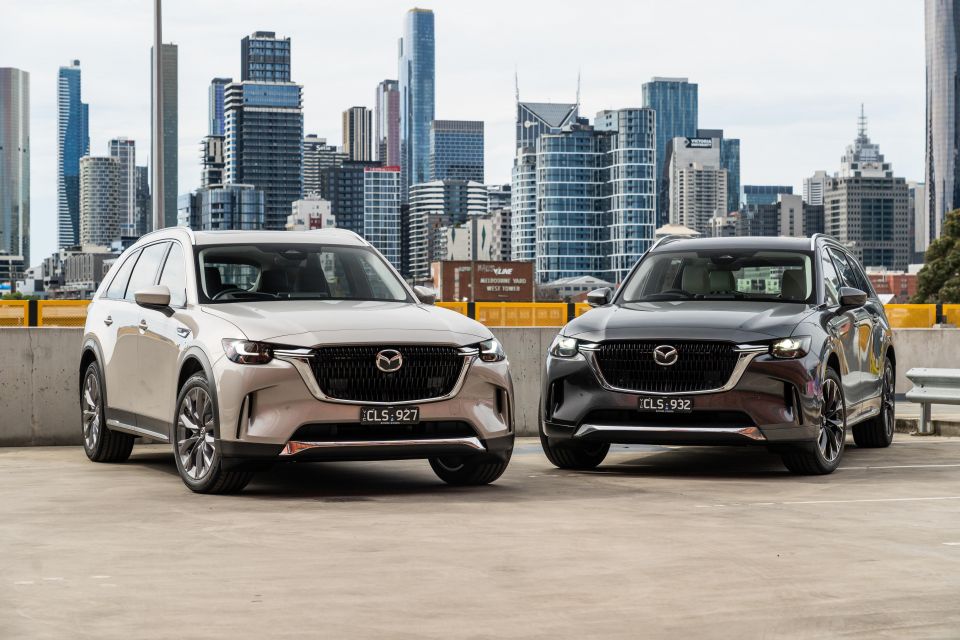
But which of the two engines should you go for? We’ve put the Mazda CX-90 D50e GT alongside the Mazda CX-90 G50e Azami to find out.
Prices exclude on-road costs
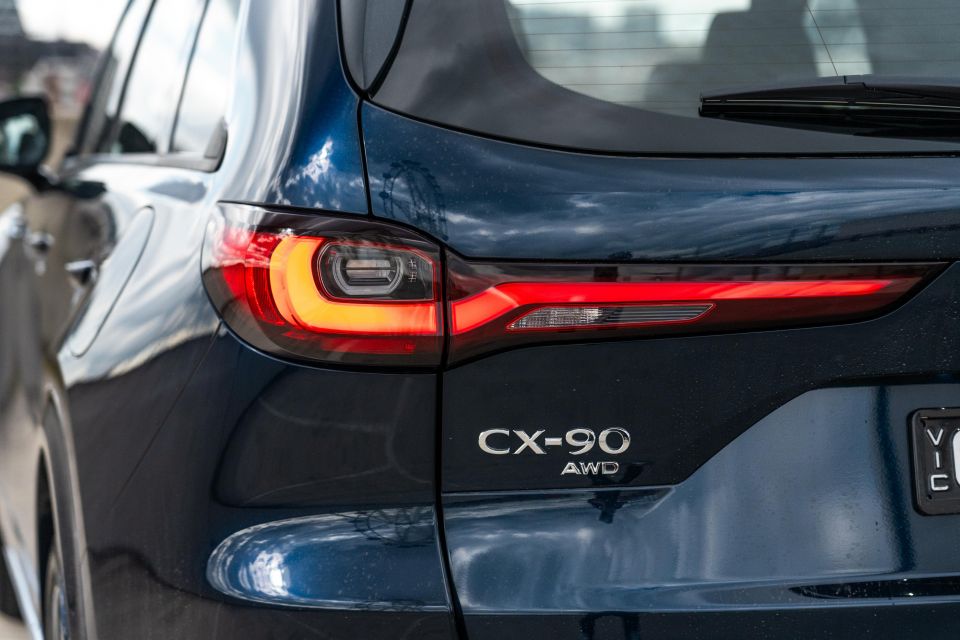
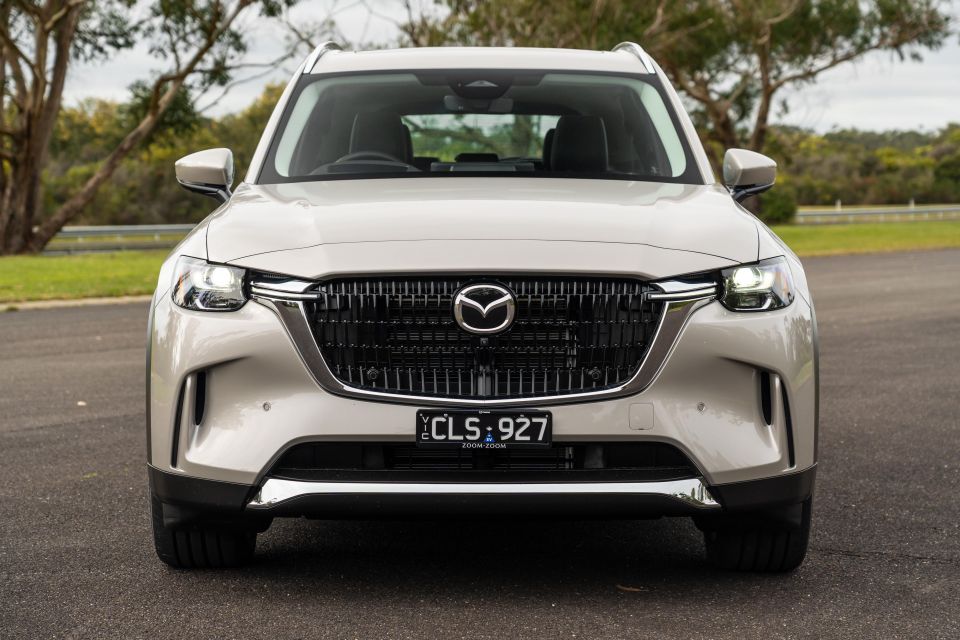
The new CX-90 takes the design language from the outgoing CX-9 and drags it into a new era, with a simple design and plenty of high quality materials.
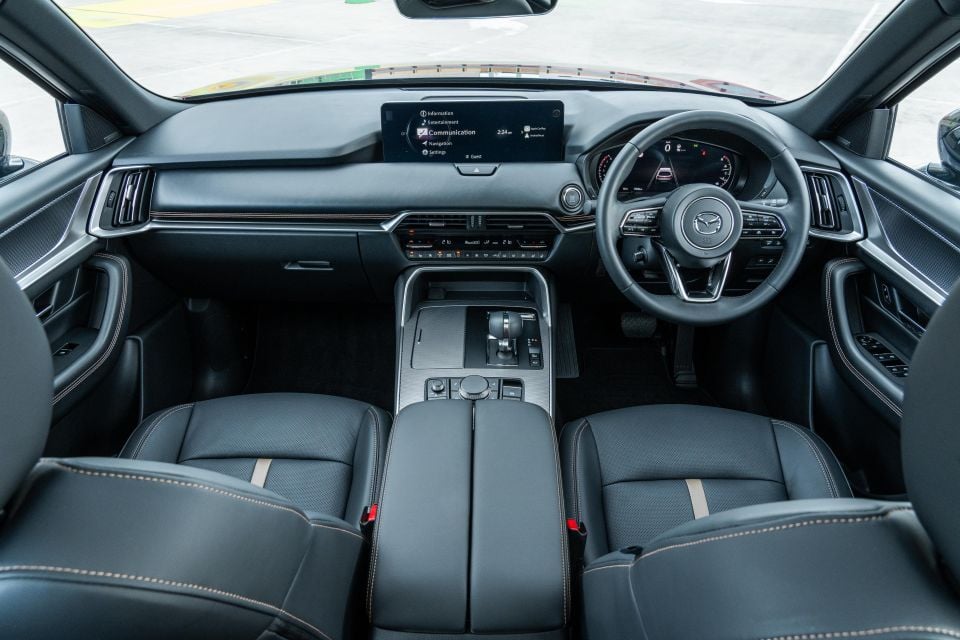
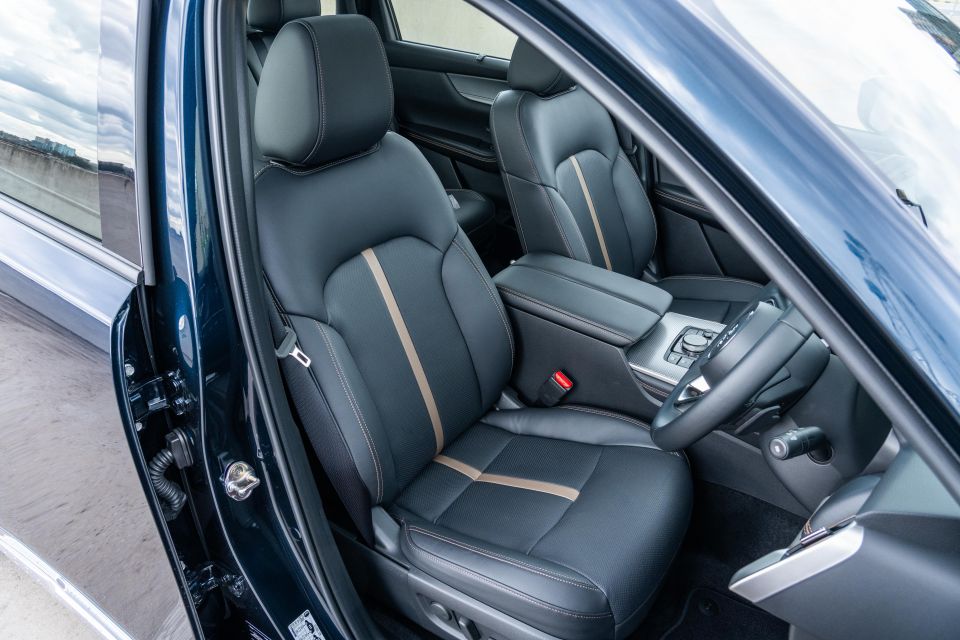
It’s also a really nice place to spend long periods of time. The front seats are generously padded armchairs with heaps of adjustment, all the places you rest your elbows are soft to the touch, and the view out of the tall windows is palatial.
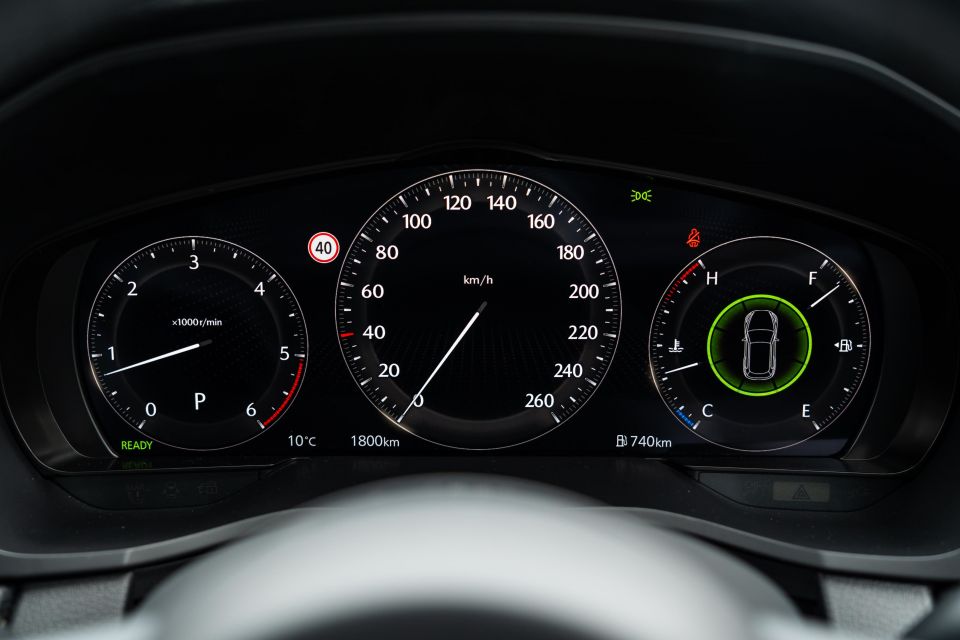
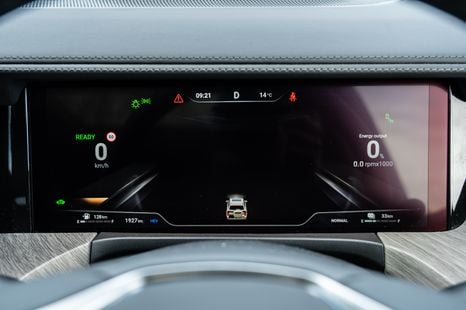
There’s also something reassuring about how conventional it all is. The climate control pod has proper buttons and dials, the infotainment screen is nestled neatly in the dashboard rather than dominating it, and the digital dials are designed to mimic classic instruments.
The inverse of that? It’s a bit boring, even in top-spec guise. Restraint isn’t to everyone’s taste.
The most prominent link between the CX-90 and less expensive Mazda models is the infotainment system. It’s shared with the wider range and looks sharp on the 12.3-inch display angled towards the driver.


With wireless smartphone mirroring, factory satellite navigation and AM/FM/DAB radio, it’s fully featured. The menu setup also feels logical, as you jump around using the rotary dial on the transmission tunnel.
The display is only a touchscreen when you’re using smartphone mirroring and stationary, and even if you are trying to poke and prod the display it’s mounted quite a long way away – so it’s easier to move around using the dial instead.
There are two USB-C ports under the armrest and there’s a wireless phone charger under the dashboard. Dual cupholders feature as well beneath a nicely damped lid that folds away. Throw in door pockets with plenty of room for oversized bottles and there’s no shortage of spaces.
Space in the second row is impressive, with plenty of legroom and headroom for taller teenagers or full-sized adults back there. The rear doors are huge, making it easy to clamber in (or load kids in), and the door sill is protected by the door trim.
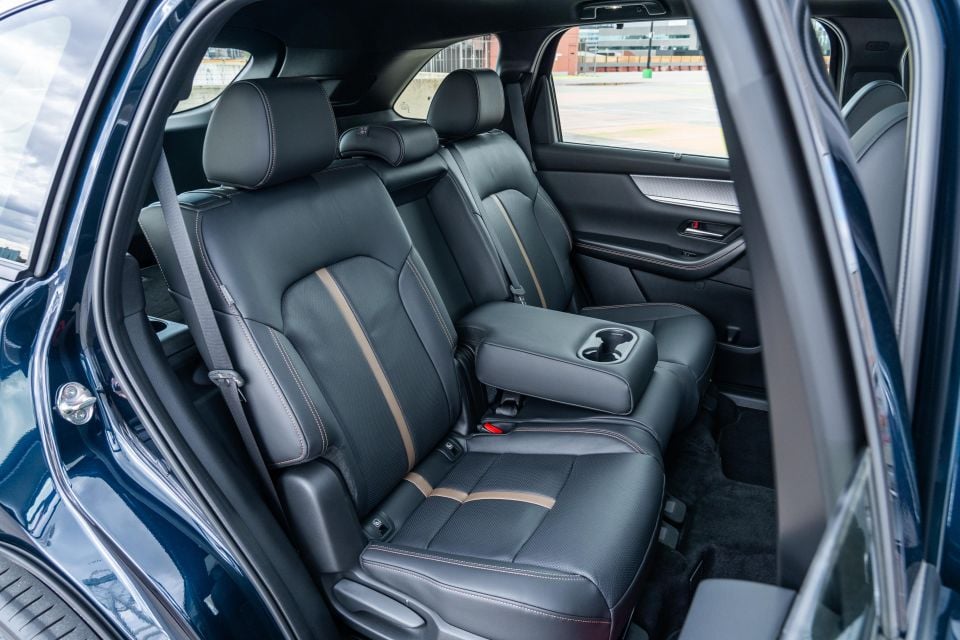
That means no muddy legs when kids drop out of the car, and less of a step into the back seat for short passengers.
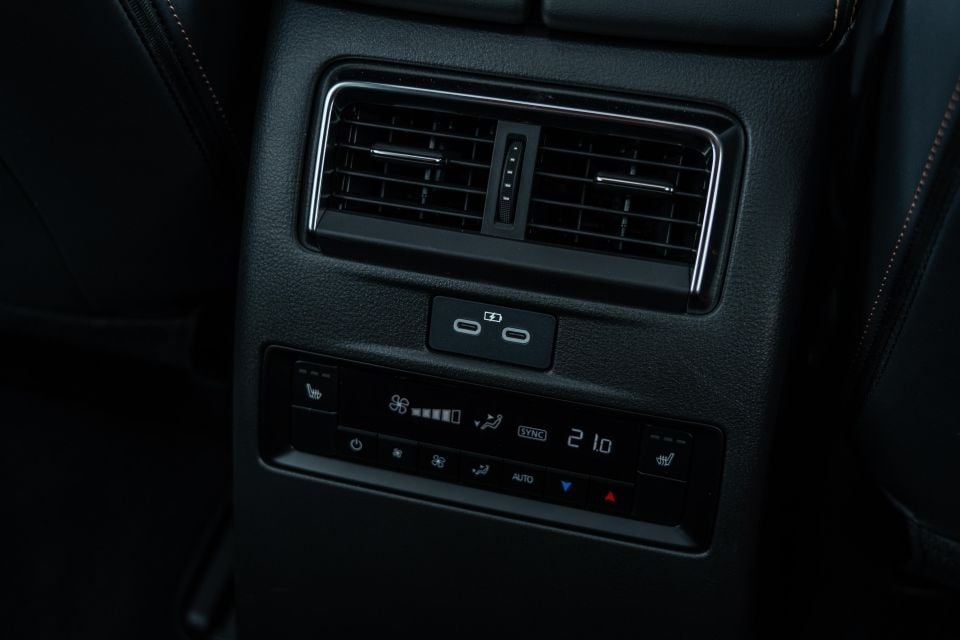
ISOFIX points feature on the outboard rear seats, and there’s a trio of top-tether points in the second row. USB-C ports, air vents, and climate controls all feature, along with a central fold-down armrest.
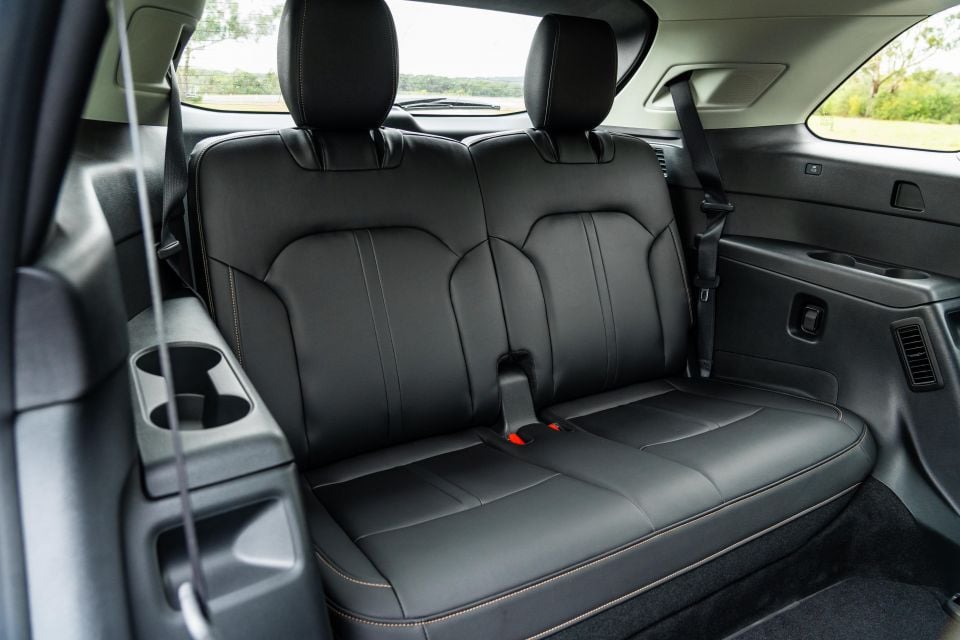
Behind the tilting, sliding second row hides a pair of seats that are definitely better than what’s on offer in the CX-9, but still aren’t quite class-leading.
Headroom back there is up by 36mm, legroom by 18mm, and shoulder room by 3mm when compared with the CX-9 – the outgoing car’s curvy rear had resulted in decent legroom for third-row occupants but not much in the way of headroom.
Toe room is limited, but you can fit a pair of taller children or smaller teenagers back there without much difficulty. It’s also not too difficult clambering back here. USB ports, air vents, and cupholders all feature.
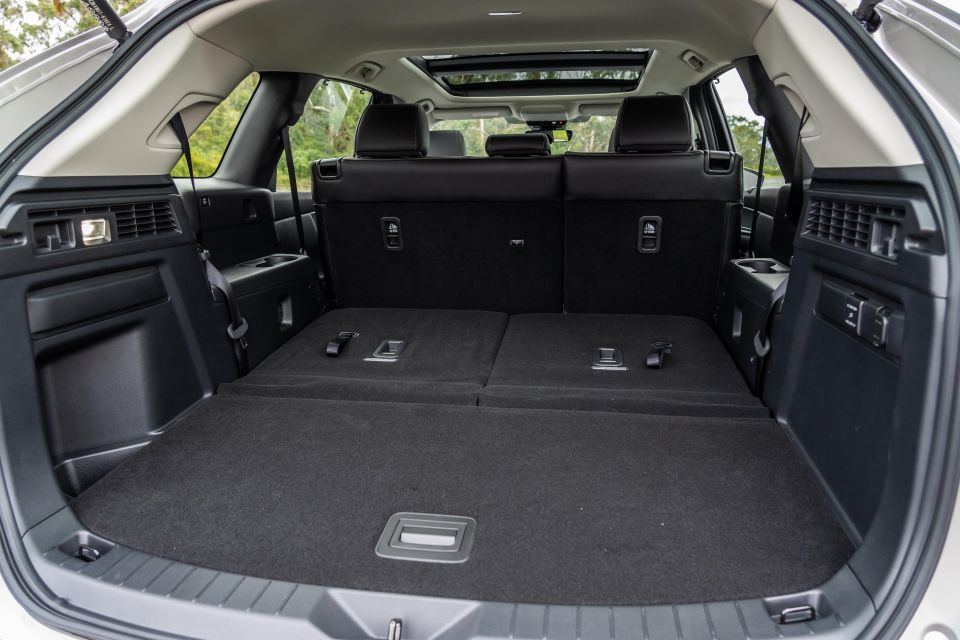
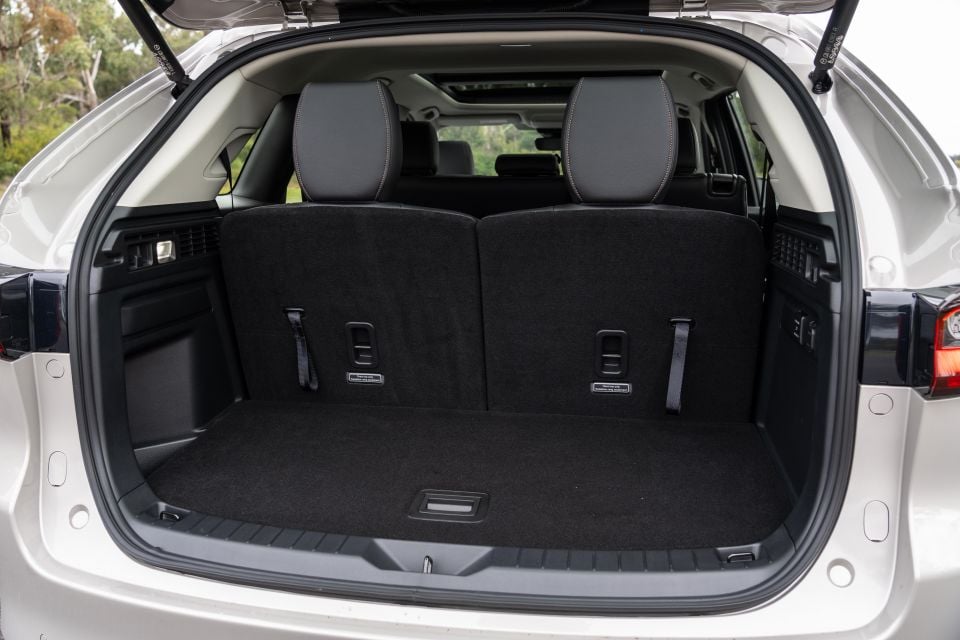
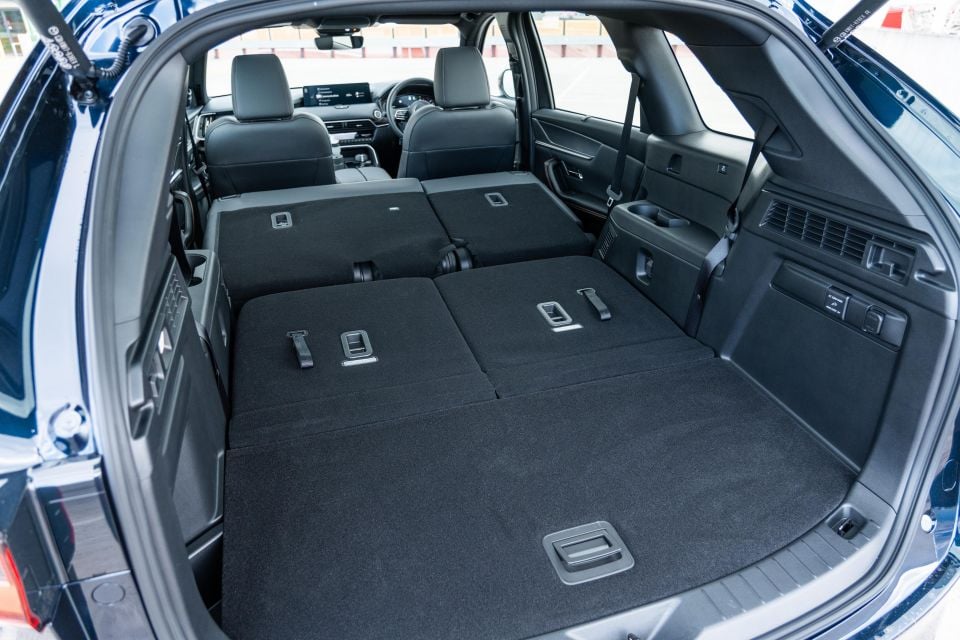
With all three rows up, there’s 257L of space, an improvement of 59L. Drop the third row and this space expands to 608L, measured to the height of the seat back and including the underfloor storage space.
Drop this row, and there’s 2025L, measured to the ceiling and again accounting for the underfloor storage space. Under the boot floor there’s a space-saver spare.
The tailgate features both a button for closing it as well as one for closing it and locking the vehicle.
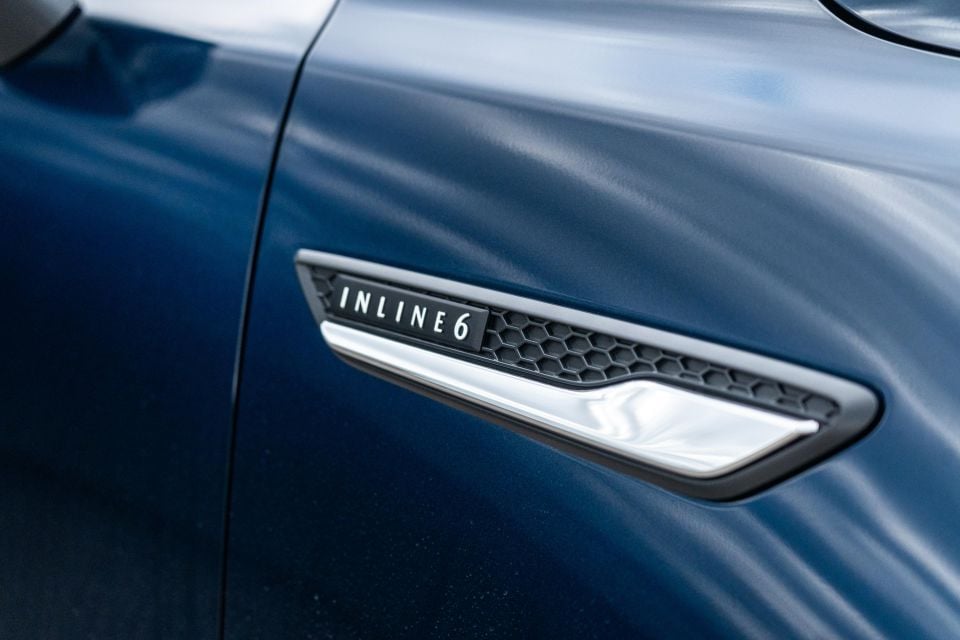
Power in the CX-90 G50e comes from a 3.3-litre turbocharged inline-six petrol engine backed by 48V mild-hybrid tech.
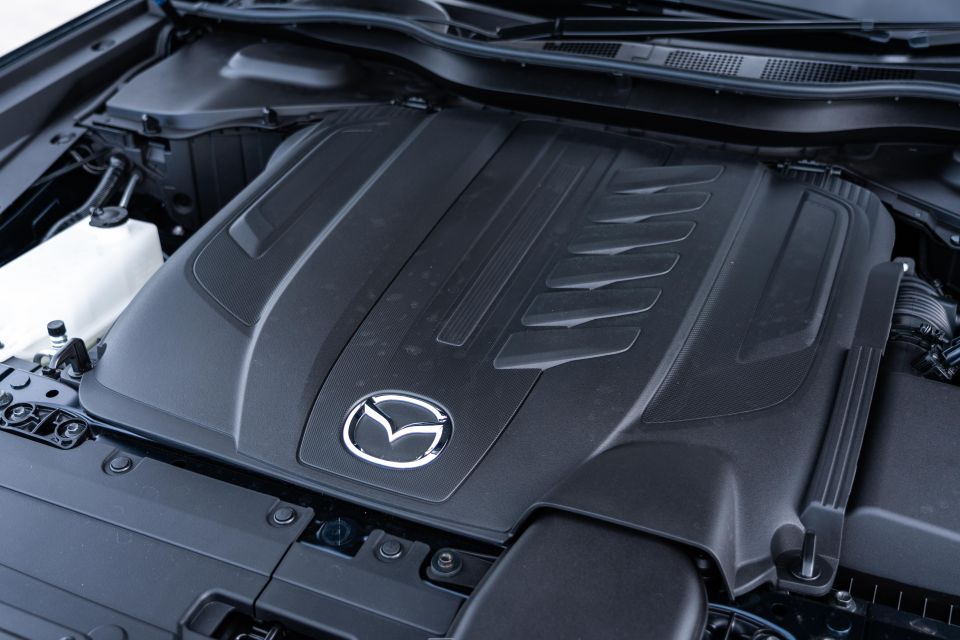
Outputs are 254kW of power between 5000 and 6000rpm and 500Nm between 2000 and 4500rpm.
Claimed fuel economy is 8.3 litres per 100km, but we saw 10L/100km on a week skewed to city driving.
You’ll need to splurge on 95 RON premium unleaded, and the fuel tank holds 74 litres.
The D50e is powered by a 3.3-litre inline-six turbo-diesel backed by 48V mild-hybrid tech.
Outputs are 187kW of power at 3750rpm, and 550Nm of torque between 1500 and 2400rpm.
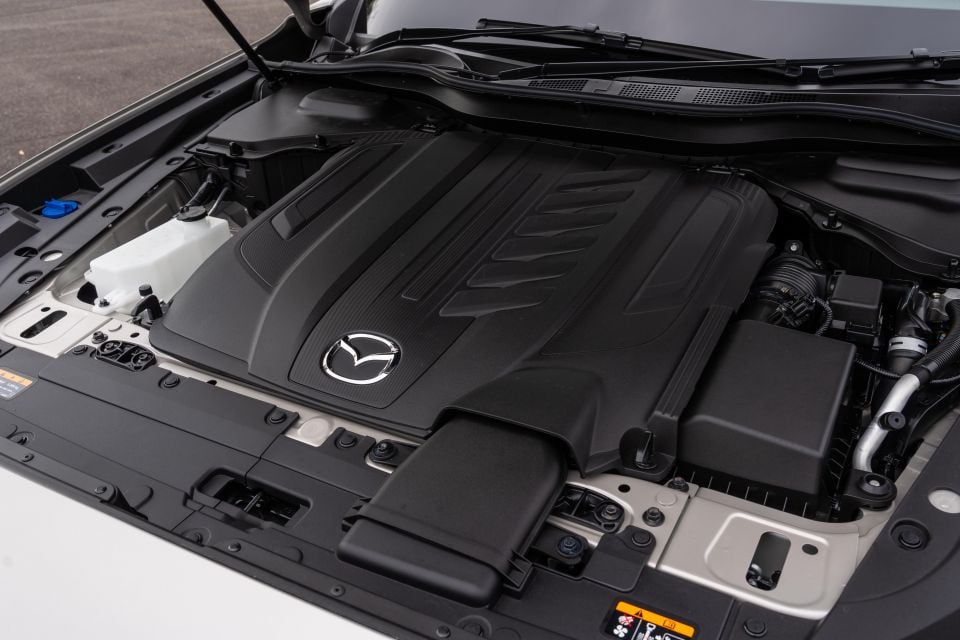
The fuel tank holds 74 litres, and claimed fuel economy is 5.4 litres per 100km on the combined cycle. We saw closer to 6.0L/100km on a drive loop.
Both models feature a new eight-speed automatic transmission, developed in-house and called Skyactiv-Drive, which substitutes a conventional torque converter for a wet clutch.
They also feature Mazda’s M Hybrid Boost system, which comprises a 48V mild-hybrid system that offers smoother start/stop, and can give the petrol engine a helping hand at low revs.
Before we get into the differences between the petrol and diesel, let’s talk similarities.

There’s a heavy set, old-school feel to the CX-90 that’s quite refreshing. The steering is quite heavy and slow at low speeds, the throttle has a long travel, and the conventional automatic is more natural than a dual-clutch in traffic.
That maybe goes too far in some cases; slightly lighter and more direct steering wouldn’t go astray at city speeds.
Ride quality is better in the bigger, heavier CX-90 than the rough-and-tumble CX-60. Even the Azami with its 21-inch alloys does a good job smoothing out pimply urban roads, and softens sharp hits from speed bumps or potholes nicely.
It settles down nicely at higher speeds, too. Despite tipping the scales at ~2200kg it settles quickly over big crests and dips, for a long-legged feel on the highway.
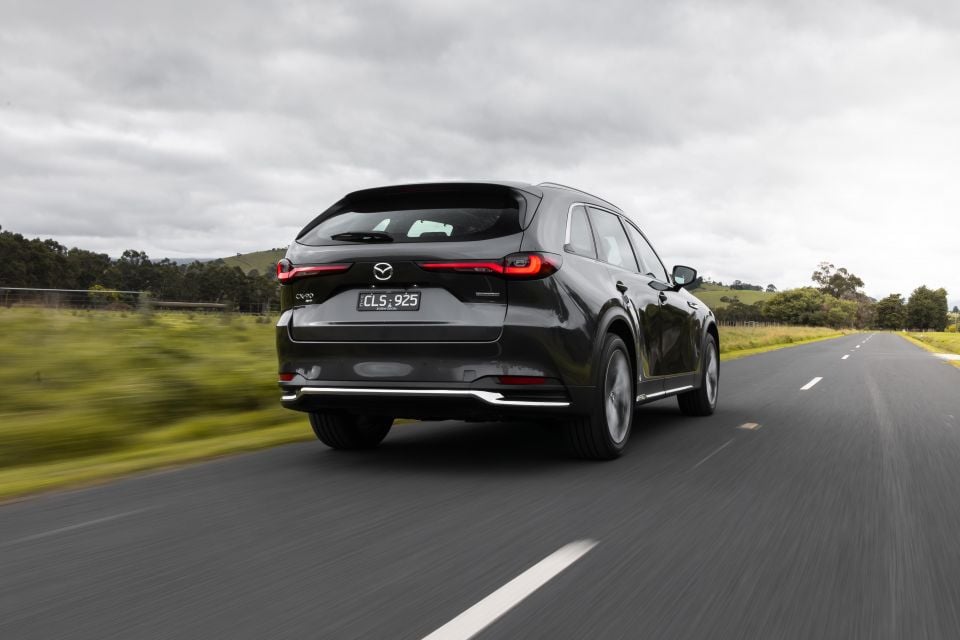
Combined with adaptive cruise control and lane-centring assists that are smartly calibrated, and a blind-spot monitor that makes it easier to know what’s hiding behind the chunky C-pillar, the comfortable ride makes this a nice place to spend long periods of time.
Mazda used to struggle with noise insulation, but its latest cars are whisper quiet. There’s minimal road roar from the tyres on rural highways, and the engine settles down nicely at a cruise.
Of the pair, the diesel is the more refined and relaxed engine. Although it’s down on power compared to the petrol, the fact it develops more torque (550Nm v 500Nm) at lower revs (1500rpm v 2000rpm) means it feels more muscular at city speeds, backed by an artificially augmented rumble from the engine.
Lean on the throttle and it pulls nicely from almost any speed in a way that feels very BMW.

The petrol engine isn’t exactly a screamer, with plenty of torque when you call on it at city speeds, but it needs to be worked slightly harder than the diesel to get the CX-90’s considerable mass moving in a hurry.
Regardless of which option you choose, the transmission and mild-hybrid system needs some work.
The eight-speed automatic generally does a good job shuffling quietly through the gears in the background but occasionally it’ll throw a sharp shift into the mix to keep you on your toes.
Coupled with a mild-hybrid system that’s a bit too keen to cut the engine out when you lift off the throttle, the car can feel everything from effortless and premium to a bit awkward and jerky depending on how the hybrid system is (or isn’t) behaving.
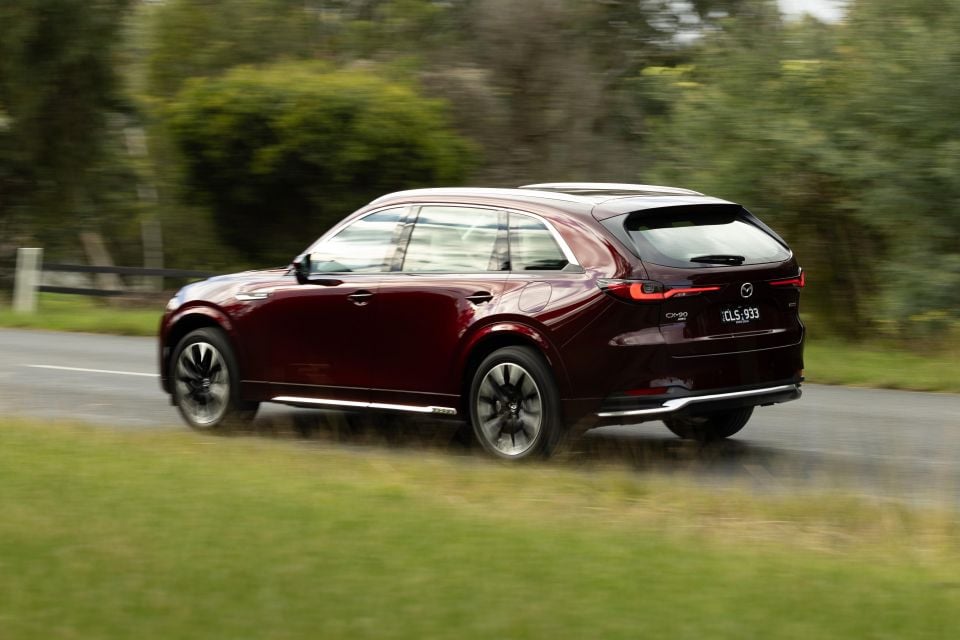
It also makes all sorts of noises that aren’t what you’d call particularly premium.
You get a gurgling, grinding noise from the electric motor when you lift off the accelerator at low speeds as the mild-hybrid system harvests energy using regenerative braking, and you can hear the all-wheel drive clutch packs engaging and disengaging on the move.
It’s all very interesting, but it all feels a bit first generation.
If this is the car for you, we’ll compare offers from trusted dealers, handle the back and forth and manage your purchase from enquiry to delivery.
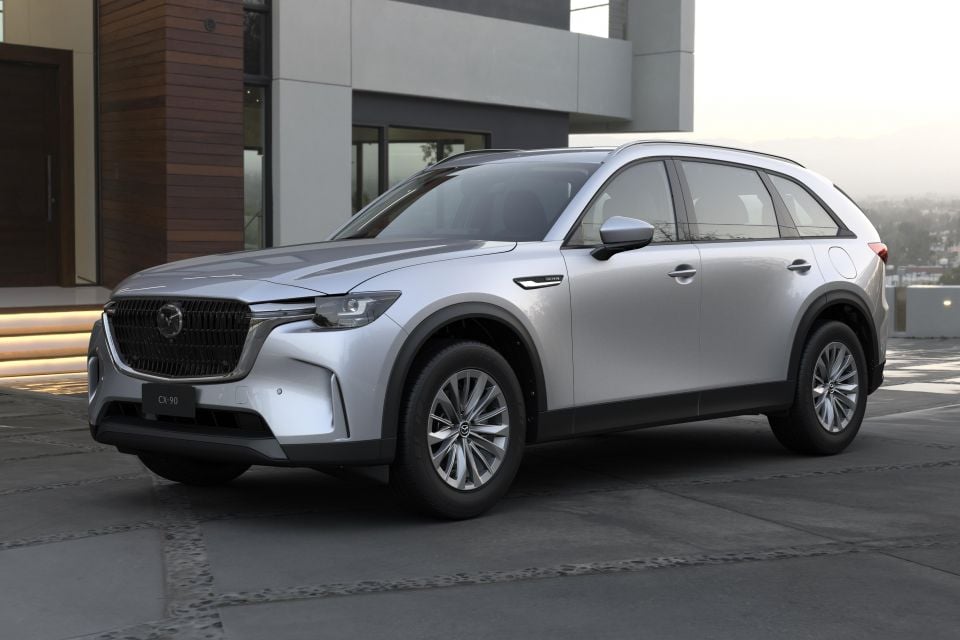
CX-90 Touring highlights:
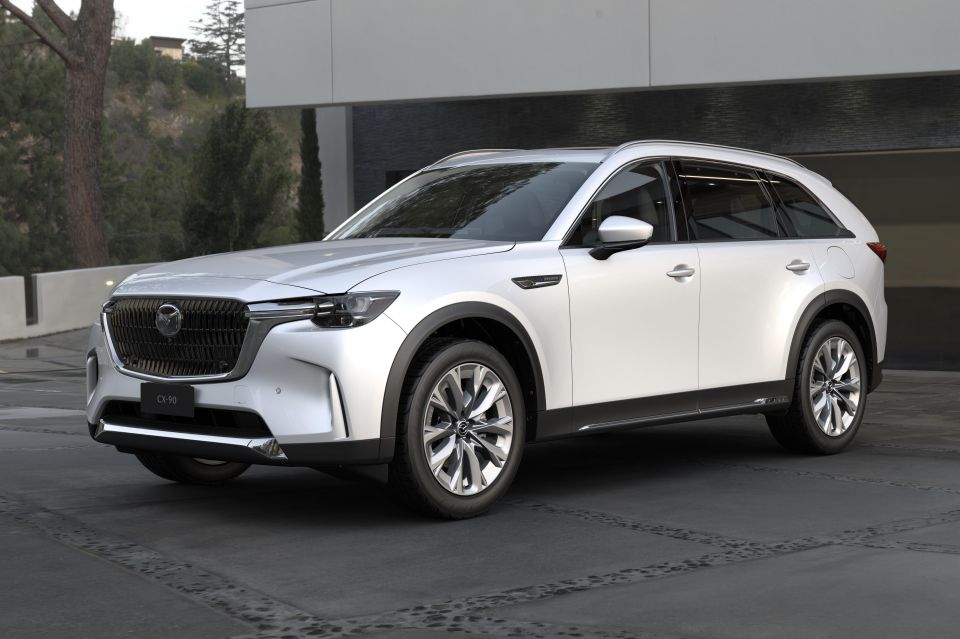
CX-90 GT adds:
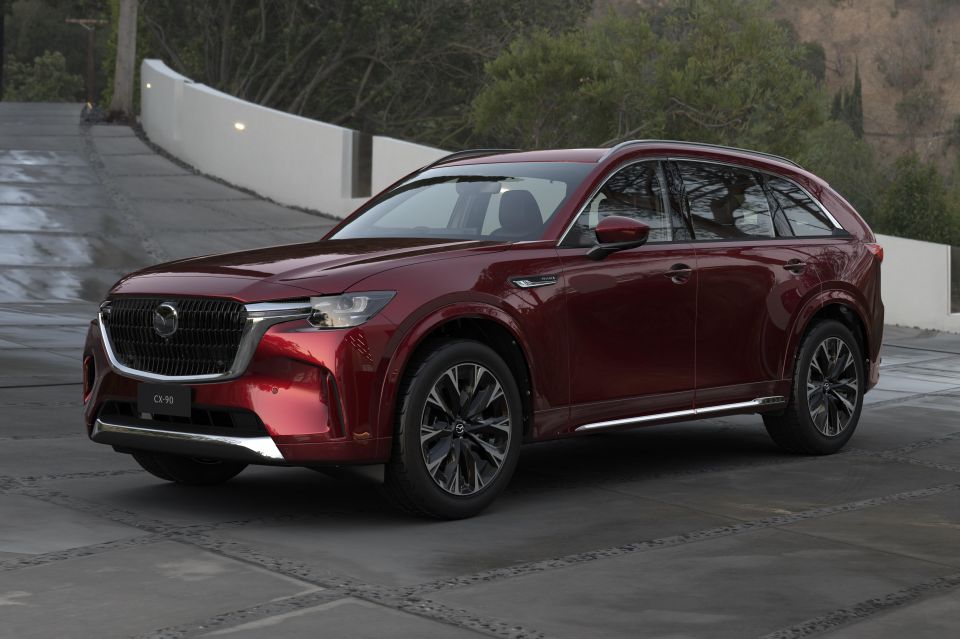
CX-90 Azami adds:
The CX-90 hasn’t yet been crash tested by ANCAP or Euro NCAP – and based on recent comments from Mazda Australia, it might not ever see an NCAP crash barrier.
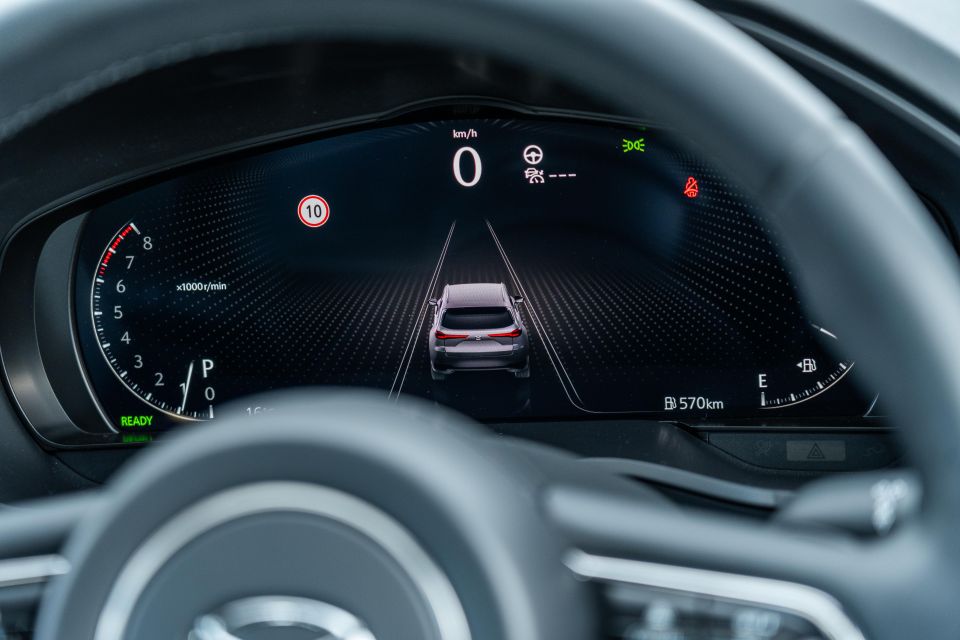
Standard safety features include:
CX-90 GT adds:
CX-90 Azami adds:
Mazda offers five years of capped-price servicing, though the diesel has shorter intervals of 12 months or 10,000km versus 12 months or 15,000km for the petrol.
The diesel’s first five services are capped at $478, $643, $975, $643 and $478, or $3117 over the course of five years.
The petrol’s first five services are capped at $437, $644, $588, $1268 and $453, or $3390 over the course of five years.
Mazda deserves credit for bucking the industry trend and investing in new, fit-for-purpose internal-combustion engines.
The world is moving to electric power, but there’s a place for brawny petrol and diesel engines in big family four-wheel drives for now.
As for which is the better engine in the CX-90? Like the CX-60, it’s the diesel.
Although the petrol is slightly more refined, the diesel is every bit as punchy and sips fuel like a hybrid. Given the minimal difference in list price, it’s the CX-90 we’d be opting for.
More broadly, the CX-90 is a good start for Mazda as it moves upmarket… but more refinement is needed regardless of which engine you go for.
From the odd noises to the hyperactive automatic start/stop system, to the slightly too keen active safety assists, the polish we’ve come to expect from the CX-5 and CX-9 isn’t quite present yet in the new Large Car Architecture.
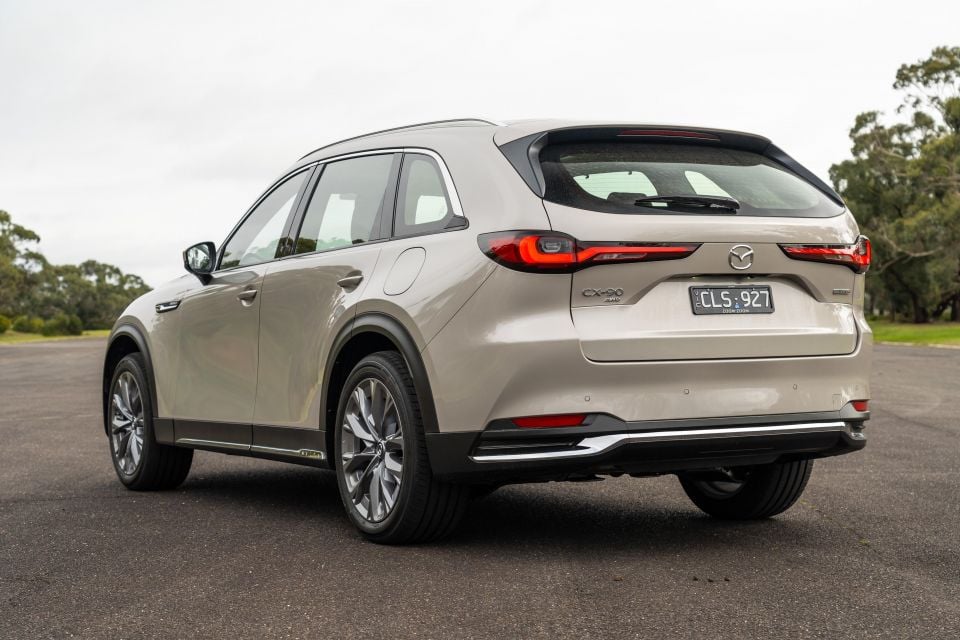
Click the images for the full gallery
BUY: Mazda CX-90 MORE: Everything Mazda CX-90
Share your thoughts with us in the comments below!
Scott Collie is an automotive journalist based in Melbourne, Australia. Scott studied journalism at RMIT University and, after a lifelong obsession with everything automotive, started covering the car industry shortly afterwards. He has a passion for travel, and is an avid Melbourne Demons supporter.
Share your thoughts and write a review of a car you own and get featured on CarExpert.
Josh Nevett
3 Hours Ago

Damion Smy
19 Hours Ago


Alborz Fallah
20 Hours Ago

William Stopford
20 Hours Ago

Matt Campbell
1 Day Ago

Ben Zachariah
1 Day Ago