Why experts say driving is vital for mental health during COVID-19
"Destination-less driving may be a great way to relax for many people. This can provide us a time to daydream and contemplate and even problem solve which can all have many positive benefits on our mental health." - Michelle Saluja, Principal Psychologist.
Last week I wrote an opinion piece about why going for a non-essential drive should be legal. This week, I spoke to a psychologist about the mental health benefits of being able to go for a drive for the sake of it (especially for extroverted personalities), in order to deal with the lockdown caused by the Coronavirus pandemic.
To recap my argument from last week, so long as you are not coming in contact with others in an unreasonable way, simply going from point A to point A for the sake of getting out of the house is a great way to mentally get through the current crisis we all find ourselves in.
To provide some context, horse racing, golf, going to Bunnings, getting your car washed, going for a bike ride or run (past dozens of people in a public place), shopping at street markets or shopping centres, and plenty of other examples are still all very much legal.
Nonetheless, state authorities have decided – without any actual valid medical reason – that driving for the sake of driving, even by yourself in your own car isolated from the rest of the world, is in violation of quarantine and new health regulations. These violations are being dealt with by four-figure fines across Australia.
Not surprisingly, our point of view and the original article led to a lot of debate amongst car enthusiasts and others. Some see it as selfish behaviour, ignoring the argument for mental health and instead suggesting the ‘what-if’ scenarios of having car accidents and putting extra load on the health system at a time that it doesn’t need it.
It’s a fair point, however it’s also interesting to note that more people are currently injuring themselves at home (e.g. falling off ladders) in the pursuit of housework than prior to the lockdown.
On the support side, we had plenty of doctors, nurses, experts in infection control and other medical experts contact us arguing that the effects of the lockdown on people’s mental health are a cost that no one is yet willing to discuss and that a drive is a great way to relieve some mental stress.
Nonetheless, we needed someone that deals with mental health as a profession, so we went looking for a qualified and highly experienced psychologist to help us understand why driving for the sake of just getting out of your house, can be beneficial to your mental health.
Michelle Saluja is the Principal Psychologist and Director of Body Mind Soul Clinic on the Gold Coast and she took the time to answer some important questions below.
The expert: How driving without a destination can help a person’s mental health
“Driving provides us with a sense or perceived sense of freedom, especially if one is feeling trapped or isolated within their house. Imagine your house (those four walls) as being equivalent to your mind, getting out of them can be beneficial for your mental health (like getting out of your head). Being at home can be stressful, even if there’s very little to do, our internal stress levels can very easily go up, thus a drive can be a great stress reliever for many people.
“Getting out in the car or going for a short drive may be really important, especially for those who might be in a home environment that’s toxic or one that may have significant interpersonal issues.
“A drive will provide a short term escape which may assist in allowing them to calm down or clear their head…
“Destination-less driving may be a great way to relax for many people. This can provide us a time to daydream and contemplate and even problem solve which can all have many positive benefits on our mental health.
“A change of scenery is great for the mind and can reinvigorate us in many ways, as it allows us to feel connected to the outside world once again. Some people are unable to do a lot of physical activity, such as the elderly, due to their physical health, thus a drive may be their equivalent to undertaking exercise in the day.
“Jumping in the car and driving without a destination has the ability to reduce the boredom of the restrictions of being at home, though in a safe way that adheres to the social distancing rules.
Tell us in the comments below how driving helps you stay sane during this Pandemic.
More generally speaking, Dr Saluja also had this to say about the current situation.
What are the short- and long-term effects of this level of isolation in general?
“Social isolation and loneliness aren’t the same thing, though there’s defiantly a connection between social relationships and health that is often overlooked. These factors, when added up together such as social isolation, lack of connection and loneliness, can have significant impacts on peoples overall wellbeing.
“Humans are social creatures and we have this underlying need to belong. And when we feel disconnected to the world around us, a sense of loneliness can develop. You couple that with the need to socially isolate and you potentially have a recipe for disaster.
“The concern is when peoples social connections are already limited, then you add the fact that now we have to socially isolate, this may have profound effects on someone’s mental health. Consider the elderly especially, and the impact it potentially will have on them.
“Isolation in itself isn’t great, though short term isolation doesn’t have any long term impacts compared to long term isolation.
“Long term social isolation has been connected to depression and anxiety in humans. Research on prolonged isolation in mice indicated significant behavioural changes. This included increased levels of aggression towards other mice, fearful behaviour, and a heightened sensitivity to perceived threats.
“There is plenty of research out there that supports the negative impacts of being socially isolated. Impacting not only on our mental health, but also our physical health, and we know that they also have a very close correlating relationship with each other.
“The impacts of loneliness and social isolation can have a number of impacts such as:
Mental health conditions – increased risk of depression, anxiety, paranoia and PTSD (due the perceived threat due to the COVID19 outbreak)
Reduced Energy – we may feel more tired or even lack motivation
Physical symptoms – aches and pains, illness or worsening of medical conditions, and headaches
Self-medicating – there may be an increase in the consumption of alcohol, smoking, medications, and drugs
Negative feelings – increased feelings of worthlessness, hopelessness or even thoughts about suicide
Sleep disturbances – and issues with getting to sleep, waking frequently or sleeping too much
“Being around people allows us to measure ourselves in relation to the status quo, it allow us to connect, it helps us feel like we belong, and we feel that warmth of human connection which comes from not just interacting, but also the physical aspects of that, such as hugging and touching.
“The fact that the government has not provided us an end date, the emotions that come with hope and positive anticipation are now currently on hold, thus the social, mental, and physical impacts of the social isolation are still truly yet to be seen within the coming months.
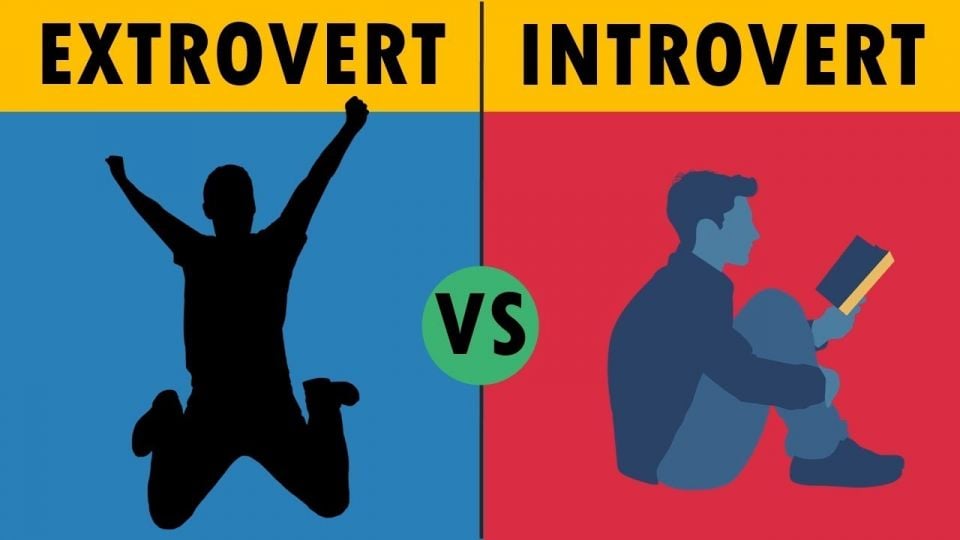
How do different personalities react to isolation, in regards to introvert and extroverts?
“Introverts are going to revel in the isolation, as this is a time when they can indulge their interests during this lockdown period. There’s no better time to be an introvert than during a pandemic such as what we’re going through right now.
“Yet sadly for the extroverts, this could be their worst nightmare. Extroverts fill up by surrounding themselves with others, and the struggle becomes very real when their ability to psychically and socially connect is limited or restricted. It’s the extroverts whom I fear may end up being more susceptible to the mental health impacts of social isolating.
There’s a lot of discussion around the physical effects of the virus on the population, which are indeed rather ominous as we have seen in Europe and USA, but what do you think could be the long-term effects of battling the virus on our mental health?
“This is an unprecedented time for everyone, and in Australia, we’ve only just started seeing the impacts of the virus on our mental health and I feel that the effects will be much more far reaching then we are yet to realise.
“Long term, what we could be looking at is the impacts of the social isolation, the impact of the fear and uncertainty of the pandemic itself, a loss of identity for those having lost jobs or major changes to roles, increased social issues such as Domestic Violence, the social impacts of potential high unemployment and increased poverty, and potential reintegration issues for people who may be experiencing anxiety, social anxiety and trauma due to the virus.
“There are a number of groups whose mental health may be at risk long term as a result of COVID19. One of these are mental health workers, mainly due to the level of stress that they may be working under within their profession.
“But also the level of distress they may be experiencing due to having to make difficult decisions in difficult times. Also, those who have been quarantined. Recent research is showing us of the psychological impacts that are associated with this, though also the stigma of being quarantined, the financial impacts, and the fear of being infected or infecting others which are all associated with poorer outcomes.
“And lastly, those who are unemployed or have irregular work are also at risk of higher mental health issues due to the uncertainty of work, economic insecurity, financial strain and potentially poor health.
How will this Pandemic affect people’s outlook on life in the future
“This will no doubt have some impact on people’s outlook on life and the future, though again we’re only guessing how this could play out. Though I’m going to take the psychological perspective around choice, as this is yet to be written at some level, and our ability to choose our perceptive could change everything.
“What we do know, is that our economy will change, business with change, the way we do teach, learn and interact will change. All of this may or may not be exciting for people as we see how this unfolds over the next 6 to 18 months and beyond. Though people’s personal outlook on life? This has the potential to be laced with fear, stress and uncertainty as this has now become an ever changing landscape for all.
What are some ways we can all stay sane during a social lockdown?
“There are a number of things we can do to make sure we stay “sane” during this lockdown period.
Manage your media – be mindful of how much news and media coverage you’re watching as it can increase our levels of fear and anxiety in ourselves and our children.
Stay calm – fear breads fear so maintaining a calm approach allows you to have a more positive impact on those around you.
Care for your own wellbeing – and we can do this by keeping an active routine or schedule, connecting with friends or family (in person, phone or video), exercising, eating nutritious food and liaising with a health care professional if you need support with regards to your mental health.
Showing compassion and kindness – when we’re fearful and under stress, its easy for us to behave in ways that are the opposite to this, though remember that we’re all in this together. So simple acts of compassion and kindness can go a long way to cement levels of connectedness (even when socially distancing) and community.
Staying connected – make sure you stay connected to those around you. Not everyone who is struggling will reach out, so make a point of checking in with family, friends and even neighbours and let them know you’re there if they need you.
If you are struggling to cope at the moment and need somebody to speak with, please call Lifeline on 13 11 14 or Beyond Blue on 1300 22 4636. You can also visit the Beyond Blue website for more helpful resources on dealing with the current situation.
Alborz Fallah
Publisher
Alborz Fallah
Publisher
Alborz Fallah is a CarExpert co-founder and industry leader shaping digital automotive media with a unique mix of tech and car expertise.