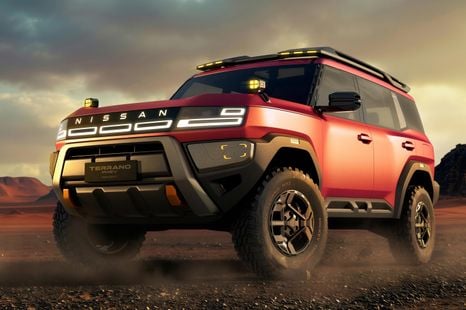
The Haval H7 Vanta looks ready for an off-road adventure, but the Australian model Paul Maric tests is a front-wheel drive hybrid. At just under $47,000 drive-away when we filmed, it also sat close to a Haval H6 plug-in hybrid. That makes the boxier styling a fairly expensive point of difference.
There’s plenty to like about the ride. Around town it’s smooth, our high-speed undulations reveal good body control, and the rough-road section feels impressively comfortable. This test car hadn’t received the Australian suspension tuning GWM was working on, making that result particularly encouraging.
The hybrid system combines a 1.5-litre turbocharged petrol engine with electric assistance for just under 180kW of power and more than 500Nm of torque. Transitions between electric and petrol propulsion are smooth, and it feels punchy once moving. Getting that torque through the front tyres is another matter: accelerating with steering lock can spin an inside wheel, with traction-control intervention interrupting progress in the wet.
Our 0-100km/h run took 9.32 seconds despite launch control. Indicated consumption was 7.6 litres per 100km after predominantly highway driving, against a claim below 6.0L/100km. Neither result made the drivetrain feel especially compelling.
The brakes are more concerning. The pedal feels like an on-off switch in traffic, with an abrupt transition between regeneration and friction braking. Our 38.75-metre stop from 100km/h was strong, but the brakes smoked afterwards. The car had only 600km on the clock, but smoke after a single hard stop left us wondering whether the brakes were undersized.
Inside, rear passengers get generous knee room, head room, and toe room. Up front there are heated and ventilated seats, a heated steering wheel, and wireless smartphone mirroring. However, the screens remain too bright at night, the infotainment feels dated, and there’s no USB-C connectivity. The boot offers just under 500 litres, with a tyre repair kit instead of a spare.
Lane support also disappointed, crossing a line in our test and failing to engage in the outermost lane. With those irritations, poor rear visibility, and the front-wheel drive limitations, we struggle to justify the H7’s price over the H6 plug-in hybrid.