Our tour of the 2026 Beijing motor show left Paul Maric with a clear impression: established car brands have a serious fight ahead. Across a sprawling event packed with new models, we found Chinese manufacturers pushing hard on battery technology, cabin equipment, and value. Chery hosted our visit, and the video also includes a Youi insurance promotion.
Chery’s stand captured that breadth. The large Chery Tiggo X aimed upmarket, while the Chery Tiggo 9 impressed us with its huge, continuous infotainment display. The transforming Chery Tiggo V promised SUV and ute versatility, although it had disappeared from the stand by our second-day visit, so we covered it using information and images rather than a hands-on inspection.
The extravagance continued with a six-wheel Jetour F700 display vehicle carrying a sports bike. Its towering driving position and elaborate cabin made it one of our favourite spectacles. Elsewhere, increasingly luxurious SUVs sat alongside affordable small electric cars, showing how broad the Chinese industry’s ambitions had become.
Battery development was just as significant as the cars. CATL outlined rapid-charging advances, while BYD demonstrated the thinking behind its flash-charging system and on-site battery storage. These were technology presentations, not our own timed charging tests. Nio offered a different ownership proposition through battery swapping and the option to lease a battery rather than buy it.
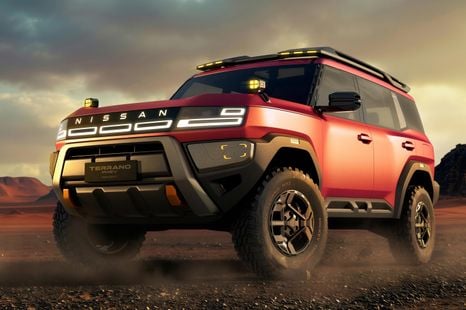
There were important Australian angles, too. We reported the Nissan Frontier Pro plug-in hybrid ute’s Australian confirmation and explored GWM’s move to add a plug-in hybrid to the GWM Cannon. The new MG 4 brought semi-solid-state battery technology into a more affordable segment, although Australian availability of that battery version remained uncertain.
Legacy brands weren’t standing still. Volkswagen showed a huge range-extender SUV, while Hyundai’s Venus and Earth concepts took contrasting approaches to future design. But the intensity of the Chinese competition was unmistakable, particularly when we compared cabin presentation and technology.
There were caveats behind our enthusiasm. Impressive Chinese-market infotainment often loses features when exported, and more sensors don’t automatically deliver better driver assistance. Australian pricing, local tuning, and support still matter. Even so, we left convinced the established brands couldn’t afford to treat this competition lightly.