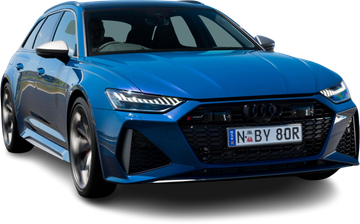
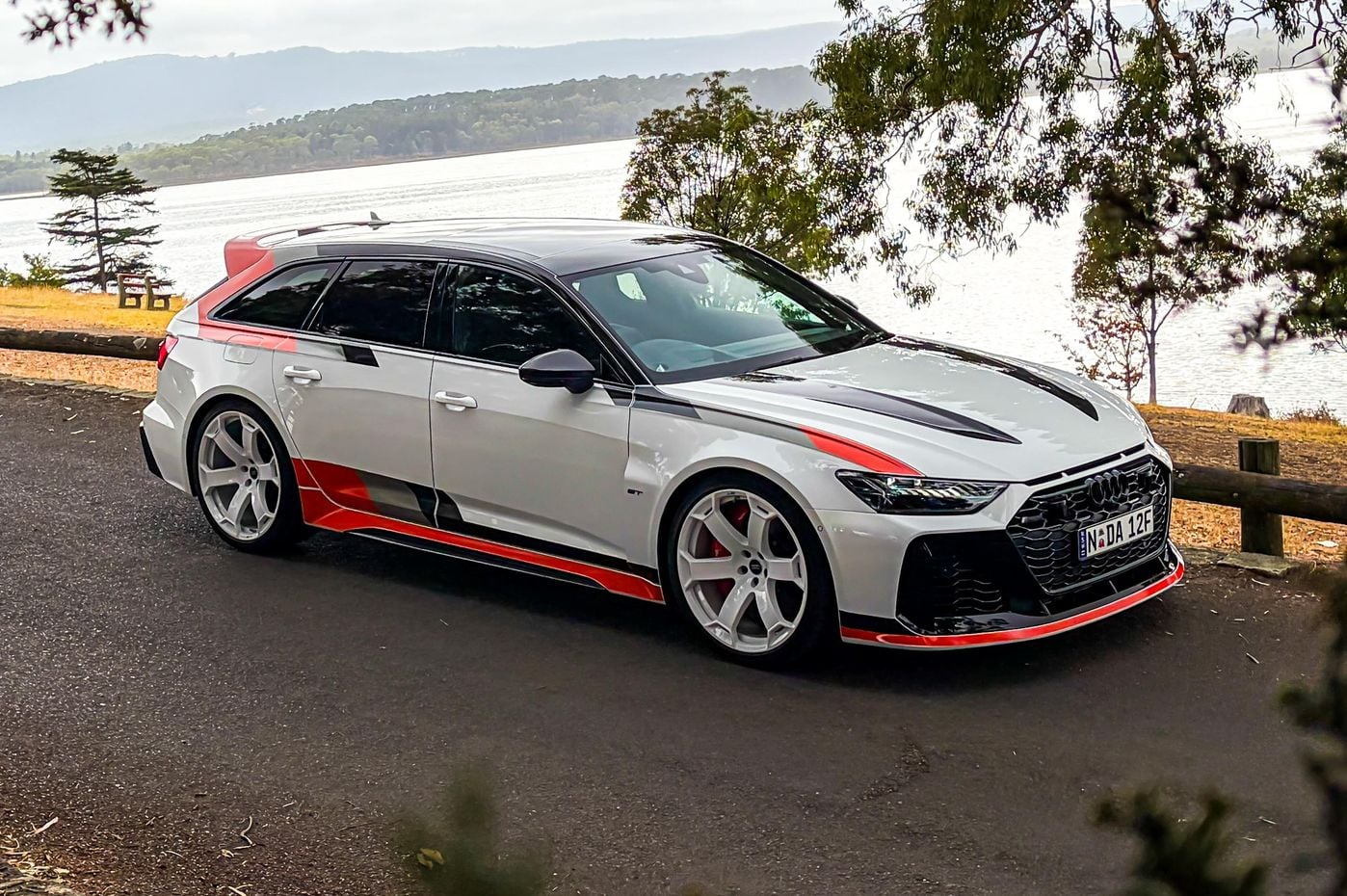
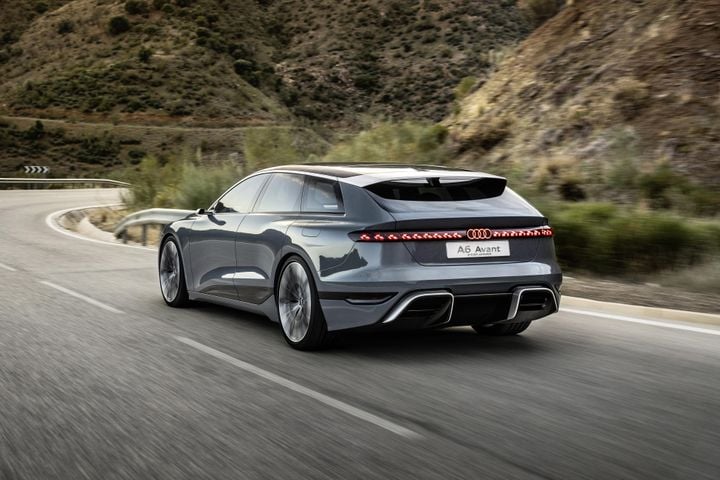
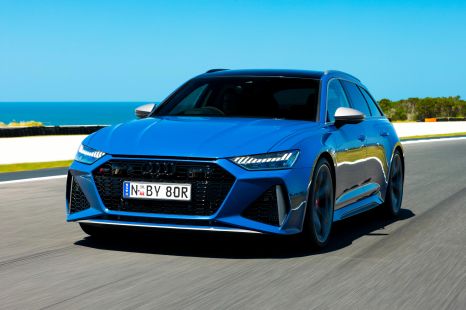
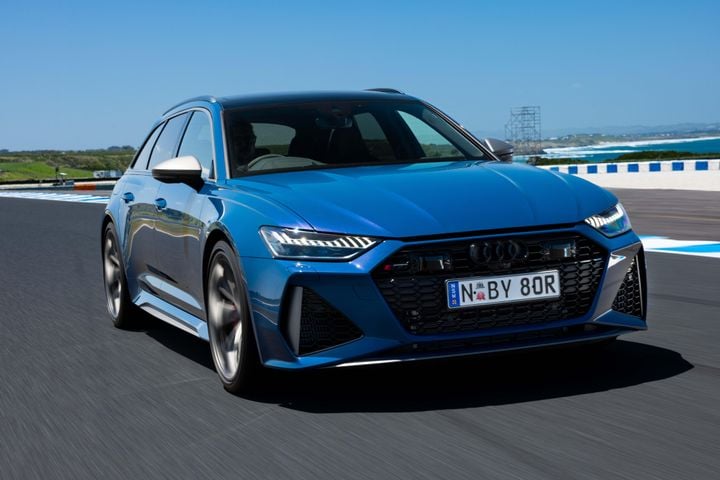
The Audi RS6 Avant makes a persuasive argument against buying a performance SUV. It’s fast, spacious, and surprisingly manageable in everyday driving. In this review filmed in 2020, the starting price was $216,000, but our heavily optioned test car demonstrates why the final bill needs careful attention.
Its 4.0-litre twin-turbo V8 produces 441kW of power and 800Nm of torque, driving all four wheels through an eight-speed torque-converter automatic. The engine delivers an enormous shove as boost builds, accompanied by the sort of exhaust note that makes a practical wagon feel genuinely special.
At the drag strip, our first two 0-100km/h runs in Comfort mode both took 4.6 seconds, with idle stop/start enabled for one and disabled for the other. Launch control initially reduced that to 3.7 seconds. On the quarter-mile run, we matched Audi’s 3.6-second 0-100km/h claim and recorded 11.9 seconds over the quarter mile at 193km/h.
The impressive part isn’t just straight-line speed. Our car’s optional Dynamic Ride Control keeps the body remarkably flat through corners without making every mid-corner bump uncomfortable. Traction is strong, and the optional carbon-ceramic brakes provide serious stopping power. The steering could offer more feedback, though, and we’d prefer a more natural feel than the four-wheel steering delivers.
Despite its 22-inch wheels, the RS6 remains surprisingly comfortable in its softer setting. There’s still a firm edge, and rear-seat passengers notice more tyre drone than we do up front. The trip computer showed 10.6L/100km after highway driving, but its longer-term reading was 13.5L/100km, against an official combined claim of 11.7 litres per 100km.
Inside, the strong build quality, supportive seats, and crisp digital displays create a suitably expensive atmosphere. The configurable instrument cluster is particularly impressive. Less appealing are fingerprint-prone gloss-black surfaces and climate controls that require looking down at a separate touchscreen.
Rear knee room is generous, although toe room is more restricted. The boot offers just over 560 litres, expanding to just under 1700 litres with the rear seats folded. A low loading lip and useful cargo restraints make that space genuinely usable.
We finish this test thoroughly impressed. The RS6 combines enormous performance with real family practicality, but extras such as the carbon-ceramic brakes, styling packages, and upgraded sound system mean the car tested shouldn’t be mistaken for the base-price specification.