




Ben Zachariah
GWM Australia sets ambitious deadline for utes to meet key sales target
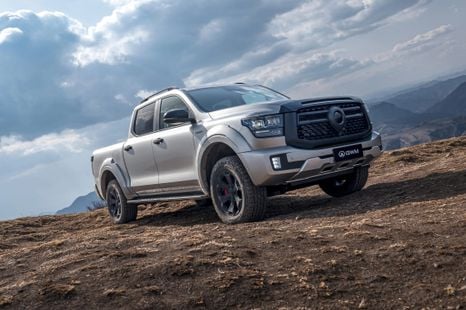
A senior GWM executive has set an ambitious sales target for its utes, and a deadline for the company to meet it.
2 Days Ago
The Ford Ranger and Toyota HiLux are among the best-selling vehicles in Australia. Which has the better in-cabin technology?

Tech Contributor
Tech Contributor
Tech Contributor
Tech Contributor
If this is the car for you, we’ll compare offers from trusted dealers, handle the back and forth and manage your purchase from enquiry to delivery.
Last year saw the Toyota HiLux outsell the Ford Ranger by just under 7000 cars – and throughout 2020 the two dual-cab utes have remained popular choices.
There are multiple areas to consider when purchasing a new vehicle, and one focus is what you see and touch in the cabin – the features at your fingertips, the infotainment system, and in-car experience.
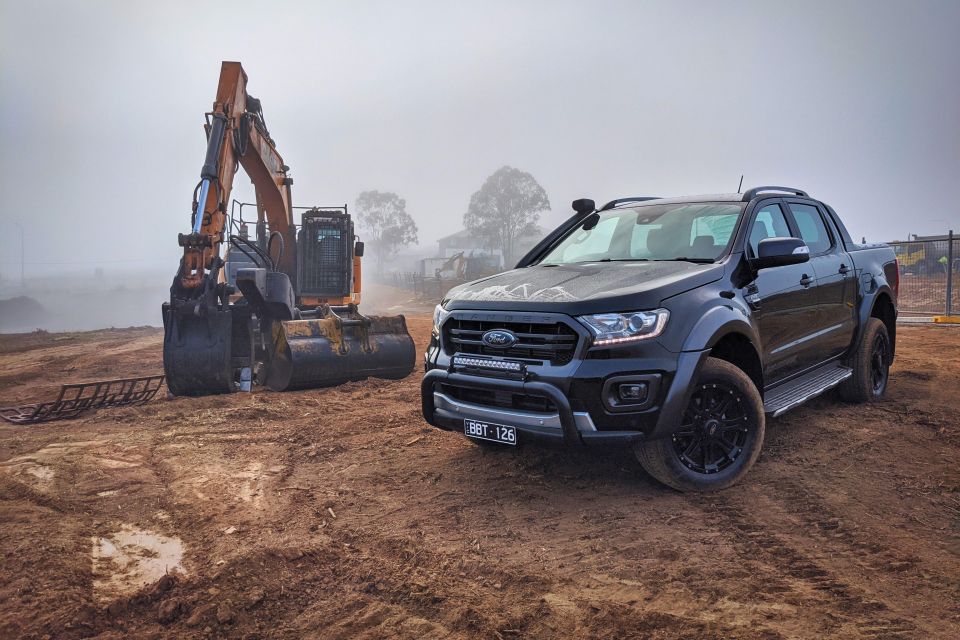
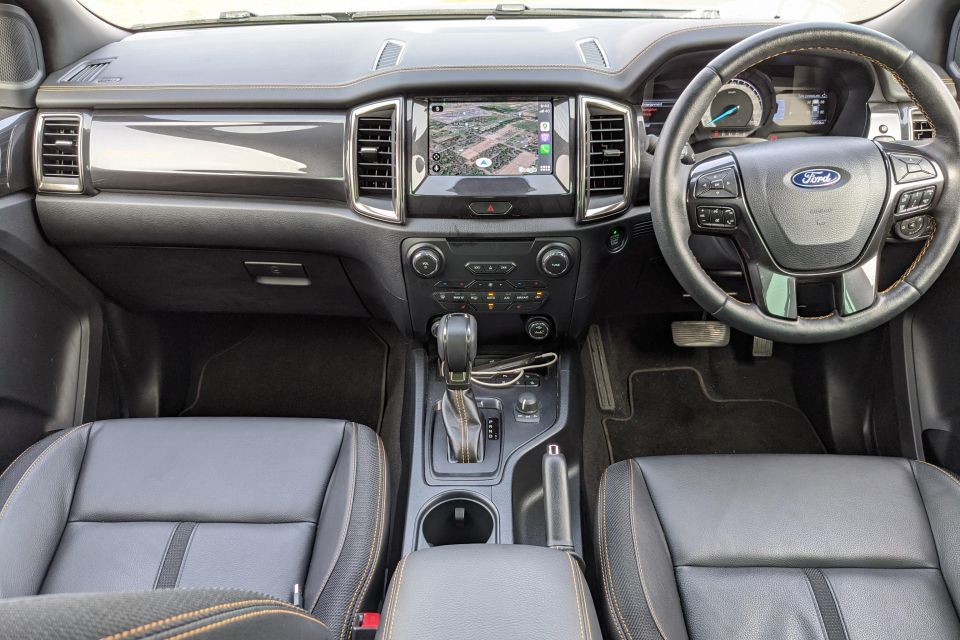
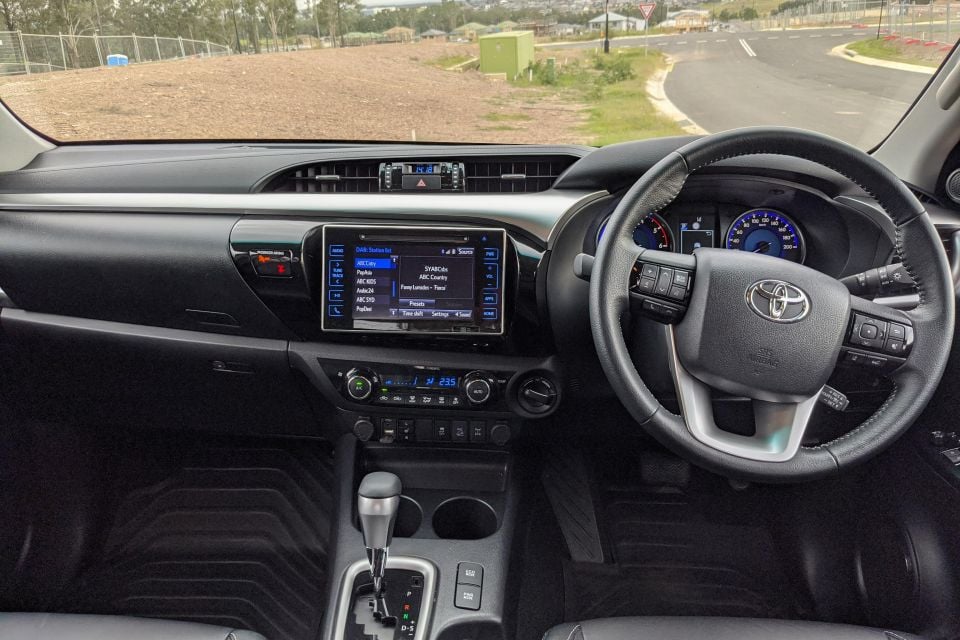
When it comes to the all-important Toyota HiLux vs Ford Ranger, how do they compare? We put the HiLux SR5 next to the Ranger Wildtrak to see for ourselves.
The Toyota HiLux and Ford Ranger have very different designs when it comes to what the driver sees front and centre.
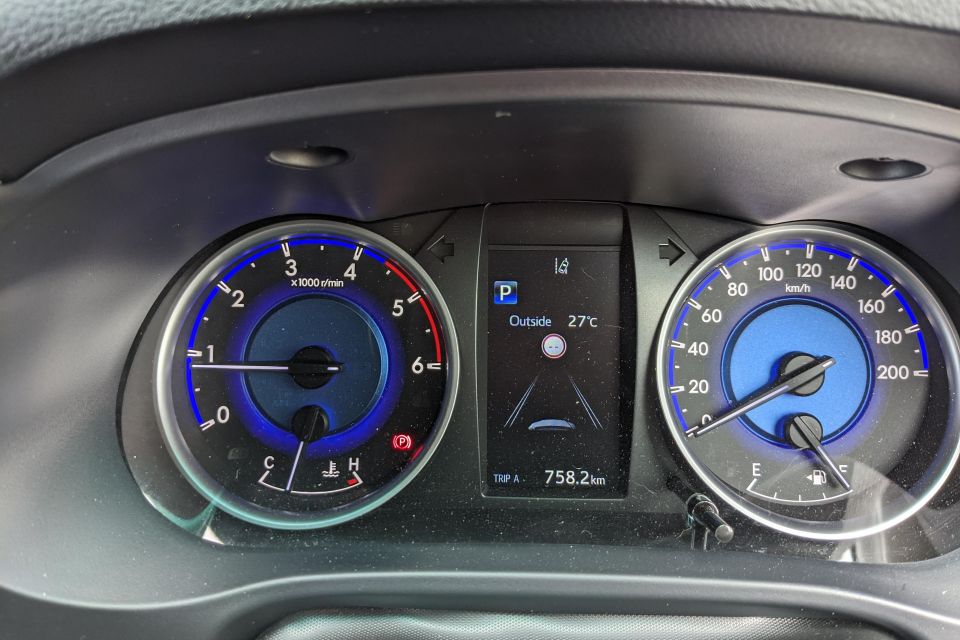
The Toyota has a traditional speedometer and tachometer with a 4.2-inch display in the middle. The display shows information about audio, navigation, temperatures, and speed limits.
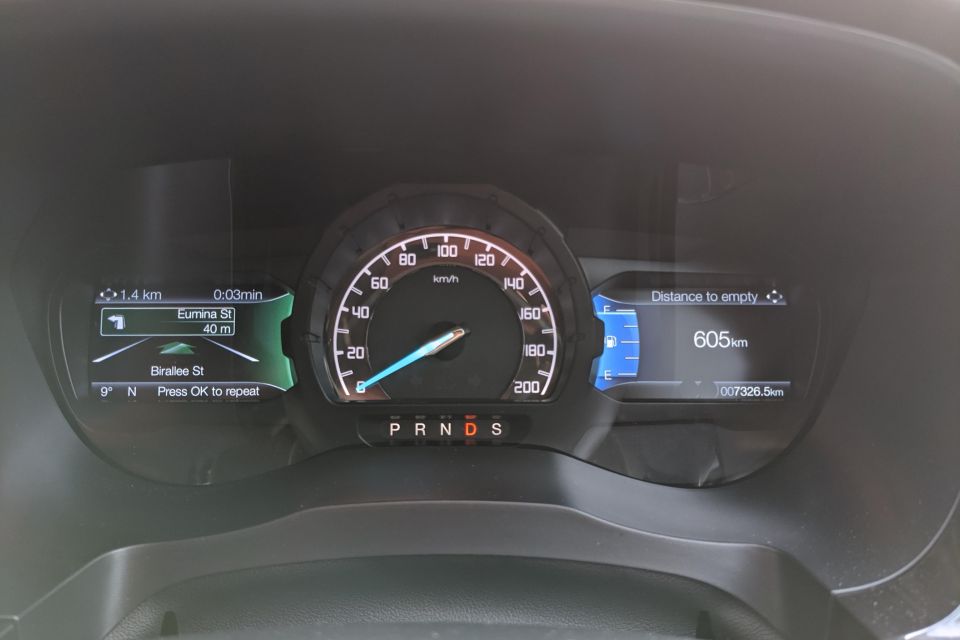
In the Ranger you have two 4.2-inch displays with a traditional speedometer in the middle. Each screen has its own steering wheel controls.
They might be something you set and don’t use again, but the extra information that can be shown to the driver will be appreciated by some.
In this category the Ranger gets the nod.
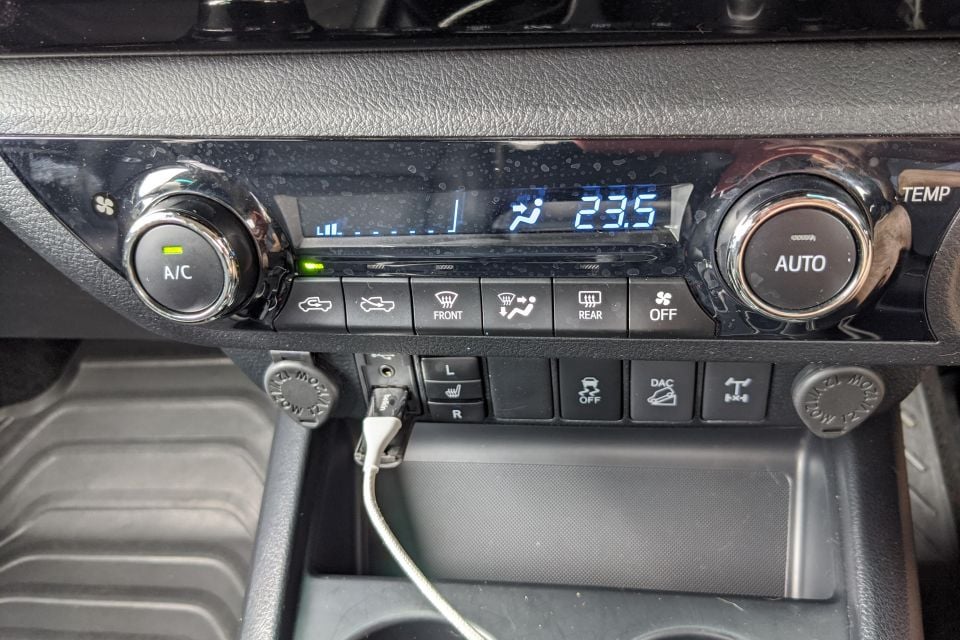
The HiLux has one USB port at the front and two 12V ports. We also found the 220V socket inside the transmission tunnel handy, but perhaps not in an ideal location.
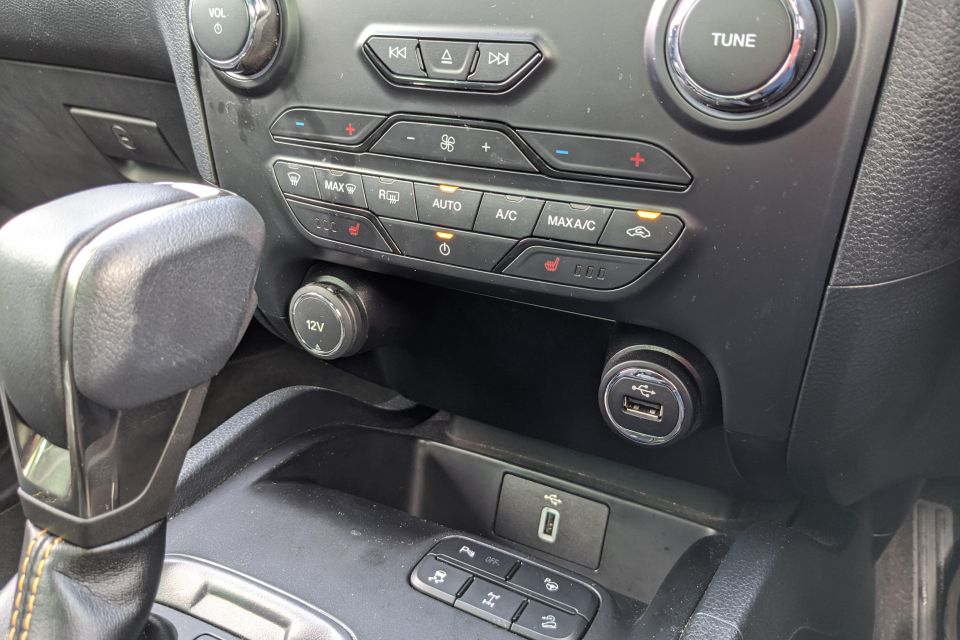
The Ranger provides two USB ports and one 12V plug in the front. The Ranger also carries a 12V port and 230V power inverter on the transmission tunnel for access in the back seat.
Further, Ford adds a 12V connection in the tray – the HiLux doesn’t. If one of these vehicles is meant to be your mobile office, staff room, and portable warehouse, these connections are critical.
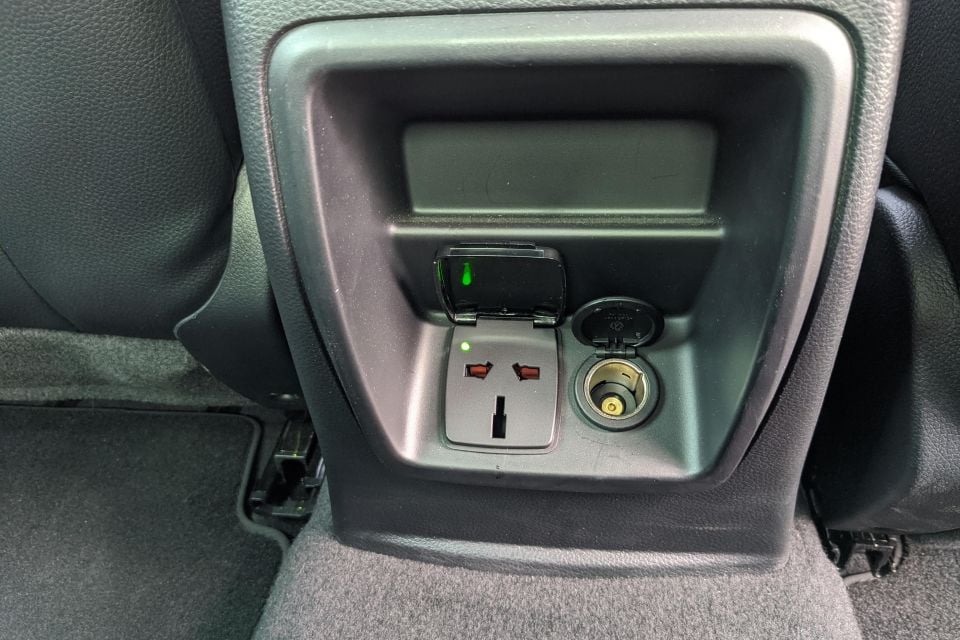
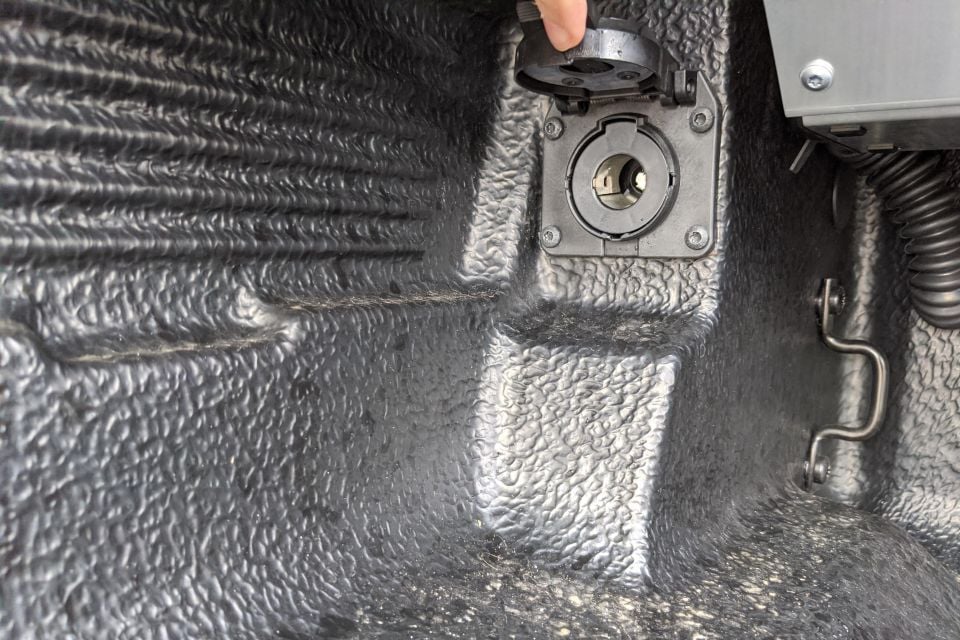
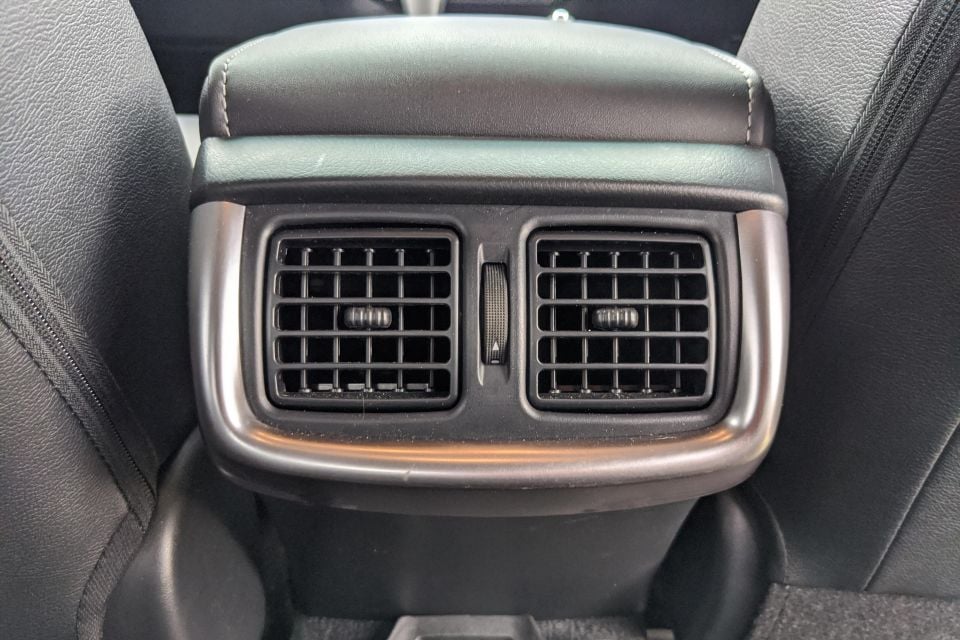
Despite having more 12V connections in the front, the extra USB ports and power in the tray make the Ranger a winner in this category.
Both utes at this level have a six-speaker stereo. The central infotainment display measures at 8.0 inches on the Ranger and 7.0 inches in the HiLux.
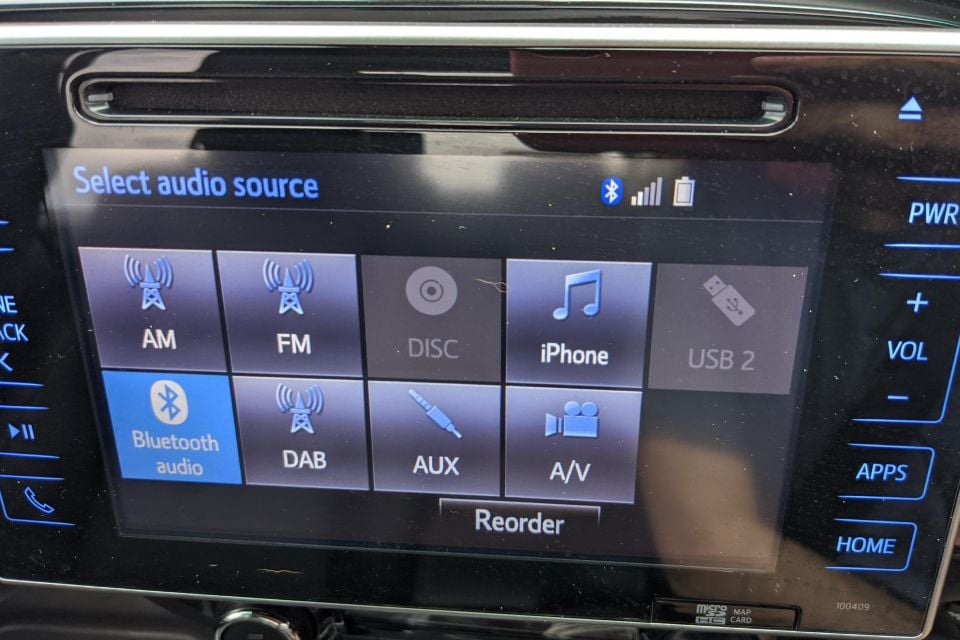
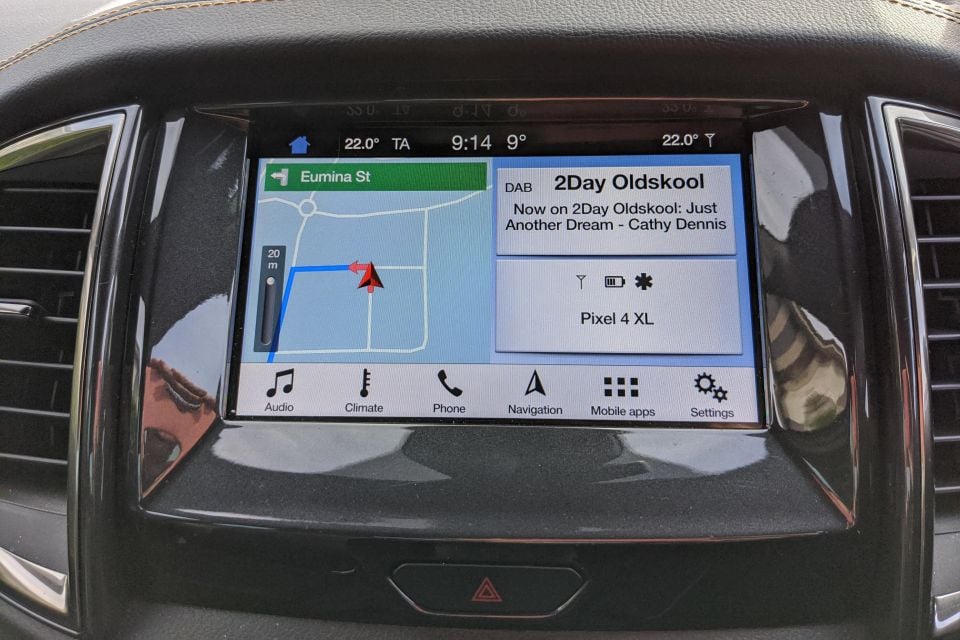
Both carry CD, AM/FM and DAB+ digital radio. Both are fitted with Bluetooth for calls and music streaming. The Ford Ranger makes use of Apple CarPlay and Android Auto, which is tightly integrated into the vehicle.
The HiLux lacks this feature for now, although an update will bring the technology later this year.
Combined with the smaller central display puts Toyota on the back foot in this category.
With the Toyota HiLux we’re only able to assess the navigation built into the infotainment system.
As the Ford Ranger has its own navigation plus mapping from Apple CarPlay and Android Auto, there are some immediate advantages. However, the Toyota navigation system is very easy to use, has intuitive controls, and brings traffic information into play.
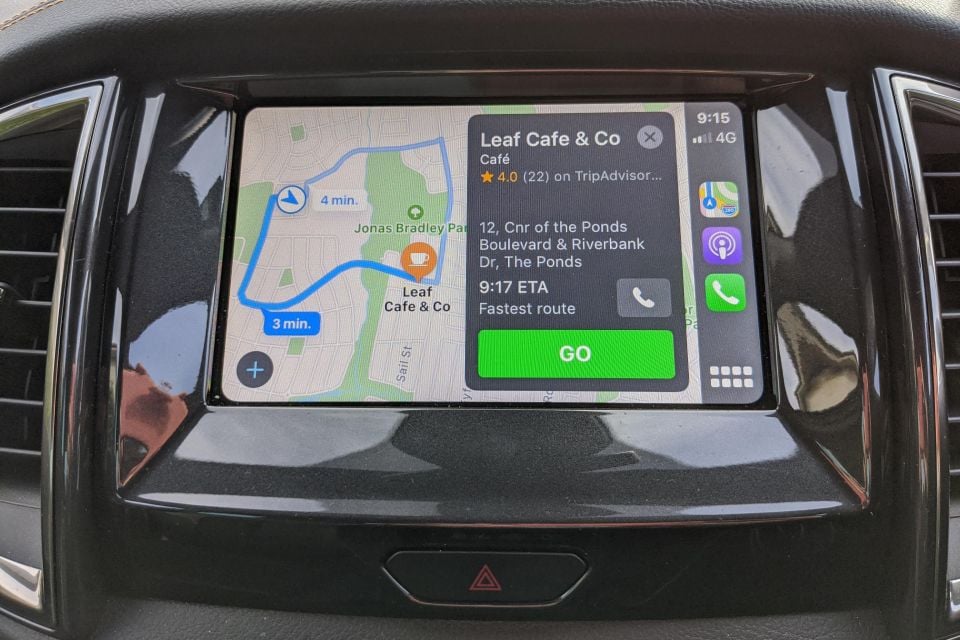
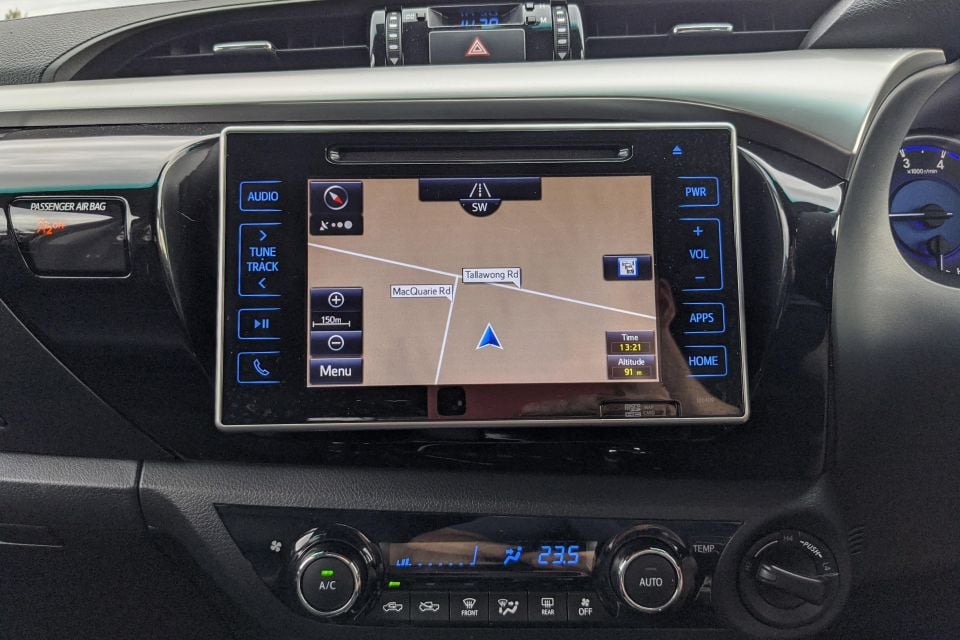
2D maps remain visible if you’re on a call and the display can be customised to show the maps at all times on the home screen. The Ford Ranger’s onboard navigation is easy to use, with easy access to point of interest categories such as food, fuel, and ATM services.
The navigation experience in the Ranger is complemented by the displays in the instrument cluster, with a screen that can be dedicated to highlighting your next turn. What really impresses us is how the factory navigation is able to hand its destination on to your smartphone when you plug in.
This is a deeper level of integration we didn’t expect, and would like to see this in more cars.
Fortunately the extra 12V port at the front of the HiLux will come in handy for the Navman you’ll likely require. Another win to the Ranger on this.
Getting home safely at the end of the day is everyone’s priority and both cars carry a five-star ANCAP safety rating. Both vehicles also carry lane departure warning, pedestrian and cyclist detection, road sign assist and active cruise control.
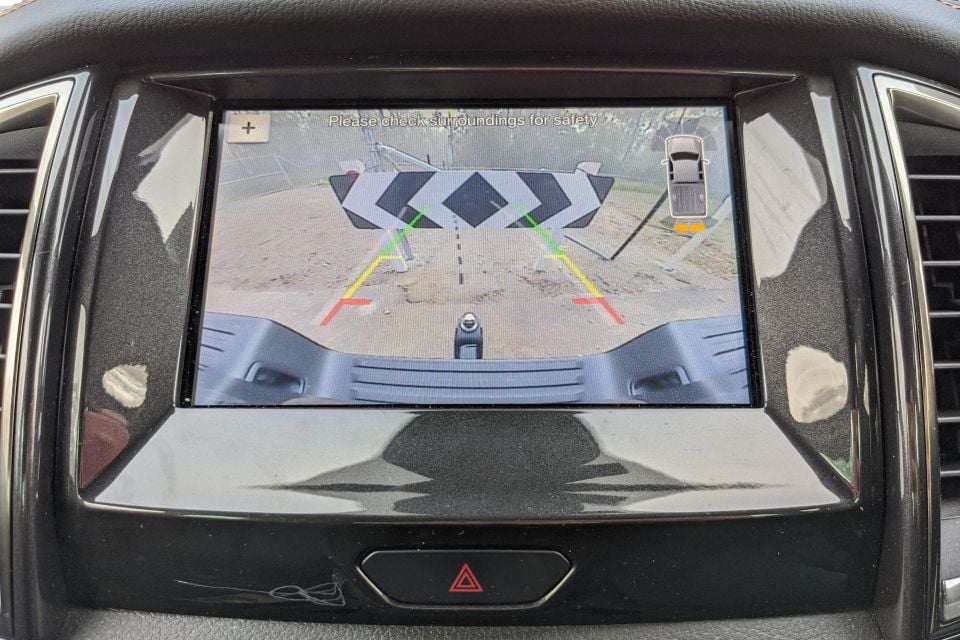
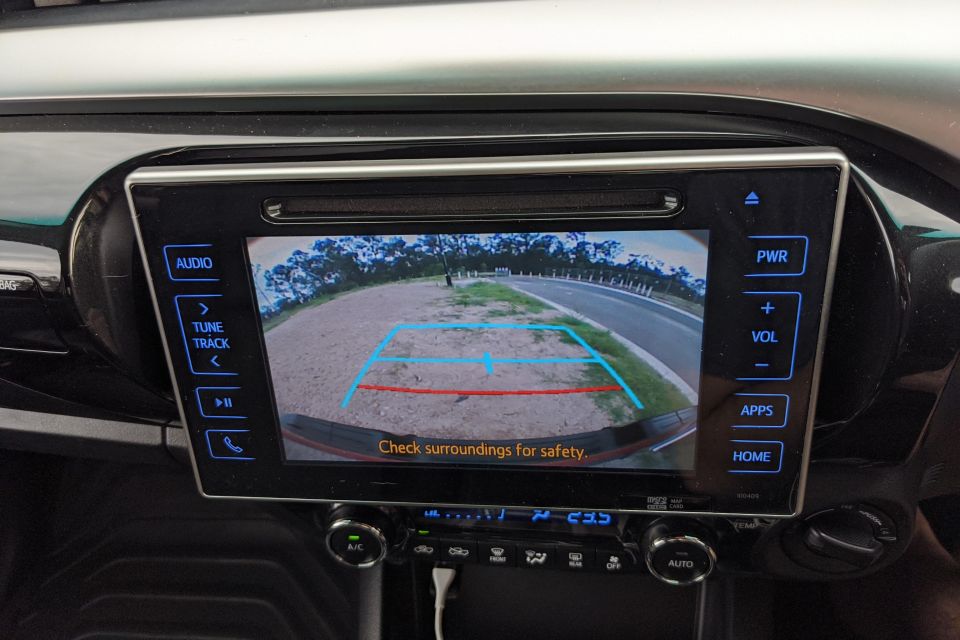
You’ll find parking sensors on both and a reversing camera, both of which have a similar level of clarity and contrast.
The Ford Ranger does have tyre pressure monitoring, something the HiLux lacked. It should also be noted with Apple CarPlay and Android Auto available in the Ranger, you never need to consider touching your phone.
It’s so much safer to use phone features, including simple access to voice assistants such as Siri that will keep you focused on the road. Both vehicles are well equipped in this category however, but minor features put the Ranger just above the HiLux here.
With the weather cooling, down we loved that both vehicles pack heated front seats. The HiLux has an on or off approach to their heating, while the Ranger carries three levels of heat that you can choose for your posterior.
Both allow you to control driver and passenger seat separately. The Ranger has climate control enabling the driver to have the air-conditioning at their desired temperature different to the passenger, while the HiLux has one temperature control for all passengers.
The HiLux does, however, have a hidden cupholder siting in front of the air-conditioning vents, excellent for summer when you want to keep drinks cold.
Ford adds semi-automatic active parking assist, excellent for a first year apprentice nervous about parallel parking. This is another area the Ford Ranger wins over the HiLux.
When it comes to the technology and features inside both vehicles we couldn’t find a category the Toyota dominated.
Although a new HiLux is around the corner and will support Apple CarPlay and Android Auto, you have to wonder whether that’ll be enough to combat what Ford will also do to its next Ranger.
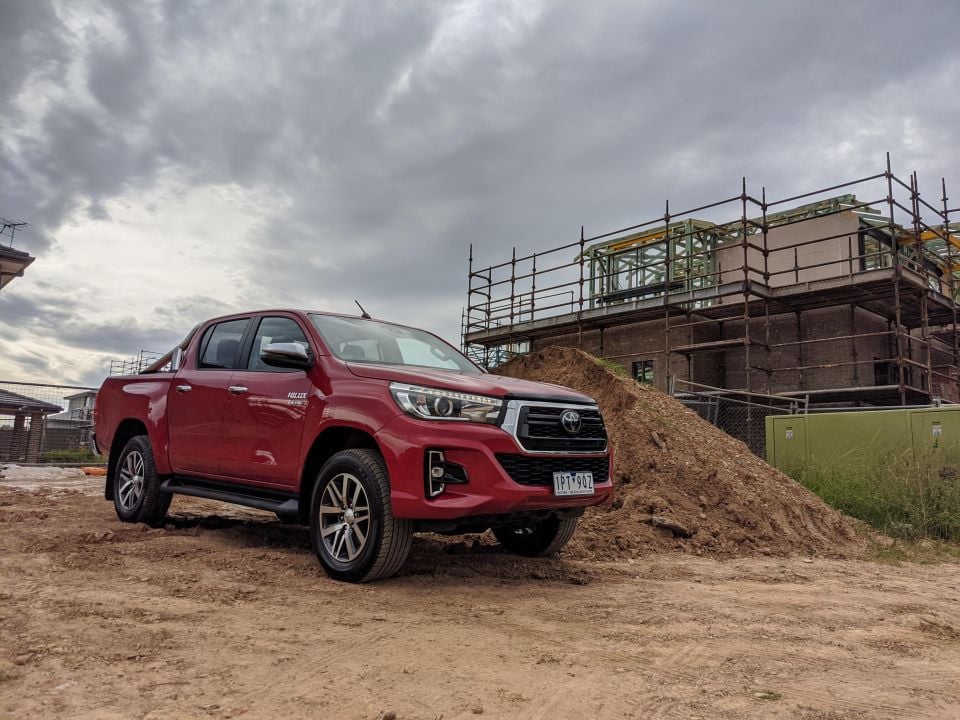
If you’re spending multiple hours a day in your ute, you should enjoy it and have the creature comforts expected of a modern car with a price tag around $60,000.
The Ranger delivers a comfortable environment and advanced technology the HiLux cant come close to matching.
When it comes to the in-car experience, the Ford is a winner.
If this is the car for you, we’ll compare offers from trusted dealers, handle the back and forth and manage your purchase from enquiry to delivery.
Quickly see how this car stacks up against its competition. Select any benchmark to see more details.
Ford Ranger
Ford Ranger Sales rolling 12-months#
*Based on VFACTS and EVC data
Looking for complete Ford Ranger price history?
Our Ford Ranger Pricing Page shows exactly how prices have changed over time.
2027
$0
2026
$0
2027
$42,200
2026
$42,200
2027
$58,536
2026
$58,536
2026
$63,573
2027
$64,160
2026
$72,338
2027
$74,604
2026
$75,943
2026
$77,076
2027
$84,286
2027
$87,273
2026
$87,273
2026
$89,436
2027
$97,367
2026
$97,367
2026
$103,313
Add CarExpert as a Preferred Source on Google so your search results prioritise writing by actual experts, not AI.
Ben Zachariah
2 Days Ago

Max Davies
3 Days Ago

Damion Smy
5 Days Ago

Matthew Hansen
6 Days Ago
Damion Smy
6 Days Ago
Damion Smy
7 Days Ago
Add CarExpert as a Preferred Source on Google so your search results prioritise writing by actual experts, not AI.
# Based on VFACTS and EVC data
† Displayed prices are based on the drive-away price of the vehicle, which includes delivery charges, registration fees, number plates, and applicable road taxes, based on a Sydney location. However, prices may vary between states and territories, and additional costs such as compulsory third party (CTP) insurance, dealer delivery fees, and optional extras are not included. These prices are subject to change without notice and may not reflect current market pricing or dealer offers.
 Automotive Vehicle Spec Data & 4K images Powered by JATO Dynamics Ltd