




William Stopford
Ford Transit Custom recalled for fire risk
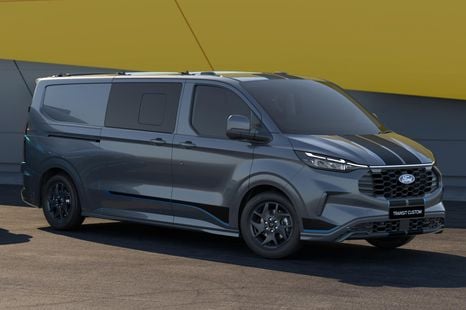
Almost 800 current-generation Ford Transit Custom double cab vans are being recalled for a potential fire risk.
11 Days Ago
The Hyundai Staria has been given a facelift, with a new flagship bringing hybrid power to the people mover lineup for the first time.

Deputy News Editor
Deputy News Editor
Deputy News Editor
Deputy News Editor
If this is the car for you, we’ll compare offers from trusted dealers, handle the back and forth and manage your purchase from enquiry to delivery.
A curly-haired lady and a bloke wearing sunglasses seated at a large wooden table yell across the cafe: “Excuse me, is that your Hyundai Staria?” While I ponder my answer, which is both yes and no – given it’s a CarExpert test vehicle – they add: “We’ve been considering one, but we’re also looking at the Volkswagen.”
The Hyundai Staria people mover, though, has just been given a makeover: “That’s the updated 2026 model, the top-spec Lounge, which is the first Staria hybrid,” I reply, upping the intrigue in a single sentence (even if Hyundai refers to it as an MY27 model).
Those inquisitive coffee-goers considering the diesel-powered Volkswagen Multivan may also be tempted by Staria rivals such as the diesel-powered Ford Tourneo or the Kia Carnival, which, like the new Staria, offers the combination of hybrid power and seven seats.
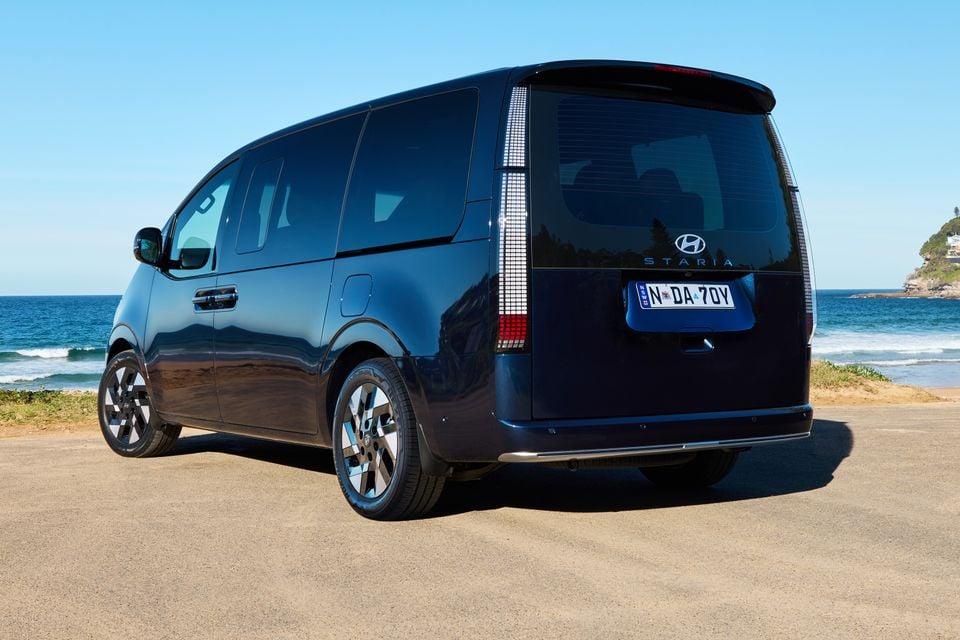
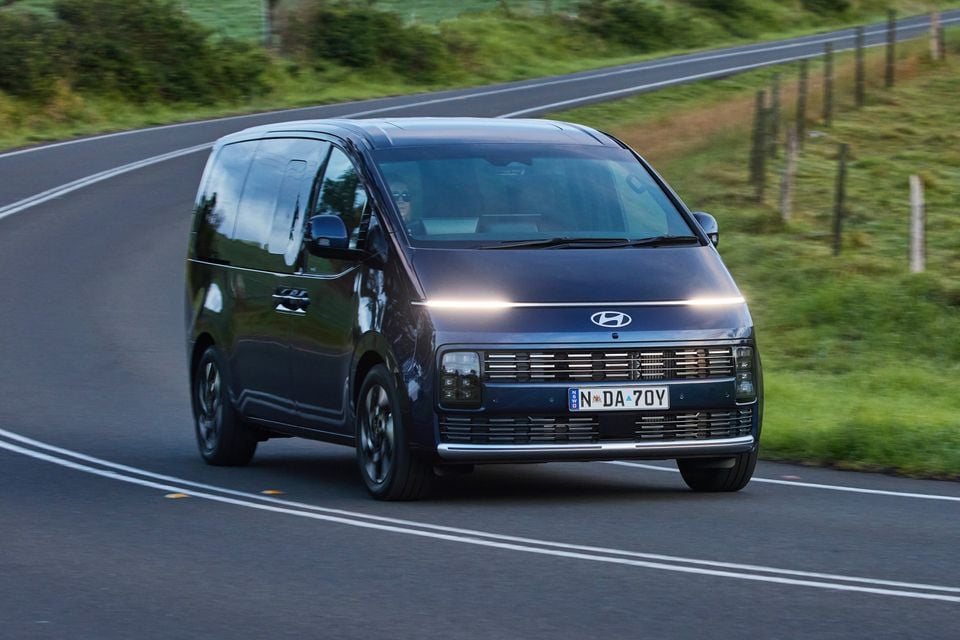
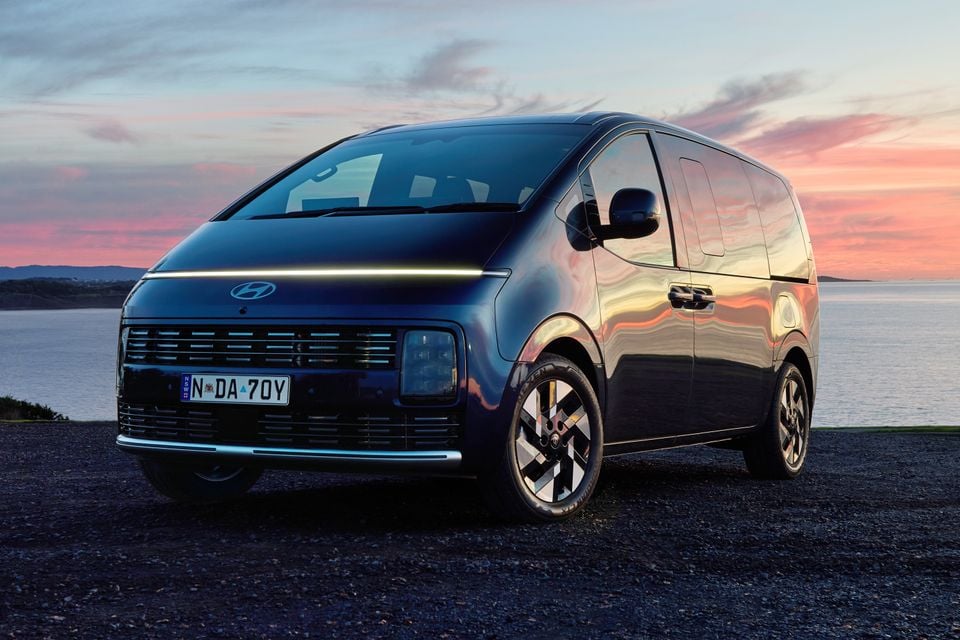
Hyundai’s latest update is the biggest change to the Staria since it was launched here in 2021. Its futuristic design (anyone remember the 1993 film Coneheads?) was previously offered only with petrol and diesel engines, and has not aged one bit.
The hybrid arrives as part of a rejigged three-variant lineup – one petrol and one diesel, both badged simply as 'Staria' and offering eight seats – plus the single hybrid grade in the luxury-tilted, seven-seat Staria Lounge we're testing here.
It also brings a minor facelift, specification changes including chassis tweaks, and modest price rises across the simplified lineup.
Hyundai reckons the hybrid will account for around 40 per cent of Staria sales but, in launching it alongside its commercial sibling, the Staria Load, admits it’s not looking to chase down the dominant Carnival’s staggering 88.4 per cent share of the people mover market segment.
Yet is that selling the Staria Lounge Hybrid short? We’ve driven it some serious miles, including a trip from Sydney to Melbourne, to find out.
The Lounge is the flagship of the Staria range, priced at $73,740 before on-road costs, making it the most expensive variant in the lineup by more than $20,000, and pricier than the pre-facelift Highlander grade it replaces, which was priced at $65,500 plus ORCs in petrol guise, with diesel power costing an extra $3000.
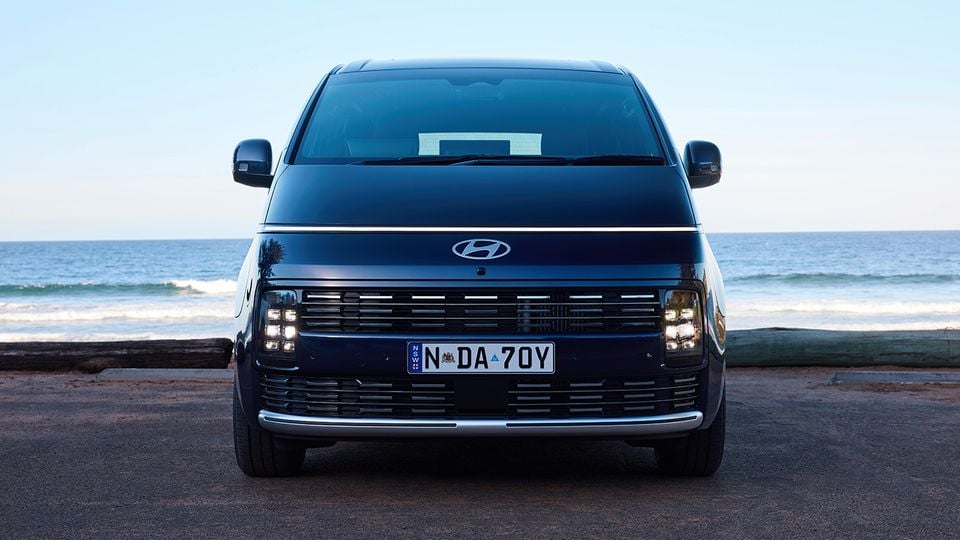
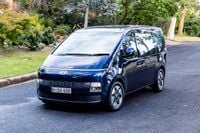
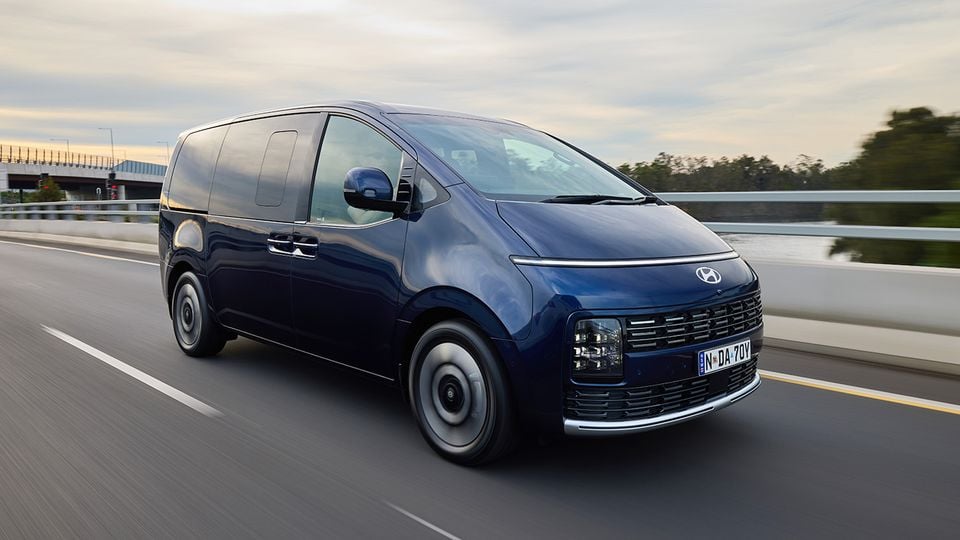
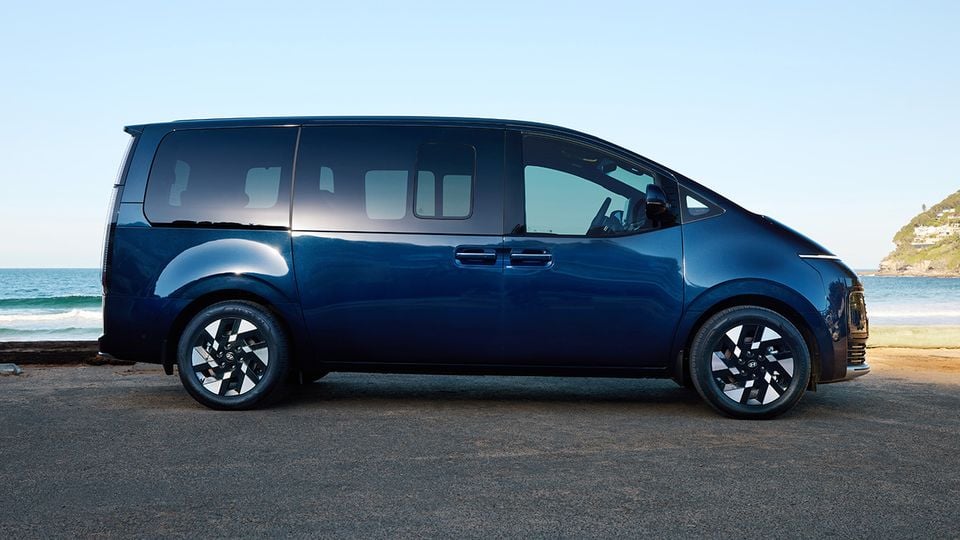
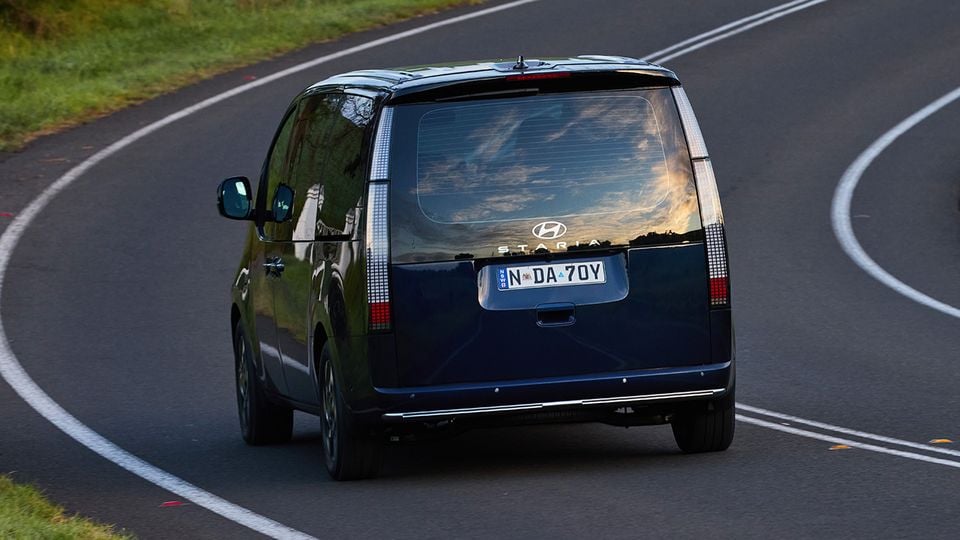
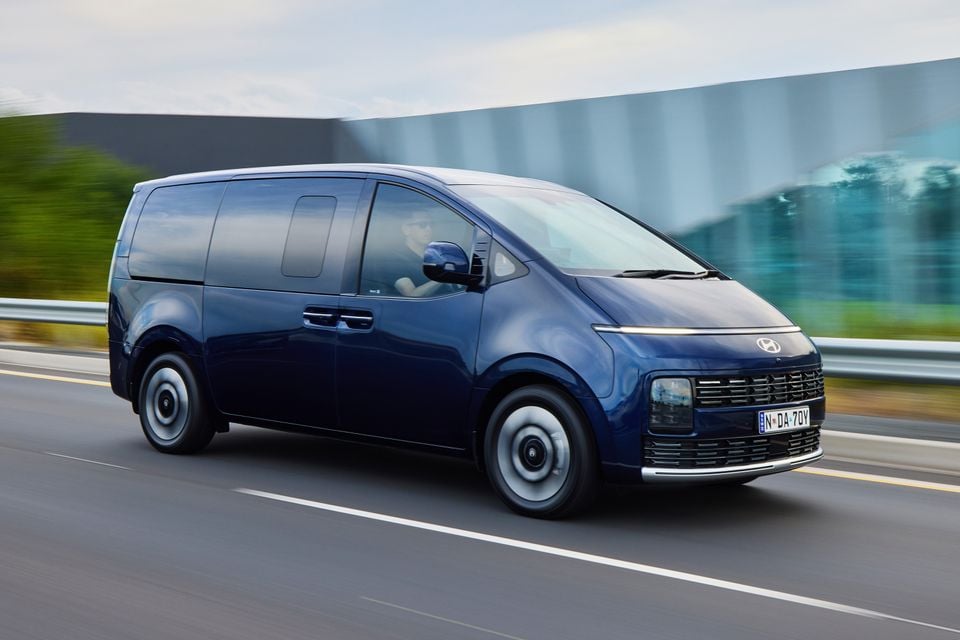
Our test vehicle was optioned with Ecotronic Grey paint ($750) and a Beige interior ($250), taking the price to $74,340 before on-road costs. The vehicle pictured here is Classy Blue.
For 2026, diesel and petrol versions are priced identically at $54,300 plus ORCs, and offered only in the entry-level trim grade known simply as 'Staria'. That means you need the Staria Lounge to access both the top-shelf equipment list and the hybrid powertrain in the new lineup.
The Lounge's $73,740 plus ORCs list price is around the same as that of the diesel-powered Ford Tourneo Titanium X ($72,490 plus ORCs), but less than the range-topping Kia Carnival GT-Line HEV – which uses the same hybrid powertrain as the Staria Lounge – at $76,840 plus ORCs.
It's also less than the cheapest Volkswagen Multivan, which shares its underpinnings and diesel powertrain with the Ford Tourneo, and is priced from $77,290 plus ORCs.
| Model | Price before on-road costs |
|---|---|
| 2026 Hyundai Staria 3.5L V6 FWD | $54,300 |
| 2026 Hyundai Staria 2.2L diesel FWD | $54,300 |
| 2026 Hyundai Staria Lounge HEV FWD | $73,740 |
To see how the Hyundai Staria lines up against the competition, check out our comparison tool
While it's sleek and almost 1980s-retro on the outside, the Staria's real appeal is on the inside – where the flagship version truly earns its Lounge designation.
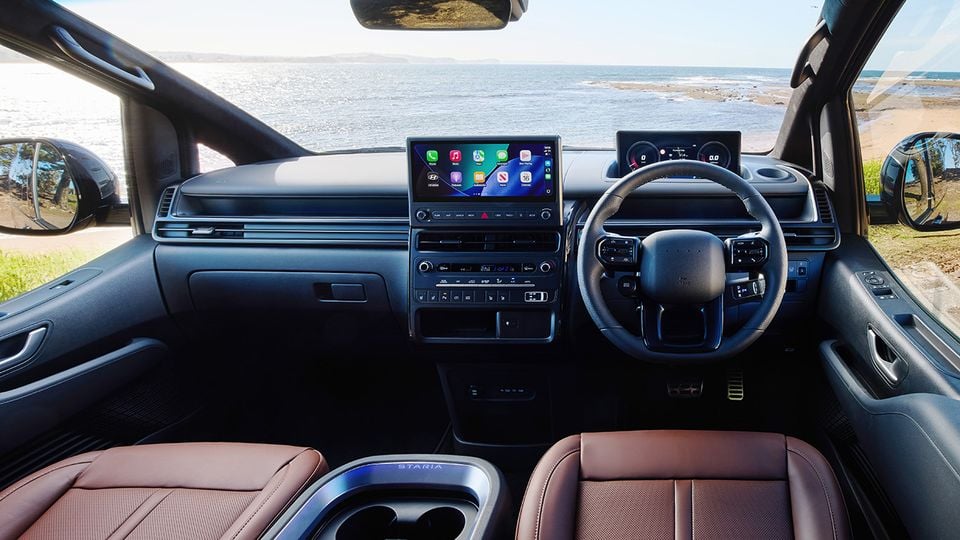
Our test vehicle came with the Beige interior – which, along with a burgundy colour choice, is a $295 option above the standard black – and covers everything from the six Nappa leather-trimmed seats – including two centre captain's chairs – to the suede-clad pillars, headliner, and entire dash-top.
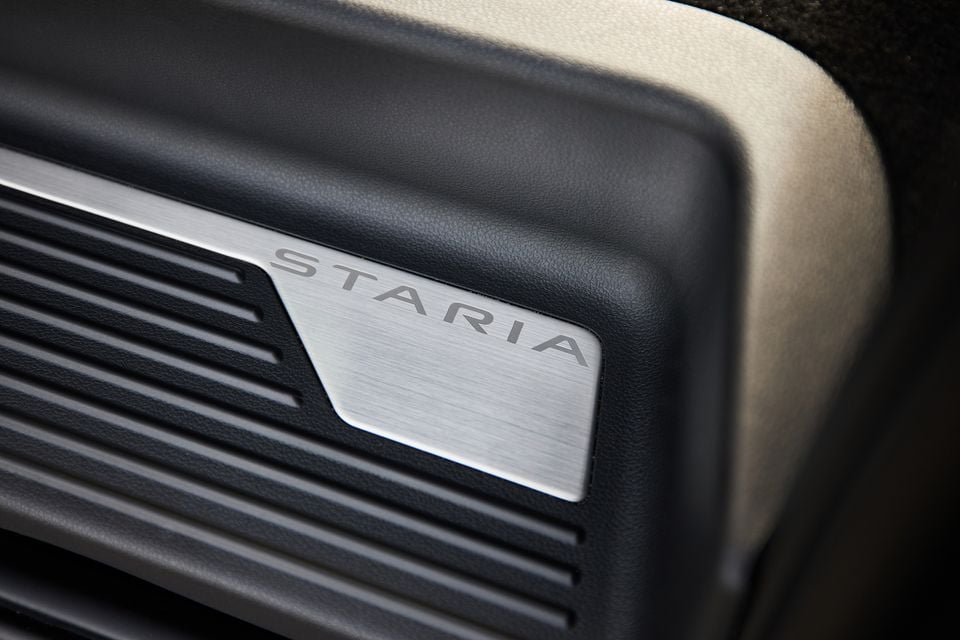
The quality is superb, with no signs of cost-saving anywhere; even the sun visors are trimmed in a smooth beige suede, while the touch points are all high-end, from the push-button starter and the chromed Staria branding on the door sills to the metal-faced pedals.
The updated Staria also brings a redesigned dash boasting more horizontal 'shelf space', while the gear selector has been repositioned to the right-hand side of the steering column, alongside an updated Hyundai steering wheel design.
The new wheel feels nice to hold, and the overall cabin layout is excellent, with loads of cubby spaces – the tall front doors, for example, have three pockets of varying sizes, holding everything from a pen up top to drink containers and larger objects down below.
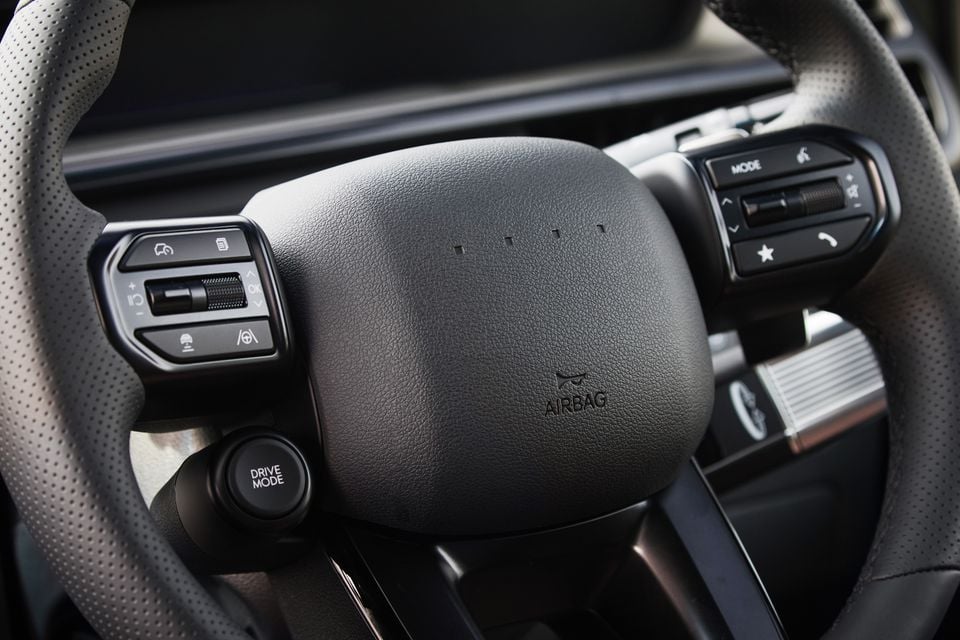
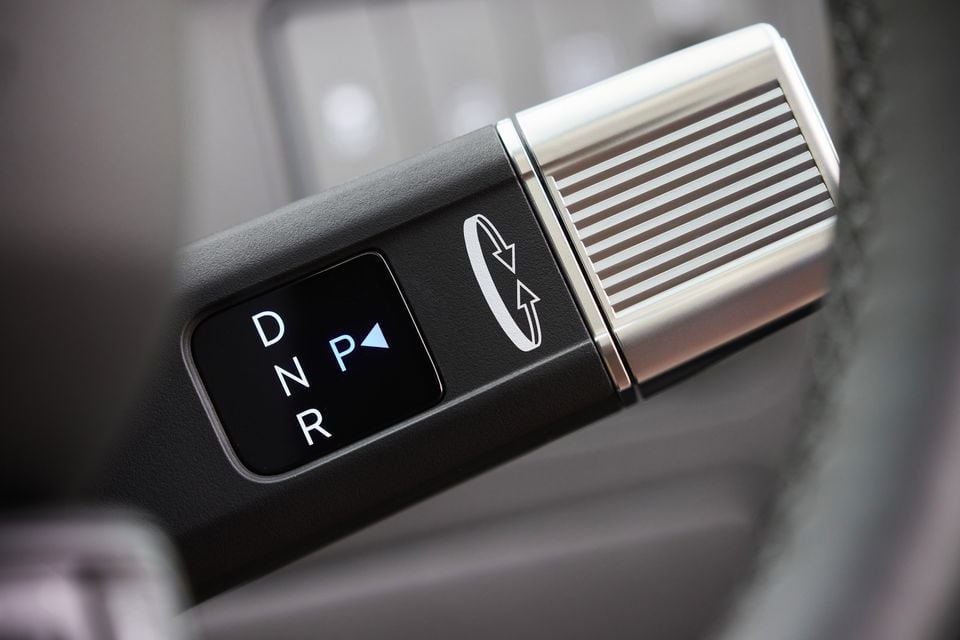
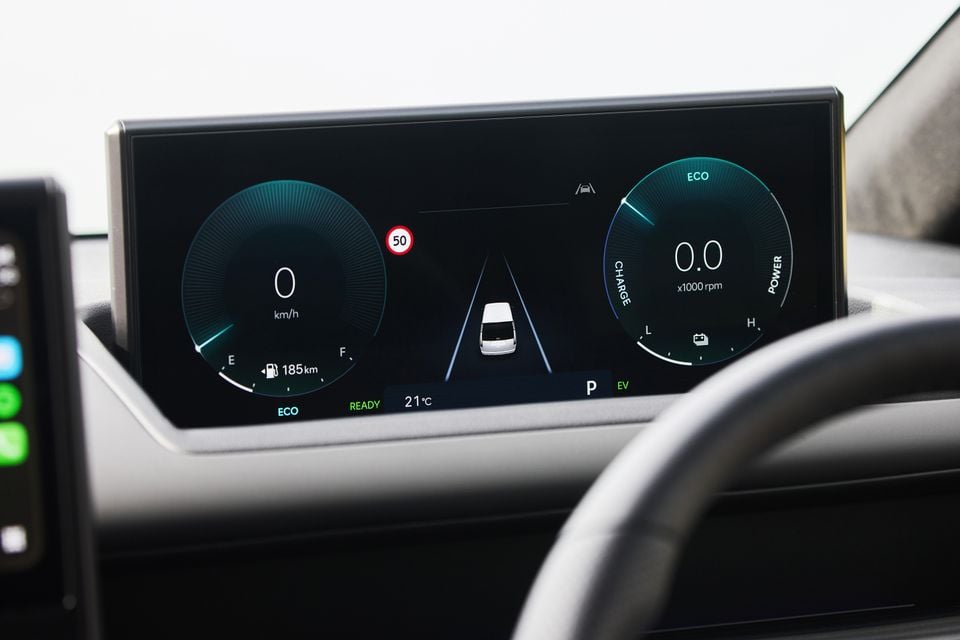
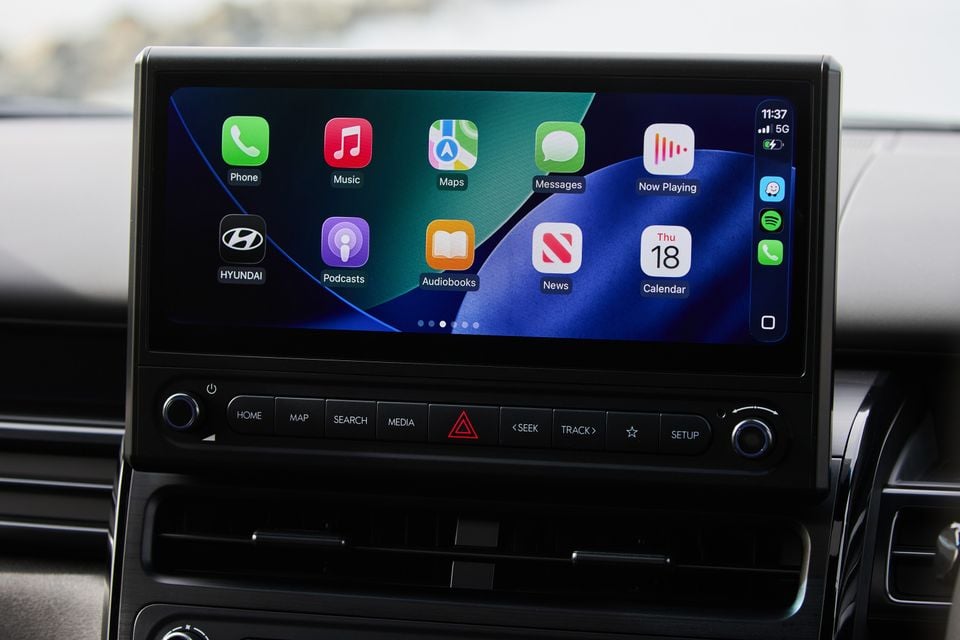
The dash's centre stack includes physical buttons for the climate-control air-conditioning and a wireless phone charger with a magnetic holder, although it can only charge one phone at a time, meaning the front passenger will have to use one of the front two USB-C ports instead.
Connecting a phone to the infotainment system through the central 12.3-inch touchscreen is easy, and the Bose Centrepoint audio system offers quality sound that can be directed to specific areas of the cabin through any of its 12 speakers.
New for the Lounge is Hyundai Digital Key 2, which adds keyless proximity entry and engine start via a smartphone, and can be shared with up to 15 other devices if the Staria is used by multiple people.
Hyundai Bluelink connected services are offered for the first time with the Staria, too, with a five-year subscription enabling features such as automatic emergency calling, send-to-car navigation, and 'find my car'.
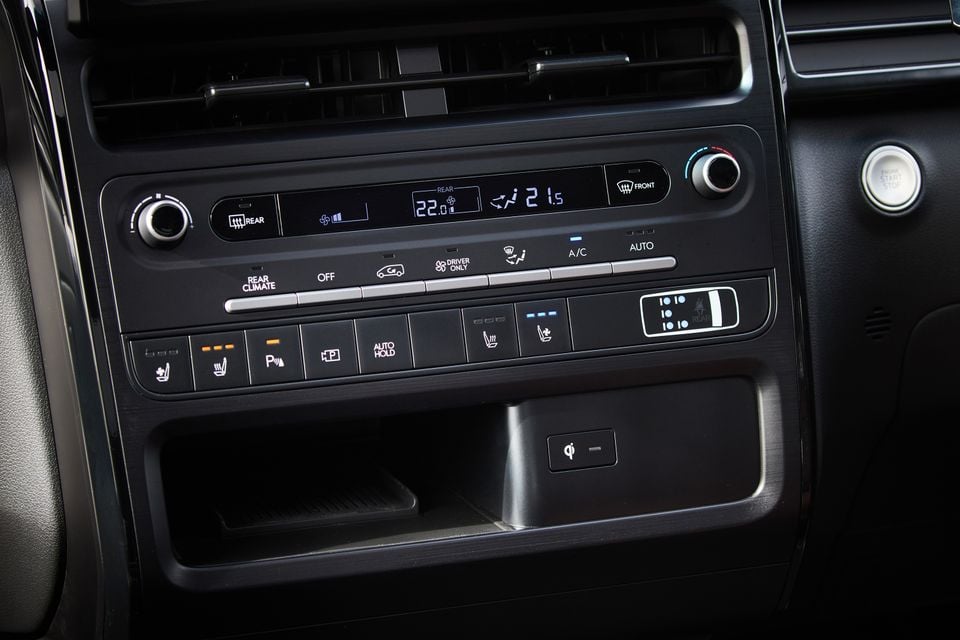
From the driver's seat, there's also a button to activate the 360-degree camera – and a second-row camera monitor – which is sharp and clear, while there are driver-assist systems we'll mention in the drive section below, including blind-spot camera view displayed in the 12.3-inch digital instrument cluster.
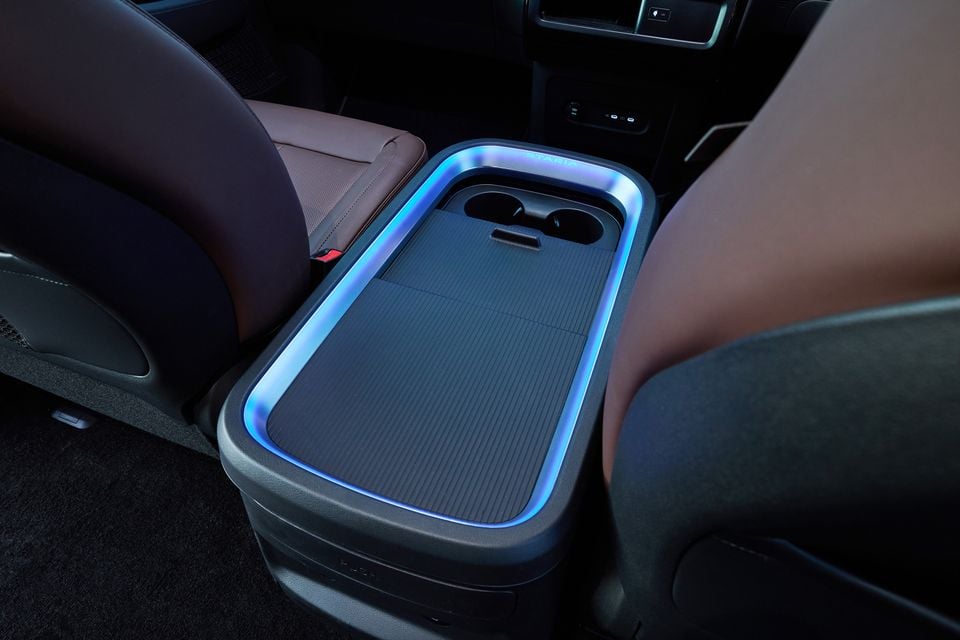
The centre console is cavernous and includes ambient lighting that extends across the dash and around the perimeter of the cabin – including the third row.
The front seats are both power-adjustable, heated and ventilated – as are the second-row captain's chairs, which sit on a pair of rails and can be adjusted using a manual lever.
You can set the heating, ventilation and position of the second-row chairs from the front touchscreen, as well as by using the controls on the seats themselves. There are also overhead buttons to open the side doors and tailgate from the driver's seat.
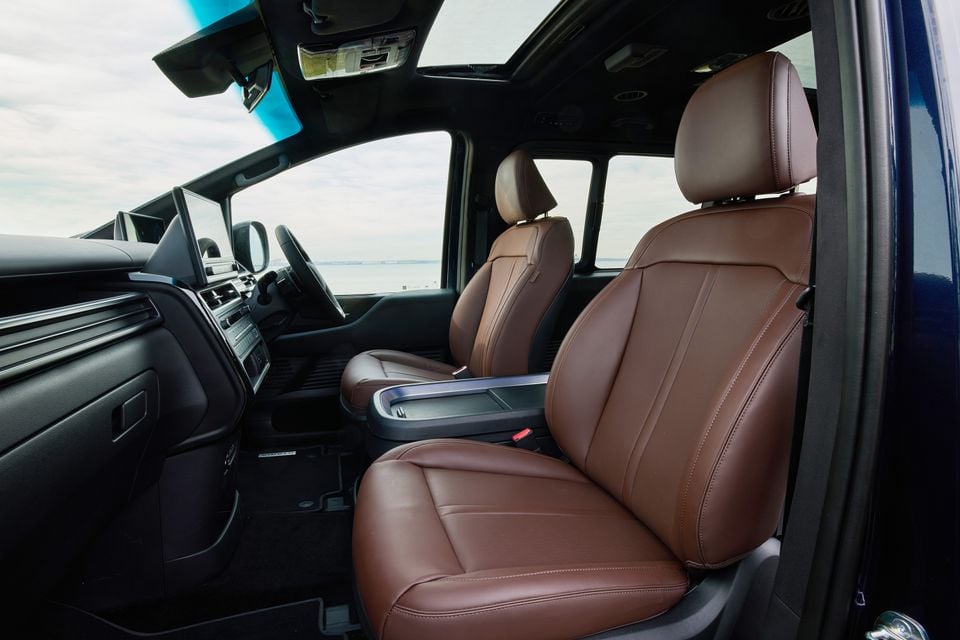
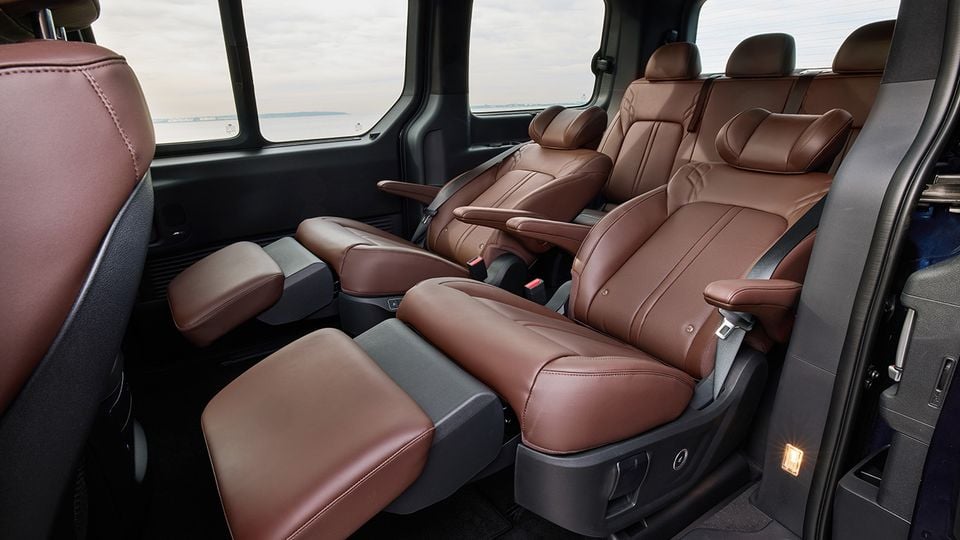
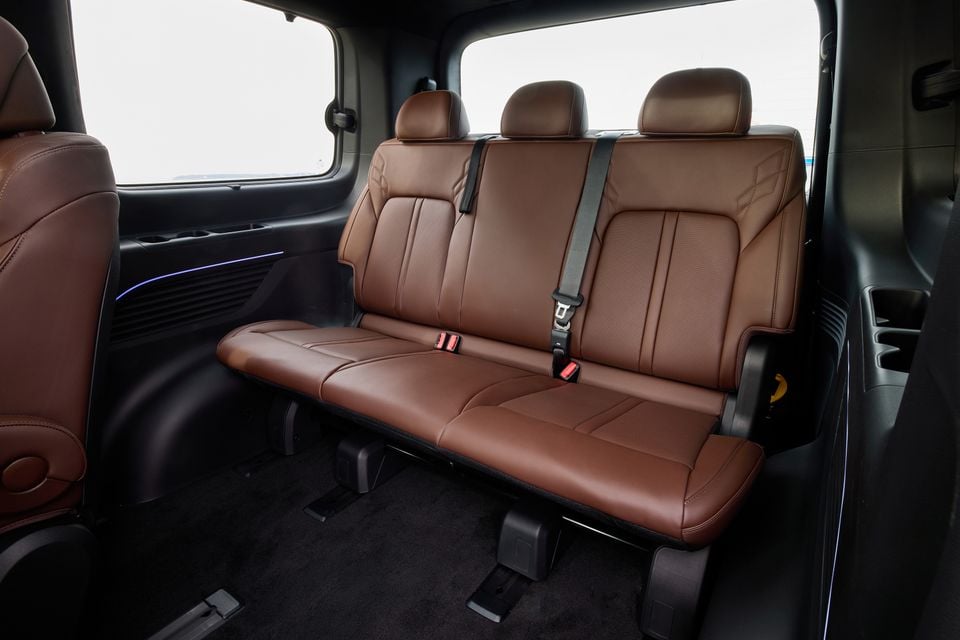
Getting to the second row demands quite a step up, especially for older people, and although there are grab handles on the pillar to help, it's still an effort to clamber in – a set of side steps would be a welcome feature here.
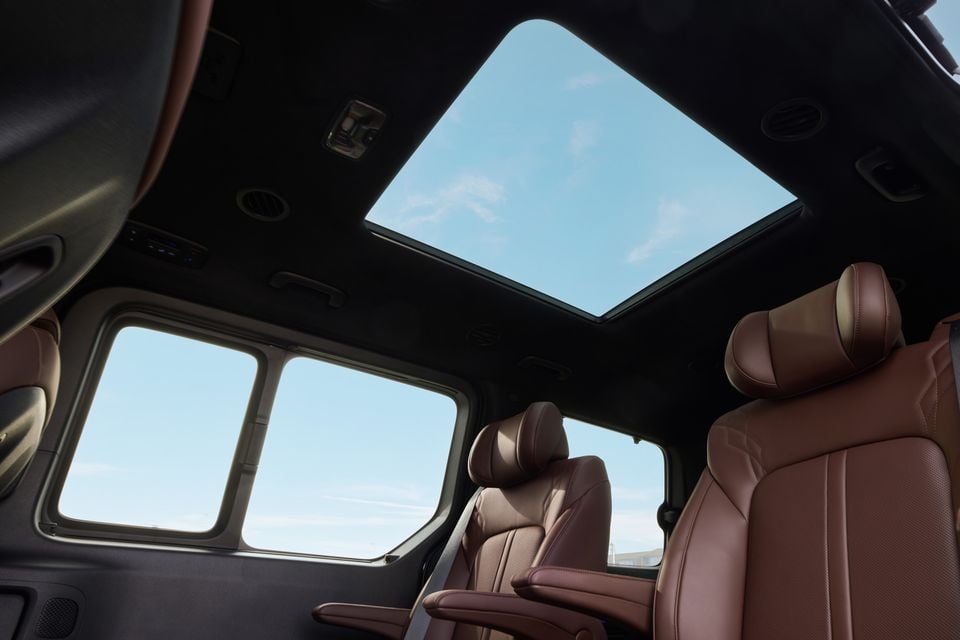
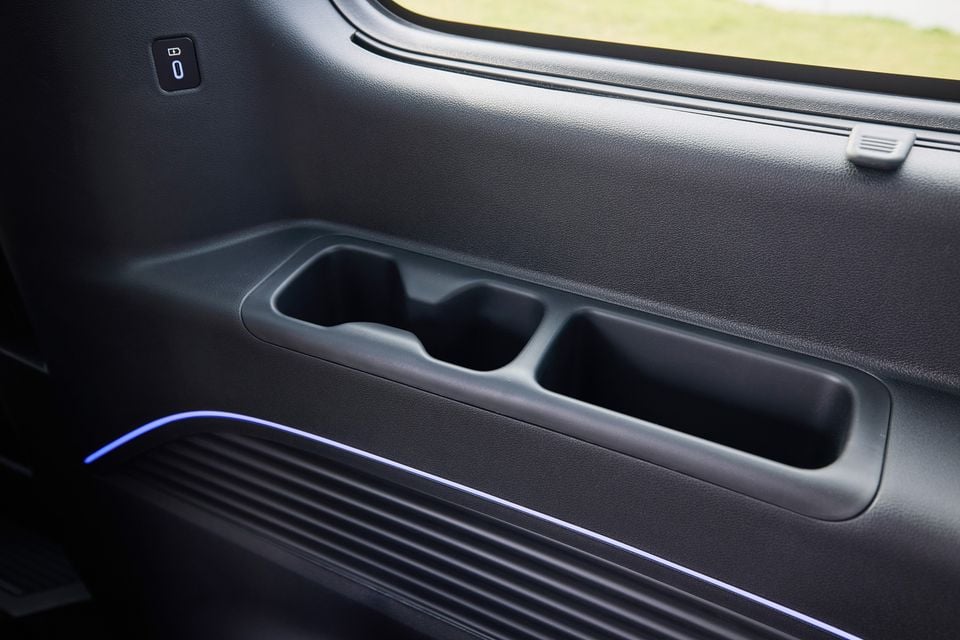
Once on board, second-row passengers can bask in the light from a separate fixed-glass sunroof with a sunshade, and they also score climate-control ventilation, Bose speakers, door bins, map pockets, and a coat hook on the back of the front seats.
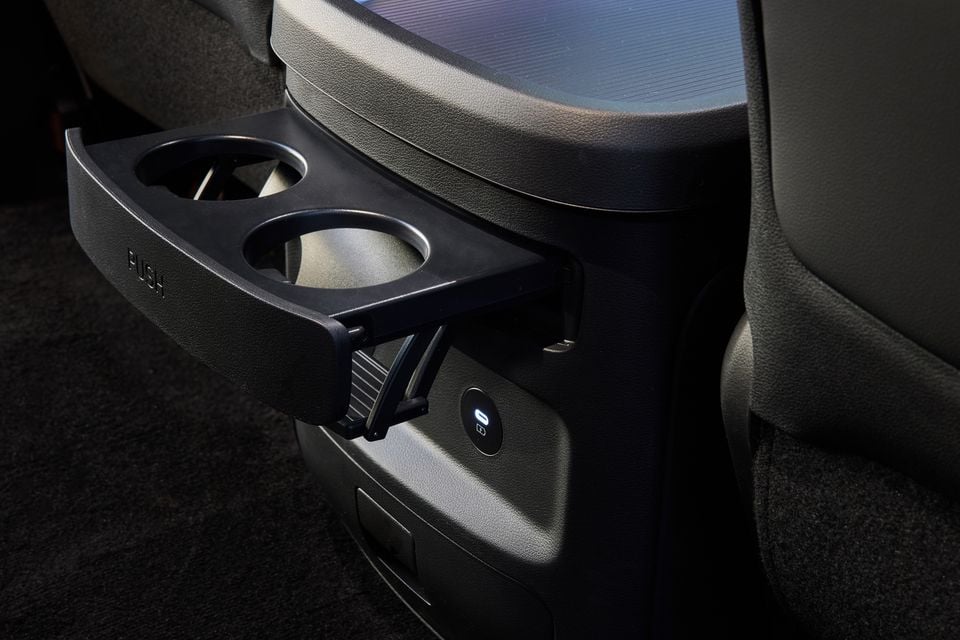
The rear of the centre console also offers retractable cupholders, two USB-C outlets, and a lower stowage drawer, while there are buttons to operate the rear air-conditioning – including a temperature display – and the auto-sliding doors.
There's also an opening section in the sliding-door windows, plus privacy glass for the second and third rows.
One miss is the lack of anchorage points for child seats, which includes two ISOFIX and two top-tether points in the second row, but none in the third row, making it potentially unsuitable for some young families.
The third row comprises a bench seat that can be manually folded flat or positioned upright in a number of ways, plus a USB-C port on each pillar, speakers and air vents that extend to the rearmost occupants – along with curtain airbags, manual sunshades, and pop-out opening windows.
There is enough cargo space behind the third row for bags and – in our case – a few boxes of books, but the standard power tailgate means access can be limited because the vehicle is so tall.
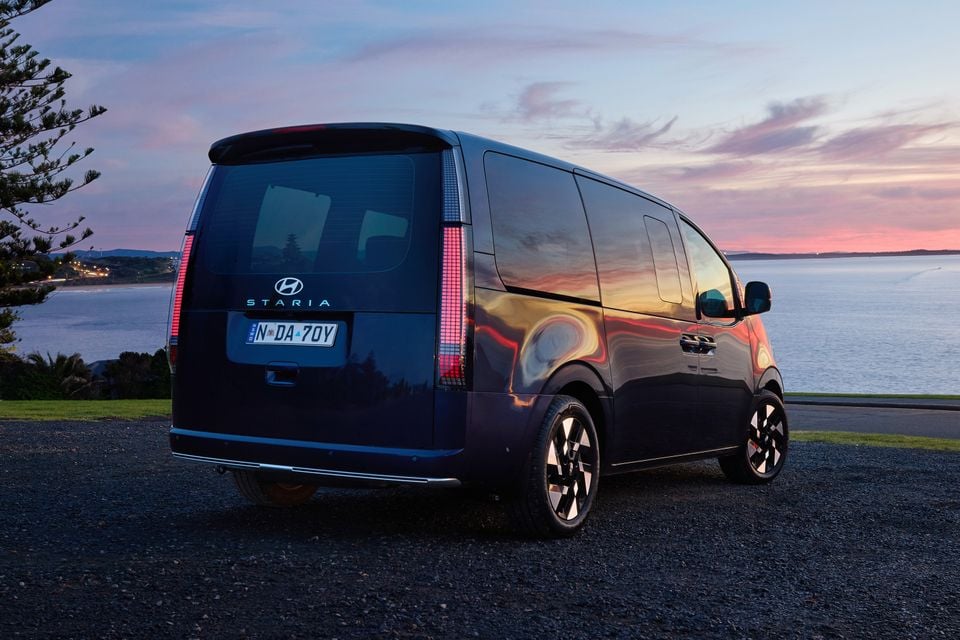
You need almost six metres of space to park the Staria and be able to open the tailgate fully.
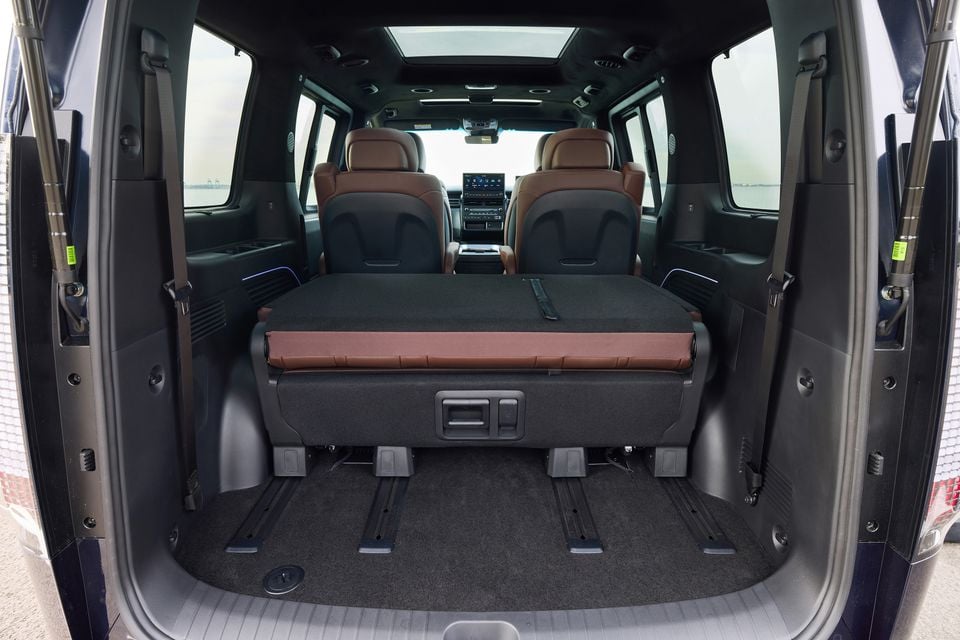
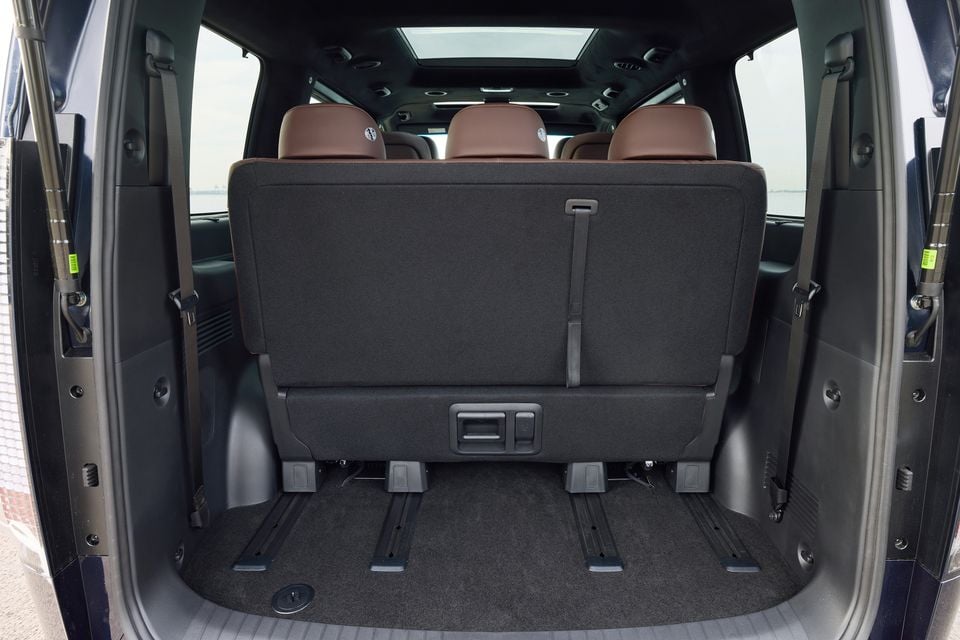
That said, the timer that automatically closes the tailgate after a set period was excellent for carrying those heavy boxes from the Staria without worrying about leaving our cargo exposed to thieves, closing after we moved each box.
| Dimensions | Hyundai Staria |
|---|---|
| Length | 5253mm |
| Width | 1997mm |
| Height | 1990mm |
| Wheelbase | 3273mm |
| Cargo capacity | 117L (behind the third row)431L (third row folded) |
To see how the Hyundai Staria lines up against the competition, check out our comparison tool
The Lounge is fitted with a hybrid powertrain that's already offered in other Hyundai and Kia models, including the Staria's direct rival in the segment-leading Kia Carnival.
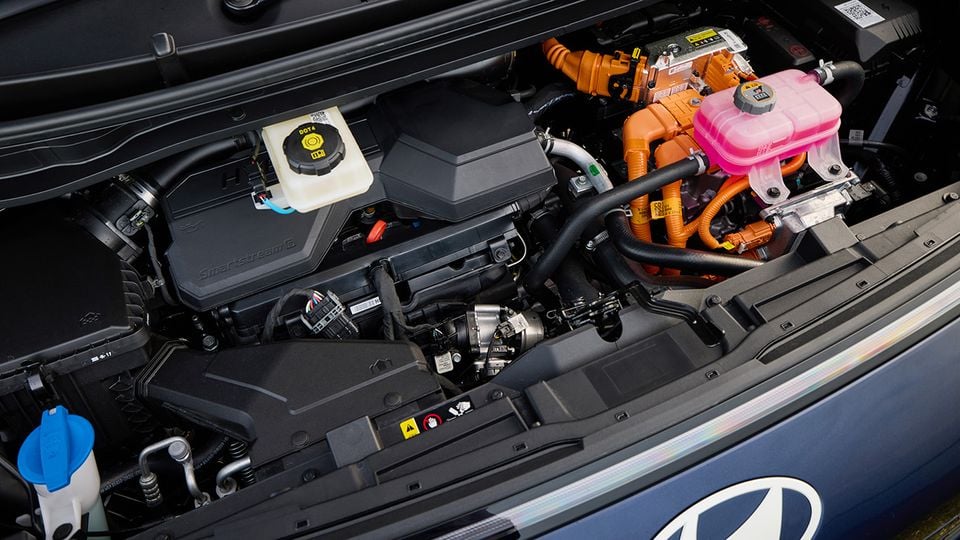
It sees a 132kW/265Nm 1.6-litre turbocharged petrol engine and six-speed automatic transmission teamed with a 54kW electric motor that's powered by a 1.49kWh battery and drives the front wheels. All-wheel drive is no longer available.
Combined outputs are 180kW/367Nm and combined fuel consumption is 6.5L/100km, making it the most fuel-efficient Staria variant, with the diesel rated at 7.2L/100km and the petrol at 10.5L/100km.
Our result was 7.97L/100km using standard 91-octane unleaded petrol, after driving from the edge of Sydney to Melbourne and stopping after 776km (around 80km short of the southern city) to refuel the 65-litre tank. That's 10L less than the petrol and diesel Staria, which would have made it all the way without refilling.
Our overall economy figure during our time with the hybrid was just over 7.2L/100km, which included peak-hour city commutes when it did even better, with some short trips averaging as little as 4.5L/100km.
While it has gained a hybrid powertrain, the Staria has lost all-wheel drive, which was standard with the previous diesel-powered Highlander flagship. The entire people mover lineup – and the Staria Load commercial range – is now front-wheel drive only.
Oddly, at the time of writing, the hybrid doesn't have a braked towing capacity, despite the same powertrain being tow-rated in other models such as the Hyundai Tucson and Santa Fe SUVs. The petrol and diesel Staria both have a braked towing capacity of 2500kg.
| Specifications | Hyundai Staria Lounge |
|---|---|
| Engine | 1.6L 4cyl turbo-petrol |
| Engine outputs | 132kW/265Nm |
| Hybrid system | Single-motor electric |
| Peak electric motor outputs | 54kW/304Nm |
| Peak system outputs | 180kW/367Nm |
| Battery | 1.49kWh lithium-ion polymer |
| Transmission | 6-speed automatic |
| Drive type | Front-wheel drive |
| Tare mass | 2387kg |
| 0-100km/h (claimed) | - |
| Fuel economy (claimed) | 6.5L/100km |
| Fuel economy (as tested) | 7.2L/100km |
| Fuel tank capacity | 65L |
| Fuel requirement | 91-octane regular unleaded |
| CO2 emissions | 147g/km |
| Emissions standard | Euro 5 |
| Braked towing capacity | - |
To see how the Hyundai Staria lines up against the competition, check out our comparison tool
The Staria's character spills over from its bold looks, confident cabin layout, and user-friendliness into a van that – despite its 5253mm length – is easy to drive and easy on fuel.
The driver's seat is super-comfortable with loads of space – there's so much headroom your whole family could probably wear sombreros to a Mexican food festival with no drama – and all-round vision is superb.
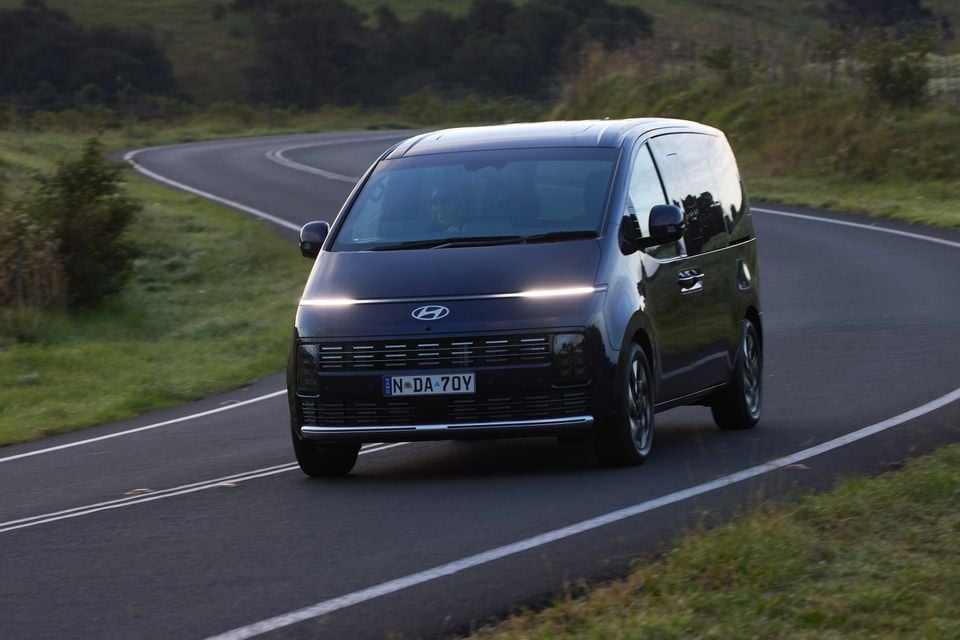
The side mirrors are large and the rear-view mirror provides enough vision out the back, and while on the move there are not only blind-spot monitors but also rear-facing cameras down the side of the vehicle that activate when the indicators are on.
This is important, as the Staria initially feels long and like it pivots around the front axle – making it seem like you're dragging a large amount of baggage behind you. But it's not long before you become accustomed to it – there's a massive 3.4 turns lock-to-lock, and the 360-degree camera is excellent for parking and tackling gaps in traffic.
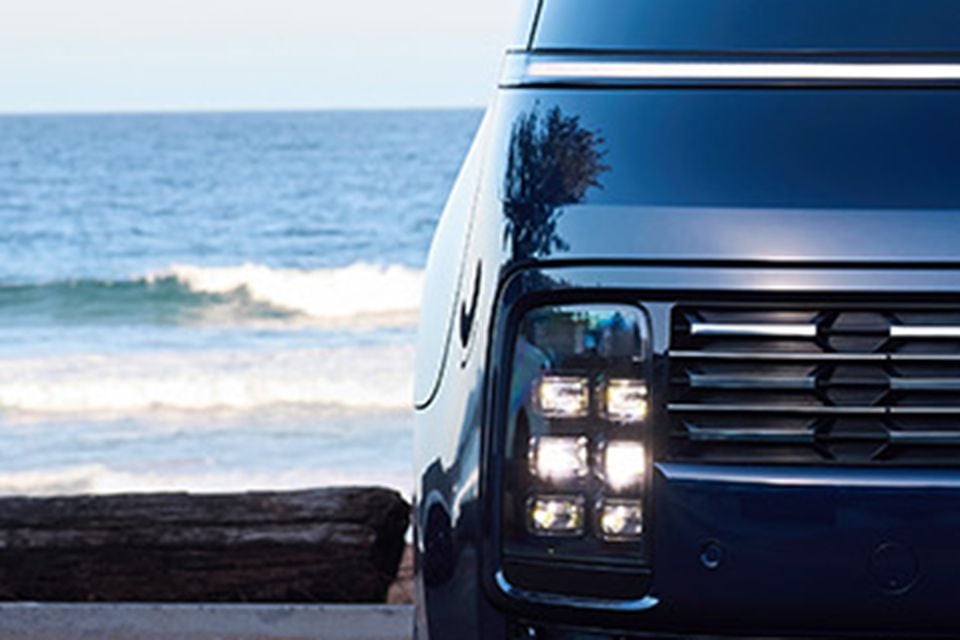
That includes at night, when – despite the fashionable front-end design – the Staria's auto headlights work well, effectively lighting up the landscape well ahead.
On the city commute, the Staria further underlines its manoeuvrability with light steering, decent traction and instant electric response making it not daunting at all to drive, despite being as large as a CBD apartment. It also pulls up quite well, despite its 2387kg kerb weight, adding confidence.
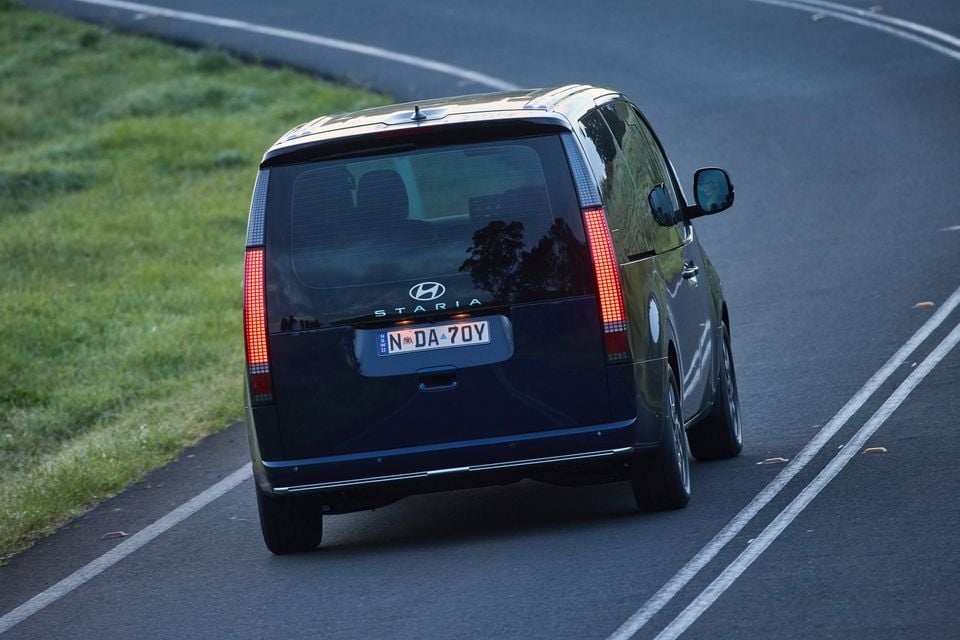
The powertrain switches seamlessly between petrol and electric power in all three drive modes: Eco, which we spent the most time in; Sport, which changes the crisp digital cluster to red, and Smart, which determines the best form of propulsion based on how heavy your right foot is.
The response off the line is not brutal, but the Staria is powerful enough to keep you out of trouble, never feeling sluggish yet always remaining relatively refined. There's an almost rorty engine note if you really push it, which people movers aren't made for, but the punch and backing track are on tap when demanded.
At slower speeds, the Lounge's serene electric motor aids refinement – it'll even switch to electric power at 110km/h on the freeway. It's an excellent powertrain, with a competent balance of power and economy, all while remaining seamless and well-mannered.
It's refined enough for us to pick up slight wind noise above around 75km/h, though this was often drowned out by the ruts and other coarse surfaces of the poorly maintained Hume Freeway as we headed south.
If this is the car for you, we’ll compare offers from trusted dealers, handle the back and forth and manage your purchase from enquiry to delivery.
Freeway speeds also reveal the vague steering, which is not a drama, but the Staria's great leather-wrapped steering wheel has a lot of play on-centre, meaning relatively large steering inputs are required for small direction changes, and plenty of arm-twirling is needed for parking when you're back in town.
Again, you also have to consider whether you'll need to open the standard tailgate when parking. Given the Staria Lounge's 1990mm roof height, that requires – by our crude measurement – another 450mm of space for it to fully open.
On the standard 18-inch alloys, the ride is on the firm side but not uncomfortable. Some road patter is fed through the chassis and steering, but it's only larger bumps that really crash through – especially at the rear, where there's often a loud thump.
We found our test car was running 47psi in both rear tyres, which we adjusted to the placard-recommended 42psi (using a questionably accurate service station gauge) in an attempt to better replicate the Staria's showroom spec – but the firmness remained.
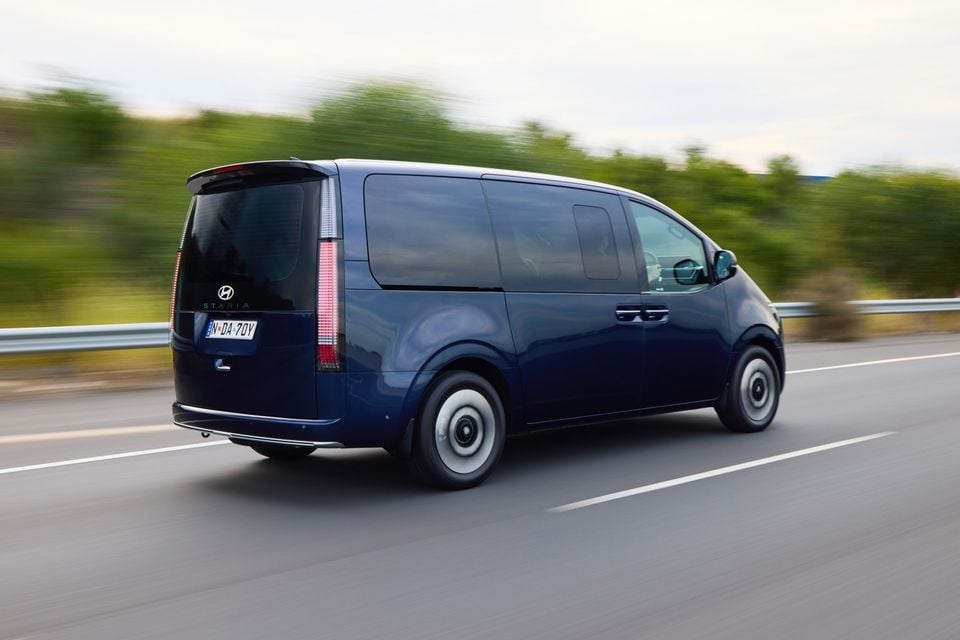
The MY27 update brings suspension changes, including retuned shock absorbers front and rear, additional subframe bushings up front, and new hydro bushings at the rear, where there's coil-spring suspension instead of the leaf springs used by the Staria Load delivery van.
The changes are intended to deliver a more comfortable ride, while new rear wheel-arch linings aim to make it quieter for second- and third-row passengers, and the firewall and dash have thicker insulation to further reduce cabin noise.
The chassis tweaks build on the Staria's solid composure, both when passing 18-wheelers on the freeway – which don't trouble the Staria at all – and when driving around town.
This is not a sloppy box on wheels, but a well-sorted people carrier that – while not quite as polished as a Hyundai SUV – is easy and comfortable to drive.
We also found the seats super-comfortable on the long trip, helping to reduce fatigue, yet also supportive enough to hold you in around corners on winding country roads.
The steering wheel controls are also effective – with driver-assistance controls on the left and audio functions on the right – and my voice commands actually worked, even at freeway speeds.
The Staria has a great dash layout that's easy to navigate, with its driver-assist systems such as lane-centring doing just that – assisting. However, we found the speed sign recognition incorrectly picked up off-ramp speed limits.
It was a rare flaw in the otherwise excellent adaptive cruise control system, which automatically adjusts speed to the posted limit, while the average speed monitor was a boon for dodging a speeding ticket.
Indeed, the Staria's native systems including navigation work well – but we loved the average speed monitor that picked up the average speed camera zones on the Hume Highway and displayed the Staria's average speed as we progressed.
It's part of the standard Highway Driving Assist (HDA) system in the Staria Lounge, and it prevented any speeding tickets being issued to us by NSW or Victoria Police.
To see how the Hyundai Staria lines up against the competition, check out our comparison tool
In addition to the hybrid powertrain, the flagship Staria Lounge brings a raft of changes over the Highlander it replaces, and the standard petrol/diesel Staria.
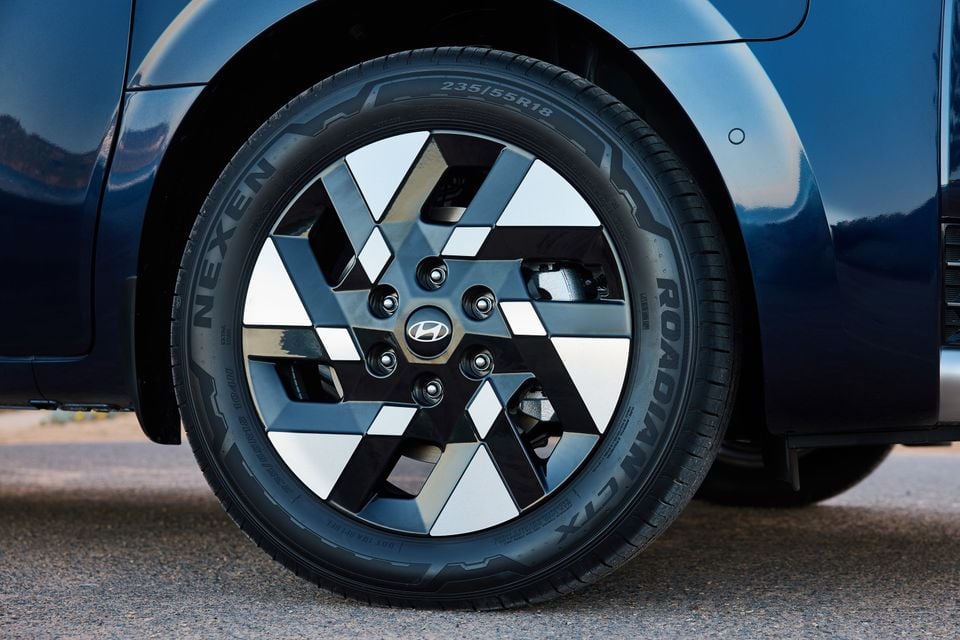
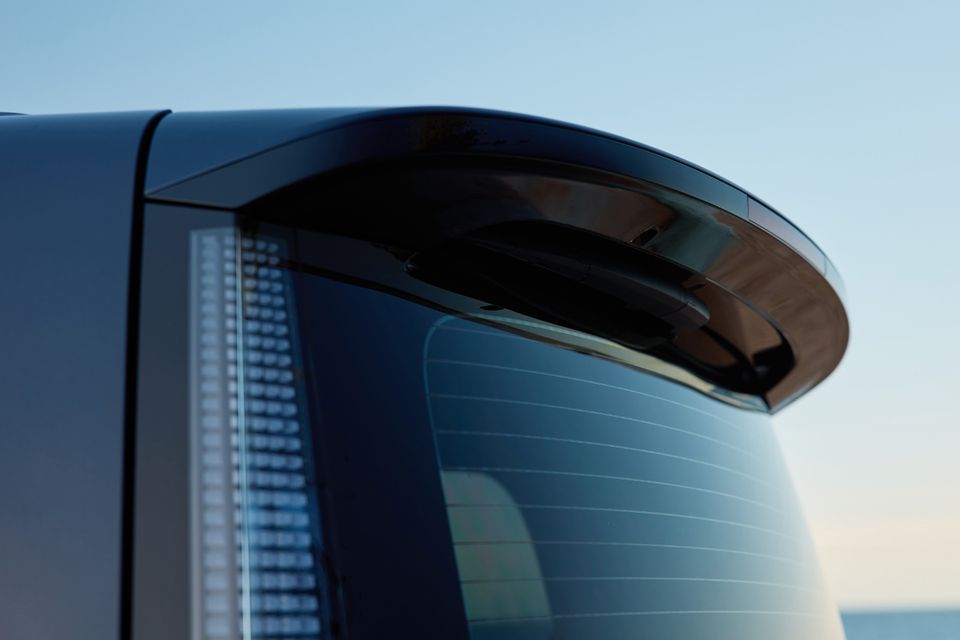
2026 Hyundai Staria equipment highlights:
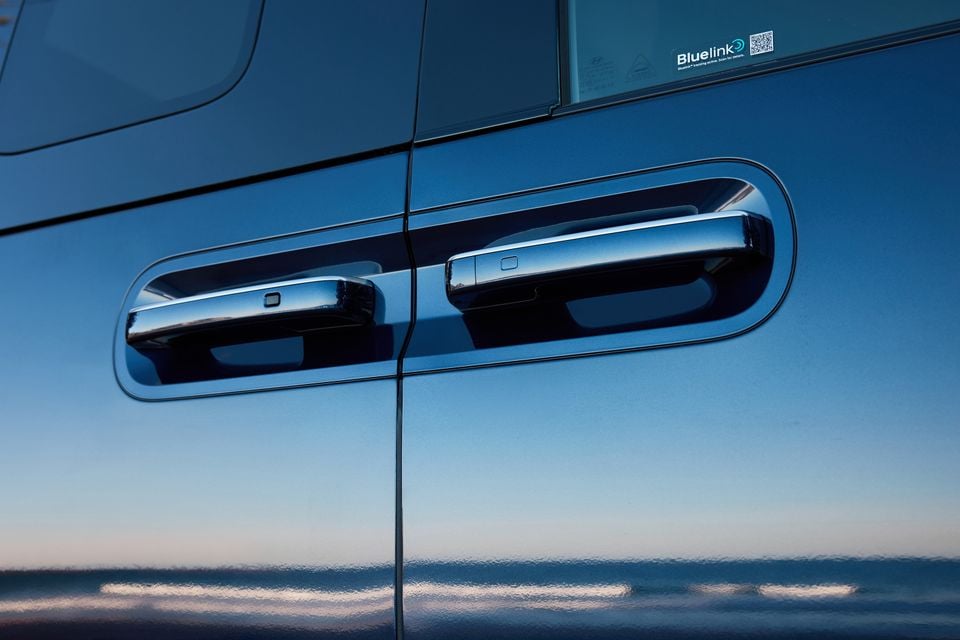
The Staria Lounge adds/replaces:
To see how the Hyundai Staria lines up against the competition, check out our comparison tool
The Hyundai Staria has a five-star safety rating, but the hybrid Lounge is not yet rated and is currently being evaluated by the Australasian New Car Assessment Program (ANCAP).
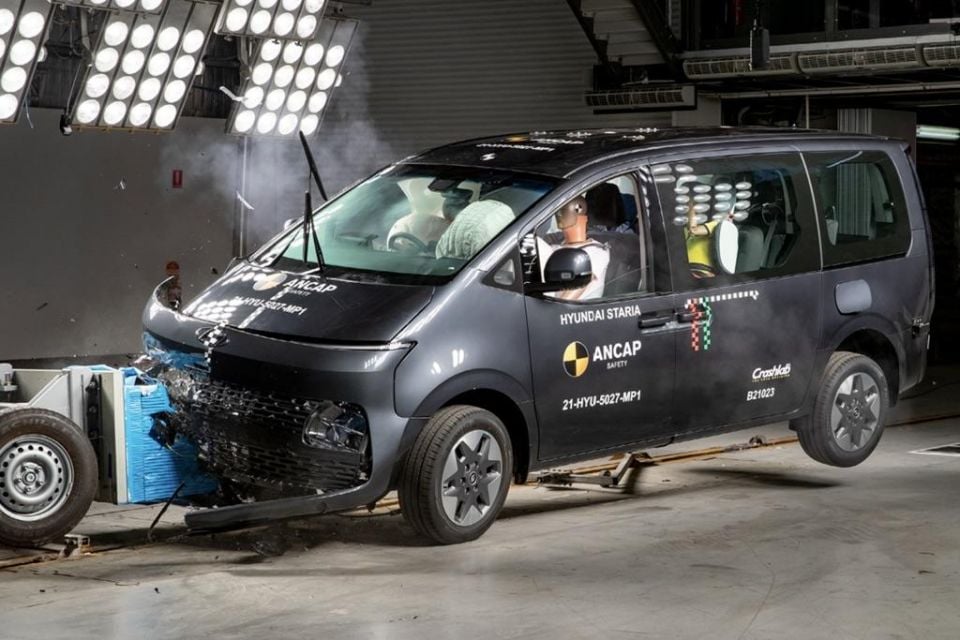
Given it's a hybrid, ANCAP performs additional crash tests to determine the integrity of components such as the high-voltage battery.
The current rating for the petrol and diesel Staria was awarded in 2021, meaning the hybrid will be tested to the same protocols, but it will also be subject to the six-year expiry date for the people mover's original 2021 rating.
This means the Staria lineup, regardless of the powertrain, will see its ANCAP rating expire in 2027 unless Hyundai Australia has the vehicle retested to the stricter 2026 protocols introduced this year.
| Category | Hyundai Staria (diesel/petrol) |
|---|---|
| Adult occupant protection | 85 per cent |
| Child occupant protection | 86 per cent |
| Vulnerable road user protection | 65 per cent |
| Safety assist | 74 per cent |
Standard safety features include:
The Staria Lounge adds:
To see how the Hyundai Staria lines up against the competition, check out our comparison tool
For private buyers, the Staria Lounge is covered by a seven-year/unlimited-kilometre warranty, with an eight-year warranty for its lithium-ion polymer battery.
Commercial users get a five-year/160,000km warranty (once again, whichever comes first).
All buyers of the Staria Lounge are offered a capped-price service program, which is marginally cheaper over five years than that of the petrol and diesel Staria. The trade-off is the hybrid does need to be serviced more often, every 10,000km instead of 15,000km.
| Servicing and Warranty | Hyundai Staria Lounge |
|---|---|
| Warranty | 5 years, unlimited kilometres – standard7 years, unlimited kilometres – service-activated |
| Roadside assistance | 12 months – standardLifetime – service-activated |
| Service intervals | 12 months or 10,000km |
| Capped-price servicing | Lifetime |
| Average annual service cost (5 years) | $488 |
| Total capped-price service cost (5 years) | $2439 |
To see how the Hyundai Staria lines up against the competition, check out our comparison tool
The Hyundai Staria Lounge is a stylish, spacious and smart people mover, capable of carrying passengers in comfort and offering eminently practical convenience. It offers high levels of refinement in a high-quality cabin that is well thought-out and supremely user-friendly.
It also returns excellent fuel economy yet offers strong drivability, faithful handling dynamics and general road manners that make it feel much smaller than it should, even if its pattery ride may be a tad firm for some – especially over larger bumps.
The powertrain, too, is proven in other Hyundai models, and the Staria also ticks all the boxes – for the time being – on the safety front.
While we were critical of the lower-spec diesel for offering less for more money with this update, the Lounge comes at a significant premium of nearly $20,000 – but it remains competitive with its rivals.
That said, there are all-electric people movers available for around the same price, as well as some plug-in hybrid alternatives, plus the Kia Carnival.
If you're looking to ferry babies around, the lack of third-row child seat anchors may be an issue.
The omission of a tow rating, which may only be temporary, may not bother many prospective buyers, and the large tailgate is common to all of the Staria's rivals too, so it shouldn't be a deciding factor for shoppers.
But what should sway buyers is the Lounge's unique combination of style, tech, safety and drivability at a competitive price, along with low ongoing running costs.
The Staria may not have the sales results to make it a class-leader, but that makes the new Lounge an even cooler under-the-radar pick if you're in the market for a big hybrid people mover.
CarExpert can save you thousands on a new Hyundai Staria. Click here to get a great deal.
Click the images for the full gallery
If this is the car for you, we’ll compare offers from trusted dealers, handle the back and forth and manage your purchase from enquiry to delivery.
Quickly see how this car stacks up against its competition. Select any benchmark to see more details.
Hyundai Staria
Hyundai Staria Sales rolling 12-months#
*Based on VFACTS and EVC data
Looking for complete Hyundai Staria price history?
Our Hyundai Staria Pricing Page shows exactly how prices have changed over time.
2026
$58,293
2027
$59,133
2026
$63,543
2026
$74,043
2027
$79,545
Damion Smy is an award-winning motoring journalist with global editorial experience at Car, Auto Express, and Wheels.
Add CarExpert as a Preferred Source on Google so your search results prioritise writing by actual experts, not AI.
William Stopford
11 Days Ago
Damion Smy
13 Days Ago
Damion Smy
14 Days Ago
William Stopford
18 Days Ago
Damion Smy
26 Days Ago
Damion Smy
2 Months Ago
Add CarExpert as a Preferred Source on Google so your search results prioritise writing by actual experts, not AI.
# Based on VFACTS and EVC data
† Displayed prices are based on the drive-away price of the vehicle, which includes delivery charges, registration fees, number plates, and applicable road taxes, based on a Sydney location. However, prices may vary between states and territories, and additional costs such as compulsory third party (CTP) insurance, dealer delivery fees, and optional extras are not included. These prices are subject to change without notice and may not reflect current market pricing or dealer offers.
 Automotive Vehicle Spec Data & 4K images Powered by JATO Dynamics Ltd